What is Yolngu Morning Star Pole?
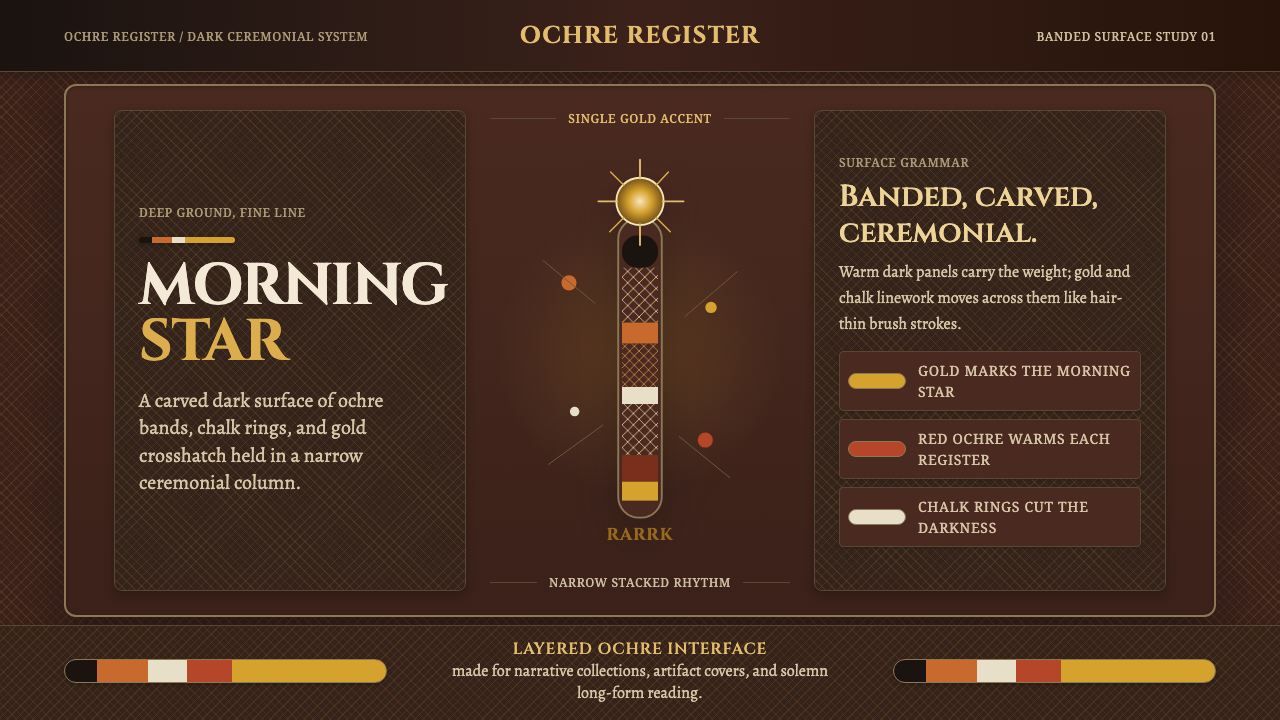
The Yolŋu Morning Star pole turns ceremony into a vertical field of dark earth, rising rings, feathered light, and rarrk hatchwork that seems to carry dawn upward.
Yolngu Morning Star Pole in brief
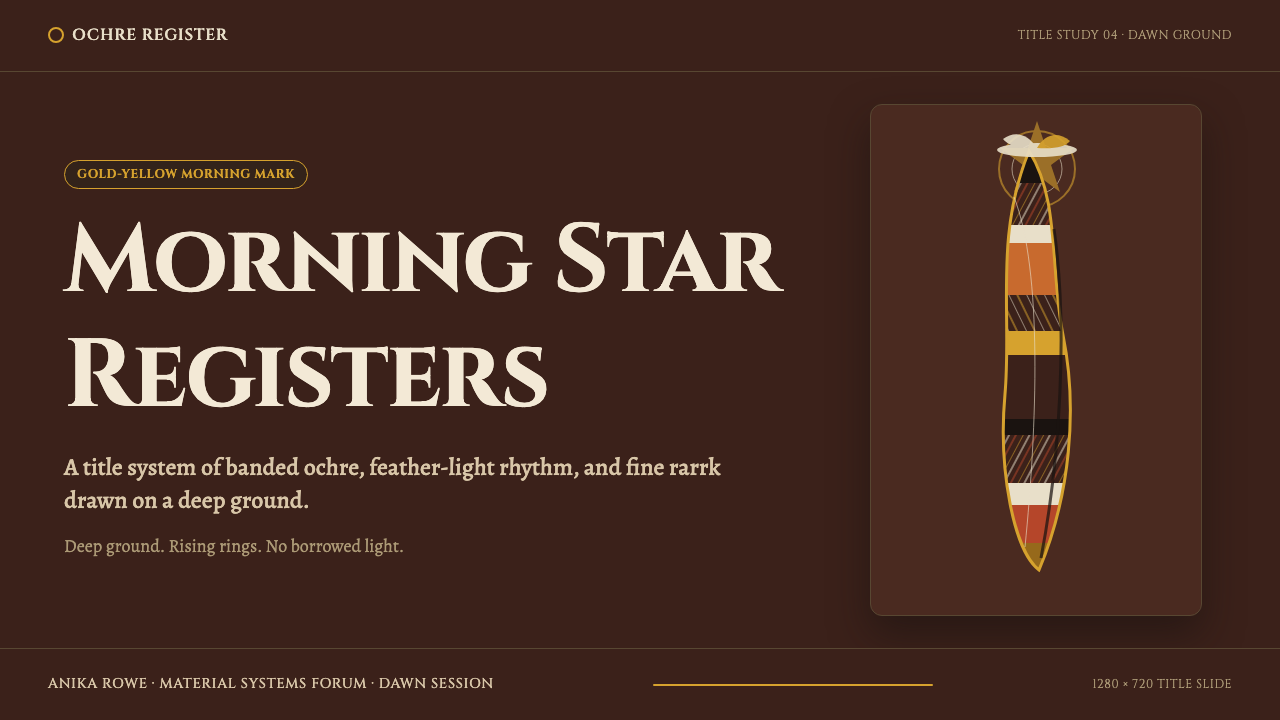
The Yolŋu banumbirr, or Morning Star pole, is a ceremonial mortuary object used in rites across Arnhem Land in Australia’s Northern Territory. It is a wooden pole wrapped in bands of ochre color and crowned with white cockatoo down and lorikeet feathers held by string. Its presence is vertical, cumulative, and ceremonial: the eye begins in the dark body of the pole and travels through successive rings toward the feathered crown.
Its painted surface is built from black bands, rising orange rings, and chalky white bands described as sun rings. Fine rarrk cross-hatching is laid over and between these fields in yellow, white, and red ochre. The marks are made with a marwat brush formed from human hair, giving the linework a materially specific character. The pattern is not a generic texture applied over a surface; it is a concentrated field of repeated hand-drawn crossings.
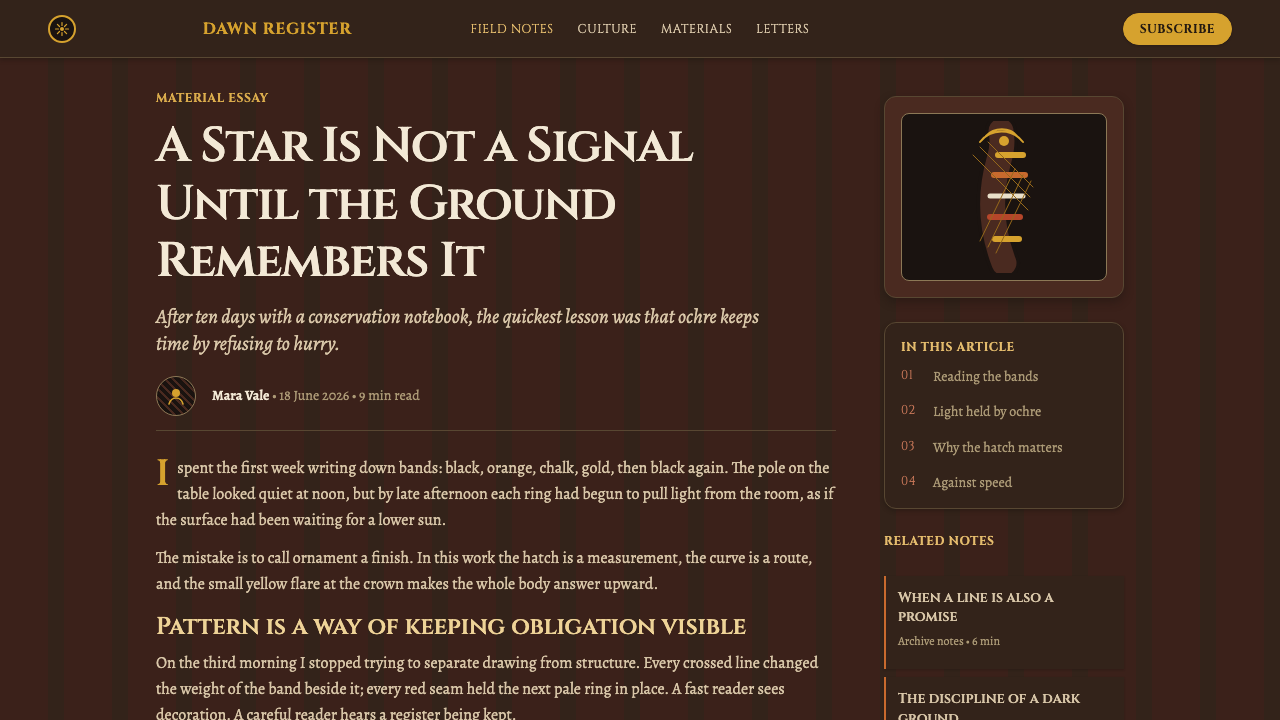
As a digital style, the Morning Star pole becomes a warm, dark interface language. A deep ochre-brown ground carries horizontal or curved bands of gold-yellow, red, black, and chalky white, while fine hatchwork supplies density without the slickness of a synthetic pattern. The effect should feel carved, wrapped, and held in layers. A single gold accent carries special force, standing in for the morning star rather than functioning as general-purpose decoration.
Where does Yolngu Morning Star Pole come from?
The Morning Star pole belongs to a continuing Yolŋu ceremonial tradition of deep ancestral origin in Arnhem Land, Northern Territory, Australia. The supplied historical frame places its documented ceremonial tradition within the first half of the twentieth century while making clear that the practice itself is not a modern invention. Any contemporary design adaptation should preserve that distinction: it may borrow a visual logic from the pole, but it does not recreate or replace the ceremonial object.
The banumbirr is associated with mortuary rites and is made as a wooden vertical form rather than a flat image. That physical construction matters to its visual translation. Its surface is encountered as a shaft around which bands climb, not as a poster laid out on a rectangular page. Digital compositions informed by it work best when they retain a sense of ascent, enclosure, and wrapped registers rather than flattening every motif into an interchangeable wallpaper.
Rarrk crosshatch painting is central to the surface language. Yellow, white, and red ochre lines are drawn with a human-hair marwat brush, creating a fine crossing structure against the stronger bands of black, orange, and pale white. The relationship between broad color registers and close linework is essential: large areas establish the pole’s rhythm, while rarrk gives those areas tactile intensity and visual vibration.
The source material identifies Yolŋu pole-makers and clan custodians of the banumbirr design as the key custodial figures. This is an important boundary for contemporary use. The style can be approached as an educational visual reference for dark grounds, banded composition, and careful linework; it should not imply ownership of ceremonial meaning, present invented symbols as traditional, or detach the design language from its Yolŋu context in Arnhem Land.
What defines the Yolngu Morning Star Pole look?
Deep Ochre Ground
The base should feel warm, earthen, and absorbent rather than neutral black or cool charcoal. Deep ochre-brown gives the brighter marks a grounded setting and makes the interface feel like a surface carrying pigment. Large empty dark areas are useful here: they create the quiet from which rings, feathers, and hatchwork can emerge.
Climbing Bands
Black, rising orange, and chalky white bands establish the main structure. They should read as registers that wrap or climb, not as generic stripes added for variety. Curved edges, partial bands, and interrupted sections can imply the pole’s shaft and keep the composition moving upward. Each band needs enough visual mass to remain legible beneath detailed linework.
Rarrk Linework
Fine cross-hatching provides the system’s most distinctive texture. It should be precise, repeated, and visibly hand-drawn in spirit, with lines crossing to create woven density. Use it in fields and bands rather than scattering it indiscriminately. The goal is not simulated age or roughness; it is a disciplined surface rhythm that rewards close viewing.
Ochre Contrast
Gold-yellow, red, white, orange, and black operate as a closely related ceremonial set over the dark ground. Their contrast should be strong but not noisy. Gold-yellow is the rarest and most directional note, recalling the morning star; red and white enrich the hatchwork and bands; black provides intervals of rest and structure. The palette succeeds through restraint and placement, not saturation everywhere.
Feathered Light
The pole’s crown of cockatoo down and lorikeet feathers suggests a lighter, more delicate counterpoint to the dense shaft. In digital work, this can become pale, fine, suspended detail near the top edge or at a focal point. It should feel tethered and luminous, never like a soft cloud effect. Lightness is created through sparse marks and contrast with the dark field.
Ceremonial Restraint
The style gains force from a limited repertoire used with concentration: dark ground, banded ascent, fine hatchwork, and a decisive gold signal. Additional gloss, decorative symbols, random organic textures, or unrelated ornamental motifs dilute that concentration. The desired result is solemn and tactile, not luxurious in a generic sense and not exoticized as an atmospheric theme.

Who shaped Yolngu Morning Star Pole?
Yolŋu pole-makers are identified in the source material as key makers within the Morning Star pole tradition. Their role centers the object as a made ceremonial form: wooden shaft, ochre-banded surface, rarrk linework, and feathered crown belong together as one constructed presence rather than as separate decorative assets.
Clan custodians of the banumbirr design are named as key custodial figures in the source material. Their inclusion makes cultural context part of responsible visual interpretation. A digital system may acknowledge formal qualities such as ascent, banding, and crosshatching, while avoiding claims that its own motifs carry the authority or ceremonial meaning of the banumbirr.
The marwat brush, made from human hair, is the tool named for drawing rarrk in yellow, white, and red ochre. It matters because it explains why the hatchwork should retain precision and intimacy. In adaptation, the lesson is not to imitate a brush mechanically, but to treat fine linework as a deliberate, materially attentive layer.
How do you use Yolngu Morning Star Pole today?
For presentation covers, use the dark ochre field as a quiet stage for a single climbing band or concentrated rarrk panel. Let the title sit with generous space and reserve gold-yellow for one directional mark, key word, or small star-like focal signal. Content slides should become layered registers: headings align to the band structure, body copy remains calm and legible, and hatchwork is confined to margins, dividers, or a supporting field rather than placed behind every sentence.
Data slides benefit when the palette assigns roles instead of merely decorating charts. Use the deep ground to hold the system together, black or subdued areas for secondary context, and the pale, red, orange, and gold notes to distinguish selected information. A highlighted series can take the morning-star role; everything else should recede. Fine crosshatching can separate zones or annotations, but it should never make values harder to read.
For web interfaces, this language is especially suited to dashboards, research portals, collections, and pricing pages that need gravity, hierarchy, and a sense of crafted attention. Use broad dark surfaces, banded section transitions, and controlled gold emphasis for important actions or states. Cards should feel inset into the field or held within painted registers. Navigation and controls should remain direct and readable, allowing the ornamental density to live in bounded surface areas rather than competing with interaction.
For editorial and marketing work, the style is effective when a story needs a ceremonial, material, or place-aware tone. A long-form article can use rarrk-inspired line fields to frame pull quotes, section labels, or image captions, while bands distinguish chapters and campaign moments. Marketing compositions work best when they move vertically toward one focal accent, echoing the pole’s ascent instead of filling every region with competing motifs.
The common mistake is reducing the style to dark brown plus gold texture. That loses the essential relationship between broad ochre rings, disciplined rarrk crosshatching, feathered lightness, and the Morning Star pole’s ceremonial context. Avoid generic tribalizing symbols, random woven patterns, glitter effects, or excessive gold. The strongest work is sparse in its accents, explicit about its Yolŋu source, and careful not to present a digital moodboard as ceremonial knowledge.
Yolngu Morning Star Pole — FAQ
Is this style simply a dark indigenous pattern theme?
No. The reference is specifically the Yolŋu banumbirr, or Morning Star pole, from Arnhem Land, along with rarrk crosshatch painting. Its visual language comes from a ceremonial wooden object with ochre bands, a feathered crown, and fine linework. Treating it as a generic pattern category removes the specific context that gives its formal qualities meaning.
Why is gold-yellow used so sparingly?
In this digital translation, gold-yellow stands in for the morning star itself. Its value comes from rarity and directional force. If it is spread across every surface, it becomes general decoration and loses its ability to organize attention. Let the warmer dark ground and ochre-related bands do most of the atmospheric work, then use gold to establish a destination.
Can rarrk be used as a background texture everywhere?
It can be referenced in bounded fields, but covering every surface weakens both readability and the linework’s concentrated effect. Rarrk is most useful where close detail can contrast with broad, quieter bands. In a functional interface, keep it away from dense forms, tables, and extended body text, and allow unpatterned dark areas to remain visible.
What makes a digital adaptation feel respectful?
Start by naming the Yolŋu and Arnhem Land source rather than presenting the work as anonymous decoration. Keep the adaptation focused on documented formal qualities: dark ochre ground, bands, rarrk-like fine crossing, feathered lightness, and restrained gold emphasis. Do not invent ceremonial explanations, assign meanings to unapproved motifs, or suggest that an interface reproduces the authority of the banumbirr.
Which products suit this visual language best?
It suits experiences that benefit from depth, concentration, and crafted material presence: cultural collections, research tools, exhibitions, editorial stories, and premium information spaces. It is less suitable where an airy, neutral, frictionless appearance is the central goal. The style needs room for dark ground, bands, and detail, so it works best when the product can support a slower, more deliberate visual rhythm.
Related design styles
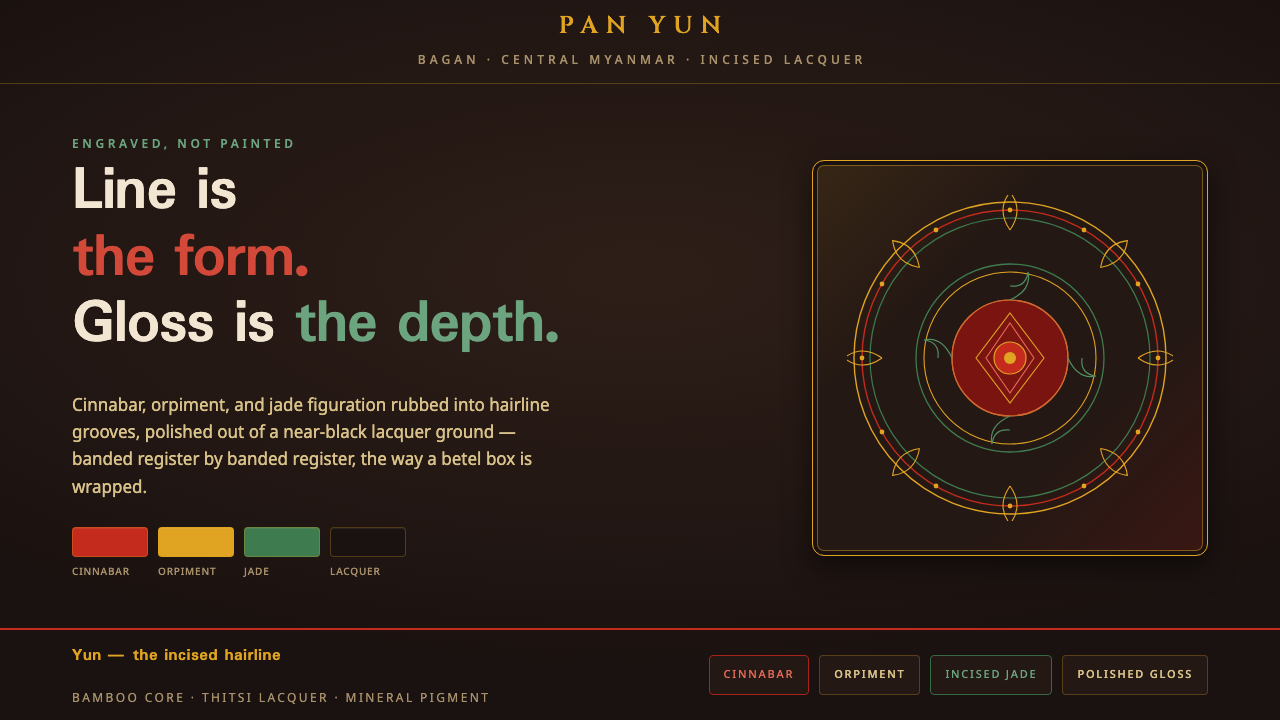 Bagan Yun LacquerwareEngraved, not painted. Cinnabar, orpiment and jade hairlines polished from ne…
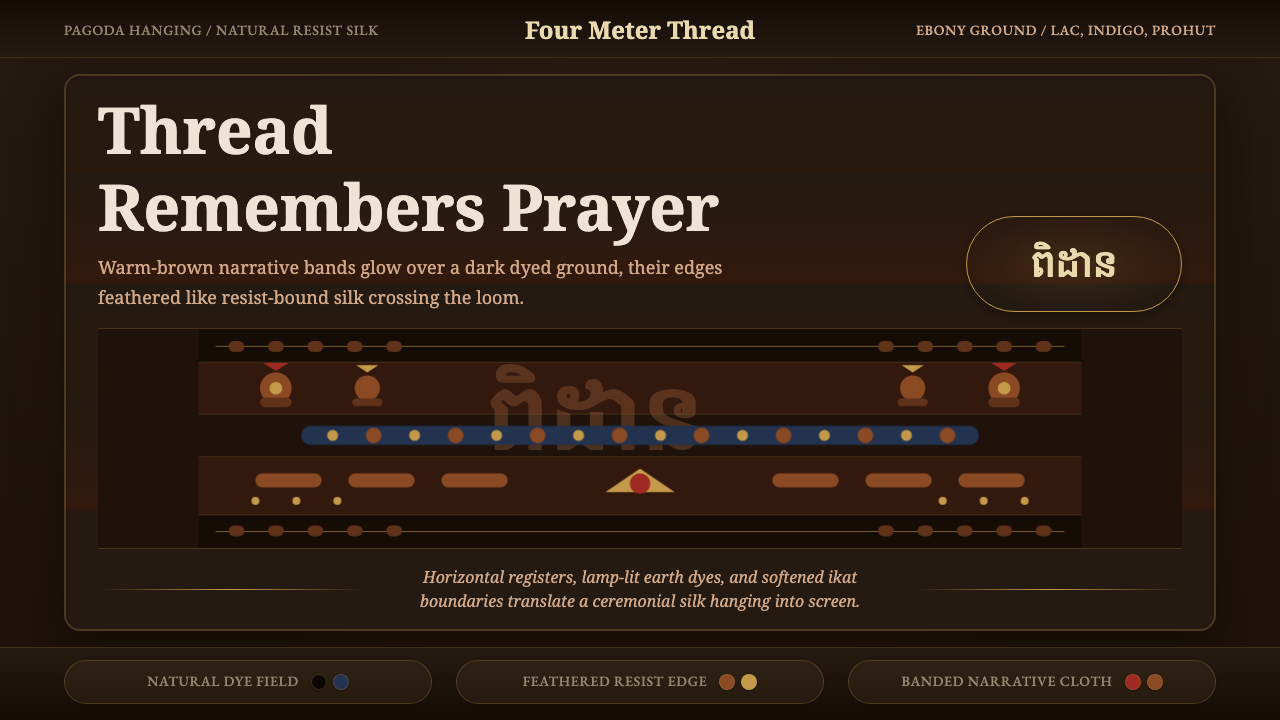 Cambodian Pidan IkatSacred cloth glows. Ebony-indigo bands carry warm-brown ikat figures with fea…
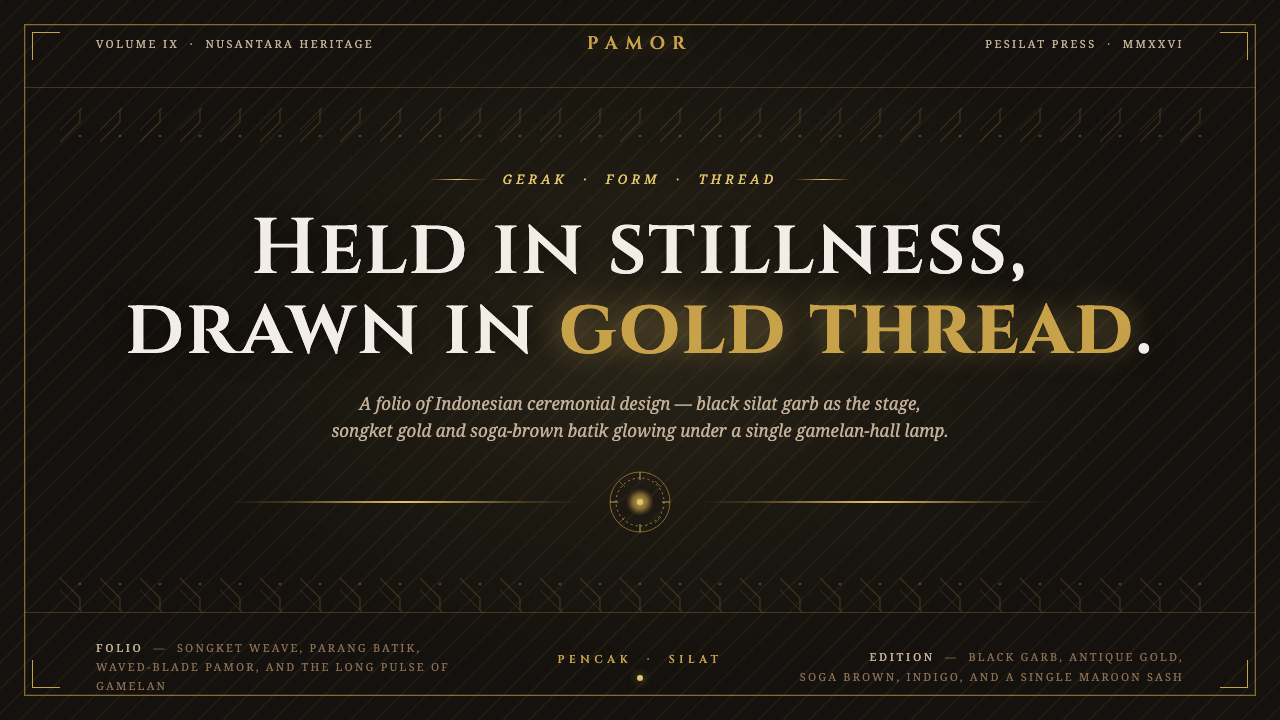 Indonesian Pencak SilatHeld in stillness, drawn in gold. Songket thread glows on black silat garb un…
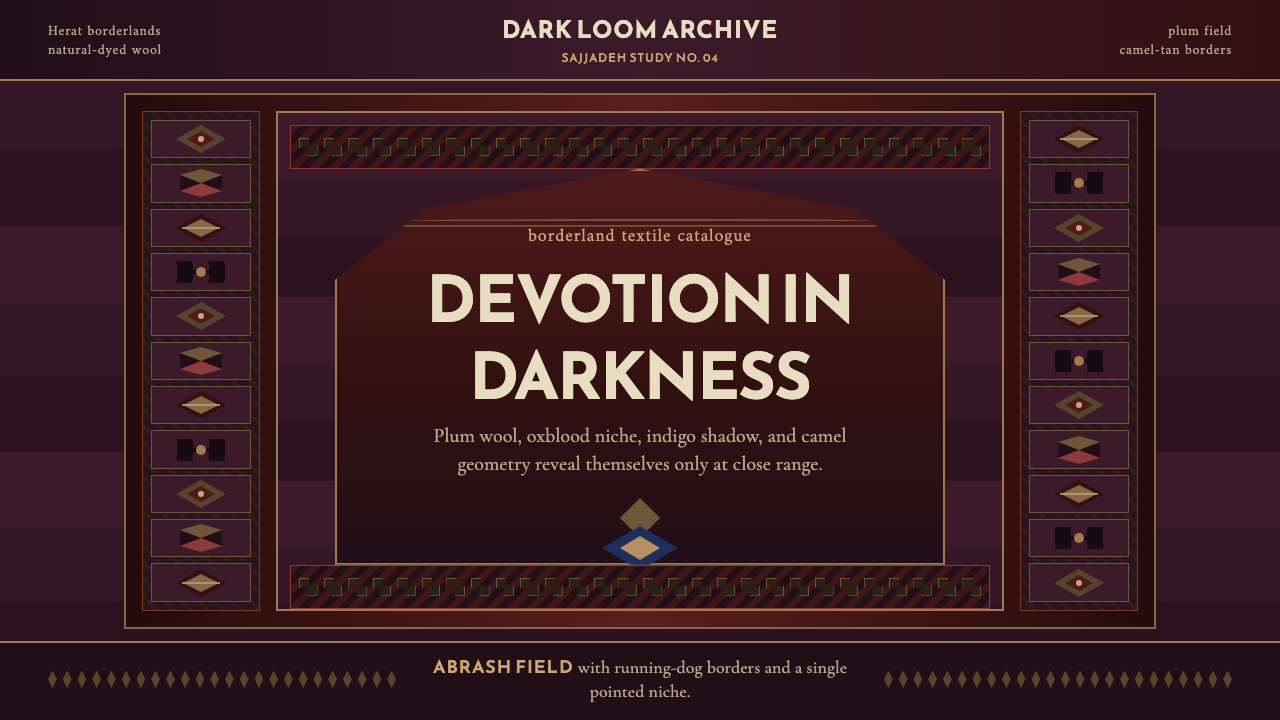 Afghan Baluchi Prayer RugDevotional darkness glows. Plum field, oxblood mihrab, and camel borders surf…
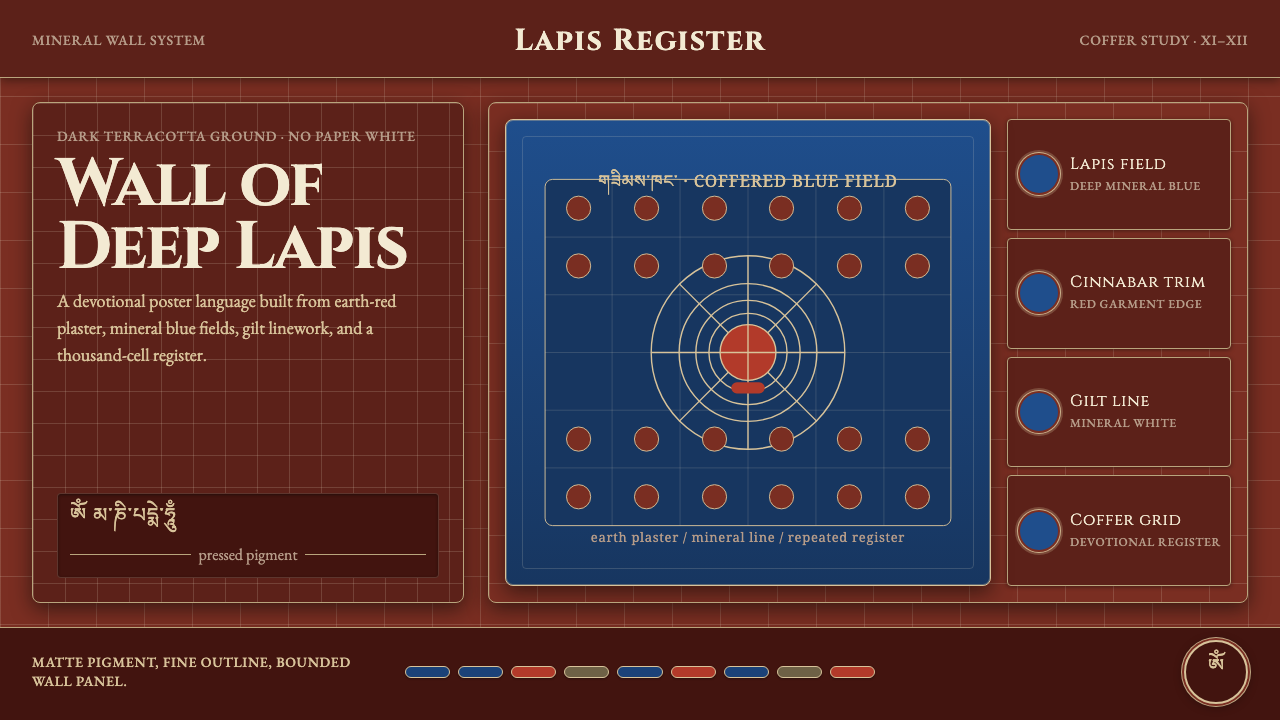 Alchi Monastery MuralDevotional depth. Lapis fields and coffered grids glow on terracotta plaster.
 Armenian Khachkar Cross-StoneStone becomes memory. Tuff grey, pomegranate red, and carved borders hold the…