What is Y2K Aqua 2000?
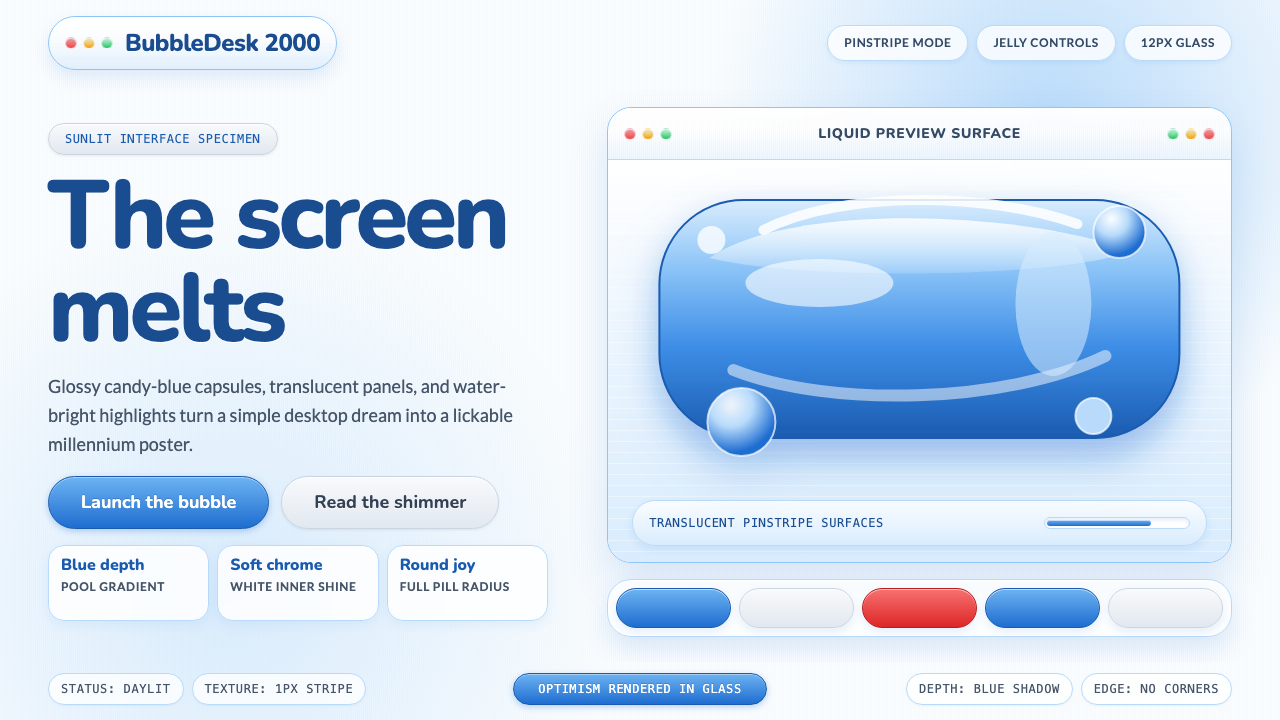
Y2K Aqua 2000 captures the millennium's sweetest promise — glossy candy-blue interfaces so vivid and tactile that Apple's own co-founder declared users would want to lick the screen.
Y2K Aqua 2000 in brief
Y2K Aqua 2000 is a design style rooted in the visual language Apple introduced with Mac OS X at the turn of the millennium. Its signature look is built on translucent blue gradients, pill-shaped controls, spherical candy-like buttons, pinstripe textures, and liquid highlights that make every surface feel as though light is passing through water. The overall impression is one of joyful depth — elements appear to float, gleam, and gently ripple, in sharp contrast to the flat, matte interfaces that preceded them.
Where earlier operating system interfaces felt painted on, Aqua felt sculpted. Every button had a three-dimensional presence achieved through carefully layered highlights and shadows rendered not as hard geometry but as soft, rounded luminosity. Menus slid into view with theatrical genie-effect animations. Window control buttons glowed like traffic lights — small circular jewels that implied physical weight and responsiveness. The aesthetic language communicated a simple and seductive idea: computers had become objects of desire, not merely tools of utility.
As a contemporary design style, Y2K Aqua 2000 draws on this era's unapologetic optimism and translates it into a modern vocabulary. It is skeuomorphic without being kitsch — the glass, the roundness, and the luminosity are used to evoke feeling rather than to simulate literal physical objects. The style sits at the intersection of nostalgia and sophistication, making it particularly resonant in contexts where playfulness and trustworthiness need to coexist.

Where does Y2K Aqua 2000 come from?
The visual story of Y2K Aqua begins in the years immediately before the millennium, when the graphical user interface was entering a new phase of cultural significance. Personal computers had moved from the desktop of specialists into the living rooms and kitchens of ordinary households. Interface design had to become appealing, not just functional. The industry was searching for a visual metaphor that would make software feel welcoming, and the winning answer turned out to be transparency, roundness, and light.
Apple unveiled Mac OS X at the Macworld Expo in January 2000 and shipped it in March 2001, and the Aqua interface it introduced was unlike anything the industry had seen at commercial scale. Steve Jobs reportedly told his designers that the interface should be so beautiful that users would want to lick it — a phrase that became one of the most quoted in interface design history. The interface was the work of a team led by Cordell Ratzlaff, Apple's human interface chief at the time, with interaction contributions from Bas Ording, who pioneered many of the fluid animation behaviors that gave Aqua its sense of physical responsiveness. The design language was built in Cupertino, California, and it carried the particular optimism of Silicon Valley at its height — an era of new-economy confidence and technological utopianism that the dot-com boom had made the default mood of the industry.
Aqua did not emerge in isolation. It belongs to a broader current in turn-of-the-millennium visual culture that design historians have called Frutiger Aero — a sensibility encompassing glossy plastic surfaces, soft blue-green gradients, water and sky imagery, and a general embrace of translucency as the visual metaphor of the information age. Windows XP's Luna interface, launched in 2001, drew on a similar vocabulary, as did countless consumer electronics product designs of the period. Screensavers, product packaging, and advertising all reached for the same liquid-glass aesthetic. The style reflected a collective cultural mood: technology was becoming clean, bright, and joyful, and design was the medium through which that transformation was announced.
The Aqua era lasted roughly through the middle of the first decade of the twenty-first century. Apple began progressively flattening and simplifying its interfaces from around 2007 onward as mobile context demanded greater legibility at smaller sizes. iOS 7's radical 2013 redesign effectively ended the skeuomorphic chapter and ushered in the flat-design era. But the Y2K Aqua aesthetic never disappeared entirely — it went underground into a devoted subculture of nostalgia, reemerging in the 2020s as a full-fledged retro revival. Today the style resonates as both a sincere historical reference and a contemporary aesthetic choice, valued for the warmth, playfulness, and tactile richness it brings to otherwise minimal digital environments.
What defines the Y2K Aqua 2000 look?
Translucent Depth
The defining visual quality of Y2K Aqua is the illusion of depth created through translucency. Surfaces are not simply colored — they appear to be filled with a glowing liquid or seen through layers of tinted glass. This effect is achieved through graduated luminosity that brightens toward the top of each element and deepens toward its base, suggesting that light originates from above and passes through the material. The result gives every element a sense of volume and physical presence that purely flat design cannot achieve.
Candy-Blue Palette
The palette is anchored in a family of saturated aqua and sky blues — bright and clear rather than cool or corporate. These blues are warm enough to read as inviting, yet vivid enough to feel technological. Secondary accents draw from soft silver, translucent white, and an occasional brushed-steel grey. The overall palette evokes water, sky, and swimming-pool light — environments that carry associations of clarity, refreshment, and optimism. Darker tones appear primarily in shadows and pinstripe textures rather than as dominant background fields.
Pill and Sphere Forms
Where Bauhaus reaches for the hard-edged circle, square, and triangle, Y2K Aqua reaches for the pill and the sphere — forms that have no sharp terminus and whose softness communicates approachability. Buttons are elongated ovals with gleaming highlights along their upper edges. Scroll indicators are rounded capsules. Window control elements are small glowing spheres in traffic-light arrangement. The consistent use of these rounded forms across every interactive element creates a visual ecosystem that feels unified, tactile, and alive.
Pinstripe Texture
A subtle but distinctive texture inherited directly from original Aqua interfaces: extremely fine horizontal lines alternating between slightly lighter and slightly darker tones of the base color, creating a brushed or woven surface quality. Pinstripes appear primarily in window chrome, toolbar backgrounds, and panel headers. They are fine enough that at normal viewing distances they read as a tonal texture rather than an explicit pattern — adding visual sophistication without competing with the primary content. When used sparingly, this texture grounds the interface and prevents the glossy surfaces above it from feeling weightless.
Soft Specular Highlights
Unlike flat design, which uses no shading at all, or hard-shadow approaches that use offset flat shapes, Y2K Aqua employs soft, diffuse highlights that simulate the way light reflects off a glossy curved surface. A button might carry a bright oval highlight in its upper third, fading smoothly into the mid-tone of the button body. These highlights are always interior to the element — they describe the surface curvature rather than simulating an external light source cast onto a flat backdrop. This gives Aqua elements their characteristic lickable, liquid quality.
Fluid Animation and Motion
Y2K Aqua was inseparable from its motion behaviors. The genie effect — in which windows compressed and flowed into the dock like a stream of liquid — was not decoration but philosophy: it communicated that the interface obeyed physics, that objects had weight and momentum. Menus faded in rather than snapping. Windows bounced when they exceeded their bounds. These behaviors established a vocabulary of physicality that made the screen feel like a tangible environment. In still-image applications of the style, the same sensibility is evoked through the implied motion of curved highlights, the elasticity suggested by pill shapes, and the depth implied by layered translucency.
Restrained Typography
Typography in Y2K Aqua is subordinate to the interface chrome rather than dominant over it — a reversal of the Bauhaus hierarchy. Type is typically set in clean, slightly rounded sans-serif forms that complement the softness of the surrounding elements. Headings carry gentle anti-aliasing that gives letterforms a smooth, screen-native quality. Label text on controls is small and precise, embedded within the glossy buttons rather than floating above them. The typographic tone is friendly and readable rather than bold or confrontational — the interface speaks, but the surfaces sing.

Who shaped Y2K Aqua 2000?
As Apple's co-founder and CEO during the Mac OS X era, Jobs was the ultimate patron and creative arbiter of the Aqua interface. His insistence that the desktop computing experience should be sensually compelling — not merely functional — set the mandate that drove Aqua's extraordinary visual ambition. His reported declaration that the interface should be beautiful enough to lick became the defining anecdote of the skeuomorphic era, capturing in a single phrase the philosophy that visual richness and tactile suggestion were legitimate design goals, not indulgences.
Ratzlaff served as Apple's Human Interface group manager during the formative years of Mac OS X development and was the primary architect of the Aqua design language. His team was responsible for translating the directive to make an interface that felt physically real into a coherent and systematic visual vocabulary — defining the translucency model, the control shapes, the pinstripe textures, and the color system that made Aqua identifiable across every surface and interaction. His work represents one of the most consequential interface design decisions of the personal computing era.
Ording was the interaction designer and engineer behind many of the signature animation behaviors that gave Aqua its sense of physical presence. The genie effect — the liquid animation that compressed windows as they minimized into the dock — was among his contributions and became one of the most celebrated interaction design moments of the era. His work demonstrated that motion and physics were not supplementary to interface design but constitutive of it: the way elements moved was inseparable from what those elements meant to users.
Though Kare's most celebrated work predated Aqua — her icon designs for the original Macintosh in 1984 established the visual language of the GUI — her influence on Apple's approach to interface as an expressive, personality-rich medium shaped the culture that made Aqua possible. Her practice of treating interface elements as miniature objects with character and weight, rather than as functional placeholders, was a direct philosophical ancestor of the skeuomorphic sensibility that Aqua would later develop to its fullest expression.
Not a single figure but a broader cultural current, Frutiger Aero names the visual sensibility that swept consumer technology design between roughly 1997 and 2013 — characterized by water, sky, glass, and nature imagery rendered in translucent digital form. Aqua was its most influential single artifact, but the movement included Windows Vista's Aero Glass interface, countless mobile wallpapers, consumer electronics packaging, and early Web 2.0 visual design. Understanding Aqua in this broader context reveals that it was not an isolated Apple invention but the most refined expression of a shared millennial optimism about what technology could feel like.
How do you use Y2K Aqua 2000 today?
Y2K Aqua 2000 is a style of deliberate emotional contrast: it works best when surrounded by contexts that have become overly minimal, flat, or colorless. Its translucency, roundness, and luminosity register as warmth and personality in environments where those qualities are absent. The practical challenge of applying it is resisting the temptation to overload every surface with gloss — restraint is what separates a convincing Aqua-derived design from a garish one. The style's principles should be understood first: depth through layered translucency, volume through soft highlights, tactility through rounded forms.
For presentation slides, Y2K Aqua 2000 has distinctive strengths on both cover and section-break slides. A cover benefits from a deeply saturated aqua or sky-blue field as the dominant background, with a large pill-shaped or spherical graphic element catching a specular highlight in its upper portion. Title type should be set in a clean, slightly rounded sans-serif form at a generous size, with a subtle drop shadow that suggests the letterforms are floating above the surface rather than sitting on it. Content slides work best when the gloss is used selectively — a single glossy button or badge element to draw attention to a key data point, while the majority of the slide remains clean and readable. Data visualizations take on a candy-like quality when bars and indicators are rendered as three-dimensional pill forms rather than flat rectangles.
For web UI and dashboards, the style is particularly effective in contexts that need to convey energy, modernity, and approachability simultaneously — consumer dashboards, personal productivity tools, and community platforms benefit most. The approach: establish a near-white or very light grey background field, then introduce Aqua through the interactive elements specifically — buttons with luminous pill shapes, toggle controls that glow when active, card surfaces with a subtle glassy sheen. Pricing pages work well in this idiom, using glossy highlighted cards to distinguish tiers, with the featured tier rendered more luminously than the rest. Navigation elements should remain clean and typographic, with gloss reserved for call-to-action elements.
For editorial and marketing work, Y2K Aqua 2000 has strong poster and hero-image potential. A hero section dominated by a deep aqua gradient with a central glossy object — a sphere, a pill, a jewel-like form — creates immediate visual impact while communicating a sense of technological sophistication. For print and digital editorial layouts, the style works best as a selective accent system: a pull-quote set in a translucent aqua box, a section divider rendered as a luminous horizontal capsule, a featured article badge shaped as a glowing orb. In marketing contexts, the style is well-suited to product launch communications and technology announcements where the product itself needs to feel new, exciting, and desirable.
A common mistake when applying this style is confusing visual complexity with aesthetic richness. The Aqua aesthetic achieves its effect through a small number of well-executed techniques — layered translucency, soft highlights, consistent rounding — applied with precision. Designers who apply gradients to every surface, add glossy overlays to text, and round the corners of every element including images typically produce work that reads as cluttered and dated rather than refined and nostalgic. The guiding principle should be: choose the three or four elements in the composition that most benefit from the Aqua treatment, execute those with care, and keep everything else relatively clean. The contrast between glossy focal elements and plain surroundings is what gives the focal elements their impact.

Y2K Aqua 2000 — FAQ
Is Y2K Aqua 2000 the same as skeuomorphic design?
Skeuomorphic design is a broader category that describes any interface design that mimics the look of physical objects — leather-bound calendars, wooden bookshelves, textured felt surfaces. Y2K Aqua is a specific variant within that broader category, one that focuses on the glass-and-water metaphor specifically: luminous buttons, translucent surfaces, liquid highlights. Not all skeuomorphic design looks like Aqua — later iOS apps went further into textured materials and realistic surfaces — but all Aqua is skeuomorphic. The distinction matters for application: the Y2K Aqua 2000 style is considerably more restrained than peak skeuomorphism, relying on luminosity and roundness rather than on detailed material simulation.
Can Y2K Aqua 2000 work on dark backgrounds?
Yes, and in some respects dark backgrounds amplify the style's signature effects. Against a dark field, luminous pill-shaped buttons and glowing highlights read with even greater intensity — the translucency and inner glow effects that define the style are more visible when they are not competing with a bright background. The risk is the inverse of the light-background version: where the light-background approach can become cluttered, the dark-background approach can become garish if the glowing elements are too numerous or too bright. A successful dark Aqua implementation typically uses a deep charcoal or near-black base, reserves the candy-blue glow for a small number of key interactive elements, and uses silver-grey as the secondary tone for surfaces and borders.
How does Y2K Aqua differ from vaporwave or other retro-digital aesthetics?
Vaporwave and related aesthetics — seapunk, Y2K maximalism — share with Aqua a fondness for the visual culture of the early internet era, but they approach that fondness very differently. Vaporwave draws on the generic corporate imagery and lo-fi glitches of the 1980s and 1990s and treats them with irony — the aesthetic is deliberately uncanny, referencing failure and nostalgia simultaneously. Y2K Aqua is not ironic. It takes the optimism of the millennium interface at face value and treats it as genuinely beautiful. The practical difference is in tone: Aqua is aspirational and warmly nostalgic; vaporwave is dreamlike, melancholic, and often deliberately disorienting. They can coexist in a visual mood board but should not be blended in execution.
Why did Aqua fall out of use, and why is it returning now?
Aqua fell out of use primarily because of the smartphone. When the primary interface moved to a touchscreen smaller than a human palm, the visual complexity of Aqua became a liability — fine highlights and pinstripe textures became invisible at small sizes, and the heavy chrome of glossy buttons consumed screen real estate that small-display interfaces could not afford to spare. The flat design revolution from 2013 onward was partly an aesthetic preference and partly a practical adaptation to the constraints of mobile displays. Aqua is returning now because those constraints are no longer universal — large monitors, tablets, and televisions have reclaimed the visual real estate that makes Aqua's depth and luminosity legible — and because a generation of designers has grown up seeing flat design as the default, making Aqua feel genuinely fresh rather than outdated.
What kinds of products or brands is Y2K Aqua 2000 unsuitable for?
The style has genuine limitations. It struggles in contexts that require authority, gravity, or institutional seriousness — legal services, financial compliance tools, healthcare record systems, and government applications all demand an interface language that reads as stable and trustworthy rather than playful and luminous. The candy-blue palette and glossy forms can undermine credibility in these contexts, however well-executed. Similarly, the style is a poor fit for products whose brand positioning depends on earthiness, naturalism, or artisanal quality — organic food brands, handcraft marketplaces, and wellness products that trade in warmth and imperfection will find Aqua's technological sheen at odds with their values. The style is strongest when the product itself is digital-native and when the user's relationship to it is one of enthusiasm rather than obligation.
Related design styles
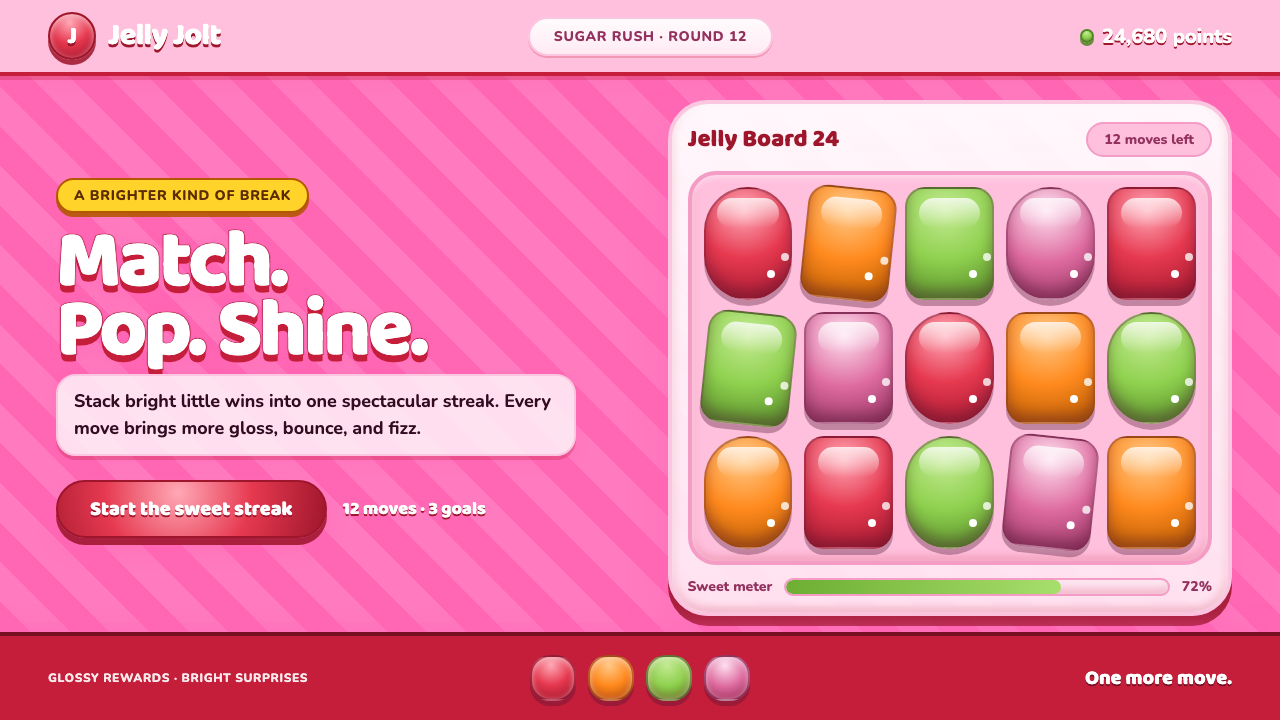 Candy Crush (2012)Sugar rush without restraint. Glossy candy tiles pulse across a striped bubbl…
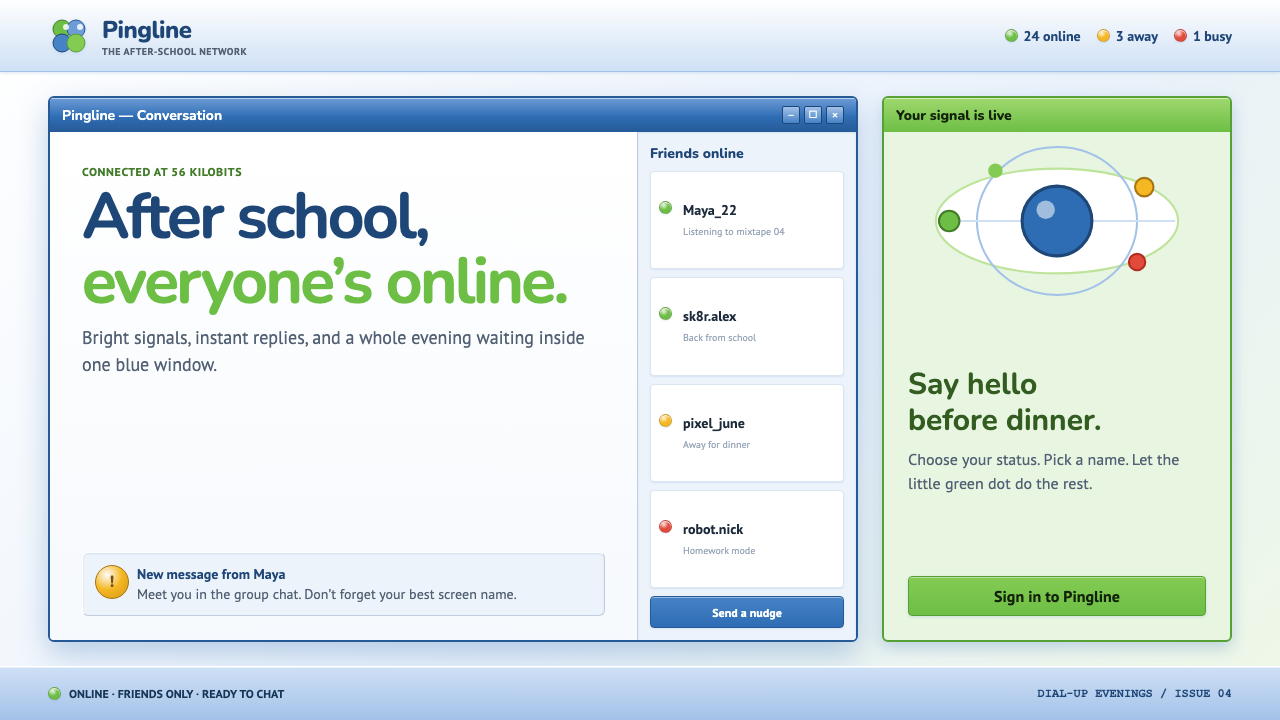 MSN Messenger (2001)Dial-up optimism, online. Luna-blue chrome and bright status dots keep every…
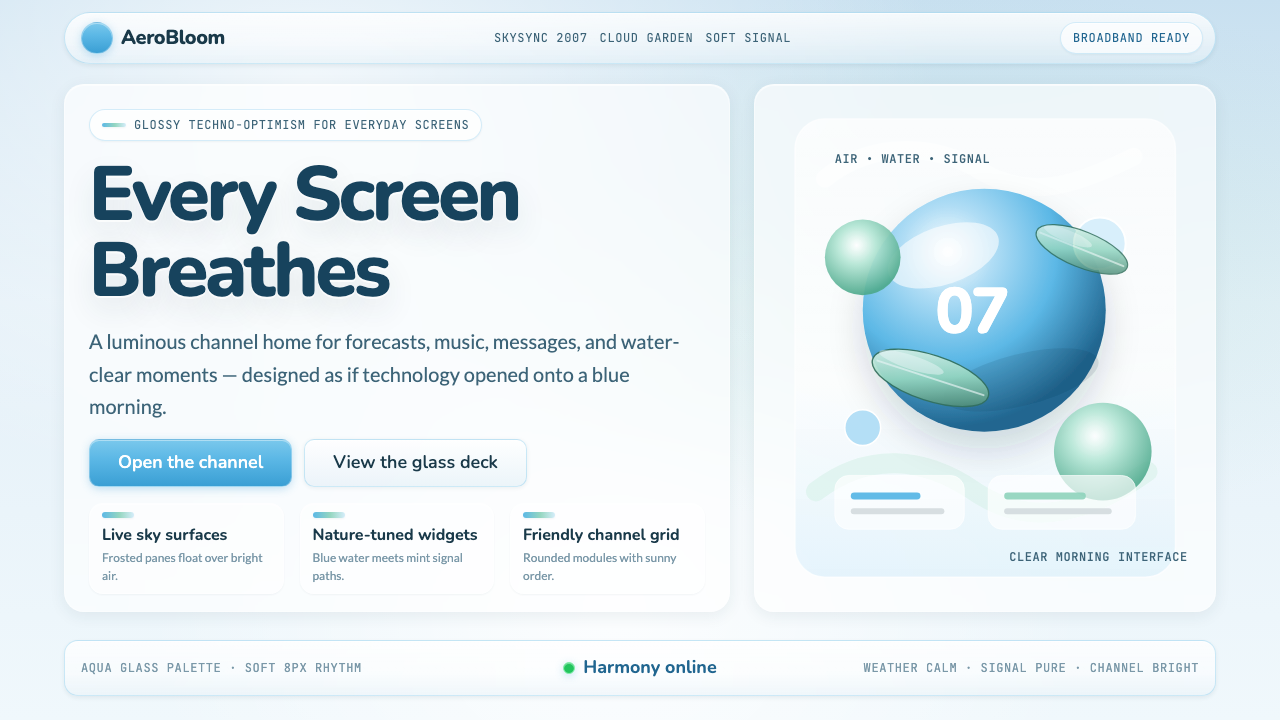 Frutiger Aero 2007Glossy techno-optimism. Translucent glass, photoreal skies, blue-greens — tec…
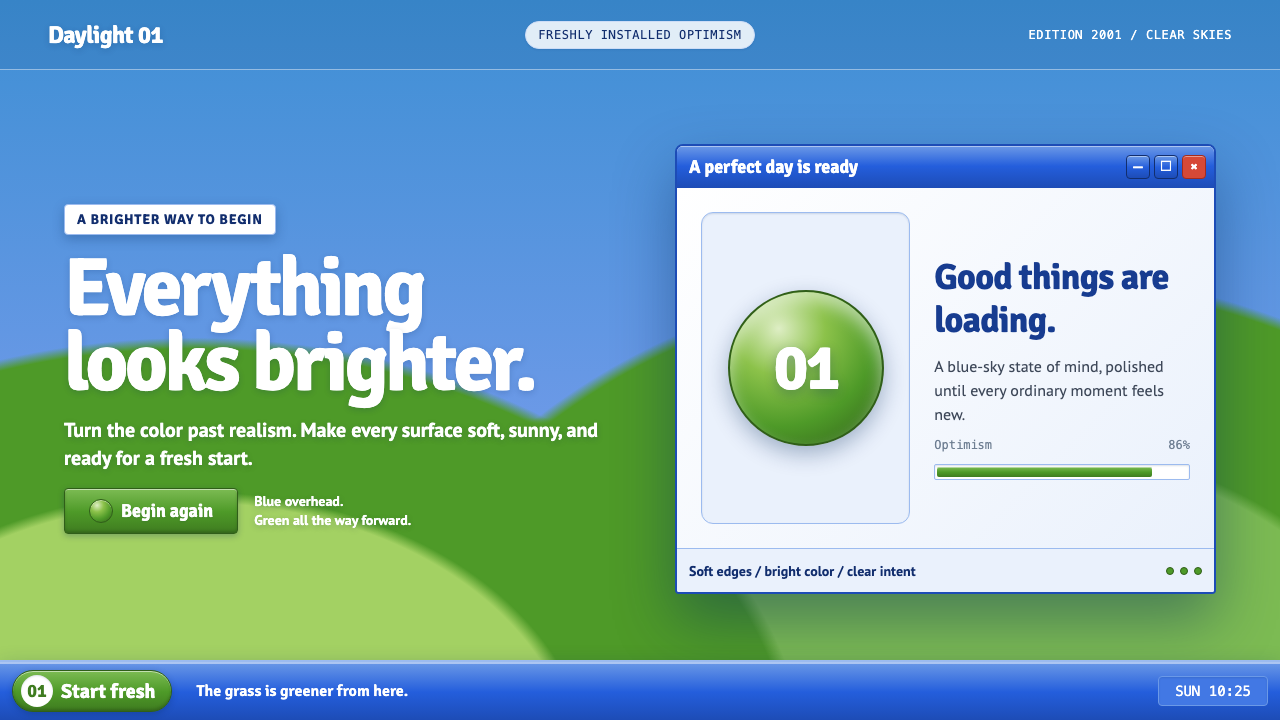 Windows XP Bliss (2001)Fresh-install optimism. Sky blue, hill green, and glossy gel chrome turn real…
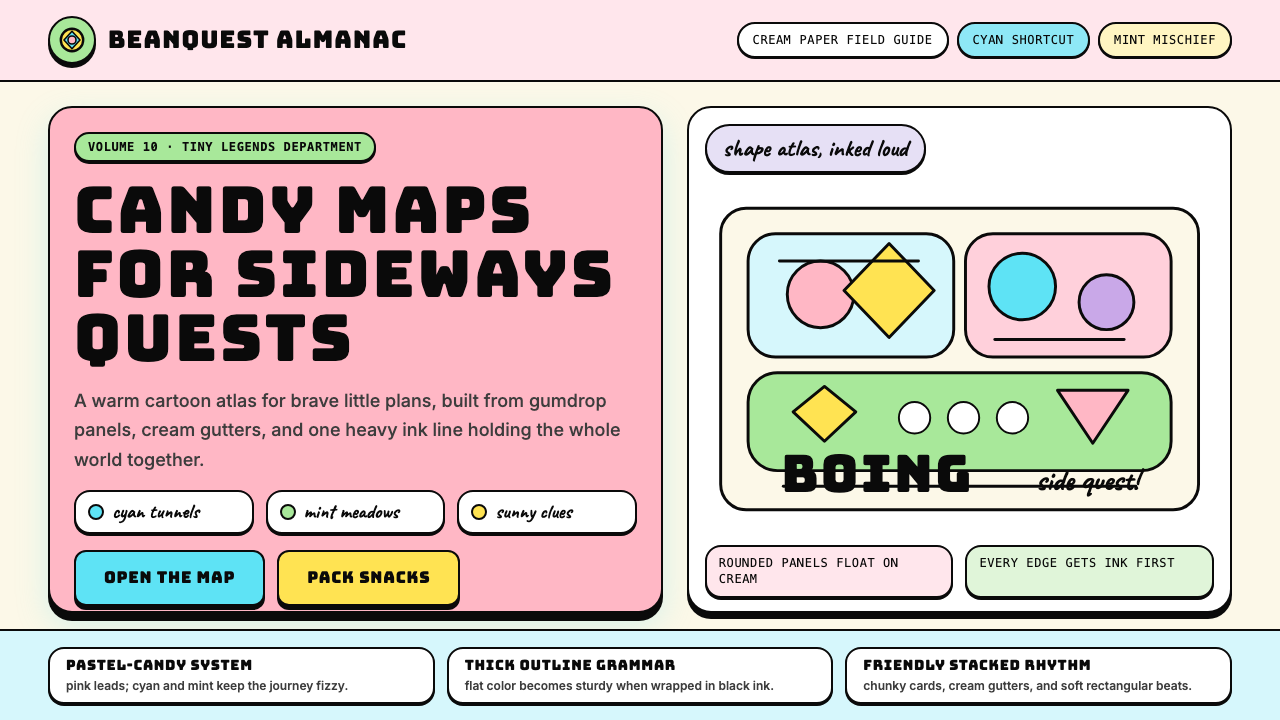 Adventure TimeCartoon warmth, inked loud. Cream gutters, candy pink, cyan and mint lock int…
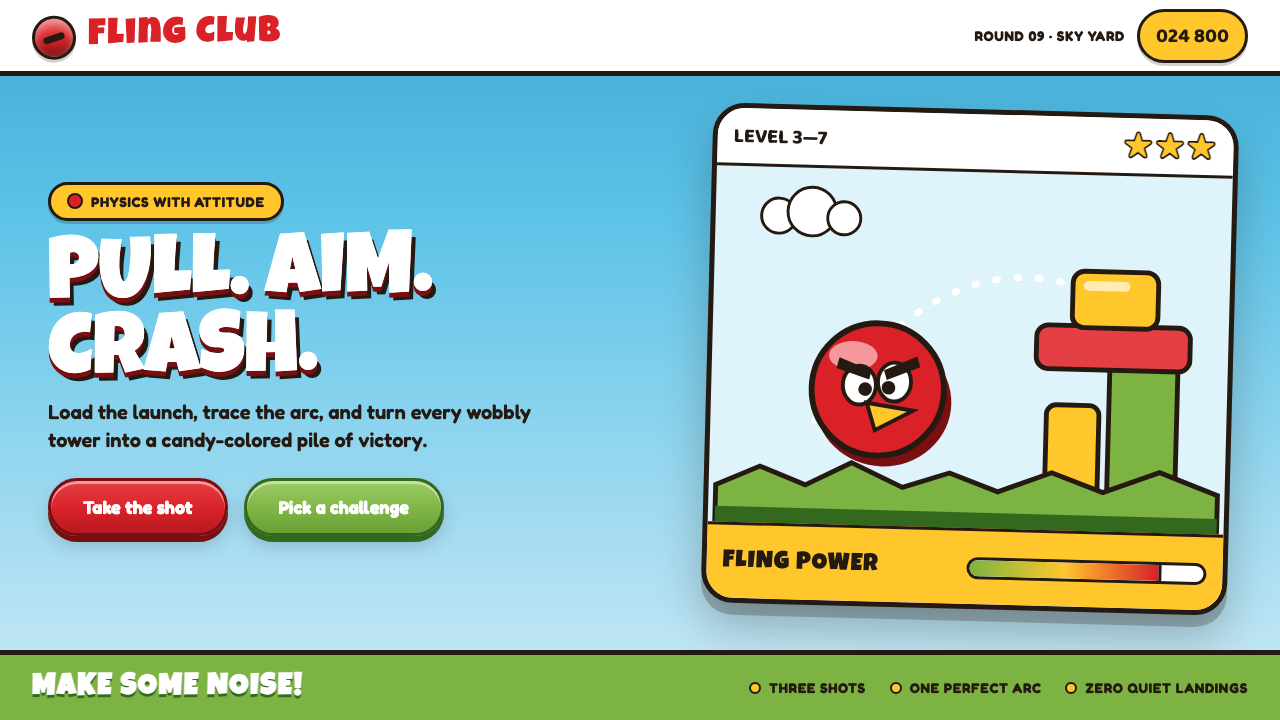 Angry Birds (2009)Adorable aggression takes flight. Candy primaries, chunky outlines, and a dot…