What is Frutiger Aero 2007?
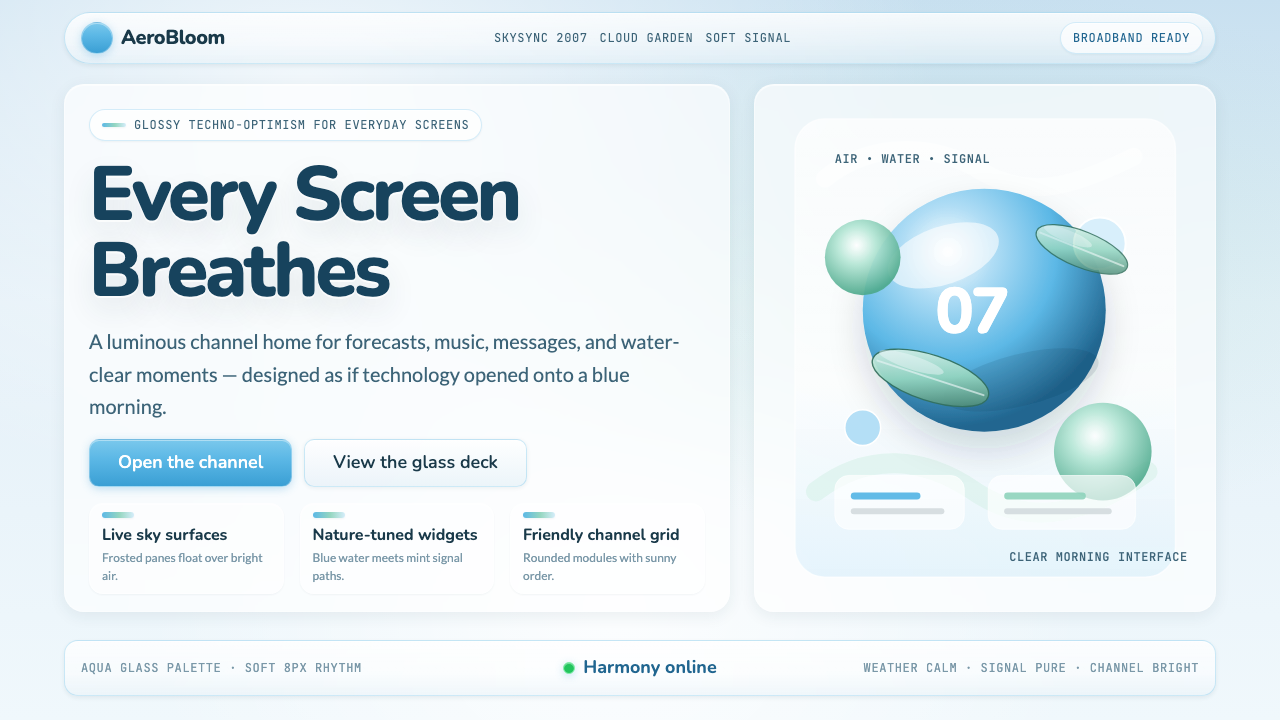
Frutiger Aero was the glossy, sky-drenched design language of the mid-2000s — a belief, rendered in translucent glass and blue-green light, that technology and nature could exist in luminous harmony.
Frutiger Aero 2007 in brief
Frutiger Aero is the name retroactively given to the dominant visual style of consumer technology between roughly 2004 and 2013. The aesthetic is built on a small number of immediately recognizable elements: translucent and glossy surfaces that simulate glass and liquid, photorealistic skies and water rendered as interface backgrounds, a palette anchored in luminous blue-greens and aquas, and soft specular highlights that give every button, icon, and panel the appearance of something freshly molded from light itself.
The name fuses two reference points. Adrian Frutiger was the Swiss typographer whose humanist typefaces — clean, legible, and rooted in a faith that letterforms should feel natural to the human eye — gave the style its first half. 'Aero' comes directly from Microsoft's Windows Vista interface theme of the same name, launched in 2007, which became the era's most widely distributed and recognized expression of the aesthetic. Together they name something that was never a formal movement: a shared mood, transmitted across corporate design teams, broadcast studios, consumer packaged goods, and game console interfaces, bound by a common optimism about what the near future looked like.
The style stood in explicit contrast to what came before and what came after. Before Frutiger Aero, digital interfaces were largely flat, boxy, and utilitarian — the visual vocabulary of the early-to-mid 1990s. After it, iOS 7's 2013 flat redesign triggered an industry-wide purge of glossiness, gradients, and skeuomorphic suggestion. The years in between belong to this aesthetic: a window in design history when screens were gaining resolution fast enough to render convincing material surfaces, and when the prevailing cultural mood — pre-financial crisis, early broadband, first smartphone — encouraged designers to imagine digital life as something genuinely beautiful.

Where does Frutiger Aero 2007 come from?
The roots of Frutiger Aero reach back to Apple's Aqua interface, introduced with Mac OS X in 2001. Aqua was the first widely distributed consumer operating system to stake its identity on simulated material richness: its buttons looked like water droplets, its scroll bars gleamed, its dock reflected icons as if sitting on a polished surface. Apple's design team, then operating under an aesthetic philosophy of 'lickable' interfaces, demonstrated that mass-market hardware could carry an image of sensory luxury. Aqua established the baseline assumptions that the rest of the industry would then amplify.
Microsoft's Aero theme for Windows Vista, launched to consumers in January 2007, became the aesthetic's definitive mass-market expression. The Vista Aero interface introduced translucent window borders — the 'glass' effect that gave users the impression of looking through frosted panes at the desktop beneath — alongside glowing taskbar buttons, smoothly animated transitions, and a general atmosphere of softness and light. Vista itself had a troubled reception, but its visual language was absorbed immediately and broadly: PC manufacturers shipped it on hundreds of millions of machines, and its palette of cool blues, slate grays, and glowing accents entered the visual vocabulary of an entire generation of desktop software, websites, and broadcast graphics.
The Nintendo Wii, launched in late 2006, brought the aesthetic into the living room in a different register. The Wii's channel interface and system menus used soft gradients, gentle glows, and a friendly rounded vocabulary that felt like a console designed for the whole family — approachable, clean, slightly luminous. At roughly the same time, British broadcasters including Sky Sports and BBC News were adopting similar visual grammars for their on-screen graphics packages: swooping translucent panels, glowing text treatments, and photorealistic environmental imagery used as motion backgrounds. The aesthetic was not confined to software; it was the house style of a technological moment.
Consumer packaged goods absorbed it too. Vitaminwater's packaging — photographed water in vivid fruit colors, clean sans-serif labeling, a sense of freshness engineered from color and light — is a physical-world analogue to the style's priorities. Mobile carrier advertising, energy drink branding, and early social media interfaces all pulled from the same visual well. What united them was a shared cultural proposition: technology was becoming beautiful, nature was becoming accessible through technology, and the future was bright, translucent, and blue-green. This optimism had a specific historical context — the mid-2000s, before the 2008 financial crisis and before social media's social costs became apparent — and when the context changed, the aesthetic changed with it.
What defines the Frutiger Aero 2007 look?
Translucent Glass Surfaces
The defining material metaphor of Frutiger Aero is glass: panels, windows, and interface elements are treated as if made from frosted or tinted transparent material, allowing the suggestion of depth and layering without fully revealing what lies beneath. This translucency is achieved through layered light effects rather than literal see-through compositing — what matters is the impression of a glassy, refractive surface. Highlights appear at the top edge of elements, shadows pool at the bottom, and the overall effect is of an interface floating just above its background rather than sitting flat against it.
Photorealistic Sky and Water
Natural imagery — specifically expansive blue skies, cumulus clouds, sunlit water, and green hillsides — appears throughout the aesthetic as background material, wallpaper, and decorative framing. These are not stylized or illustrated; they are photographic or rendered to photorealistic standards, lending an almost aspirational quality to digital environments. The repeated use of sky imagery in particular suggests boundlessness and possibility. Nature is not depicted as wild or untamed but as serene, clean, and perfectly lit — a vision of the natural world that technology has curated and made safely accessible.
Blue-Green Palette with Warm Accents
The dominant hue range runs from aquamarine through teal to sky blue — a family of colors that simultaneously evokes clear water, open sky, and clean technology. This chromatic territory feels both natural and synthetic, which is precisely the aesthetic's ambition. Warm accents — glowing oranges, lime greens, soft whites — punctuate the cool foundation without displacing it. Saturated color is applied at varying luminosities to create depth: lighter values for highlights and airy backgrounds, deeper values for shadow and grounding. The palette reads as optimistic and forward-facing rather than neutral or authoritative.
Specular Highlights and Gloss
Every surface in Frutiger Aero catches light. Buttons carry a bright highlight stripe across their upper third, suggesting a curved surface reflecting an overhead light source. Icons have a glossy cap — a teardrop or circular zone of concentrated brightness at the top. Badges and notification elements appear to be lacquered. This persistent application of specular highlights was the era's primary technique for communicating quality and interactivity: something that catches light seems alive, responsive, and worth touching. The highlight is not subtle; it is the foreground event of the design.
Soft Gradients and Luminous Depth
Whereas earlier interface design used hard edges and flat fills, Frutiger Aero suffuses almost every surface with gentle tonal gradation — lighter at top, darker at bottom, as if lit from above by a diffuse overhead source. These gradients are rarely dramatic; they exist to suggest volume and material substance rather than to create visual contrast. Backgrounds often feature radial glows emanating from a central light source, giving the compositional center a sense of warmth and luminosity. The cumulative effect is of a world that has been softly illuminated from within: everything glows slightly, nothing is harsh.
Humanist Legibility and Rounded Forms
Typography in the Frutiger Aero era leans toward clean, humanist letterforms with slightly rounded terminals — letterforms that feel approachable and warm rather than mechanically precise. Icons and interface controls follow the same logic: corners are rounded rather than sharp, shapes are organic enough to feel handcrafted but regular enough to feel engineered. This rounding is not aggressive in the way of later 'squircle' trends; it is a subtle softness applied to every edge that reinforces the broader aesthetic of comfort and luxury. The overall effect is of a designed world that wants you to touch it.
Nature-Technology Synthesis
Perhaps the deepest characteristic of Frutiger Aero is its central proposition: that technology and nature are not opposed but complementary, and that the designed artifact can express both simultaneously. Organic imagery — leaves, water, light, sky — appears inside or alongside synthetic material surfaces. Green energy iconography, water droplets on glass, aurora-like gradients: these combinations argue that the digital world is an extension of the natural one, not its replacement. This was a culturally specific optimism, characteristic of a moment when environmental awareness and technological enthusiasm had not yet come into sharp conflict.

Who shaped Frutiger Aero 2007?
The Swiss typographer whose name anchors half of the aesthetic's retroactive label never worked in digital interface design. Frutiger's significance is indirect but genuine: his humanist typefaces — designed with the conviction that letterforms should feel natural to the human eye and should prioritize legibility over expression — shaped the typographic sensibility of the entire era. The Frutiger typeface family, originally designed for Charles de Gaulle Airport's signage system in 1968 and widely licensed from the 1990s onward, became a default choice for corporations and institutions seeking a voice that was clean, modern, and approachable. When designers of the mid-2000s reached for type that felt simultaneously technical and warm, they reached for Frutiger or its direct descendants.
The team responsible for Windows Vista's Aero interface — working in Redmond across the mid-2000s under the broader Windows Vista development program — produced the most widely distributed single artifact of the Frutiger Aero aesthetic. The glass window chrome, the glowing taskbar, the soft drop shadows, the translucent start menu panel: these were design decisions made for a mainstream PC operating system that shipped on hundreds of millions of machines. Whatever its reception as a product, Vista Aero set the visual baseline for an era. The team's work demonstrates that aesthetic movements in the consumer technology space are often defined not by the most artistically ambitious efforts but by the ones that reach the largest audiences.
The Wii's channel-based interface, developed in Kyoto and launched in late 2006, represented a distinct and influential interpretation of the Frutiger Aero visual language. Where Microsoft's Vista Aero leaned into glass and shadow, the Wii interface opted for a warmer, softer expression: rounded white panels floating on a pale blue gradient, gentle glows rather than hard reflections, an atmosphere of invitation rather than sophistication. The Wii reached audiences — families, casual players, older users — who had no prior relationship with the aesthetic from personal computing, and its success demonstrated that the style's core associations (clean, modern, approachable, luminous) were legible across age groups and experience levels.
Apple's Aqua interface, introduced with Mac OS X in 2001 and refined through subsequent releases, established the foundational assumptions that the broader Frutiger Aero era would amplify. The Aqua team — working under a design philosophy that prized sensory richness and the 'lickable' quality of digital surfaces — demonstrated that operating system interfaces could be beautiful in an explicitly material, tactile sense: that buttons could look like candy, that scroll bars could gleam, that the desktop could feel like a lit stage rather than a gray utility space. This precedent was enormously influential, both directly (Apple devices carried Aqua throughout the period) and indirectly (it legitimized the premise that consumer-facing software should be visually pleasurable).
British broadcast design played a distinctive role in diffusing the Frutiger Aero aesthetic beyond the software world. The on-screen graphics packages developed by Sky Sports, BBC News, and other British broadcasters during the mid-2000s brought the style's key elements — translucent swooping panels, glowing text, photorealistic environmental imagery as animated backgrounds, blue-green and silver palettes — into tens of millions of living rooms every day. Broadcast graphics have their own production constraints and technical standards, and the fact that the aesthetic translated successfully from GUI design to motion graphics and television overlay work demonstrated its versatility. The broadcasters were not followers of a software trend; they were parallel contributors to a shared visual moment.
How do you use Frutiger Aero 2007 today?
Frutiger Aero is a style rooted in a specific historical optimism, and applying it today requires understanding what that optimism communicated — and choosing deliberately whether to invoke it straight, ironically, or as nostalgic homage. In contemporary presentation design, the aesthetic works best when the content itself calls for a sense of technological aspiration or forward momentum: technology company keynote decks, climate-tech funding presentations, product launches framing innovation as inherently positive. Cover slides benefit most directly: a full-bleed photorealistic sky or water background, a large translucent panel carrying the title in clean humanist type, and a single glowing accent element create an immediate sense of luminous arrival. Content slides should carry the translucency forward with panel-style containers rather than flat white rectangles, with type set against soft gradient fields rather than flat grounds.
For web UI work — particularly dashboards, SaaS product marketing pages, and pricing tiers — Frutiger Aero offers a distinct alternative to the flat and ultra-minimal aesthetics that have dominated since 2013. The approach is to treat UI components as physical objects: cards with soft gloss and a gentle top highlight, navigation bars with a frosted-glass treatment that lets the background bleed through slightly, buttons with a subtle gradient from a brighter top to a slightly deeper bottom. Interactive states — hover, active, focus — should feel materially responsive, as if the surface is reacting to touch. The palette anchors in cool blues and aquas, with white used generously for breathing room and warm accents used sparingly for calls to action.
In editorial and marketing contexts, the style supports a register of premium technological promise. Feature articles about innovation, sustainability reports from technology companies, and brand campaigns positioning products within a nature-and-technology narrative all benefit from the aesthetic's core visual vocabulary. A spreads layout might use a full-bleed sky photograph as the background field, with article text set in a wide translucent overlay panel. Marketing pages work well with alternating section backgrounds: a pale sky-blue gradient followed by a near-white section followed by a deeper teal — each transition feeling like moving through atmospheric layers. Headline typography should be large and confident, set in a clean humanist face, with no serif and no display-style decoration.
Data visualization within the Frutiger Aero framework takes on a luminous, immersive quality. Charts and graphs are treated as illuminated objects: line graphs glow slightly against dark gradient backgrounds, bar charts use the blue-green palette with graduated fills from lighter to deeper tones, area charts carry a gentle transparency that allows underlying grid lines to show through as if seen through water. This approach is particularly effective in executive-facing dashboards and annual report data pages, where the goal is to make data feel significant and considered rather than utilitarian.
A common mistake when applying Frutiger Aero is mistaking surface ornament for the aesthetic itself — adding gloss highlights and gradient fills without the underlying compositional logic that makes them coherent. The style's gloss elements work because they suggest material consistency: every surface catches light from the same implied direction, every gradient moves light-to-dark from top to bottom. Inconsistent highlight directions, gradients that run in different orientations, or photorealistic nature imagery placed next to flat-design UI components create a visual incoherence that reads as dated rather than nostalgic. Similarly, applying the full palette — cool blues, warm greens, glowing oranges, and lime accents — simultaneously without a clear hierarchy produces visual noise rather than techno-optimism. Anchor the composition in one or two hues from the blue-green range, and treat all others as punctuation.

Frutiger Aero 2007 — FAQ
Is Frutiger Aero the same as skeuomorphism?
They overlap but are not identical. Skeuomorphism is the broader design principle of making digital interfaces look and behave like physical objects — leather-textured calendars, felt-lined game center tables, realistic toggle switches. Frutiger Aero shares skeuomorphism's interest in material richness and tactile suggestion but is more specifically an atmospheric and chromatic sensibility: it is concerned with light, translucency, and the color of sky and water rather than with imitating specific physical objects. A skeuomorphic design might imitate a legal pad; a Frutiger Aero design immerses the user in the feeling of a clear day. Many products of the era combined both tendencies, which is why they are often conflated, but the retronym 'Frutiger Aero' points to the atmospheric and luminous qualities specifically.
Why did the style disappear so quickly after 2013?
iOS 7, released in September 2013, was the triggering event, but the conditions for the style's decline had been accumulating for years. Mobile screens had become the dominant computing surface, and the glossy, gradient-heavy aesthetic designed for large-format desktop displays did not translate well to small screens where every pixel needed to work harder. The style also carried cultural baggage by 2013: it was associated with a mid-2000s optimism that the 2008 financial crisis had complicated, and its visual references — aquamarine skies, clean technology, luminous promise — could read as naive given the intervening years. Apple's flat redesign gave the industry a coordinating mechanism: once the most influential platform shifted, other platforms, software developers, and brand designers followed quickly. The transition was unusually rapid because the aesthetic had always been defined by the platforms rather than by a principled design movement.
How is the current Gen Z nostalgia for Frutiger Aero different from simply reviving it?
The nostalgia operates with an awareness of the gap between the aesthetic and the present that the original did not have. When designers in 2006 produced Frutiger Aero visuals, they were expressing a sincere belief in a techno-optimist future; when a designer in 2024 recreates those visuals for a TikTok aesthetic or a brand identity, the mood is more complex — a longing for a moment when optimism felt possible, combined with an ironic distance from its naivety. The resulting work often exaggerates the style's most recognizable elements (brighter glows, more saturated aquas, more obviously photorealistic skies) rather than reproducing them with period accuracy, because the goal is to evoke a feeling rather than to document a historical moment. This is nostalgia as emotional argument, not historical reconstruction.
Can Frutiger Aero work for brands that need to feel trustworthy and serious, not just aspirational?
Yes, with calibration. The aesthetic has two registers: the exuberant, glossy consumer-facing version seen in Vitaminwater and early social media, and the more composed, luminous-but-restrained version seen in enterprise software, hospital signage systems, and institutional communications of the same era. The latter register is entirely usable for serious applications. The key adjustments are: reducing the saturation of the blue-green palette toward a more muted, professional range; limiting gloss highlights to structural accents rather than applying them to every element; choosing photography that feels documentary rather than aspirational; and ensuring that the translucency effects serve clarity rather than decoration. In this register, the style communicates technology, precision, and environmental responsibility — values that are quite compatible with institutional trust.
What is the single most common failure mode when applying this aesthetic?
Applying the visual surface features without the underlying light logic. Frutiger Aero works as a coherent aesthetic because it implies a consistent light environment: overhead, diffuse, slightly warm, and omnipresent. Every highlight, every gradient, every translucent surface is a consequence of that implied light source. When designers add gloss highlights pointing in different directions, combine gradients that run in conflicting orientations, or mix photorealistic nature imagery with unlit flat elements, they break the implied physics that make the aesthetic feel intentional. The result looks like a collection of glossy parts rather than a designed world. Before adding any gloss or gradient, establish where the light is coming from, and apply every surface effect as if the same sun is shining on everything in the composition.
Related design styles
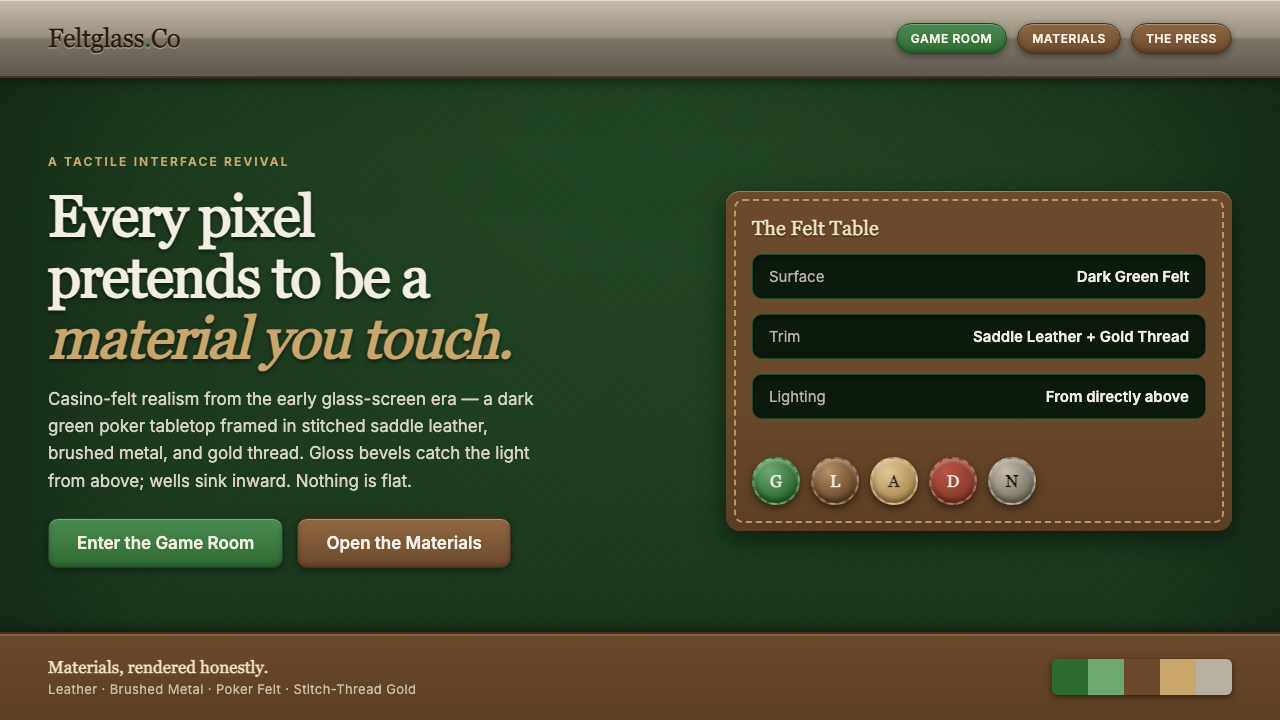 Skeuomorphic iOSEvery pixel pretends to be touchable. Dark green poker felt, stitched leather…
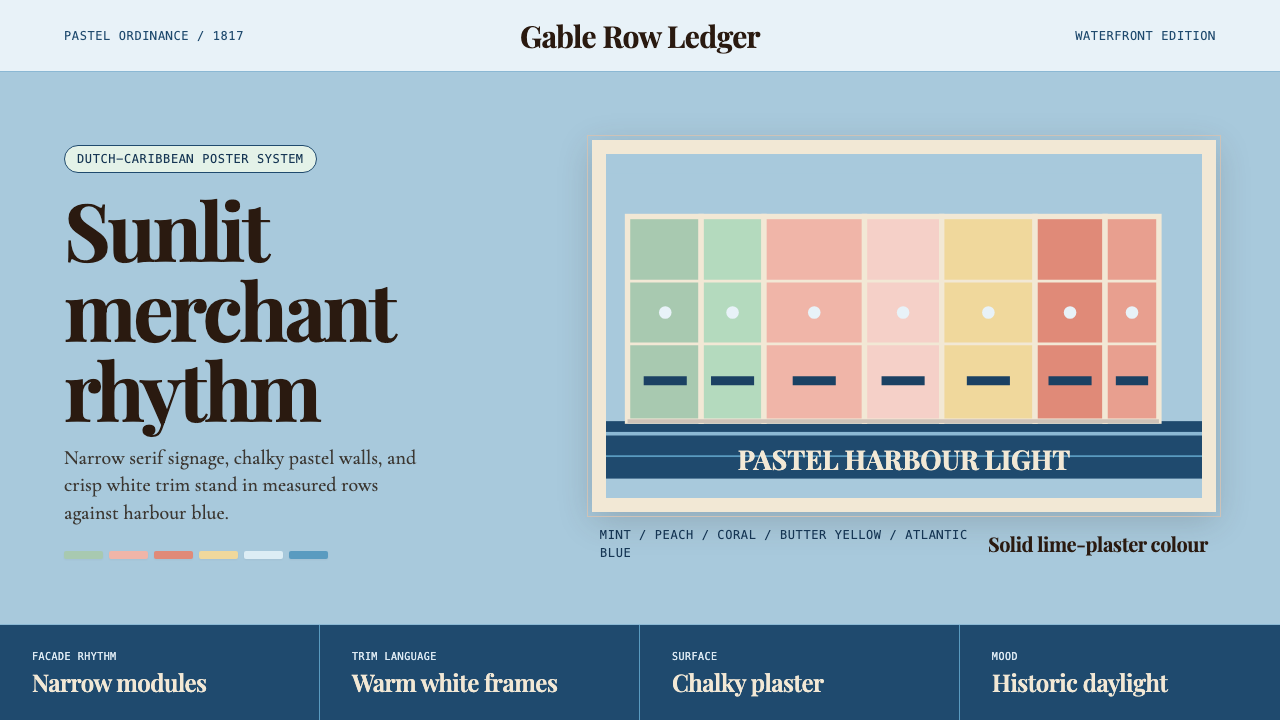 Curaçao Handelskade PastelPastel order feels sunlit. Coral, mint, and serif gables march across sky blu…
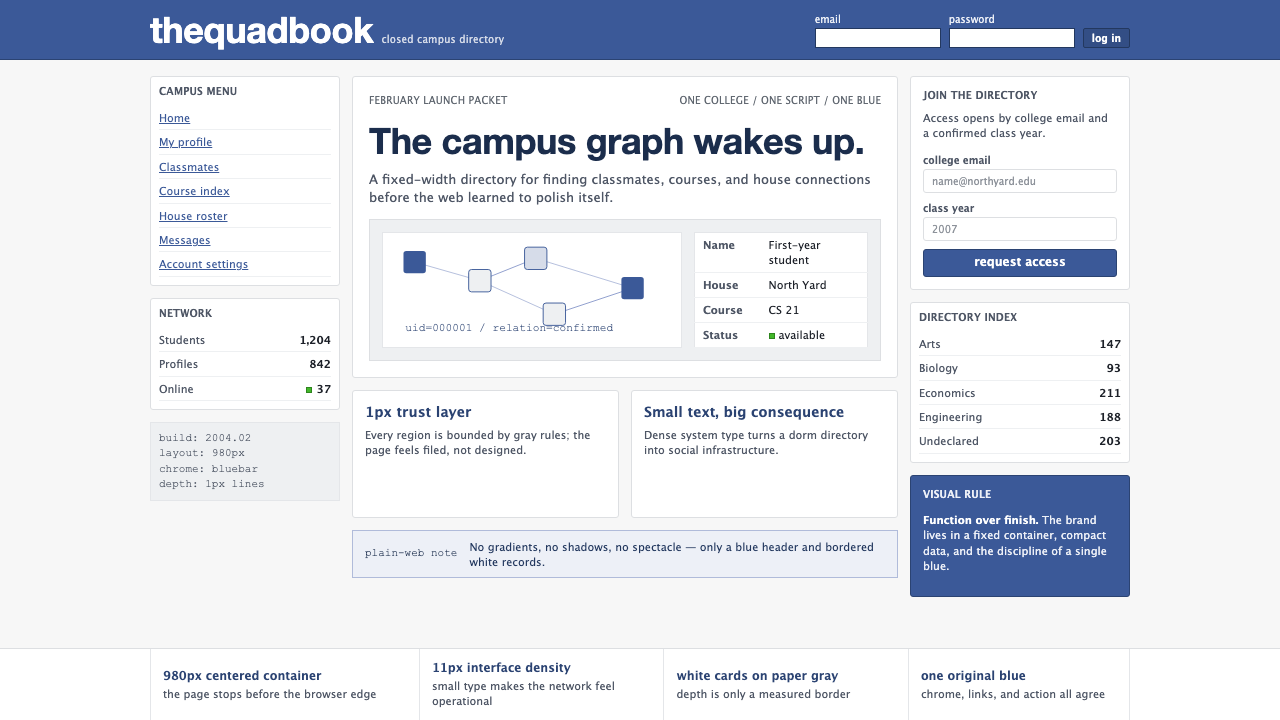 Facebook 2004Dorm-web austerity. Original blue, 980px grid, 1px borders, tiny Lucida Grand…
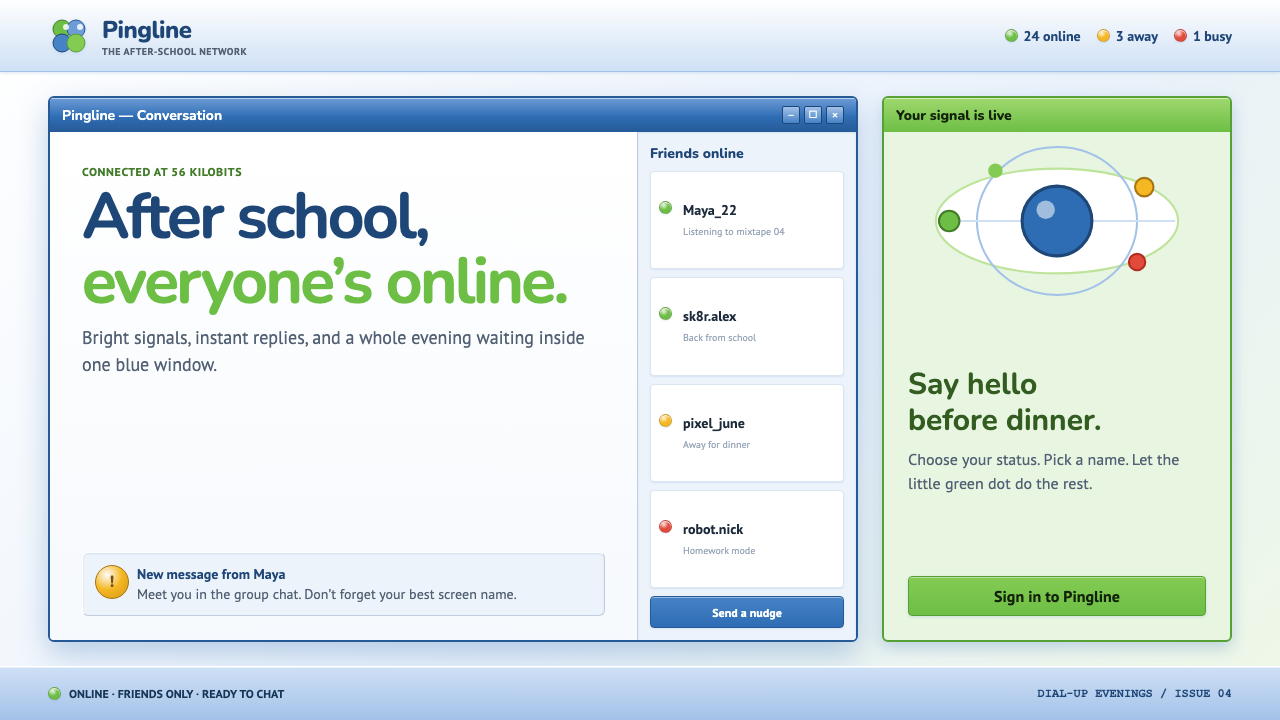 MSN Messenger (2001)Dial-up optimism, online. Luna-blue chrome and bright status dots keep every…
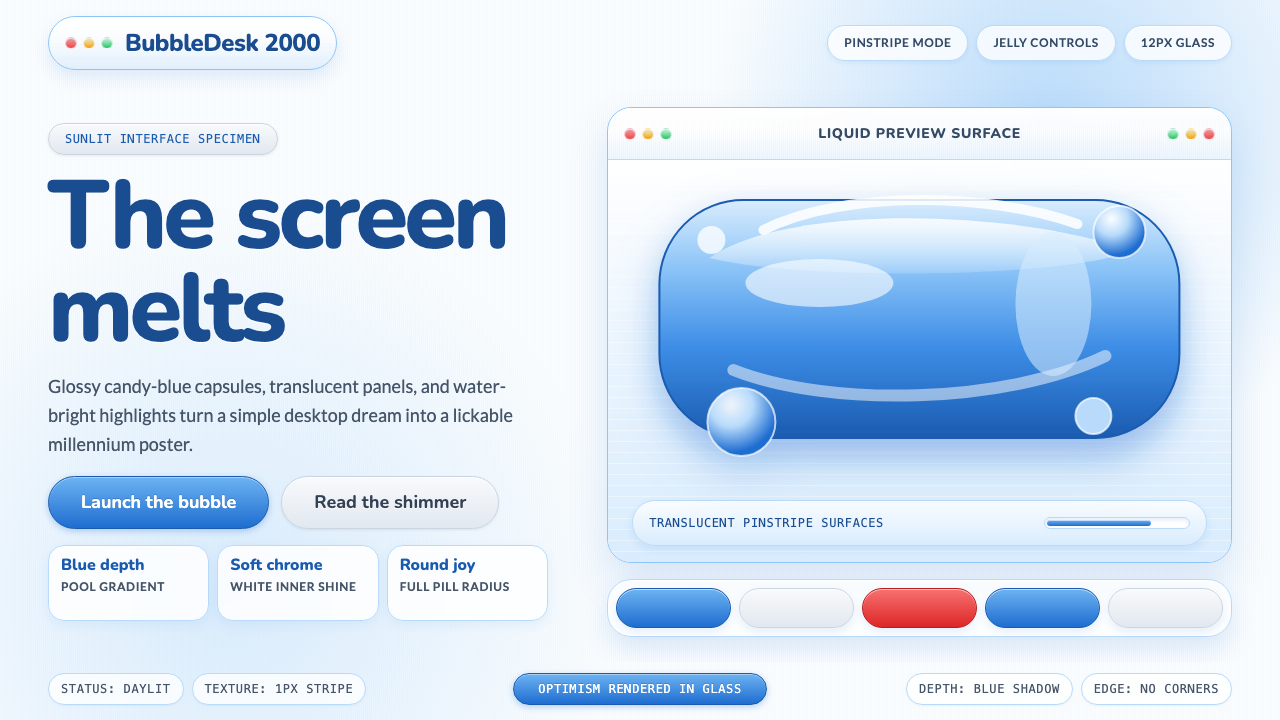 Y2K Aqua 2000Optimism looks lickable. Candy-blue pills, pinstripes, and glass panels gleam…
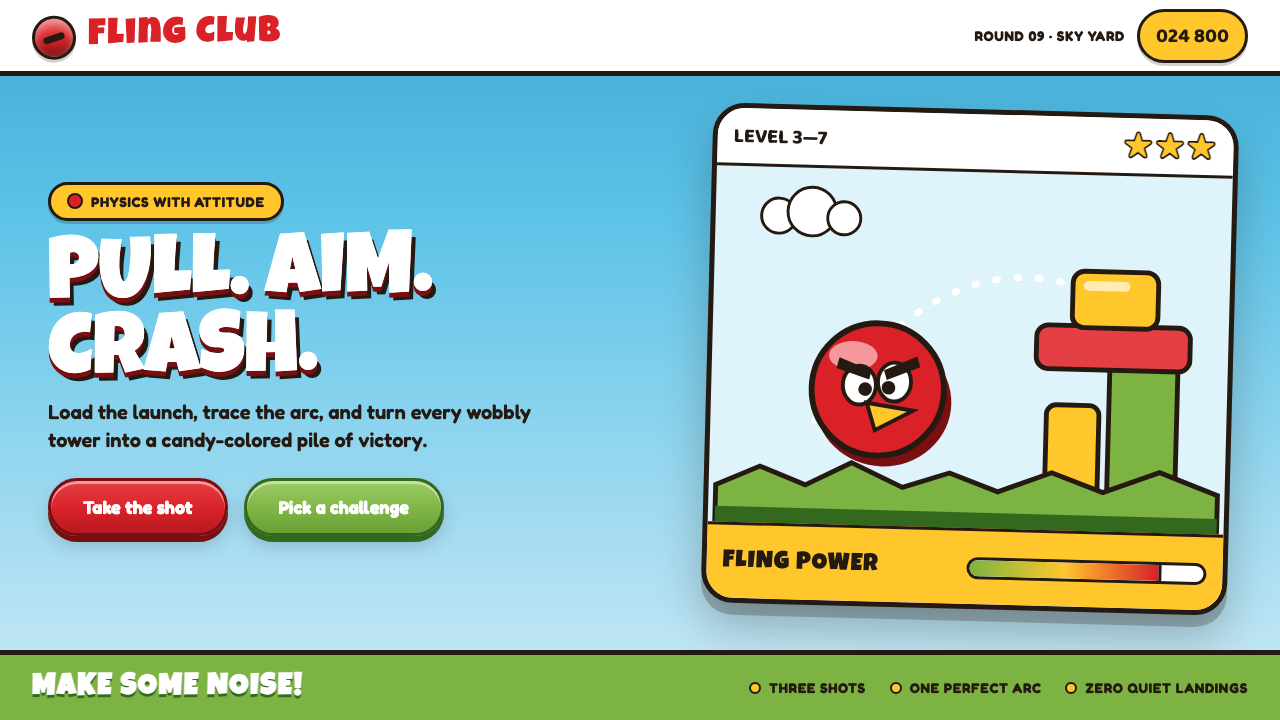 Angry Birds (2009)Adorable aggression takes flight. Candy primaries, chunky outlines, and a dot…