What is Kit Kat Japan Collector?
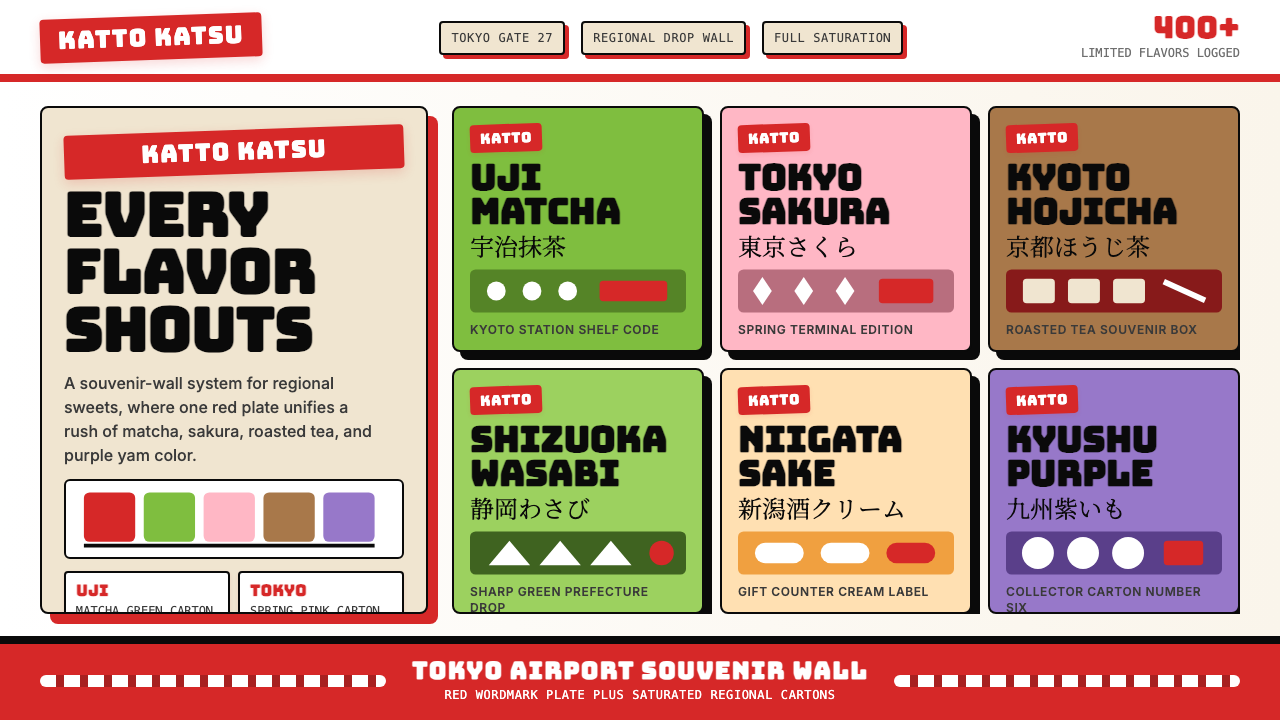
Japan's Kit Kat turned a humble chocolate bar into a souvenir mythology — saturated flavor colors, a red wordmark, and four hundred limited editions that made airport shelves into collector walls.
Kit Kat Japan Collector in brief
Kit Kat Japan Collector is a visual language derived directly from the packaging system that Nestlé Japan developed for its regional limited-edition Kit Kat line, which launched in earnest in the early 2000s and grew to more than four hundred distinct flavors by the 2020s. Each flavor receives its own dominant packaging color — matcha green, sakura pink, hojicha amber, wasabi yellow-green — and that color saturates the entire box face while a shared red Kit Kat wordmark anchors every variant to a single recognizable family.
The aesthetic is deliberately populist and celebratory rather than restrained or aspirational. Where luxury food brands seek quiet elegance — muted palettes, generous white space, understated type — the Kit Kat Japan system does the opposite. Chunky display lettering shouts flavor names. Colors are pushed to maximum vibrancy. Regional illustrations and flavor cues compete cheerfully for attention on a shelf where dozens of variants stand side by side. The visual experience is the souvenir wall itself: abundant, varied, and unapologetically loud.
As a design style, Kit Kat Japan Collector translates this energy into a set of repeatable principles: high-saturation single-color fields as primary backgrounds, a bold anchor mark or wordmark that unifies all variants, flavor or category names set in chunky rounded display type, and a structured grid that organizes the chaos into rows of clearly distinct but family-coherent tiles. The result is a system that feels festive and collectable while remaining instantly legible from a distance.

Where does Kit Kat Japan Collector come from?
The Kit Kat brand arrived in Japan in 1973, imported by Fujiya and later managed directly by Nestlé Japan from 1988. For its first decades it was a conventional confectionery product, sold in standard milk chocolate and dark chocolate formats, with no particular claim to cultural significance. The transformation began in the late 1990s and accelerated sharply after 2000, when Nestlé Japan began experimenting with regional flavors tied to Japan's deep tradition of omiyage — the obligation to bring back local food gifts from travel.
The word 'Kit Kat' is phonetically close to 'kitto katsu' in Japanese, an informal expression meaning 'surely win' or 'you'll definitely succeed.' This coincidence gave the bar a built-in association with good luck and exam season encouragement, which Nestlé Japan leaned into deliberately. University entrance exam periods — a source of intense national anxiety — became a key sales moment, with Kit Kat positioned as a gift token of encouragement. The good-luck framing aligned perfectly with omiyage culture: a regionally distinctive, giftable, affordable confection that carries a benevolent message.
The regional flavor strategy formalized and expanded under Nestlé Japan's brand team in the 2000s, with the pastry chef and culinary director Yasumasa Takagi becoming a notable creative collaborator on prestige flavor development. Takagi worked on upscale variants — including sake, roasted green tea, and specialty strawberry editions — that positioned the brand at the intersection of high craft and mass accessibility. The packaging visual language evolved alongside: each regional or seasonal flavor was assigned its own saturated color identity, creating a coherent family that was nevertheless endlessly varied on the shelf.
By the 2010s the system had grown to encompass flavors spanning every region of Japan — shiro strawberry from Hokkaido, purple sweet potato from Okinawa, wasabi from Shizuoka, yuzu from Kochi — and the Tokyo airport Kit Kat specialty stores had become a destination in their own right. The souvenir wall aesthetic — floor-to-ceiling shelves of color-coded boxes, each announcing its flavor in bold type — was no longer an incidental display arrangement but a designed experience that the brand actively cultivated. That wall became the visual template that Kit Kat Japan Collector, as a design language, reproduces and celebrates.
What defines the Kit Kat Japan Collector look?
Saturated Single-Hue Fields
Each variant in the Kit Kat Japan system claims one dominant hue and pushes it to near-maximum saturation across the entire packaging face. Matcha reads as a vivid, slightly dusty green; sakura as a warm, full-bodied pink; hojicha as a deep amber brown; strawberry as a candy-bright red. These colors are not muted or tinted toward neutrality — they are declarative statements of flavor identity. In applied design, this translates to full-bleed color panels that leave no ambiguity about which category or variant a given tile represents.
Unified Anchor Mark
Across every variant and every hue, the Kit Kat red wordmark appears in a consistent position and weight. This single repeated element is what holds the system together as a family — it tells the viewer that all these wildly different colored boxes are part of one brand, one collection. In design terms, this is a master-brand anchoring device: a fixed visual signature that absorbs the variety of everything around it without changing itself. Applied to other systems, the equivalent is a logo or symbol that appears identically on every variant regardless of background color.
Chunky Rounded Display Type
Flavor names and category labels in the Kit Kat Japan system are set in type that is visibly heavy, rounded at the corners or terminals, and sized for impact rather than elegance. The letterforms communicate friendliness and confidence at the same time — they are not delicate script fonts associated with premium products, nor are they the neutral sans-serifs of utilitarian design. They occupy enough space to be read from across a shelf, and their roundness gives them a tactile, almost edible quality that reinforces the confectionery context.
Tile Grid Structure
The souvenir wall experience is organized by an implicit grid — rows and columns of same-size boxes, each a distinct color block, collectively forming a mosaic. This tile logic is foundational to the aesthetic. Individual tiles (boxes, cards, product panels) are self-contained color environments; the grid that holds them creates rhythm and allows comparison. The system tolerates extreme color diversity from tile to tile because each tile is internally consistent. In UI and presentation contexts, this translates to card-based layouts where each card carries a full-bleed background in its category color.
Regional and Seasonal Storytelling
Each Kit Kat Japan variant tells a geographic or seasonal story through its color and supporting illustration or imagery. A matcha variant evokes Kyoto and spring tea harvest. A sakura variant signals a specific window of the Japanese year. This layering of place and time onto a color is what makes the system feel encyclopedic and collectable rather than merely varied. In design terms, it means each tile carries metadata — a story — that the color alone begins to encode. Over time, the collection of tiles becomes a map of flavors, places, and seasons.
Joyful Maximalism Within a System
The Kit Kat Japan visual language sits in deliberate opposition to refined-luxury minimalism. It does not seek tranquility or suggest exclusivity through negative space and whispered type. Instead it embraces fullness: the box face is occupied, the color is bold, the type is confident, the illustration is present. This is maximalism, but it is maximalism with structure — every variant follows the same compositional rules even as it screams a different flavor in a different hue. The loudness is the point; the system is what makes the loudness cohere.
Collectibility as a Design Intent
The Kit Kat Japan system is explicitly designed to be collected, not just consumed. Limited regional editions, seasonal releases, and packaging variations all reinforce the sense that each variant is a discrete, finite artifact worth preserving. The tile aesthetic — each box a self-contained color swatch — translates perfectly to physical display: a shelf of sorted Kit Kat boxes is a visually satisfying color progression. This collectibility principle has design implications: variants must be visually distinct enough to justify acquisition, but coherent enough to read as a unified series when arranged together.

Who shaped Kit Kat Japan Collector?
The Nestlé Japan brand team, working from the early 2000s onward, developed and systematized the regional limited-edition strategy that transformed Kit Kat from a standard confectionery line into a cultural artifact. Their key insight was to link the product to the omiyage gift-giving tradition and to the phonetic good-luck association with 'kitto katsu.' They oversaw the development of the packaging visual language — the saturated color-per-flavor system, the consistent red wordmark, the tile-like shelf presentation — that became both the product's commercial engine and its aesthetic identity.
Yasumasa Takagi, a celebrated Japanese pastry chef, collaborated with Nestlé Japan on the development of high-end prestige Kit Kat variants, including the critically acclaimed Bake! line and various limited specialty flavors. His involvement elevated the brand's credibility in culinary circles while extending the flavor palette into territory — sake, roasted green tea, rare regional fruits — that reinforced the system's encyclopedic and collectable quality. His work demonstrated that the Kit Kat Japan project could span both mass-market accessibility and artisanal craft.
Not a single person but a designed environment: the Kit Kat specialty stores in Tokyo Narita, Haneda, and other major Japanese airports became a crucial site for the brand's visual language to fully materialize. These stores, with their wall-to-wall shelving of color-coded variants, created the souvenir wall experience that defines the aesthetic. They also turned Kit Kat into a premium souvenir category, competing with traditional crafts and regional sweets as a culturally specific, giftable artifact. The airport retail format is the closest physical equivalent of the tile-grid logic that the design style reproduces.
The omiyage custom — the social obligation to bring back locally distinctive food gifts from travel — is not a designer but a cultural force that shaped the entire Kit Kat Japan system from the outside. By building a product that plugged directly into this obligation, Nestlé Japan created demand that was self-renewing: every region needed its own flavor, every season needed its variant, every traveler needed a box. The design system's emphasis on regional color-coding and shelf variety is a direct visual translation of omiyage logic: a gift should be unmistakably of a place, and a shelf of gifts should display that variety proudly.
How do you use Kit Kat Japan Collector today?
Kit Kat Japan Collector is a high-energy system best deployed when the goal is to make a collection feel celebratory, distinct, and browsable. Before applying it, identify whether your content actually has a collection logic: multiple variants, categories, or options that benefit from being color-differentiated and displayed together. If you are designing a single-product page or a minimal informational layout, this is the wrong system. Where it works brilliantly is anywhere you need the viewer to feel like a collector choosing among delightful, equally-valid options — a flavor is a flavor, a plan is a plan, a region is a region.
For presentation slides, Kit Kat Japan Collector is most effective on cover pages and collection overview slides. A cover built on this system uses one vivid full-bleed background color to anchor the mood, sets the presentation title in chunky display type large enough to read from a distance, and places a unifying logo or wordmark in a fixed corner. Collection overview slides benefit from the tile-grid format: each category, product, or section gets its own color panel in a two-by-three or three-by-four grid. Data slides should be treated carefully — the high saturation can overwhelm quantitative content — so use the color system for category labels and chart legends while keeping chart bodies on a near-white or cream ground.
For web interfaces, the style is a natural fit for category landing pages, flavor or product selectors, pricing tiers, and marketplace browsing experiences. The tile-grid logic maps directly to card-based UI: each card carries its category color as a full-bleed header or background, the card title sits in bold rounded type, and the family is unified by a consistent badge or mark in the brand anchor color. Navigation and body text should be set on a neutral ground — the saturated tiles need breathing room between them, and a neutral global background acts as the mortar that holds the mosaic together. Interactive states (hover, selected) can be indicated by a border in the anchor color rather than by changing the tile color.
For editorial and marketing work, the system supports product launch announcements, seasonal campaign pages, and regional feature stories where multiple subjects need equal visual weight. A campaign page in this style alternates saturated color sections — each section a different hue representing a flavor, region, or season — with a repeated header element in the anchor color that stitches the scroll experience together. Marketing emails work well with a single-tile approach: one vivid background color per email, flavor name in large display type, and a short description block. Avoid building long-form editorial in this style — dense body text on saturated backgrounds strains readability quickly.
The most common mistake when applying Kit Kat Japan Collector is treating the saturation as a license to mix all colors simultaneously at full intensity across a single composition. The system achieves coherence because each tile is a single-color environment — the chaos is organized, not compounded. In practice, this means one dominant hue per slide, card, or section, with the anchor mark providing the only consistent cross-color element. A second mistake is abandoning the grid: the tile system only reads as a collection when items are arranged in a structured, regular layout. Irregular placements dissolve the mosaic logic and turn the high saturation into visual noise rather than organized abundance.

Kit Kat Japan Collector — FAQ
Is this style actually minimalist, or is it the opposite?
It is the opposite of minimalism in spirit, though it is minimal in element count. Kit Kat Japan Collector uses few types of elements — a color field, a mark, a flavor name, sometimes an illustration — but pushes each of them to maximum presence. Minimalism reduces saturation, scale, and density to achieve quiet; this system reduces element variety but maxes out intensity. The result reads as celebratory maximalism even though each individual tile contains relatively few components. If your instinct is to dial things back, add white space, and lower saturation, you are moving toward minimalism and away from this style.
Can this style work for a serious or professional context, like enterprise software?
With careful calibration, yes — but the default energy of the system runs against enterprise conventions. The system works in enterprise contexts when it is used for a specific bounded purpose: a category selector, an onboarding flow where users choose a plan or workspace type, a product catalog within a larger neutral-toned application. In those cases, the saturated tile grid signals 'choose your flavor' in a way that is legible and even playful without undermining the rest of the interface. What does not work is applying it globally to an enterprise product — high saturation across an entire dashboard creates fatigue and undermines data legibility. Treat it as an accent mode, not a global theme.
How do you handle typography in this style without it becoming overwhelming?
The key is to treat type as a supporting element within the color field, not as a competing layer on top of it. In the Kit Kat Japan packaging, the flavor name is large and bold, but it occupies a fraction of the box face — the color field remains the dominant visual element. In applied design, this means the card title or label should be sized for confident readability rather than for maximum impact, and the body text (if any) should be set in a clean, undecorated weight on the color background. Avoid decorative or script type — the rounded display style is appropriate for the hero label, but body and supporting text should be restrained. White or near-white type on saturated backgrounds almost always outperforms dark type for legibility and visual balance.
What is the difference between this style and generic 'colorful card' design?
The difference is system coherence and the anchor mark. Generic colorful card design assigns colors to categories for differentiation, but the cards often lack a unifying element that reads as family membership — each card is just a different color. Kit Kat Japan Collector adds two structural layers: an anchor mark that appears identically on every tile regardless of its background color, and a consistent compositional template (color field, flavor label in the same position and weight, mark in the same corner) that makes every variant feel like part of a curated series. The analogy is the difference between a drawer full of mismatched socks and a sock collection displayed in a grid — both have variety, but only one has system.
Does this style require actual product illustrations or photos to work?
No — the system works with color and type alone, and in many contexts that is the cleaner application. The Kit Kat Japan packaging does use flavor illustrations and photography, but these serve as supporting storytellers rather than structural elements. In UI and presentation contexts, a tile that is simply a saturated color field with a bold label and an anchor mark already carries the full visual logic of the system. Illustrations can add richness and regional specificity when the content calls for it — a regional flavors page might benefit from small local motifs — but they are never required. The color itself does the primary communicative work; everything else is embellishment.
Related design styles
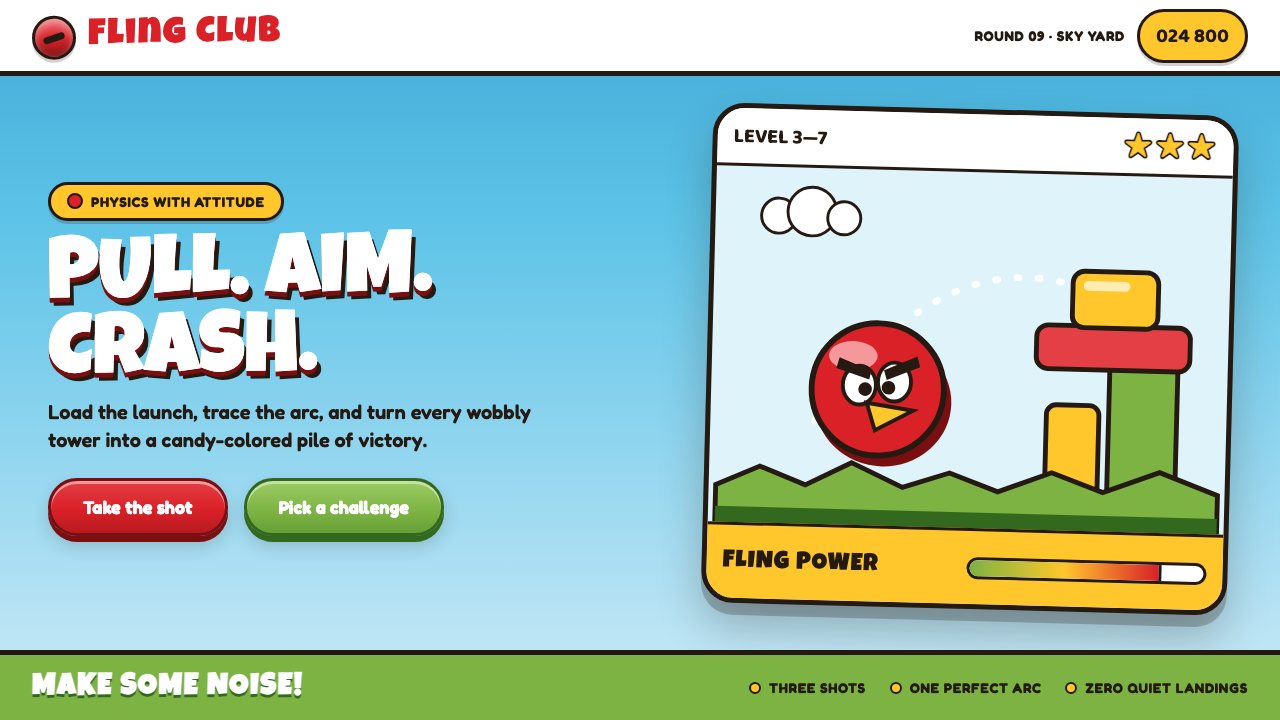 Angry Birds (2009)Adorable aggression takes flight. Candy primaries, chunky outlines, and a dot…
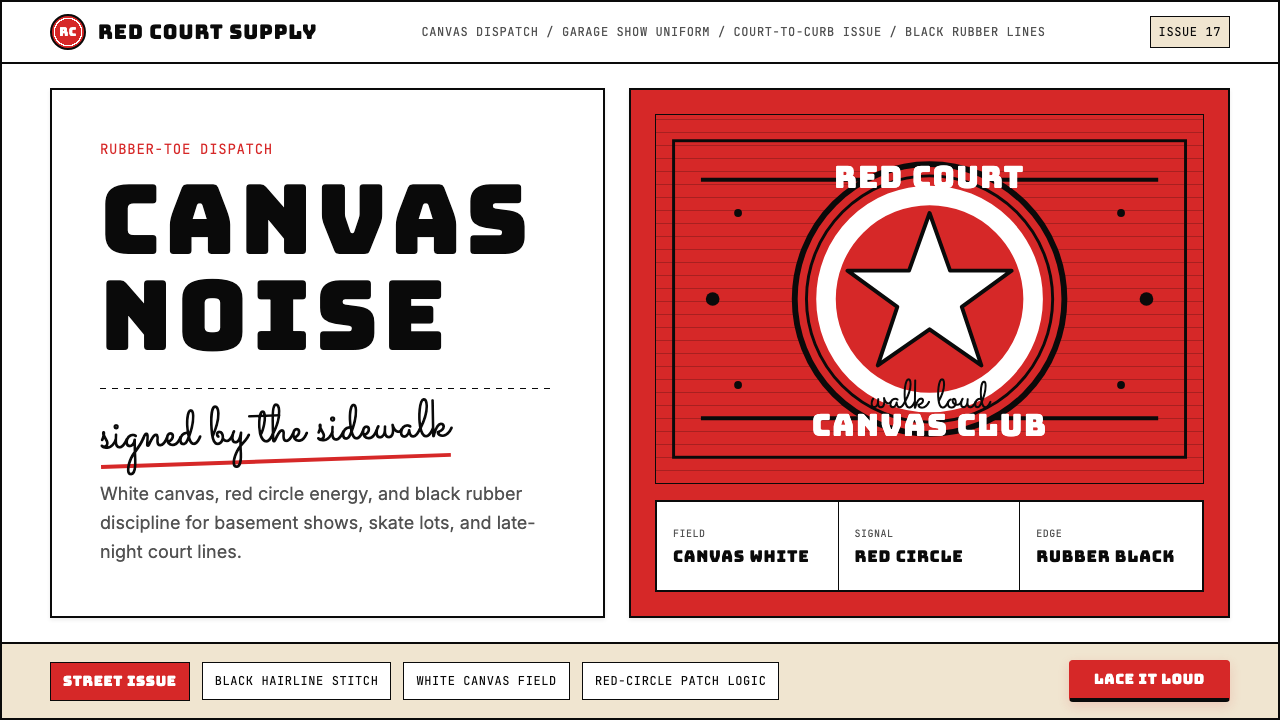 Converse Chuck TaylorPopulist and loud. Saturated red circles, Bungee type, black stitch lines on…
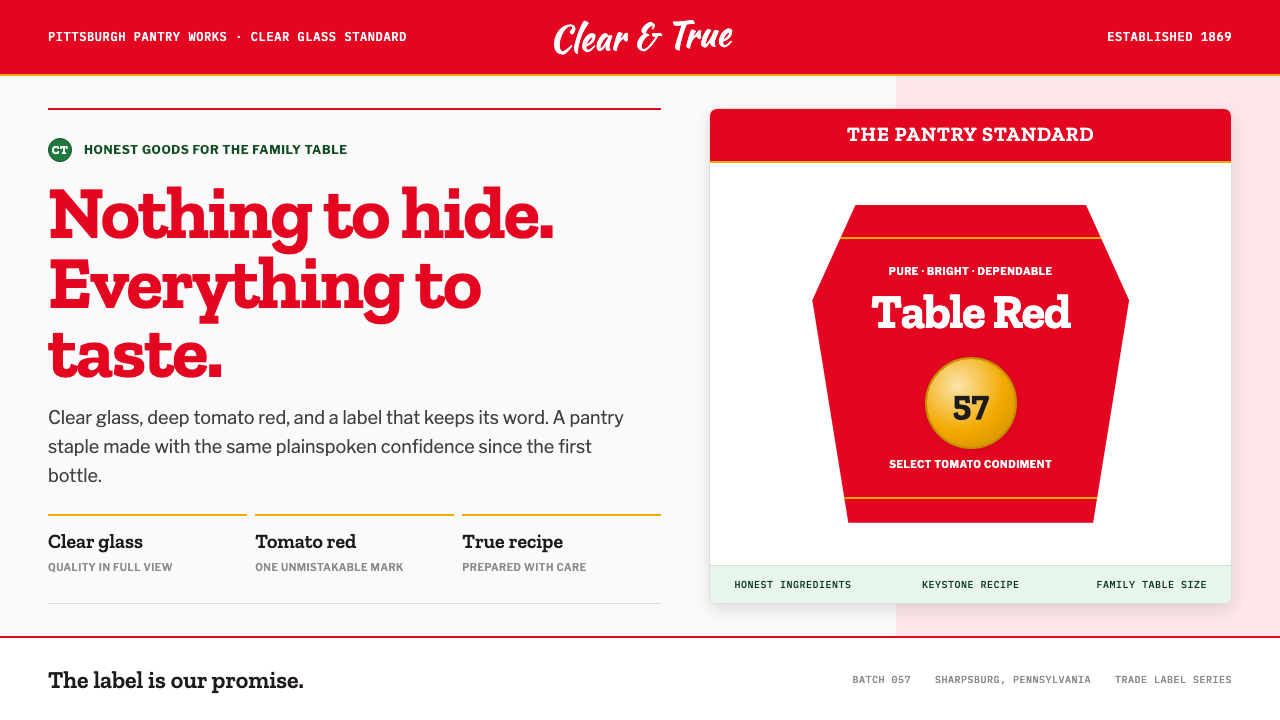 Heinz Ketchup (1869)Nothing to hide. Tomato red and slab serif lock clear-glass honesty into a ke…
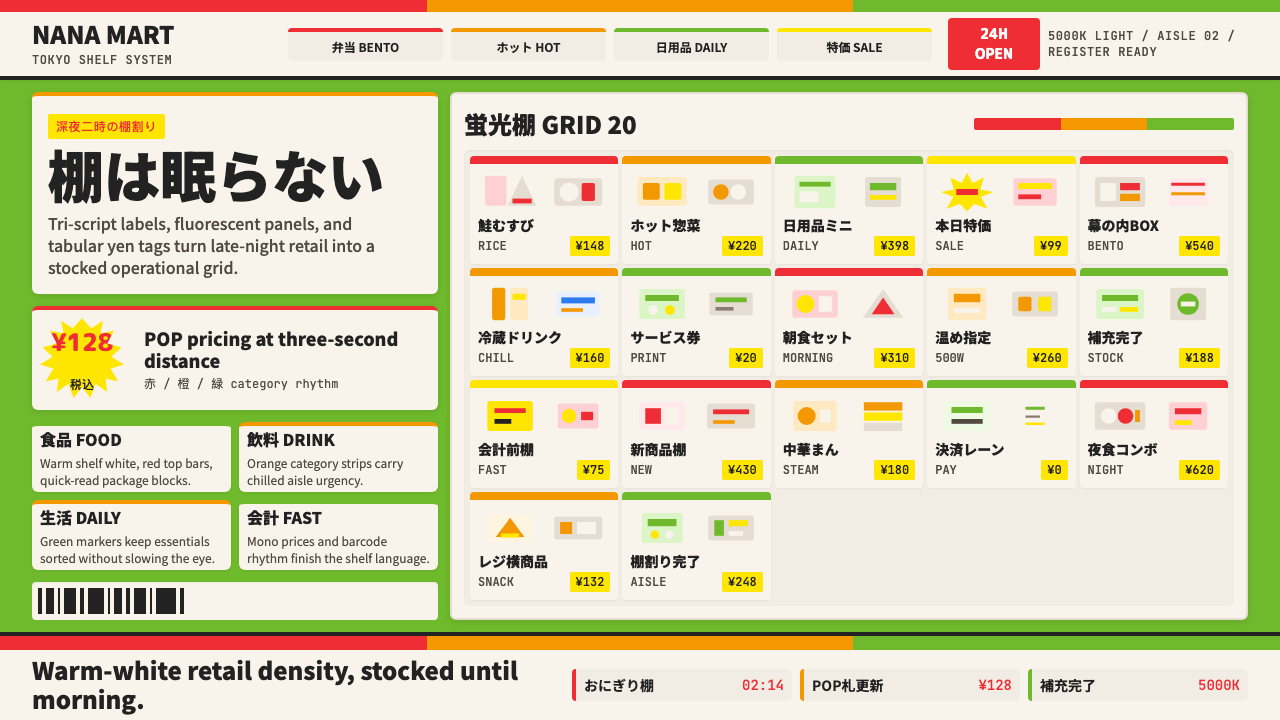 Japanese Konbini 7-ElevenAlways stocked, always bright. Green canopy, warm shelves, POP yen tags, tigh…
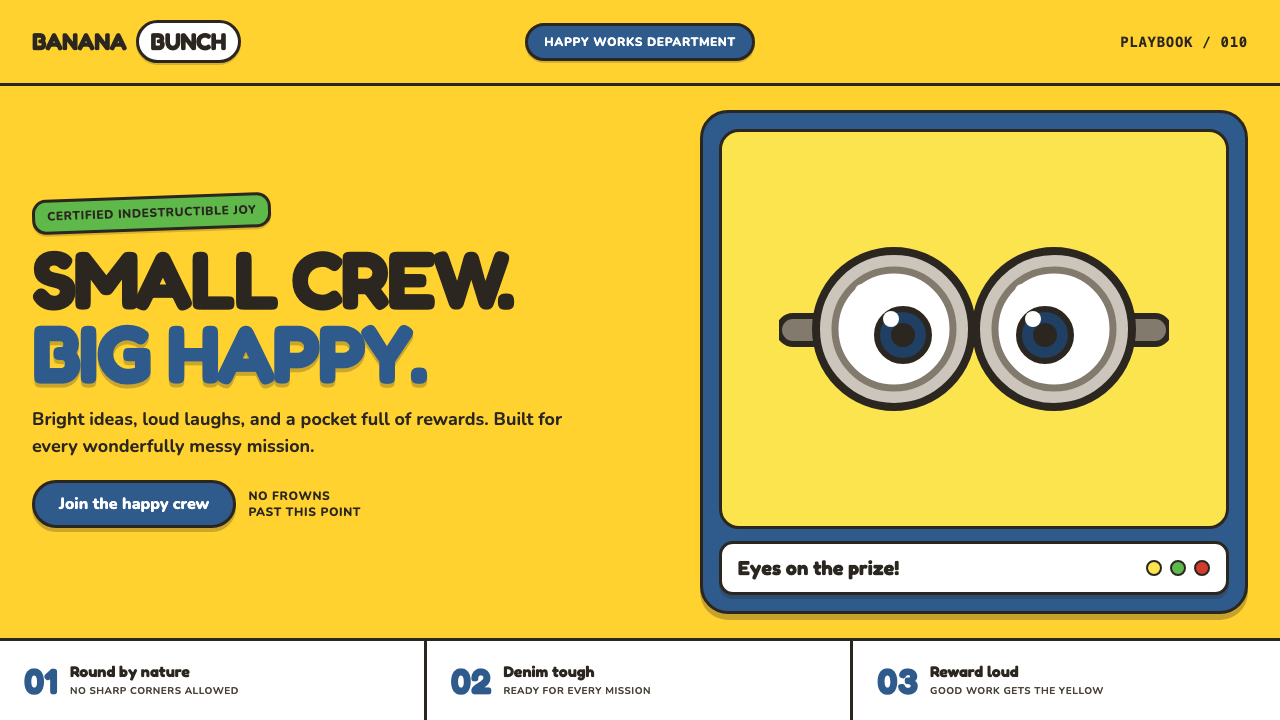 Minions (Despicable Me, 2010)Indestructibly cheerful. Minion yellow, denim blue, and chunky goggle geometr…
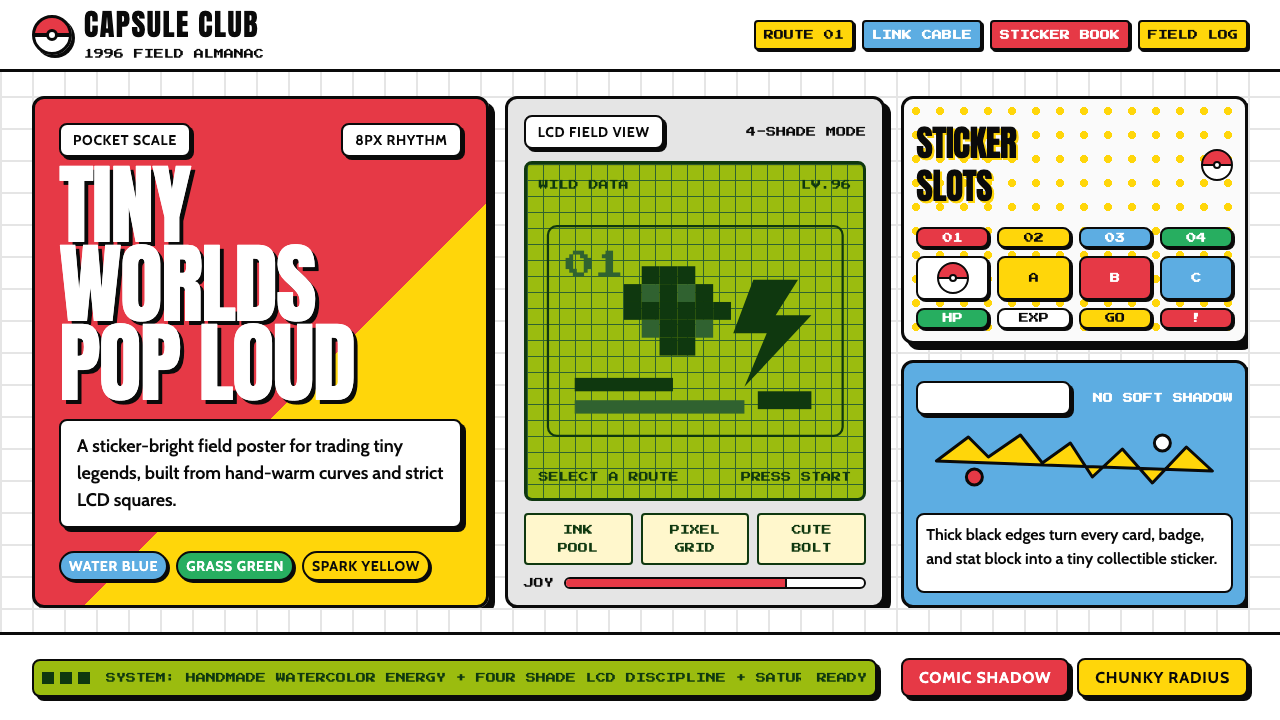 Pokémon Game BoyKawaii meets cartridge logic. Capsule red, LCD green, Anton heft, and 8px gri…