What is Japanese Konbini 7-Eleven?
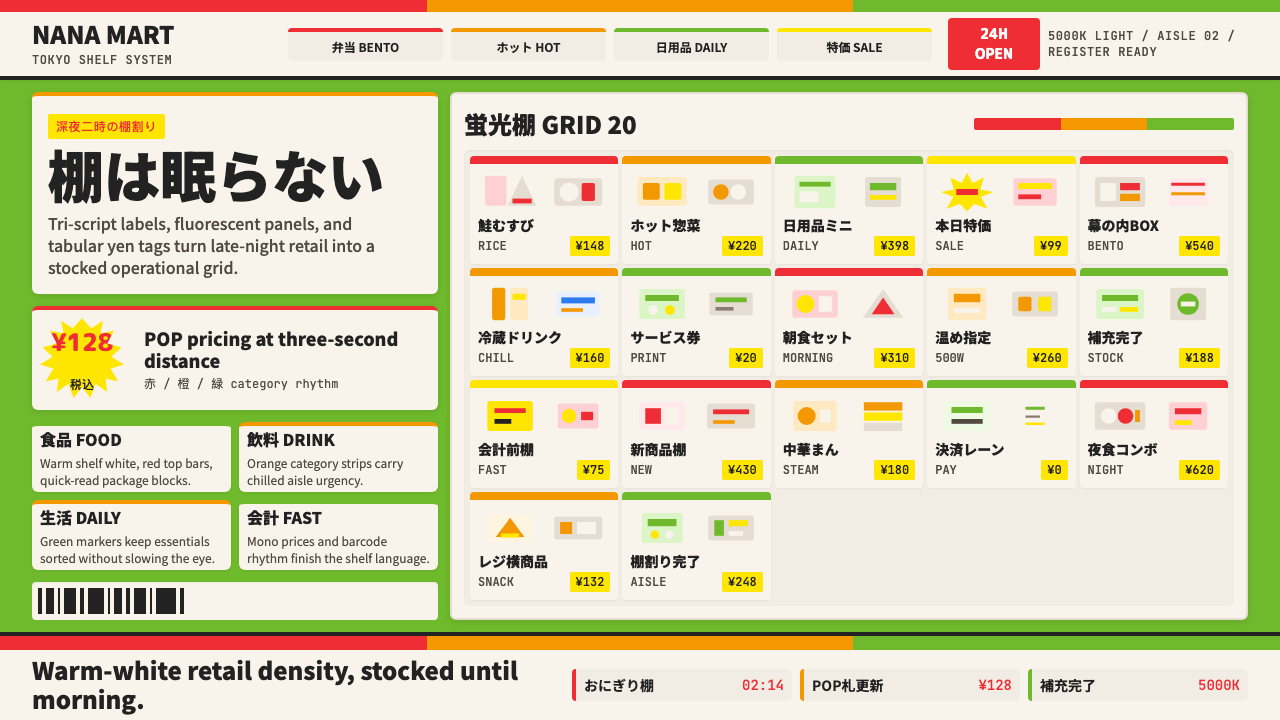
Japanese konbini never close, never dim, and never waste a centimeter — 7-Eleven Japan's tri-stripe identity and bento-grid logic turned the convenience store into a visual system as precise as a surgical instrument.
Japanese Konbini 7-Eleven in brief
Japanese konbini aesthetic is the visual language that emerged from the operational demands of Japan's convenience store chains — principally 7-Eleven Japan, which began franchising in 1974 and grew into a nationwide infrastructure of more than 56,000 stores. The style is defined by a specific set of constraints: fluorescent ceiling light that must render every product attractively at any hour, shelving measured to the millimeter, price communication that must be legible in a fraction-of-a-second glance, and a trilingual environment where kanji, katakana, and Latin script coexist on the same label. The result is not a style chosen for aesthetic reasons but a visual system that evolved under competitive and operational pressure and crystallized into something immediately recognizable.
The core visual signature is the 7-Eleven tri-stripe: a bold horizontal banding of red, orange, and green that runs across signage, packaging, and digital surfaces. These three colors were not selected for symbolic reasons in the Western sense — they function as a proprietary identification system, a flag that reads correctly even in peripheral vision, even when the store is seen through rain or fog at highway speed. Inside, the warm-white shelf surface creates a consistent neutral ground that makes every product photograph sharply under the overhead tubes. Shelf labels and product tags follow the POP (Point of Purchase) convention: starburst shapes, bold yen numerals, kanji-heavy descriptors, and brightly blocked color fields that interrupt the neutral shelf ground deliberately.
Where Bauhaus stripped ornament in search of structural purity, konbini design accumulates information in search of transactional efficiency. The two aesthetics appear opposite, but they share a ruthless elimination of anything that does not serve a function. In konbini, that function is selling: every visual element exists to guide the eye toward a product, a price, or a promotion. The resulting density — which can seem overwhelming to the uninitiated — is calibrated precisely for a customer who has entered the store knowing they have three minutes and ten possible decisions to make.

Where does Japanese Konbini 7-Eleven come from?
The story of Japanese 7-Eleven begins in 1973, when Ito-Yokado, a Japanese supermarket operator, licensed the 7-Eleven brand from the Southland Corporation in Dallas, Texas. The first Japanese 7-Eleven opened in Koto-ku, Tokyo, in May 1974. What followed over the next two decades was not merely a transplant of the American model but a fundamental reinvention. Toshifumi Suzuki, who would become the dominant executive force behind the chain's expansion, recognized early that Japanese consumers expected a different relationship with a store than American consumers did. Proximity mattered more than size. Product freshness mattered more than variety. The supply chain was redesigned from scratch: multiple daily deliveries replaced the American weekly model, and the concept of tightly controlled freshness windows for rice balls, sandwiches, and hot foods became a defining feature of the system.
The visual identity of Japanese 7-Eleven evolved in parallel with its operational model. The American tri-stripe logo — red, green, and orange horizontal bands — was retained, but its application in Japan became denser and more systematic. Through the 1980s and 1990s, as the chain expanded from hundreds to thousands of stores, the visual language of shelf labeling, product photography, and POP signage was codified into internal standards. Akira Kosugi and design teams working within 7-Eleven Japan and its product development subsidiaries shaped the look of private-label packaging — the Seven Premium and Seven Gold lines — which required a visual language that communicated quality above the house brand norm while still reading as konbini merchandise rather than department store goods.
The POP tag — the starburst or oval burst shape containing a bold yen price — has roots in Japanese advertising traditions that predate convenience stores. Japanese street markets and department store food halls had used handwritten price explosion tags since at least the postwar period, and the konbini simply mechanized and systematized this tradition. By the 1990s the digitally typeset POP burst had become a visual shorthand for affordability and freshness that Japanese consumers processed automatically. Tadahiro Wakabayashi and others working in retail display and promotional material production helped formalize these conventions across the industry.
By the 2000s, 7-Eleven Japan had become the largest convenience store chain in the world by store count, and its visual system had achieved the status of a cultural infrastructure. The green canopy, the tri-stripe facade, the warm interior light visible from the street at midnight — these had become orientation points in Japanese urban life in the way that postal boxes or traffic signals function. When 7-Eleven Japan's parent company, Ito-Yokado, acquired the Southland Corporation in 1991, the direction of influence formally reversed: the Japanese subsidiary was now setting design and operational standards that the American original was being asked to study.
What defines the Japanese Konbini 7-Eleven look?
Tri-Stripe Color Identity
The foundational color move is a horizontal banding of red, orange, and green — three colors that read as warm and energetic together, creating an immediate proprietary signal. These are not symbolic colors in the way Bauhaus primary colors carry psychological theory; they are identification colors, functioning more like a flag than a palette. The three stripes appear at different scales across every touchpoint: enormous on exterior facades, condensed on packaging labels, reduced to a thin rule on receipt headers. The consistency of this banding across scales is what makes the system feel systematic rather than decorative.
Warm-White Neutral Ground
The shelf surface, the interior wall treatment, and the dominant ground for product photography all tend toward a warm, slightly yellowish white rather than a cool or blue-shifted white. This is an operational decision with aesthetic consequences: warm white light and warm white surfaces cause food products — especially onigiri wrappers, bento containers, and pastry packaging — to read as appetizing rather than clinical. The warmth also softens the high-density visual environment, preventing the store from feeling like a warehouse despite its information density.
POP Burst Price Tags
The starburst or irregular-outline burst shape containing a yen price is one of the most recognizable micro-elements of the konbini visual system. It functions as a deliberate interruption: placed against the neutral shelf surface, the burst catches peripheral vision and telegraphs a single piece of information — this item has a price worth noting. The typography inside the burst is always high-contrast and dominated by the numeral; kanji or katakana modifiers appear in a secondary scale. The burst shape itself has no fixed geometry — it may have five points or twelve — but it is always irregular and always reads as energetic rather than refined.
Bento-Grid Product Layout
The bento box — a compartmentalized container in which each food occupies a precisely bounded cell — is the structural metaphor for how konbini visual systems organize product information. Category zones on shelves are hard-bounded; product photography in promotional materials arranges items in tight grids with minimal gaps; packaging designs divide their surface into functional zones for nutritional information, product name, ingredient callouts, and barcode. This grid logic is not the airy, breathing grid of editorial design; it is a compression grid, designed to maximize the number of distinct pieces of information that can be conveyed within a fixed area.
Trilingual Typography Hierarchy
Japanese konbini operate in a genuinely trilingual typographic environment: kanji provides semantic density and cultural grounding; katakana handles foreign loan words, product names, and phonetic rendering; Latin script covers brand names, ingredient terminology, and increasingly product identity. On a single label these three scripts may appear within millimeters of one another, and the visual system must make them coexist legibly. The hierarchy is typically kanji-dominant for product category names and main descriptors, katakana for modifiers and flavor notes, and Latin for brand or tier identity. Size, weight, and color differentiate the three registers rather than physical separation.
Hyper-Operational Signage Logic
Every sign in a konbini is designed for a customer in motion: ceiling hangers visible from the store entrance, shelf edge strips readable while walking the aisle, register-area prompts visible during checkout, window graphics readable from the sidewalk. The hierarchy of communication is always transactional first — where is the thing, what does it cost, what promotion is active — and atmospheric second. Seasonal and promotional campaigns update the surface decoration while the structural signage system underneath remains constant. This layered approach means the store can feel fresh without the navigational system being disrupted.
Product Photography as Information
Konbini product photography — on packaging, on shelf talkers, on promotional posters — treats the photograph as a dense information carrier rather than an aspiration image. The product is typically shot from directly above or from a slight three-quarter angle that reveals maximum surface. Ingredients are often shown separately arranged around the hero product. The background is white or the warm-white that matches shelf surface. There is no lifestyle context, no hand reaching for the product, no environmental staging. The goal is to communicate what is inside the package as efficiently as possible, because the customer making a decision about an onigiri or a bento has seconds, not minutes.

Who shaped Japanese Konbini 7-Eleven?
Suzuki joined Ito-Yokado in the early 1960s and became the principal architect of 7-Eleven Japan's expansion and operational philosophy. He championed the policy of multiple daily deliveries — replacing the weekly American model — and the tight freshness windows that made onigiri and bento a core rather than a peripheral category. His insistence on treating each store as a data collection point, adjusting product mix daily based on sales data, shaped the visual environment as much as any designer: a system that tracks what sells and restocks continuously produces a particular kind of density and product confidence in its displays.
Kosugi worked within the product development and private-label design sphere of 7-Eleven Japan's supply chain organization. The Seven Premium and Seven Gold product lines required a visual identity that could sit on the same shelf as national brands without being mistaken for them, while signaling a quality premium over standard house goods. The design language developed for these lines — restrained color, clean photography, structured typography — became a secondary visual register within the konbini environment that complemented the promotional intensity of POP signage with relative quietness.
Wakabayashi's work touched the retail display and in-store promotional material conventions that shaped how konbini signage systems were structured and updated seasonally. The system of seasonal campaign overlays — in which a consistent structural scaffold receives a new surface treatment for cherry blossom season, summer fireworks, autumn harvest, and winter holiday — requires a production logic as rigorous as the visual logic itself. His contributions helped establish the rhythm of visual renewal that allows the konbini environment to feel perpetually current without rebuilding its fundamental navigation.
No single designer can be credited with the konbini visual system at the level of, say, Paul Rand credited with IBM or Massimo Vignelli with the New York subway. The system emerged from the internal standards teams, package design vendors, and display material producers who worked within 7-Eleven Japan's supply chain from the 1980s onward. Their collective contribution was the codification of conventions — the exact proportion of a shelf edge label, the type hierarchy on a POP burst, the photography brief for a new bento line — that made the visual system reproducible across tens of thousands of locations without losing coherence.
The original American 7-Eleven, founded in Dallas in 1927 as an ice dock and converted to a convenience store format in the postwar period, provided the tri-stripe logo and the brand name that Japanese licensees received in 1973. The irony of the relationship is complete: by 1991, when Ito-Yokado acquired the struggling American parent, the visual and operational standards had been so thoroughly developed in Japan that the Japanese subsidiary had become the de facto global standard-setter. The American origin is now largely a historical footnote in the story of a visual system that evolved in Tokyo.
How do you use Japanese Konbini 7-Eleven today?
Japanese konbini aesthetic is one of the most useful styles for designers who need to communicate density, freshness, and commercial confidence simultaneously. It is not a minimalist style — it is a maximum-information style disciplined by operational necessity. Applying it correctly means understanding that every element earns its place by serving a navigational, transactional, or freshness-signaling function. When all elements are doing their job, the result reads as energetic rather than cluttered.
For presentation slides, the konbini system offers a distinctive alternative to both the austere minimalism and the bloated corporate template that dominate most decks. Cover slides work well with a bold tri-color stripe occupying a third or more of the slide height, with the title in strong, somewhat compact type against the remaining white or warm-white ground. Content slides should lean into the bento-grid metaphor: use visible dividers or tight cell structures to organize information zones, label each zone clearly with a category name in a high-contrast style, and use color fills sparingly to signal importance rather than decoration. Data slides can take on the POP burst as a functional element — a key metric or callout number surrounded by an irregular burst outline reads as a price tag for an insight, giving data a commercial urgency that standard charts rarely achieve.
For web interfaces, the style is especially effective for e-commerce product listing pages, food delivery menus, and any dashboard where real-time status or pricing needs to be scanned quickly. The approach: commit to a warm-white or very light cream background rather than a cool white, use a tight grid with minimal gutters for product cards, and adopt the shelf-label convention for category headers — bold, high-contrast, optionally with a colored background strip that runs the full width of the category row. Avoid gradients and soft shadows; the konbini world uses hard-bordered containers and flat color fills. Pricing should be typographically dominant — the number larger than any accompanying text — with promotional labels borrowing the starburst or burst-outline shape.
For editorial and marketing work, the aesthetic offers an immediately recognizable and culturally specific visual language that communicates authenticity for food-related, Japan-adjacent, or urban-life-adjacent content. A marketing page designed in this register might use a warm-white ground, a tri-stripe header element, bento-grid product photography, and POP-style callout bubbles for key value propositions. Editorial layouts can use the shelf-label logic to organize section headers, treating each section like a category zone in a store. The style works well for packaging design and point-of-purchase material in the food and beverage space, where the association with the freshness and reliability of the Japanese konbini supply chain is a genuine brand asset.
A common mistake when applying konbini aesthetic is treating density as permission for disorder. The konbini system achieves its density while remaining navigable because every element is bound to a grid, every color follows a consistent assignment logic, and every typographic hierarchy is maintained without exception. Designers who borrow the surface markers — the starburst shapes, the yen-style numeral emphasis, the warm white ground — without building the underlying grid discipline produce layouts that read as busy rather than efficient. The second common error is choosing the wrong chromatic register: the tri-stripe colors are warm, and the supporting palette should follow — introducing cool blues or desaturated neutrals into a konbini-style layout creates a tonal conflict that undermines the system's commercial warmth.

Japanese Konbini 7-Eleven — FAQ
Is konbini design the same as general Japanese graphic design?
No. Japanese graphic design is an enormously broad field that includes everything from the restrained elegance of traditional publishing and high-end fashion houses to the maximalist energy of manga and pachislot advertising. Konbini design is a specific subset defined by its retail and operational context. It shares certain features with the broader category — the trilingual typographic environment, a high tolerance for information density — but its particular visual signature (the tri-stripe, the POP burst, the bento grid) is specific to the convenience store format and the competitive environment between major chains including 7-Eleven, Lawson, and FamilyMart.
Can this style work for luxury or premium brands?
With significant modification. The raw konbini style — POP bursts, dense grids, tri-stripe color — reads as mass-market and affordable, which is precisely its cultural power in its native context. For a premium brand to borrow from this aesthetic, it would need to extract the structural logic (the bento grid, the product-photography directness, the shelf-label typographic confidence) while discarding the markers of mass-market price communication (the starburst tags, the high-chroma promotional colors). The Seven Premium and Seven Gold lines within 7-Eleven Japan itself demonstrate this possible middle register: konbini structure with quieter execution. The result signals quality within the konbini context without signaling premium in the luxury sense.
How does konbini aesthetic handle dark mode or dark backgrounds?
The historic konbini environment is resolutely light: white or warm-white grounds dominate both the physical store and the packaging. A dark inversion is not part of the native visual language. However, the 7-Eleven tri-stripe — with its red, orange, and green on black — was used in early American signage and has been seen in some nighttime promotional contexts in Japan, where the colors read as neon-adjacent. A dark interpretation of konbini style would work best by treating the black as a night-store backdrop and the tri-stripe as a lit canopy element, while preserving the POP burst and bento-grid logic. The risk is that on a dark ground the system loses the freshness and warmth associations that make the style commercially effective — it slides toward the adjacent aesthetic of night-market signage rather than the 24-hour operational confidence of the store itself.
What makes konbini design different from other retail design systems?
Most retail design systems are built around aspiration: the supermarket evokes abundance and freshness through wide aisles and natural-light palettes; the department store communicates luxury through generous white space and restrained signage; the pharmacy communicates clinical trust through cool whites and systematic organization. Konbini design is built around transaction speed. Every decision — shelf height, label typeface scale, POP burst frequency, trilingual hierarchy — is optimized for a customer who is completing a decision in seconds, not minutes. The result is a design system that would be inappropriate for contexts where deliberation is desired, but that is extraordinarily effective when the product and the context call for immediate legibility and commercial confidence.
Is it appropriate to use the actual 7-Eleven tri-stripe in design work?
The tri-stripe in its exact form — and certainly combined with the 7-Eleven wordmark — is proprietary intellectual property and should not be used in commercial work without licensing. The broader visual principles it represents — a bold horizontal banding of warm, energetic colors used as a primary identification system — are a legitimate design approach that can be applied with different colors, different proportions, and different contexts without infringing on the specific mark. The goal in design work is to capture the structural logic and cultural resonance of the konbini system, not to reproduce its specific brand assets. Designers should treat the tri-stripe as an inspiration and reference point, not a template.
Related design styles
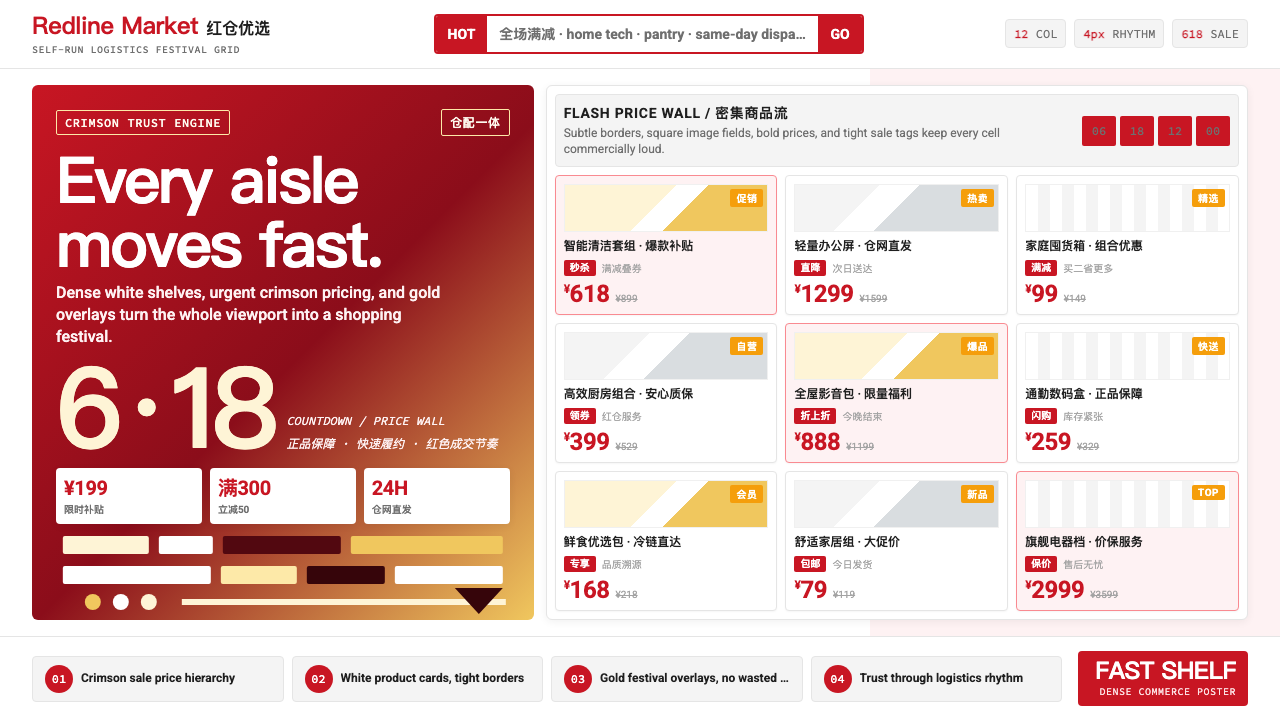 JD.com (京东)Urgency earns trust. Deep red prices pack a white 12-column grid with gold fe…
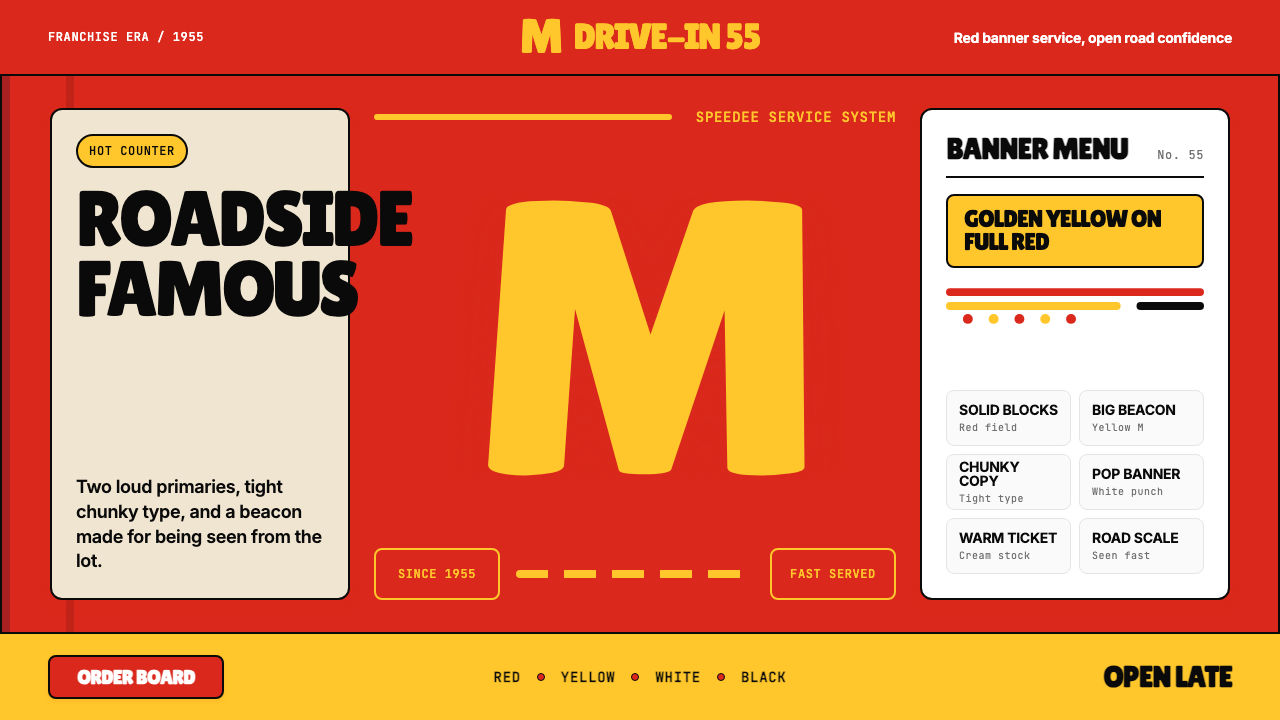 McDonald's Golden ArchesRoadside famous. Saturated red, hot yellow, and chunky type shout from 1955.
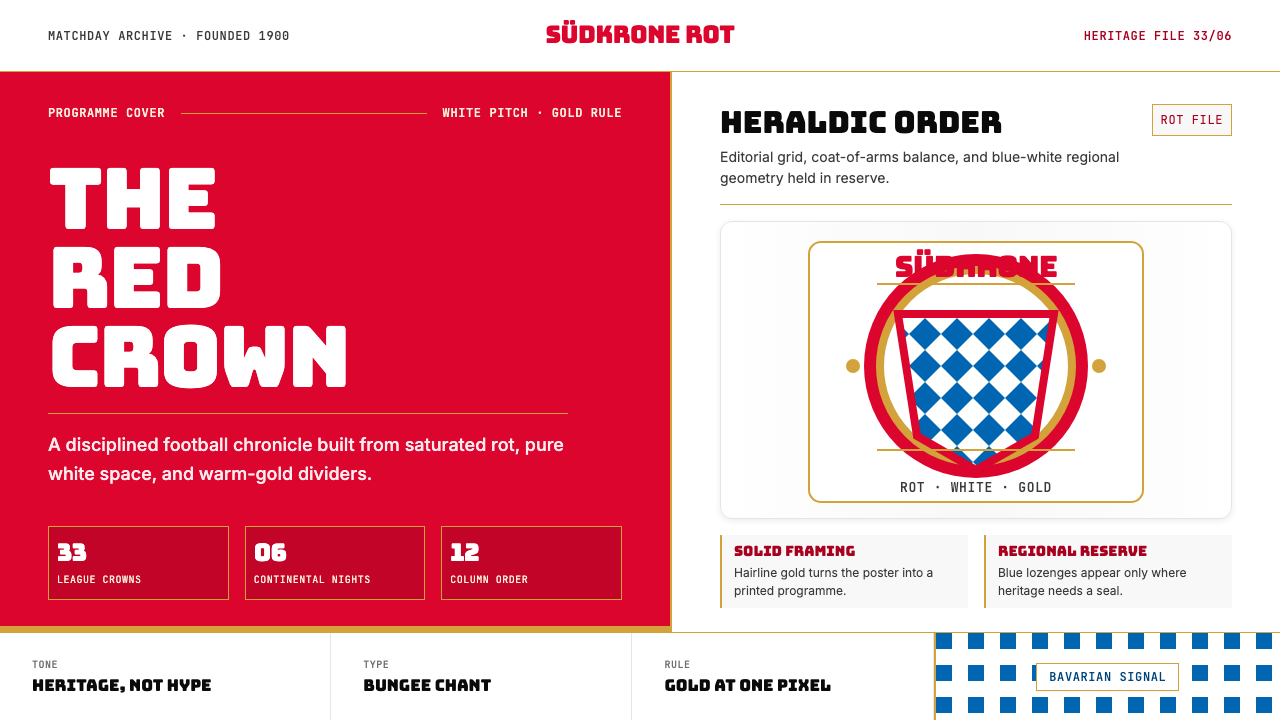 Bayern Munich (Rot)Heritage, not hype. Saturated rot fields, gold rules, and blue lozenges enfor…
 FC Barcelona (Blaugrana)Stadium heritage, not nostalgia. Blue-garnet stripes, Bungee type, gold heral…
 Kit Kat Japan CollectorSouvenir wall joy. Red plates and saturated flavor tiles turn regional sweets…
 Converse Chuck TaylorPopulist and loud. Saturated red circles, Bungee type, black stitch lines on…