What is FC Barcelona (Blaugrana)?
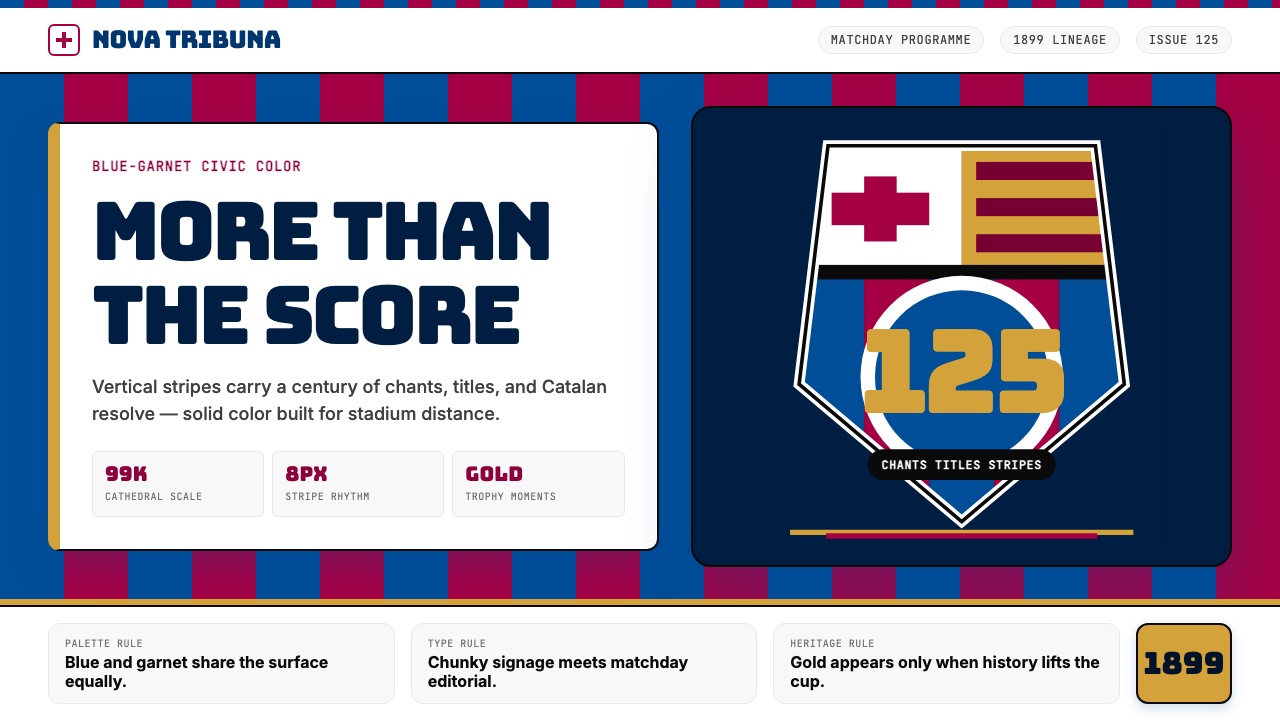
A century of Catalan defiance compressed into blue-and-garnet stripes, gold heraldry, and type as bold as a stadium chant.
FC Barcelona (Blaugrana) in brief
The Blaugrana design system is the visual identity of FC Barcelona, a football club founded in Barcelona in 1899 that grew into one of the most recognized institutions in global sport. Its name comes from the Catalan words for blue and garnet — the two colors of the club's vertical-striped jerseys — and the design language built around them is simultaneously a sporting livery, a cultural statement, and a carrier of political memory.
At its core, the system is built on deep saturated blue and a dark claret-garnet, paired with a warm gold reserved for moments of ceremony and achievement. These three hues carry historical weight: the blue and garnet were worn through decades when the club's Catalan identity was actively suppressed, making the jersey a form of resistance, and the gold marks the heraldic tradition of the club's crest. The typography that anchors the system is chunky and architectural — display letterforms that echo the weight of stadium signage, built for legibility at distance and impact at scale.
The overall character of the Blaugrana aesthetic is one of proud solidity. It does not whisper or suggest; it asserts. Vertical rhythm — the recurring stripe motif — runs through applications from jerseys to editorial spreads. Gold accents and heraldic crest elements introduce a ceremonial register that lifts the system above pure sportswear into something closer to civic heraldry. The result is a design language that works at the scale of a stadium banner and at the intimacy of a matchday program.

Where does FC Barcelona (Blaugrana) come from?
FC Barcelona was founded on 29 November 1899 by Hans Gamper, a Swiss merchant and footballer who had arrived in Barcelona earlier that year. Gamper placed a notice in a local sports newspaper seeking players to form a football club; eleven men responded, and the club was born. The choice of blue and garnet for the jersey is most plausibly attributed to the colors of Gamper's Swiss hometown club, FC Basel, though the exact origin remains a matter of historical debate. What is certain is that by the early twentieth century, the blue-and-garnet stripes had become inseparable from the club's identity and, increasingly, from the identity of Catalonia itself.
The political dimension of the Blaugrana colors deepened dramatically under the dictatorship of Francisco Franco, which lasted from 1939 to 1975. Franco's regime suppressed Catalan language, culture, and political expression with particular severity; the Camp Nou stadium and the club's jerseys became one of the few public spaces where Catalan identity could be expressed without direct political risk. Attending a Barcelona match was, for many Catalans, an act of cultural preservation. The visual system absorbed this weight: the blue and garnet were not merely colors but a form of declaration, and the crest — with its Catalan flag quarters and the cross of Saint George — carried heraldic significance that went far beyond sport.
The modern visual identity emerged through a long process of refinement in the late twentieth and early twenty-first centuries, with a significant redesign of the club crest in the 1990s and further evolution of the broader identity system through the 2010s and into the early 2020s. The introduction of bold, architecturally weighted display typography — reminiscent of stadium lettering from earlier eras — was part of this modernization. The goal was to distill the visual weight of Camp Nou: the sense that entering the stadium is entering a civic institution, not merely a sports venue.
The tiki-taka philosophy — the high-tempo, possession-based style of play associated with Johan Cruyff's tenure as manager in the late 1980s and early 1990s, and brought to its peak by Pep Guardiola's teams between 2008 and 2012 — did not directly shape the visual identity, but it reinforced a shared organizational character: precision, intelligence, and the subordination of individual spectacle to collective system. The design language shares these values. It is not maximalist or showy in a brash sense; its confidence comes from certainty of structure rather than from decoration. Every stripe, crest, and headline is where it is because it belongs there.
What defines the FC Barcelona (Blaugrana) look?
Color
The palette centers on two foundational hues — a deep, fully saturated blue and a dark garnet-claret — used in near-equal weight, neither subordinate to the other. Gold functions as a ceremony color, appearing on the crest, trophy-related applications, and moments of elevated significance; it never serves as a decorative filler. The system avoids pastels, neutrals, and gradients. Color transitions, where they occur, are structural: a stripe ends, a field begins. The saturation level is consistently high, lending the palette a quality that reads with conviction even at distance or under stadium floodlighting.
Vertical Stripe Rhythm
The blue-and-garnet vertical stripe is the system's most distinctive structural motif. It appears not only on jerseys but as a compositional device in editorial layouts, presentation backgrounds, and environmental graphics. When used as a background or framing element, the stripes impose a strong vertical rhythm that naturally organizes content into columns and directs the eye downward. The stripe width and spacing carry visual weight — too narrow and they become texture; at the canonical width, they read as deliberate structure.
Typography
Display typography in the Blaugrana system is bold, wide, and architecturally scaled — letterforms that carry the same visual weight as stadium signage and feel at home printed large on banners or projected across scoreboards. The character of the type is chunky and confident, with a slab-like density that holds firm against the high-saturation color palette beneath it. Body text is kept clean and subordinate, allowing the display hierarchy to dominate. The contrast between headline scale and body scale is dramatic, creating clear reading entry points without relying on decorative dividers.
Heraldic Crest
The club crest is a central and non-negotiable element of the system — it is the point at which sport, heraldry, and Catalan cultural identity converge. The crest incorporates the four red-and-gold bars of the Catalan flag, the cross of Saint George, the club's founding colors, and a football. It is used at high prominence on both formal and informal applications, scaled to anchor compositions rather than float as a small identifier. Attempts to strip or simplify the crest undermine the system's cultural legitimacy.
Gold as Ceremony
Gold in the Blaugrana system is not a general accent or a substitute for yellow. It functions as a ceremonial register, appearing at specific moments — trophies, championship graphics, crest metalwork, anniversary editions. This restraint is what gives gold its power: when it appears, it signals that something significant has been achieved. Diluting gold to a general decorative role flattens the system's hierarchy and strips the color of its earned meaning.
Structural Confidence
Every element in the Blaugrana system is placed with the assumption that it belongs there — no apologetic spacing, no soft-focus vignettes, no hedging through gradient transitions. Negative space is used generously on content-dense layouts, but the overall posture of the design is assertive rather than tentative. This structural confidence is a direct translation of the club's institutional character: 125 years of titles, anthems, and contested identity do not produce a system that whispers.
Surface and Texture
The system is fundamentally flat in its two-dimensional applications. Color fields are solid, not graduated; edges are crisp, not feathered; shadows, when they appear, are hard-edged and used for structural separation rather than atmospheric depth. This flatness is not minimalism for its own sake — it is a practical consequence of the system's origins in fabric printing and stadium graphics, where the ability to reproduce cleanly at any scale matters more than nuance.

Who shaped FC Barcelona (Blaugrana)?
Gamper founded FC Barcelona in 1899 after placing a notice in a local sports newspaper seeking players. Swiss-born and trained as a merchant, he brought organizational discipline and a genuine passion for football to the new club. He served as president on multiple occasions and was instrumental in securing the club's early financial stability and growth. The choice of the blue-and-garnet colors — likely influenced by his hometown club FC Basel — set the visual foundation that would define the club's identity for the following 125 years.
Cruyff's relationship with Barcelona ran across two distinct phases. As a player in the early 1970s, he was the most visible embodiment of a particular style of intelligence-first football; his transfer to Barcelona in 1973 was a cultural event as much as a sporting one. As manager from 1988 to 1996, he built the so-called Dream Team and embedded the tiki-taka possession philosophy that would define the club's identity for the next three decades. His insistence on a coherent football philosophy — applied consistently from the youth academy to the first team — created the organizational ethos that gives the Blaugrana identity its internal logic.
Guardiola played under Cruyff and returned as manager from 2008 to 2012, leading arguably the most successful period in the club's history. His teams — built around Xavi Hernández, Andrés Iniesta, and Lionel Messi — won fourteen titles in four seasons, including two UEFA Champions League trophies, and played a style of football so coherent and beautiful that it reshaped how the sport was understood globally. For the visual identity, Guardiola's era represents the peak of the institutional confidence that the Blaugrana system projects: total commitment to a system, executed with technical precision.
Messi joined Barcelona's youth academy La Masia in 2000 at the age of thirteen and remained at the club until 2021 — a span of over two decades that saw him become arguably the greatest footballer in history. His association with the Blaugrana colors is so complete that the two are, for a generation of fans worldwide, inseparable. From a design perspective, Messi's career is the human proof of the system's internal logic: exceptional individual talent entirely at the service of a collective structure, producing results that look effortless precisely because the system behind them is so well designed.
Xavi spent nearly his entire playing career at Barcelona — from 1998 to 2015 — and is the technical embodiment of the tiki-taka philosophy. As a midfielder, his passing accuracy, spatial intelligence, and tempo control set the rhythm of an era. He later returned as manager in 2021, continuing the pedagogical tradition of players who understood the system deeply becoming its teachers. His significance for the design language is in what he represents: that the Blaugrana system values system over spectacle, consistency over flash.
How do you use FC Barcelona (Blaugrana) today?
Blaugrana is one of the most immediately recognizable sporting identities in the world, which makes it both powerful and demanding to work with. Applying it correctly means understanding that its authority comes from structural commitment — to color, to stripe, to crest — rather than from surface decoration. Borrowing only the colors without engaging the vertical rhythm and the heraldic weight produces work that looks like merchandise, not like design rooted in a century of institutional history.
For presentation slides, the system works best when it commits fully to the vertical stripe as a structural device. A cover slide benefits from a field of blue-and-garnet stripes occupying one half of the canvas, with the title in bold, wide display type on a clean white or cream ground — the contrast between the dense stripe pattern and the open typographic field creates immediate visual tension and hierarchy. Content slides should be treated as clean white fields with the Blaugrana palette reserved for key data, section markers, or emphasis states. Gold appears only for the single most important metric or call-out on any given slide; diluting it across multiple elements destroys its signaling power.
For web user interfaces and dashboards, the system translates into a structure-first approach. A header or sidebar in deep Blaugrana blue establishes the primary navigation zone; content areas remain near-white to ensure body text is comfortable at extended reading lengths. Interactive states — hover, active, selected — can draw on the garnet, reserving blue for structural framing and gold for premium or achievement-related badges. Pricing pages benefit from the system's natural tier-differentiation logic: a blue tier, a garnet tier, and a gold tier communicate hierarchy without requiring additional visual complexity.
For editorial and marketing applications, the Blaugrana system supports a poster-like directness. A full-bleed background in Blaugrana blue with reversed-out white type and a gold crest produces a composition that reads instantly and at distance. Feature spreads can use the vertical stripe as a structural break between sections rather than as wallpaper — stripes occupying a quarter-column width act as visual rhythm markers without overwhelming the content. Campaign work benefits from the system's championship associations: gold details, crest lockups, and heavyweight display type combine to create materials that feel earned rather than designed.
A common mistake when applying the Blaugrana system is treating it as a general sports palette — reaching for the blue and garnet without engaging the heraldic and ceremonial logic that gives them meaning. The crest should not be reduced to a small watermark; the stripes should not be randomized or scaled arbitrarily; the gold should not appear on body copy or secondary UI elements. The system's power lies in its discipline: each element appears at the right scale, in the right position, for the right reason. Departing from that discipline produces work that references the style superficially without inheriting its authority.

FC Barcelona (Blaugrana) — FAQ
Can the Blaugrana system be used outside football and sports contexts?
Yes, but with awareness that the system carries strong sporting and Catalan cultural associations that will arrive with it. In contexts where those associations are welcome — a Barcelona-themed event, a Catalan cultural initiative, a sports technology product — the system carries immediate authority and recognition. In completely unrelated commercial contexts, the associations may distract or feel incongruous. The vertical stripe motif and the bold display typography are the most transferable elements; the crest is the least transferable and should only be used with explicit licensing or in clearly transformative creative work.
How does Blaugrana differ from other football club visual identities?
Most football club identities are primarily jersey-plus-crest systems — the visual language rarely extends beyond those two anchors into a developed typographic and compositional system. Blaugrana is unusual in that the vertical stripe translates into a compositional device, the heraldic crest carries genuine historical and political weight, and the color relationship between blue, garnet, and gold creates a three-register system with clear rules for when each appears. By comparison, many club identities use a single primary color with black or white, and deploy the crest as a logo without the surrounding heraldic logic. The result is that Blaugrana feels more like a national identity than a sports brand.
Is dark mode appropriate for Blaugrana?
A dark ground version is possible and has precedents in the club's own night-match and third-kit applications. On a very dark navy or near-black ground, the garnet can be introduced as a mid-ground element, with white type providing the primary contrast. Gold becomes even more powerful on a dark ground — its ceremonial register intensifies. However, the full blue-and-garnet stripe on a black background can read as excessive in weight, collapsing into a single dark mass at distance. The most successful dark Blaugrana applications tend to reduce the stripe to a structural border or accent rather than a full-field background, and use the dark ground to make the gold detailing more luminous.
How should the stripe motif be scaled?
Scale matters enormously for the stripe. At jersey width — where each stripe is roughly the span of a palm — the pattern reads as structured, deliberate, and athletic. At very fine scales, the stripes collapse into visual noise and lose their identity. At very large scales — mural-width — they become architectural elements that structure space rather than surface pattern. In design applications, the canonical jersey proportion is a reliable starting point: each stripe occupying approximately equal width, with no stripe significantly wider or narrower than its neighbor. Departing significantly from this proportion without a clear compositional reason risks making the stripes look decorative rather than structural.
What kinds of content or products are a poor fit for the Blaugrana system?
The system is a poor fit for products that depend on warmth, softness, or organic approachability — children's platforms, wellness and health applications, food and hospitality brands, or any context where the user relationship is built on intimacy and care rather than authority and achievement. The Blaugrana system is assertive, saturated, and ceremonial; these qualities read as cold or imposing in contexts that call for the opposite. The system is also a poor fit for products seeking to project novelty or irreverence — its century of institutional history means it carries weight in a direction that works against lightness, humor, or disruptive positioning.
Related design styles
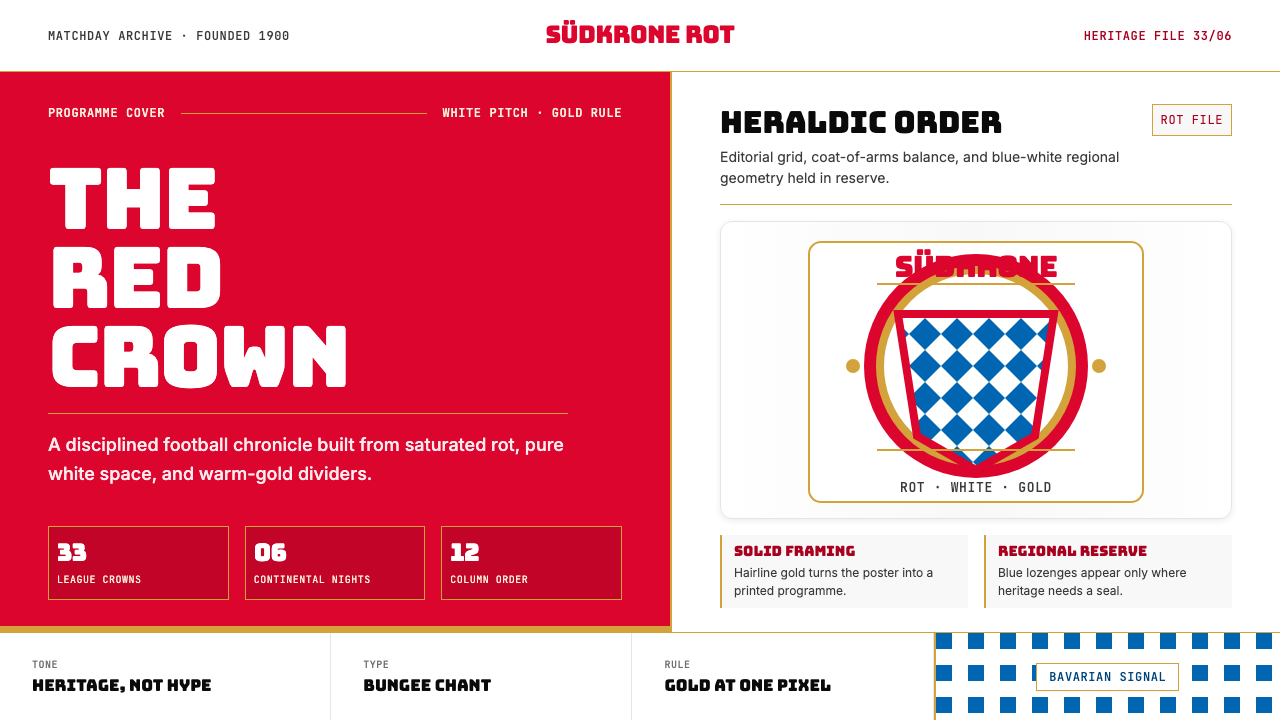 Bayern Munich (Rot)Heritage, not hype. Saturated rot fields, gold rules, and blue lozenges enfor…
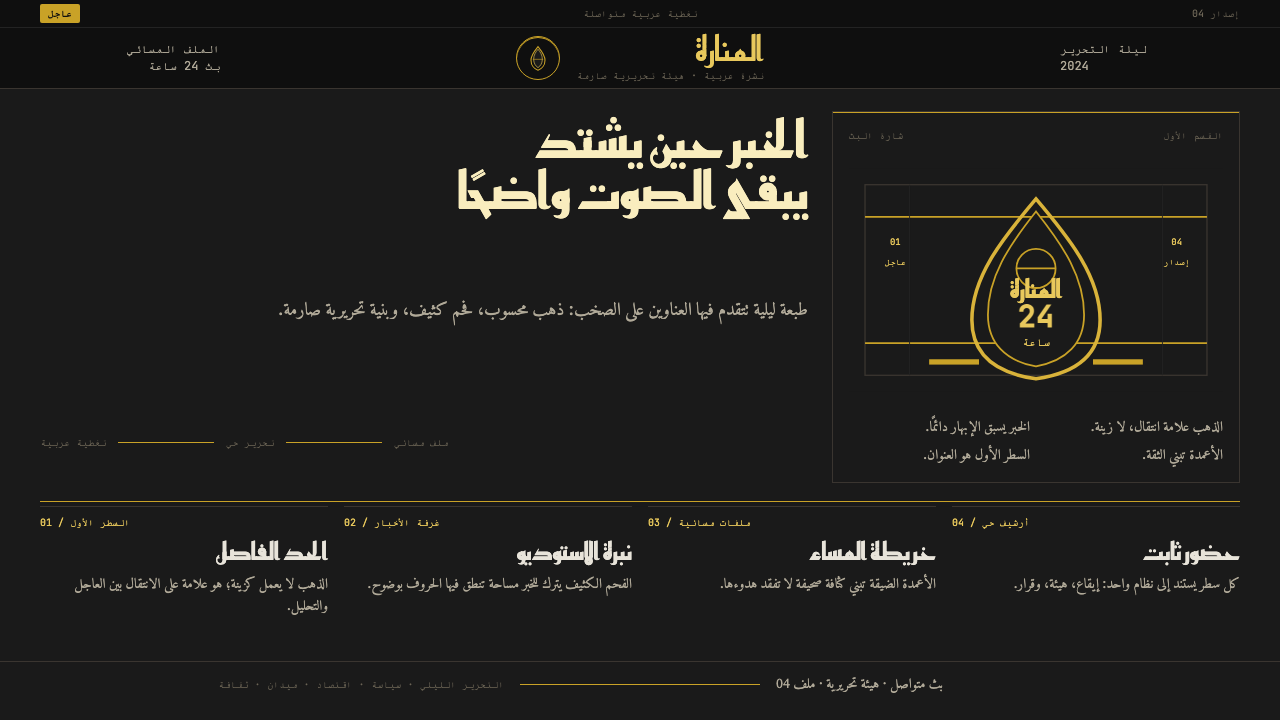 Al Jazeera Arabic NewsAuthority, stripped bare. Gold seal, dense Arabic type, matte charcoal.
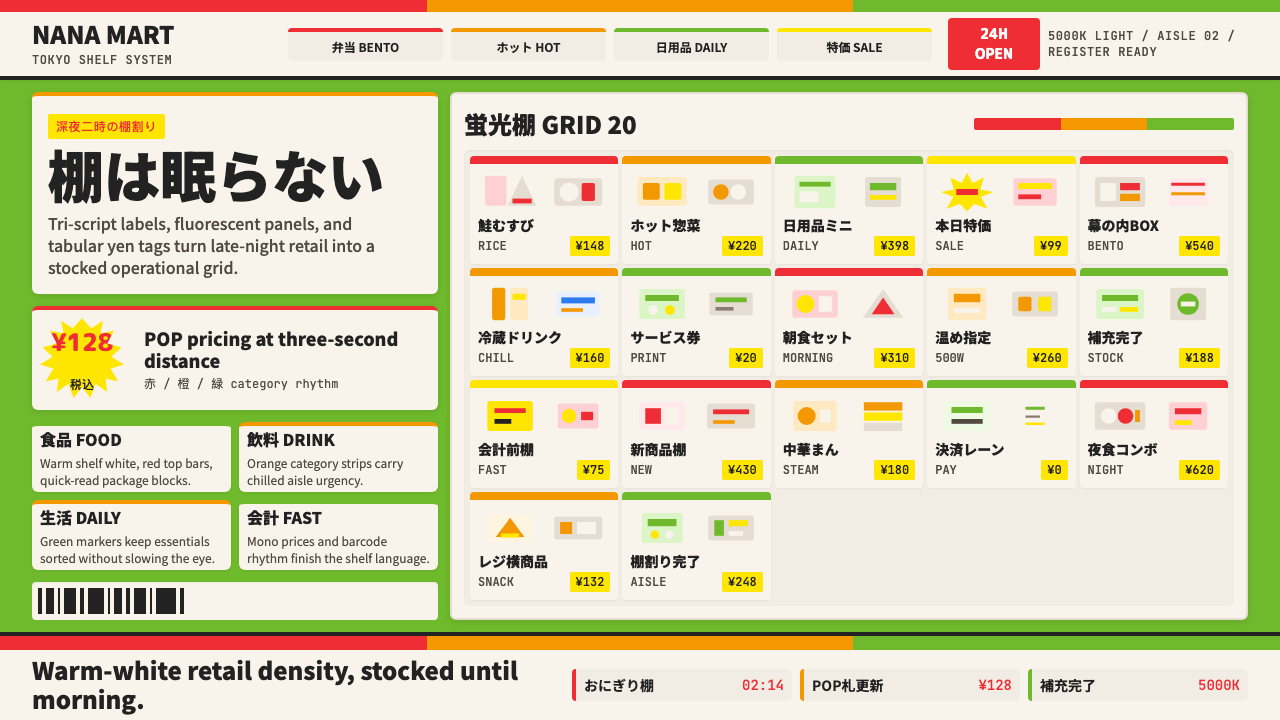 Japanese Konbini 7-ElevenAlways stocked, always bright. Green canopy, warm shelves, POP yen tags, tigh…
 JD.com (京东)Urgency earns trust. Deep red prices pack a white 12-column grid with gold fe…
 Manchester United (Red Devils)Heritage hits like a chant. Red-black blocks, Bungee type, and gold filigree…
 NASA Artemis ProgramCrewed return, engineered. Mission black, crescent-blue arc, flame orange, ri…