What is Bayern Munich (Rot)?
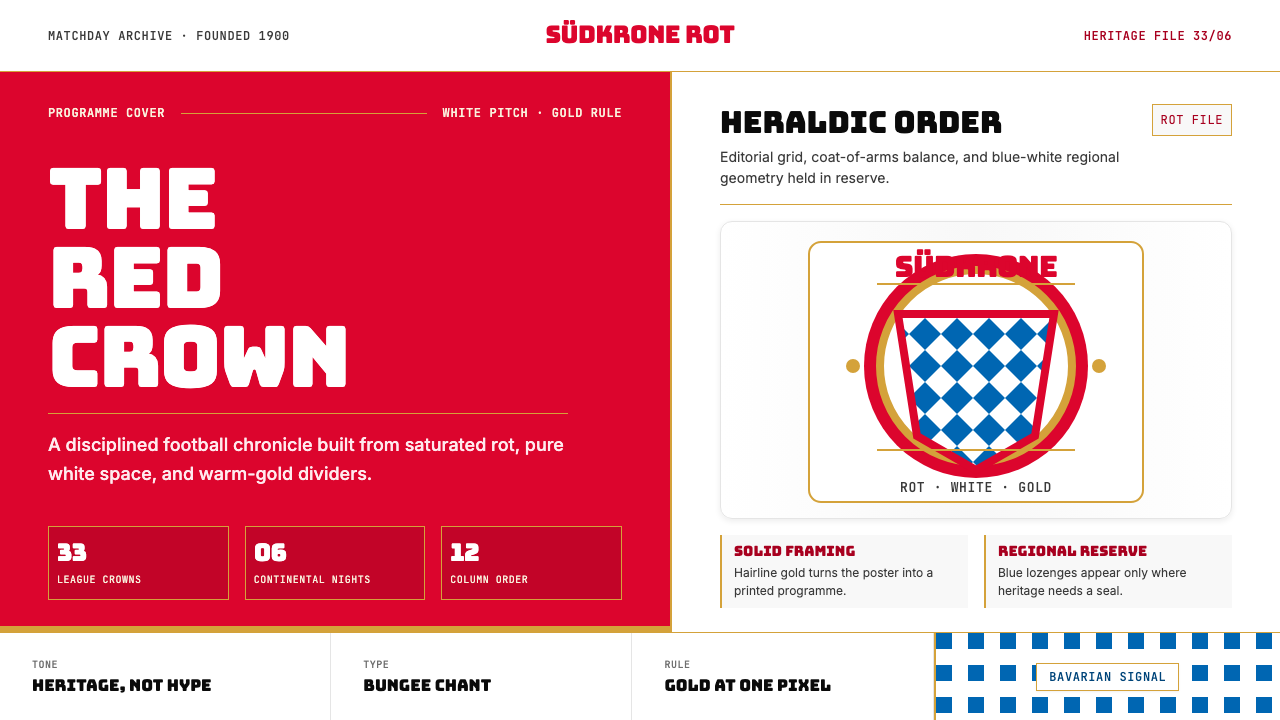
Bayern Munich's visual language distills a century of football dominance into saturated rot red, warm Bavarian gold, and the quiet authority of a coat of arms.
Bayern Munich (Rot) in brief
Bayern Munich (Rot) is the visual identity system of FC Bayern Munich, Germany's most-decorated football club. Built on a palette of saturated rot red, pure white, and warm Bavarian gold — with deep Bavarian blue held in reserve for moments of regional emphasis — the system projects heritage, discipline, and continental authority. It is not a sports brand built for hype; it is a club crest translated into design grammar.
The rot red that anchors the system is not the aggressive neon of an energy drink or the bright scarlet of a fashion brand. It is a fully saturated, stable crimson — the kind of red that reads as institutional rather than promotional, earned rather than chosen. Against pure white grounds and precise gold rules, it carries the weight of 33 Bundesliga titles and 6 UEFA Champions League crowns without needing to announce them.
What distinguishes Bayern Munich (Rot) from other sports-derived aesthetics is its restraint. The Bavarian blue-and-white diamond lozenge pattern — a heraldic motif drawn directly from the state flag of Bavaria — grounds the identity in regional culture and history. Nothing in the system is decorative for decoration's sake; each element maps to something real. The result is a design language that communicates belonging, continuity, and the particular gravity of an institution that has won more than it has lost for over a century.

Where does Bayern Munich (Rot) come from?
FC Bayern Munich was founded on February 27, 1900, in the Bavarian capital, by eleven footballers who broke away from Munich gymnastic club MTV 1879 to form an independent football association. The founding moment was modest, but the cultural soil was rich: Bavaria had its own distinct identity within the newly unified Germany, its own royal house (the Wittelsbachs), and a visual heraldic tradition — the blue-and-white diamond lozenge — that had defined the region's flag and coat of arms for centuries. From the earliest years, the club's colors were red and white, reflecting both the city of Munich's traditional palette and the straightforward directness that Bavarian identity prized.
The visual language evolved gradually through the twentieth century alongside the club's fortunes. The crest — a circle divided into a red ring, the club's initials in gold on red, and the Bavarian lozenge pattern in blue and white — was formalized across decades of iteration. The rot red deepened and stabilized as a specific institutional hue; the gold rules and lettering gained precision. By the time the club entered its golden European era under Franz Beckenbauer in the 1970s — winning the UEFA European Cup three consecutive times from 1974 to 1976 — the visual identity had coalesced into something that felt historic even as it was being made.
The current global visual expression of Bayern Munich, refined across the 2010s and consolidated through the 2022–2024 period, reflects the club's standing as one of the world's most commercially successful and internationally recognized football institutions. The rot red jersey on white shorts, the white-and-gold crest centered like a coat of arms, the Allianz Arena glowing red against the Munich skyline — these images have been broadcast to audiences across every continent. The visual system had to scale from a match-day scarf to a global marketing campaign without losing the heraldic weight that defines it.
The Bavarian cultural context is not incidental to understanding this aesthetic. Bavaria is Germany's largest state by area, a region with a distinctive folk tradition, a strong sense of local identity that coexists with German national pride, and an economic and institutional confidence that extends well beyond football. The blue-and-white lozenge in Bayern's crest is not a design choice — it is a citation, a deliberate anchoring of the club within a regional identity that predates the German nation itself. When Bayern Munich's visual language is applied to presentations, editorial work, or digital products, it carries this layered historical resonance whether or not the audience is consciously aware of its source.
What defines the Bayern Munich (Rot) look?
Color
The palette is built on three anchors: a fully saturated rot red that reads as institutional and earned rather than promotional; pure white that provides clean negative space and amplifies the red's authority; and warm Bavarian gold used for rules, lettering, and heraldic detail. Deep Bavarian blue appears as a fourth element, always in partnership with white in the lozenge pattern, and reserved for accent rather than mass. The hierarchy is deliberate — rot red dominates, gold articulates structure, blue signals regional heritage.
Heraldic Structure
The crest logic — a circular device divided into a bold outer ring, an inner field carrying the club initials, and a central lozenge panel — governs how the identity is composed across applications. The circular crest is treated as a centered anchor, like a coat of arms or a royal seal, rather than as a logo to be floated freely. This heraldic instinct informs the broader design system: symmetry and central alignment are permitted here in ways they are not in more modernist sports brands, because the reference is medieval civic identity rather than contemporary branding.
Lozenge Pattern
The blue-and-white diamond lozenge — drawn directly from the Bavarian state flag — is the system's most distinctive textural element. Used as a repeating pattern, a border treatment, or a contained panel within the crest, it introduces visual rhythm without resorting to abstract decoration. It carries specific geographic and historical meaning: it is a citation of Bavaria, not an ornament. Applied subtly as a background texture or a contained accent, it grounds any layout in the club's regional identity without overwhelming the primary rot-and-white palette.
Typography
The typographic register is bold, upright, and institutional. Headlines carry significant weight, set in capitals or mixed-case with strong inter-letter spacing that gives each word a monumental quality. Body text is set cleanly in a neutral sans-serif that recedes behind the structural color work rather than competing with it. Gold is used for titles and emphasized labels; white type on red grounds creates the high-contrast combinations most associated with the club's matchday communications. The overall effect is authoritative and legible at scale — designed to work on stadium signage as readily as on a printed program.
Spatial Gravity
Bayern Munich's visual system favors centered, anchored compositions over dynamic asymmetry. Where modernist sports brands chase kinetic energy through diagonal cuts and explosive typography, the Bayern system holds weight at the center and lets the color do the work of commanding attention. Generous margins give the crest and type room to breathe. The result is a composure that reads as earned confidence — not excitement, but authority.
Gold as Structure
Warm gold in this system does not function as luxury signaling — it functions as a structural element. Fine gold rules divide sections, gold letterforms in the crest carry the club identity, and gold borders frame panels of red or white. The warmth of the gold prevents the red-and-white combination from reading as clinical or cold; it introduces a sense of permanence and material richness without departing from the heraldic vocabulary. Used sparingly and precisely, gold is the element that elevates the palette from a football color scheme to something that reads as genuinely institutional.
Red as Field, Not Accent
In most design systems, red functions as an accent — a warning color, a call to action, a signal of urgency. In Bayern Munich (Rot), red is the field: the ground against which everything else is read. This inversion is the system's most distinctive quality. Red is background, not foreground. It is the environment the viewer enters, not the element that competes for attention within a white or neutral space. Understanding this distinction is essential to applying the system correctly — when red is treated as accent rather than field, the entire visual weight of the identity collapses.

Who shaped Bayern Munich (Rot)?
Beckenbauer — 'Der Kaiser' — is the single figure most associated with Bayern Munich's ascent to continental dominance. As a libero, he reinvented the defensive position by reading the game as an architect rather than a stopper, bringing the ball forward and directing attacks from the back. He captained Bayern to three consecutive European Cup titles from 1974 to 1976 and later managed the club, winning the Bundesliga in 1994. His disciplined, imperious style of play became the human expression of the club's visual identity: controlled, authoritative, and never showy.
Hoeneß transformed Bayern Munich from a successful football club into a German institution. As a forward he was part of the 1970s championship squads; as manager and later president, he built the administrative and financial structure that made Bayern's consistent dominance possible. His insistence on financial prudence — Bayern has been debt-free for decades — and his fierce protection of the club's identity shaped an organizational culture that the visual system reflects: no shortcuts, no compromise on the fundamentals, heritage as competitive advantage.
Rummenigge served as CEO of Bayern Munich for decades, overseeing the club's commercial expansion and its establishment as one of the most globally recognized sports brands. Under his leadership, Bayern's visual identity was systematized and internationalized — the rot red, the crest, the Allianz Arena becoming consistent global symbols rather than regional ones. His role bridges the sporting heritage that gives the identity its authority and the commercial infrastructure that gives it its reach.
Neuer redefined the goalkeeper position for the modern era, becoming synonymous with the concept of the sweeper-keeper — a player who commands territory beyond the penalty area with the same confidence that Bayern's visual identity commands the page. His tenure as club and national captain placed him at the center of Bayern's contemporary identity during its most globally visible era, including the treble-winning 2012–2013 season and multiple subsequent Bundesliga and European campaigns.
Müller represents Bayern Munich's continuity in its purest form — a player who has spent his entire senior career at the club and become inseparable from its identity. His longevity, combined with a playing style that prioritizes collective function over individual spectacle, mirrors the design system's own values: no flash, no ornament, just relentless effectiveness in service of a larger structure. Müller is the human argument for why Bayern's aesthetic reads as heritage rather than marketing.
How do you use Bayern Munich (Rot) today?
Bayern Munich (Rot) is a high-authority style that works best when the content itself has institutional weight — football, sports journalism, Bavarian cultural programming, anniversary or commemorative materials, and any brand positioning that needs to communicate earned confidence rather than aspirational energy. The system's power comes from restraint: the rot red must be allowed to function as a field rather than as an accent, and the gold must be used sparingly to articulate structure rather than to signal luxury.
For presentation slides, the system works most powerfully on cover and chapter-break pages, where the full rot-red field can be deployed without visual competition. A cover built on a saturated rot ground, white title set in heavy upright type, and a gold rule or the club's lozenge motif as a structural accent will communicate authority from the first slide. Content pages should shift to white or near-white grounds, with rot red reserved for key callouts, data highlights, or section labels rather than backgrounds. Data visualization — bar charts, timelines, scorecards — should follow the color hierarchy: red for the primary series, white or light neutral for secondary, gold for annotation or emphasis. Avoid decorative frames and gratuitous background elements; let the type and data carry the page.
For web interfaces and dashboards, Bayern Munich (Rot) suits contexts where clarity and authority are the primary UX values — analytics platforms, sports statistics tools, Bundesliga or UEFA content hubs, and institutional sites. The approach: establish a strong typographic hierarchy with heavy headlines and clean body text, use the rot red sparingly for primary interactive states and tier labels, and keep the background white or off-white with gold rules as structural dividers. Pricing pages benefit from the style's heraldic instinct — tier cards centered like crests, gold for premium tier labels, rot red for calls to action. Navigation should be text-forward, with the crest or lozenge motif as a contained brand element rather than a floating decoration.
For editorial and marketing work, the system's poster-like boldness makes it exceptionally well-suited to full-page spreads, feature openers, and campaign headers. A spread that commits fully to the rot-red field — white headline in heavy type, gold rule marking a structural divide, lozenge border as a contained texture at the edge — carries the kind of visual authority that few purely modernist systems can achieve. Marketing emails and social cards work well with a tight red-white-gold palette: one dominant color per module, clean hierarchy, no gradient fills or soft shadows. The goal is always to make the layout feel like it was stamped rather than assembled.
A common mistake when applying Bayern Munich (Rot) is treating the red as one color among equals — using it alongside the gold and blue simultaneously at high saturation to achieve a 'full Bayern' effect. In practice, this produces visual noise rather than authority. The authentic system leads with rot red as the ground, brings in white as the primary contrast, introduces gold as a structural accent, and allows the Bavarian blue only within the lozenge pattern or as a very contained regional marker. Using all four colors at once at full saturation collapses the hierarchy that gives the system its power. Similarly, substituting bright or warm-toned photography for the system's flat-color palette undermines the heraldic seriousness of the identity — photographic images should be treated as contained elements within the structured color field, not allowed to bleed freely across the composition.

Bayern Munich (Rot) — FAQ
Is Bayern Munich (Rot) appropriate for non-football contexts?
Yes, with the right content. The system's authority derives from heraldic structure and color restraint, not from football imagery itself. It transfers well to any context that values institutional confidence: financial reporting, sports analytics platforms, regional tourism presenting Bavarian cultural heritage, anniversary publications, and premium editorial work. What it does not transfer well to is contexts requiring warmth, approachability, or sensory softness — the saturated red and rigid gold structure will read as cold or imposing in wellness, food, or family-oriented contexts. The question is whether the content earns the weight of the palette.
How does this system differ from other European football club identities?
Most European football clubs use their primary colors as accent elements within a broader design language that prioritizes dynamism, diagonal energy, and kinetic typography. Bayern Munich (Rot) inverts this: the red is the field, not the accent, and the composition favors centered heraldic gravity over diagonal movement. This makes it closer in spirit to an institutional identity — a bank, a university, a government body — than to a contemporary sports brand. The Bavarian lozenge pattern also gives it a geographic specificity that purely color-based football identities lack; it is Bavaria made visible, not just a red club.
Can the lozenge pattern be used as a full background texture?
It can, but it requires careful calibration. The lozenge pattern at full density and high contrast will compete with body text and other structural elements, reducing legibility and collapsing the hierarchy the system depends on. The more effective approach is to use the pattern at reduced contrast — blue on near-blue, or white on near-white — as a contained border treatment, a background texture in a header band, or a corner detail. Think of it as architectural surface texture rather than wallpaper: it should enrich the spatial quality of the layout without asserting itself over the primary content.
How should photography be integrated into this design system?
Photography should be treated as a contained element within the structured color field, not as a bleeding, ambient background. The most compatible approach is to frame photographic images within hard geometric borders — a rectangle flush with a grid column, a circle echoing the circular crest — rather than allowing them to extend edge-to-edge. High-contrast black-and-white treatment makes photographs more compatible with the flat-color palette; desaturated or duotone images treated in rot-red and white are particularly effective. Action photography that emphasizes the kit color — the red jersey against a white or green ground — integrates naturally. Lifestyle photography with warm ambient lighting and soft backgrounds fights the system's heraldic seriousness and should generally be avoided.
What is the most common misconception about this style?
The most common misconception is that Bayern Munich (Rot) is interchangeable with any red-dominant sports aesthetic — that using red heavily, white secondarily, and some gold detail is enough to invoke the system. It is not. The specific quality of the red (institutional, fully saturated, treated as field rather than accent), the heraldic composition logic (centered, symmetry-tolerant, crest-anchored), the precise restraint in gold usage, and the geographic specificity of the Bavarian lozenge all combine to produce an identity that is qualitatively different from generic red sports branding. Applying the palette without understanding the structure produces work that feels like a football kit rather than an institutional identity — which misses the entire point of what makes Bayern Munich (Rot) distinctive.
Related design styles
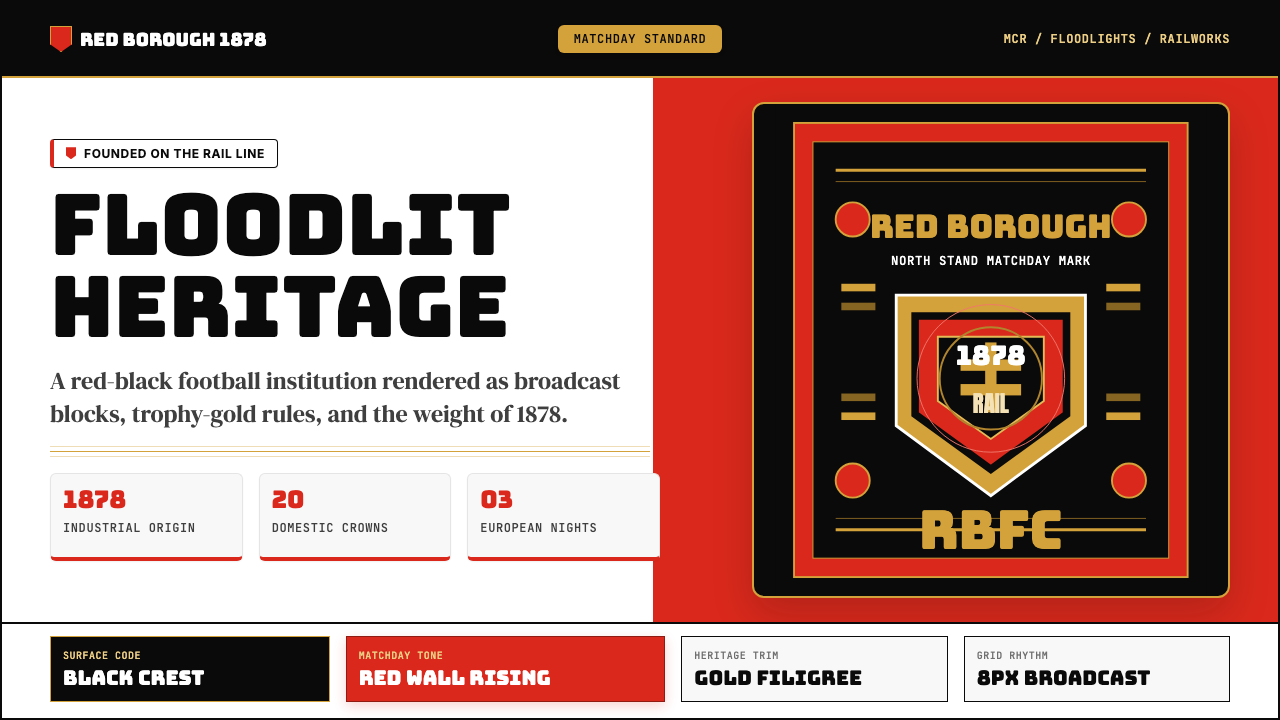 Manchester United (Red Devils)Heritage hits like a chant. Red-black blocks, Bungee type, and gold filigree…
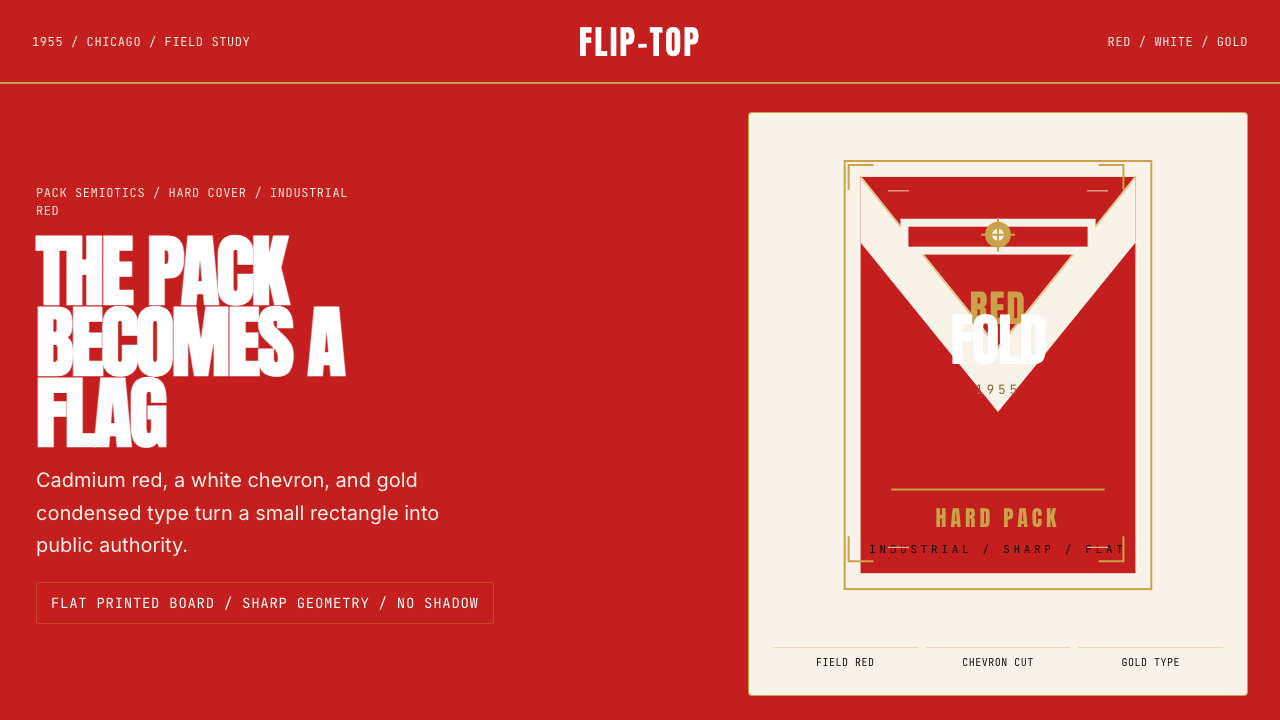 Marlboro Red Flip-Top (1955)Authority in one fold. Cadmium red, white chevron, and gold type read like a…
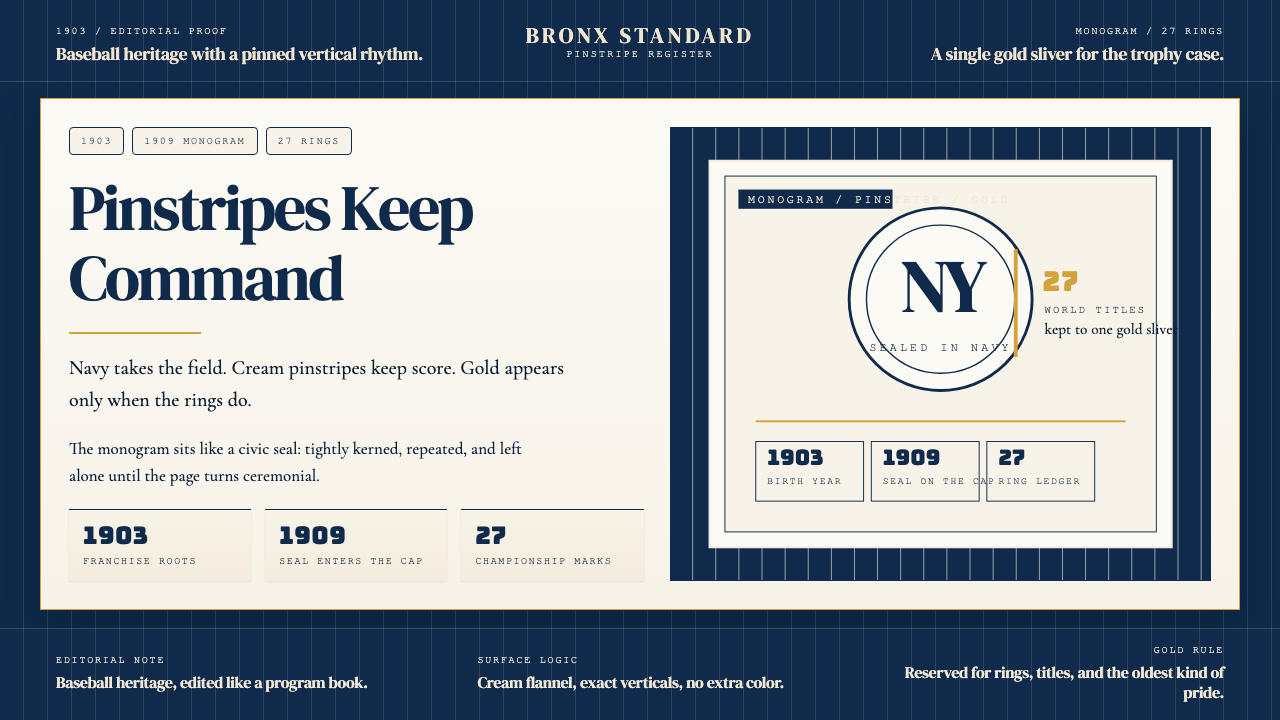 New York Yankees (Navy-Pinstripe)Navy restraint, not noise. Cream pinstripes and a gold monogram seal do the w…
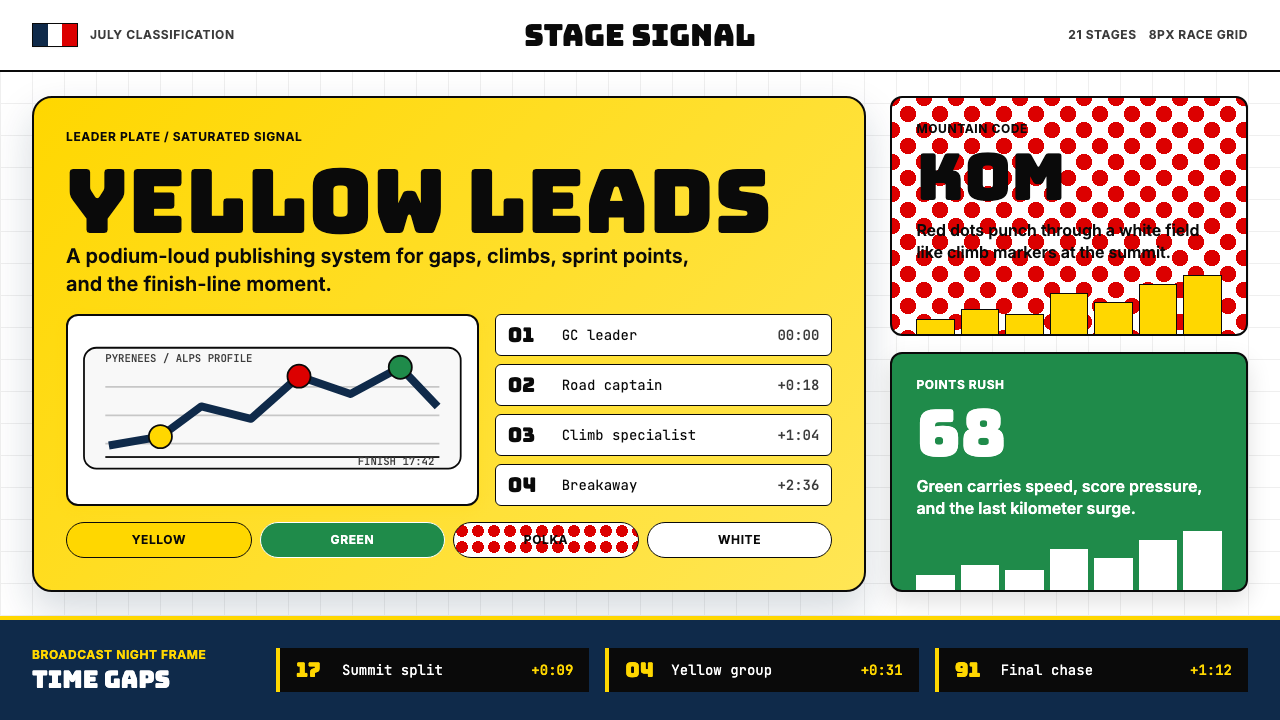 Tour de France (Yellow Jersey)Yellow owns the finish. Bungee type, polka dots, and navy tickers snap to an…
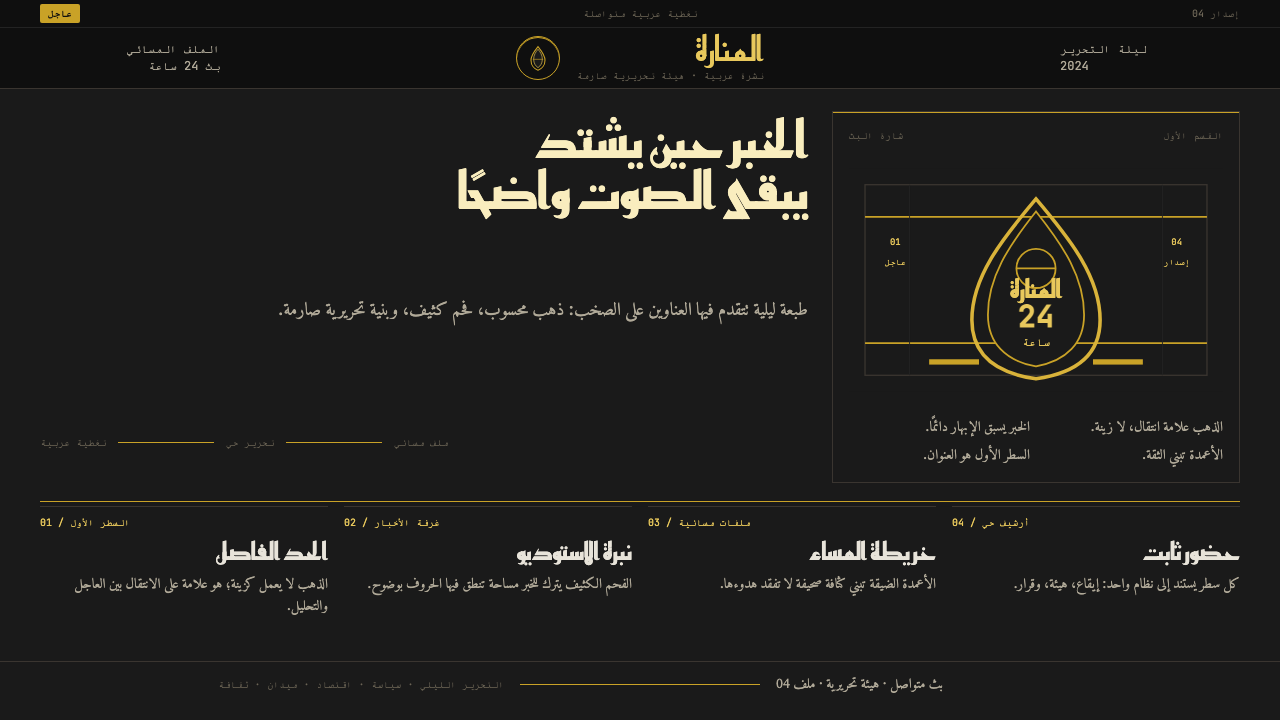 Al Jazeera Arabic NewsAuthority, stripped bare. Gold seal, dense Arabic type, matte charcoal.
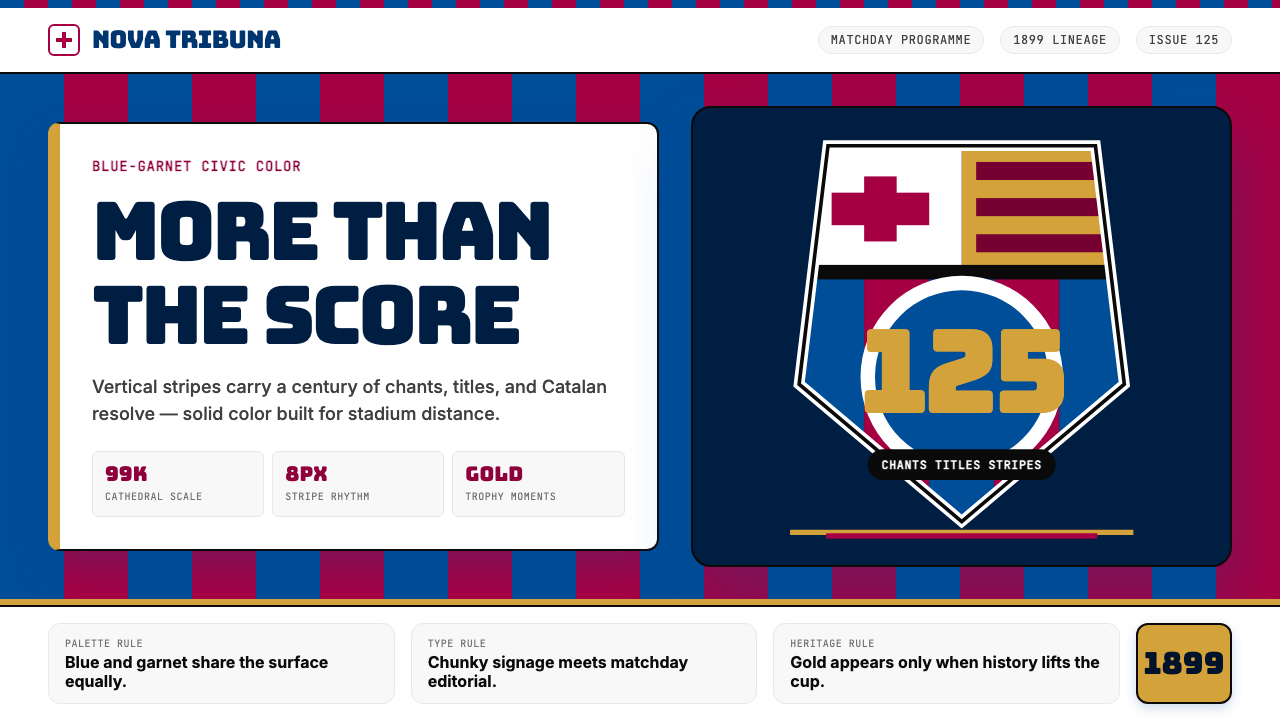 FC Barcelona (Blaugrana)Stadium heritage, not nostalgia. Blue-garnet stripes, Bungee type, gold heral…