What is Manchester United (Red Devils)?
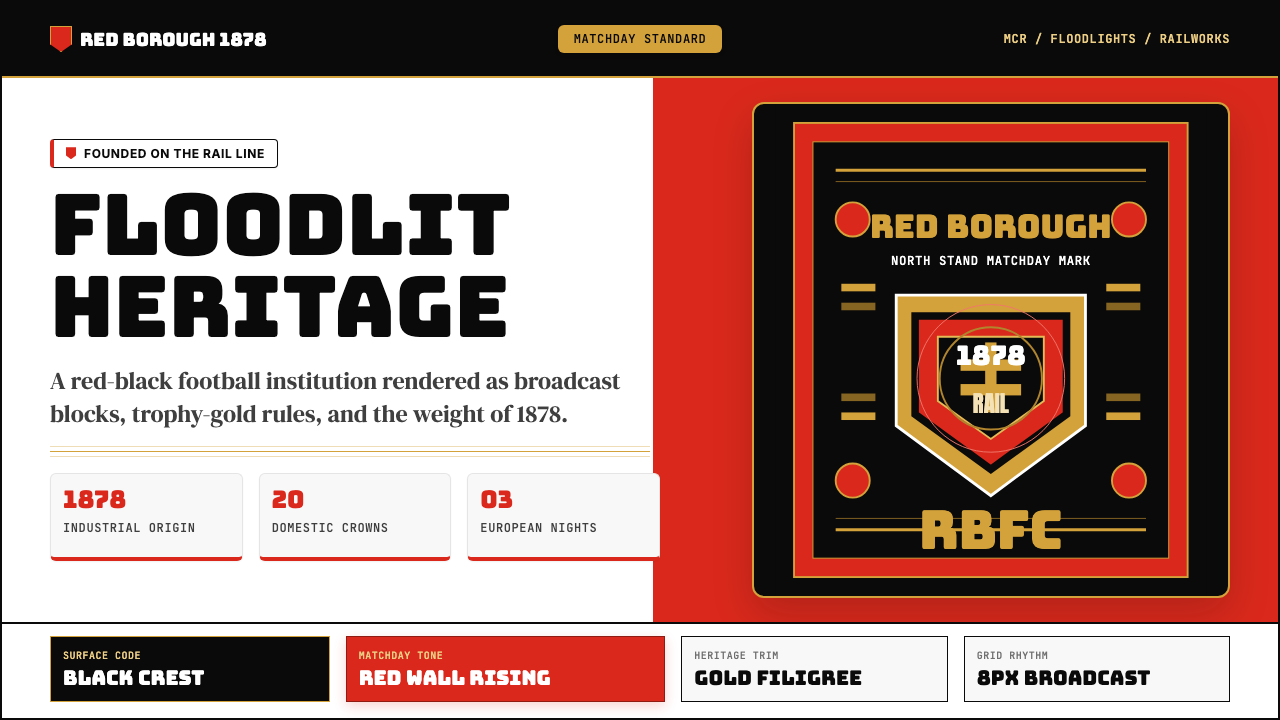
Red, black, and gold forged in a century of English football — Manchester United's visual identity hits with the force of a matchday crowd.
Manchester United (Red Devils) in brief
Manchester United is the most globally recognized football-club brand in the English Premier League — a visual system built from saturated United red, heraldic gold, deep black, and the heraldic crest bearing a ship, a devil, and a trident. The aesthetic is not borrowed from fine art or graphic design movements; it evolved from a century of English football culture, stadium signage, jersey printing, and the weight of institutional history pressing down on every design decision.
The identity reads as controlled intensity. Heavy block lettering — the kind that can be read from the upper tier of Old Trafford — coexists with fine gold filigree on the crest, a tension between raw power and ceremonial dignity. Color is deployed in large, confident masses rather than subtle gradations: red dominates, black anchors, gold accents. There is no softness in the palette, no pastel inference, no room for ambiguity. Every element declares its allegiance.
What separates this aesthetic from generic sportswear branding is its heraldic dimension. The Manchester United crest draws on the tradition of civic arms — the ship from Manchester's coat of arms, the red devil adopted as mascot in the early twentieth century, the motto Trinity. These elements introduce a vocabulary of ceremony and permanence into what might otherwise be a purely commercial identity, giving the visual system a depth that casual replication cannot replicate.

Where does Manchester United (Red Devils) come from?
The club was founded in 1878 as Newton Heath Lancashire and Yorkshire Railway Football Club — a works team for railway employees in the Newton Heath district of Manchester. Its earliest visual identity was purely functional: jerseys in whatever colors were available, no consistent graphic language, no crest with meaning. The railway connection established the utilitarian, working-class character that would underpin the club's identity even after it shed its industrial origins. In 1902 the club was renamed Manchester United, and the transformation from a railway workers' team to a commercial sporting institution accelerated through the first decades of the twentieth century.
The red jersey — now inseparable from the club's identity — was not always the signature color. Newton Heath played in green and gold, then in various combinations. Red became dominant in the early twentieth century, a choice that aligned Manchester United with a color carrying maximum visual impact in stadium contexts: saturated red reads at distance, against green grass, under artificial floodlighting, in television broadcast. The practical logic of sports visibility merged with the symbolic weight of passion and danger traditionally associated with red, cementing the color as the irreplaceable core of the palette.
The visual identity was decisively shaped by two managerial eras that together define the modern club's character. Sir Matt Busby, manager from 1945 to 1969, rebuilt the club after the Second World War and then — with devastating tragedy — after the 1958 Munich air disaster, in which eight of his young 'Busby Babes' died. Busby's legacy imposed a dimension of perseverance and human cost on the club's identity that no graphic system alone could carry; it became embedded in how supporters and designers alike approached the brand. The club's three floodlights-and-red visual language sharpened during these years as European competition brought the identity onto an international stage for the first time.
Sir Alex Ferguson's tenure from 1986 to 2013 transformed Manchester United into a global commercial brand. The Ferguson era saw the Premier League's commercial revolution — satellite television, global sponsorship, merchandise empires — and the club's visual identity was systematized to meet these demands. The crest was refined, the typography became more consistent, and the red-black-gold system was applied across kit design, stadium graphics, print, and eventually digital environments. By the time Ferguson retired, Manchester United had become one of the most recognized sporting brands on Earth, with a visual system that could operate on a stadium facade in Manchester or a jersey in Jakarta with equal legibility.
What defines the Manchester United (Red Devils) look?
Color
The palette is anchored by three colors deployed at high saturation and in large masses. United red is the dominant hue — a warm, full-bodied red that reads as simultaneously passionate and authoritative, neither orange-shifted nor burgundy-dark. Black provides structural weight, used for backgrounds, outlines, and typographic grounding. Heraldic gold — warmer and richer than simple yellow — appears as accent and trim, introducing a note of ceremonial prestige that elevates the system above pure sportswear. The three colors are rarely mixed or softened; they operate as distinct territories, each claiming its space on any surface.
Typography
Type in the Manchester United system is bold, compressed, and built for legibility at distance. The headline letterforms are heavy and wide, designed to occupy space with confidence rather than refinement — suited to stadium hoardings, broadcast graphics, and the front of a jersey. Decorative lettering associated with the crest introduces a secondary voice: Gothic-influenced script that signals historical continuity and ceremonial weight. The tension between these two registers — the blunt authority of the sports headline and the fine tradition of the heraldic inscription — runs through every typographic application.
Heraldic Crest
The Manchester United crest is the most information-dense element in the visual system, combining civic symbolism — the ship from Manchester's own coat of arms, representing the city's trading heritage — with the red devil that gives the club its nickname, set against a shield form with the club motto. Fine gold filigree lines define the crest's details: feather textures on the devil's wings, rope work on the shield border, decorative flourishes that introduce craft and intricacy into an otherwise muscular visual system. This level of detail is not replicated across all applications; it is preserved for contexts requiring premium or ceremonial expression.
Contrast and Weight
The Manchester United aesthetic depends on high contrast and heavy visual weight rather than on elegance or restraint. Red on black, gold on black, white on red — every canonical color combination exploits the maximum tonal difference between figure and ground. There is no gray area, no mid-tone softening the edges between masses. This high-contrast approach is functional: it produces legibility under the variable lighting conditions of live sport — stadium floodlights, television broadcast, phone screens in direct sunlight — while also projecting the emotional intensity appropriate to a global football brand.
Geometric Block Composition
Layouts in the Manchester United visual system favor bold geometric blocks — full-bleed color fields, hard-edged panels, and rectangular divisions with no feathering or soft transition. The red jersey against the green pitch is the original block composition; this logic transfers into graphic design as large color areas divided by clean horizontal or vertical lines. Diagonal cuts appear in more dynamic applications such as broadcast motion graphics, introducing a sense of momentum and forward direction. The block approach ensures the identity remains readable at any scale, from a stadium banner to a social media thumbnail.
Ceremonial Gold Accent
Gold in the Manchester United system does more than provide color variety — it assigns hierarchy and signals achievement. It appears on the crest's fine details, on star motifs representing championship titles, on commemorative editions of the kit, and as a finishing note on premium merchandise. The color carries cultural associations with trophies, medals, and club honors, meaning its use is always read in the context of earned status rather than decoration. This makes gold a powerful tool for elevating specific applications — a Champions League final graphic, an anniversary mark — above the everyday visual register.
Industrial Physicality
The Manchester United aesthetic carries a physical, tactile dimension absent from more digitally native design systems. It originates in woven jersey fabric, embossed crest badges, printed matchday programs, and the texture of stadium concrete. Even when translated to flat digital surfaces, the visual language retains a sense of material weight — bold strokes feel stamped rather than drawn, color fields feel saturated enough to be pigment rather than light. This physicality is an important quality signal: it communicates solidity, permanence, and the legitimacy of institutional history rather than the lightness of a startup brand.

Who shaped Manchester United (Red Devils)?
Busby managed Manchester United from 1945 to 1969 and is the foundational figure in the club's modern identity. He built three distinct great teams, the last of which — the Busby Babes — was devastated by the Munich air disaster of 1958. Busby's survival of the crash and subsequent reconstruction of the club embedded a narrative of tragedy, resilience, and renewal into the brand that no visual system alone could create. His tenure produced the club's first European Cup in 1968, positioning Manchester United as an institution with continental ambitions and a story of suffering-earned triumph that continues to shape how the brand is presented.
Ferguson managed Manchester United from 1986 to 2013, the longest continuous tenure of any manager at the club, and the period in which the brand became globally dominant. Under Ferguson, the club won thirteen Premier League titles, two Champions League trophies, and numerous domestic cups. His era coincided with the full commercial expansion of the Premier League through satellite television and international licensing, and it was during these years that the Manchester United visual identity was systematized and globalized. Ferguson's association with the brand is so complete that his silhouette and managerial demeanor — arms crossed, watching from the touchline — became inseparable from the club's public image.
Charlton survived the Munich air disaster as a twenty-year-old and went on to become the defining player of the Busby era, winning the 1966 World Cup with England and the 1968 European Cup with Manchester United — the club's first. His career trajectory from Munich survivor to champion embodies the resilience narrative at the heart of the brand's identity. As a club ambassador and board member for decades after his playing career, Charlton personified the institutional memory that makes the Manchester United identity more than a commercial construct: it is the face of a living tradition.
The French striker Cantona joined Manchester United in 1992 and became the iconic player of the early Premier League era, winning four league titles in five seasons. His personality — theatrical, confrontational, fiercely individual — gave the brand a cultural edge that transcended sport. Cantona was the first Manchester United player to be as widely discussed for his persona and philosophy as for his goals, and his presence helped transform the club from a football institution into a global cultural phenomenon during the critical window when the Premier League was becoming an international product. His collar-up jersey image became one of the most reproduced visual motifs associated with the club.
The Manchester-born graphic designer Peter Saville, best known for his work with Factory Records and Joy Division, is among the designers who have engaged with the club's visual identity in various capacities. More broadly, the 1998 crest redesign — which removed the words 'Football Club' from the badge at the direction of then-chairman Martin Edwards, a commercial decision that acknowledged the brand's global reach beyond domestic football — represents a pivotal moment in the visual history. This decision, though controversial among supporters, codified the brand's ambition: Manchester United was no longer naming itself a football club because it understood itself as something larger.
How do you use Manchester United (Red Devils) today?
The Manchester United visual system — red, black, gold, bold type, heraldic crest — is a high-intensity aesthetic that works most powerfully when the subject matter matches the emotional register. It is the wrong choice for calm, analytical, or minimalist contexts; it is exactly right for anything requiring presence, authority, and the feeling of earned achievement. Applying it well means committing to the energy of the system rather than moderating it.
For presentation slides, the style works exceptionally well on cover and chapter-break pages. A black background with a large red block in one quadrant, the title in heavy white letterforms, and a fine gold rule as the sole decorative element creates immediate impact without visual noise. Content slides should keep the palette tight: black or deep-red backgrounds with white body text, gold reserved only for section labels or key callouts. Data slides benefit from the high-contrast approach — bar charts and comparison tables rendered in the red-black-gold palette become visually assertive and memorable, each data series claiming its territory with the same confidence as a jersey color.
For web interfaces, the system suits contexts where boldness and credibility are primary values: sports platforms, event registration pages, ticketing interfaces, membership dashboards, and any product that needs to communicate strength and heritage simultaneously. The approach is direct: rich red or black as the dominant background tone, white or cream for body text and data fields, gold for interactive highlights, hover states, and premium tier indicators. Navigation should be typographically heavy — large labels with strong visual weight — and hero sections work best with full-bleed color or photography treated as a backdrop for bold text overlays. Soft shadows and rounded corners dilute the aesthetic; hard edges and flat color masses preserve it.
For editorial and marketing work, the style supports strong hierarchical communication. A campaign poster uses the block composition most naturally — a full-field red background with white display type occupying the upper two-thirds, a black band at the base containing a gold-lettered date or location. Brand announcements and anniversary materials can introduce the crest's fine gold filigree as a premium layer, making the distinction between commemorative and everyday communication visible and meaningful. Social media graphics should simplify the system: one dominant color, one message, one weight of type — the club identity is strong enough that restraint reads as confidence rather than emptiness.
A common mistake when applying this aesthetic is treating all three colors — red, black, and gold — as equally available in every application. The system's power comes from hierarchy: red dominates, black grounds, gold accents. Reversing this order — gold at full saturation across a layout, with red as a secondary note — produces visual confusion and loses the ceremonial logic that distinguishes this palette from generic warm-toned sports color combinations. Similarly, introducing softness through gradients, blurs, or pastel variants of the primary colors strips the system of its defining quality. The Manchester United aesthetic does not do subtle; it does authoritative.

Manchester United (Red Devils) — FAQ
Can the Manchester United aesthetic work for non-sports brands?
Yes, with clear intent. The aesthetic's core qualities — high contrast, bold type, strong color hierarchy, institutional authority — are transferable to any context that wants to project strength and heritage. Financial services, premium events, entertainment platforms, and even technology products positioning themselves as market leaders can use the visual logic without the football-specific references. The key is to strip the jersey-and-crest iconography and retain the underlying compositional grammar: dominant color masses, heavyweight type, gold as a prestige signal, and hard rather than soft edges throughout. The mistake to avoid is importing the football atmosphere as surface decoration without understanding the structural principles beneath it.
How do you distinguish this style from other red-dominated sports brands?
The distinguishing elements are the heraldic dimension and the specific red-black-gold triad. Many sports brands use red — it is the default high-energy sports color — but few combine it with the ceremonial weight of heraldic gold and the depth of full black in the same system. The Manchester United identity also introduces fine detail through the crest: gold filigree, illustrated figurative elements, and layered symbolic meaning. Generic sports red aesthetics typically omit this complexity, defaulting to red with white or red with gray. The presence of heraldic gold at the accent position, paired with solid black rather than charcoal or navy, is the primary differentiator.
Is dark mode compatible with this aesthetic?
Very much so — in fact, the black-dominant variant is arguably more powerful than the red-dominant one for many digital applications. The Manchester United crest has long existed in a black-background version where gold filigree reads at its most legible and red operates as a strong secondary. For dark mode interfaces, the approach is: black or near-black as the base, United red for primary interactive elements and prominent type, gold for hover states and premium indicators, white for body text. This ordering keeps the gold from dominating — on dark grounds, gold can overwhelm if used broadly — and uses red to do the structural work that cream-on-white does in lighter variants.
How does this style handle photography and imagery?
Photography works well in this system when it is treated as a high-contrast, strongly lit element rather than a naturalistic one. Match action photography — players in red under stadium lights, a crowd of red shirts — integrates naturally because the photographic reality shares the palette's energy. For non-football contexts, duotone treatment in red-and-black or gold-and-black allows photography to be absorbed into the graphic system without breaking the color hierarchy. Avoid imagery with soft, warm, or pastel color temperatures that conflict with the palette's intensity. When photography is cropped tightly and placed against solid color fields rather than floated with space around it, it reads as part of the block composition rather than a window inserted into the layout.
What contexts should avoid this aesthetic entirely?
The Manchester United aesthetic is poorly suited to contexts requiring warmth, approachability, or emotional softness. Children's products, healthcare interfaces, food and wellness brands, community-oriented nonprofits, and any product where the user experience depends on feeling safe, nurtured, or delighted will struggle against the system's intensity and authority. It is also a poor fit for luxury goods that communicate through refinement and restraint rather than boldness — high-end hospitality, fine jewelry, and premium beauty all require a more delicate visual register. The style's associations with competition, tribalism, and collective identity make it equally unsuitable for any brand that needs to appeal across divisions rather than to a defined and committed community.
Related design styles
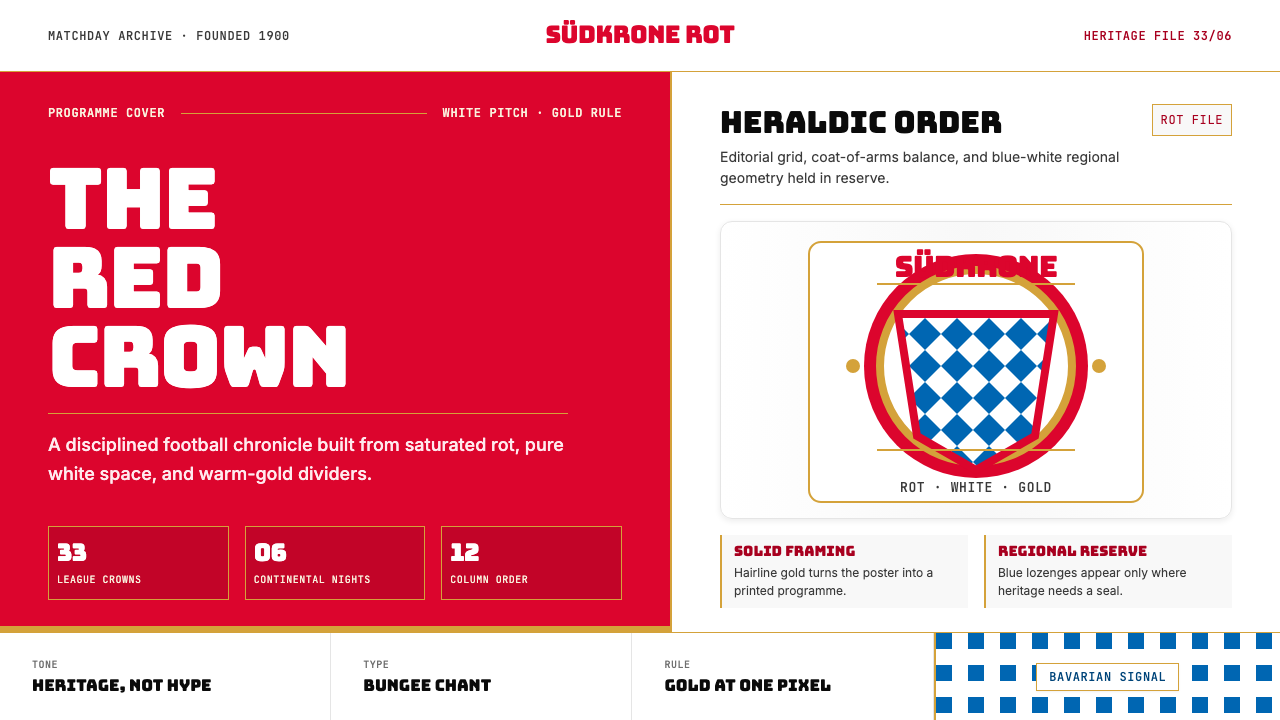 Bayern Munich (Rot)Heritage, not hype. Saturated rot fields, gold rules, and blue lozenges enfor…
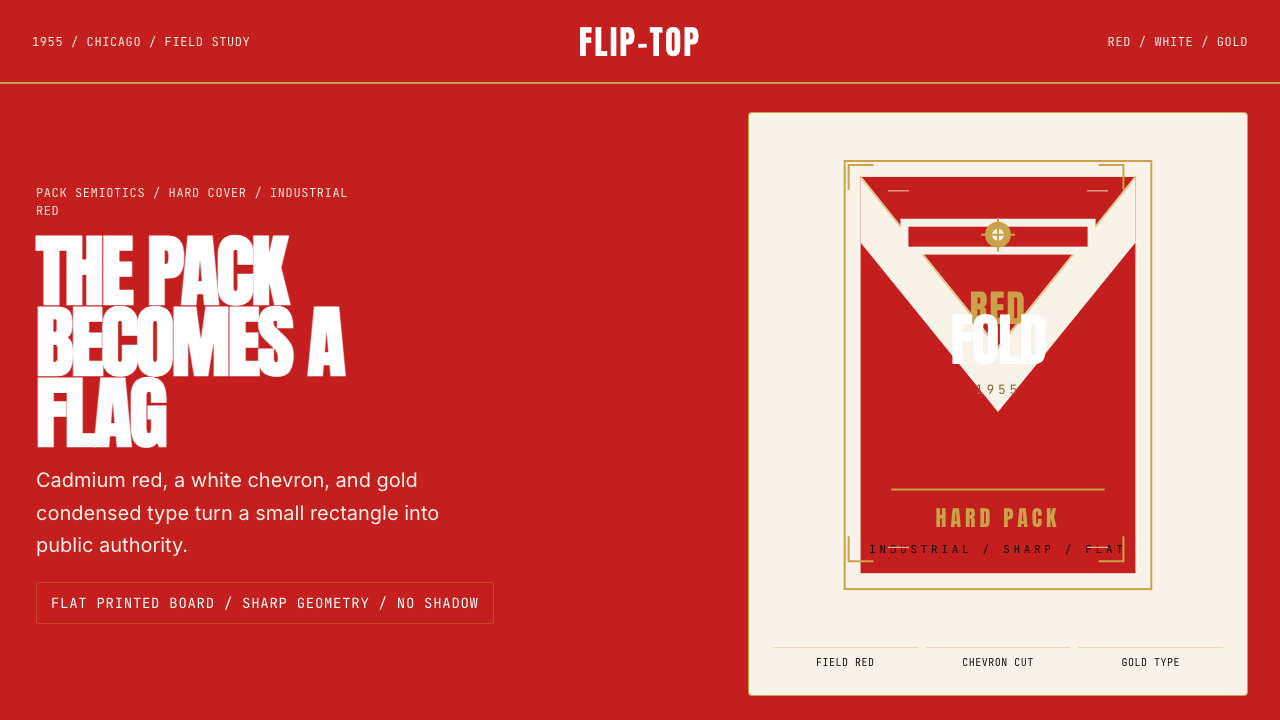 Marlboro Red Flip-Top (1955)Authority in one fold. Cadmium red, white chevron, and gold type read like a…
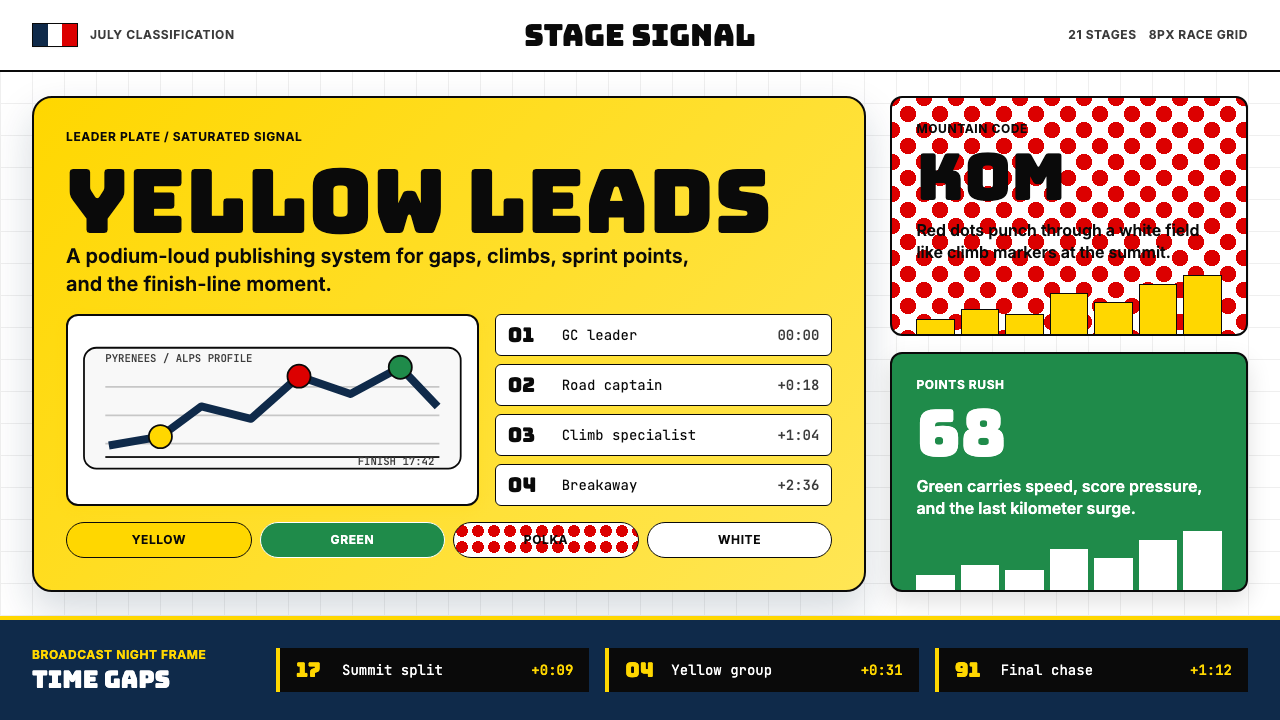 Tour de France (Yellow Jersey)Yellow owns the finish. Bungee type, polka dots, and navy tickers snap to an…
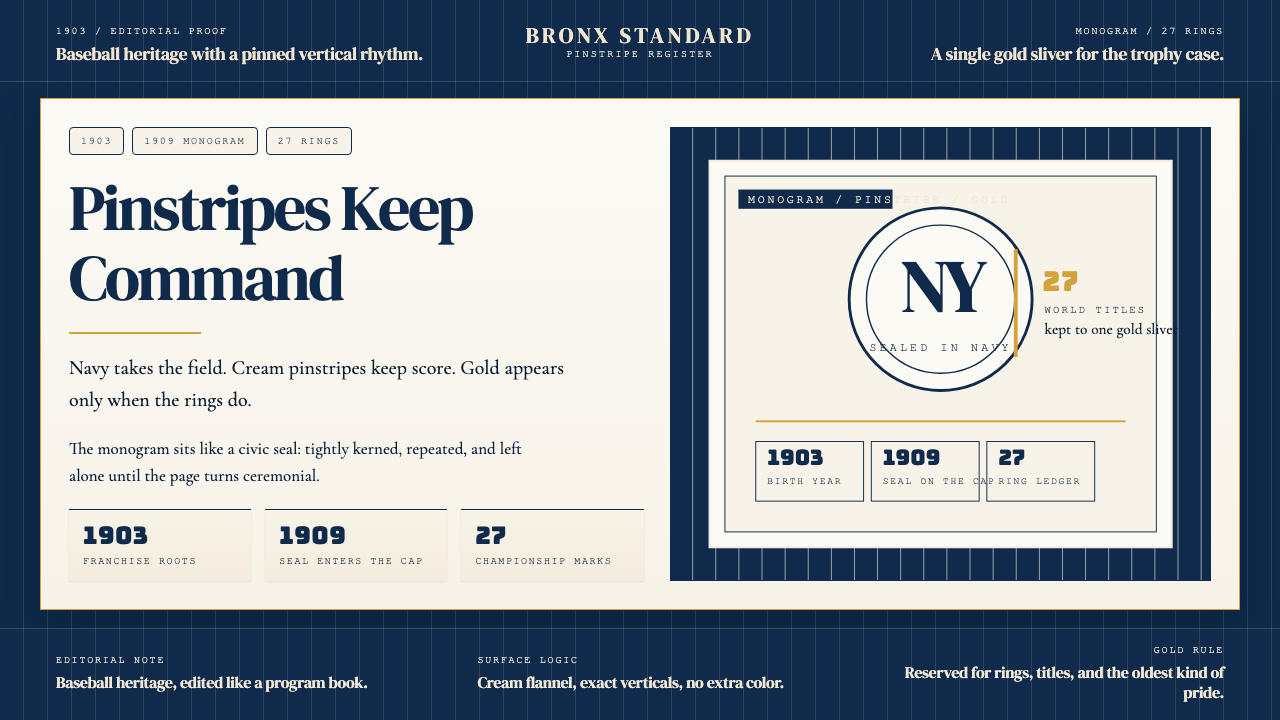 New York Yankees (Navy-Pinstripe)Navy restraint, not noise. Cream pinstripes and a gold monogram seal do the w…
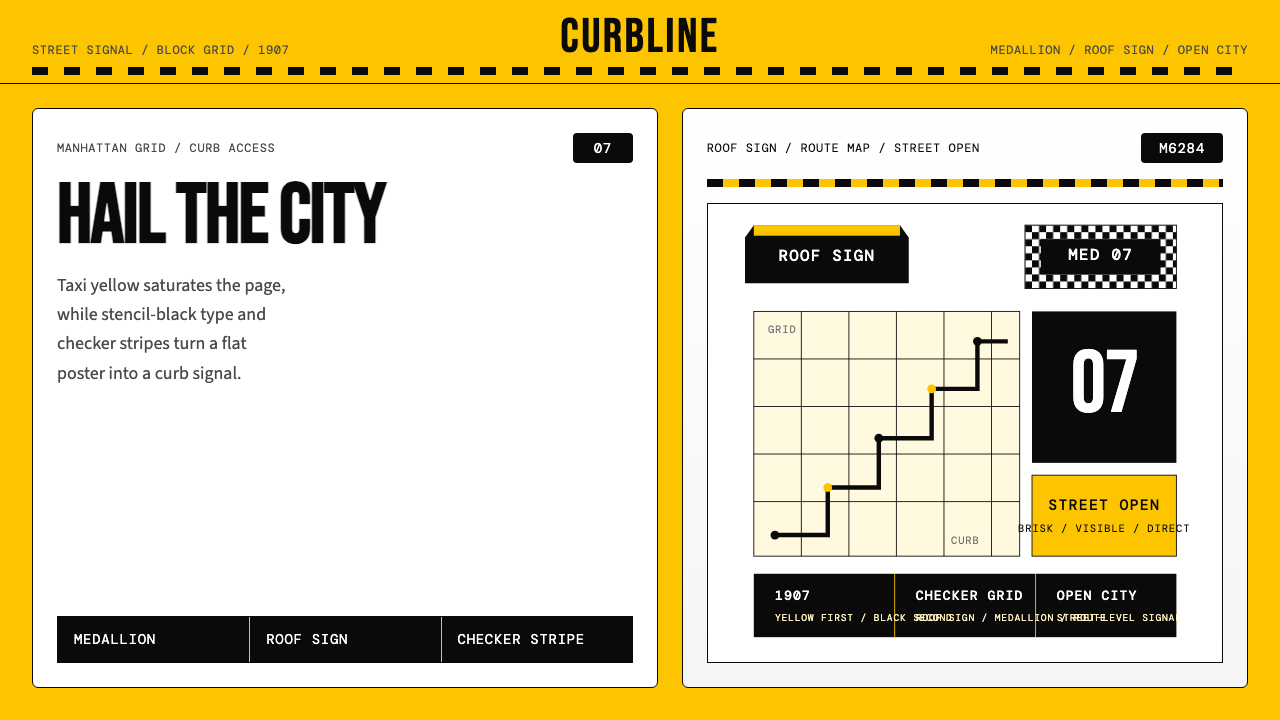 New York Yellow Cab (1907)Visibility is the brand. Taxi yellow, stencil type, checker stripes.
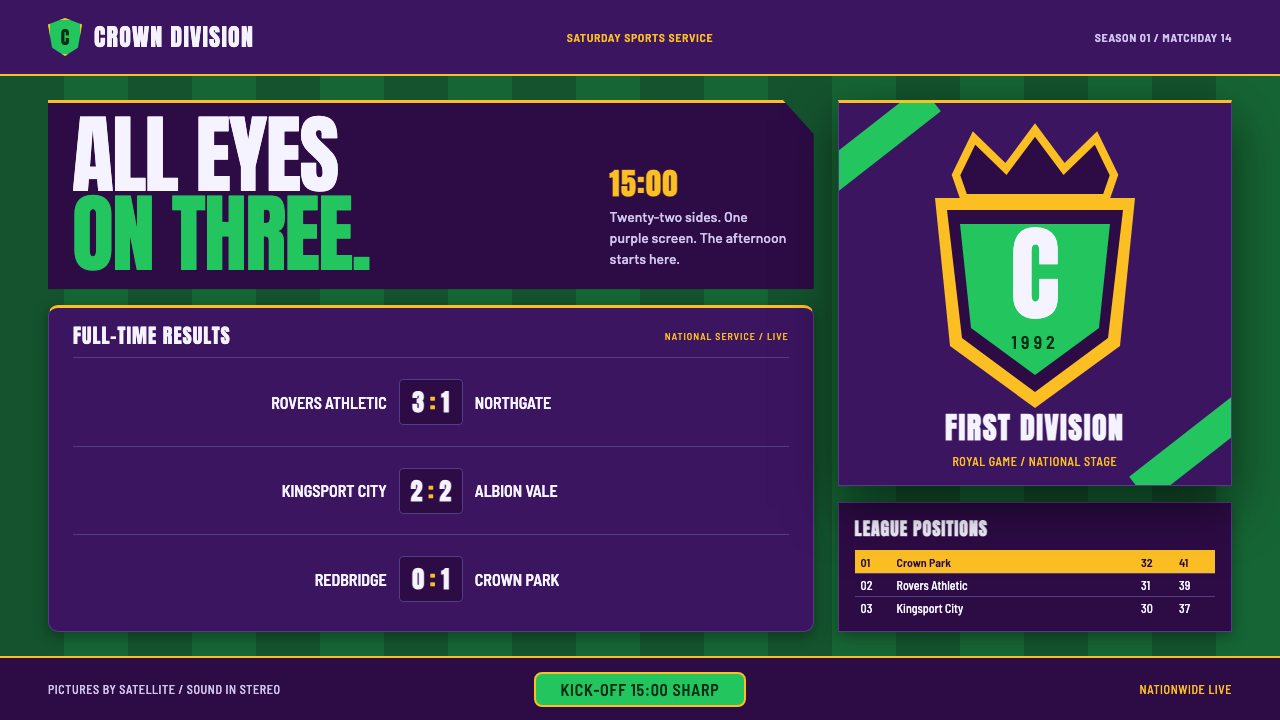 Premier League (1992)Heraldry meets the results page. Aubergine, pitch green and gold frame tabula…