What is Nintendo GameCube (2001)?
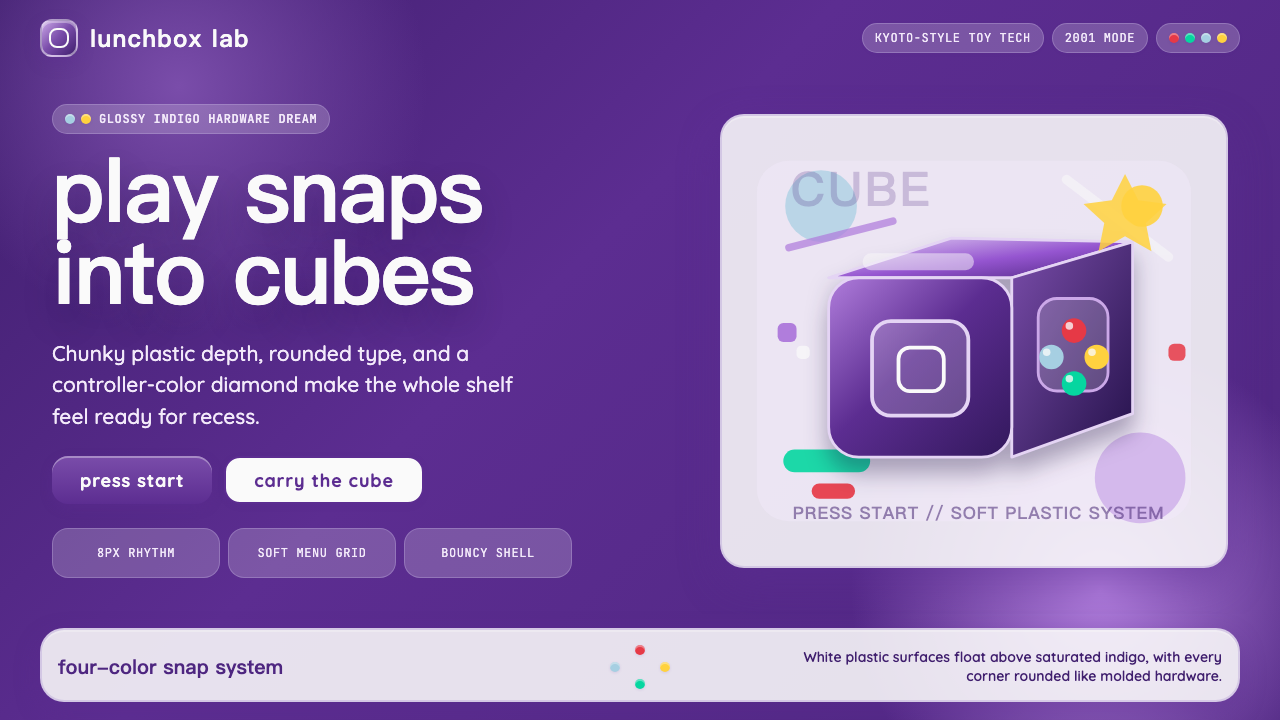
The GameCube turned a game console into a lunchbox-shaped declaration of joy — indigo plastic, translucent accents, and four candy-colored buttons that made play feel like a promise.
Nintendo GameCube (2001) in brief
Nintendo GameCube (2001) is a consumer-electronics design style rooted in the visual identity of Nintendo's sixth-generation home console, released in Japan in September 2001 and worldwide through 2002. Its aesthetic is defined by a deep indigo shell, a glossy translucent handle and disc cover, generous rounded corners on every surface, and the iconic four-button diamond rendered in vivid green, red, blue, and yellow. Together these elements form a visual language that is unambiguously playful — one that deliberately chose approachability and personality over the aggressive angular styling common among rival consoles of the era.
The style belongs to a broader wave of late-1990s and early-2000s consumer-technology optimism in which translucent plastics, candy colors, and rounded industrial forms signaled that technology could be friendly and even joyful. Nintendo had previewed this philosophy with the iridescent plastic of the Game Boy Color and the bold palette of the Game Boy Advance, but the GameCube pushed it further: every major component — the controller, the memory cards, the carrying handle — participated in the same exuberant formal language. Functionally the console was a cube; emotionally it was a toy.
As a design system for contemporary work, GameCube (2001) distills that toy-tech optimism into a transferable vocabulary: glossy surfaces with subtle gradient depth, high-chroma color used with confidence rather than restraint, rounded forms that soften every corner, and a playful hierarchy that prioritizes tactile delight over austere order. It is a style for products and communications that want to feel energetic, warm, and genuinely fun without tipping into the chaos of pure novelty.

Where does Nintendo GameCube (2001) come from?
The GameCube's visual identity was shaped within Nintendo's Kyoto design studios under the leadership of hardware designer Kenichiro Ashida, whose team also created the distinctive wave-surfed controller that accompanied the console. Nintendo's design philosophy in this period was driven by Shigeru Miyamoto's conviction that hardware should communicate its purpose through form — that a game machine should look like something you want to touch and pick up, not something you rack in an entertainment center and forget about. The cube shape was chosen partly for internal engineering reasons but also because it was the least intimidating geometry available: blunt, honest, and immediately readable as a self-contained object.
The indigo colorway that became the console's signature was selected after extensive user research suggested it struck a balance between the warm purples associated with fantasy and play and the cooler blues associated with technology and precision. Nintendo offered the GameCube in several regional colorways — platinum silver, jet black, and a translucent Spice Orange released in Japan — but indigo dominated marketing materials worldwide and became the generation's visual shorthand. The translucent purple handle and disc cover were not merely decorative; they echoed the peek-inside aesthetic that had defined the Macintosh G3 iMac in 1998 and which had by 2001 become a shared grammar of consumer-tech friendliness.
The four-button diamond on the controller — A in green, B in red, X in blue, Y in yellow — distilled decades of Nintendo input-device thinking into its most legible form. Color was used functionally, not decoratively: each button's hue corresponded to its role in most game contexts, training muscle memory through chromatic association rather than text labels alone. This principle — that color should carry meaning rather than merely brighten a surface — runs through the entire GameCube aesthetic and distinguishes it from the arbitrary palette choices of lesser toy-tech imitators.
Satoru Iwata, then Nintendo's head of corporate planning and soon to become president, played a crucial role in shaping the GameCube era's communication style. Under his influence, Nintendo's marketing leaned into the console's personality rather than its specifications — advertisements showed children and adults laughing together, not polygon counts. This communication philosophy reinforced the design language: the GameCube was not marketed as the most powerful machine but as the most joyful one, and every element of its visual identity, from the chunky logo type to the primary-plus-indigo color system, was in service of that claim.
What defines the Nintendo GameCube (2001) look?
Indigo-Led Color System
The palette centers on a deep, saturated indigo — neither a cool violet nor a flat navy but a warm purple-blue that reads as uniquely playful in the consumer-electronics context. This base is complemented by the four-button primary quartet: vivid green, red, blue, and yellow. Each of the four accent colors is used at full chroma, without muddying or softening, which gives the system an almost graphic-design boldness. Whites and light grays function as neutral grounds, and the translucent purple elements introduce a luminous, backlit quality that softens the palette's intensity without neutralizing it.
Glossy Gradient Depth
Unlike flat-design systems that reject all depth simulation, GameCube aesthetic embraces a specific kind of glossy, highlight-driven gradient that recalls the sheen of hard polished plastic. Surfaces catch a diffuse highlight near the top or center and deepen toward the edges, suggesting a convex, tactile form even in two-dimensional applications. This is not the soft atmospheric shadow of skeuomorphism or the hard offset shadow of Bauhaus — it is a surface-level luminosity that reads as material quality rather than spatial depth. The effect communicates that the object is solid, satisfying to hold, and manufactured with care.
Generous Rounded Corners
Every form in the GameCube visual language carries a pronounced curve radius at its corners — far beyond the subtle rounding that became a contemporary UI convention. This is not a polish detail but a formal commitment: rounded corners signal safety, approachability, and the tactile logic of a handheld object designed not to hurt you. In layout applications, this principle extends to cards, buttons, badges, and containers, all of which should feel chunky and friendly rather than precise and edged. The roundness is part of the personality, and trimming it back toward a tighter radius undermines the style's core warmth.
Toy-Scale Typography
Text in the GameCube style is set with the deliberate boldness of a toy label rather than the precision of editorial type. Headlines favor rounded, slightly inflated letterforms — either rounded sans-serifs or display typefaces with a friendly, bubbly quality. Weight is used generously: where an editorial system might use a medium weight for body and a bold for headers, this style reaches for extra-bold or black weights at headline level. Letter-spacing is tight, reinforcing the chunky, self-contained feel. Body text remains readable but is secondary — this is a style where the headline is the experience and the body copy is supporting information.
Translucent Accent Elements
A defining material signature of the GameCube era is the use of translucent or frosted plastic alongside the solid-colored primary material. In the original hardware this appears in the handle, the disc cover, and memory card edges. In two-dimensional design applications, this translucency translates to frosted-glass panels, semi-opaque overlays, or glassmorphism-adjacent cards that allow background color to bleed through at reduced opacity. The effect should preserve some legibility of whatever lies beneath — it is not a full opacity block but a layered luminosity. This distinguishes the style from pure opaque flat design and adds the specific lightness associated with that era of consumer tech.
Joyful Hierarchy
Information hierarchy in the GameCube style is organized around emotional emphasis rather than pure logical ranking. The most important element on a layout is not necessarily the most information-dense — it is the most delightful. A bold color splash, an oversized icon, or a playful label gets visual priority even if it carries relatively little semantic weight. Supporting information steps back but does not disappear: it is rendered in a lighter weight or a neutral tone, allowing the hero element to dominate without abandoning legibility. This hierarchy rewards users who scan for feeling before they read for content — which is the natural behavior of a consumer engaging with a playful product.
Chunky, Tactile Form Language
The GameCube aesthetic consistently prefers mass over thinness, substance over elegance, and tactile implied weight over visual lightness. Buttons look pressable. Cards look stackable. Iconography appears three-dimensional enough to pick up. This is the opposite of the ultra-thin, borderless minimalism that dominated design in the mid-2010s — it is a deliberate return to the period when designed objects were unafraid to take up space. In UI applications, this means borders and outlines are present rather than ghosted, interactive elements have visible states, and the overall impression is of a system that has physical confidence in itself.

Who shaped Nintendo GameCube (2001)?
Ashida led the industrial design of the GameCube hardware at Nintendo's Kyoto studios. His team was responsible for the console's distinctive cube form factor, the indigo and translucent-purple color system, and the ergonomically unconventional GameCube controller — a piece of input-device design that remains studied for its radical departure from the symmetric gamepad conventions of the preceding decade. Ashida's design approach at Nintendo consistently prioritized the emotional and tactile experience of holding hardware over its visual alignment with broader consumer-electronics trends, a philosophy that made each Nintendo product of the era immediately recognizable as distinct from the competition.
Miyamoto, as Nintendo's most senior creative director, set the overarching design philosophy that the GameCube hardware and software visual identity had to serve. His insistence that games and game hardware should communicate joy through their form — not just their content — shaped every aesthetic decision from the choice of indigo over neutral gray to the decision to make the carry handle a design feature rather than an afterthought. Miyamoto's practice of playtesting hardware in the hands of children and non-gamers to observe their emotional reactions directly informed the softened, approachable language of the GameCube era, and his influence ensured that playfulness was treated as a discipline rather than a decoration.
Iwata joined Nintendo as head of corporate planning during the GameCube's development and became president in 2002 as the console launched globally. His contribution to the GameCube design era was primarily one of communication and philosophy: under his direction, Nintendo's public-facing identity emphasized human connection and accessible fun over technical specification. This stance shaped how the visual identity was deployed in marketing — the indigo cube appeared in contexts of laughter and shared play rather than technical power — and set the groundwork for the DS and Wii eras that followed. Iwata's deep respect for both engineering precision and user empathy made him an unusual bridge between the technical and aesthetic ambitions of the GameCube project.
The GameCube did not emerge in a vacuum: it was the product of a specific moment in consumer-technology design history when translucent plastics and candy-colored housings became a shared aesthetic grammar. Apple's iMac G3 (1998) had demonstrated that consumers responded emotionally to hardware they could see through and that came in colors beyond beige. The movement — often called Y2K design — swept through electronics, household appliances, and even automotive interiors in the years around 2000. Nintendo absorbed this grammar and pushed it further, combining the translucence aesthetic with a stronger primary-color system and a more explicitly toy-derived formal language, resulting in a product that was simultaneously of its moment and distinctly itself.
How do you use Nintendo GameCube (2001) today?
GameCube (2001) is a style whose personality is its primary asset, which means applying it correctly requires committing to its emotional register rather than borrowing only its surface details. The indigo-and-four-color system, the rounded forms, and the glossy depth all work together as a system. Using the rounded corners without the bold color, or the translucent elements without the playful hierarchy, produces something that feels neither authentically GameCube nor clearly anything else. The first discipline is committing to the whole vocabulary rather than sampling from it.
For presentation slides, the style works exceptionally well for product launches, team introductions, gaming or entertainment industry decks, and any context where warmth and energy are desired over formal authority. A cover slide benefits from the style's poster-like boldness: a large indigo ground with one oversized element — a bold typographic title, an icon rendered in the four-button palette, or a product hero shot — anchored against generous white space at the bottom for subtitle and date information. Content slides should use the rounded card system as their primary organizing principle, with each card carrying a distinct accent color drawn from the four-button palette to signal its category or priority. Data slides lean into the toy-scale approach: bar charts and bubble charts become bold geometric objects, with bars filled in the primary accent colors and value labels set in a heavy, rounded typeface.
For web interfaces, the style is best suited to consumer-facing products where delight is a feature: gaming platforms, children's educational tools, entertainment subscription services, and playful productivity tools aimed at creative professionals. Dashboard layouts should use the rounded card grid as their backbone, with interactive elements — buttons, toggles, badges — rendered in the full-chroma accent colors rather than muted variants. Pricing pages work well with the style's bold hierarchy: a featured tier gets a full indigo background with light text, flanked by lighter-toned alternatives that allow the primary selection to dominate. Navigation should be confident and label-heavy, with rounded pill-shaped active states replacing thin underlines.
For editorial and marketing work, GameCube (2001) suits campaign materials, event branding, social card series, and any communication that wants to feel celebratory and energetic. A social card template should commit to one dominant color per card — rotating through indigo, green, red, and yellow across a series — with a single bold typographic statement and a supporting line at smaller scale. Editorial layouts in this style avoid the narrow, justified body-text conventions of serious editorial; instead they prefer wider line spacing, shorter measures, and a reading experience that feels more like a magazine feature than a journal article. The key is maintaining the sense that reading is a pleasure rather than an obligation.
A common mistake when applying GameCube (2001) is confusing playfulness with randomness. Authentic GameCube aesthetic is rigorous about which colors appear where and in what proportion: the indigo is the dominant ground, the four accent colors are used individually rather than simultaneously, and the translucent elements appear as highlights rather than backgrounds. Placing all four accent colors on the same panel, using random rounded shapes as decoration without structural purpose, or applying the glossy gradient to every element equally — all of these flatten the style into a generic retro-gaming pastiche. The discipline here is the same as in any strong design system: constraint enables personality, and personality requires restraint.

Nintendo GameCube (2001) — FAQ
Is GameCube (2001) the same as general Y2K design?
They overlap but are not identical. Y2K design is a broad umbrella covering translucent plastics, iridescent surfaces, chrome gradients, and candy colors across many product categories from roughly 1997 to 2004. GameCube (2001) is a more specific and coherent visual system: it has a defined color anchor in indigo, a specific formal vocabulary in chunky rounded geometry, and a philosophical grounding in Nintendo's toy-tech approach that distinguishes it from purely trend-driven Y2K pastiche. Applying GameCube means applying a specific grammar, not just reaching for any translucent purple element from that era.
Can this style work for serious or professional products?
It can, but it requires careful calibration. The style's natural territory is consumer-facing products where warmth, approachability, and energy are assets. In more serious professional contexts — financial tools, medical platforms, enterprise analytics — the full GameCube vocabulary risks reading as juvenile or insufficiently authoritative. A productive approach in such contexts is to borrow specific elements selectively: the rounded card system and the confident color accents can work in a product-management tool or a creative-agency website, while the full glossy-gradient and four-color-diamond treatment is reserved for moments of celebration or reward states rather than the default UI.
How does this style handle dark mode?
The canonical GameCube palette is light-ground — white or light gray backgrounds with the indigo and accent colors as dominant chromatic elements. A dark variant is possible and can work well, but it shifts the aesthetic toward something closer to an arcade interface or a gaming dashboard rather than the original toy-tech warmth. On a dark background, the indigo becomes a mid-tone accent rather than a ground color, and the four button colors may need to be toned down slightly to avoid overwhelming brightness. The translucent elements work particularly well in dark mode, as the frosted-glass quality creates a luminous layering effect against dark grounds without sacrificing legibility.
What makes this different from generic retro-gaming aesthetics?
Generic retro-gaming aesthetics tend to reach for pixel art, scanlines, phosphor-glow gradients, and the visual language of cathode-ray-tube screens and eight-bit or sixteen-bit game graphics. GameCube (2001) is a different historical moment entirely — it is smooth, three-dimensional, plastic, and optimistic rather than pixelated, nostalgic, and screen-simulating. The style is rooted in physical industrial design rather than digital display artifacts. Confusing the two produces a hybrid that satisfies neither reference: pixels and rounded plastic do not share a visual logic, and combining them produces work that reads as confused rather than layered.
How should the four-button colors be distributed across a layout?
The most common and most successful approach is to treat the four accent colors as a category system: each color is assigned to a distinct group, tier, or content type, and it appears consistently for that group across the entire design. This mirrors how the buttons functioned on the original controller — each color reliably meant something specific. What does not work is applying all four colors to a single hero element for visual richness, or cycling through them randomly across similar-level elements. The indigo should remain the dominant ground throughout; the four accent colors are highlights within that system, not competitors to it.
Related design styles
 MSN Messenger (2001)Dial-up optimism, online. Luna-blue chrome and bright status dots keep every…
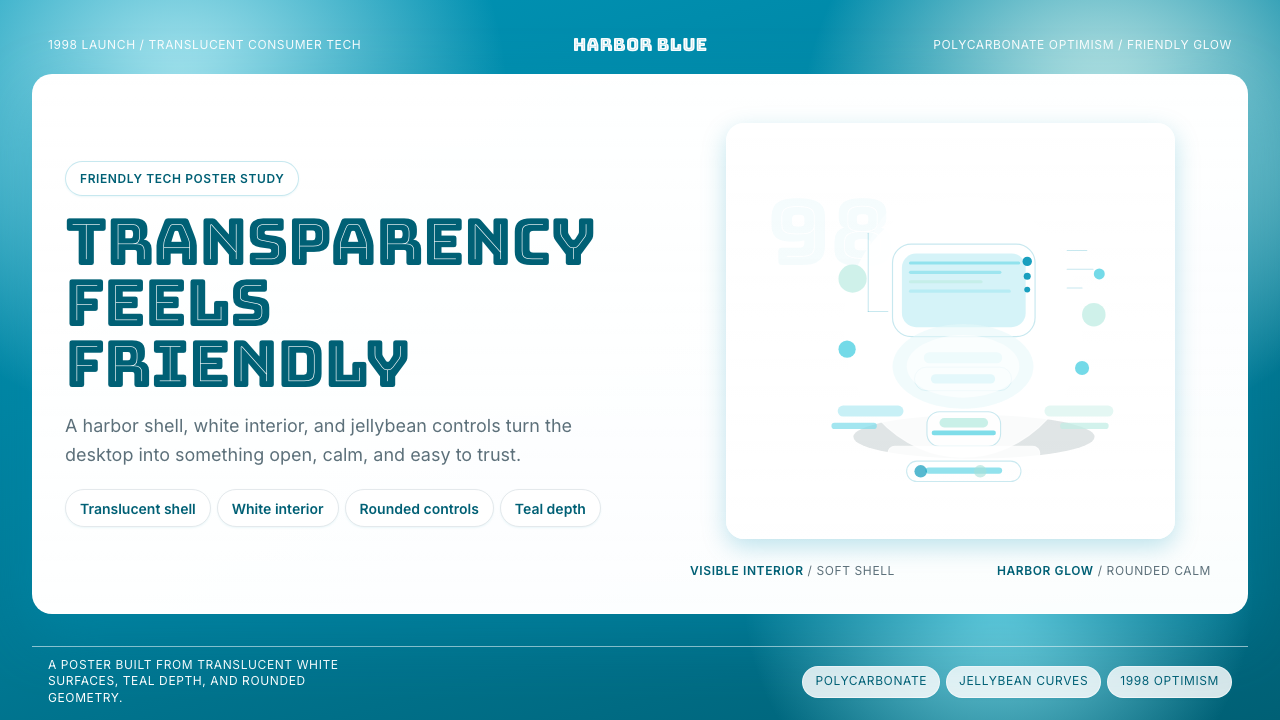 iMac G3 Bondi Blue (1998)Transparency feels friendly. Bondi blue, white glass, and pill curves set the…
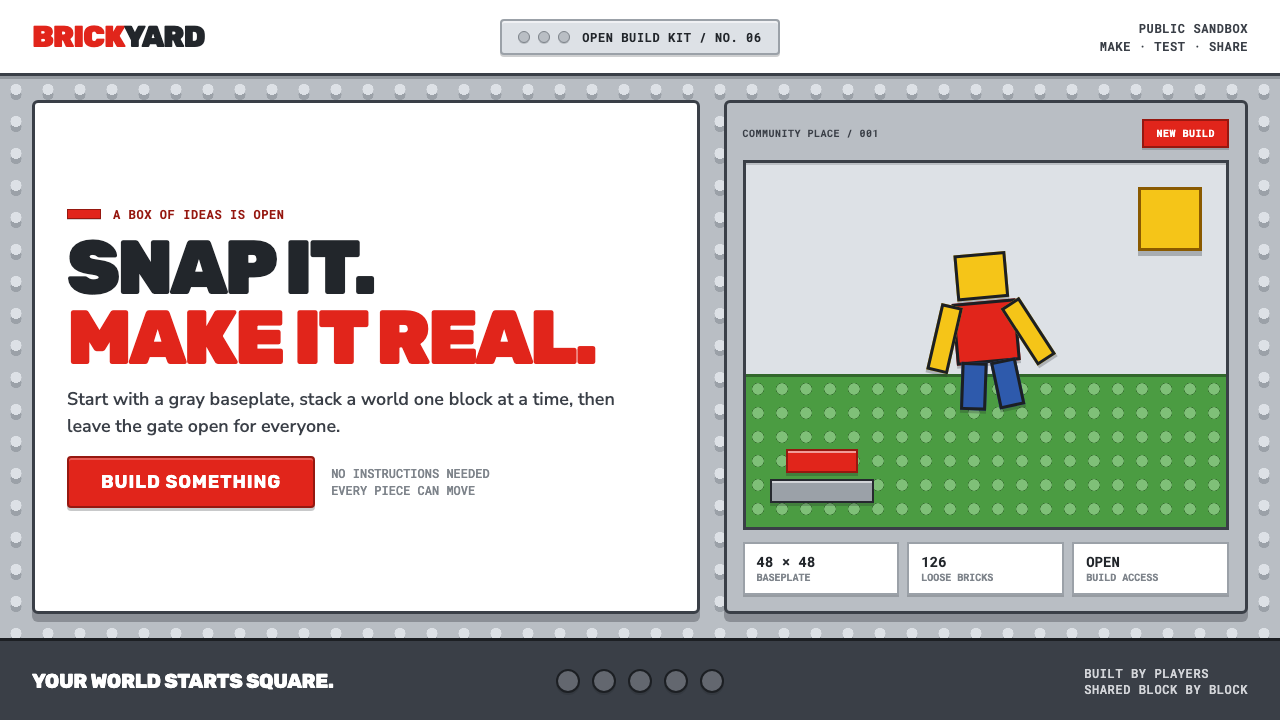 Roblox (2006)Play begins with a click. Fire-engine red cuts through a hard-edged gray stud…
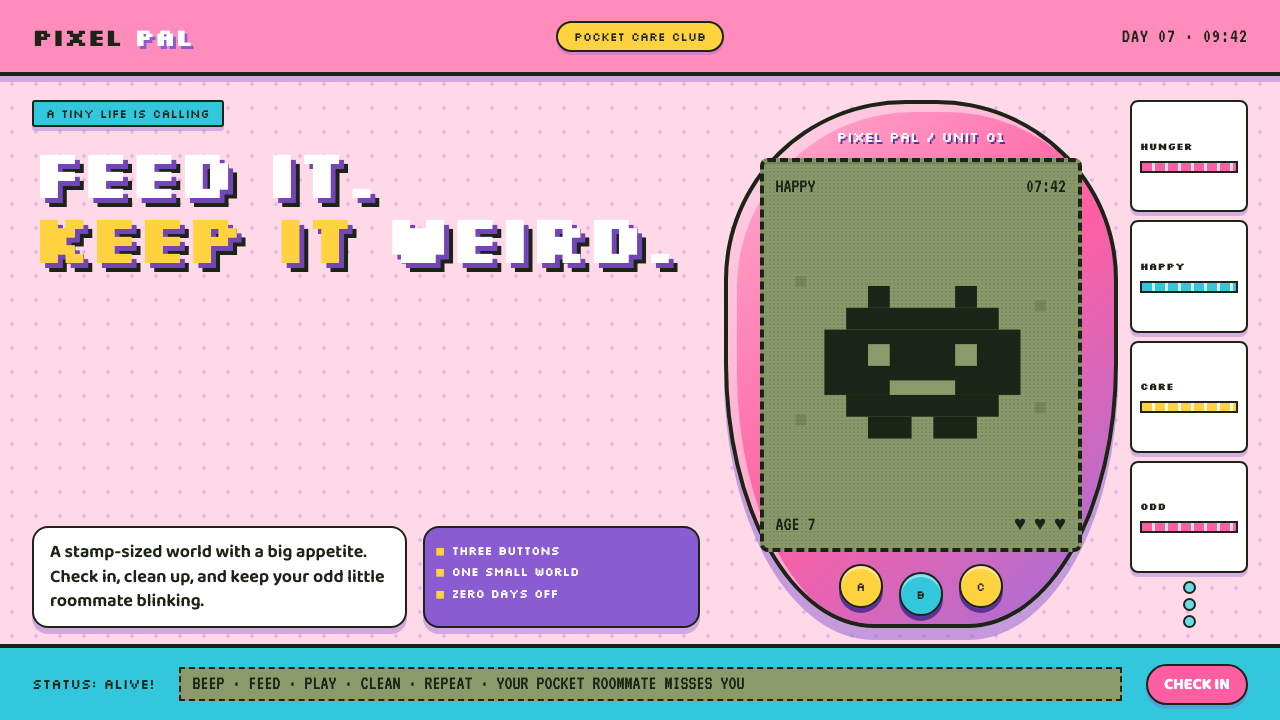 Tamagotchi (1996)Care gets candy-coated. Bubblegum plastic frames a crunchy pea-green pixel wo…
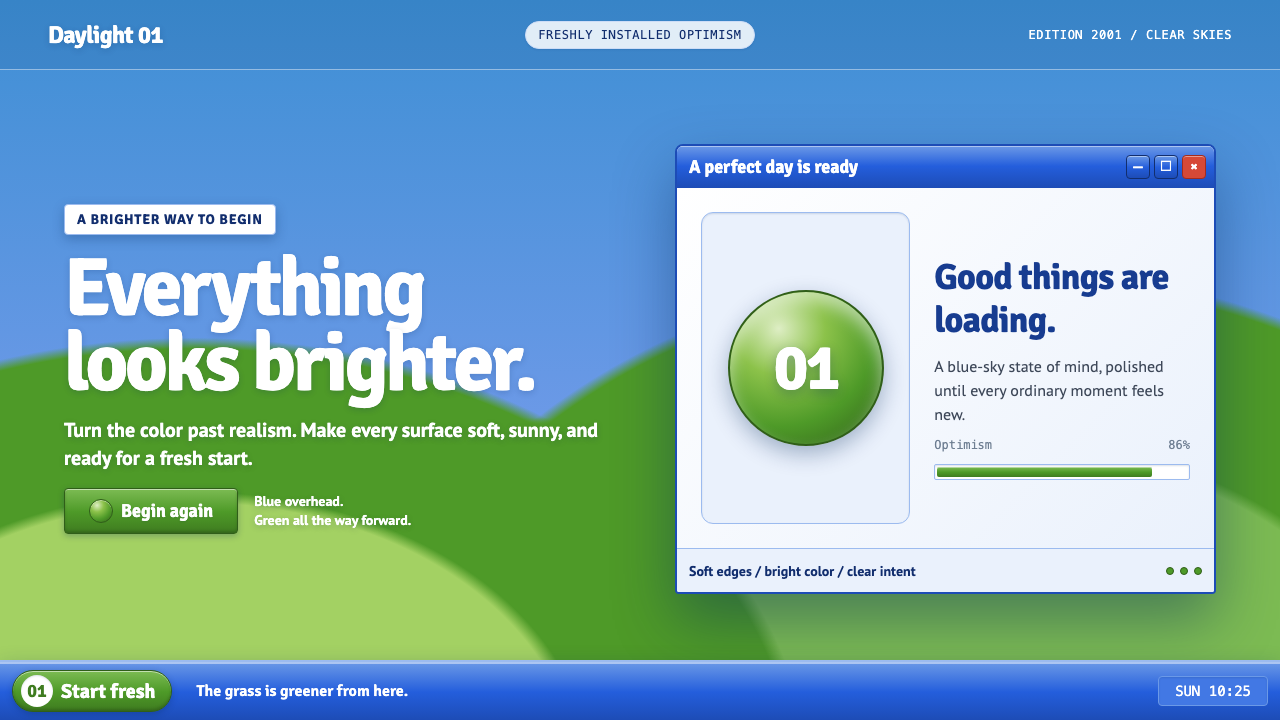 Windows XP Bliss (2001)Fresh-install optimism. Sky blue, hill green, and glossy gel chrome turn real…
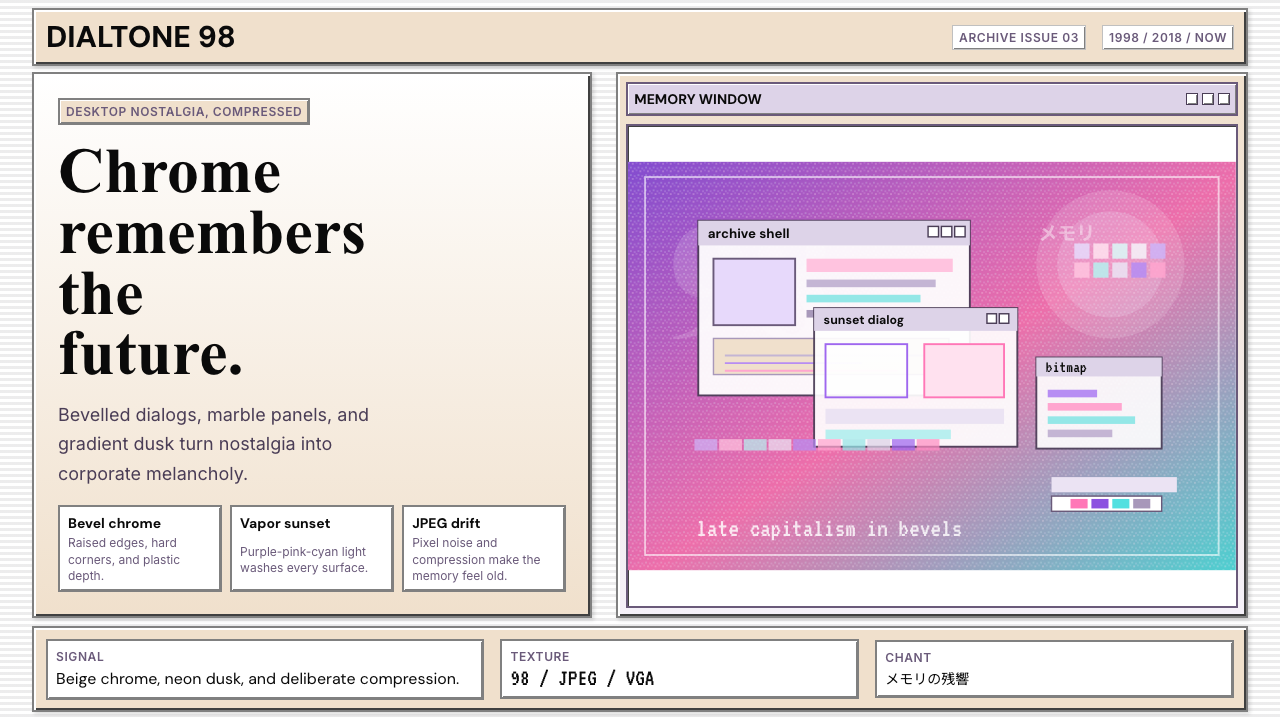 Windows 98 VaporwaveCorporate melancholy glows. Bevelled panels and purple-pink-cyan dusk do the…