What is MTV Y2K (2000s)?
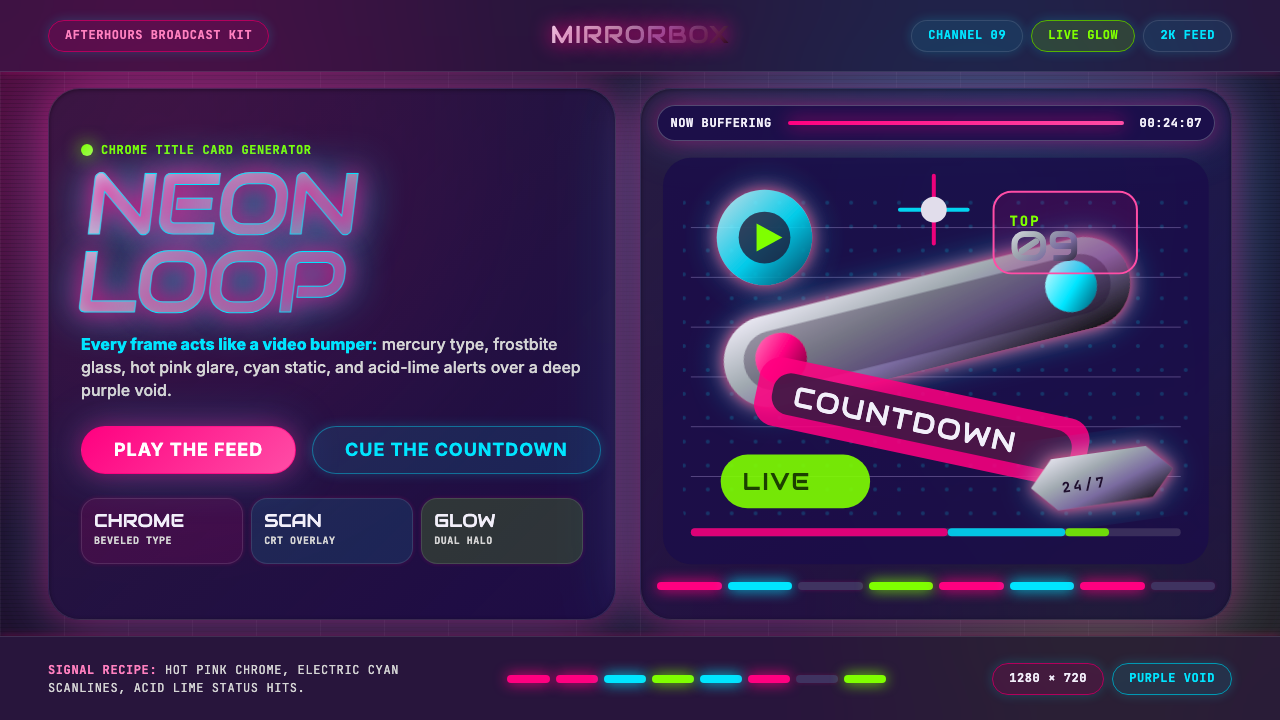
MTV's millennium-era identity turned every screen into a music video title card — chrome gradients, neon scanlines, and lens-flare halos burning over deep purple voids at maximum volume.
MTV Y2K (2000s) in brief
MTV Y2K is the broadcast design aesthetic that defined the network's visual identity from the late 1990s through roughly the mid-2000s — a period anchored by shows like Total Request Live, Cribs, and Pimp My Ride. It represents Y2K visual culture at its most amplified: chrome-metallic type treatments, scanline-and-glitch overlays, and hot pink, cyan, and acid lime screaming against deep purple or near-black voids. Every surface gleams, every edge glows, and every transition flickers as if the signal is about to overload.
The style is best understood as an intentional sensory assault. Unlike design movements that pursued restraint or clarity, MTV Y2K embraced excess as a statement — more chrome, more neon, more lens flare, more motion blur. The underlying message was that the millennium itself was spectacular, and the screen should reflect that spectacle at all times. It fused early glassmorphism (frosted, translucent surfaces suggesting depth), mercury-glass gradients (reflective metallic transitions that seem to contain light), and lens-flare halos (starburst rings of color radiating from bright focal points) into a deliberately overstimulating whole.
Visually, the style sits at the intersection of broadcast graphics, early CGI experimentation, and music video aesthetics. It borrowed the kinetic energy of hip-hop and pop video production, the technological optimism of early digital consumer culture, and the futurist chrome fantasies that science fiction had been building since the 1980s. The result was a design language that felt simultaneously cutting-edge and celebratory — a visual declaration that digital culture had arrived and that it was loud.

Where does MTV Y2K (2000s) come from?
MTV launched in 1981 with the explicit mission of making music visual — a 24-hour television channel devoted entirely to music videos, VJ personalities, and the theatrical presentation of pop culture. By the mid-1990s, MTV had become the dominant youth media brand in the United States and was expanding globally through regional networks. Its graphic identity in those early and middle years was bold but relatively contained: primary-color logotypes, energetic motion graphics, and the network's famous shape-shifting logo bugs. The transition into Y2K aesthetics was gradual, beginning around 1997 and accelerating sharply as 1999 approached.
The historical context is essential. The late 1990s were saturated with millennium anxiety and millennium optimism in nearly equal measure. Consumer technology was changing rapidly — the first generation of truly affordable home computers, the early public web, nascent digital cameras, and DVD players all arrived in the same compressed window. Design software was becoming powerful enough for individual artists and small studios to produce broadcast-quality motion graphics without industrial facilities. This democratization of digital production tools created a moment when chrome gradients, lens flares, and CGI reflections were simultaneously new, impressive, and achievable — and therefore everywhere.
MTV's design teams, operating from the network's Times Square headquarters in New York City, were well positioned to absorb and amplify these trends. The network had always operated by treating its graphics as a form of programming in their own right — the bumpers, idents, and show open sequences were designed to be as visually arresting as the content they surrounded. Under executives including Tom Freston, who served as CEO during much of the relevant period, MTV maintained a culture of graphic experimentation. The on-air look became progressively more chrome-heavy, more neon-saturated, and more glitch-inflected through the TRL era (Total Request Live debuted in 1998 and ran until 2008), which placed the visual language of Y2K aesthetics at the center of daily American youth media consumption.
Key creative figures shaped the era. Carson Daly, as the face of TRL, embodied the style's cultural position — a bridge between celebrity excess and teenage aspiration framed in visual language that referenced luxury, technology, and spectacle simultaneously. Photographer and director David LaChapelle contributed a saturated, hyper-real visual sensibility to the network's editorial and video aesthetic that aligned perfectly with Y2K's rejection of naturalism. Eric Nyari, who worked in MTV's design and branding operations, was among those who translated these cultural energies into consistent on-air graphic systems. The broader context also includes the simultaneous rise of hip-hop as the dominant popular music genre, which brought its own visual vocabulary — iced-out jewelry, chrome rims, palatial interiors — into television design through shows like Cribs.
What defines the MTV Y2K (2000s) look?
Chrome-Metallic Surfaces
The defining material of MTV Y2K is chrome — not as a solid color but as a gradient effect that simulates highly reflective metallic surfaces. Type treatments, logo elements, and decorative shapes all receive this mercury-glass treatment: light appears to exist within the element itself, shifting from brilliant white at the highlight through steel gray to near-black at the shadow edge. The effect communicates luxury, technology, and futurism simultaneously, drawing on associations with car culture chrome and science-fiction spacecraft. Chrome surfaces are rarely flat; they catch implied light sources and reflect implied environments, giving even static elements a sense of movement.
Neon Color Palette
The dominant hues are hot pink, electric cyan, and acid lime — all pushed to luminosity levels that suggest they are being generated by light rather than pigment. These colors appear against deep purple, near-black, or void backgrounds that allow them to vibrate at maximum intensity. The palette is explicitly theatrical: these are not colors found in nature but colors found in signs, screens, and the imagined future. Purple backgrounds serve a specific function — they are warm enough to feel dramatic rather than cold, and they allow both the warm neon pinks and the cool neon cyans to read with equal intensity without either dominating.
Scanlines and Glitch Overlays
Horizontal scanlines — fine parallel lines running across the entire composition — reference the CRT television technology through which MTV's audience originally consumed its content. Rather than hiding this technological mediation, the style celebrates it as texture and identity. Glitch overlays add a second layer of technological self-reference: fragmented blocks, signal interference patterns, and momentary digital artifacts that suggest the broadcast is at the edge of its technical limits. Together, scanlines and glitches function as the style's version of grain in film photography — a texture that simultaneously marks the medium and adds visual richness.
Lens-Flare Halos and Light Bleeds
Lens flares — the starburst rings, streaks, and polygon-shaped artifacts produced when a bright light source enters a camera lens — are used not as photographic accidents but as deliberate compositional elements. A focal point in the composition will frequently be surrounded by concentric rings of color, radiating spokes of light, or a general bloom that bleeds the boundary between object and background. Light bleeds extend this logic: entire sections of the composition glow outward, dissolving edges into luminous halos. The effect reinforces the sense that the visual content is itself a source of energy — that looking at it means being exposed to light.
Frosted and Translucent Layering
MTV Y2K anticipates what would later be formally named glassmorphism: surfaces that appear frosted or partially transparent, allowing the color and content behind them to bleed through in a diffused, softened form. These translucent panels create depth without relying on hard shadows — instead of a solid card sitting on a background, a frosted card merges with it, suggesting a physical object made of treated glass or polished acrylic. The layering is typically extreme: four, five, or six translucent elements stacked and overlapping create compositions of considerable depth despite the two-dimensional surface.
Kinetic and Overloaded Typography
Type in the MTV Y2K style is never quiet. Letterforms receive the same chrome-gradient treatment as other design elements, frequently with added glow effects that cause them to appear lit from within. Scale is used dramatically: headlines may be enormous and slightly condensed, pushed to the absolute edge of the composition, while secondary text is much smaller and sometimes set in tight monospaced or technical-looking faces that evoke digital readouts. Multiple type weights, angles, and treatments often coexist on the same composition — the typographic chaos is part of the style's energy rather than an oversight.
Deep-Space Void Backgrounds
Backgrounds are rarely neutral. The typical MTV Y2K background reads as a deep, radiating void — dark purple or near-black at the edges, blooming toward a lighter, slightly blue or magenta center, as if the composition is being viewed through the entrance to a tunnel of light. This vignette effect gives the composition a sense of infinite recession while simultaneously framing all foreground elements as if they are emerging from darkness toward the viewer. The background is not empty space but rather atmospheric space — full of depth, color, and implied dimensionality.

Who shaped MTV Y2K (2000s)?
Freston co-founded MTV and served as its chief executive through much of the Y2K era, providing the institutional leadership and creative latitude that allowed the network's design culture to develop its signature excess. Under his stewardship, MTV expanded globally while maintaining a consistent on-air aesthetic identity rooted in spectacle and experimentation. His belief in treating MTV as a creative brand rather than a conventional broadcaster created the conditions under which the Y2K visual language could flourish as a genuine design movement rather than simply a network house style.
As the host of Total Request Live from its 1998 debut through 2003, Carson Daly was the human face at the center of the Y2K aesthetic's daily broadcast expression. TRL was the program through which the visual language of MTV Y2K became most visible to its audience — the chrome graphics, neon countdown sequences, and glitch overlays of the show's packaging surrounded Daly on screen five days a week. His persona — friendly, aspirational, simultaneously celebrity-adjacent and audience-approachable — embodied the style's central tension between spectacle and accessibility.
LaChapelle is a photographer and music video director whose hyper-saturated, maximalist visual style was among the most influential in shaping the broader Y2K aesthetic. His images — populated by celebrities, extreme color, surreal props, and an almost overwhelming density of visual information — provided the editorial and video template that MTV's design language echoed and systematized. His work for artists including Britney Spears, Christina Aguilera, and Elton John during this period constitutes a primary visual record of Y2K excess, and his sensibility of deliberate over-stimulation is inseparable from the network's graphic identity of the same era.
Nyari worked within MTV's design and branding operations during the network's Y2K peak, contributing to the translation of the era's cultural energies into systematic on-air graphic languages. Figures like Nyari represent the often-uncredited design practitioners who took the broader aesthetic currents of Y2K culture — its chrome, its neon, its digital futurism — and built them into repeatable, broadcast-ready design systems that could be applied consistently across the network's programming slate and promotional materials.
Hype Williams is a music video director whose work in the late 1990s and early 2000s was foundational to the visual grammar that MTV's graphic designers absorbed and broadcast. His signature techniques — extreme wide-angle lens distortion that stretches the edges of the frame, hypersaturated color grading, and the use of reflective surfaces, luxury objects, and deep cinematic contrast — defined the music video aesthetic that TRL and other MTV programming brought into living rooms daily. His videos for artists including Missy Elliott, Jay-Z, and Busta Rhymes are among the most direct expressions of Y2K visual culture in motion.
How do you use MTV Y2K (2000s) today?
MTV Y2K is a high-intensity style that succeeds through commitment rather than moderation. Applying it at half-volume — a little chrome here, a mild neon accent there — typically produces results that feel dated or confused rather than stylish. When the style is the right choice, it should be executed at full intensity: deep void backgrounds, chrome-gradient headlines, neon accent colors that feel actively luminous, and scanline or glitch textures that reinforce the broadcast-era reference. The aesthetic rewards designers who treat excess as a discipline rather than an accident.
For presentation slides, the style is most effective as a thematic or editorial statement. A cover slide in MTV Y2K style should commit to a full deep-purple-to-void background, a chrome-treated headline in a large condensed display typeface, and one or two neon accent colors used for supporting text or graphic elements. Content slides require more restraint — the background treatment and color palette should remain consistent, but the density of effects should decrease so that data and text remain readable. Data visualizations should use the neon palette actively: bar charts and graphs with neon fill against deep backgrounds read as inherently energetic rather than analytical, which works well for creative, entertainment, or cultural industry presentations.
For web user interfaces and dashboards, MTV Y2K works best for products in the music, entertainment, gaming, or digital culture verticals where the aesthetic's associations with energy and spectacle are brand-appropriate. A pricing page or feature showcase built in this style uses a deep dark background with subtle vignette, frosted or translucent card components with chrome-gradient accent borders, and neon color coding for tier differentiation or interactive states. Navigation should be typographic and high-contrast. The style requires careful attention to accessibility: neon text on dark backgrounds can achieve excellent contrast ratios, but glitch overlays and scanline textures should be applied at low enough opacity that they do not impede legibility.
For editorial and marketing applications, the style excels in contexts where the content itself is about spectacle, culture, or digital life — music releases, gaming announcements, entertainment features, fashion editorial. A full-page marketing spread in MTV Y2K style uses the full void background, allows chrome elements to bleed toward the edges of the composition, and places neon typographic callouts at angles that reinforce the kinetic energy of the layout. Social card formats benefit from the style's tendency toward focal-point composition: a single chrome-treated headline or logo in the center of a deep void background, surrounded by lens-flare halos, is immediately legible at thumbnail scale and recognizable as a stylistic statement.
The most common mistake when applying MTV Y2K is using the neon palette against light or white backgrounds. The style's colors are engineered for darkness — they achieve their characteristic luminosity only when the background has sufficient depth to absorb and contrast them. A second common error is applying chrome gradients to body text, which creates illegibility. Chrome treatments work at display sizes, where individual letterforms are large enough to render the gradient transition; at body text sizes, the effect becomes visual noise. Finally, the style is not suited to contexts that require trust-signaling, conservative brand positioning, or emotional warmth — it communicates energy and spectacle, not reliability or care.

MTV Y2K (2000s) — FAQ
Is MTV Y2K the same as general Y2K aesthetic, or is it distinct?
Y2K aesthetic is a broad category that includes many strands — the soft, iridescent pastels of early-2000s consumer product design, the rounded bubbly typography of tech company logos, the futurist utility wear of early streetwear culture, and much more. MTV Y2K is a specific, high-saturation variant of this broader category, distinguished by its broadcast origins, its extreme darkness-and-neon contrast, and its direct connection to music video and celebrity culture. General Y2K can be relatively gentle and pastel; MTV Y2K is always loud, dark, and chrome-heavy. Think of MTV Y2K as the full-volume, maximum-chrome subset of a much wider aesthetic family.
Can this style work for a serious or professional product, or is it only for entertainment brands?
The style's associations are strongly tied to entertainment, youth culture, and spectacle, which limits its applicability in contexts that require conservative trust-signaling — finance, healthcare, legal services, and enterprise software typically cannot absorb the aesthetic without undermining their credibility positioning. However, the style can work for professional products in sectors where energy and cultural relevance are desirable brand values: gaming platforms, music technology tools, creative software, streaming services, digital-native media brands, and event or festival properties. The key question is whether the product's audience would find the aesthetic energizing or alienating. When the audience overlap with Y2K nostalgia culture is high, the style can function as an effective cultural alignment signal.
How do scanlines and glitch effects work without making content unreadable?
Scanlines and glitch effects function as atmospheric textures rather than foreground elements — they should be visible but never dominant. The practical rule is that these effects should be applied at an opacity level where the underlying content remains fully legible, and where a viewer could read all the text in the composition even without noticing the texture overlaying it. Glitch effects in particular should be applied to background regions or to non-essential decorative elements rather than to headline text or data. The most controlled approach is to use scanlines as a full-composition overlay at low opacity, and to use glitch effects as localized accents on specific graphic elements — a logo, a decorative band, a transition area — rather than as a uniform treatment across all content.
Does the style translate well to print, or is it fundamentally a screen aesthetic?
The style originated in and is optimized for the screen — its defining qualities (luminous neon colors, chrome reflections, scanline textures, and glitch artifacts) all depend on or reference light-emitting display technology. Print translation is possible but requires deliberate adaptation. Neon colors in print will not achieve the luminosity they have on-screen; a UV or fluorescent ink treatment can partially compensate, making this a higher-production-cost application. Chrome gradients translate reasonably well when printed at large scale on coated or metallic stock. Glitch and scanline elements can be reproduced as halftone or rasterized patterns. The overall effect in print will necessarily be less luminous and less kinetic than on screen, which means the composition needs to lean harder on bold typography and strong compositional structure to compensate for what the printing process cannot replicate.
How does MTV Y2K relate to the current nostalgia revival of early-2000s aesthetics?
The early-2000s aesthetic revival that emerged strongly in the early-to-mid 2020s draws heavily on MTV Y2K as one of its primary visual references. This revival is driven by a generation for whom these aesthetics are childhood memories rather than contemporary design — which gives them the particular emotional charge of nostalgia rather than the directness of trend. Designers applying MTV Y2K today are therefore working in two registers simultaneously: as a historical reference with documented origins, and as an active nostalgia currency with contemporary cultural resonance. This dual function means the style can be applied both to projects aiming for authentic period recreation and to projects using the nostalgic association as a branding signal. The key distinction is intentionality — knowing which mode you are operating in, and executing with enough specificity that the reference reads as deliberate rather than accidental.
Related design styles
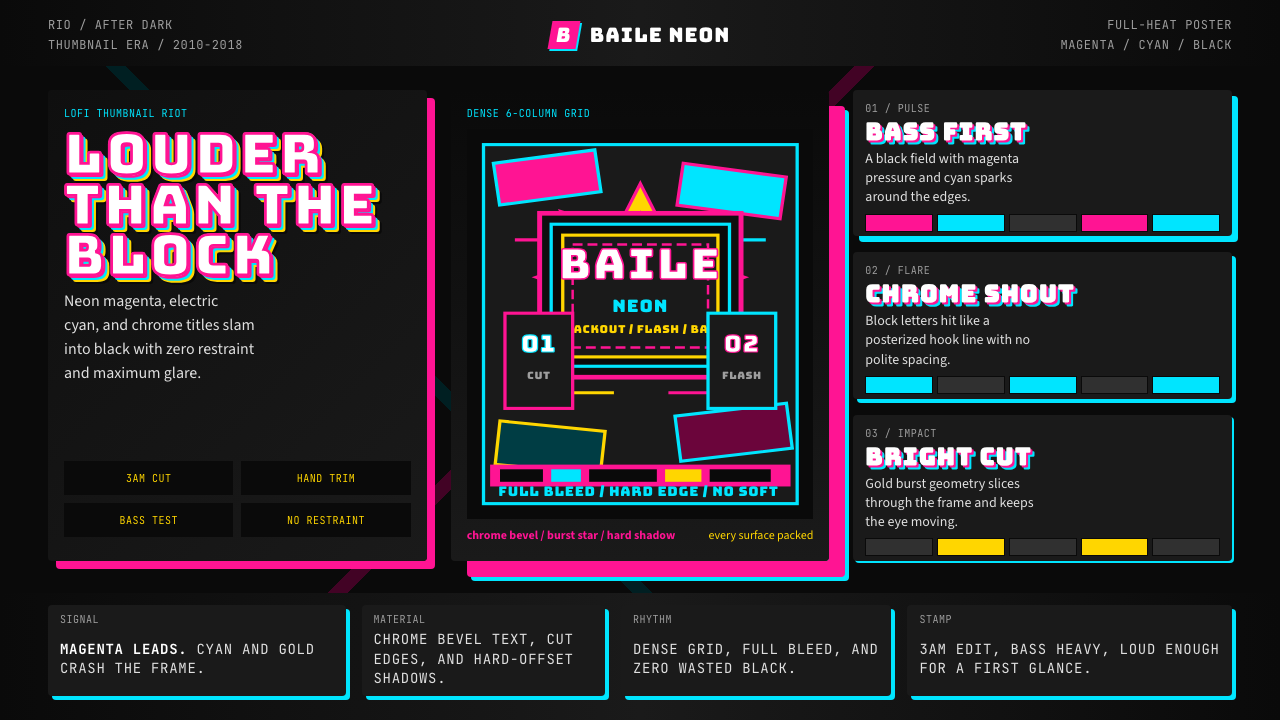 Funk Carioca FavelaMaximalist and unruly. Magenta, cyan, and chrome slam into black at thumbnail…
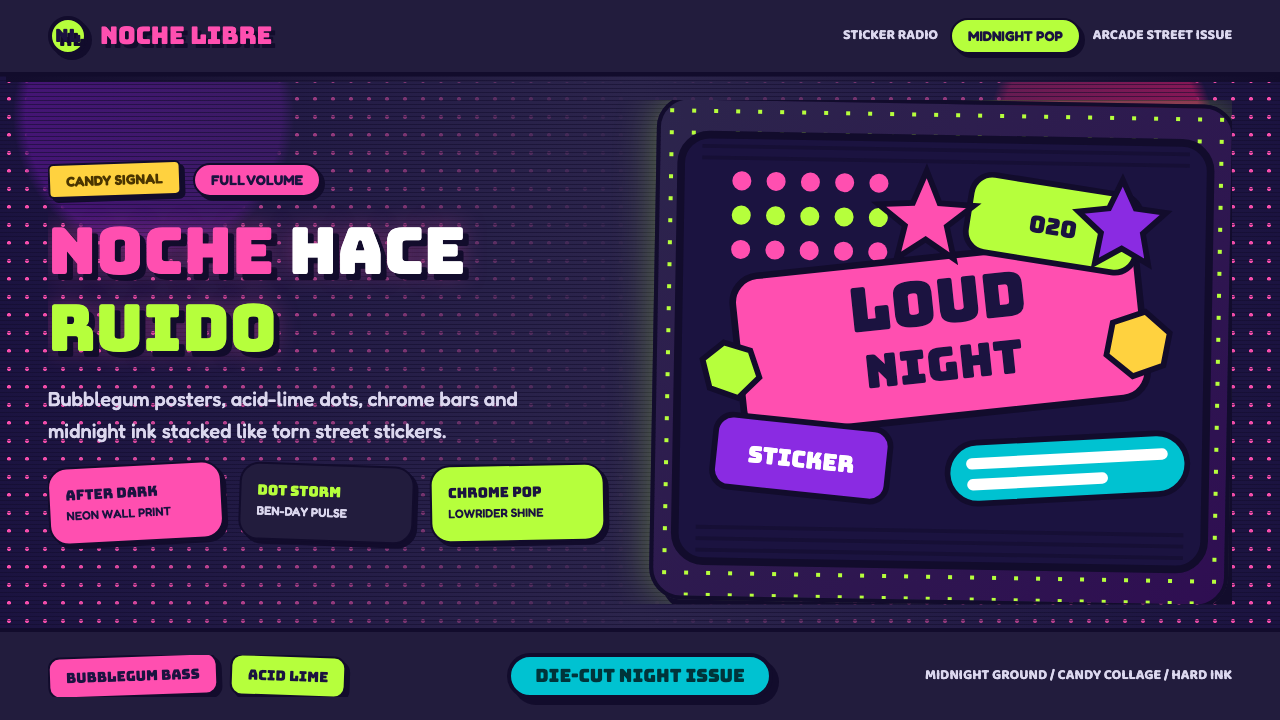 Bad Bunny YHLQMDLGMaximal night-pop collides. Bubblegum pink and acid lime stickers glow on mid…
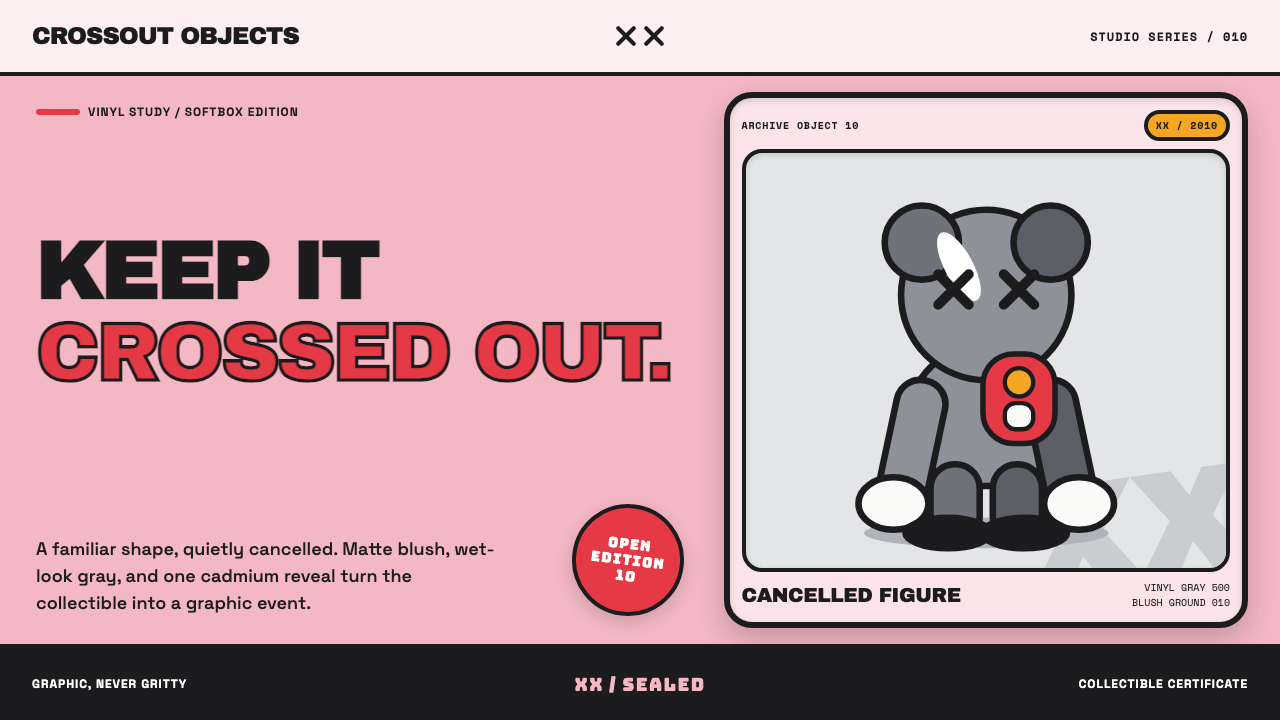 KAWS Companion (2010)Playful, with its eyes crossed out. Blush fields frame glossy gray vinyl and…
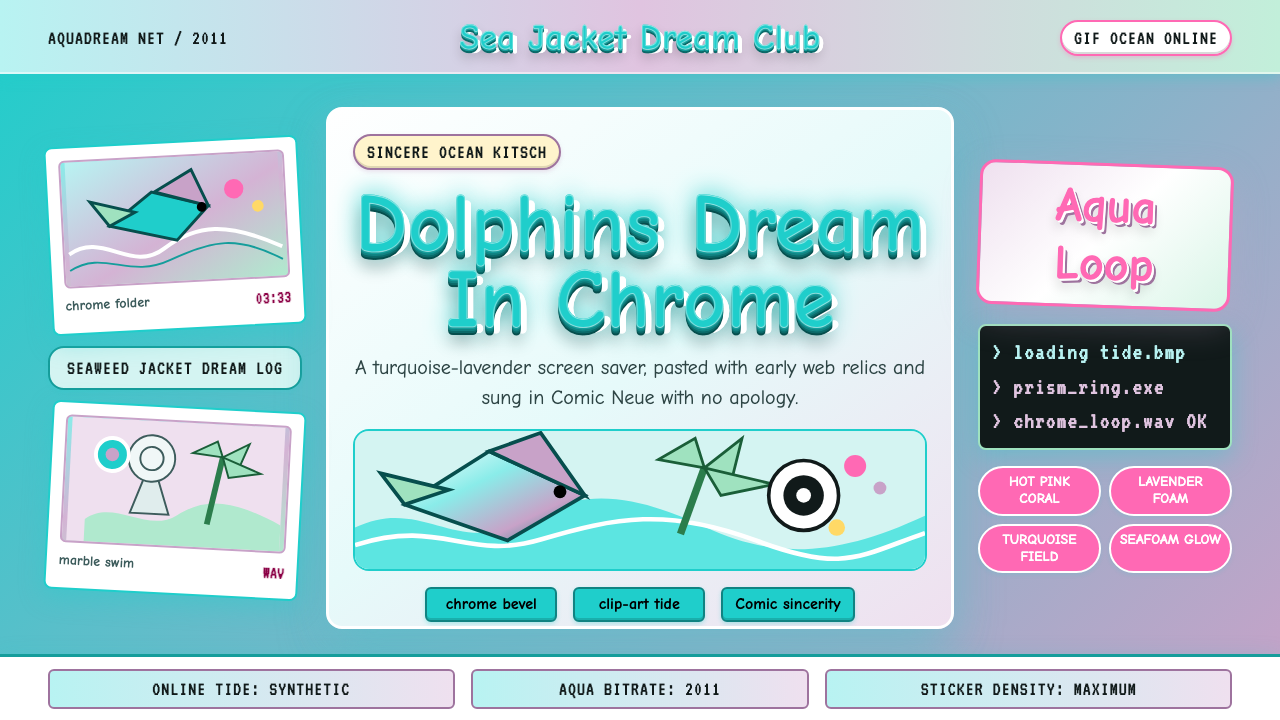 Seapunk 2011Sincere ocean kitsch. Turquoise gradients, Comic Neue chrome, and clip-art do…
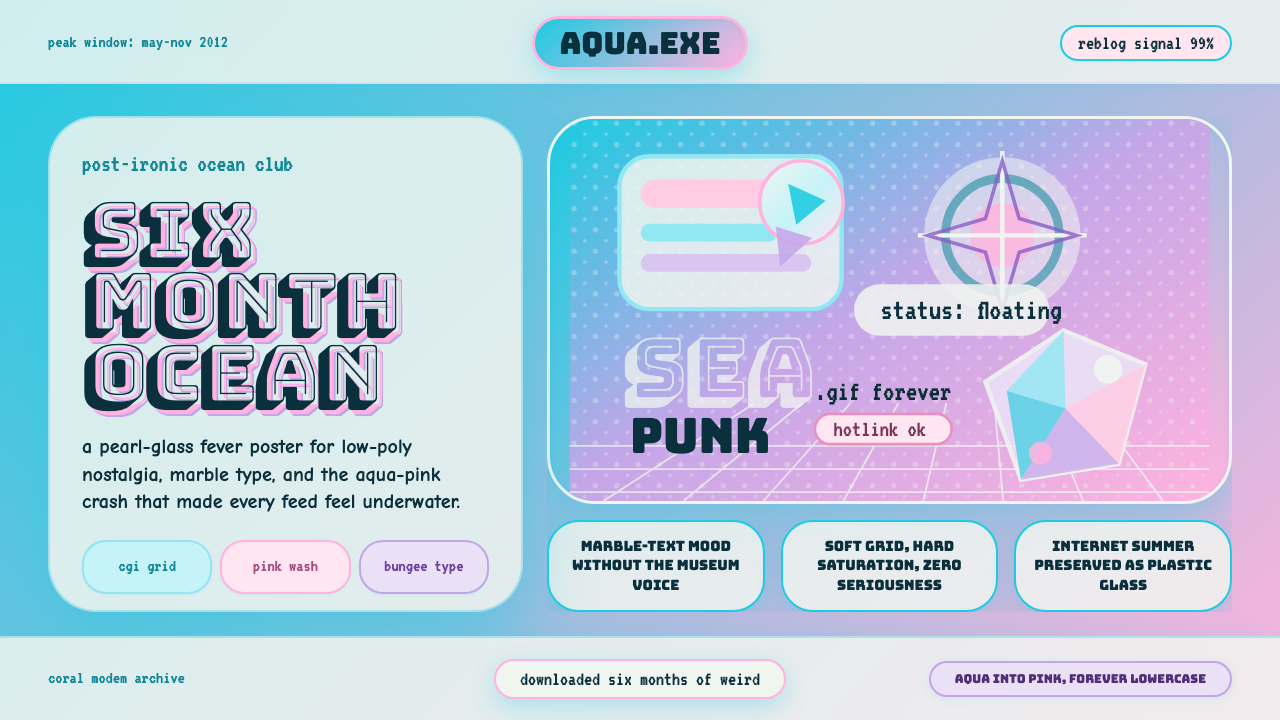 Seapunk Tumblr (2012)Burns bright then crashes. Aqua-pink wash, Bungee type, glassy CGI-grid colla…
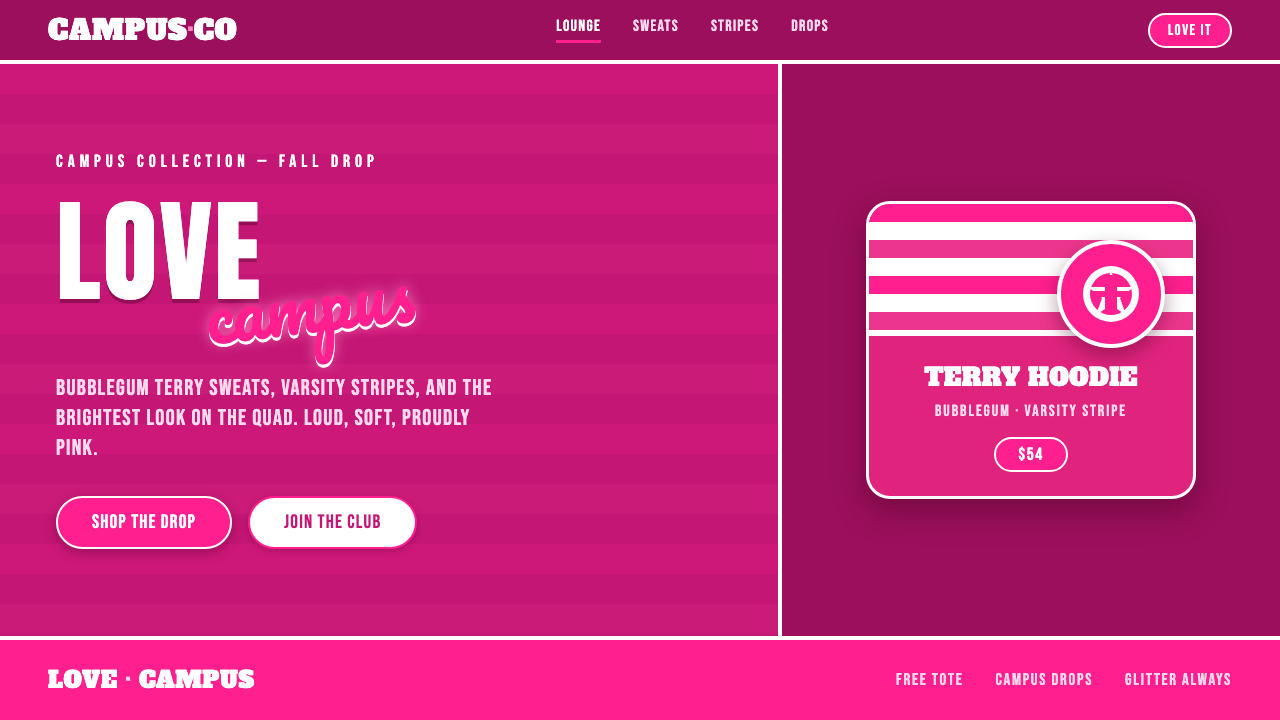 Victoria's Secret PINK 2004Proudly, relentlessly pink. Bubblegum magenta, varsity caps under cursive scr…