What is Minecraft Voxel?
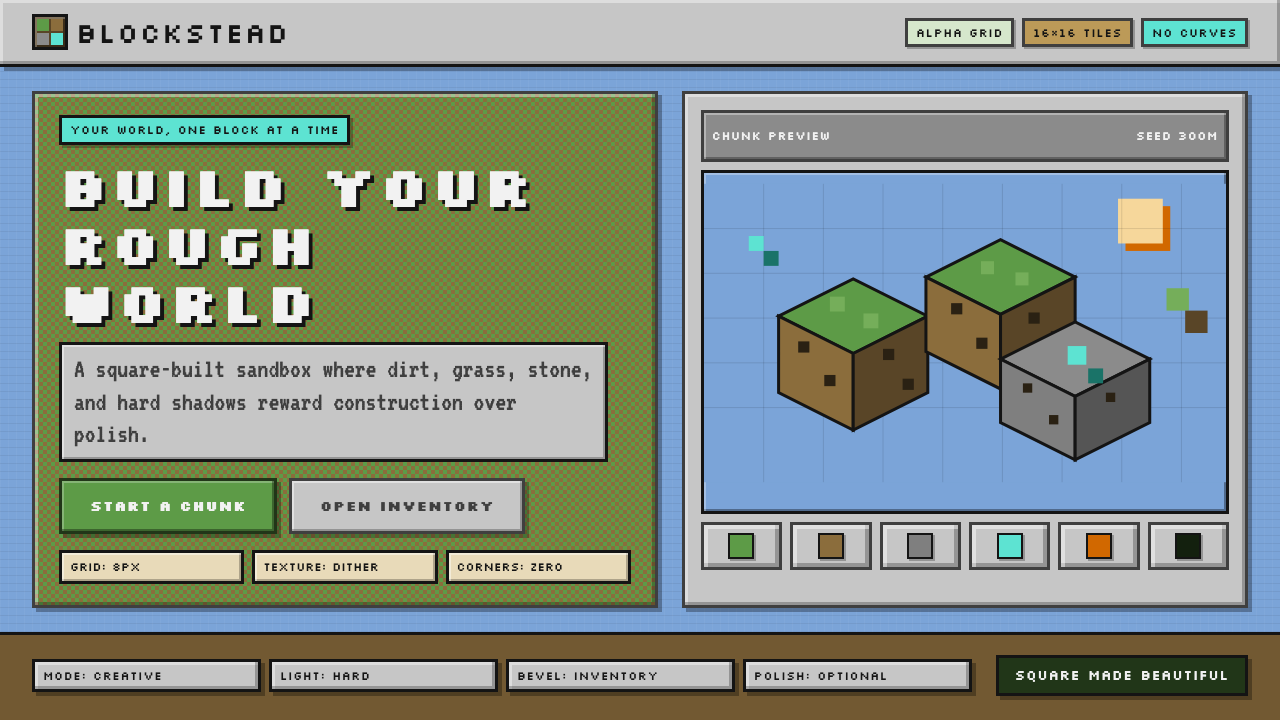
Minecraft proved that a world built from dirt-brown cubes and pixelated grass could become the best-selling game in history — because the grid itself was an invitation.
Minecraft Voxel in brief
Minecraft Voxel is the visual language born from Markus Persson's blocky sandbox game and refined across fifteen years of global play. Its grammar is built on three unbreakable constraints: every surface snaps to a square grid, every texture lives within a small, fixed resolution, and geometry is composed entirely from right-angle forms. No curves, no diagonals, no anti-aliasing. The result is an aesthetic that is immediately legible as digital, handmade, and infinite all at once.
What distinguishes this style from generic pixel art is its three-dimensional commitment. Voxel design is not merely flat sprites scaled up — it is a full volumetric world rendered as stacked cubes, where every block casts hard-edge shadows onto its neighbors and light is calculated in discrete steps rather than continuous gradients. The signature color palette leans earthy and slightly desaturated: grass greens, soil browns, stone grays, and ore-tinged highlights punctuate a world that never feels artificially polished.
The style's most distinctive UI artifact is the inventory slot: a thick, dark border surrounding a lighter interior field, creating a recessed-tray illusion entirely through flat color. This component has become a cultural shorthand for 'crafting, building, and ownership.' When applied to design work outside gaming, Minecraft Voxel signals handcraft at digital scale, creative empowerment, and a certain honest roughness that audiences raised on the game immediately trust.

Where does Minecraft Voxel come from?
The Minecraft aesthetic was not designed — it was defaulted into. In early 2009, Markus 'Notch' Persson was working alone in Stockholm, building a survival game prototype inspired by Infiniminer, an open-source voxel mining game. The sixteen-by-sixteen texture resolution he chose was not a stylistic statement; it was a technical ceiling for a one-person project running on limited hardware. The blocky geometry followed directly from the voxel data structure: each unit of the world was a cube, so each face of the world was a square. Curves were simply not in the model.
Persson released the alpha publicly in May 2009, and the response was immediate. Players did not experience the low resolution as a limitation — they experienced it as a medium. The coarse texture tiles made it easy to read the world at a glance, and the grid made it possible to plan and execute constructions mentally before placing a single block. The aesthetic that had been a technical compromise became a design affordance. By the time the game reached full commercial release in November 2011, it had already sold over one million copies and the visual language was established.
Jens 'Jeb' Bergensten joined Mojang and took over primary development responsibility after the full release, continuing to expand the game's block vocabulary while rigorously preserving the core texture resolution and geometry rules. Each new material — prismarine, deepslate, copper — had to read legibly at the original tile size, a constraint that forced designers to work with silhouette and color contrast rather than fine detail. Jasper Boerstra later led texture work and produced a major visual refresh in 2019, updating hundreds of block textures for higher-fidelity monitors while preserving the characteristic palette relationships and the strict grid.
The broader cultural diffusion of the Minecraft aesthetic followed from YouTube and Twitch. By the mid-2010s, Minecraft was the most-viewed gaming content on the internet. The visual grammar — chunky geometry, earthy palette, pixelated inventory UI — was absorbed by an entire generation as a shared visual reference, much as earlier generations absorbed certain cartoon styles through Saturday morning television. By the early 2020s, the aesthetic had migrated out of gaming into merchandise, educational materials, event branding, and eventually into professional design work targeting audiences who had grown up building in the game.
What defines the Minecraft Voxel look?
Grid Absolutism
Every element in the Minecraft Voxel system aligns to a square grid with no exceptions. There are no half-units, no optical corrections, no elements positioned between grid intersections. This rigidity is the style's structural spine: it makes compositions feel architecturally inevitable rather than arbitrarily placed. When applied to design work, the grid should be treated as a hard constraint, not a guide — elements either sit on it or they violate the system.
Earthy, Slightly Desaturated Palette
The Minecraft palette is neither vibrant nor muddy — it occupies a specific middle register. Greens lean toward yellow-green rather than pure green; browns carry warmth without tipping into orange; stone tones stay cool without going clinical. Accent colors — lava orange, diamond blue, emerald green — appear as rewards amid the earthiness, never as background fields. The overall effect reads as organic and handmade even at high contrast, because no color is fully saturated to its maximum chroma.
Hard-Edge Dithered Shading
Depth and shadow in the voxel world are rendered through hard-edge value shifts and, in transition zones, through dithering — a checkerboard or diagonal pattern of two tones that the eye blends into a middle value. There are no soft gradients, no ambient occlusion halos, no gaussian blurs. Each face of each block receives a flat value — brighter on top-facing surfaces, darker on side-facing surfaces, darkest underneath. Shadow is structural information, not atmospheric mood.
The Inventory Slot Component
The inventory slot is the style's most transferable UI primitive: a square cell with a thick, dark outer border, a medium-tone intermediate border, and a slightly lighter interior — all rendered as flat color blocks with no rounded corners and no drop shadows. The slight inset illusion created by the border sequence communicates 'container' without any literal depth simulation. This component works equally well at small icon scale and at large card scale, making it remarkably versatile for design systems that want to reference the aesthetic.
Chunky, Unrefined Typography
The in-game typeface is a bitmap font drawn on the same grid as the world: each character is composed of filled and empty squares rather than smooth vector curves. Letters read as constructed objects rather than refined glyphs. When applying the style to design work, this translates to a preference for display typefaces with visible structure — squared-off terminals, low contrast stroke variation, and a heaviness that reads from a distance. The feel is not polished; it is purposeful.
Volumetric Thinking in Two Dimensions
Even in flat design contexts, Minecraft Voxel composition maintains a sense of stacked, constructed volume. Elements are presented as faces of three-dimensional objects seen from a consistent angle — typically a slightly elevated isometric or axonometric viewpoint — rather than as flat shapes on a plane. This creates a characteristic spatial depth that distinguishes the style from standard pixel art: things feel built, not drawn.
Deliberate Pixel Visibility
The individual pixel — or block — is never hidden. Zoom controls and scaling are always set to integer multiples so that each source pixel maps to a clean square on screen. Subpixel rendering, bilinear smoothing, and any form of interpolation that would blur the grid are actively avoided. This choice is ideological: the pixel is a unit of construction, and the visible grid is a record of the work. Smoothing it out would erase the craft.

Who shaped Minecraft Voxel?
Persson created the original Minecraft prototype in Stockholm in 2009, working alone and making purely pragmatic visual decisions that would define a global aesthetic. The choice to use small square textures, axis-aligned geometry, and a grid-locked world model was driven entirely by the scope of a solo project on consumer hardware. His willingness to release the unfinished prototype publicly and iterate based on player response established the aesthetic's first principles before any deliberate art direction had been applied. The visual language that emerged from his constraints has outlasted every technical limitation that created it.
Bergensten joined Mojang early and became the primary development lead after the full release, shepherding the game's visual vocabulary through a decade of expansion. His guardianship of the core visual constraints — maintaining the texture resolution rule even as computing power made larger textures trivially possible, and ensuring that each new block type read legibly within the established palette — transformed what could have been a relaxed early-release aesthetic into a durable, consistent design system. He is the figure most responsible for proving that the Minecraft visual language could scale.
Boerstra led the texture overhaul released in 2019, a project that updated hundreds of block textures to better suit high-resolution displays while preserving the distinctive palette relationships and grid discipline of the original style. The update required navigating an extremely vocal player community with strong opinions about visual fidelity versus familiarity — the new textures needed to read as Minecraft at a glance even while correcting inconsistencies that had accumulated over a decade. Boerstra's work demonstrates that a mature pixel-art visual system can be refined without being diluted.
An unusual feature of the Minecraft aesthetic is that it was co-developed by its player community as much as by its authors. Fan texture packs, resource packs, and community-made tools have continuously expanded and tested the boundaries of the visual system since 2009, creating a shared understanding of what changes the aesthetic can absorb and what changes break it. The community produced the first high-resolution texture packs, the first shader mods simulating realistic lighting, and the first explicit tests of which departures from the grid felt like enhancements versus violations. No other design system at this scale has been stress-tested by its users in quite the same way.
How do you use Minecraft Voxel today?
Minecraft Voxel transfers well to design work when the target audience has grown up with the game or when the project goal is to evoke creativity, construction, and tangible ownership. Its structural principles — grid alignment, flat color, hard edges, and an earthy restricted palette — are concrete enough to apply systematically, but the style carries strong cultural associations that must be considered before deployment. It works best when those associations reinforce the product's values rather than merely decorating it.
For presentation slides, the style is most effective on cover pages and section dividers where boldness matters more than information density. A cover built in this idiom uses a blocky isometric illustration as the dominant visual — rendered at a visible grid scale — with the title set in a heavy, square-terminal typeface against an earthy neutral ground. Content slides should be treated with restraint: the grid guides layout and spacing, the earthy palette limits color use to one or two accent tones, and data visualizations take on the appearance of block structures — bar charts rendered as stacked pixel-unit columns, progress indicators as partially filled grid rows. The style is less suited to dense data slides where fine-grained legibility is required at small scale.
For web interfaces and dashboards, the approach works well for products targeting younger audiences, creative tools, educational platforms, and gaming-adjacent services. The key is applying the grid system structurally — a module-based layout where every card, button, and container width is a clean multiple of the base grid unit — and using the inventory-slot UI pattern for item or card containers. Background tones should stay in the earthy neutral range: warm off-whites, mid-tone stone grays, dark charcoal rather than pure black. Accent colors should be used as rewards, appearing on interactive states, highlighted tiers, or progress milestones rather than as ambient decoration. Navigation and labels benefit from a squared, slightly heavier typeface than the site's reading body text.
For editorial and marketing work, the style supports strong graphic boldness at large format — posters, event banners, social cards, and hero sections. An effective approach uses a grid-locked isometric construction scene as a full-bleed visual with the headline set in hard, blocky letterforms above or below. Marketing pages for products using this style benefit from alternating full-width sections that each feature a different earthy color field, maintaining palette coherence while creating visual rhythm. The style's honest, unfinished quality makes it work especially well for educational content, maker tools, and brands that want to signal that users are active creators rather than passive consumers.
The most common mistake when applying Minecraft Voxel is smoothing things out — adding rounded corners, soft drop shadows, gradients, or subpixel-antialiased type. Each of these choices erodes the style's defining characteristic: the visible construction grid. A second frequent error is palette drift toward hyper-saturated neon, which replaces the style's earthiness with a generic 'gaming' look that does not carry the Minecraft associations. A third pitfall is treating the aesthetic as inherently juvenile; applied with compositional rigor and strong typographic hierarchy, the style reads as confident and authoritative for audiences who grew up with it, regardless of the product's seriousness.

Minecraft Voxel — FAQ
Is Minecraft Voxel the same as pixel art?
They overlap but are not identical. Pixel art is a broad category covering any image where individual pixels are intentionally visible and the low-resolution grid is a deliberate aesthetic choice — this includes everything from classic arcade sprites to contemporary indie game graphics. Minecraft Voxel is a specific subset: three-dimensional, volumetric, and defined by the cubic block as the fundamental unit rather than the flat sprite. The isometric and axonometric depth of voxel art, the distinctive earthy palette, and the inventory-slot UI component are all specific to the Minecraft idiom. You can make pixel art that looks nothing like Minecraft, but Minecraft Voxel work is always a form of pixel art.
Can this style work for professional or enterprise-facing products?
It can, but with significant caveats. The Minecraft Voxel aesthetic carries strong associations with play, childhood, and consumer gaming. In an enterprise context — financial dashboards, B2B SaaS, legal or medical software — these associations can undermine the product's authority unless the target user base explicitly values them. The style works in enterprise contexts when the product itself is about building or construction (project management, infrastructure tooling, developer platforms), when the audience is heavily weighted toward engineers or technical users who grew up with the game, or when the brand is explicitly positioning itself as anti-corporate. Outside those conditions, the structural principles of the style — grid rigor, flat color, hard edges — can be borrowed without the full Minecraft palette and iconography.
How do you handle text legibility at small sizes in this style?
This is the style's most practical challenge. Bitmap fonts drawn on the game's own grid break down at sizes smaller than their native resolution and become illegible at typical body text scales in web or print contexts. The solution in applied design work is to use the Minecraft aesthetic for display text and structural elements — headlines, labels, UI chrome — while switching to a well-hinted, slightly squared sans-serif typeface for body text and any content that must be read continuously. The key is maintaining the structural vocabulary of the style (grid alignment, hard edges, earthy color) in the display layers while allowing the reading layer to be conventionally legible. Pixel-perfect bitmap fonts should be reserved for large-scale display use where their construction character reads as intentional rather than technical limitation.
What makes an application of this style feel authentic versus superficial?
Authentic application starts with the grid — not as a layout guide but as a hard constraint that governs every element's size, position, and proportion. Superficial application typically applies visible pixels and blocky illustrations as decorative layer on top of an otherwise conventional layout with rounded corners, soft shadows, and full-saturation accent colors. The test is simple: if you removed the pixel-art elements, would the underlying layout still feel like Minecraft? If yes, the style is structural. If the layout immediately reads as generic web design, the Minecraft elements are decoration. Authentic work also uses the earthy palette as a system — browns, warm grays, and muted greens as the dominant field, with saturated accents deployed sparingly — rather than mapping bright saturated colors across all elements for visual energy.
Does the style have a dark mode?
The natural dark mode for Minecraft Voxel is the cave interior or the nighttime overworld — deep charcoal grounds with torch-orange and lava-glow accents, rather than the pure black of typical dark mode interfaces. A well-executed dark variant maintains the earthy character of the palette: backgrounds should read as dark stone or deep soil rather than as pure neutral black. Accent colors need rebalancing at this end of the value range — earthy greens and warm oranges hold up well, while sky blues tend to flatten. The inventory slot component translates effectively to dark mode by darkening the field while maintaining the tonal sequence of the borders. The critical mistake to avoid is converting to pure white text on pure black background, which eliminates the earthy warmth that gives the style its character.
Related design styles
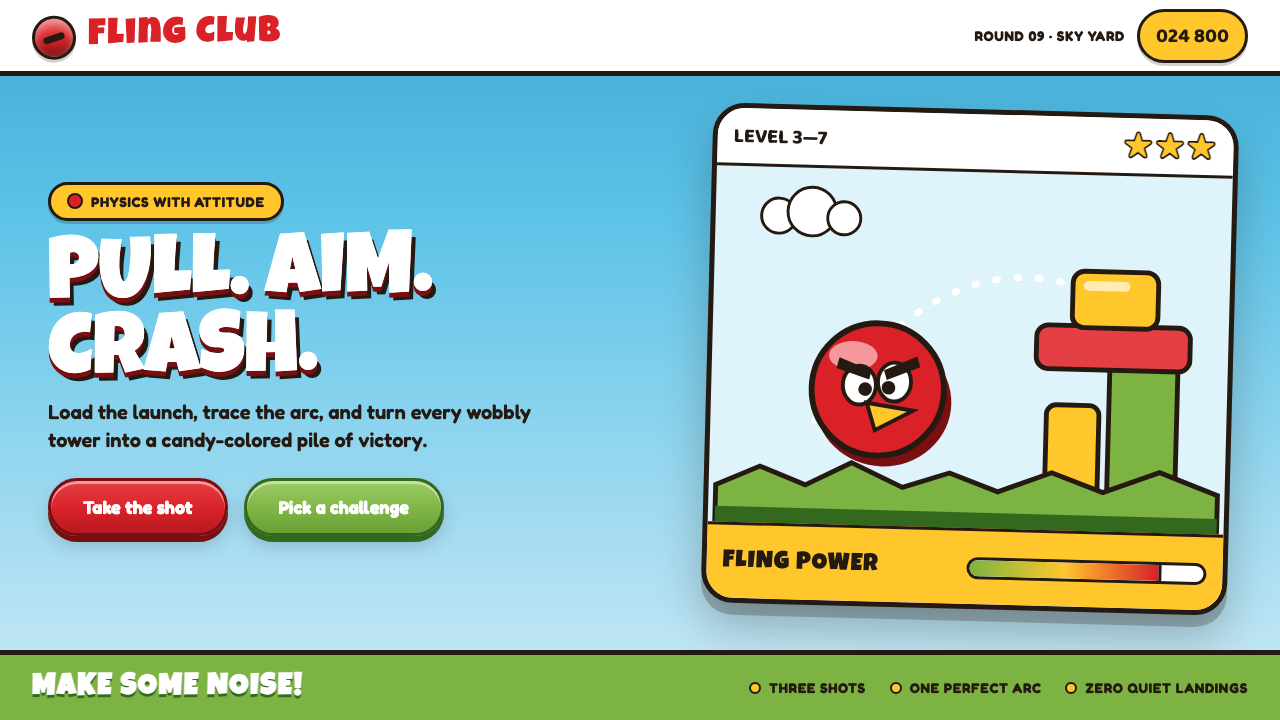 Angry Birds (2009)Adorable aggression takes flight. Candy primaries, chunky outlines, and a dot…
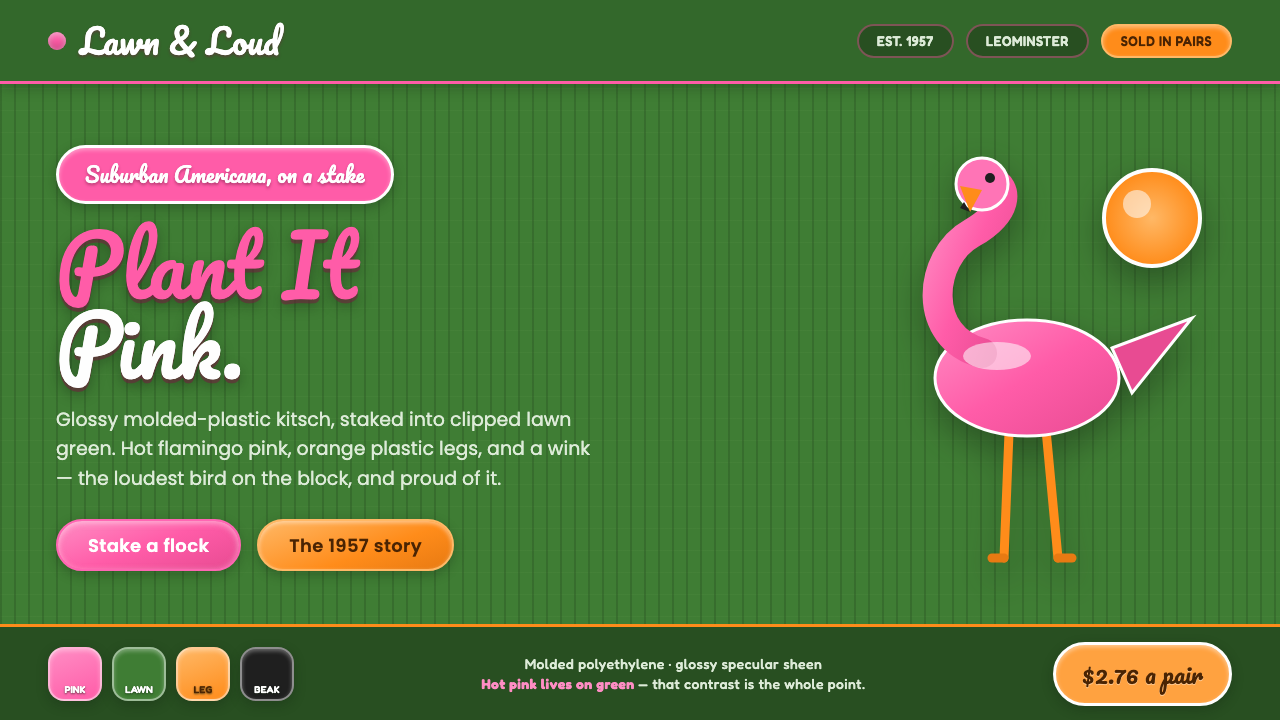 Pink Flamingo Lawn OrnamentLoud on purpose. Hot flamingo pink staked into lawn green, glossy molded plas…
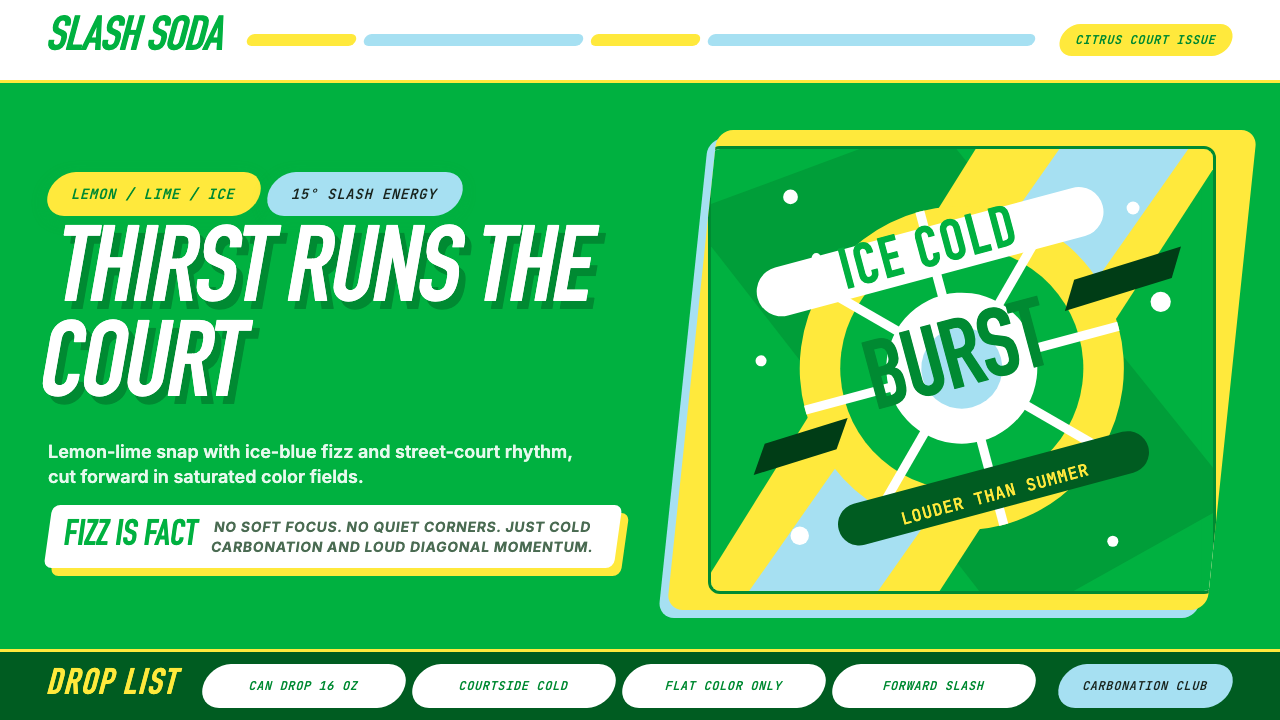 Sprite — Obey Your ThirstCitrus hits like asphalt heat. Saturated green, lemon yellow, and 15° slashes…
 Swatch Watch (1983)Pop plastic optimism. Bungee type, candy primaries, round dials and squiggles…
 UNO (1971)Every number shouts. Four pure primaries punch through black with tilted whit…
 Doge Meme (2013)Anti-design becomes pure joy. Candy Comic Neue captions drift at lazy angles…