What is Funk Carioca Favela?
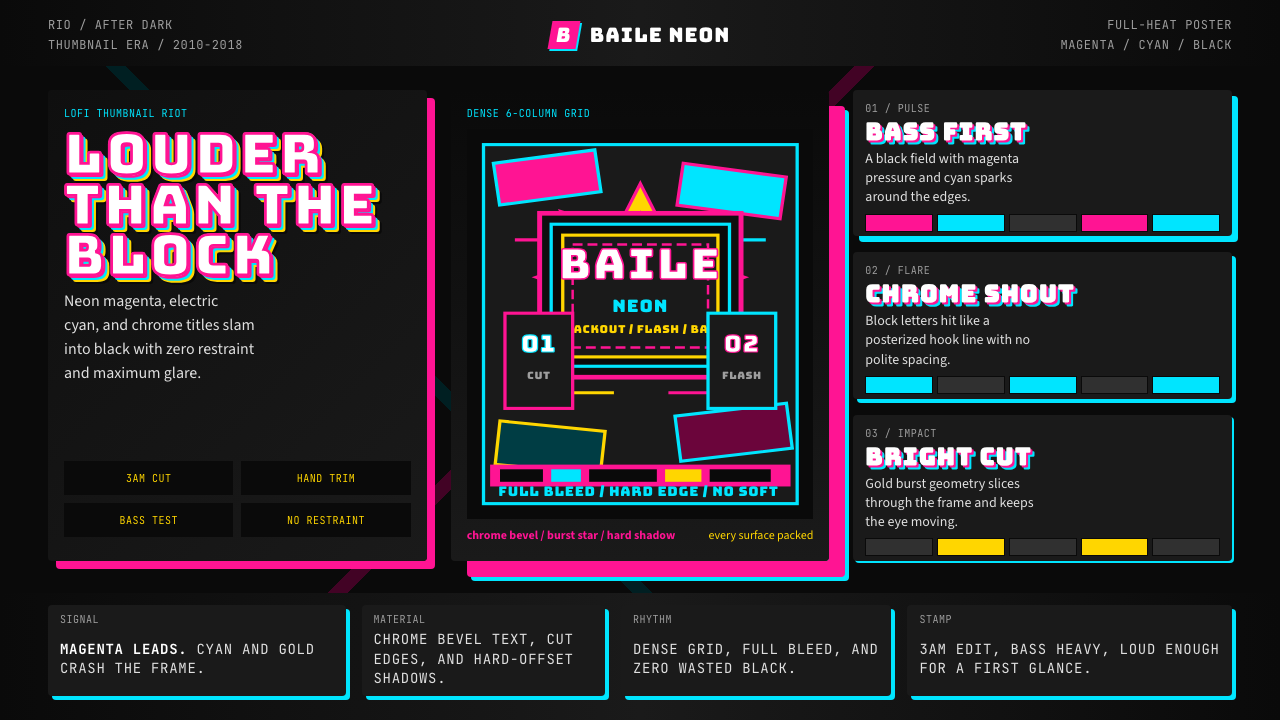
Funk Carioca Favela is the visual roar of Rio's baile funk scene — neon magenta and electric cyan screaming over pitch black, chrome-bevel titles, and maximalist energy that treats restraint as a foreign concept.
Funk Carioca Favela in brief
Funk Carioca Favela is a grassroots visual aesthetic born from the sound-system culture of Rio de Janeiro's favelas. It emerged organically in the mid-2000s and reached its most recognizable peak between 2010 and 2018, driven almost entirely by the explosion of YouTube as a platform for baile funk music. Thousands of independent producers and MCs created their own thumbnails, flyers, and promotional graphics using pirated software at midnight, and the resulting aesthetic — loud, layered, unstoppable — became a global visual signature.
The style is defined by its absolute rejection of minimalism. Every surface is packed. Color does not accent; it overwhelms. Text is not set; it is weaponized — beveled, chrome-plated, outlined in contrasting neon, and scaled to fill every available corner. Background elements compete rather than recede. The visual grammar is one of maximum density and maximum contrast, where the goal is not balance but impact: the thumbnail must stop a thumb mid-scroll even when viewed at the size of a postage stamp.
Unlike most design movements that began in studios or academies, Funk Carioca Favela is a product of pure necessity and democratized tools. It is the aesthetic language of communities that had no formal design training but had access to Photoshop, a digital camera, and an audience hungry for their music. That origin story is inseparable from its visual character — the rough cut-out photography, the deliberately imperfect drop shadows, the lens flares that nobody tried to remove — because these were not mistakes. They were the style.

Where does Funk Carioca Favela come from?
Funk carioca as a music genre has roots stretching back to the late 1970s and early 1980s, when Miami bass and electro funk records began circulating in Rio's working-class neighborhoods through the baile funk — the neighborhood dance party organized around massive portable sound systems. The visual culture that would eventually crystallize into the Funk Carioca Favela aesthetic grew alongside the music, beginning with hand-painted banners and photocopied flyers advertising these events. By the 1990s, the introduction of affordable desktop publishing tools in Brazil's informal economy began shifting production toward digital means, though the grassroots, high-energy visual sensibility remained constant.
The true catalyst for the style's global visibility was the rise of YouTube and social media between 2005 and 2012. MCs and producers from neighborhoods like Rocinha, Complexo do Alemão, and Cidade de Deus suddenly had access to a worldwide distribution channel that required no gatekeepers, no labels, and no professional media infrastructure. The thumbnail became the primary piece of graphic design in this economy: it had to communicate genre, energy, artist identity, and mood in a single compressed image, competing against thousands of other thumbnails in YouTube's recommendation sidebar. This constraint — maximum communication in minimum space — shaped the visual maximalism that defines the style.
Kondzilla, the music video producer from São Paulo who relocated his practice to serve the funk carioca market, played a pivotal role in professionalizing and amplifying the aesthetic. His production company's videos — shot in favelas, featuring artists like MC Kevinho, Anitta, and Ludmilla — brought cinematic production value to baile funk while retaining its raw visual DNA: the saturated colors, the aggressive typography, the sense of overflowing energy. By the early 2010s, Kondzilla's channel had accumulated hundreds of millions of views, and the aesthetic he helped codify was being studied by brands and designers worldwide.
MC Carol, Anitta, and Ludmilla each contributed to the style's mainstream crossover in different ways. Anitta in particular engineered a career that moved from pure funk carioca into international pop, and her visual identity during the 2010s served as a bridge between the raw favela aesthetic and the conventions of global commercial music marketing — demonstrating that the style could scale up without losing its essential character. This crossover documented that Funk Carioca Favela was not merely a subcultural curiosity but a fully formed visual language capable of competing on the world stage.
What defines the Funk Carioca Favela look?
Color
The palette is built on extreme contrast and maximum saturation. Neon magenta and electric cyan are the twin anchors, almost always deployed against a pitch-black ground so that they appear to emit their own light. Acid yellow appears frequently as a third presence, and hot orange, lime green, and electric violet fight for space in more densely layered compositions. Nothing is muted. Nothing is pastel. The guiding principle is not harmony but competition: every color vies for dominance, and the overall effect is one of chromatic overload that reads as energy rather than chaos when executed with confidence.
Typography
Text in the Funk Carioca Favela style is never understated. Titles are set in heavy, condensed, or ultra-bold letterforms and then treated with chrome beveling, metallic gradients, multiple outline layers, or hard-edged glow effects. The outline-within-outline technique — where a bright inner stroke is ringed by a dark outer stroke — creates a three-dimensional floating quality that makes type appear to hover above the background. All-caps is the default for headlines. Multiple type sizes coexist on a single surface without a formal grid, with scale used as the primary driver of attention rather than position or whitespace.
Texture and Surface
Where the Bauhaus insists on flat surfaces, Funk Carioca Favela insists on maximum surface richness. Every element is treated: chrome effects simulate metallic reflections, lens flare overlays create a sense of live event photography, noise and grain textures evoke the feel of a scanned flyer, and glitter or sparkle brushes add points of light across the composition. The background itself is rarely flat black — it typically hosts a starburst, a radial gradient, a textured overlay, or all three simultaneously. This layering creates visual depth not through spatial composition but through the accumulation of effects.
Composition
The compositional logic, if there is one, is centrifugal: everything pushes outward from the center, and there is no designated empty space for the eye to rest. Cut-out photographs of performers — often taken with heavy flash and shot against informal backgrounds — are dropped into the composition with deliberately rough masking, leaving visible halos and edge artifacts that the style reclaims as authenticity markers. Elements overlap freely and without hierarchy. The result is a total surface where every zone carries information, and the cumulative density communicates the energy of the baile funk itself.
Photography Treatment
Performer photography is central to the style, and its treatment is distinctive. Figures are isolated from their backgrounds with a selection approach that prioritizes speed over precision — soft, uneven edges are acceptable and common. The isolated figure is then typically enlarged to fill a significant portion of the frame, sometimes cropped at unexpected points. Color grading pushes skin tones toward warmth and amplifies specular highlights to create a glossy, hyper-real look. Drop shadows on the cut-out figure are hard, offset, and rendered in the background's complementary color or in pure black, reinforcing the sense that the figure has been physically placed on top of the composition.
Energy and Density
The single most defining quality of the style is its refusal to leave anything empty. Negative space is not a design tool but an opportunity missed. This density is not random accumulation — when the style is working at its best, the competition between elements creates a specific reading sequence: the face or figure first, the title second, the contextual information third. But this sequence emerges from visual weight and contrast rather than from compositional order. The energy the style projects is deliberate: it communicates that what is being advertised is loud, alive, and worth attention.
Glow and Light Effects
Light effects serve as the style's primary atmospheric device. Outer glow applied to type and graphic elements gives the entire composition the appearance of a stage lit by colored spotlights. Lens flares — circular bursts, streak flares, and polygonal bokeh overlays — suggest the experience of looking directly at a bright light source at a live event. Starburst shapes radiating from a central point create a sense of explosive revelation. These effects collectively simulate the experience of the baile funk sound system environment: a dark room, high-power speaker stacks, and light shows that seem physically overwhelming.

Who shaped Funk Carioca Favela?
Kondzilla is the production company and creative persona of music video director Weatherly Konrad Silva, who became the central figure in professionalizing the visual language of baile funk. Operating from São Paulo but working deeply with the Rio favela music scene, Kondzilla's YouTube channel grew to become one of the most-watched music channels in the world, with a cumulative viewership in the billions. His production style — high production value applied to raw funk carioca content, with the aesthetic energy of DIY thumbnails translated into cinematic music videos — effectively canonized what had been an informal and rapidly evolving visual system. The Kondzilla aesthetic, distributed at massive scale across YouTube, served as the primary global reference point for designers, brands, and media researchers studying this visual style.
Anitta, born Larissa de Macedo Machado in the Honório Gurgel neighborhood of Rio de Janeiro, began her career in pure funk carioca and engineered one of Latin music's most deliberate international crossovers. Her visual identity during the 2010s was a sustained negotiation between the raw aesthetic of baile funk and the conventions of international pop marketing, and she consistently managed to retain the essential energy and color grammar of the favela aesthetic even as her production budgets and global reach expanded dramatically. Anitta's career demonstrated that the visual language of Funk Carioca Favela was not a low-budget substitute for something more polished — it was a fully valid expressive system capable of competing at the highest levels of global entertainment.
Ludmilla, born Ludmilla Oliveira Ferreira in the Duque de Caxias neighborhood near Rio, rose through the baile funk circuit with a visual presentation that leaned heavily into the maximalist graphic style of the scene. Her early career is a particularly clear record of the style in its unmediated form — promotional imagery made with genuine community production tools, operating entirely within the aesthetic logic of the favela YouTube economy. As her career developed and her audience expanded, her visual work shifted toward higher production values while maintaining the color intensity and typographic boldness that had defined her early presence. Ludmilla's trajectory illustrates how the style scales from grassroots self-production to professional studio output without fundamentally changing its character.
MC Carol, born Carolina Oliveira in Niterói, is one of the most politically engaged figures to have emerged from the funk carioca scene, and her visual presentation reflects a deliberate use of the style's maximalist grammar in service of confrontational political and social messaging. Her album art and promotional imagery deploy the full toolkit of the Funk Carioca Favela aesthetic — neon colors, chrome type, densely layered imagery — while incorporating content that addresses race, gender, and class in Brazil with directness rarely seen in mainstream Brazilian pop. MC Carol's work demonstrates the style's capacity to carry serious cultural weight without abandoning its visual intensity, and her international recognition helped establish funk carioca's place in global conversations about music, politics, and visual culture.
How do you use Funk Carioca Favela today?
Applying Funk Carioca Favela to designed work requires understanding what gives the style its energy: not randomness, but controlled overload. Every element is pushed to its maximum expression, but there is a hierarchy underneath the density — performer first, title second, event or release information third. Before adding any effects, establish this reading order. The effects exist to amplify the hierarchy, not to obscure it. An application that piles on chrome, glow, and texture without a clear focal point will read as muddy rather than loud.
For presentation decks, the style works best for cover slides and bold section dividers where the goal is impact rather than information delivery. A cover in this style should commit fully: pitch black ground, a performer or product image treated with the style's characteristic cut-out and glow treatment, a title set in heavily beveled or outlined type, and a color burst or starburst radiating behind the central subject. Content slides within the same deck should dial back the effects significantly — full-density Funk Carioca Favela on every slide creates visual fatigue. Use the style for entrances and high-impact moments; use a simplified derived palette (the neon colors on black, without the layered effects) for data and body-copy slides.
For web interfaces and dashboards, direct application of the full Funk Carioca Favela density is rarely appropriate for data-heavy contexts, but the style's color logic and typographic boldness translate well to entertainment platforms, event pages, music streaming interfaces, and any product targeting audiences familiar with the aesthetic. Use the high-saturation neon palette against dark backgrounds for navigation elements and calls to action. Apply the style's characteristic heavy outlined type for section headers and featured labels. Reserve the full glowing, layered treatment for hero sections, featured artist cards, and promotional banners. Pricing pages and feature tables should use a restrained version — neon accent colors on near-black grounds, with clean typographic hierarchy — to maintain readability while preserving the aesthetic register.
For editorial and marketing applications, the style is particularly powerful for event promotion, music-related editorial content, cultural journalism about Latin American urban culture, and any campaign that needs to communicate aliveness and immediacy. Concert and event posters in this style should be treated as pure maximalism: no hierarchy element is too bold, no color is too saturated. For print-format editorial, a more selective application works better — use the style's color palette and typographic treatment for display elements (headlines, pull quotes, section openers) while keeping body text in a clean, high-contrast setting that allows the reader's eye to rest between the high-energy moments.
A common mistake when applying this style outside its native context is treating the roughness as optional or as something to be smoothed away. The visible cut-out edges, the lens flares that nobody removed, the slightly imperfect masking — these are not production errors that better tools would have eliminated. They are authenticity markers that signal genuine origin in a grassroots production context. Sanitizing them too aggressively produces something that has the color palette of Funk Carioca Favela but not its energy. A related mistake is using the style's neon colors in isolation — cyan and magenta against a white or grey ground — without the black background that gives them their appearance of self-illumination. On white, these colors look loud; on black, they look electric. The difference is decisive.

Funk Carioca Favela — FAQ
Is this style appropriate for premium or luxury brands?
Rarely in its full form, and only when the brand is explicitly engaging with the culture the style represents rather than appropriating its surface. Funk Carioca Favela is, at its core, an aesthetic of abundance produced under material constraint — its maximalism is a form of aspiration and pride, not excess for its own sake. A luxury brand adopting the style without cultural grounding risks misrepresentation. However, individual elements of the aesthetic — the neon-on-black color logic, the typographic boldness, the high-energy density — have been selectively adopted by fashion brands, streetwear labels, and cultural institutions engaging with Latin American urban identity. The distinction between cultural engagement and superficial borrowing lies in whether the application acknowledges the style's specific origin and community.
How does Funk Carioca Favela differ from Memphis design or 1990s rave aesthetics?
All three share a rejection of restrained modernism and a commitment to maximum visual energy, but their origins, rules, and cultural meanings are distinct. Memphis design (Milan, 1980s) was a studio-produced, deliberately theoretical movement that treated maximalism as an intellectual proposition — its geometry and color were systematic responses to functionalist orthodoxy. Nineties rave aesthetics were produced by a subculture organized around a specific pharmacological and sonic experience, and their visual character reflects the particular visual phenomena associated with that experience — fractals, strobe effects, and extreme optical vibration. Funk Carioca Favela is neither theoretical nor pharmacologically coded; it is community commercial production, born from the need to sell music in a competitive thumbnail economy. Its maximalism is marketing, not manifesto.
Can the style work in a light-background context?
Technically possible, but it requires accepting a fundamental shift in the style's character. The black ground is not a neutral choice in Funk Carioca Favela — it is the mechanism that gives the neon colors their apparent luminosity and the composition its sense of a stage lit from within. On a white or cream ground, the same neon magenta and electric cyan read as loud print colors rather than as light sources, and the glow effects that depend on the black-to-neon contrast largely dissolve. What remains is a brightly colored, densely composed graphic style — still energetic, but without the characteristic sense of self-illumination that is the style's most distinctive atmospheric quality. If a light background is required, the recommendation is to use a single strongly colored accent from the palette rather than the full neon range, and to reduce layered effects significantly.
How should this style be approached when used for data visualization?
The style's core color logic — high-saturation neons against black — translates surprisingly well to data visualization contexts, provided that the decorative layering is stripped away. Data charts in a Funk Carioca Favela-derived palette should use the neon colors functionally: each series or category assigned a single neon color, the background held at near-black, and grid lines either eliminated or reduced to very low-contrast marks. The result reads as a high-tech dark-mode data display rather than as baile funk promotional material, and the color separation between series is excellent. What must not carry over are the chrome effects, the layered textures, and the decorative typography — these are incompatible with readable data. The typographic boldness of the style can be applied to chart titles and axis labels at reduced intensity without compromising readability.
What separates an authentic application of this style from a shallow imitation?
The deepest distinction is whether the application understands what the style is communicating, not just what it looks like. Funk Carioca Favela is the visual language of community pride, musical energy, and commercial necessity under specific material conditions. Authentic application — even when executed at a higher production level — preserves the hierarchy logic (performer or product as undisputed focal point), the sense of overflowing abundance rather than controlled excess, and the quality of self-generation that comes from building everything to its maximum rather than restraining elements for aesthetic balance. Shallow imitation typically does the opposite: it applies neon colors and chrome effects to a layout that is fundamentally organized around negative space and conventional hierarchy, producing something that reads as a corporate interpretation of the style rather than an expression of it. The tell is always the background: if it still has breathing room, the style is not yet present.
Related design styles
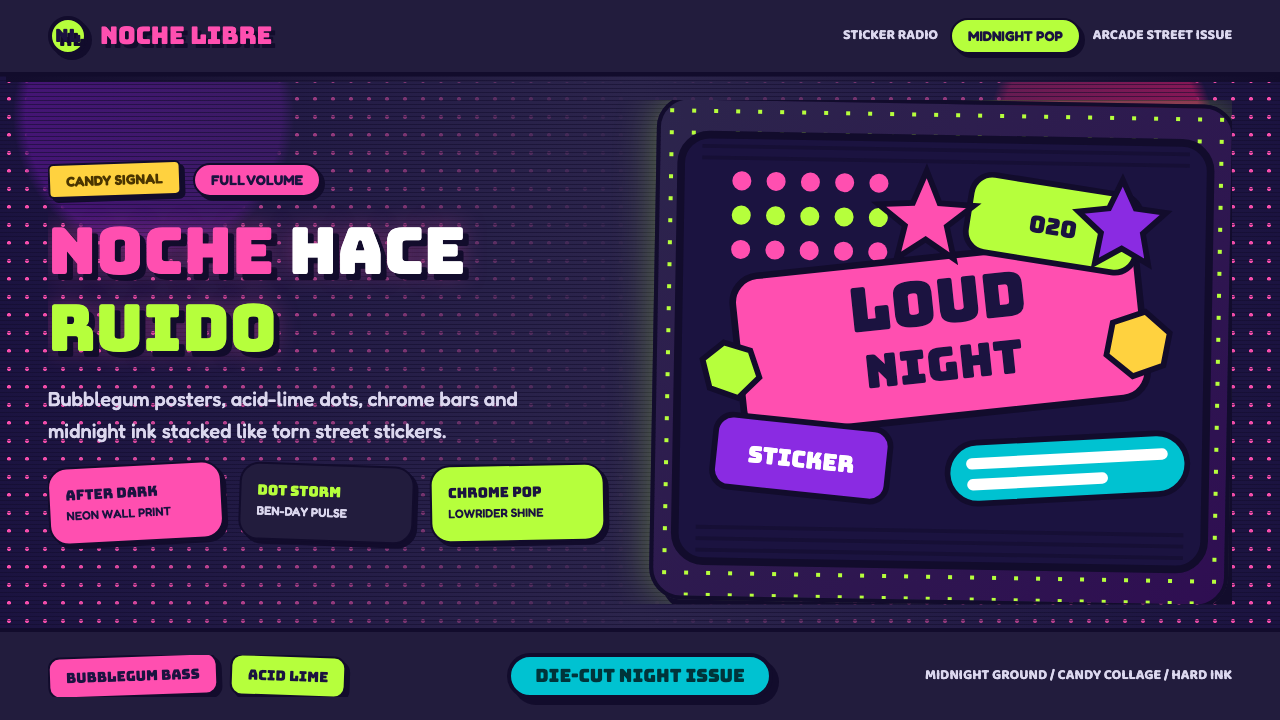 Bad Bunny YHLQMDLGMaximal night-pop collides. Bubblegum pink and acid lime stickers glow on mid…
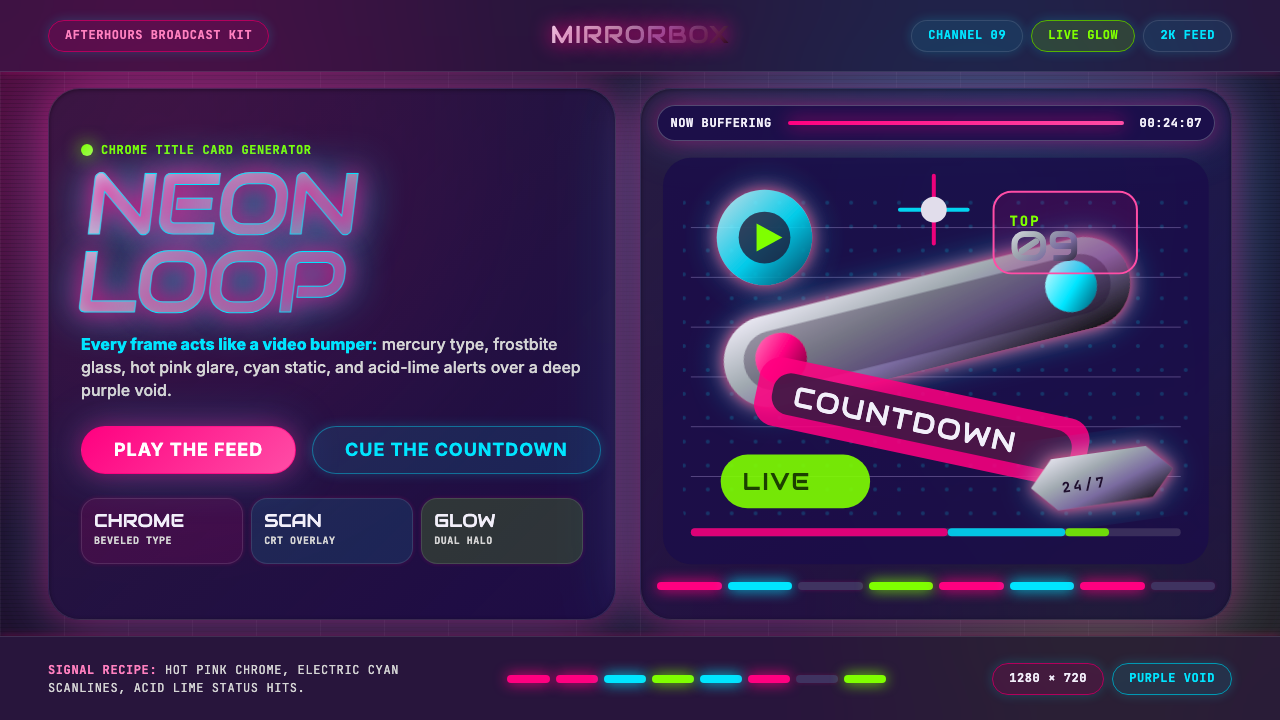 MTV Y2K (2000s)Maximum-volume Y2K. Hot pink chrome, cyan scanlines, and lime hits burn over…
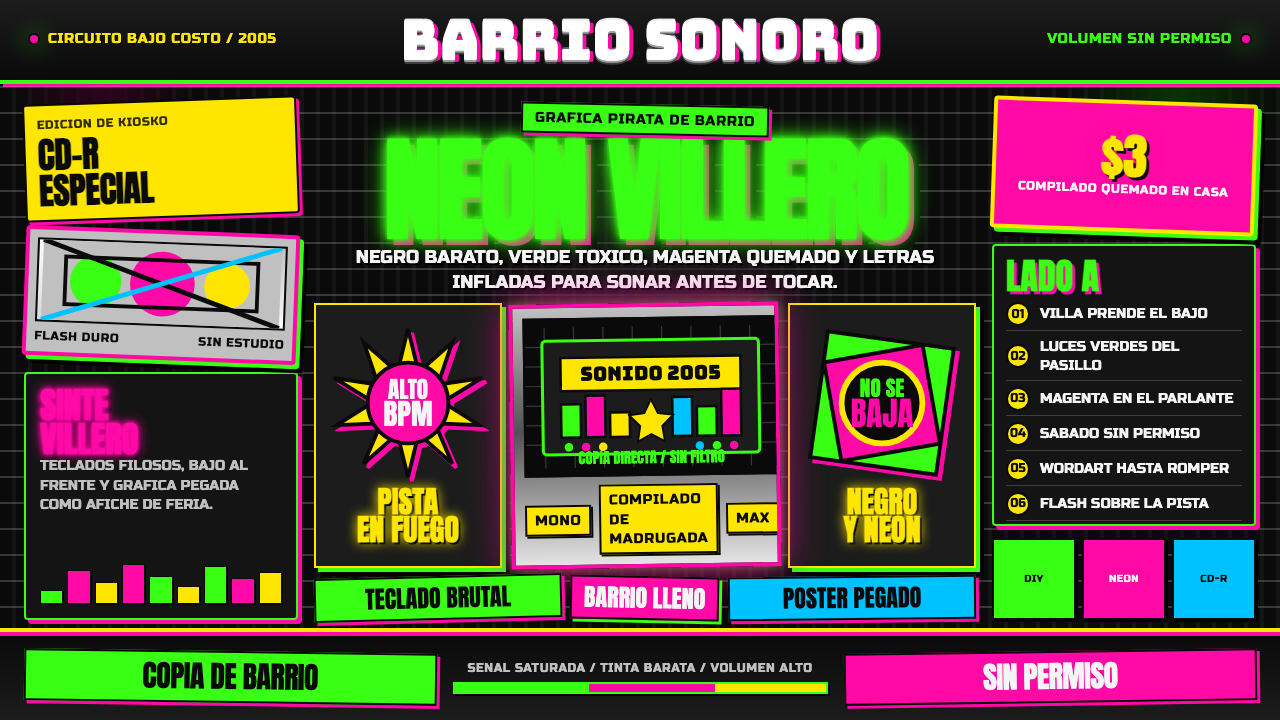 Cumbia VilleraLow-budget defiance. Neon green and hot magenta crowd black with chrome inlin…
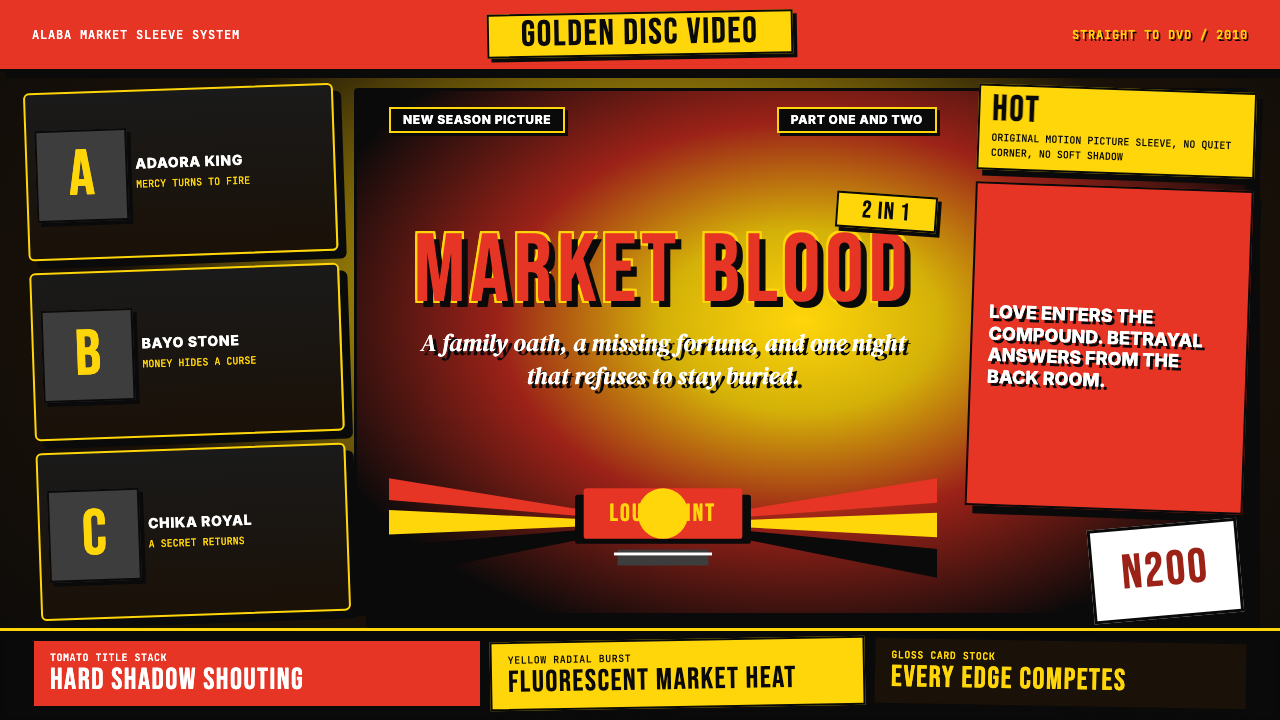 Nigerian Nollywood DVD Poster (2010)Market-stall cinema shouts. Tomato red type and yellow burst collide on jet b…
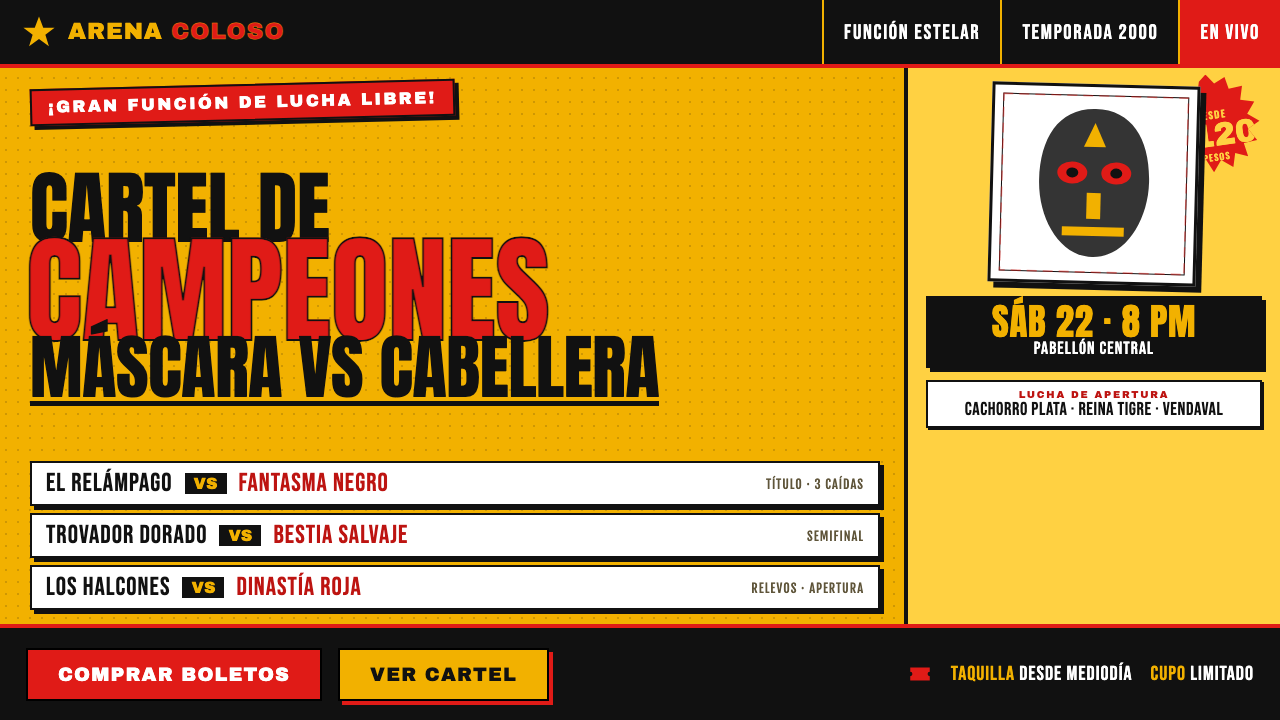 Lucha Libre Fight CartelTwo inks, maximum volume. Blood red on chrome-yellow, fat condensed type, sta…
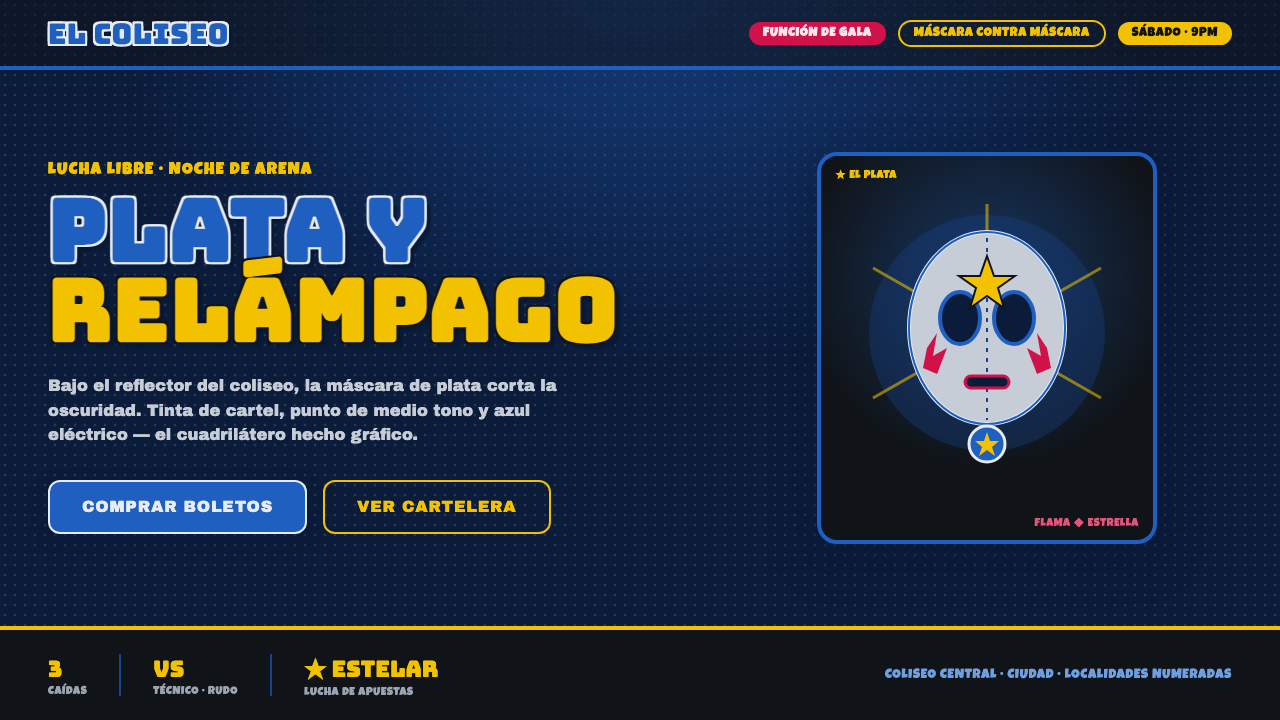 Mexican Lucha Mask GraphicComic-book lucha, lit from above. Silver-blue mask out of arena-night dark, h…