What is Adventure Time?
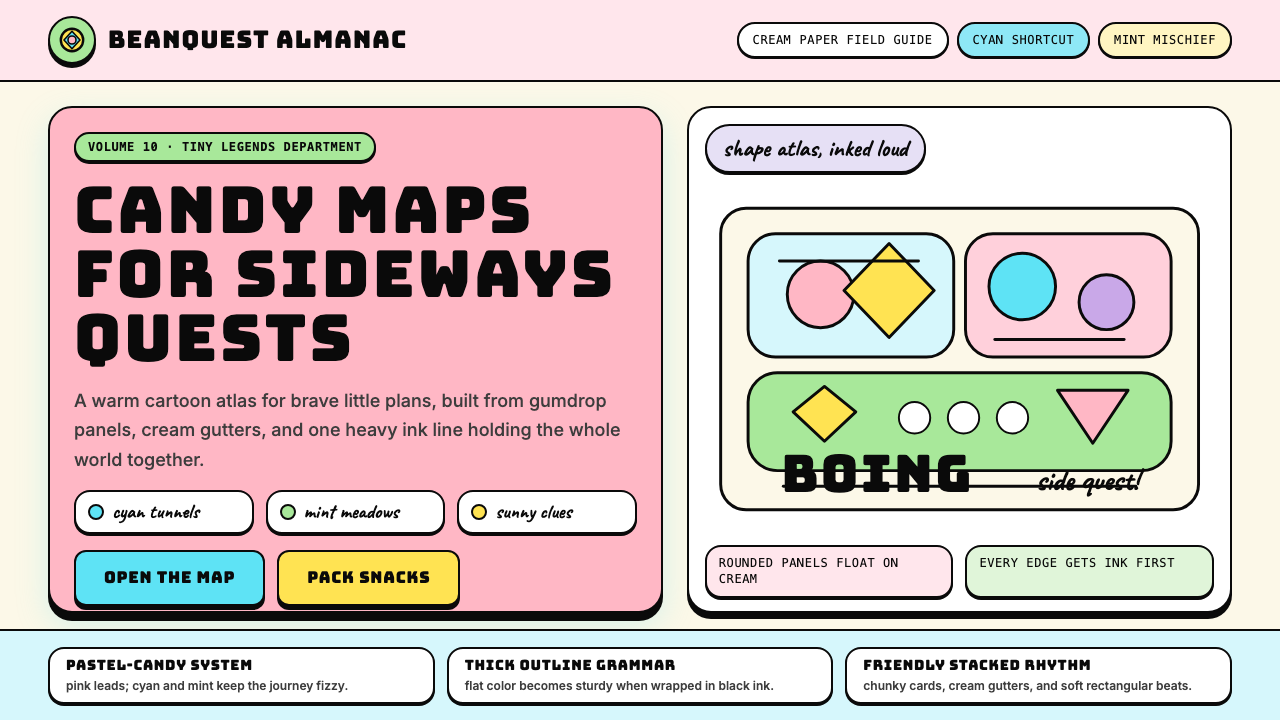
Adventure Time distilled a decade of indie-animation warmth into one visual grammar: candy-saturated pastels caged in thick black outlines, cream breathing room, and a whimsical looseness that somehow reads as precise.
Adventure Time in brief
Adventure Time is the visual design language that crystallized around Cartoon Network's landmark animated series, which aired from 2010 to 2018 and then continued on HBO Max. Its aesthetic — saturated pastel-candy colors bounded by thick black outlines, bean-shaped and softly rounded characters, cream or near-white grounds, and an overall sense of hand-drawn warmth — became the defining look of a generation of indie and studio animation.
As a graphic design system, Adventure Time is simultaneously populist and rigorous. It appears effortless, even childlike, yet its internal rules are consistent: a heavy black outline does all the structural work that shadow or depth would do in a more naturalistic style; color is deployed from a small, tightly curated candy palette — candy pink, sky cyan, soft mint, warm yellow, and gentle lavender — always against light or cream grounds; shapes default to organic curves and bean forms rather than hard geometry; and every element carries the slight irregularity of a confident hand-drawn stroke.
The system's strength is its emotional legibility. Because it borrows the visual grammar of children's media, it triggers immediate warmth and approachability. But because Pendleton Ward's production design was genuinely disciplined — thick outlines create containment, the palette avoids muddy combinations, and negative space is used generously — the style remains clear at small sizes and across different media. It is playful but never chaotic, cartoon but never crude.

Where does Adventure Time come from?
The Adventure Time aesthetic traces back to a 2006 seven-minute Flash animation pilot that Pendleton Ward produced while attending the California Institute of the Arts. Frederator Studios picked it up and posted it online, where it accumulated millions of views before Cartoon Network greenlit a full series in 2010. That origin story — scrappy indie animation reaching mainstream broadcast through internet viral momentum — embedded the style's hand-crafted, non-corporate warmth at its core.
Ward drew on a specific lineage: the rounded, expressive character design of early Hanna-Barbera cartoons, the elastic looseness of Fleischer Studios animation from the 1930s, and the psychedelic color sensibility that ran through independent underground comics of the 1970s and 1980s. He combined these influences with the color vocabulary of candy packaging and childhood illustration — a palette that reads as nostalgic and inviting rather than aggressive or sophisticated. The Land of Ooo, the show's fictional setting, was explicitly designed as a post-apocalyptic candy kingdom, which justified the density of saturated pinks, cyans, and mints in the world-building.
The series also served as a launching pad for a generation of animation talent. Rebecca Sugar, who worked on Adventure Time as a writer and storyboard artist before creating Steven Universe in 2013, carried the candy palette and thick-outline aesthetic forward while adding an additional emotional depth and musical expressiveness. Jesse Moynihan, another Adventure Time writer and storyboard artist, brought a cosmic mysticism to the show's visual mythology. These collaborators seeded the post-Adventure Time animation wave — shows like Gravity Falls, Steven Universe, OK K.O.!, and She-Ra — that collectively extended the aesthetic into the mid-2020s.
As a design reference, Adventure Time arrived at precisely the right cultural moment. The mid-2010s saw a reaction against the ultra-polished flat design of early smartphone software, and designers began reaching for warmer, more expressive visual languages. The Adventure Time look offered a vocabulary that was digital-native yet hand-made-feeling, bold yet approachable, and richly colored yet legible. It was adopted — consciously or not — across branding for youth-targeted digital products, social media illustration, and a wave of illustration-forward marketing campaigns that peaked around 2015 to 2020.
What defines the Adventure Time look?
Thick Black Outlines
The single most recognizable feature of the Adventure Time visual system is a consistently heavy black outline that traces every character, object, and major shape. This line is not a decoration — it is the structural skeleton. It provides containment for the saturated interior colors, prevents adjacent candy hues from bleeding into each other, and creates legibility across a wide range of sizes and backgrounds. The line weight is uniform or near-uniform around each form, giving objects a printed or stamped quality rather than a hand-shaded or rendered one. This is cartoon line discipline at its most purposeful.
Candy Pastel Palette
The color palette is saturated but not harsh — it reads as candy rather than neon. The anchor colors are a warm candy pink, a bright sky cyan, a soft mint green, a gentle warm yellow, and occasional soft lavender. These are applied as flat fills with no shading, gradient, or texture inside the outlined shapes. The key tension in the palette is that the colors are individually high-chroma but are always paired against cream or near-white grounds and separated by the black outline system, which prevents them from clashing. The result is intense but never aggressive — the palette of a cartoon world that is bright because brightness is joyful, not because it is alarming.
Bean Forms and Organic Curves
Where Bauhaus reaches for the circle, square, and triangle, Adventure Time reaches for the bean, the blob, and the soft irregular oval. Characters and objects are designed on organic, rounded armatures — Finn's body is a rounded rectangle, the Ice King's form is a rounded diamond, even the architectural structures in the Land of Ooo favor rounded towers and soft-cornered buildings. This preference for organic form over geometric form creates a visual world that feels grown or found rather than constructed — consistent with the show's premise of a world that has overgrown, healed, and become strange after catastrophe. In design applications, this translates to rounded corners at a generous radius, pill-shaped containers, and illustrations built from overlapping soft blobs rather than hard polygons.
Cream Grounds and Generous Negative Space
The Adventure Time visual system is not dense. Despite its saturated palette, it breathes. Backgrounds in the show itself are often simple washes of a single warm sky tone or a cream ground with minimal detail. In graphic design applications derived from the aesthetic, this translates to avoiding overfilled layouts — the cream or near-white background is a primary compositional element, not a default emptiness waiting to be covered. Candy-colored elements float against the light ground; the outline system defines their edges without requiring the contrast of a dark background. This openness is what keeps the style readable and prevents its intense palette from feeling overwhelming.
Hand-Drawn Warmth and Deliberate Imperfection
Even when the Adventure Time aesthetic is executed digitally, it retains the visible signature of hand-drawn origin: lines that are confident but not mechanically perfect, shapes that are consistent in proportion but carry slight organic wobble, fills that read as painted rather than algorithmically applied. This deliberate imperfection is not sloppiness — it is an intentional warmth signal. It communicates that a human made this, that it was drawn with energy and affection. In design contexts, this quality is achieved through illustration elements, slightly textured fills, hand-lettered accents, or wobbling borders rather than perfectly straight rules. The warmth is the point.
Expressive Character as Visual Anchor
In Adventure Time's native context — animation — characters carry enormous expressive range through simple, exaggerated facial features: wide circular eyes, small mouths capable of vast emotional range, eyebrows that travel far up or down the forehead. This character expressiveness translates into the wider design aesthetic as a preference for mascot-style illustration, friendly face motifs, and design elements that feel inhabited or personified rather than purely abstract. When the Adventure Time aesthetic is applied to branding or interface design, the natural extension is character-driven illustration, emotive iconography, and a general warmth of voice that the visual system supports and amplifies.
Flat Fill, No Gradient
Color in the Adventure Time system is applied as uniform flat fill — the interior of an outlined shape is a single solid color with no shading, no highlight, no drop in value from light to dark. Depth and volume are communicated through outline, shape overlap, and the occasional use of a separate darker flat tone for shadow areas (a second flat color, not a gradient). This flat-fill discipline is what gives the style its printed-page quality and keeps it legible as a transferable design system. Any softening of fills — blurs, glows, gradients — pulls the aesthetic out of the Adventure Time register and into a different, more generic digital style.

Who shaped Adventure Time?
Ward created the Adventure Time universe and served as its showrunner through the first six seasons. His original 2006 pilot — made at CalArts and distributed online by Frederator Studios — established the visual DNA that would define the series: the candy palette, the thick outlines, Finn and Jake's rounded forms, and the particular flavor of absurdist warmth that distinguishes the show from other animated comedies. Ward stepped back from day-to-day showrunning after Season Six, but the visual language he established remained remarkably consistent through the series' conclusion and influenced virtually every indie animation production that followed.
Sugar joined Adventure Time as a writer and storyboard artist and worked on the show from 2010 to 2013. Her contributions — including the fan-favorite episode 'It Came from the Nightosphere' and the musical segment 'Simon and Marcy' — helped establish the emotional depth beneath the candy surface. After leaving to create Steven Universe, Sugar carried the thick-outline candy aesthetic into a new show that added greater cultural diversity, more complex emotional storytelling, and a musical vocabulary. Steven Universe became the primary vector through which the Adventure Time visual language reached new audiences in the mid-2010s and demonstrated the system's range.
Moynihan was a writer and storyboard artist on Adventure Time whose visual contributions leaned toward the more mystical and cosmic dimensions of the show's mythology. He is credited with developing some of the most visually ambitious episodes — those dealing with ancient cosmic entities, the Lich, and the origins of the Land of Ooo — that pushed the candy-colored surface into contact with genuinely dark and visually experimental territory. Moynihan's own illustration and comic work runs parallel to the show's style and gives a clearer view of the aesthetic's range when applied by a single hand. His work demonstrates that the Adventure Time visual language is not limited to cheerfulness — it can accommodate unease and strangeness within the same candy-outline system.
Muto joined the show early as a storyboard artist and eventually became showrunner for the series' final seasons following Ward's departure. His tenure was responsible for maintaining visual consistency across a massive production spanning hundreds of episodes while also steering the show's narrative toward a more epic conclusion. Muto's role demonstrates a dimension of the Adventure Time aesthetic that is often overlooked: the style is not just a look but a production system — a set of constraints around character construction, background painting, and line discipline that allowed a large team to maintain coherent output across years of production. That systemic discipline is what makes it so transferable as a design language.
How do you use Adventure Time today?
Adventure Time is one of the most directly actionable cartoon-derived aesthetics in contemporary design work, because its rules are visual rather than conceptual. You do not need to understand its narrative or cultural context to apply it — you need to understand its line, color, and form logic. Apply it correctly and the result reads as warm, approachable, and joyful. Apply it carelessly and it reads as childish, chaotic, or unconsidered. The difference lies in discipline: the same commitment to consistent outline weight, restrained palette, and generous negative space that made the show visually coherent must carry through into any design application.
For presentation slides, the Adventure Time aesthetic is most effective when it leans into illustration as a structural device rather than decoration. A cover slide benefits from a centered or asymmetrically placed character or creature illustration against a cream ground, with the title set in a bold rounded typeface that echoes the organic form language. Content slides should treat text as secondary to visual hierarchy — use large, friendly, clearly bounded content areas with candy-colored headers and cream bodies. For data slides, charts and graphs take on an illustrated quality: bars are rounded, segments are separated by white space that echoes the outline system, and each data category gets one palette color as its identifier. The system works well for educational decks, product launches aimed at younger or broader audiences, and any context where warmth and accessibility are the primary communication goals.
For web interfaces, the Adventure Time aesthetic works naturally in products where emotional warmth and approachability are central to the experience — onboarding flows, children's educational platforms, community or social products, and creative tools. The approach: use a cream or very light warm white as the base background, round all interactive elements generously, apply the candy palette to call-to-action elements and highlights rather than large surface areas, and use clear black borders or heavy strokes around card and container components instead of soft drop shadows. Navigation should be friendly and typographic, with icon elements rounded and illustrated rather than geometric or minimal. The common failure mode for web applications is overdoing the illustration — Adventure Time's own success came from restraint: clear ground, bounded color, generous space.
For editorial and marketing work, the Adventure Time aesthetic supports campaigns targeting audiences where warmth, creativity, and inclusivity are desired associations. A marketing page using this system would feature illustration-forward hero sections with a candy-colored character or scene against a cream field, section breaks marked by thick colored rules or illustrated dividers rather than hairlines, and body text set in a rounded, approachable typeface against a light ground. Social media graphics benefit enormously from the system's clarity at small sizes: a single bold character or icon in the candy palette against cream, outlined in black, reads clearly even as a thumbnail. The aesthetic is particularly well-suited to product launches, brand refreshes, and awareness campaigns where the goal is emotional resonance rather than authority signaling.
A common mistake when applying the Adventure Time aesthetic is importing the surface energy — the saturated colors, the rounded forms — without importing the structural discipline that makes the original work legible. The candy palette only works because it operates against a light, uncrowded ground separated by consistent line weight. Designers who fill backgrounds with candy colors, stack multiple saturated hues without the outline system to separate them, or use soft gradients in place of flat fills end up with something that feels agitated and unresolved rather than joyfully bold. A second common error is confusing the aesthetic with generic cartoon cuteness — Adventure Time's line quality is deliberate and consistent, not approximate. Committing to a uniform stroke weight and a tight, curated palette of four to five candy colors will produce more authentic results than assembling a large library of disparate cartoon elements.

Adventure Time — FAQ
Is the Adventure Time aesthetic appropriate for adult or professional audiences?
Yes, with important qualifications. Adventure Time itself was always a dual-audience show — it ran on a children's network but was written, in significant part, for adults who appreciated its philosophical depth, emotional complexity, and subversive humor. The design aesthetic similarly can carry adult or professional content when deployed with discipline. The key is context and intent: a productivity app, mental health platform, or creative-industry brand can successfully use the candy palette and organic forms if the content strategy and voice are calibrated for the target audience. What makes it feel juvenile is not the visual system but the absence of considered deployment — playful visuals paired with thoughtful, substantive content read as whimsical sophistication, not immaturity.
How does Adventure Time differ from other cartoon-inspired design aesthetics?
The clearest distinctions are the color palette and the outline system. Flat design and Material Design also use solid fills and bold colors, but their color systems are more corporate and their lines are absent — there is no outline, just color contrast to define shape. Classic Disney or Pixar aesthetics have outlines in their animation but rely on gradient shading and volume modeling that Adventure Time explicitly rejects. The 1990s Nickelodeon cartoon aesthetic — Rugrats, Hey Arnold — shares the thick outline and candy colors but is noisier, more textured, and uses pattern fills far more heavily. Adventure Time's distinguishing discipline is the cream ground, the restraint of the candy palette to five or six anchor colors, and the flat fill rule. These three constraints working together produce the style's particular readable warmth.
Can this aesthetic work in dark mode or on dark backgrounds?
The Adventure Time aesthetic is fundamentally a light-ground system, and dark inversions require care. The candy palette — particularly the pale mints and lavenders — loses much of its character on dark grounds because those colors depend on their contrast with cream or white to read as delicate rather than washed-out. On black, candy pink and bright cyan survive well; soft mint and pale lavender tend to disappear or require substantial saturation boost that pushes them out of the palette's gentle register. A workable dark variant leans on the stronger anchor colors — candy pink, bright cyan, warm yellow — and uses the black outline system as the primary structural device rather than background contrast. It reads more like a night scene from the show than a full inversion of the design system.
What types of projects are a poor fit for the Adventure Time aesthetic?
The Adventure Time aesthetic struggles in contexts that require authority, institutional gravitas, or premium-luxury positioning. Financial services, legal products, enterprise software, luxury consumer brands, and medical or clinical applications generally cannot absorb the candy palette and rounded organic forms without undermining the trust and competence signals those categories depend on. The aesthetic is also a poor fit for contexts where cultural specificity is important — the visual language is strongly identified with American indie animation and with a particular millennial and Gen-Z internet cultural moment, and it may feel alienating or inappropriate in design contexts with strong ties to other cultural traditions. Finally, the style does not scale gracefully into extreme information density — it is designed to breathe, and forcing it into dense data-heavy interfaces produces clutter, not clarity.
How closely should illustrations follow the Adventure Time character style to be authentic?
The spirit of the system matters more than literal imitation. Using Finn, Jake, or other existing Adventure Time characters in design work raises intellectual property questions and misses the point anyway — the goal is to apply the visual language, not to reproduce the show. What constitutes authentic application is adherence to the underlying principles: organic rounded forms built on bean-shape armatures, a consistent thick black outline at the same weight throughout, flat candy-palette fills, generous cream or white grounds, and a hand-drawn warmth in the line quality. Original characters and abstract shapes that follow these rules read as Adventure Time aesthetic without copying any specific design. The system is generative, not a locked library of characters.
Related design styles
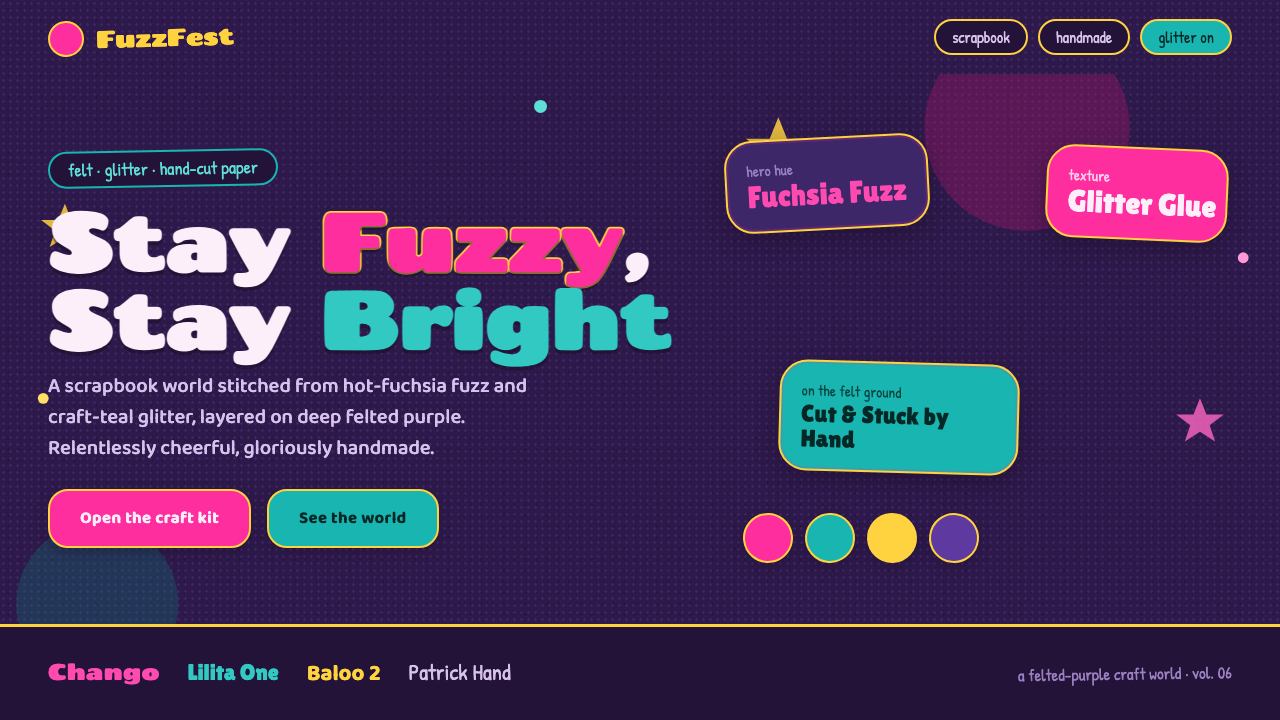 Trolls Poppy Magenta 2016Relentlessly cheerful, gloriously handmade. Fuchsia fuzz and craft-teal glitt…
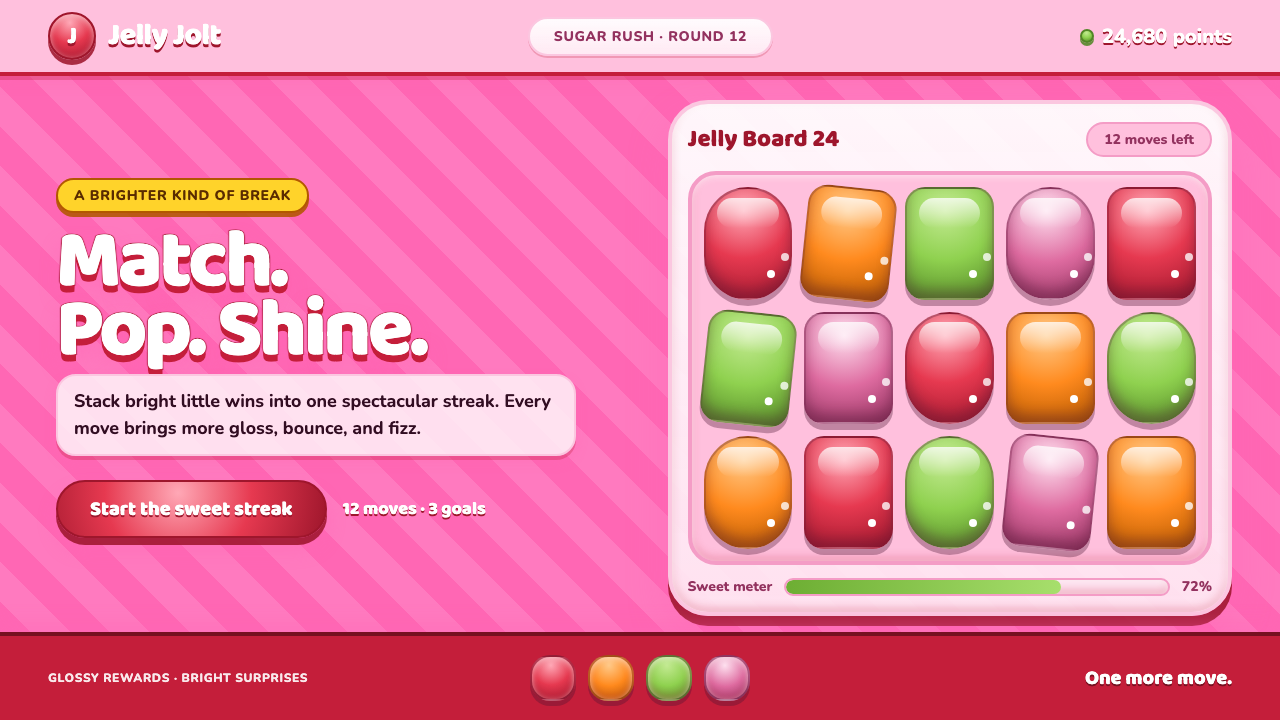 Candy Crush (2012)Sugar rush without restraint. Glossy candy tiles pulse across a striped bubbl…
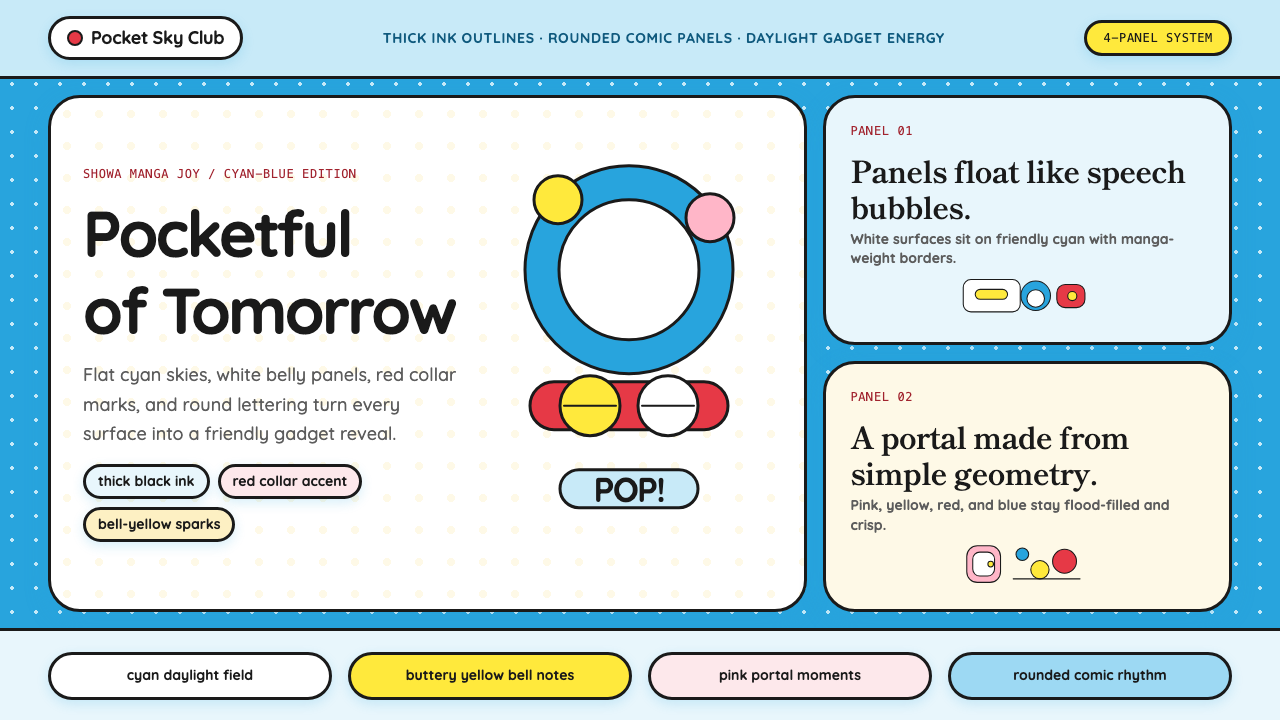 DoraemonChildhood joy, inked bold. Cyan fields, white panels, red collars, and rounde…
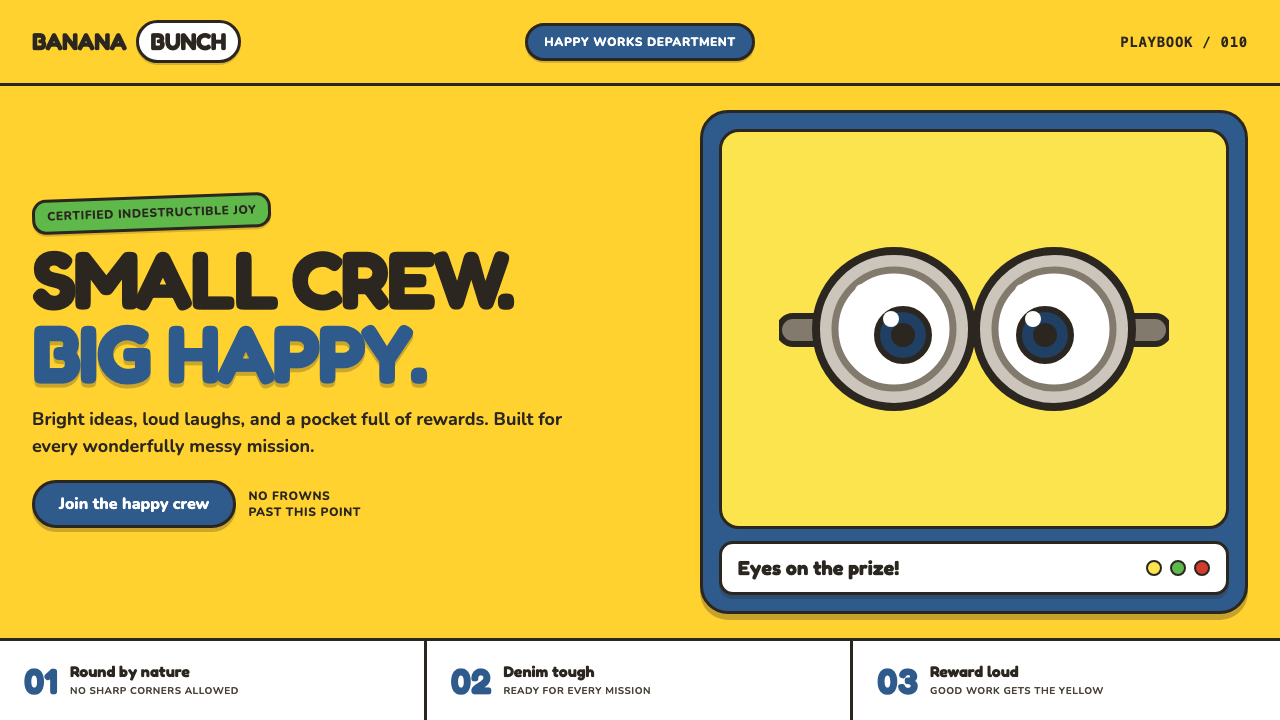 Minions (Despicable Me, 2010)Indestructibly cheerful. Minion yellow, denim blue, and chunky goggle geometr…
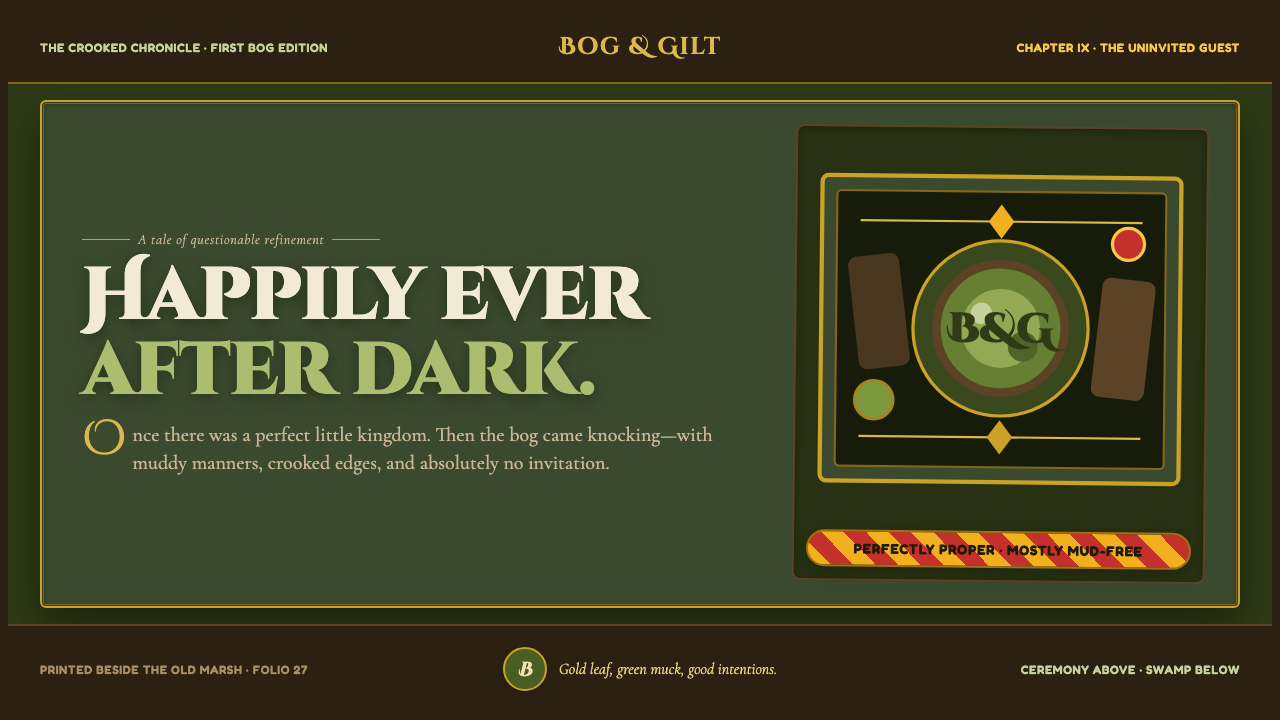 Shrek Swamp (2001)Fairy-tale ceremony gets muddy. Gilt frames collide with moss green and candy…
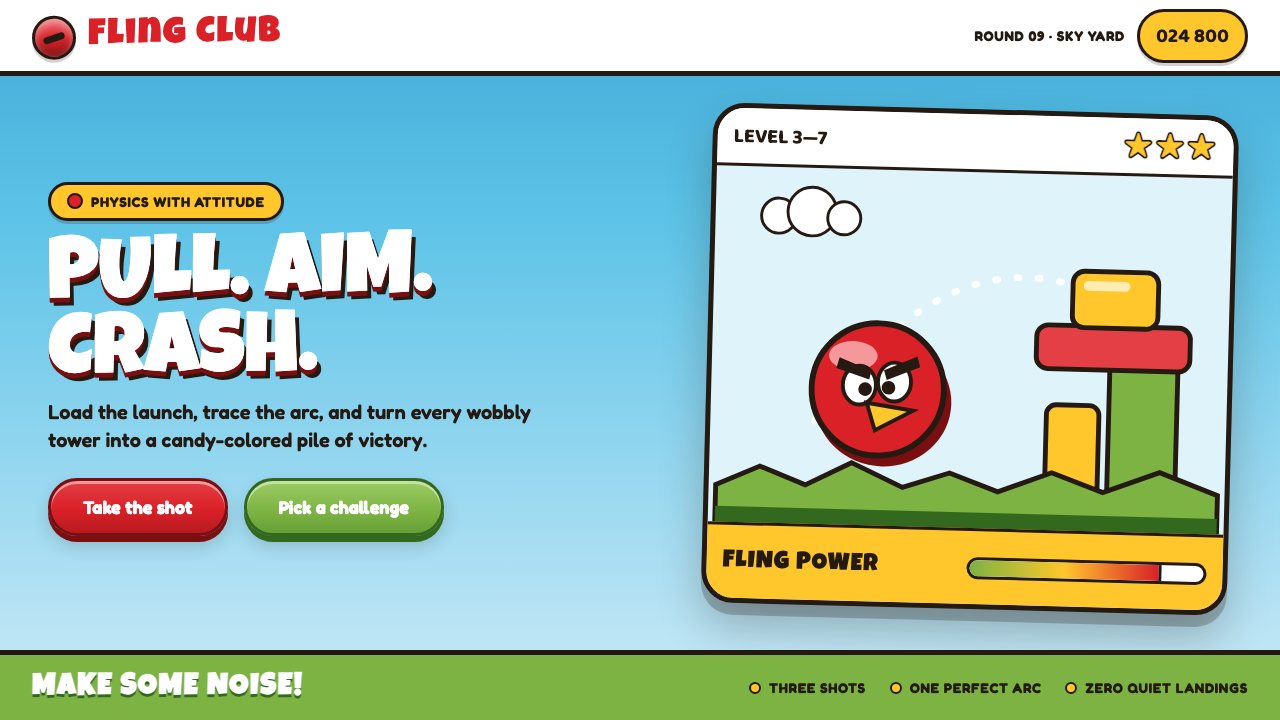 Angry Birds (2009)Adorable aggression takes flight. Candy primaries, chunky outlines, and a dot…