What is Mailchimp Freddie-Yellow?
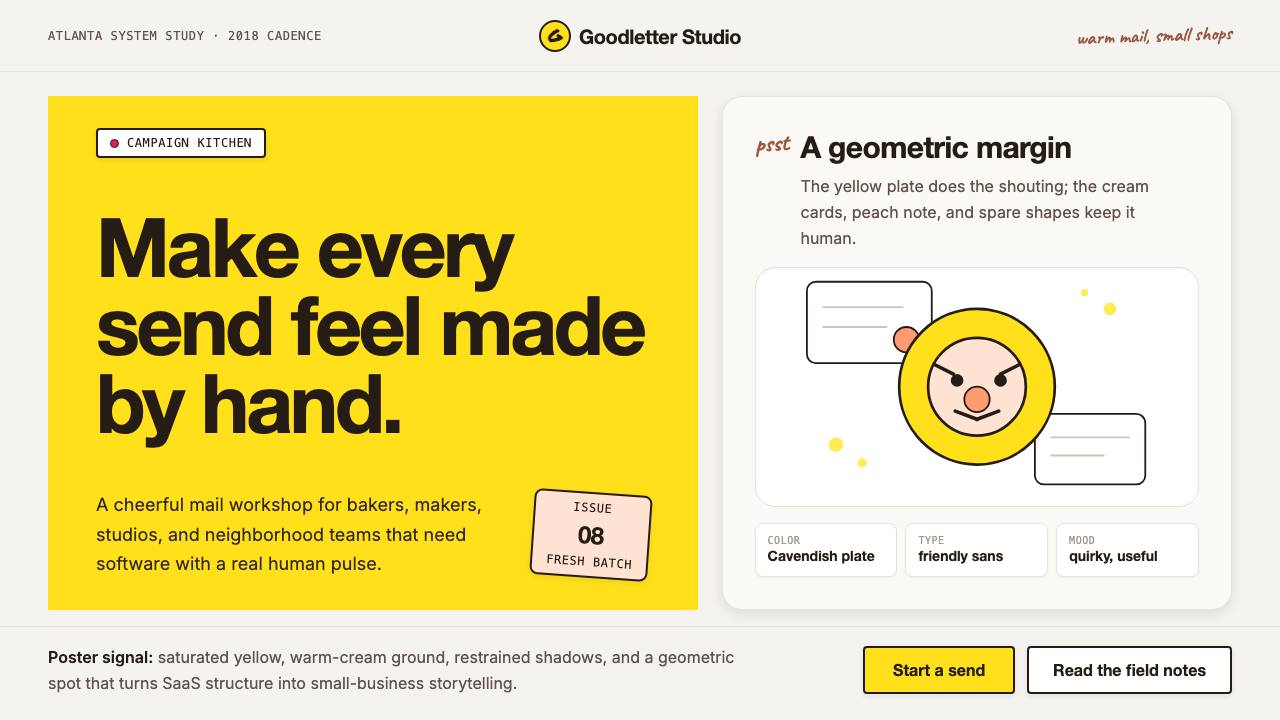
Mailchimp turned email software into a beloved brand by pairing a winking cartoon monkey with a sun-drenched banana-yellow that made marketing feel like something a human being actually made.
Mailchimp Freddie-Yellow in brief
Mailchimp Freddie-Yellow is the visual identity system built around Mailchimp's email-marketing platform: a saturated Cavendish-yellow primary color, a warm cream background, hand-drawn illustration, and the cartoon-monkey mascot Freddie who appears throughout the interface and marketing material. Together these elements produce a tone that is simultaneously professional and approachable — the rare tech brand that feels as if it were designed by someone who has actually run a small business.
The aesthetic sits at the intersection of editorial illustration, brand mascotry, and digital product design. It rejects both the cold minimalism of enterprise SaaS and the aggressive gradient-heavy look of fintech. Instead it draws on the warmth of mid-century American commercial art — bold flat shapes, friendly curves, ink-line character — and updates that sensibility for a web interface where clarity and delight must coexist on the same page.
What distinguishes this system from mere friendliness-as-decoration is its structural discipline. The yellow is not sprinkled; it anchors entire hero blocks. Freddie is not a logo dropped into a corner; he is an active participant — winking at form completion, offering a high-five at campaign launch. The cream background is not a safe default; it is a considered warm neutral that makes the yellow sing rather than glare. Every element has a job, and the cumulative effect is a brand that feels human without feeling amateurish.

Where does Mailchimp Freddie-Yellow come from?
Mailchimp was founded in 2001 in Atlanta, Georgia by Ben Chestnut and Dan Kurzius. Chestnut had been running a web-design agency when he noticed that his small-business clients spent an inordinate amount of time wrestling with email newsletters. The two built Mailchimp as a side project to solve that specific problem, and the informal, human-scale nature of that origin — a tool built by people for people like them — never fully left the brand's DNA. Atlanta, not San Francisco, shaped its sensibility: scrappier, warmer, more inclined toward wit than polish.
The mascot Freddie Von Chimpenheimer IV — Freddie for short — predates the canonical brand system by years. Chestnut originally sketched the character in the early days of the company as an internal joke, and the winking monkey gradually became the face customers saw in transactional emails and loading states. What began as an improvised bit of personality became the brand's most recognizable asset. Freddie's persistence through multiple redesigns illustrates a principle the Mailchimp team articulated explicitly: a brand built around a character rather than an abstraction is harder to erase, because people form genuine affection for characters.
The canonical brand refresh that established the visual system in its current cohesive form arrived in 2018, when Mailchimp worked with its internal creative team and external collaborators to systematize what had been an evolving, sometimes inconsistent collection of brand decisions. The 2018 system introduced the Cavendish-yellow name — chosen deliberately, a reference to the Cavendish banana variety, grounding the abstract brand color in something tangible and edible — along with a warm cream background as the default canvas, a new custom typeface built on geometric sans-serif forms, and a formalized illustration style drawing on the work of collaborators like Tom Froese, whose hand-drawn characters and vignettes of small-business life became the system's illustrative voice.
Intuit acquired Mailchimp in 2021, and the brand has since been integrated into a larger suite of small-business financial tools. The visual identity has been maintained largely intact, though the product context has broadened. For designers, the canonical reference point remains the 2018 system: the moment when every element — color, type, illustration, mascot, tone of voice — was deliberately unified into something teachable and replicable. That system became a case study in how a SaaS company could build brand equity not through sleekness or data-driven minimalism but through personality and craft.
What defines the Mailchimp Freddie-Yellow look?
Color: Cavendish Yellow
The defining color is a fully saturated, warm banana yellow named after the Cavendish banana — bright enough to command attention at full-page scale, warm enough to read as cheerful rather than alarming. It is used in large fields: hero backgrounds, button fills, highlight bands. The yellow is never diluted into a pastel and never darkened toward ochre; its job is to be unambiguously itself. Against the warm cream background that the system pairs it with, the yellow glows rather than vibrates, because both colors share the same warm undertone.
Background: Warm Cream Canvas
The default background is not white but a warm off-white — cream with a slight yellow cast — that functions as a chromatic bridge between the dominant yellow and the body text black. This choice is rarely noticed by users but is responsible for much of the system's perceived warmth. Pure white would make the yellow feel loud; the cream absorbs it. The cream background also references the tactile warmth of uncoated paper, aligning the digital system with the handmade, printed-matter aesthetic that the illustration style reinforces.
Illustration: Hand-Drawn Warmth
The illustration style is characterized by visible ink line work, imperfect edges, and subject matter drawn from the everyday life of small-business owners — storefronts, coffee cups, potted plants, shipping boxes, small crowds of recognizably human figures. The style deliberately preserves evidence of the human hand: slight irregularities in line weight, textures that suggest paper grain, color fills that stop just inside the outline. This is not the smooth vector illustration common to most SaaS platforms; it is illustration that has been touched.
Mascot: Freddie as Active Participant
Freddie is not a static logo mark but a character deployed contextually throughout the product experience. He winks at successful form submissions, offers an animated fist-bump when a campaign goes live, and peers out from corners in moments of user delight. This contextual deployment is what distinguishes a brand mascot from a logo: the character responds to events, which creates the illusion of relationship. Freddie is always Freddie — the same rounded face, the same cap — but his expression and gesture change to match what the user has just accomplished.
Typography: Geometric Sans with Personality
The type system is built on a custom geometric sans-serif with letterforms that are clean and modern but not cold — the terminals and proportions carry enough optical warmth to harmonize with the illustration style rather than clash with it. Headlines are set large and confident, with ample negative space. Body text is kept at a comfortable reading weight, never compressed or condensed in ways that would undercut readability. The type system avoids the hyper-refined, micro-contrast letterforms common to luxury or finance brands; it is built for legibility and friendliness at the same time.
Tone: Witty Without Trying Too Hard
The visual system is inseparable from a verbal tone that is conversational, occasionally self-deprecating, and comfortable with the absurdity of marketing a marketing tool. Error messages are humanized; confirmation copy is celebratory without being sycophantic. The illustrations reinforce this — a small business owner depicted mid-coffee-sip is more relatable than a stock-photo professional in a glass office. The overall effect is a brand that feels like it has a sense of humor about itself, which is a difficult thing to sustain across a complex product without tipping into forced quirk.
Layout: Generous Space, Clear Hierarchy
Layouts within the Mailchimp system are characterized by generous breathing room around text and illustration elements, a strong left-aligned reading axis, and a two- or three-level typographic hierarchy that is resolved through size and weight rather than color variation. The yellow is reserved for calls to action and featured elements; it does not appear in every section. Content blocks alternate between cream-background sections and yellow-background hero panels, creating rhythm without requiring complex grid acrobatics.

Who shaped Mailchimp Freddie-Yellow?
Co-founder and longtime CEO of Mailchimp, Chestnut was the original author of the brand's personality. His background as a web designer rather than a venture-backed founder shaped the company's preference for craftsmanship over scale optics. He drew early versions of Freddie himself, setting the precedent that brand identity at Mailchimp was something built by the people running the product, not outsourced to consultants. His insistence on maintaining Atlanta roots rather than relocating to Silicon Valley reinforced the brand's positioning as an outsider making tools for outsiders.
As head of brand and content at Mailchimp for many years, DiCristina was the steward of the Freddie-Yellow system through its maturation. He championed the idea that Mailchimp's marketing should itself demonstrate the quality of creative work the platform enables — publishing original editorial content, commissioning independent filmmakers, and treating the brand's creative output as worthy of the same attention as the product. Under his guidance, Mailchimp became as well known for its branded content strategy as for its visual identity.
The type designer behind Mailchimp's custom typeface — a geometric sans-serif developed to give the brand a typographic voice that was distinctly its own rather than borrowed from a widely licensed library. Jenkins brought a craftsman's approach to the letterforms, building in proportions and details that harmonize with the organic warmth of the illustration system without sacrificing the legibility required for an interface that surfaces dense information. The custom type is one of the system's most quietly important elements: it prevents the brand from feeling like a theme applied on top of someone else's design.
Among the illustrators whose work shaped the Mailchimp illustration voice, Froese contributed character work and scenes depicting small-business life with the warmth and slight imperfection that became signature to the system. His approach — figures with expressive but not cartoonish faces, environments rendered with just enough detail to feel real — helped define the tonal sweet spot between illustration and editorial art. The Mailchimp illustration style is not a house style developed by a single hand; it is a defined set of qualities that multiple collaborators were invited to work within, and Froese's output helped establish what those qualities felt like in practice.
How do you use Mailchimp Freddie-Yellow today?
Applying Mailchimp Freddie-Yellow correctly requires understanding the system's underlying logic: the yellow is an anchor, not a garnish. Presentations that use this style effectively begin with a cover where the entire background field is Cavendish yellow, the title sits in large, dark letterforms, and a single illustrative element — a winking character, a relevant object drawn in the hand-rendered style — occupies one corner or edge. The yellow cover is not a color choice; it is a statement of confidence. Cream-background content slides follow, with the yellow reappearing only on interactive-style elements: data callouts, highlighted findings, section openers.
Content slides in this system work best with clear two-level hierarchy: a large, weighted headline followed by body text at a comfortable reading size, separated by generous space. Data slides benefit from treating charts and graphs as illustrations in themselves — bar charts with soft rounded tops, muted-but-warm secondary palette for non-featured data series, feature series in Cavendish yellow to draw the eye immediately to the key metric. Avoid cold charting defaults like stark gray or pure blue; they break the warmth. Every slide should feel as if it was laid out by a person who cares about the information, not generated by a template engine.
For web interfaces and dashboards, the system translates well to any surface where approachability and trust must coexist. Navigation and header areas work well with the cream background and dark type; reserve yellow for primary calls to action and key status indicators. Pricing pages benefit from using yellow as the highlight tier background — the featured plan sits in a yellow card while others remain on cream, instantly directing attention without requiring additional badge or label decoration. Form design should favor border-defined fields over ghost inputs, and confirmation states should include a Freddie-style celebratory moment — an animation, an illustrated flourish — that rewards the user for completing a task.
For editorial layouts and marketing materials, this system suits content that aims to be informative and enjoyable simultaneously. A long-form article in this style uses a wide opening image in the illustration style to set emotional tone, followed by a narrow measure of body text with generous margins for pull-quotes. Section breaks are marked by small illustrated vignettes rather than decorative lines, and the overall page rhythm alternates between reading density and visual breath. Marketing pages work with the system's poster sensibility: a bold yellow hero section makes an immediate impression, followed by cream sections that build the case, returning to yellow for the final call-to-action panel. The tone throughout should remain direct and human — the copy and the visual system must agree.
The most common mistake in applying this style is treating the yellow as a general accent color and using it throughout at small scale — yellow badges, yellow borders, yellow underlines — rather than deploying it in the large fields where it works. A second common error is pairing the system with cold, clinical illustration or photography: any imagery that reads as hyper-polished, stock-photo professional, or technically rendered immediately undermines the hand-made warmth the system depends on. A third trap is adding complexity where simplicity is the point: the Mailchimp visual language is generous with space and restrained with decoration, and crowding elements together or adding visual texture behind illustration defeats the system's fundamental character.

Mailchimp Freddie-Yellow — FAQ
Can the Freddie-Yellow system work for brands that have no mascot?
Yes, but Freddie's absence changes the system significantly. The mascot is what provides the brand's most intimate human connection — the sense that someone is on the other side of the screen, reacting to what you do. Without a mascot, the Mailchimp system becomes a strong illustration-forward color story: Cavendish yellow plus cream background plus hand-drawn imagery. That combination is still warm and distinctive, but it loses the contextual responsiveness that makes the brand feel alive. To compensate, brands without a mascot should invest more heavily in the illustration quality and the verbal tone — those two elements carry more weight when there is no character to anchor the emotional register.
Is this style appropriate for enterprise or B2B contexts?
It depends on the product positioning. Mailchimp itself is B2B — it sells to businesses — so the style is not inherently unsuited to business contexts. What it does poorly is project authority and gravitas in situations where buyers need to feel confident about large financial commitments or compliance risks. The friendly-quirky register that the system excels at communicates competence-with-approachability rather than enterprise-grade seriousness. For products sold to individual business owners, small teams, or creative professionals, the style is highly effective. For products sold to procurement committees, CFOs, or regulated industries, the warmth may undercut rather than support the sales case.
How does Freddie-Yellow differ from other friendly-tech brand aesthetics like Slack or Duolingo?
All three use color and personality to distinguish themselves from enterprise coldness, but they do so differently. Slack's visual identity is built around a multi-color palette and grid-based icon system — the friendliness is systematic and geometric rather than hand-drawn. Duolingo leans into animation and gamification cues, with Duo the owl deployed as an operationally consistent brand voice across social media as well as product. Mailchimp's distinction is specifically the hand-made illustration warmth — the ink lines, the visible human touch — combined with a single dominant color rather than a rainbow. The system feels like a small-business brand that grew up, not a tech brand that got permission to play.
What happens when the Cavendish yellow is used on dark backgrounds?
Yellow on black is a high-contrast, attention-demanding combination that works well for single-purpose contexts — a warning state, a featured highlight bar, a hero section meant to stop scrolling — but poorly as a sustained reading environment. The Mailchimp system is architected around light grounds for a reason: the yellow and cream combination creates warmth through similarity, while yellow on black creates energy through maximum contrast. A dark-mode variant of this system is possible, but it requires discipline: use the yellow sparingly as a bright accent against a very dark warm-gray or near-black background, keep body text in a warm off-white rather than pure white, and avoid deploying Freddie in yellow contexts that make him difficult to read. The character should always have sufficient contrast to be expressive.
How closely must an illustration style match the Mailchimp look to invoke this system?
The essential qualities are: visible hand-drawn line work (not smooth vector), subject matter grounded in human everyday activity, a color fill approach that stays within warm bounds, and figures with expressive but not hyperbolically cartoonish faces. The exact drawing style can vary considerably — the Mailchimp system itself employed multiple illustrators, each with a personal hand — as long as these qualities are present. What breaks the system is substituting polished vector iconography, photography, or three-dimensional rendering for flat hand-drawn illustration. The warmth the brand depends on is specifically an artifact of the illustration approach, not just the color palette, so protecting it requires consistency in how imagery is made, not merely what it depicts.
Related design styles
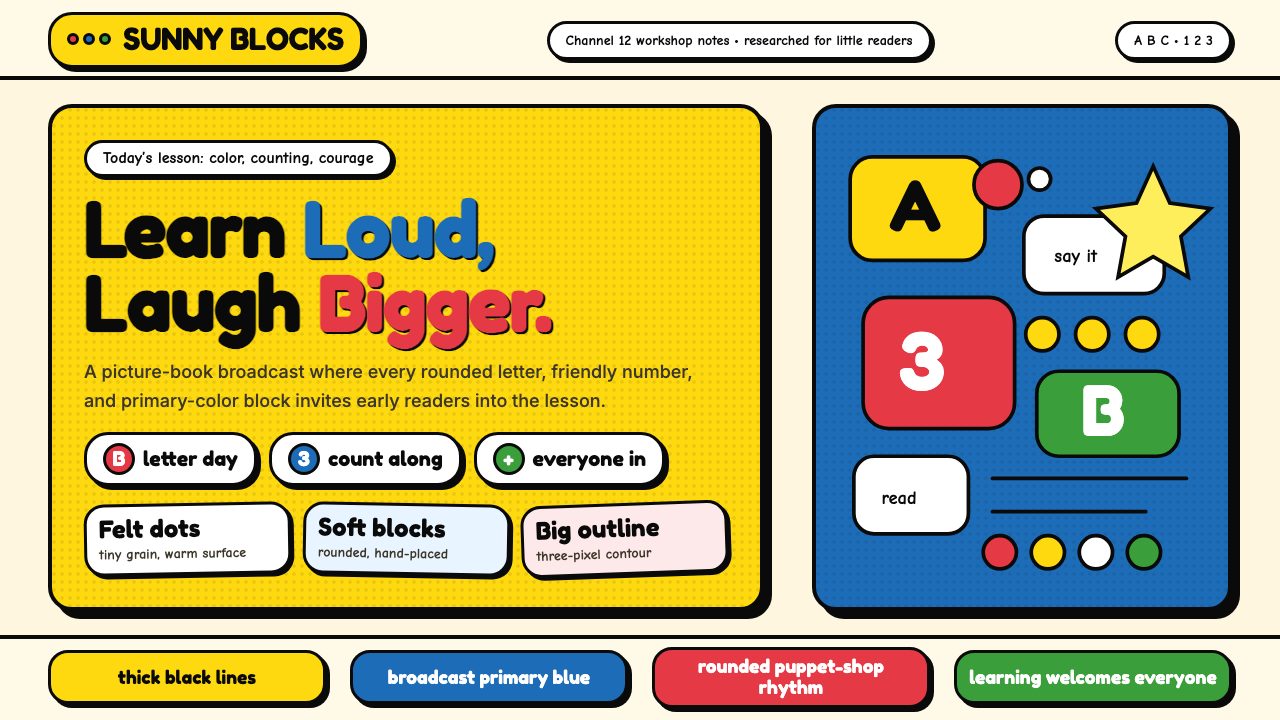 Sesame Street (1969)Learning feels handmade. Big yellow, monster blue, chunky outlines, and round…
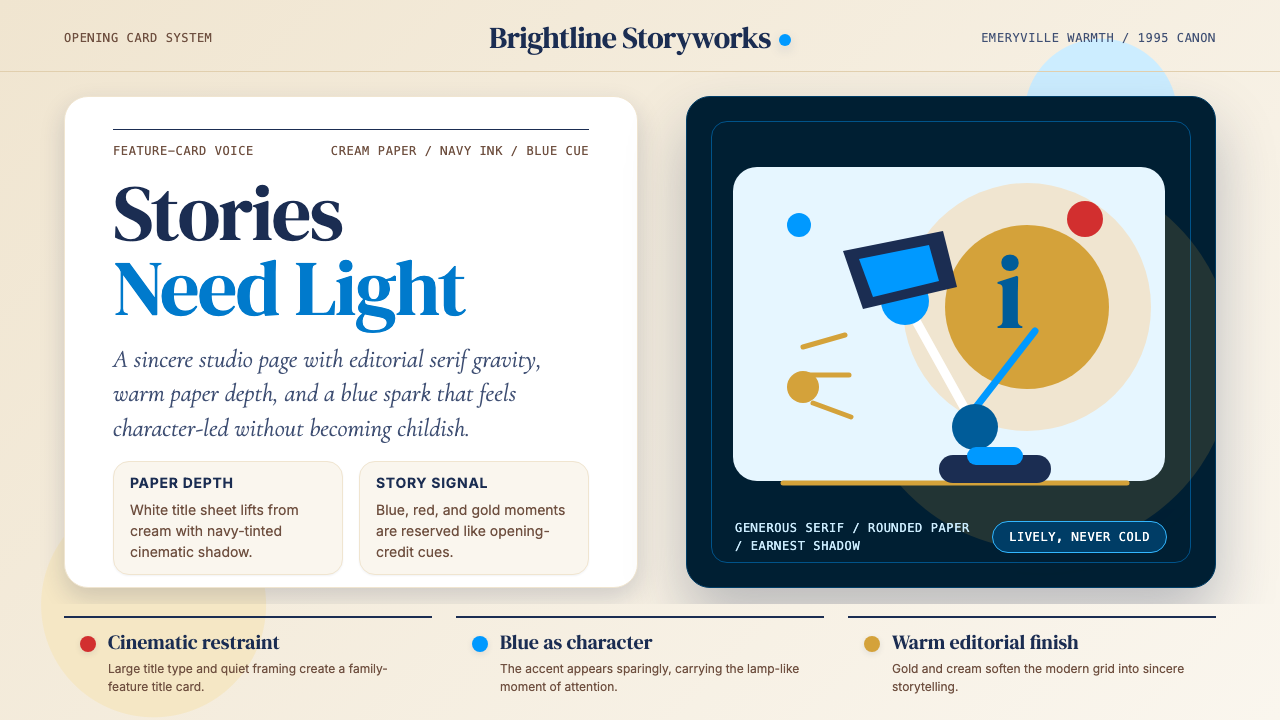 Pixar LuxoSincere story warmth. Cream paper, deep navy serif, and blue lamp geometry ho…
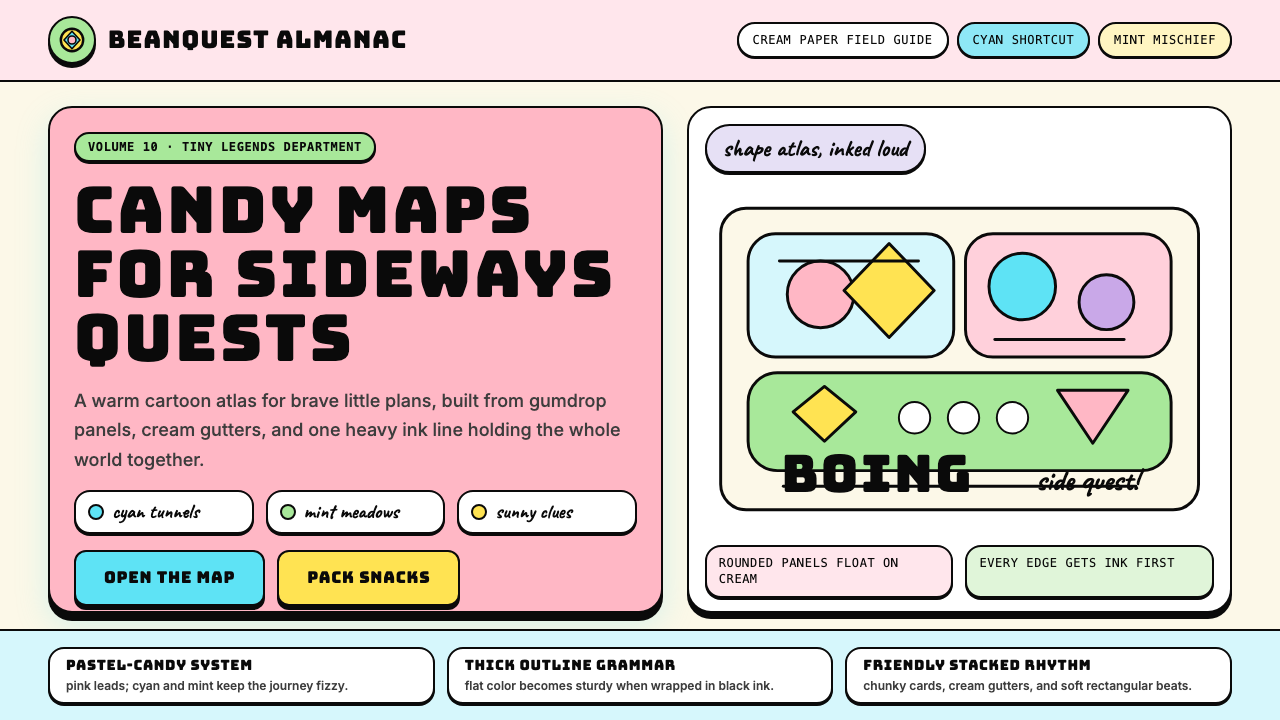 Adventure TimeCartoon warmth, inked loud. Cream gutters, candy pink, cyan and mint lock int…
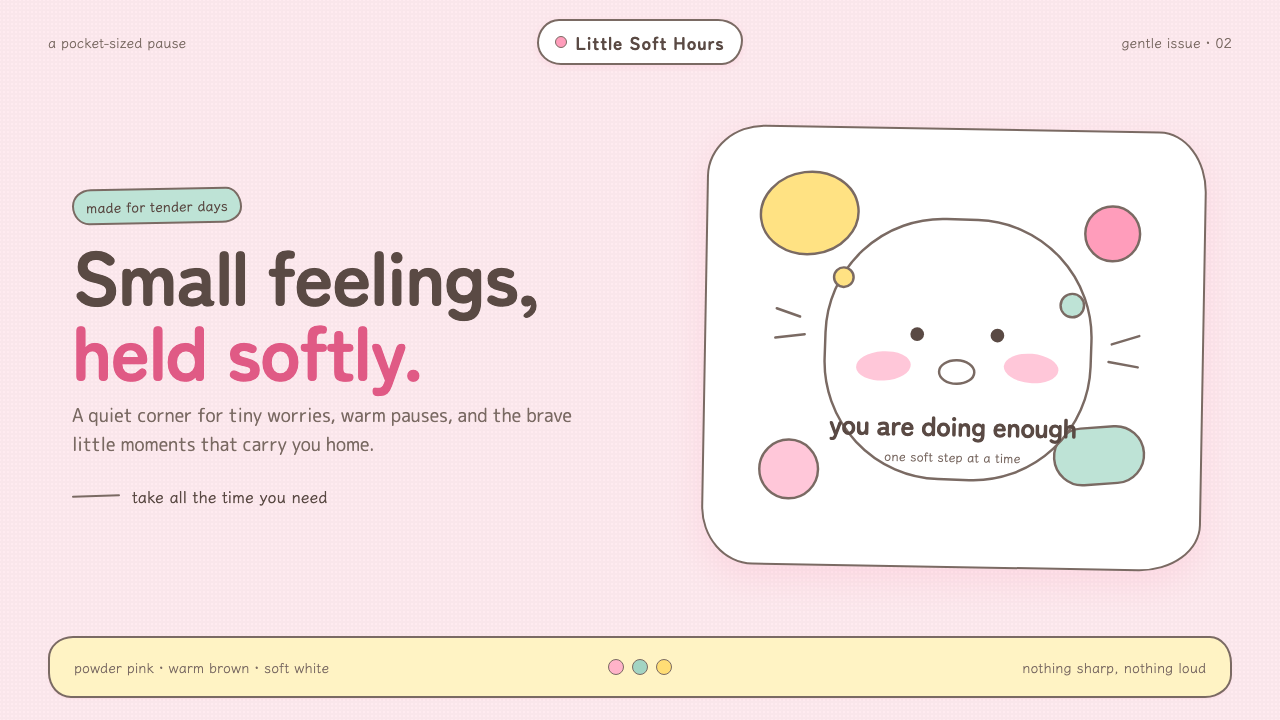 Chiikawa (2022)Tenderness made visible. Powder pink, warm-brown wobbles, and pill-soft forms…
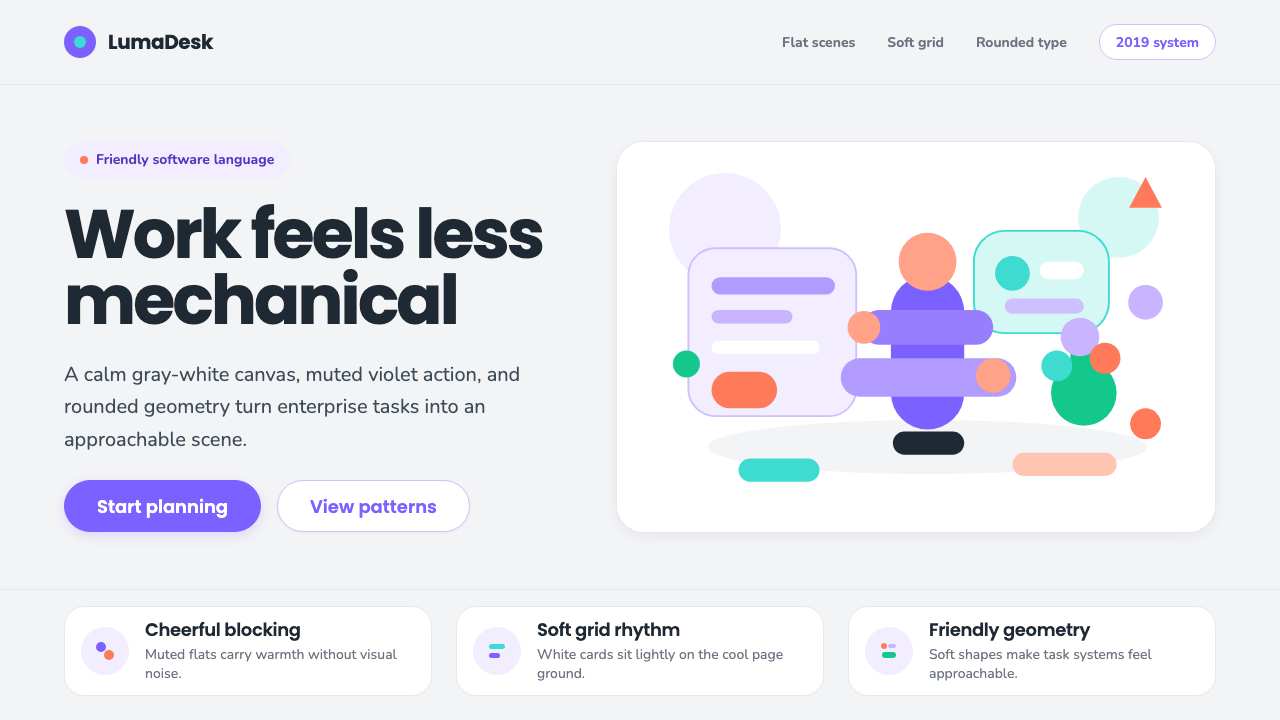 Corporate Memphis (Alegria)Friendly by design. Violet flats and rubber-hose geometry soften the SaaS gri…
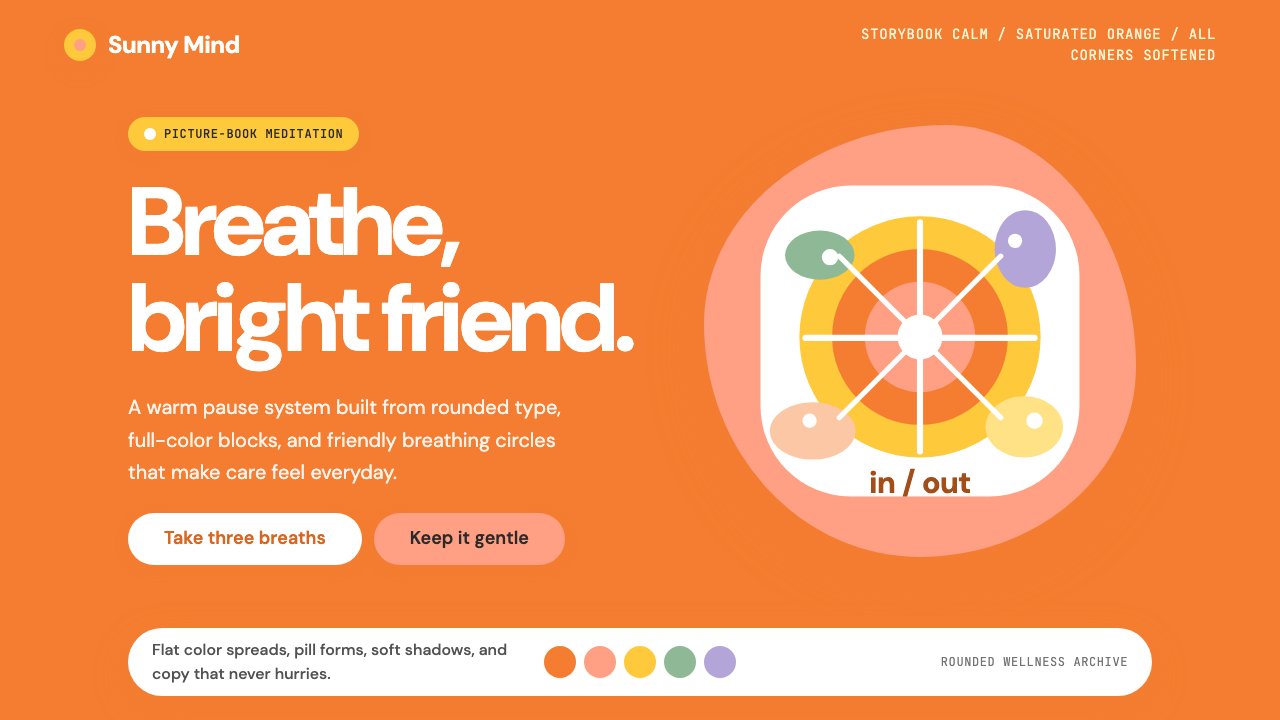 Headspace Orange MeditationMeditation becomes friendly. Orange blocks, DM Sans, and pill shapes soften e…