What is Taiwan Bubble Tea Premium?
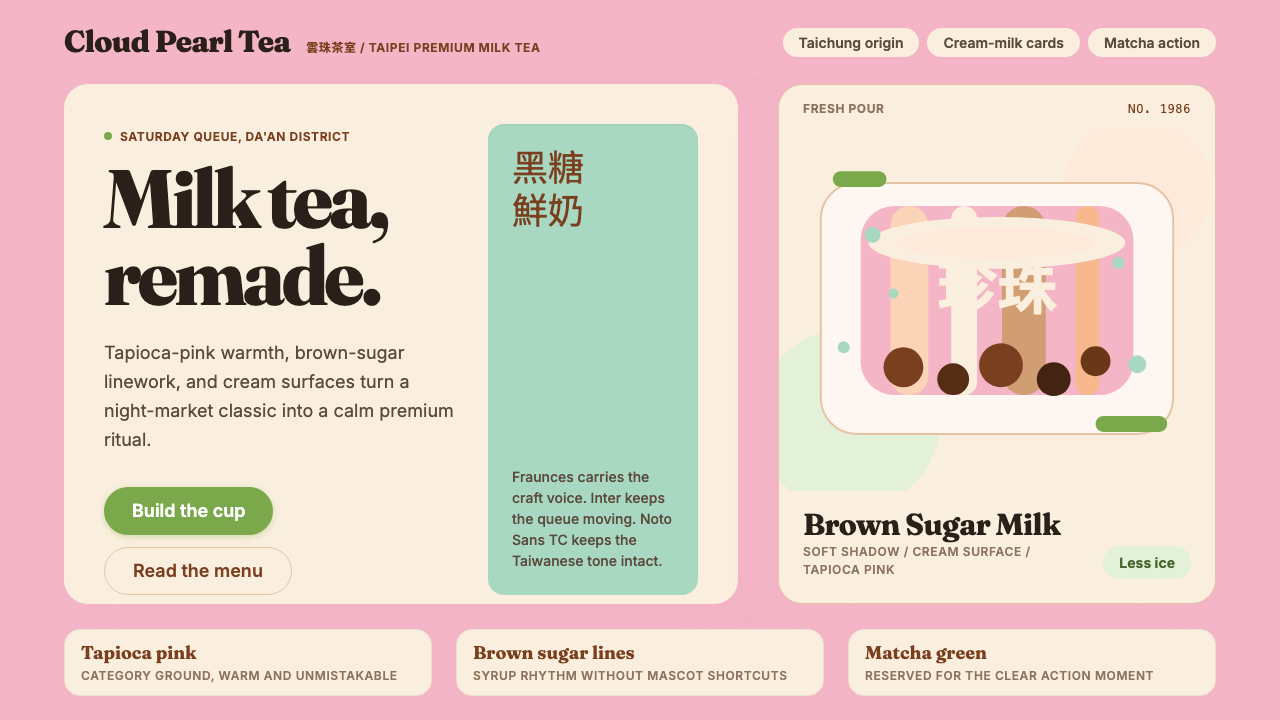
Taiwan's premium bubble tea aesthetic transformed a beloved night-market drink into a global craft-beverage visual identity — warm, approachable, and unmistakably rooted in the island's own sensibility.
Taiwan Bubble Tea Premium in brief
Taiwan Bubble Tea Premium is a contemporary visual identity system that emerged from the 2017–2019 brown-sugar boba wave — the period when Taiwanese brands like The Alley and Tiger Sugar transformed tapioca-pearl tea from a regional comfort drink into a globally recognized craft-beverage category. The visual language that crystallized during this moment is warm, handcrafted in feeling, and built around a palette drawn directly from the drink itself: the rosy warmth of tapioca pink, the clean vitality of matcha green, and the rich depth of brown-sugar-syrup illustration.
The aesthetic deliberately positions itself against two possible pitfalls. It refuses the saccharine kawaii aesthetic that dominates some Taiwanese consumer branding — no cartoonish mascots, no pastel overload, no playful infantilization of the product. Equally, it resists cold European minimalism, opting instead for a warmth that reads as genuine craft and honest hospitality. The result is a system that feels contemporary and premium without losing the human, approachable quality that makes bubble tea culturally beloved.
At its core, the style is a portrait of a Saturday afternoon queue in Taipei's Da'an district — the anticipation before a glass of tiger-striped milk tea, the pale cream of a paper cup, the dewy condensation that forms in summer heat. These sensory details are translated into design decisions: soft pink-tinted shadows suggest the warmth of an afternoon queue; cream-milk card surfaces evoke the color of the drink itself; hand-drawn brown-sugar-syrup illustration carries the craft and labor that premium positioning requires.
Where does Taiwan Bubble Tea Premium come from?
The origins of bubble tea trace back to 1986 in Taichung, Taiwan, where Liu Han-Chieh of Chun Shui Tang tea house is credited with adapting iced tea service — inspired by Japanese cold-brew coffee culture — into a Taiwanese street format. His product developer Tu Tsong-he is widely credited with the innovation of adding tapioca pearls to sweetened milk tea, creating the drink that would become a cultural touchstone. From Taichung, bubble tea spread through Taipei and across Taiwan through the 1990s, carried by independent tea-shop networks and night-market culture.
By the early 2000s, bubble tea was an established export. Chains had expanded across East and Southeast Asia, into Australian Chinatowns, European university districts, and North American suburban strip malls. But this first wave of globalization was largely unbranded visually — functional, cheerful, and typified by bright signage and plastic cups with hand-lettered menus. The drink was popular, but it lacked a coherent design language that could support premium positioning.
The transformation began in the 2010s and accelerated sharply between 2017 and 2019, when a new generation of Taiwanese brands entered the market with a deliberate premium-rebrand strategy. Tiger Sugar, founded by Jay Chiu, popularized the brown-sugar boba genre, and the brand's visual identity — tiger-stripe syrup photography, understated typography, clean packaging — set a new benchmark. The Alley formalized the craft-beverage visual idiom with serif typography, botanical illustration, and artisanal positioning. These brands were not just selling drinks; they were building a visual argument that Taiwanese bubble tea belonged alongside specialty coffee and third-wave tea culture as objects of design attention and craft pride.
The premium-rebrand wave coincided with the global rise of social media as a visual platform. Long queues outside The Alley locations in Tokyo, London, and New York generated enormous organic visual content. The photogenic qualities of the new visual systems — the condensation droplets on cups, the brown-sugar stripes, the cream-milk palette — were not incidental. The design was built to be photographed and shared, and the visual vocabulary that succeeded in that environment became the template that defined the aesthetic category. By 2020, Taiwan Bubble Tea Premium was a legible, coherent style — a design language with historical depth, cultural specificity, and a clear emotional signature.
What defines the Taiwan Bubble Tea Premium look?
Color Palette
The palette is built from the drink itself rather than from abstract color theory. Tapioca pink — a soft, rosy warmth closer to blush than to candy — serves as the primary brand ground, giving the system its distinctive warmth without tipping into sweetness. Matcha green functions as the action color: slightly cool, slightly saturated, cut against the pink and cream as a confident accent. Brown-sugar amber and deep syrup tones appear in illustration and photography, grounding the palette in the physical reality of the product. Cream and off-white serve as card and page surfaces, avoiding pure white's clinical detachment. The overall effect is warm without being saccharine — a palette that evokes afternoon light, not a candy shop.
Typography Character
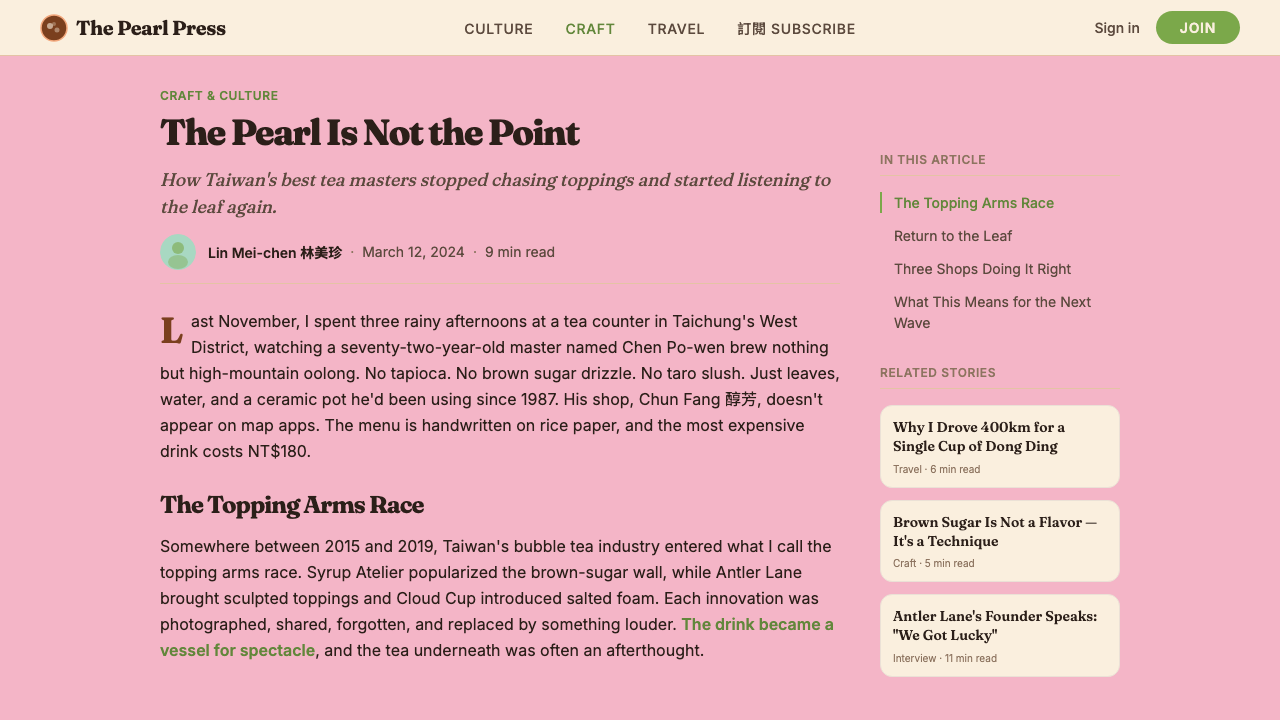
The typographic voice of the style centers on display serif letterforms that carry historical weight without formality. The serifs in question are drawn with generous curves and a slightly organic quality — closer to the warmth of hand-lettering than the precision of classical book typography. Headlines benefit from setting in cream or off-white against dark backgrounds, or in rich dark tones against cream surfaces. Body text should be set with comfortable line spacing and a measure that allows the eye to rest, reinforcing the approachable, hospitality-inflected character of the brand. The relationship between display headline and body text is one of clear hierarchy but not rigid contrast — both voices belong to the same warm family.
Surface and Texture
Card and container surfaces in this system are cream-milk rather than pure white, giving them a warmth that reads as material and honest rather than sterile and digital. The texture register is subtle: the suggestion of paper grain, the slight unevenness of a hand-stamped ink impression, the soft grain of fine cloth. These are not simulations in the skeuomorphic sense — they do not try to fool the eye into believing it is touching a physical surface — but rather tonal suggestions that remind the viewer of handcraft and care. Condensation-droplet photography, when used, adds a specifically Taiwanese summer sensory note: the cool glass on a hot day, the visible evidence that something real and cold is inside.
Illustration and Ornamentation
Brown-sugar-syrup line illustration is the system's primary decorative vocabulary — flowing, calligraphic strokes that evoke both the viscous pour of syrup and the brushwork tradition in East Asian ink art. These marks are used sparingly: as a background flourish on a packaging label, as a dividing element on a section header, as an ornamental detail in a photography composition. They carry cultural specificity without requiring explanation, functioning as a visual anchor that distinguishes this aesthetic from generic premium-craft design. Secondary illustration may include botanical references — tea leaves, tapioca plants, water imagery — always in the same spare, flowing register.
Shadow and Depth
Unlike the hard-offset shadows of austere modernism, the shadow language in this system is soft and tinted — pinkish-warm shadows that read as afternoon light falling on cream surfaces rather than geometric structural devices. The softness is deliberate: it reinforces the warmth and hospitality of the brand. Shadows are present but not assertive; they lift elements gently from the surface rather than stamping them against it. Depth is created through layering of cream surfaces, subtle tonal shifts, and the contrast between photograph and flat element — a composition feels three-dimensional without relying on dramatic shadow for structural organization.
Photography and Visual Atmosphere
Photography in this system serves a specific atmospheric function: it makes the intangible — warmth, freshness, the pleasure of anticipation — visible and credible. Subject matter centers on the drink itself (condensation on a cup, the pour of brown-sugar syrup, the steam above a hot tea) and on social moments (hands around cups, queues, the warm interior of a tea shop). Color grading is warm-shifted: shadows tend toward amber rather than cool gray, highlights toward cream rather than pure white. The photographic register is not lifestyle fantasy but honest testimony — the kind of image that feels taken in the moment rather than staged for effect.
Layout and Spatial Generosity
Layouts in this system are characterized by generous white — or rather cream — space around every element. Nothing crowds. The spatial generosity communicates quality: premium goods are never crammed into their packaging, and premium visual systems give every element room to breathe. Hierarchy is achieved through typographic scale and tonal contrast rather than through dense information stacking. A cover image, a headline, a single supporting line: these are enough. The system trusts the power of a well-chosen element presented with breathing room over the cumulative force of many elements packed tightly together.
Who shaped Taiwan Bubble Tea Premium?
Liu Han-Chieh, founder of Chun Shui Tang tea house in Taichung, is credited with adapting iced tea service to the Taiwanese street format in 1986, drawing inspiration from Japanese cold-brew coffee culture he had encountered during travels in Japan. His innovation established the tea-house format that made bubble tea commercially viable as a sit-down street experience. Chun Shui Tang remains in operation today and occupies a foundational position in the cultural narrative of bubble tea's origin — its Taichung locations function both as businesses and as cultural landmarks visited by enthusiasts tracing the drink's history.
Tu Tsong-he, product developer at Chun Shui Tang, is widely credited with the specific innovation of adding sweetened tapioca pearls — then commonly served as a cold dessert — to milk tea, creating the defining textural experience of bubble tea. The accidental or experimental origin of the combination is part of the drink's founding mythology. Tu's contribution demonstrates a pattern central to Taiwanese food culture: the creative recombination of elements from different culinary traditions (Chinese milk tea, Taiwanese tapioca desserts) into something new with its own identity.
Jay Chiu founded Tiger Sugar in Taichung in 2017, launching the brown-sugar boba genre with a visual identity that became the single most influential aesthetic reference in the premium bubble tea rebrand movement. Tiger Sugar's signature — the photogenic brown-sugar syrup drizzled in tiger stripes down the inside of a cup, photographed against a light background — is a design decision as much as a culinary one. The brand demonstrated that a bubble tea visual identity could generate global social-media momentum through the photogenic quality of its product presentation alone. Tiger Sugar's subsequent expansion into dozens of international markets carried the visual vocabulary of the brown-sugar boba aesthetic with it.
The Alley, founded in Taiwan in 2013 and expanding internationally from 2017 onward, established the botanical, artisanal visual idiom that became the second major pillar of the premium bubble tea aesthetic alongside Tiger Sugar's more dramatic, photography-driven approach. The Alley's identity — antler-logo branding, serif typography with deliberate historical patina, botanical illustration, and craft-coffee-inflected store interiors — drew explicitly from third-wave coffee culture's premium positioning playbook and applied it to tea. The brand demonstrated that premium bubble tea could be framed as a connoisseur beverage with its own cultural depth, not simply a fun and trendy drink.
The brown-sugar boba wave of 2017–2019 was less the work of any single figure than a collective competitive market phenomenon. Dozens of Taiwanese brands simultaneously raised their visual game, recognizing that the globalized social-media environment had made brand aesthetics inseparable from product quality in the consumer's perception. The cumulative effect of this competitive aesthetic upgrading — each brand trying to out-premium the next — produced the Taiwan Bubble Tea Premium visual language as a coherent category. It is one of the few instances in contemporary design history where a regional food culture generated a completely new, globally recognizable premium visual aesthetic in under five years.
How do you use Taiwan Bubble Tea Premium today?
Taiwan Bubble Tea Premium is a style built around warmth, hospitality, and craft. Applying it well means understanding that its visual appeal comes from a specific emotional register — the pleasure of a carefully made drink, the warmth of an afternoon ritual, the pride of a regional food culture claiming its place in a global premium market — and ensuring that every design decision reinforces rather than contradicts that register.
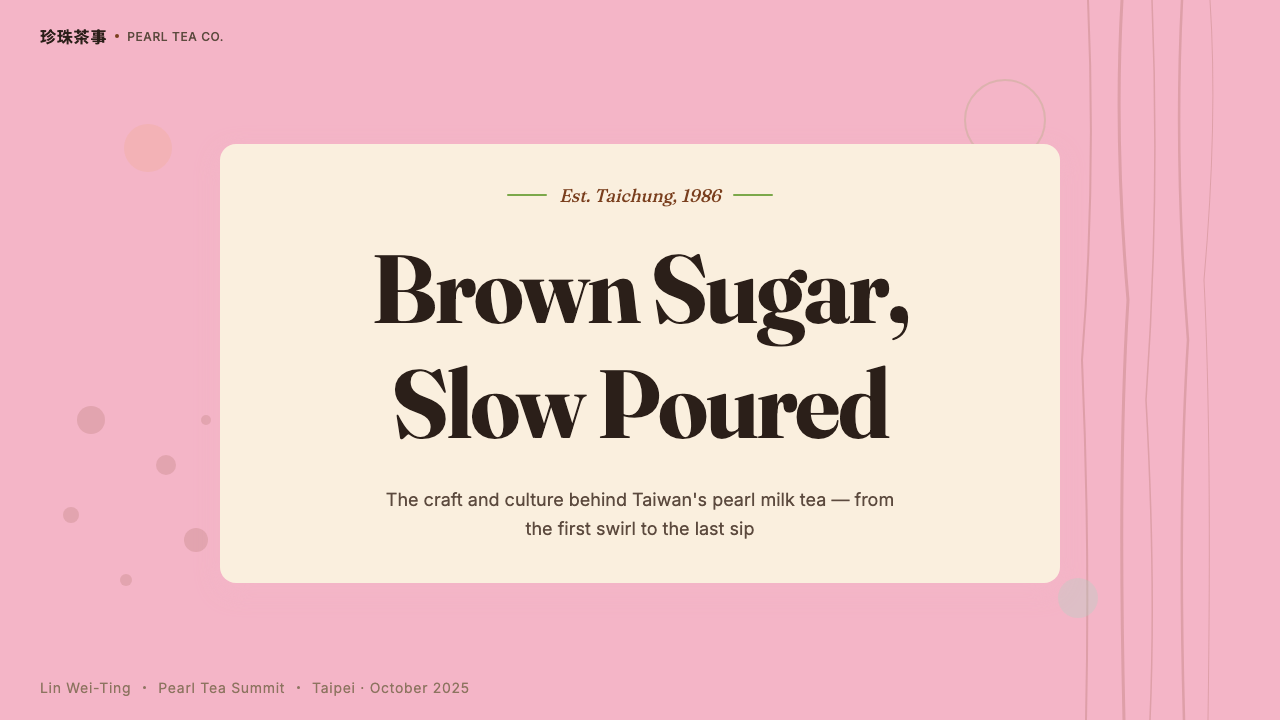
For presentation slides, the style works particularly well for brand storytelling, product introduction, and pitch decks for food, beverage, or lifestyle brands. A cover slide benefits from a single strong photograph — a well-composed cup shot with visible condensation, or a close-up of brown-sugar syrup — set against a cream or pale pink background with a display serif headline in deep brown or matcha. Content slides should lean into generous spacing, soft warm tones for section markers, and hierarchy built through scale contrast rather than color variety. Data slides are best kept minimal: clean warm-toned bar charts on cream backgrounds, with matcha green as the primary accent for the highlighted data series.
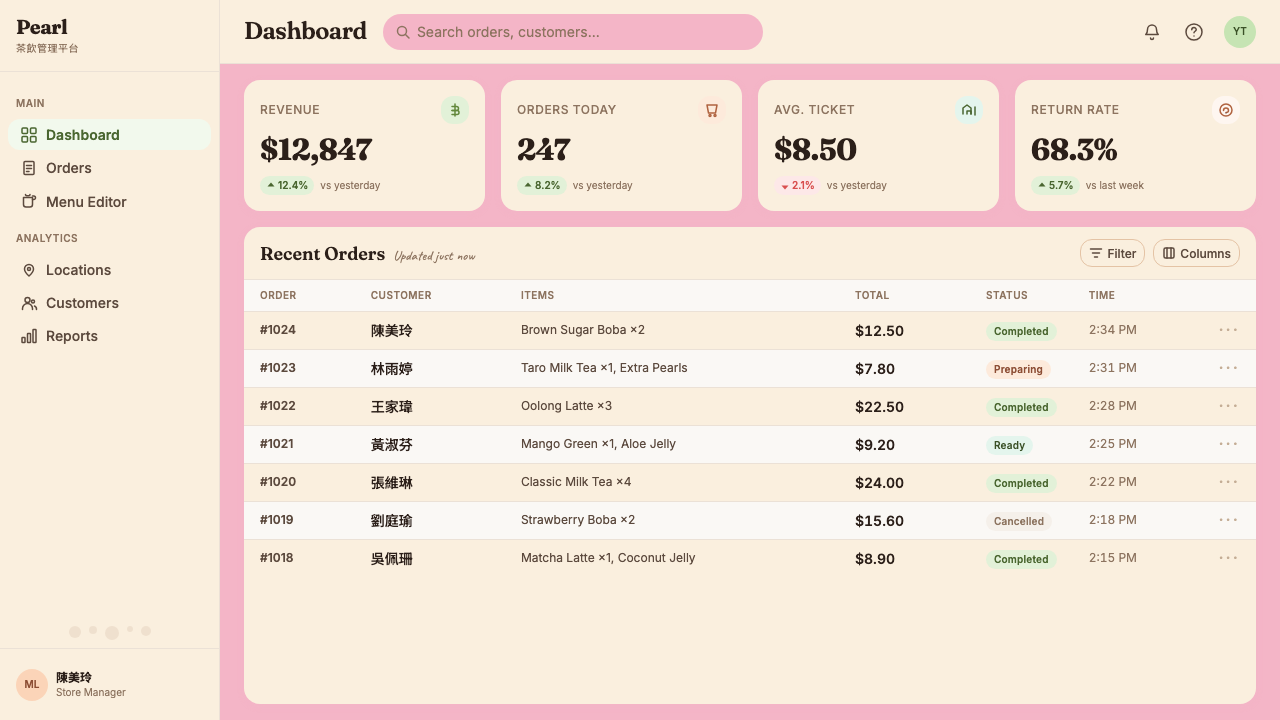
For web interfaces, this aesthetic is well-suited to e-commerce product pages, restaurant or cafe landing pages, brand-story microsites, and any interface where the emotional goal is warmth and credibility rather than urgency or efficiency. The approach: use cream as the default page background rather than pure white, introduce tapioca pink as a warm accent for calls-to-action and hover states, and reserve matcha green for confirmations and positive signals. Photography should be integrated generously — not as decoration but as the primary storytelling medium. Avoid dense information architecture: this aesthetic struggles when it is asked to carry heavy data or complex navigation.
For editorial and marketing work, the style performs strongly in food and beverage editorial, lifestyle journalism, brand campaigns, and social content. An editorial layout using this aesthetic would pair a large-format hero photograph with a serif headline set in generous point size and loose tracking, using the cream page background to let the image breathe. Marketing assets — banners, social cards, packaging mockups — benefit from the boldness of a single tapioca pink or matcha green field with a short typographic statement and perhaps a single illustrative mark in brown-sugar ink style.
A common mistake when applying this aesthetic is importing its surface qualities — the pink, the serif, the cream — without the underlying warmth of intention. The palette can be applied to a layout that is still cold and clinical in its spatial logic, producing a result that feels like a costume rather than a character. The style works when generous spacing, soft shadows, and a sense of hospitality in the layout's architecture reinforce the palette and typography — when every element communicates care, not just visual style.
Taiwan Bubble Tea Premium — FAQ
Is Taiwan Bubble Tea Premium the same as a generic Asian or kawaii aesthetic?
No, and the distinction matters. The kawaii aesthetic — associated with Japanese pop culture, bright pastels, cartoonish mascots, and playful infantilization of products — is a completely different design tradition. Taiwan Bubble Tea Premium is deliberately positioned against kawaii: it is warm rather than cute, craft-forward rather than playful, and serious about its cultural roots in Taiwanese food history without being nostalgic or kitschy. Similarly, it is not a generic pan-Asian aesthetic — it is specifically Taiwanese, referencing the visual culture of Taiwanese tea-shop signage, Taipei street life, and the specific color vocabulary of the drinks themselves. Applying generic Asian pastels or cuteness signals to this system would be a category error.
Can this aesthetic work for brands outside the food and beverage industry?
Yes, but with care. The aesthetic's core emotional qualities — warmth, approachability, craft-quality signaling, and a sense of artisanal honesty — are transferable to other categories where those values align with the brand's identity. Wellness and beauty brands, independent retail and lifestyle brands, boutique hospitality, and specialty food products all share enough of the emotional territory to apply this aesthetic credibly. Where the style struggles is in contexts that require authority, urgency, technical precision, or institutional gravitas — financial services, healthcare, legal, enterprise software. In those contexts, the warmth and softness of the palette and typography work against the communication goals rather than supporting them.
How does this style relate to other premium craft-beverage aesthetics, like specialty coffee?
There is a clear family resemblance, because Taiwan Bubble Tea Premium consciously borrowed from third-wave specialty coffee's premium-positioning visual playbook during the 2017–2019 rebrand wave. Both traditions share commitments to serif typography with historical weight, botanical or origin-story illustration, photographic emphasis on the craft process, and packaging that communicates artisanal care. The key differences lie in color and warmth: specialty coffee aesthetics tend toward cooler, more austere palettes — kraft paper, deep forest green, matte black, aged cream — while Taiwan Bubble Tea Premium embraces a warmer, softer palette that reflects the drinks' more playful and social cultural context. Where specialty coffee aesthetics signal connoisseurship and restraint, bubble tea aesthetics signal warmth and occasion.
What is the risk of this aesthetic becoming dated quickly, given its roots in a specific commercial trend?
The risk exists but is mitigated by the depth of the style's cultural roots. Visual aesthetics that emerge from genuine cultural phenomena — rather than purely from trend cycles — tend to have longer shelf lives because they carry real historical and social content. The tapioca pink and matcha green of this system are not arbitrary trend colors; they refer to actual objects that have meaning in Taiwanese food culture. That grounding gives the aesthetic more stability than a trend-driven palette would have. The more time-sensitive aspects of the style are its specific execution choices — the condensation-droplet photography style, the exact character of the brown-sugar illustration — which may feel more dated than the underlying palette and typographic warmth. Applying the core values of the aesthetic rather than its most surface-specific execution gives the style better longevity.
How should this aesthetic handle dark-mode or dark-background layouts?
Dark inversions of this aesthetic are possible but require a considered approach. The style's warmth depends substantially on its light, cream-milk surface — a straight inversion to dark gray or black risks losing the warmth that makes the system coherent. A more successful approach for a dark version is to shift toward deep amber or very deep brown-sugar tone as the dark background rather than neutral black, preserving the warmth of the color family while creating the contrast needed for a dark layout. On this warm dark ground, tapioca pink and matcha green both remain legible and warm rather than becoming artificially bright. Cream text on dark amber reads as warm and craft-inflected rather than clinical. The key is treating the dark mode as a shift within the color family's warmth rather than an inversion into a cold, neutral palette.
Related design styles
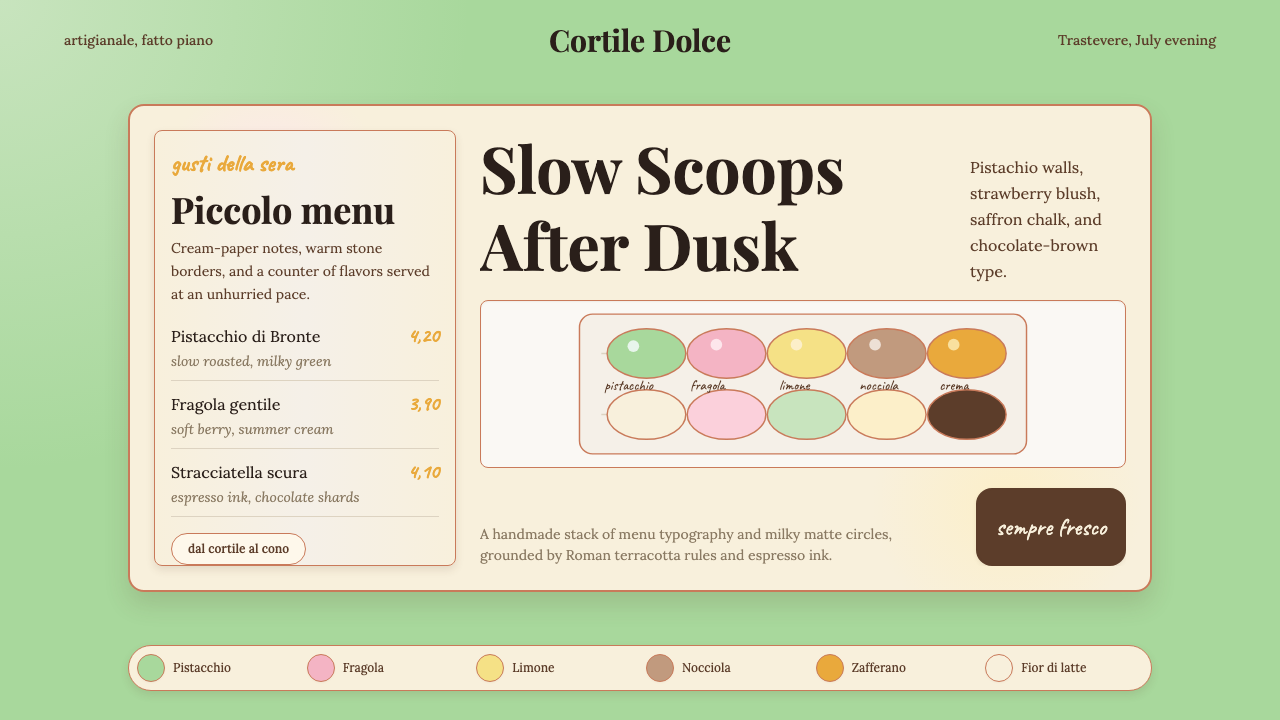 Italian Gelato ShopWarmth is hand-scooped. Pistachio green, cream panels, high-contrast serif, c…
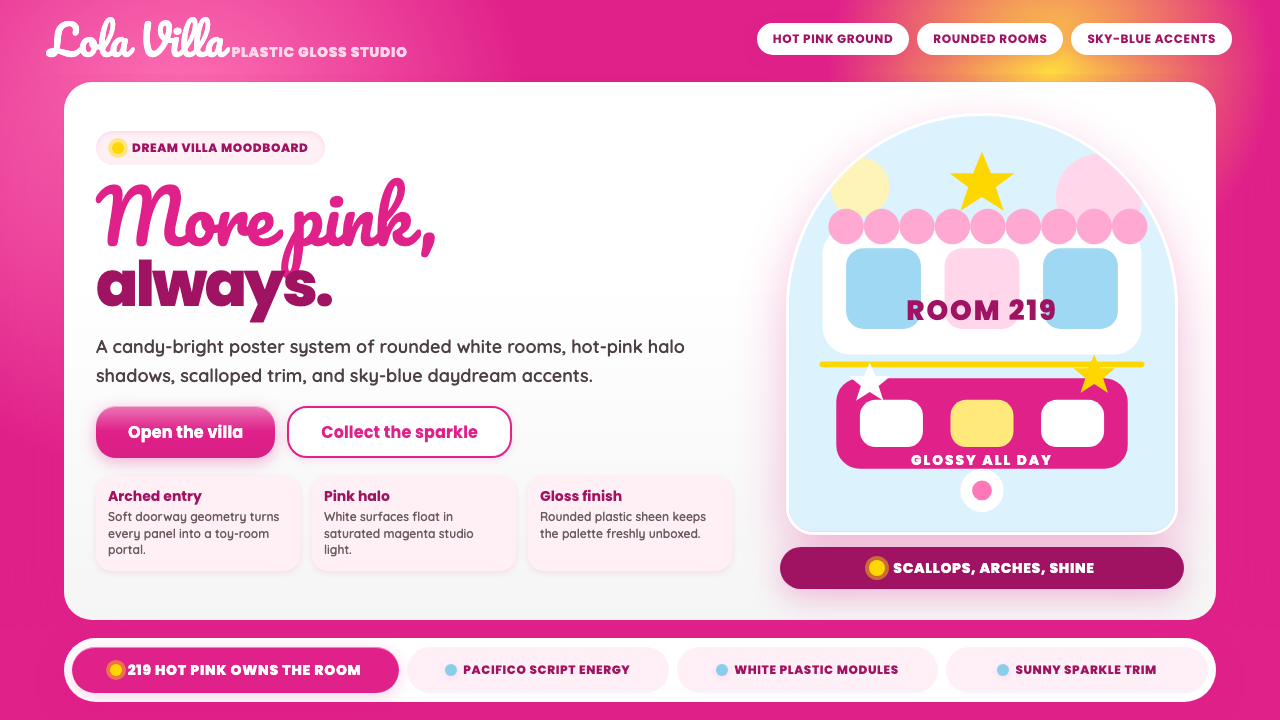 Barbie DreamhousePink is the whole world. Hot magenta ground, Pacifico script, scallops and gl…
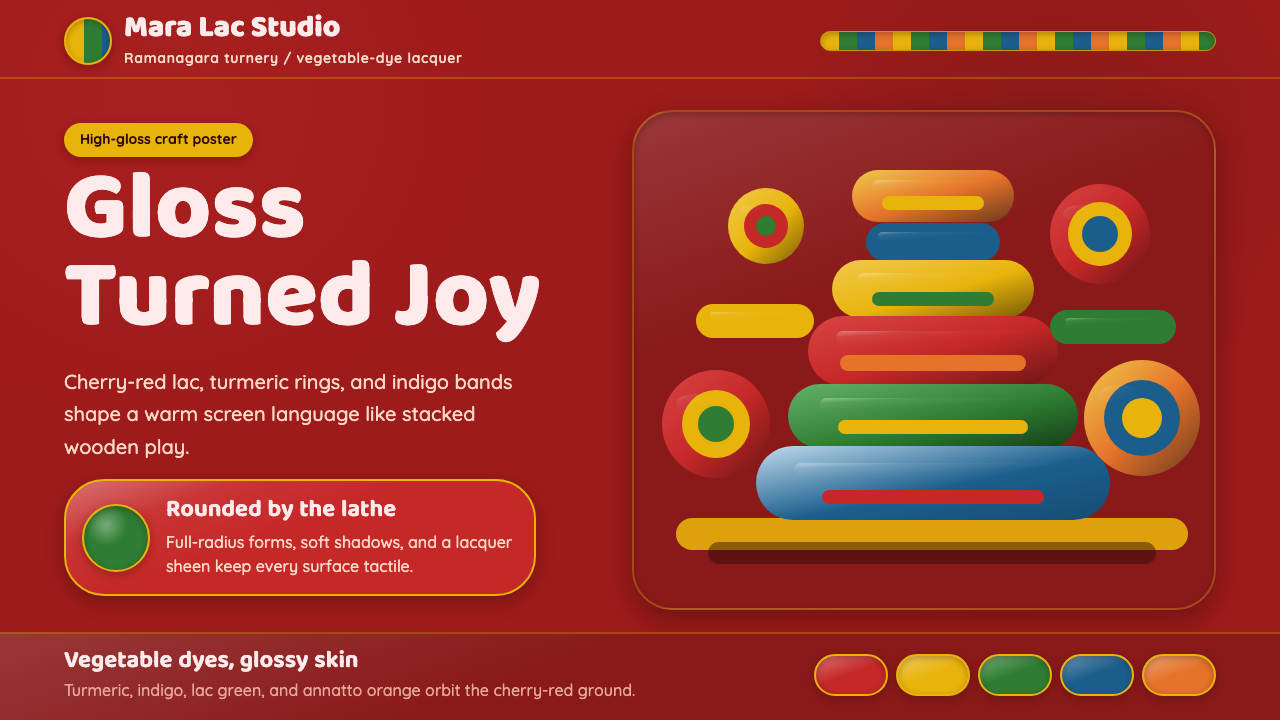 Channapatna Lacquered ToysGloss feels handmade. Lac-red ground and turmeric-indigo bands turn pixels in…
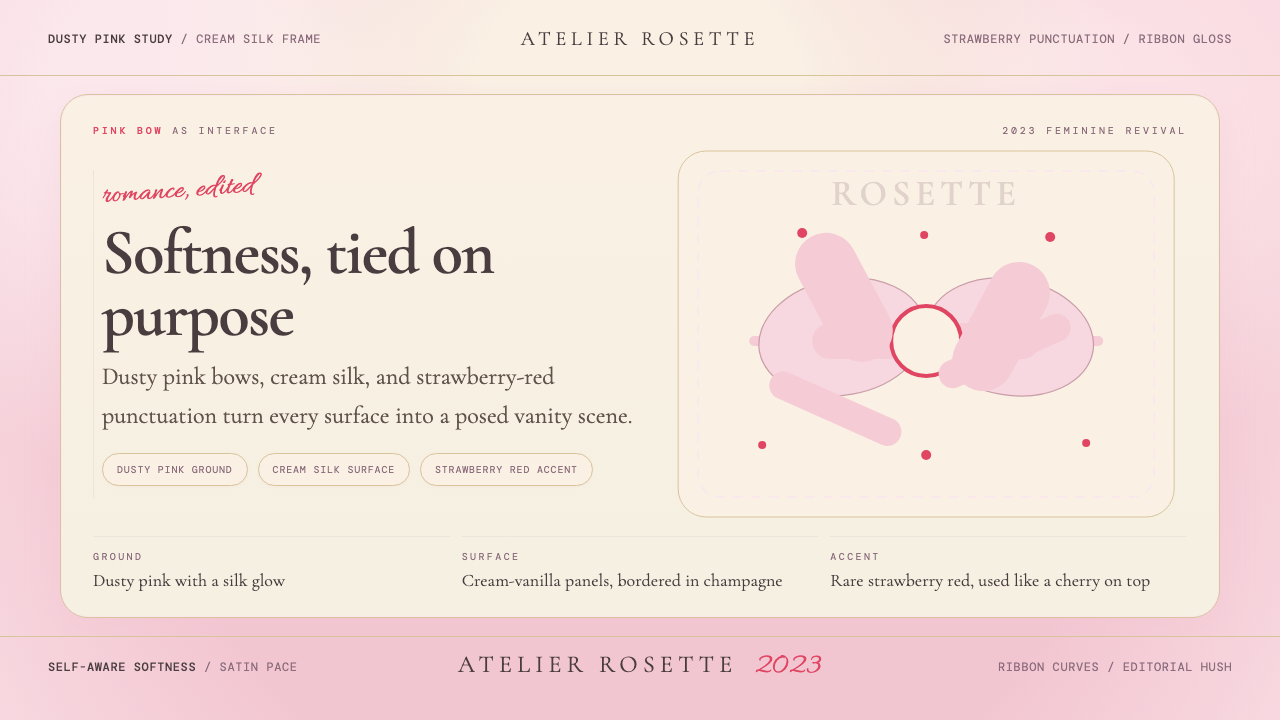 Coquette Aesthetic Pink Bow (2023)Softness is deliberate. Dusty pink, cream silk, and strawberry red frame ever…
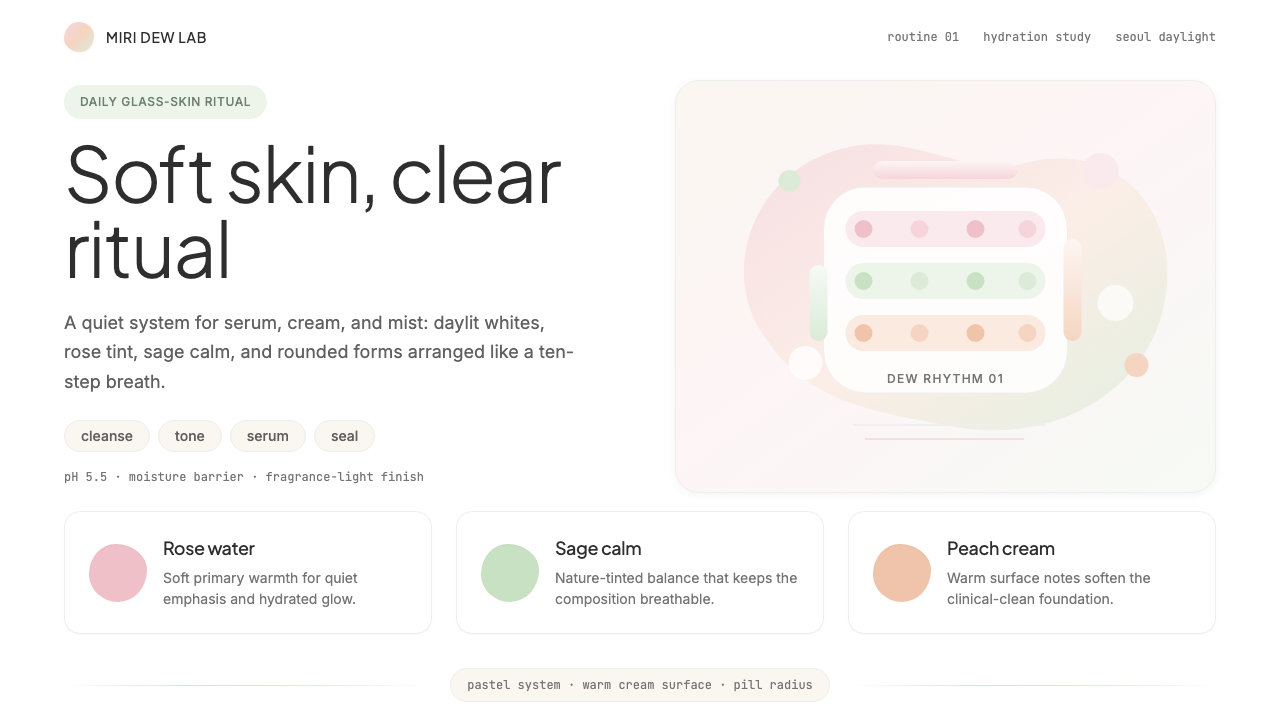 K-Beauty CleanCalm arrives dewy. Rose, sage, and peach pastels float through airy rounded f…
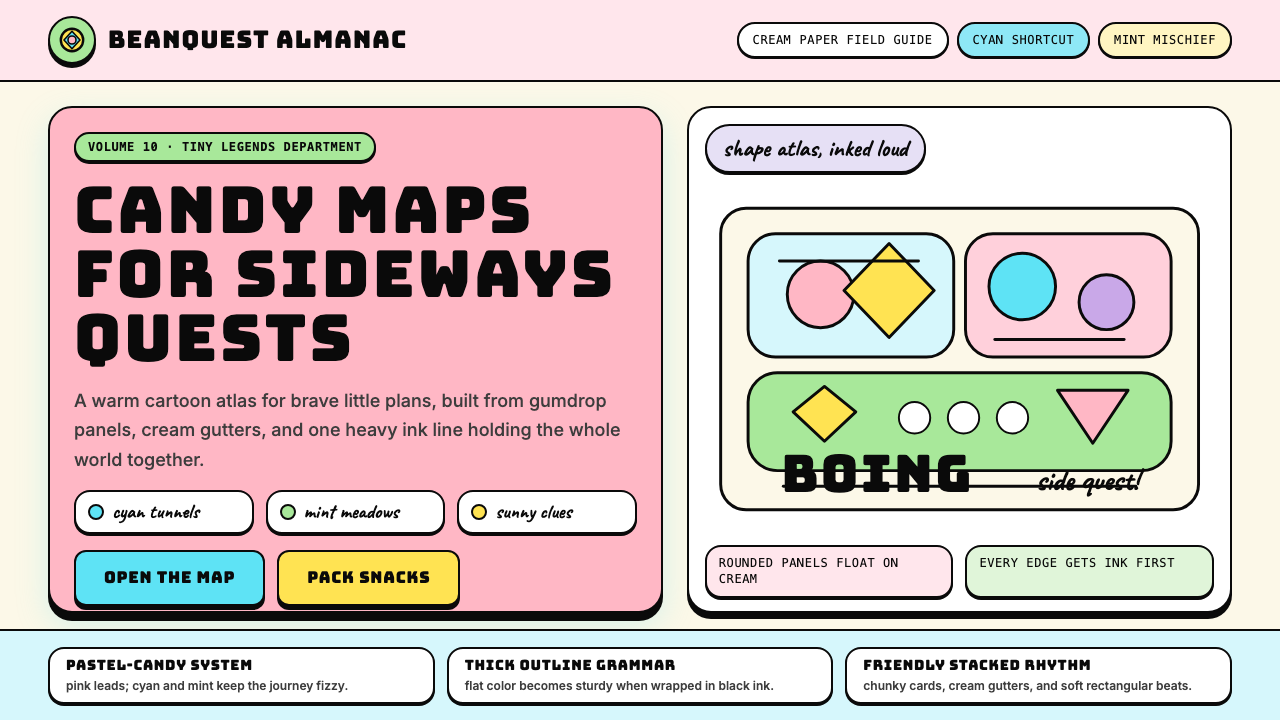 Adventure TimeCartoon warmth, inked loud. Cream gutters, candy pink, cyan and mint lock int…