What is Wise (TransferWise)?
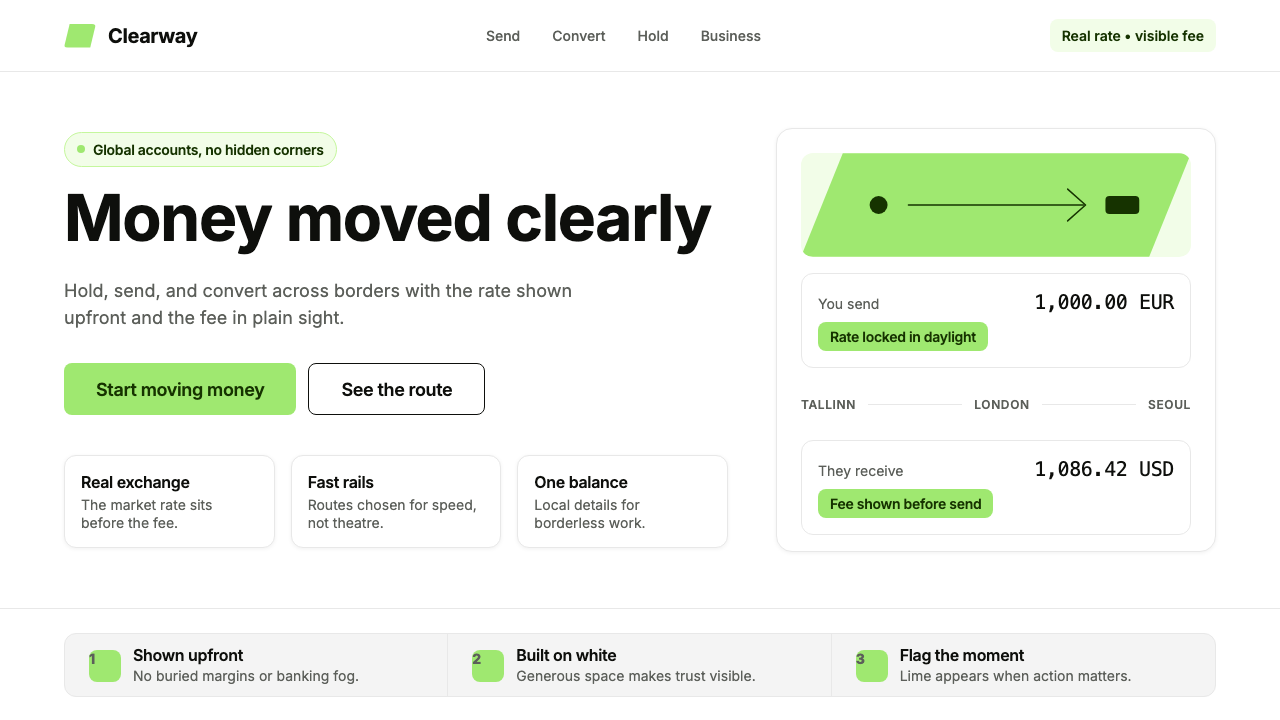
Wise proved that a financial brand can earn trust through pure clarity — a lime flag, white space, and nothing to hide.
Wise (TransferWise) in brief
Wise is a global money transfer and multi-currency banking service whose visual identity — established in its 2021 rebrand from TransferWise — stands as one of the clearest examples of fintech-as-utility design. The system is built around a single, unmistakable lime-green paired with deep navy text on pure white grounds, a palette that communicates confidence and honesty without borrowing the stuffiness of traditional banking or the playful recklessness of early-wave consumer fintech.
Every visual decision in the Wise system serves legibility and trust. Generous white space separates information into digestible units. A single geometric typeface — neutral and highly legible at every size — carries all communication from navigation labels to legal disclosures. Photography depicts real people in real cross-border situations rather than stock-photo abstraction. The overall effect is a brand that feels as straightforward as the promise it makes: the mid-market exchange rate, no hidden fees, no surprises.
What distinguishes Wise from both legacy banks and flashier fintech competitors is its deliberate restraint. Where most financial brands reach for authority through heaviness — dark palettes, serif type, imposing imagery — Wise achieves authority through transparency. The design system behaves like a well-run airport departure board: maximum information, minimum noise, and an implicit assurance that if something were wrong you would already know.

Where does Wise (TransferWise) come from?
Wise began in 2011 as TransferWise, founded in London by two Estonian friends: Kristo Käärmann and Taavet Hinrikus. Käärmann was working at Deloitte and being paid in pounds while holding a euro-denominated mortgage in Estonia; Hinrikus, Skype's first employee, was earning euros in Estonia while living in London. They solved the problem privately — each topping up the other's local account at the real exchange rate — and realized the mechanism could be formalized into a business. The founding insight was not technological but conceptual: banks were not offering a worse product out of incompetence but out of concealment. The hidden margin buried in the exchange rate was the business model.
The early TransferWise brand reflected its startup origins. The visual identity was energetic and deliberately provocateur, most memorably expressed in a 2014 protest in which company employees marched near the Houses of Parliament in their underwear, arguing that banks were taking the clothes off customers' backs. The palette leaned on bright green, but the overall system was informal, irreverent, and positioned squarely against incumbents. This posture served the company during its growth phase — it differentiated TransferWise sharply from anything a traditional bank would produce and gave journalists and regulators a clear story to tell.
By 2020, TransferWise had outgrown its antagonist identity. The company had become a significant financial infrastructure provider, not merely a disruptor. It held banking licenses across multiple jurisdictions, offered multi-currency accounts, debit cards, and business banking services. The name TransferWise had also become a constraint — 'Transfer' implied a single use case that no longer described the full product. In 2021, the company rebranded to Wise. The new identity, developed by the in-house Wise Brand team, made a deliberate shift from challenger to institution without sacrificing the clarity and honesty that had distinguished the original brand.
The centrepiece of the 2021 identity is the flag motif: a lime-green pennant that appears across all brand touchpoints, from app icons to advertising. The flag is simultaneously a navigational symbol — something you plant to mark your position — and a declaration of principle. It visually encodes the company's claim to be a trustworthy landmark in the otherwise murky landscape of international finance. The surrounding system — a refined palette, a disciplined typographic hierarchy, and a photography approach centered on authentic human moments — completed the transition from scrappy fintech to global financial utility. The identity has remained stable through subsequent years, a sign of confidence in the original brief.
What defines the Wise (TransferWise) look?
Lime-Green as Signal
The defining element of the Wise palette is a single, highly saturated lime-green that functions simultaneously as brand identifier, navigational anchor, and trust signal. Its brightness is precisely calibrated: vivid enough to be immediately recognizable in a crowded digital environment, yet not so aggressive that it overwhelms the white space around it. The color does not behave like a typical accent — it carries the full weight of brand recognition. All other palette elements exist to support and contain it.
Navy and White Foundation
Beneath the lime-green, the Wise palette rests on a pairing of deep navy text and pure white backgrounds. Navy carries the weight of financial seriousness without the cold distance of pure black; it suggests authority while remaining approachable. White backgrounds create the breathing room that allows every piece of financial information — exchange rates, fee breakdowns, account balances — to be read without interference. This pairing is the typographic and structural spine of the entire system.
Geometric Typographic Neutrality
Wise uses a single typeface family across all touchpoints, chosen for its geometric construction and exceptional clarity at small sizes. The typeface is deliberately neutral — it has no cultural associations, no historical weight, no stylistic personality that might distract from the information it carries. Its geometric precision communicates rationality and order. Hierarchy is created entirely through scale and weight contrast rather than mixing families or introducing decorative display faces.
Functional White Space
White space in the Wise system is not aesthetic luxury — it is a transparency mechanism. Financial interfaces are prone to information overload, and the deliberate use of open space around every data element signals that nothing is being hidden between the lines. Fee cards, exchange rate displays, and account summaries are given room to stand alone and be read without confusion. The space itself communicates confidence: a brand with nothing to hide does not need to crowd the page.
The Flag Motif
The lime-green flag that anchors the 2021 identity is the system's most distinctive graphic element. It appears in multiple orientations and scales — as an app icon, as a banner in advertising, as a structural device in layouts — but always reads as the same symbol. Its triangular pennant form suggests both movement and permanence: it is planted somewhere, which implies both arrival and commitment. The motif gives the brand a visual shorthand that works entirely without type, a rare achievement for a financial services company.
Authentic Documentary Photography
The photography in the Wise system is distinguished by its specificity and warmth. Rather than abstract lifestyle imagery or anonymous stock figures, Wise photography depicts recognizable cross-border situations — a family sending money home, a freelancer receiving a payment from abroad, a small business owner managing multiple currency accounts. The lighting is naturalistic, the expressions are unposed, and the settings are grounded in real geography. This approach makes an implicit argument: the service is used by real people in real situations, not by a demographic construct.
Fee Transparency as Aesthetic Principle
One of the most deliberate design decisions in the Wise system is the way fee information is presented: prominently, legibly, and in plain language, rather than relegated to fine print or buried in progressive disclosure. Fee cards and exchange rate displays are treated as primary design elements, not afterthoughts. This is both a product decision and an aesthetic statement: transparency is not merely a value the company espouses but a visual behavior the design system enforces at every touchpoint.

Who shaped Wise (TransferWise)?
Käärmann co-founded TransferWise in 2011 after personally experiencing the hidden costs of cross-border banking. As CEO, he has consistently championed the principle that the design language of the company must reflect its product promise — if the product is about transparency, the brand cannot hide anything either. His commitment to this alignment between product values and visual identity has shaped the company's design culture through the TransferWise era and the 2021 rebrand to Wise.
Hinrikus, Skype's first employee and co-founder of TransferWise, brought a product-driven discipline to the early brand. His background in technology — and specifically in software products that had achieved mass adoption by being genuinely better rather than simply marketed harder — influenced the company's foundational belief that design quality and product quality are the same argument. A better product that looks trustworthy will outcompete a worse product that merely looks premium.
The in-house brand team that led the 2021 rebrand made the consequential decision to build a new identity around institutional confidence rather than challenger energy. They retained the lime-green from the TransferWise era — providing continuity and protecting brand equity built over a decade — while systematizing it within a more disciplined, utility-scaled visual framework. Their work on the flag motif, the typographic hierarchy, and the photography direction established a system that has scaled across product surfaces, marketing, and regulatory communications without losing coherence.
The founding story of the company — two Estonians solving their own cross-border banking problem using the real exchange rate — became not just a brand narrative but a design brief. The story mandates honesty as the non-negotiable design value. Every visual decision that followed, from the fee-forward card layouts to the documentary photography, can be traced back to the obligation to look as honest as the product claims to be.
The 2021 rebrand is itself a significant event in fintech design history, representing the moment a digital-native financial challenger chose to communicate maturity and institutional seriousness without abandoning the clarity and directness that had built its reputation. It is a case study in controlled brand evolution: enough change to signal a new chapter, enough continuity to protect a decade of recognition. The decision to center the new identity on a symbolic motif — the flag — rather than purely on typography or color, gave the system a flexibility and emotional register that a purely typographic rebrand would not have achieved.
How do you use Wise (TransferWise) today?
The Wise visual system is well-suited to any design context where trust, transparency, and clarity are the primary values being communicated. Because the system was designed to handle the full complexity of financial information — exchange rates, fee structures, multi-currency balances, legal disclosures — it performs particularly well in information-dense environments. The core principle is that every design decision should make information easier to find and harder to misunderstand, not merely more visually appealing.
For presentation slides, the Wise approach works on both cover and content pages. A cover page benefits from a bold, asymmetric deployment of the lime-green motif — a flag or flag-derived shape anchoring one corner while the title sits in large, legible type on white. Content pages should use a clear typographic hierarchy: one organizing headline, a clear body level, and supporting data or labels at a smaller size. Data slides particularly benefit from this approach — financial figures, percentage comparisons, and fee breakdowns read with exceptional clarity when given adequate white space and organized within a strict column structure. Avoid decorative chart elements; the data itself, presented in clean type against white, is the visual content.
For web interfaces, dashboards, and pricing pages, the Wise system offers a strong model. The approach: work from a white or very light background throughout, use the lime accent exclusively for interactive calls to action and primary navigation highlights, and reserve navy for all substantive text. Card components presenting fee information or account summaries should have clean, visible borders and generous internal padding rather than soft shadows or blurred backgrounds — the goal is that the card looks like something you would hand to a notary, not something you would see in a lifestyle app. Pricing pages in particular benefit from the fee-forward transparency principle: show every number at full size with a clear label, and resist the temptation to defer detail into collapsed sections or tooltips.
For editorial and marketing work, the Wise style translates well to campaigns where the message is about fairness, access, or financial empowerment. A Wise-influenced marketing layout uses photography centrally, but the photography must be specific and grounded — a recognizable border crossing, a particular currency symbol, a real urban context — not generic aspiration. The lime flag motif can function as a headline-level graphic element in advertising, providing instant brand recognition without requiring the logotype. In editorial contexts, the typographic discipline of the system — one typeface, contrast through scale, ample white space — produces layouts that read as authoritative without being intimidating.
A common mistake when applying this system is treating the lime-green as merely a brand color to be applied liberally across backgrounds, buttons, and illustrative elements. The Wise lime functions as a signal, not a surface. When overused as a fill color, it loses its value as a navigational and trust marker and begins to read as aggressive or difficult to read against. The system's power comes from restraint: lime marks the most important action or element on the page, white provides the ground, and navy carries the information. Mixing in additional accent colors, softening borders into shadows, or introducing illustrative elements that compete with photography are the most common ways to dilute the system's effectiveness.

Wise (TransferWise) — FAQ
Is the Wise style appropriate for brands outside financial services?
Yes, with an important caveat. The Wise visual system encodes a specific set of values — transparency, rational clarity, functional utility — that are not exclusive to financial services. Any product or service where trust is the primary purchase driver, information complexity must be tamed, and honesty is a competitive differentiator can benefit from this approach. Practical candidates include healthcare platforms, legal services, insurance products, tax software, and any B2B tool where professional credibility matters more than emotional resonance. The system struggles in consumer contexts that call for warmth, playfulness, or cultural specificity — luxury goods, children's products, food and beverage brands, or platforms where the experience itself is the product.
How does the Wise design approach differ from generic fintech minimalism?
Generic fintech minimalism often achieves visual cleanliness through removal — white space, sans-serif type, muted palettes — without that cleanliness encoding any particular values. The result looks modern but says nothing. The Wise system, by contrast, uses its specific design decisions as arguments: the lime-green flag is a claim about trustworthiness; the fee-forward card layout is a claim about transparency; the documentary photography is a claim about real-world relevance. Every element in the system is doing rhetorical work, not just aesthetic work. This is the difference between a system designed to look like a certain kind of company and a system designed to prove it.
Can the Wise visual system work in dark-mode interfaces?
A dark adaptation of the Wise system is technically possible but requires care. The lime-green retains its distinctiveness on dark backgrounds, and navy can be lightened to a pale blue-white for body text. However, the fee-transparency principle — that all financial information should be immediately legible without effort — becomes harder to maintain in a dark environment, where contrast and hierarchy are more difficult to calibrate. The system's photographic approach also loses some of its warmth on dark backgrounds, which tend to shift the reading of images toward drama rather than authenticity. If a dark mode is required, treat it as a secondary surface variant rather than the default, and test every data-display component carefully.
What is the biggest mistake designers make when borrowing from the Wise aesthetic?
The most common mistake is importing the visual surface — lime-green accents, white backgrounds, geometric type — without importing the underlying discipline of information honesty. The Wise system only works because every visual element is doing a transparent, legible job. Designers who apply the lime color to a product that buries fees, uses dark patterns in its flows, or presents information selectively will find that the visual language creates a credibility gap rather than closing one. The aesthetic signals honesty; if the product does not deliver honesty, the gap between signal and reality becomes more damaging than a more neutral visual approach would have been. Borrow the style only if you are prepared to borrow the standard.
How does Wise handle the tension between warmth and professionalism in its design?
The Wise system resolves this tension primarily through photography rather than color or type. The typographic and structural layers of the system are cool and precise — they provide the professional credibility. The photographic layer introduces human warmth: real faces, real places, real situations involving real money crossing real borders. By separating the warmth-delivery mechanism from the clarity-delivery mechanism, the system can be simultaneously approachable and authoritative without compromising either quality. This is a design lesson that applies broadly: use the most human content format available — photography, in this case — to carry the emotional register, and let the structural elements carry the rational register.
Related design styles
 Intercom ModernWarm chat, sharp software. Electric blue bubbles on a daylit white grid.
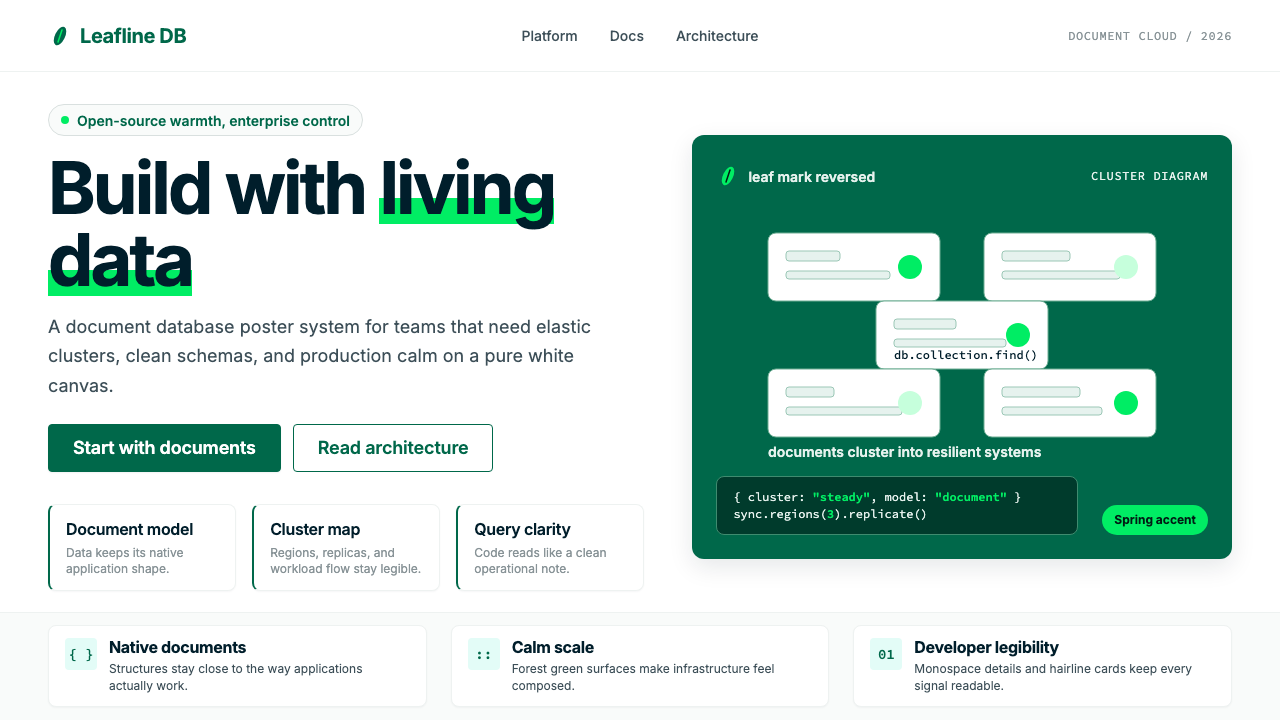 MongoDB Leaf GreenDisciplined green, open warmth. Forest leaf forms and Spring accents breathe…
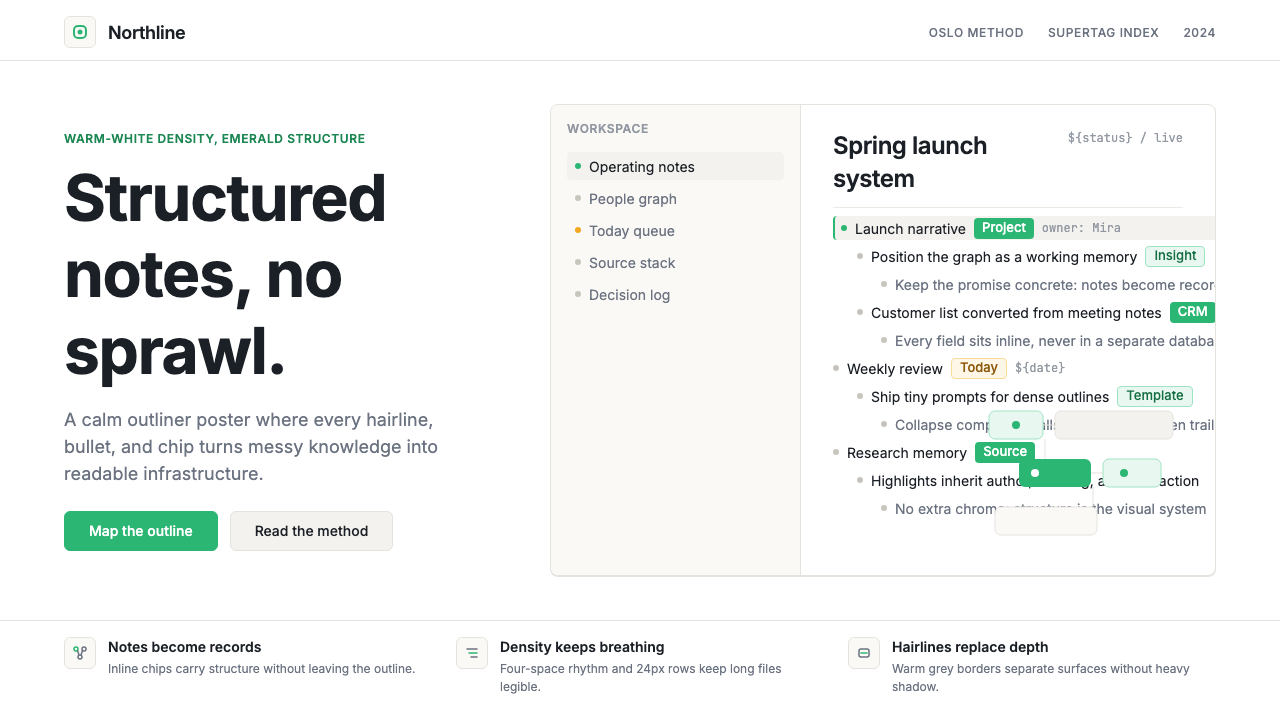 Tana SupertagsCalm density wins. Inter outlines and emerald chips punctuate pure white stru…
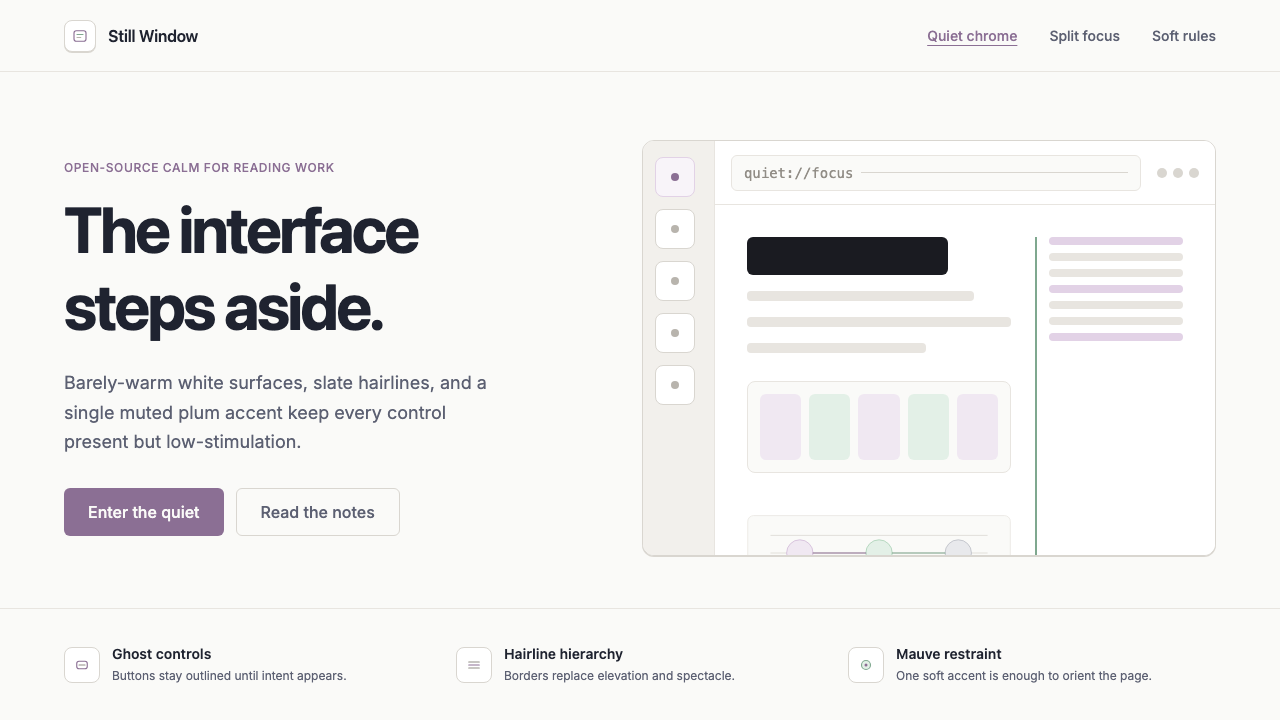 Zen BrowserSoftware steps aside. Warm white, slate hairlines, and muted plum carry the c…
 Android Bugdroid GreenFriendly tech, reduced to geometry. Vivid green pops from Grey 900 and rounde…
 AsanaCalm productivity breathes. Cream canvas, lavender panels, coral-blue-yellow…