What is Intercom Modern?
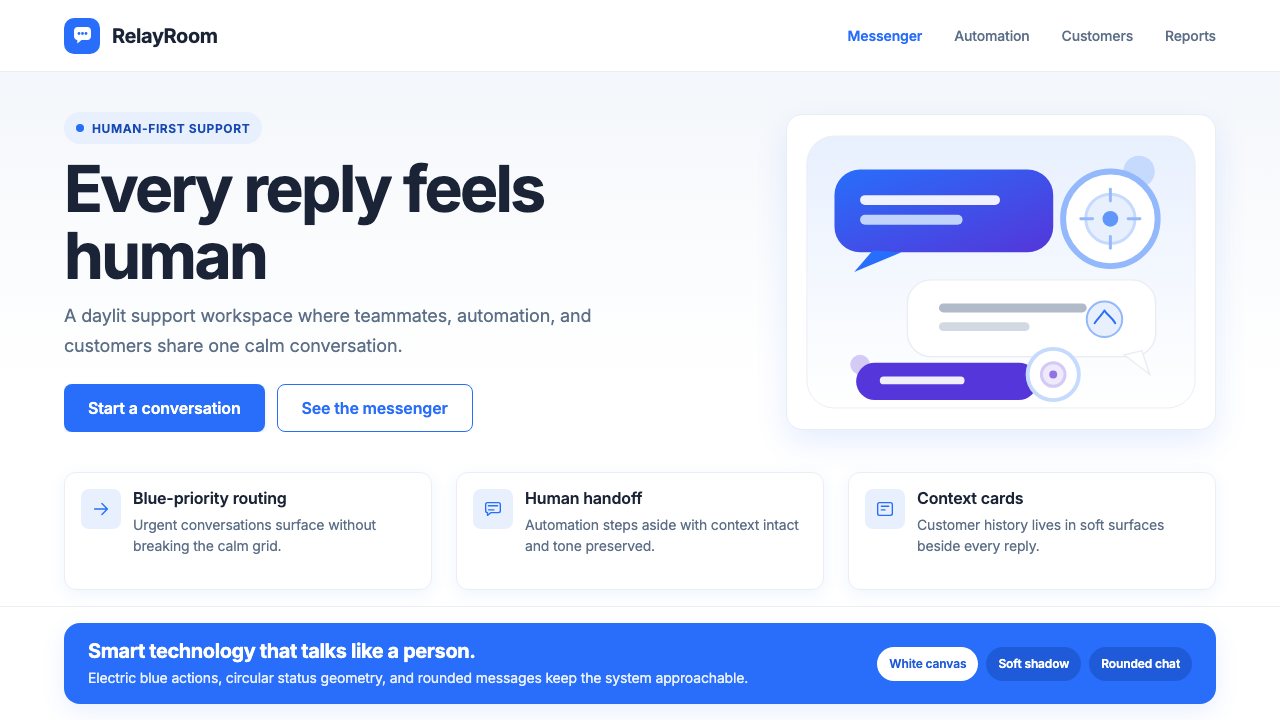
Intercom Modern proves that enterprise software can feel like a conversation — warm, direct, and unmistakably human.
Intercom Modern in brief
Intercom Modern is the visual design language developed by Intercom — the customer messaging and AI support platform — during its brand evolution from 2022 through 2024. It represents a deliberate synthesis of two values that most software design treats as opposites: the clinical precision of enterprise SaaS and the personal warmth of direct human conversation. The style is built around a signature electric indigo-blue, oversized portrait photography of real people, rounded chat-bubble geometry, and a white-dominant grid that keeps everything legible and airy.
What distinguishes this aesthetic from generic productivity software design is its commitment to the human figure. At a time when most SaaS brands retreated into abstract illustration and icon systems, Intercom leaned into large, expressive photographs of people — faces visible, expressions readable, bodies present. This was not decorative photography but a philosophical statement: the platform's purpose is human connection, and the design should embody that purpose at every scale.
The style also reflects Intercom's evolution into AI-powered support with the launch of its Fin AI agent. Rather than making the AI feel mechanical or clinical, the visual language extended its warmth to cover automated interactions. The result is a design system that holds together enterprise functionality and approachable personality without sacrificing either — a balance that makes it a compelling reference for any product navigating the same tension.

Where does Intercom Modern come from?
Intercom was founded in Dublin, Ireland in 2011 by Eoghan McCabe, Des Traynor, Ciaran Lee, and David Barrett. The founding insight was deceptively simple: business software had become so transactional and impersonal that companies had lost the ability to talk to their users like human beings. The original product was a small in-app messenger widget — a chat bubble in the corner of a web application — that let companies reach customers in real time, in context, inside the product they were already using. This widget, visually modest at first, became the seed of what would grow into both a product empire and a distinctive design vocabulary.
Through the mid-2010s, Intercom expanded from simple messaging into a full customer communication platform covering marketing automation, onboarding flows, help center content, and live support. Its early visual identity was clean and professional but relatively conventional for the SaaS era — blue-dominant, grid-structured, and cautious. The company's brand was well-regarded but had not yet found the bold distinctiveness that would come to define it. The product was ahead of the brand.
The transformation began in earnest around 2022, when Intercom undertook a comprehensive brand refresh. The new identity committed to the electric indigo-blue that had been a presence in earlier iterations but now became unmistakably ownable — a color that read as digital and energetic without losing the trustworthiness that enterprise buyers require. Portrait photography moved from supporting role to headline: marketing pages, campaign materials, and product interfaces all began foregrounding human faces at scale that felt more like editorial fashion than enterprise software.
The launch of Fin, Intercom's AI support agent, in 2023 tested whether this warm, human-centered aesthetic could extend to artificial intelligence. The design team's answer was to resist the temptation to render AI as robotic or futuristic, instead representing it through the same human warmth and approachable geometry that defined the broader system. Chat-bubble shapes — inherently conversational, inherently soft — became the visual metaphor for AI interaction. The result was a design language that did not need to choose between being a technology platform and being a human one.
What defines the Intercom Modern look?
Electric Indigo-Blue
The signature hue sits in the saturated blue-violet range — vivid enough to read as digital and contemporary, restrained enough to carry the trust associations of classic corporate blue. It appears on primary buttons, active states, data highlights, and brand moments. Its role is to orient the eye without overwhelming a layout dominated by white space. When used on dark grounds, the same hue deepens into an anchoring, near-navy weight; on white, it vibrates forward with controlled urgency.
Portrait-Led Photography
Oversized, close-cropped photographs of real people — customers, support agents, team members — anchor the most prominent visual real estate in the system. The photography style is warm and direct: subjects face the camera, expressions are open, and lighting tends toward soft natural rather than dramatic studio. Images are treated as full-bleed blocks that interrupt the grid deliberately, giving layouts a human punctuation mark amid the interface geometry. This is not stock photography deployed generically; it is a specific visual argument that the product's purpose is human.
Rounded Chat-Bubble Geometry
The chat bubble — with its generous corner radius and characteristic tail — is the origin myth of the entire product, and the design system keeps faith with it at every scale. Card components, modal containers, pill-shaped tags, avatar thumbnails, and feature illustration all share the same rounded vocabulary. The roundness is not decorative softness for its own sake; it is a legible reference to the conversational act that defines what the platform does. Hard edges and sharp corners are reserved for structural elements like grid lines and dividers.
White-Dominant Grid
The background architecture of the system is overwhelmingly white — a daylit, neutral ground that lets both the indigo-blue accent and the warm photography read at full strength without competing against a busy surface. The grid is structured and generous: content columns are padded to breathe, and vertical rhythm is consistent enough to feel intentional without feeling rigid. Sections are separated by subtle tonal shifts or thin ruled lines rather than decorative dividers or abrupt color blocks.
Warm, Direct Typography
The typographic system favors rounded or humanist letterforms over geometric or strictly neutral alternatives — a choice that aligns with the conversational personality of the brand. Headlines are set large and with confident weight, projecting authority without coldness. Body text is spaciously leaded and set at a comfortable reading measure. The hierarchy is clear without being aggressive: the system avoids the high-contrast, oversized type pairings that define more confrontational software aesthetics, preferring a measured progression from headline to label to caption.
Subtle Depth and Layering
Unlike the flat, zero-shadow orthodoxy of some minimalist systems, Intercom Modern uses soft, diffuse elevation shadows to distinguish interactive cards and modal layers from the page ground. These shadows are restrained — they suggest a single, consistent light source from above rather than multiple competing light models — and they serve a functional purpose: indicating which elements are actionable and how layers are stacked. The approach reads as physically grounded without tipping into skeuomorphism.
Conversational Illustration
Where illustration appears — in empty states, onboarding flows, and feature explanatory moments — it maintains the warmth and roundness of the broader system. Characters are stylized but recognizably human, with expressive proportions and approachable demeanor. Scenes depict interaction and connection: people talking, helping, receiving information. Abstract shapes are curved rather than angular. The illustration vocabulary reinforces rather than contradicts the photographic tone, so the system reads as coherent whether a given screen uses photography or illustration.

Who shaped Intercom Modern?
Co-founder and CEO of Intercom, McCabe shaped the company's foundational belief that business communication should feel personal and human. His insistence on treating users as people rather than tickets drove both the product philosophy and the brand character. Under his leadership, Intercom became the platform that proved enterprise software could have warmth — a conviction that runs directly through every visual choice in the modern design system.
Co-founder and Chief Strategy Officer, Traynor has been one of the most consistent voices in the industry on the relationship between product design and customer communication. His writing and thinking on jobs-to-be-done and product strategy helped establish the intellectual framework that the Intercom brand expresses visually — that products exist to help people accomplish real goals, and design should reflect that human purpose rather than the mechanics of the software.
The in-house brand team responsible for the 2022–2024 visual identity refresh built a system that had to hold together across product UI, marketing campaigns, sales materials, event presence, and the AI product launch. Their central design decision — to lead with human faces at a scale unusual in enterprise software — required both creative conviction and organizational courage, since it ran counter to the abstract illustration trends dominant in the SaaS industry at the time.
Fin is Intercom's AI customer support agent, launched in 2023. Its introduction into the design system was a significant test: could the warm, human-centered visual language extend to cover an AI product without feeling dishonest or cold? The design team's choice to represent Fin through the same rounded geometry, warm photography, and conversational bubble shapes as the rest of the system — rather than through futuristic or robotic visual metaphors — became a reference point for how AI products can be designed to feel approachable.
While not an Intercom figure, Butterfield's work at Slack in the early 2010s established the design precedent that Intercom extended and refined: that workplace communication software could adopt a friendly, even playful visual identity without sacrificing enterprise credibility. The chat-first, human-centered aesthetic that Slack popularized created the cultural conditions in which Intercom's warmer, more photography-driven evolution made strategic sense. Understanding Slack's visual trajectory helps locate Intercom Modern in the broader history of enterprise communication design.
How do you use Intercom Modern today?
Intercom Modern translates well to presentation contexts because its warmth and legibility work across both slide covers and dense content pages. A cover slide in this style leads with a full-bleed portrait photograph occupying half or more of the canvas, with the title set in confident, generously sized type against the white half. The indigo-blue enters as a single accent — on a key word, an underline, a pill badge — rather than flooding the slide. This restraint is important: the style's warmth comes from the photography, not from saturating the layout with the brand color.
Content and data slides benefit from the system's grid discipline. Each content slide should commit to a clear visual hierarchy with no more than three levels: a large headline, a body section in comfortable measure, and optional supporting labels or captions. Data visualizations — charts, metrics, comparison tables — should use the indigo-blue as the primary data color for highlights, with neutral grays handling secondary series. Avoid mixing multiple saturated colors in a single chart; the system's restraint in color use is what makes its data moments land clearly.
For web interfaces — dashboards, SaaS product pages, pricing grids, and support portal layouts — the style's white-ground discipline is the foundation. Keep backgrounds white or very lightly tinted, use the indigo-blue for primary interactive elements and active states, and let portrait photography occupy hero regions at full-bleed scale. Card components should carry a soft, consistent shadow to distinguish them from the page ground. Navigation should be clean and typographic, with the brand color appearing in the logo and primary call-to-action button but not distributed across every navigation element.
Editorial and marketing applications — campaign landing pages, email templates, event materials, and social media assets — give the style room to be more expressive. Full-width photography blocks alternating with white content sections create a rhythm that feels editorial rather than purely commercial. Pull quotes can be set large in the indigo-blue against white, using scale to give them visual weight without adding decorative borders. For email design, the warmth of portrait photography in the header carries the brand register even when the body content is functional and text-heavy.
A common mistake when applying this style is treating the rounded corners and warm photography as license to add visual softness everywhere — blurred backgrounds, pastel gradients, excessive whitespace that reads as empty rather than spacious. Intercom Modern is warm but not soft in a structural sense; it achieves its approachability through considered photographic choices and the conversational bubble language, not through diffuse visual treatment. The underlying grid is precise, the typographic hierarchy is deliberate, and the color use is disciplined. When the softness of the aesthetic overwhelms the structural clarity, the result looks like a wellness app rather than a product that enterprise buyers trust.

Intercom Modern — FAQ
Is Intercom Modern appropriate for products outside customer support?
Yes, with selective application. The style's core strengths — warm photography, clear hierarchy, a trustworthy blue accent, conversational geometry — are transferable to any product whose primary value proposition involves human connection or communication: internal tools, HR platforms, collaboration software, onboarding experiences, and community products all benefit from the same visual logic. It is less suited to products where the user's primary relationship is with data or automation rather than with other people — analytics platforms, infrastructure tools, or financial dashboards where clinical precision is the primary trust signal.
How does this style handle dark mode?
Intercom Modern is natively a light-ground system, and its warmth depends significantly on the white canvas that lets photography and the indigo-blue accent read clearly. A dark mode implementation is possible but requires care: the background should shift to a deep, near-neutral dark rather than pure black, which tends to make the indigo-blue feel harsh and the photography feel over-lit. The rounded card geometry and soft elevation shadows become more important in dark mode as organizational tools, since tonal contrast is reduced. Portrait photography may need to be reselected rather than simply reused — images that read warmly on white can feel cold or flat on a dark ground.
Can the style work without photography, using illustration instead?
It can, but the character shifts noticeably. Photography is not just a decorative choice in this system — it carries the primary weight of humanizing the brand. Without it, the design relies more heavily on the rounded geometry, the conversational bubble shapes, and the typographic warmth to do the relational work. Illustration in this context should lean into the same rounded, human-figure vocabulary rather than abstract geometric or flat icon styles. The result is softer and more neutral in tone than the photography-forward version — closer to generic friendly SaaS than to Intercom's distinctive warmth — but still coherent if the illustration style is chosen deliberately.
How does Intercom Modern differ from other blue-dominant SaaS design systems?
The differentiation is primarily in emotional register rather than structural components. Most blue-dominant SaaS systems — think productivity tools, project management platforms, and data products — use blue to signal authority, clarity, and technical precision. Their blue tends toward the cooler, more neutral end of the spectrum, and their photography (when it exists) shows screens, workspaces, and abstract concepts rather than people. Intercom's indigo-blue sits in a warmer, more expressive position, and the entire system is organized around human presence rather than product demonstration. The rounded geometry reinforces this: where many SaaS systems use precise, slightly hard corners, Intercom's bubbles and cards are visibly soft and conversational. The comparison is less blue-versus-blue and more about what the blue is arguing for.
What is the most common mistake when trying to achieve this style?
Over-softening the system. Designers encountering Intercom Modern for the first time often identify the warmth and roundness as the dominant qualities, then apply softness everywhere: blurred hero backgrounds, pastel accent colors, flowing gradients, heavy use of translucency. The result looks more like a meditation app than enterprise software. The warmth in this style is generated by specific choices — the directness of portrait photography, the conversational bubble geometry, the confident indigo-blue — not by diffuse visual treatment. The underlying structural layer should remain crisp: clear typographic hierarchy, disciplined color use, and a grid that organizes content precisely. Softness applied to structure destroys readability; softness applied to specific moments through photography and geometry creates personality.
Related design styles
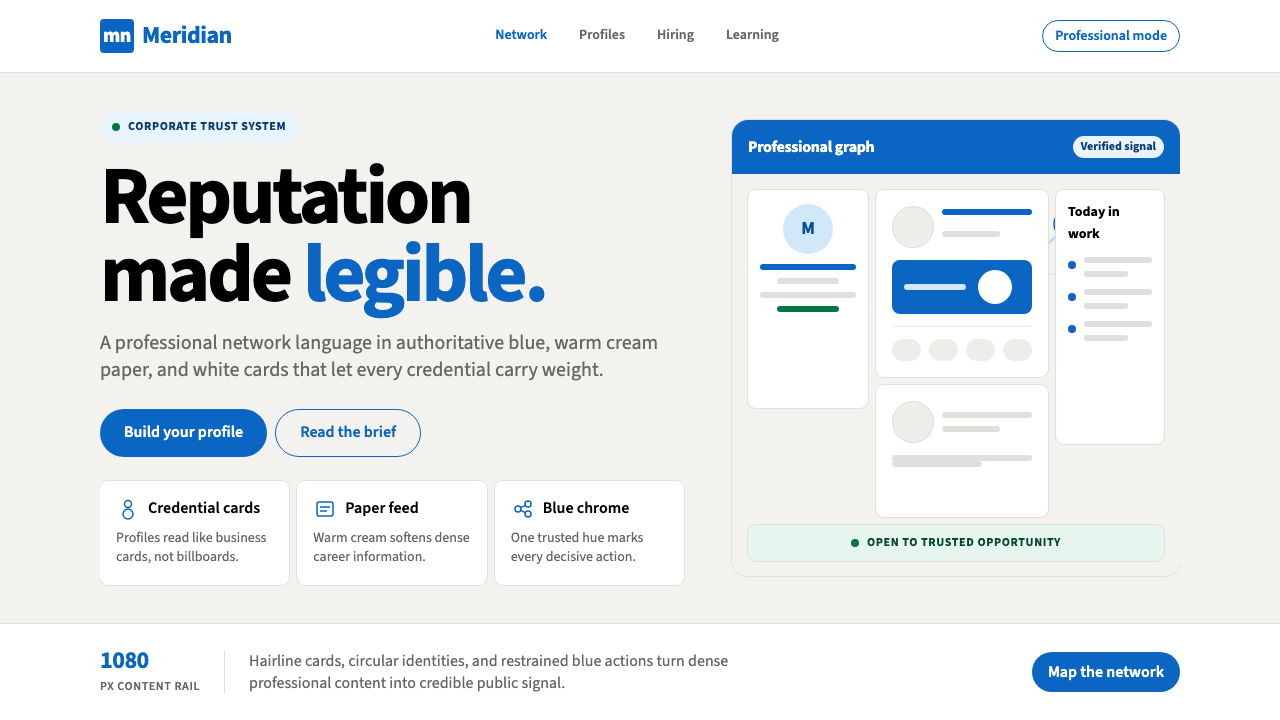 LinkedInCorporate trust, digitized. Authoritative blue frames white cards on warm cre…
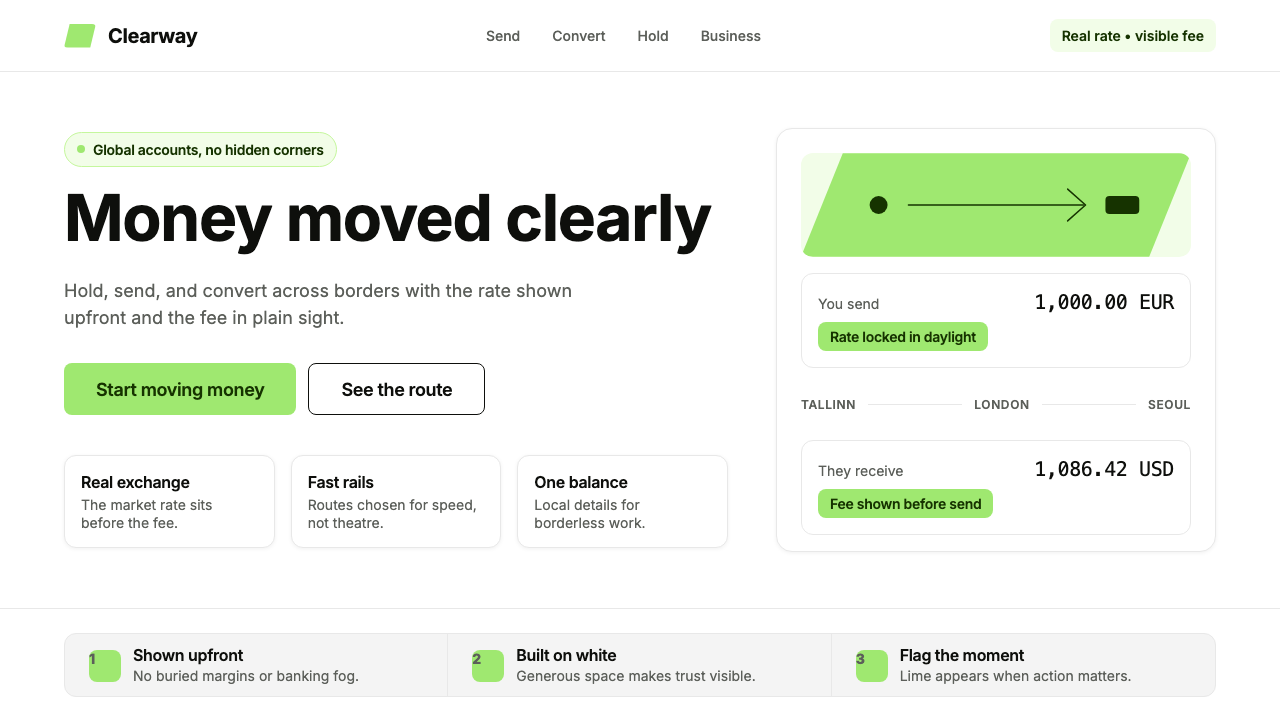 Wise (TransferWise)Clarity feels bankable. Lime flag on white, Inter geometry, quiet fee cards.
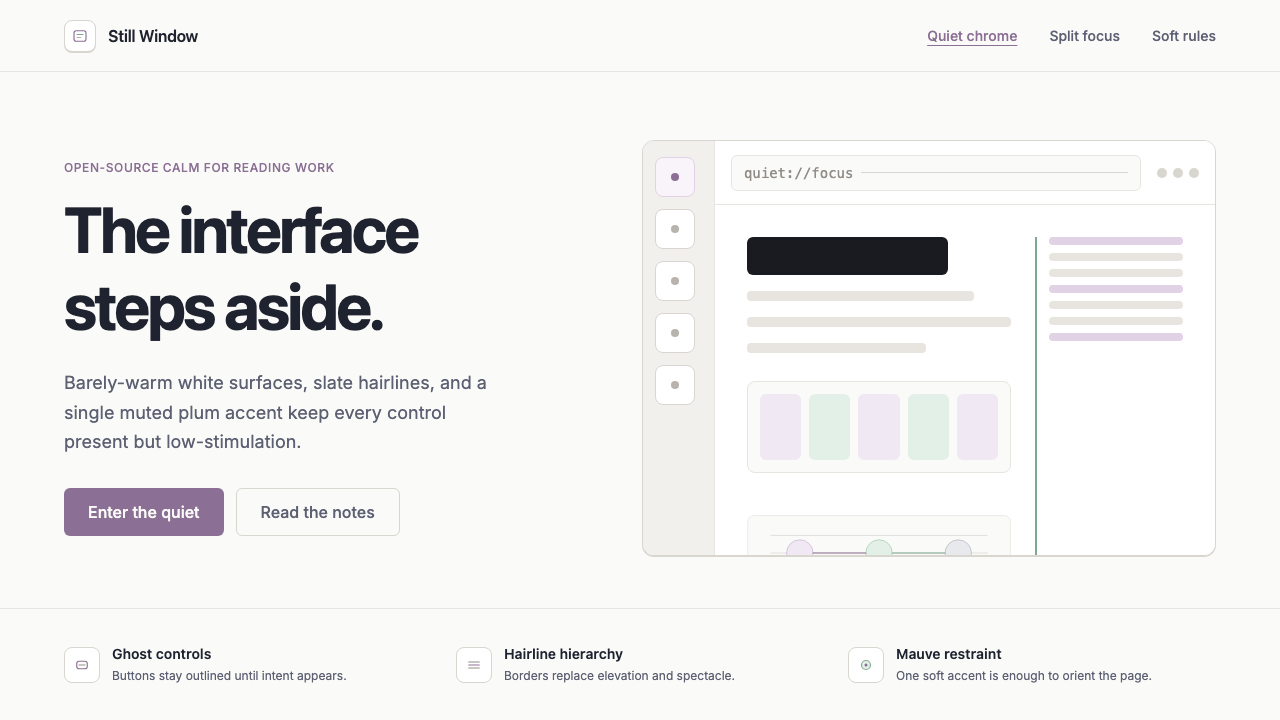 Zen BrowserSoftware steps aside. Warm white, slate hairlines, and muted plum carry the c…
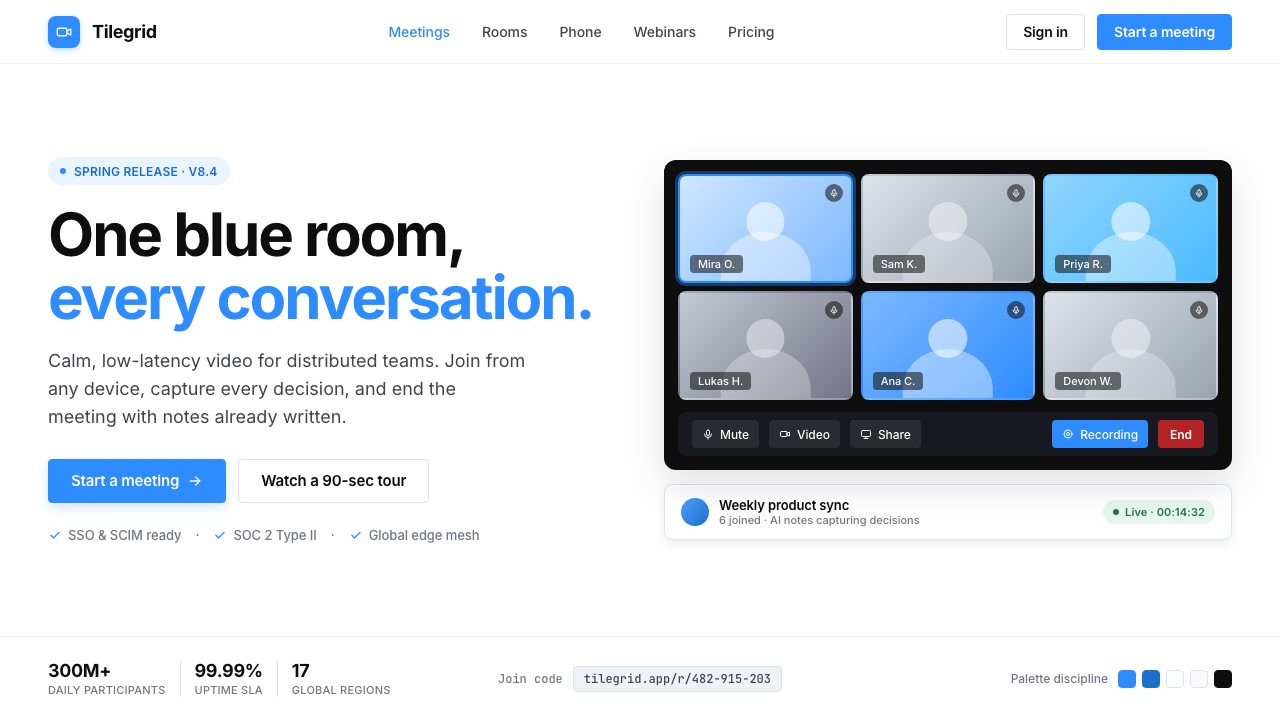 Zoom Meeting BlueRemote work's default discipline. One saturated cobalt on pure white, Inter s…
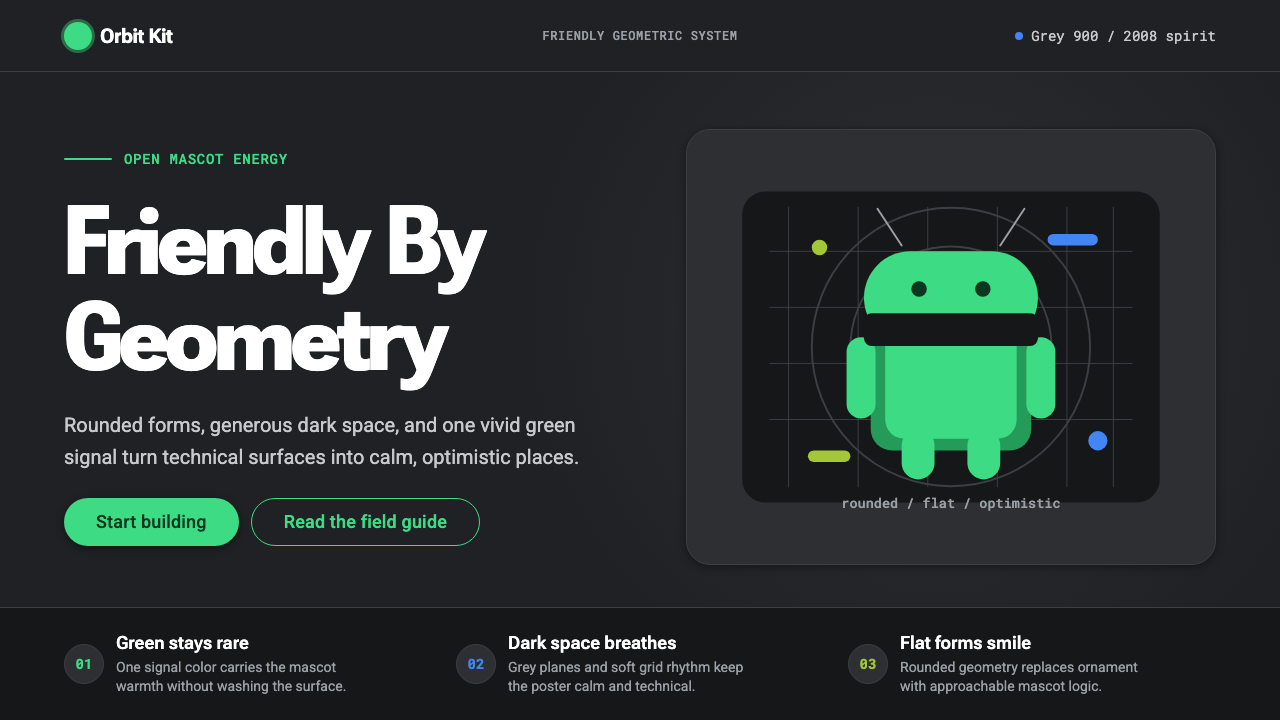 Android Bugdroid GreenFriendly tech, reduced to geometry. Vivid green pops from Grey 900 and rounde…
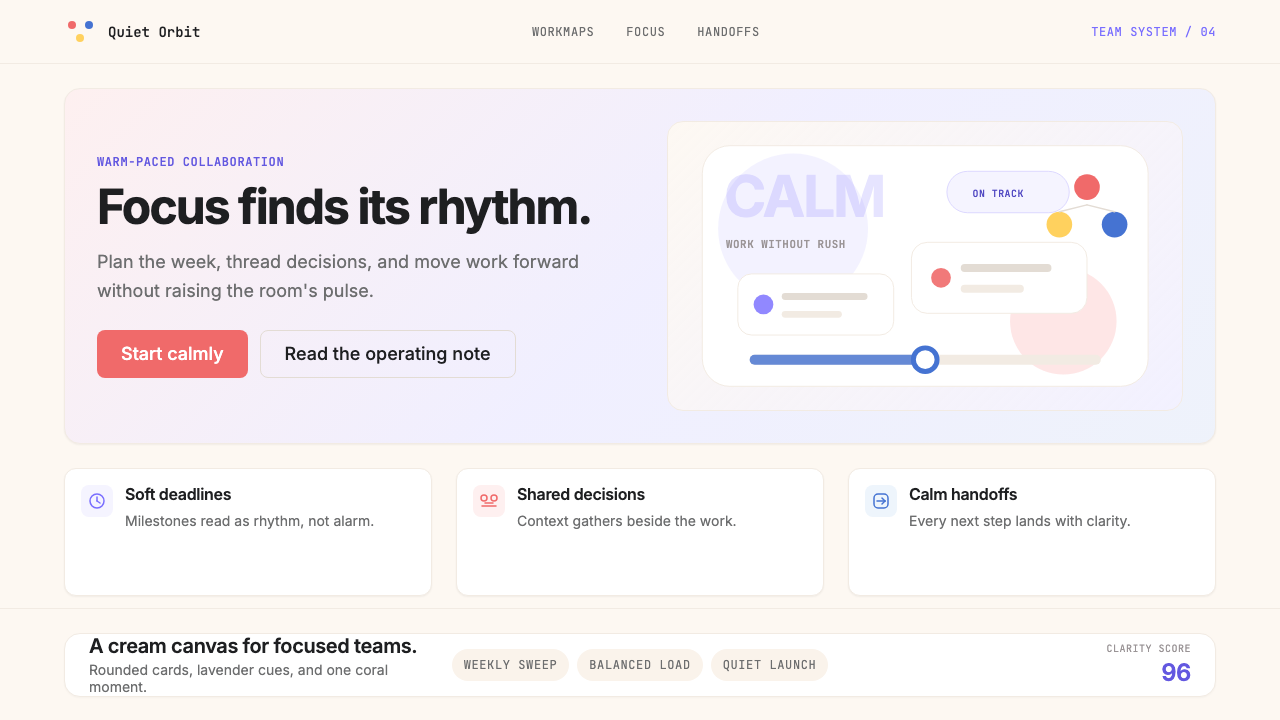 AsanaCalm productivity breathes. Cream canvas, lavender panels, coral-blue-yellow…