What is MongoDB Leaf Green?
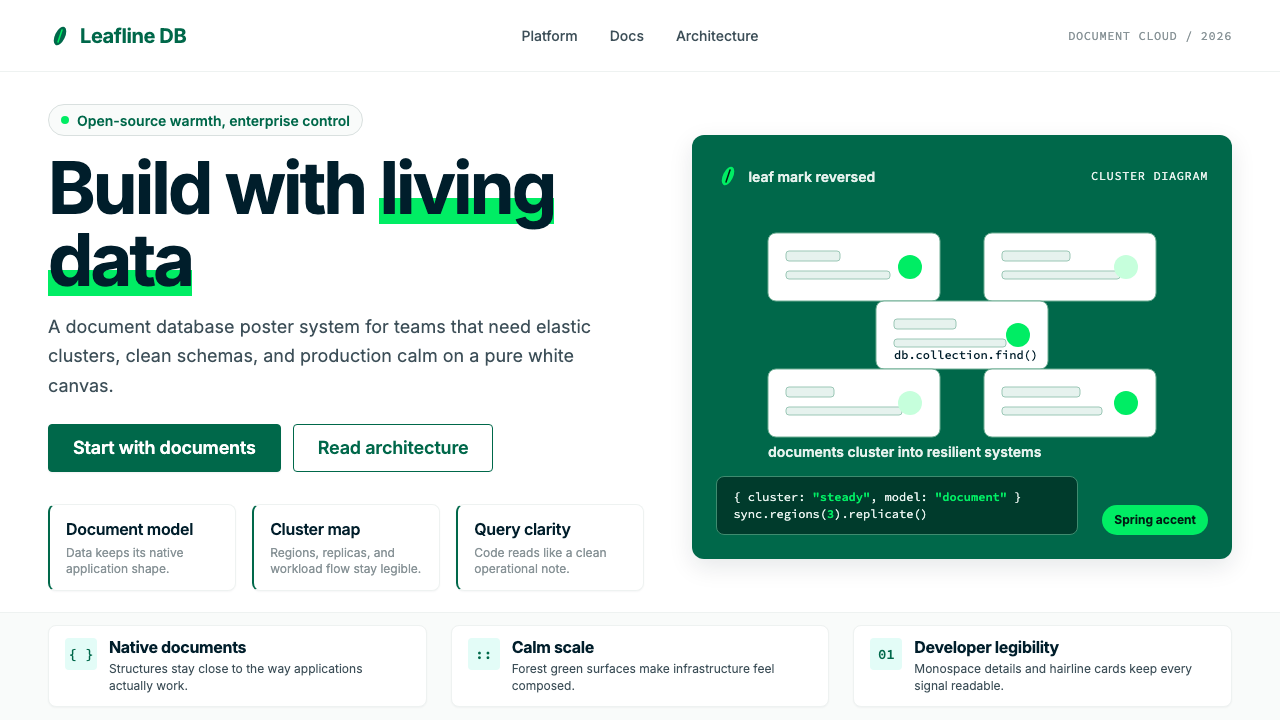
MongoDB Leaf Green distills the philosophy of a generation-defining database company into a single disciplined gesture: a deep forest green leaf breathing against generous white space.
MongoDB Leaf Green in brief
MongoDB Leaf Green is the visual identity system of MongoDB, Inc. — the company that popularized the document-oriented database model and helped define the NoSQL era of modern data infrastructure. The style is anchored by a deep, organic forest green that evokes growth and technical reliability in equal measure, paired with a luminous spring-green accent reserved for moments of energy and emphasis. Between these two greens and a neutral white-and-grey structure, the system articulates an entire world of developer-facing communication without raising its voice.
What distinguishes this aesthetic from generic tech-brand minimalism is its combination of organic warmth and modernist discipline. The leaf motif at the heart of the MongoDB mark is not a decorative flourish — it is a load-bearing symbol that carries associations of living systems, growth, and open-source community. This organic gesture is then held in tension with modernist geometric sans-serif typography, precise grid-based layout, and highly restrained color deployment. The result is a system that feels simultaneously approachable and authoritative: an enterprise platform that a developer would trust on a Friday afternoon.
The palette strategy is deliberately asymmetric. A single deep green dominates the brand identity as its anchoring hue — dark enough to read as stable and serious, green enough to signal vitality and differentiation from the grey-and-blue conventions of legacy enterprise software. The spring-green accent is deployed sparingly, almost surgically, to direct attention, mark interactive states, or highlight a key data point. Neutrals — white, light grey, and dark charcoal — do the structural work of layout without competing. The overall effect is open and breathable rather than dense or assertive.

Where does MongoDB Leaf Green come from?
MongoDB was founded in New York City in 2007 by Dwight Merriman, Eliot Horowitz, and Kevin Ryan — all veterans of DoubleClick, the advertising technology company that Google would later acquire. The founding context matters for understanding the aesthetic: DoubleClick was a data-intensive engineering organization, and its alumni brought to MongoDB a sensibility shaped by systems thinking, developer pragmatism, and the specific visual culture of New York's early-2000s tech scene. The original MongoDB brand reflected this heritage — functional, engineer-friendly, without the showiness of consumer software.
The company's early visual identity was modest, as is typical for developer-tools startups focused on adoption rather than marketing. The leaf mark — a stylized single green leaf — appeared from early on as a quiet reference to the document metaphor at the heart of MongoDB's data model. Documents are living, nested, organic structures, as opposed to the rigid rows and columns of relational databases. The green leaf embodied this contrast: something that grows and branches, rather than something ruled and fixed. The name itself — MongoDB, from 'humongous' — signals scale and organic sprawl rather than classical order.
MongoDB went public on the NASDAQ in October 2017 under the ticker MDB, a milestone that brought new expectations of brand coherence and professional visual identity. The IPO era refined the system without fundamentally changing its character. The leaf mark became cleaner and more geometric; the typography became more consistently modernist; the color palette sharpened from a family of greens into a tightly controlled two-green system. Dev Ittycheria, who became CEO in 2014, presided over a period of sustained growth in which the brand had to serve both the developer community that had built MongoDB's early momentum and the enterprise buyers who were now central to its business.
The most significant refinement came with the 2023 brand refresh, which aligned the visual system with the company's matured product portfolio — spanning Atlas (the cloud database platform), Realm (mobile data sync), and a growing suite of data services. The refresh clarified the hierarchy between the two greens, standardized the use of white space as a structural element rather than an afterthought, and introduced more systematic guidance for developer documentation, marketing, and product interfaces. The result was a visual language capable of spanning a conference keynote, a technical documentation page, and a product billing screen with equal fluency. It is this post-2023 system that defines what designers today reference as MongoDB Leaf Green.
What defines the MongoDB Leaf Green look?
Anchoring Green
The primary green is a deep, forest-floor hue — dark enough to carry the weight of headlines and primary brand marks, yet warm enough to read as organic rather than corporate. It avoids the cold teal of fintech or the bright Kelly green of consumer apps. This green has depth and seriousness without severity. In practice it functions as both a color and a structural element: it anchors navigation bars, primary buttons, and the brand mark with equal confidence.
Electric Accent
The spring-green accent is the system's most distinctive and most easily misused element. It is a luminous, almost electric hue — noticeably brighter and more saturated than the primary green — that immediately draws the eye wherever it appears. The discipline of the system depends on using this accent sparingly: one call-to-action button per screen, one data series in a chart, one highlighted metric on a dashboard. When overused, it collapses from an accent into background noise.
White Space as Architecture
White space in the MongoDB system is not the absence of design — it is the primary structural material. Generous margins, generous line height, and generous padding around components are not wasteful; they give each element the breathing room to communicate clearly. This approach is particularly evident on the mongodb.com documentation pages, where complex technical content is made navigable through spatial generosity rather than visual compression.
Geometric Modernist Typography
The typographic system is built on geometric sans-serif letterforms that feel both technical and humanist — precise in their construction, but rounded enough to avoid severity. Headlines carry significant visual weight and size contrast relative to body text, establishing hierarchy through scale rather than decoration. Monospace typefaces appear in code samples and terminal contexts, reinforcing the developer-facing honesty of the system: this is software for people who read source code.
Abstract Document Iconography
The illustration and iconography system abstracts database concepts into organic, flowing shapes that suggest clusters of documents, branching data structures, and interconnected nodes. These forms are never literal — no filing cabinets, no server racks — but they are not purely geometric either. They occupy a middle ground between organic flow and technical diagram, rendered in the brand's green palette with soft curves and layered depth. They make complex data architecture legible without reducing it to clipart.
Neutral Structure
White and a carefully graded range of light-to-dark greys carry the load of most interface and layout surfaces. These neutrals are warm rather than cool — they tend toward ivory and stone rather than blue-grey — which prevents the system from feeling sterile. Dark charcoal replaces pure black in most body text applications, softening the visual weight without reducing legibility. This neutral foundation is what allows the two greens to remain expressive rather than exhausting.
Developer Documentation Clarity
A distinctive feature of the MongoDB aesthetic is how well it scales from marketing to technical documentation. Code blocks are visually set apart without heavy chrome — a subtle background shift and monospace typography are sufficient. Syntax highlighting in code samples uses a limited color set drawn from the brand palette. Navigation structures use indentation and weight rather than borders and icons. The documentation aesthetic is an extension of the brand language, not a separate system grafted on.

Who shaped MongoDB Leaf Green?
As co-founder and founding chairman of MongoDB, Merriman brought the high-scale engineering culture of DoubleClick into the database world. His background in building internet advertising infrastructure at massive scale directly shaped MongoDB's technical ambitions and, by extension, its brand positioning as a system built for the real demands of modern data. The practical, no-nonsense engineering sensibility he helped establish at the company is legible in the visual identity's preference for clarity over showiness.
Co-founder and original CTO, Horowitz led the technical vision that made MongoDB the most widely adopted NoSQL database of its era. His developer-centric thinking — the conviction that databases should be expressive, flexible, and pleasant to work with — carried directly into the brand's communication style. The warmth and openness that the visual identity projects toward the developer community reflects the company culture that Horowitz, as a technical founder, helped establish from the ground up.
As CEO from 2014 through the company's IPO and its subsequent maturation as a publicly traded enterprise, Ittycheria oversaw the brand's evolution from developer-community darling to enterprise-grade platform. Under his leadership, the visual identity had to simultaneously retain its open-source warmth and meet the expectations of Fortune 500 procurement teams. The 2023 brand refresh — which achieved exactly this balance — took place during his tenure and reflects his vision of MongoDB as both technically credible and commercially serious.
As co-founder and experienced entrepreneur who had built and sold multiple technology companies, Ryan contributed the commercial and strategic instincts that helped MongoDB balance its open-source identity with sustainable business growth. His background in building scalable internet businesses brought an understanding of how visual brand credibility translates to enterprise sales trust — a concern that runs through every iteration of the MongoDB visual system from its earliest days to the current design language.
How do you use MongoDB Leaf Green today?
MongoDB Leaf Green is a style that rewards restraint above all else. Its two-green system only works when the roles of each green are kept strictly separate: the deep forest green as the structural anchor, the spring green as the single point of emphasis per composition. Before applying this style to any project, it helps to answer one question: where is the single most important thing the viewer should notice? That is where the spring green belongs. Everything else either recedes into the neutral ground or adopts the deep green's stability.
For presentation slides, the style excels at both cover and content formats. A cover slide works best with an asymmetric composition: the deep green used as a large bold shape or color field on one side, the title in clean geometric sans-serif set against white or the forest green itself, and the spring green reserved for a single accent — a line, a word, a small mark. Content slides should treat white space as the primary design element: wide margins, generous line spacing, and no more than two levels of text hierarchy differentiated by size and weight alone. Data slides become powerful when charts and diagrams are rendered with the deep green as the primary series and the spring green to highlight the key data point the slide is making its argument around. Avoid filling multiple chart series with greens — use neutral greys for secondary series, reserving both greens for what matters.
For web interfaces, particularly dashboards and developer portals, the system translates directly. Navigation and primary structural elements carry the deep forest green; interactive states, alerts, and primary call-to-action buttons use the spring green. The background should be white or the lightest neutral in the palette, with component surfaces slightly elevated through a subtle warm-grey distinction rather than heavy shadow. Card components work well with minimal borders — a single fine line in a light neutral — rather than drop shadows, which are inconsistent with the style's preference for structural flatness. Code and terminal sections should use a monospace typeface and a slightly warm dark background, creating a contained environment distinct from the documentation prose around it.
For editorial and marketing content — long-form articles, technical reports, product launch pages — the style supports strong information hierarchy without visual noise. Body text should read comfortably at a moderate measure, set in a clean geometric or humanist sans-serif at normal weight. Section breaks are best marked with a subtle rule or a shift in background neutral, not with decorative elements. Marketing pages can use full-width alternating sections: white background with deep green accents, then a deep green background with white typography and spring green highlights. The boldness of the contrast replaces the need for complex visual decoration. Pull quotes and callouts look strongest in the deep green with white type, not in the spring green, which should remain reserved for interactive and action elements.
The most common mistake when applying this style is conflating the two greens — using the spring green for large surfaces, or deploying both greens at high saturation in the same compositional zone. A second common error is introducing additional colors from outside the system: neither warm orange nor bright blue blends naturally with this palette, and adding them typically produces the visual incoherence of a brand that has not decided what it is. A third pitfall is using the leaf or organic illustration elements decoratively, as wallpaper or background texture, rather than purposefully. In the MongoDB system, organic forms earn their place through meaning — they represent data, documents, clusters — not through aesthetics alone.

MongoDB Leaf Green — FAQ
What makes MongoDB Leaf Green different from other green-primary tech brands?
Most green-primary tech brands either lean into bright, saturated consumer greens — energetic but shallow — or adopt dark military greens that read as serious but cold. MongoDB's system is distinctive because it uses two greens in a strict hierarchical relationship: one deep and anchoring, one luminous and active, with the discipline to keep them from competing. The leaf motif also gives the system an organic specificity that generic green palettes lack. The combination of forest depth, electric accent, and symbolic organic form is what makes this system recognizable rather than generic.
Can MongoDB Leaf Green work for a non-technical brand or product?
The style can work outside its original technical context if the product values align — specifically, if the product wants to communicate reliability, growth, and organic intelligence rather than playfulness, warmth, or sensory richness. It suits analytics tools, sustainability platforms, financial planning services, and developer education products well. It is poorly suited to consumer wellness, food, children's products, or anything requiring emotional softness. The test is not whether the brand is technical, but whether the brand's values — precise, trustworthy, growing, forward — match what the palette and typographic system communicate.
How should the style handle data visualization with many series or categories?
This is where the two-green discipline gets tested. With more than two data series, using both greens for the two most important series and neutral greys for the rest is the correct approach — it maintains the palette's hierarchy while accommodating complexity. When categories require more differentiation than two greens and greys can provide, a warm neutral and a cool neutral can expand the range without introducing foreign hues. Avoid borrowing colors from outside the palette. The rule is: the viewer's eye should travel to the most important data series first, and the color system should enforce that journey.
Is a dark-mode version of this style possible, and how should it be approached?
A dark-mode version is not only possible but is already central to MongoDB's developer-facing products, where dark terminal and editor environments are the natural habitat. The approach inverts the ground — deep charcoal or near-black replaces white as the primary surface — while keeping the two greens active. The deep forest green, however, risks disappearing against a dark background, so in dark contexts it often lightens toward a mid-forest tone to maintain its anchoring role. The spring green becomes even more prominent in dark mode and must be used even more sparingly. White or light-grey handles all body text, and the overall contrast ratio should be generous for accessibility.
How does this style handle the tension between open-source warmth and enterprise formality?
This tension is the defining creative challenge of the MongoDB brand, and the visual system resolves it through the leaf motif and the specific character of its two greens. The leaf is organic, non-corporate, and associated with natural growth — it signals community and approachability. The deep forest green, however, carries institutional authority: it is not the green of a startup, but of a company that has been around long enough to mean something. The spring green injects energy and modernity. Together, these three elements — organic form, deep anchor, luminous accent — hold both registers simultaneously. The typographic and spatial discipline then ensures the whole reads as professionally composed rather than energetically casual.
Related design styles
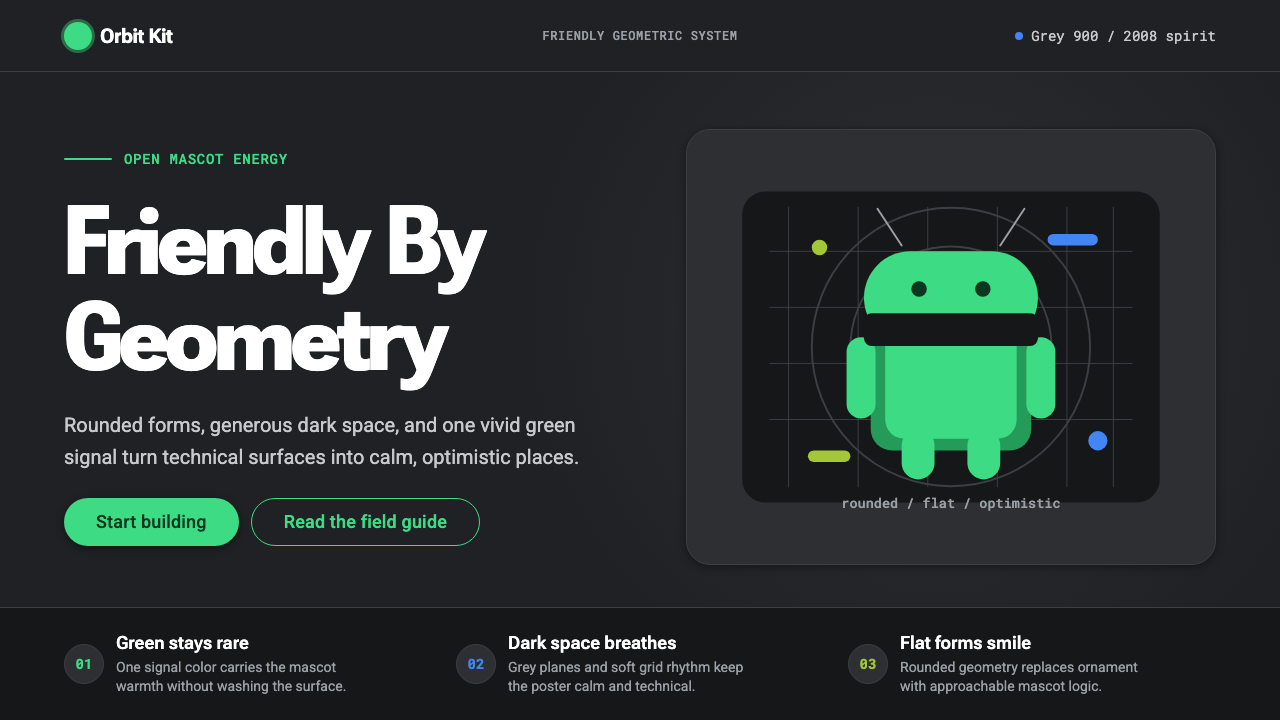 Android Bugdroid GreenFriendly tech, reduced to geometry. Vivid green pops from Grey 900 and rounde…
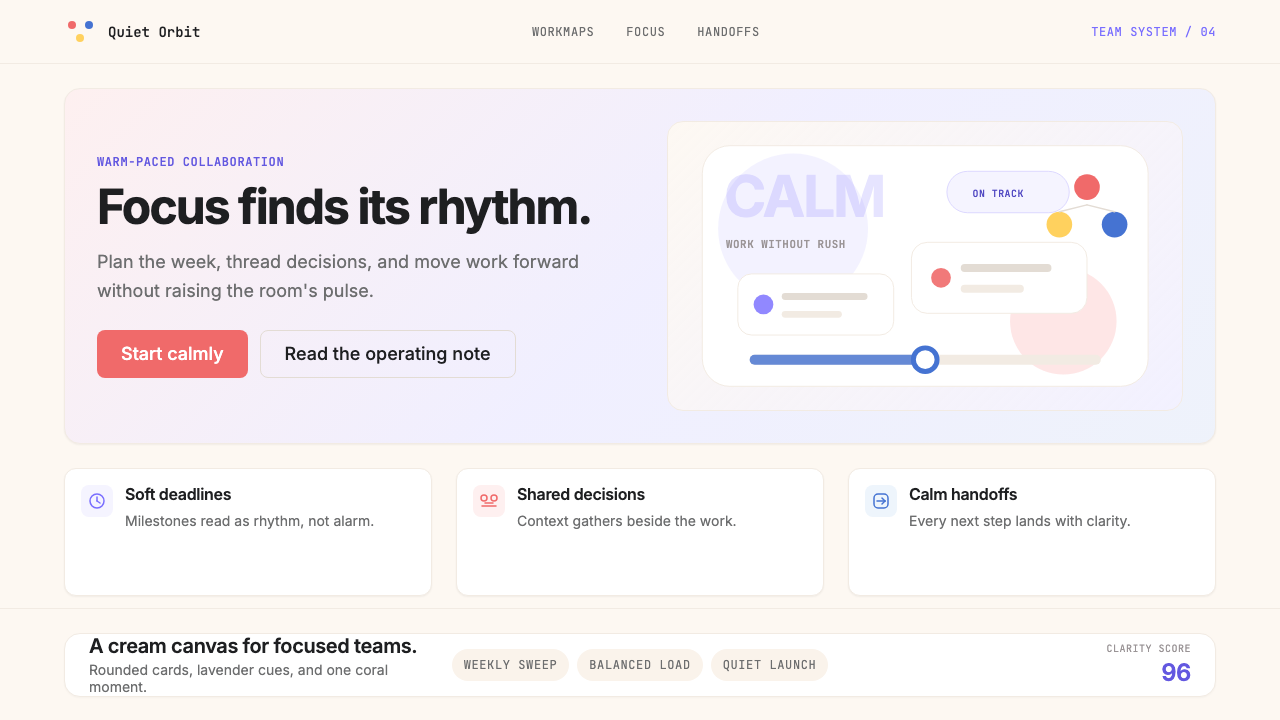 AsanaCalm productivity breathes. Cream canvas, lavender panels, coral-blue-yellow…
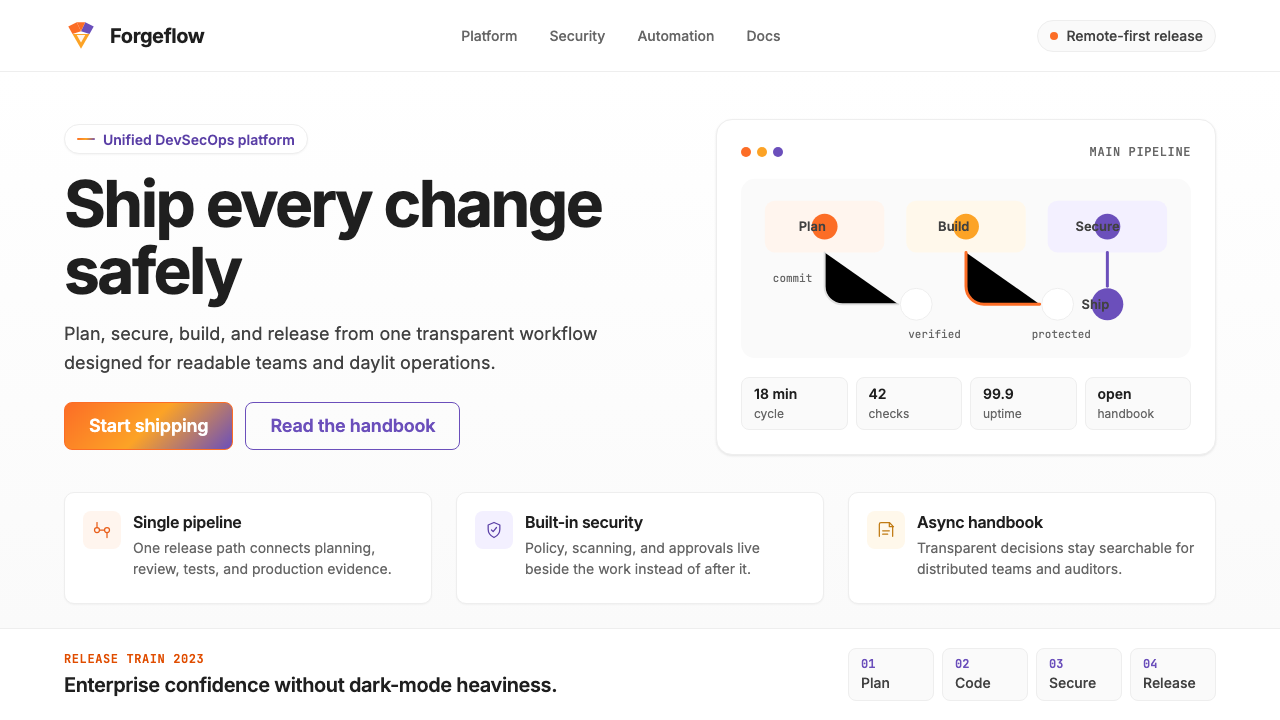 GitLab 2023DevOps in daylight. Tanuki orange-to-purple gradient, Inter, warm enough for…
 Glean Enterprise-SearchWarm enterprise AI. Cream ground, yellow focus, sage graph nodes, and sans ca…
 LinkedInCorporate trust, digitized. Authoritative blue frames white cards on warm cre…
 Shopify ModernMerchant ally, not corporate SaaS. Emerald actions on bordered white cards ca…