What is Glean Enterprise-Search?
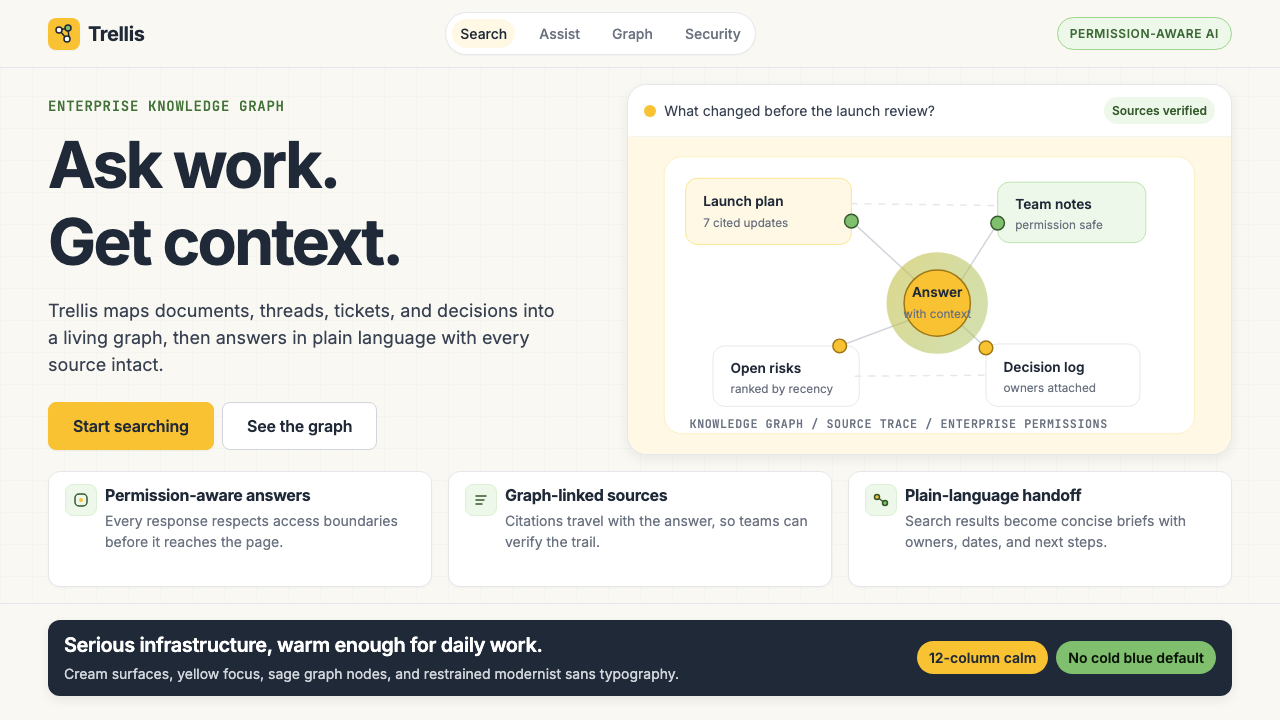
Glean flipped enterprise software's cold blue default to warm cream and sunlit yellow — proving that an AI knowledge assistant could feel approachable without sacrificing authority.
Glean Enterprise-Search in brief
Glean Enterprise-Search is the visual design language developed by Glean — the enterprise-search and AI-knowledge-assistant platform — between 2022 and 2024. It is built around three deliberate color decisions: a warm cream ground that softens the workspace, a saturated but friendly Glean-yellow used as the primary action and focus signal, and a muted sage-green that marks knowledge-graph nodes and secondary structural elements. Together they form a palette that reads as confident and modern without the sterility that dominates legacy enterprise software.
The system pairs this warm palette with a modernist sans-serif typeface whose letterforms are clean and geometrically rational — built for dense information without fatigue. Generous whitespace, subtle rounded corners, and a restrained use of border and shadow give the interface a quality that its designers sometimes describe as a research notebook: orderly, unhurried, and genuinely interested in the reader. Knowledge-graph motifs — node-and-edge diagrams that visualize how documents, people, and topics connect — appear as both functional UI elements and decorative language throughout the brand.
What distinguishes Glean's visual identity from generic enterprise modernism is its intentionality. Every deviation from the cold-blue convention — the cream instead of gray, the yellow instead of accent-blue, the sage instead of teal — was a considered decision to humanize a product category long associated with friction and opacity. The result is a design system that communicates AI confidence without the clinical distance AI products often project.

Where does Glean Enterprise-Search come from?
Glean was founded in 2019 in Palo Alto, California, by Arvind Jain, Tony Gentilcore, and Piyush Prahladka — three engineers who had previously built search infrastructure at Google. Their premise was specific: the proliferation of SaaS workplace tools through the 2010s had fragmented organizational knowledge across dozens of silos — Slack channels, Google Drive folders, Confluence wikis, Salesforce records — and no existing tool could surface the right information at the right moment. Glean's solution was to build a unified search layer and, later, an AI assistant layer on top of every connected tool, treating a company's collective knowledge as a single addressable graph.
The visual identity that emerged between 2022 and 2024 was shaped directly by this product vision. Glean's designers faced a branding challenge common to AI-infrastructure products: how do you make something that is fundamentally a search index and retrieval engine feel genuinely useful and human? The answer they arrived at was to borrow from the warmth register of consumer products — cream grounds, amber-adjacent yellows, organic but precise typography — while retaining the density and precision that enterprise users require. The knowledge-graph visualization, originally a technical diagram for showing how indexed documents relate to one another, became the visual signature of the brand: a motif that communicates intelligence, connectivity, and structure simultaneously.
By 2024 Glean had reached a valuation of approximately 2.2 billion US dollars, establishing itself as the category leader in the post-LLM enterprise AI-assistant market. The visual identity scaled with the product: as Glean added AI-generated summaries, people-graph search, and proactive knowledge surfacing, the design system absorbed these features without visual inflation. The palette remained warm and restrained, the graph motifs remained consistent, and the overall tone stayed closer to a well-designed research interface than to the dashboards and alert-heavy UIs associated with legacy enterprise software.
The historical context matters. Glean's design direction emerged at precisely the moment when the enterprise software industry was beginning to question its long-standing visual conventions — the flat blue-and-gray palettes inherited from Windows and corporate intranet aesthetics, the dense information architecture optimized for power users, the implicit message that seriousness and coldness were the same thing. Glean's willingness to introduce warmth and approachability into a serious enterprise context was not merely an aesthetic preference but a strategic positioning argument: if AI at work was going to feel like a capable colleague rather than a database query tool, it needed to look the part.
What defines the Glean Enterprise-Search look?
Palette
The palette is built around three anchors: a warm cream ground that serves as the universal background, a saturated Glean-yellow used for primary interactive elements and focal highlights, and a muted sage-green that marks graph nodes, secondary badges, and supportive structural elements. Neutral charcoal handles body text and iconography. The overall effect is warm without being playful — a considered departure from the cold blue-and-gray defaults that have dominated enterprise software for decades.
Typography
A single modernist sans-serif typeface carries the entire typographic system, deployed at a limited number of hierarchical weights and sizes rather than across multiple families. Headlines are set at generous scale with comfortable tracking; body text is compact but legible, optimized for reading dense search results and document summaries. The typeface choice signals precision and rationality without coldness — it belongs to the tradition of humanist sans-serifs that carry warmth in their letterform curves even at neutral weights.
Knowledge-Graph Motif
Node-and-edge diagrams — visualizations of how documents, people, teams, and topics interconnect across a company's knowledge base — serve double duty as functional UI elements and as decorative brand language. In product contexts, they display actual relationship data. In marketing and editorial contexts, abstracted node clusters appear as background texture or illustrative devices, communicating the core promise of the product — connection and synthesis — through visual form rather than words.
Whitespace and Breathing Room
Generous whitespace is a structural principle throughout the system, not a luxury applied to hero moments. Search result lists, document panels, and navigation elements all maintain a spacing rhythm that prevents the interface from feeling cluttered even when displaying high-density information. This discipline distinguishes Glean's approach from the information-maximalist school of enterprise software and aligns it with the research-tool aesthetic its founders explicitly targeted.
Rounded Corners and Surface Softness
Cards, chips, input fields, and modal containers consistently use gentle rounding rather than sharp right angles. The effect is subtle — not the exaggerated softness of consumer social apps, but a measured approachability that reduces the visual tension common in dense enterprise interfaces. Combined with the cream ground and warm palette, this corner language contributes significantly to the overall impression of a product that is both capable and hospitable.
Restrained Shadow and Elevation
Shadow is used sparingly and always softly — not as a dramatic depth effect but as a gentle separator between overlapping surfaces. Cards lift slightly from the page with a barely perceptible shadow rather than a bold, illustrative one. This restraint keeps the visual atmosphere clean and ensures that the yellow and sage accents, rather than lighting effects, carry the weight of visual hierarchy. The overall depth system feels measured and calm, consistent with the research-notebook character of the product.
Iconography and Illustration
Icons are geometric and stroke-based, using a consistent line weight and rounded terminations that echo the overall corner language. They are functional in character — designed to communicate action and category rather than to decorate — and appear in charcoal against the cream ground or reversed against darker surfaces. Illustration, where it appears, leans on the graph-node vocabulary: abstracted networks, connection lines, and document-as-node representations rather than figurative scenes or character-based artwork.

Who shaped Glean Enterprise-Search?
Co-founder and CEO of Glean, Jain spent years at Google building distributed search systems before identifying the organizational knowledge-fragmentation problem that Glean addresses. His engineering-first perspective shaped both the product architecture and, indirectly, the visual language: a search product built by search engineers should communicate precision, intelligence, and usefulness — values that are legible in Glean's restrained, information-forward design rather than in decorative visual complexity.
Co-founder and a key technical architect at Glean, Gentilcore's background in large-scale search infrastructure at Google informed the knowledge-graph approach that became both the product's core technical differentiator and its visual signature. The node-and-edge diagrams that appear throughout Glean's brand are not arbitrary decorative choices — they reflect a genuine technical model of how the product understands and navigates enterprise knowledge.
Co-founder of Glean and another veteran of Google's search engineering teams, Prahladka's involvement in the founding underscores the product's origins in rigorous information-retrieval thinking. The founding team's shared background in precision search — where relevance, ranking, and recall are measurable — contributed to a product philosophy that values clarity of communication, which in turn influenced the design system's preference for legibility and restraint over visual complexity.
Inter, the typeface most closely associated with Glean's visual system, was designed by Rasmus Andersson and released in 2016 as an open-source project optimized specifically for screen readability at small sizes. Its humanist geometric structure — clean enough to read at the compressed sizes required for search results and document snippets, warm enough to avoid the sterility of purely geometric sans-serifs — made it the natural typographic choice for an enterprise product attempting to balance precision with approachability. Inter became the de facto standard for numerous high-credibility technology products in the late 2010s and early 2020s, and Glean's adoption of it placed the brand clearly within that modernist-but-warm tradition.
No single individual, Glean's visual identity emerged at a specific inflection point in enterprise software history: the two years following the public release of large language models, when dozens of enterprise AI products were competing to define what AI at work should look and feel like. Most defaulted to gradients, glowing interfaces, and blue-dominated palettes that signaled futurism. Glean's counter-choice — cream, yellow, sage, and restraint — was a collective design decision that distinguished the brand in a crowded field and helped establish a distinct visual language for the category of AI knowledge assistants.
How do you use Glean Enterprise-Search today?
Glean Enterprise-Search style is most at home in contexts where the product needs to feel simultaneously intelligent and trustworthy — where users must believe the system knows a great deal and also that it will not overwhelm them. The palette's warmth does the relational work; the typographic precision and whitespace discipline do the competence work. Understanding this dual function is more important than any specific application technique.
For presentation slides, the style scales well from cover to data pages. A cover slide benefits from the large-format presence of the Glean-yellow used as a primary shape or background band, paired with a centered or left-aligned headline in a clean sans-serif at generous scale against cream or white. Content slides should treat the cream ground as a working surface: organize information into card-like blocks separated by whitespace rather than lines, use the sage-green for secondary tags or category indicators, and reserve the yellow strictly for the most important call-out on each page. Data slides — charts, diagrams, metrics — should adopt the graph-node aesthetic where possible: use warm neutral bars for baseline data and yellow or sage highlights for the data point being emphasized. Avoid using all palette colors simultaneously on a single slide; the system reads most coherently when one accent dominates per screen.
For web UI and dashboards, the style is well-suited to information-dense interfaces where hierarchy and quick scanning matter most. Establish a warm cream or very light warm-white background as the canvas; use charcoal for all body text and interface labels; reserve yellow for primary buttons, active states, and focus indicators; use sage for badges, tags, and secondary navigation. Card components should have gently rounded corners and a light, barely-there shadow that lifts them from the background without drama. Navigation bars and sidebars work well in a slightly deeper warm-neutral tone, creating gentle separation from the content canvas without resorting to hard dividing lines. For pricing pages, the yellow accent naturally draws the eye to the recommended tier, while sage can mark included features and neutral charcoal handles standard list items.
For editorial and marketing applications — landing pages, keynote backgrounds, content marketing — the knowledge-graph motif is your strongest differentiator from generic enterprise modernism. Use abstracted node-and-edge patterns as background textures for section dividers or hero blocks, at low opacity so they read as texture rather than diagram. Full-width sections should alternate between cream-on-deep-neutral and yellow-on-cream rather than relying on color blocking alone. For long-form editorial content such as research reports or case studies, the style supports a narrow text column with a wide outer margin reserved for call-outs, annotations, or supporting data visualizations — recalling the research-notebook character the product itself aspires to embody.
A common mistake when applying this style is overusing the yellow. Glean-yellow is a focal and interactive color, not a background or brand-wash color; when it covers large surfaces it loses its signaling power and the overall palette tips from warm to loud. A related mistake is treating the sage-green as a general accent interchangeable with the yellow — in the Glean system, sage signals secondary information and relationship context, not primary emphasis. Designs that mix yellow and sage at equal weight produce visual competition rather than hierarchy. A third pitfall is abandoning the cream ground in favor of pure white in an attempt to appear more minimal; pure white against these warm accents produces a clinical tension that undermines the approachability the palette is engineered to deliver. Stay warm, stay restrained, let yellow do one job per view.

Glean Enterprise-Search — FAQ
Is Glean Enterprise-Search style appropriate for non-enterprise products?
It can translate, but with caveats. The warmth of the cream-and-yellow palette and the clarity of the typographic system work well for any product that handles information retrieval, knowledge management, or research — from personal note-taking tools to academic platforms to internal knowledge bases. Where it struggles is in contexts that require strong emotional warmth, sensory richness, or playful energy: food brands, lifestyle products, children's applications. The style sits in a specific register — capable, warm, professional — and drifts outside that register when applied to products with different emotional contracts.
How does this style differ from Material Design or other enterprise design systems?
Material Design and most enterprise design systems are palette-agnostic — they define structural rules and component behaviors that teams then populate with their own brand colors. Glean's style is palette-first: the warm cream, the specific Glean-yellow, and the sage-green are not interchangeable; they carry the emotional argument of the brand. Material Design also leans toward blue-family action colors and harder surface delineation. Glean's system softens surfaces, uses warmth as a strategic differentiator, and integrates product-specific motifs — the knowledge graph — that go beyond what a general-purpose design system would specify.
Can this style support a dark-mode variant?
A dark variant is possible but requires more care than most dark-mode implementations. The foundational warmth of the palette — which depends heavily on the cream ground — is partially lost when that ground inverts to a dark neutral. The most successful dark interpretations retain the warmth by shifting to a deep warm charcoal or near-black with a brown undertone rather than a pure cool black. Glean-yellow reads well on dark grounds and can intensify as a focal color. Sage-green should be lightened slightly to maintain legibility. The knowledge-graph motifs, rendered in low-opacity warm lines, can serve as effective background texture in dark contexts without becoming visually heavy.
What makes the knowledge-graph motif work as a design element rather than just a data visualization?
The knowledge-graph motif works decoratively when it is abstracted to the point where individual nodes lose specific identity and the overall pattern reads as texture or network rather than data. The key is density and scale: a cluster of small nodes connected by thin lines at a low opacity creates a sense of interconnectedness without demanding to be read literally. When nodes are too large, too labeled, or too few, the motif tips back into diagram territory and competes with the content it is meant to support. Used at the right scale and opacity — often lighter in marketing contexts than in product UI — it is one of the most distinctive and communicatively precise visual signatures in contemporary enterprise branding.
Is this style specifically tied to Glean, or can it be used independently?
The visual principles — warm cream ground, warm focal yellow, sage-green secondary, graph-node motifs, modernist sans-serif, generous whitespace — are principles and choices, not trademarks. Any design practitioner can apply this vocabulary to a new project. The style is best understood as representing a particular moment and position in enterprise AI design: warm, knowledge-forward, and deliberately anti-sterile. Used with those values in mind, it can serve any product in the information-management, research, or knowledge-work category. Used as surface decoration without commitment to the underlying values — as a color palette borrowed without the restraint and whitespace discipline — it produces a visual echo of Glean rather than a coherent design system.
Related design styles
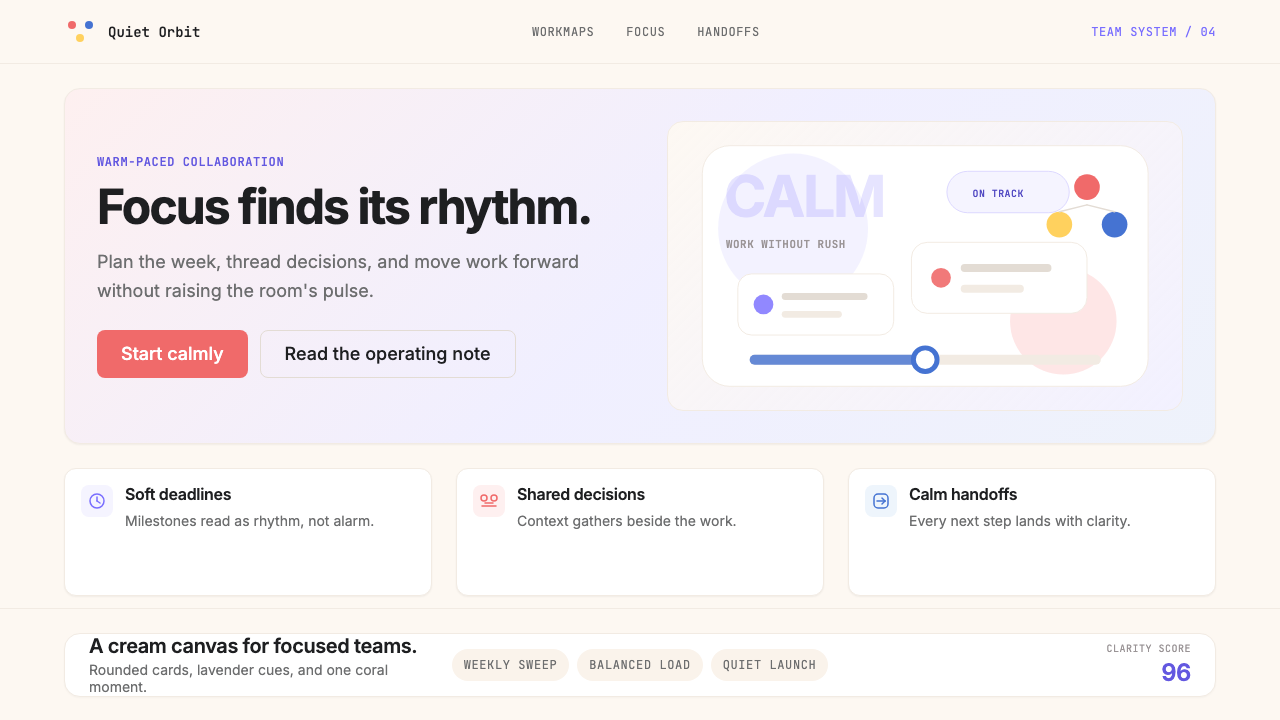 AsanaCalm productivity breathes. Cream canvas, lavender panels, coral-blue-yellow…
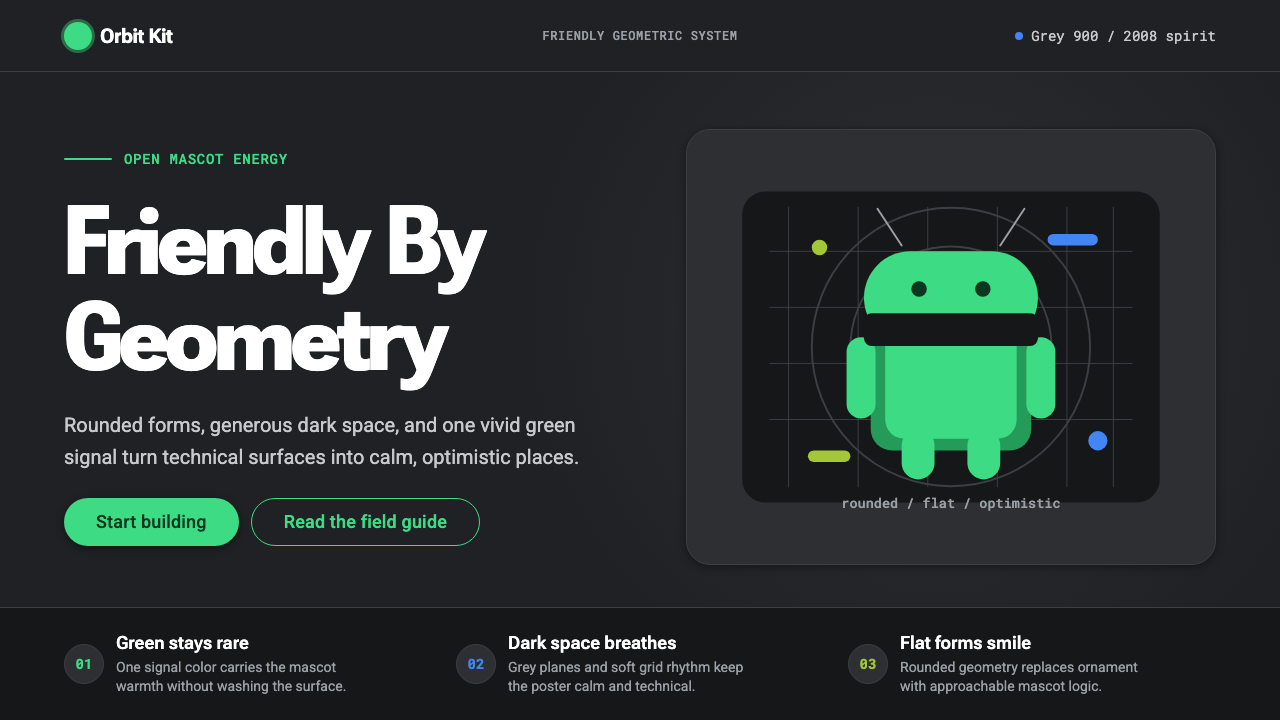 Android Bugdroid GreenFriendly tech, reduced to geometry. Vivid green pops from Grey 900 and rounde…
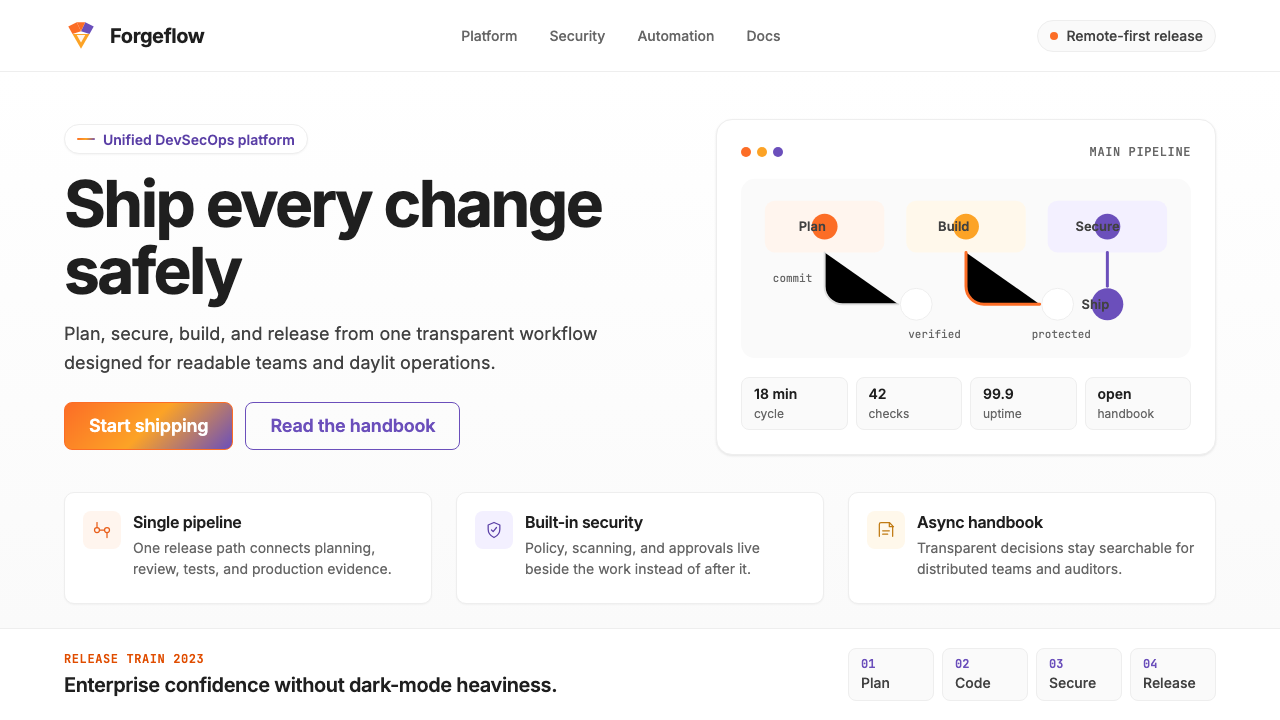 GitLab 2023DevOps in daylight. Tanuki orange-to-purple gradient, Inter, warm enough for…
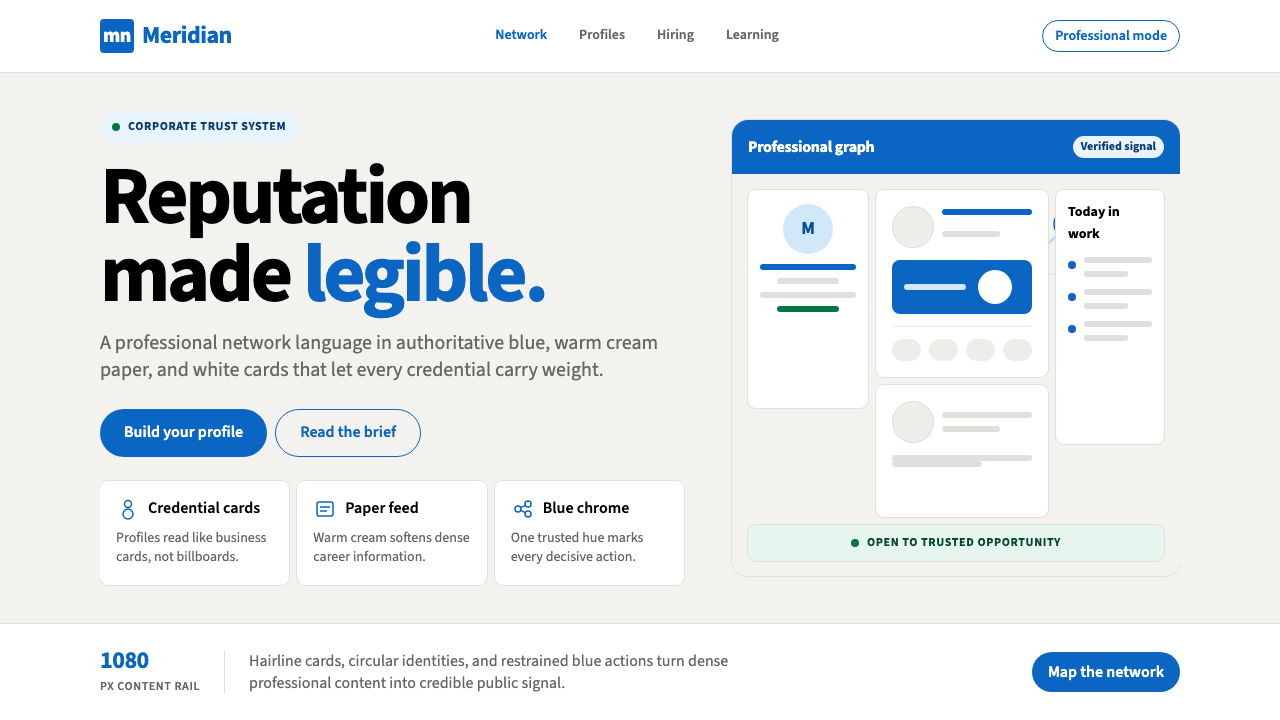 LinkedInCorporate trust, digitized. Authoritative blue frames white cards on warm cre…
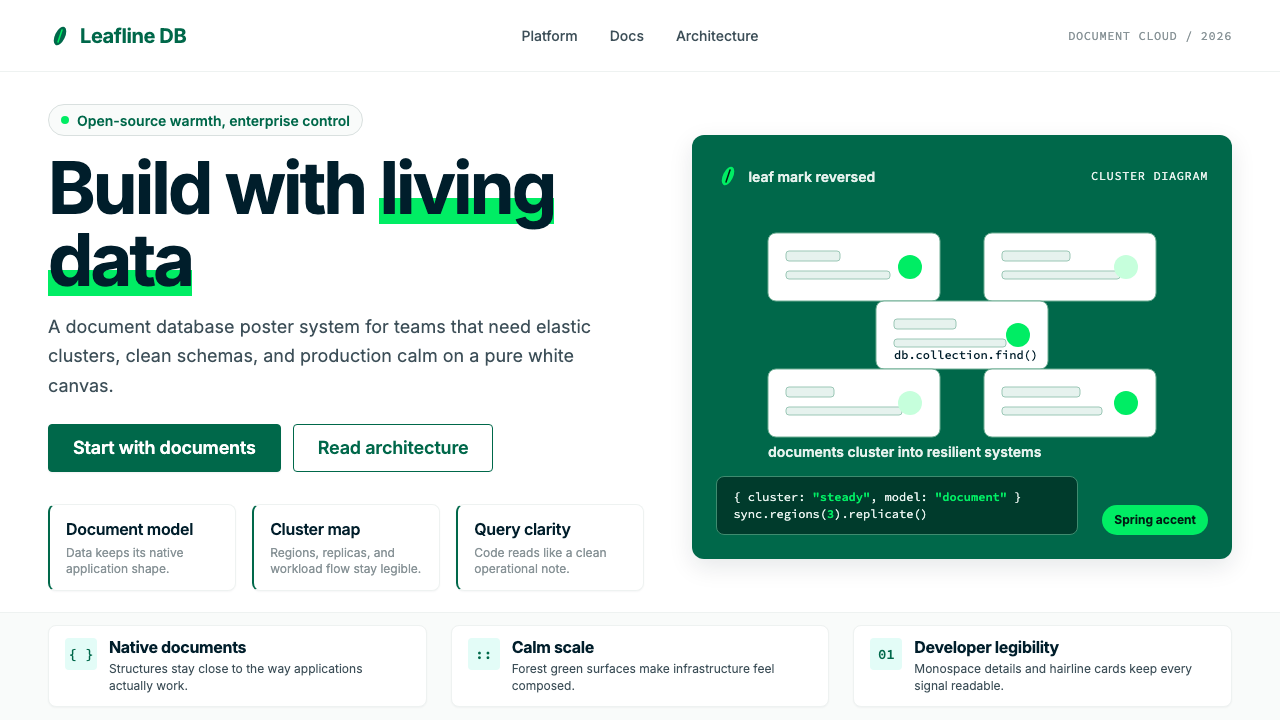 MongoDB Leaf GreenDisciplined green, open warmth. Forest leaf forms and Spring accents breathe…
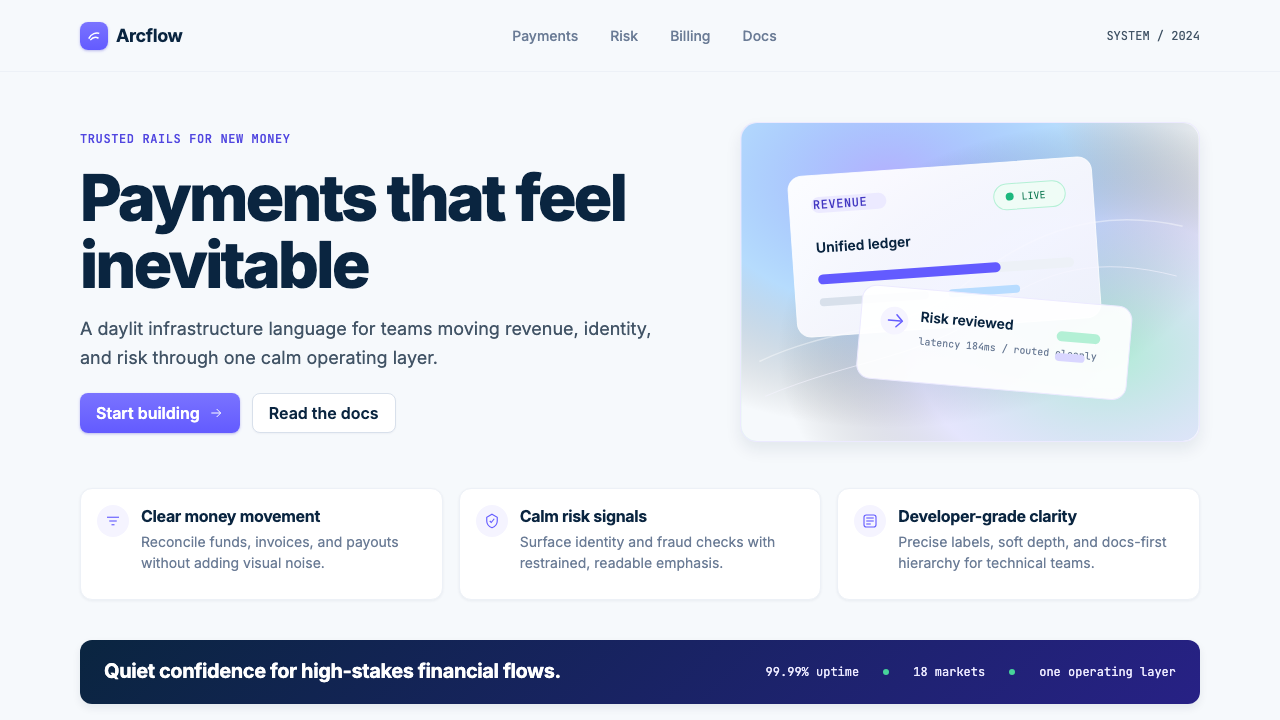 Stripe 2024Trust earns its glow. Indigo mesh, neutral type, and whisper cards float on n…