What is Wired Magazine (1993)?
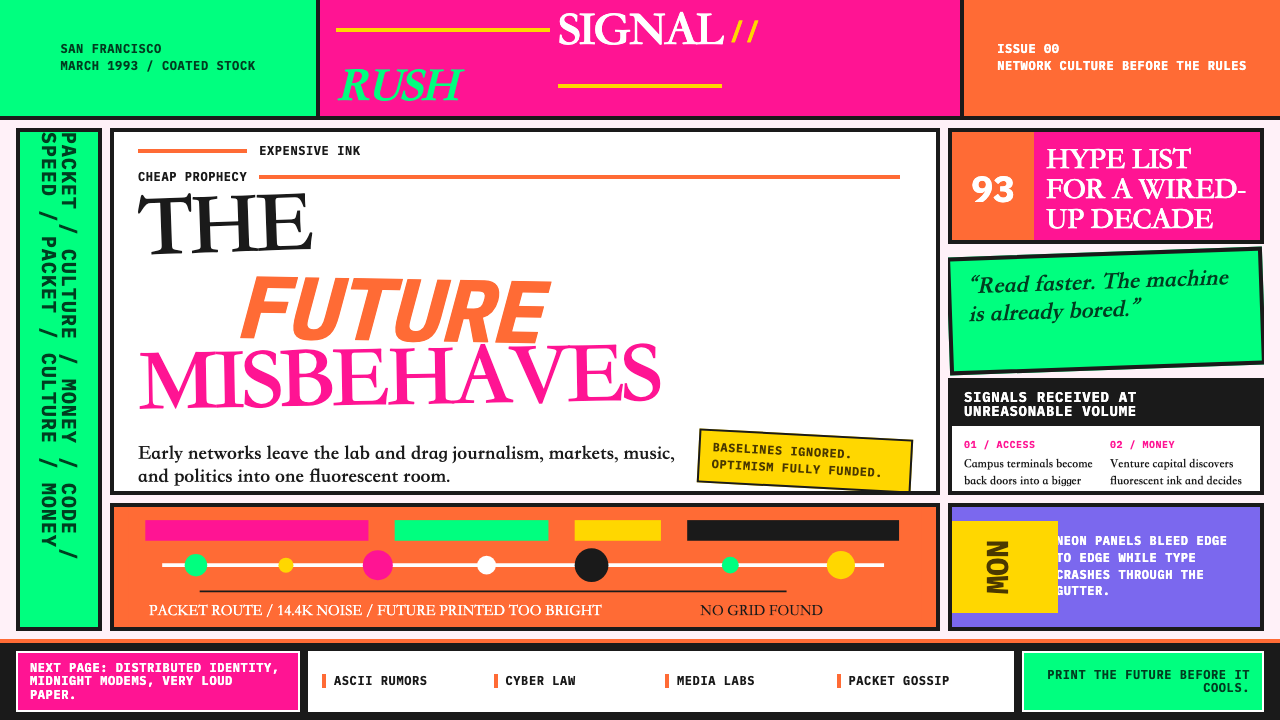
Wired 1993 was the typographic earthquake that announced the digital age in print — neon ink, broken grids, and four mismatched typefaces crammed onto a single spread.
Wired Magazine (1993) in brief
Wired Magazine 1993 is a design style born from the founding issues of Wired, the San Francisco technology publication that launched in January 1993. Creative director John Plunkett and design director Barbara Kuhr built a visual language that treated every page spread as a neon-soaked collision: fluorescent orange layered on hot pink, headlines fragmented across four mismatched typefaces, body copy rotated off the baseline, and columns that broke mid-word. The aesthetic read like the early internet looked — chaotic, dense, and radically optimistic about digital futures.
The style occupies a unique position in design history as the moment print journalism attempted to visually embody the energy of networked computing before the web had a face of its own. It fused the raver underground's fluorescent palette with the ambitions of Silicon Valley venture capital, landing on expensive coated stock with the confidence of a manifesto. Every editorial convention — legibility, restraint, hierarchy — was interrogated and frequently discarded. The result was simultaneously exhausting and electric.
Visually, Wired 1993 is defined by excess as a deliberate philosophy. Color is maximal: neon Pantone inks bleed edge to edge with no safe zone or breathing margin. Typography is confrontational: display text arrived in stacked, colliding, and rotated configurations that treated the headline as an image rather than information. Photographic imagery was processed into halftone extremes or posterized into flat zones of shrieking color. The style is not chaos without intention — it is controlled overload, the visual equivalent of a fiber-optic data surge.

Where does Wired Magazine (1993) come from?
Wired Magazine was founded by Louis Rossetto and Jane Metcalfe, who conceived it as the Rolling Stone of the digital revolution — a publication whose form would embody the content. Their pitch to investors described a magazine for the people redesigning the world with digital tools. When the first issue appeared in January 1993, it immediately established that this would not look like any magazine that had come before. Rossetto hired Plunkett and Kuhr, partners in a small San Francisco design firm, to realize that vision.
John Plunkett arrived at the project with experience in information design and a conviction that editorial design could function as a form of argument. Barbara Kuhr brought a sensibility shaped by late-1980s West Coast underground publishing, where Pantone fluorescents and photocopier-warped type had already begun to challenge the conventions of print. Together they drew on a specific set of influences: the chaotic typographic experiments of Émigré magazine, which had been pushing digital type tools to their limits since the mid-1980s; the raw, saturated aesthetics of the UK rave scene's flyer culture; and the layered visual density of Mondo 2000, the Bay Area counterculture publication that had preceded Wired in covering cyberpunk and digital culture.
The technical context shaped the design in ways that are easy to overlook in retrospect. In 1993, digital typesetting and page layout software — primarily QuarkXPress and early PostScript — gave designers the ability to do things that would have been prohibitively expensive to achieve with traditional phototypesetting: rotating type to arbitrary angles, precisely overlapping elements at any scale, mixing typefaces freely without physical constraint. Wired's designers used these tools not to achieve the clean modernist layouts that other publications were pursuing with the same software, but to push toward maximal complexity. The digital crash of forms was enabled by digital tools.
Erik Spiekermann, the German type designer and typographic systems thinker, served as a typographic consultant to Wired in its early years. His involvement is significant because it suggests that Wired's apparent chaos was more deliberately constructed than its surface energy implied. Spiekermann's work has always been grounded in systematic thinking about type hierarchy and legibility — his presence at Wired indicates that even the most anti-systematic-looking pages were the product of considered decisions about what to break and how far to push each break. The result was a style that influenced an entire decade of editorial, interactive, and brand design, visible from MTV idents to web browser interfaces of the late 1990s.
What defines the Wired Magazine (1993) look?
Fluorescent Color Overload
The Wired 1993 palette is built around Pantone fluorescent inks — the kind that glow with an almost physical intensity under bright light. Hot pink, electric orange, acid yellow-green, and cyan are used not as accents but as dominant fields, layered directly on top of one another with no neutral ground to mediate the collision. Color is used at maximum saturation throughout, with combinations chosen for maximum visual heat rather than harmonic relationship. The effect is intentionally aggressive: the eye cannot rest anywhere because nowhere is safe.
Typographic Collision
Headlines in Wired do not sit; they collide. A single display treatment might combine a condensed grotesque, an italic serif, a decorative face, and a geometric sans in the same line — each at a different scale, some rotated, some set in color, some reversed out of a color field. Type is treated as image material with the same compositional rights as a photograph or an abstract shape. Body text occasionally inherits the same treatment: columns set at slight angles, copy that wraps around intrusions of color, line breaks that prioritize visual rhythm over reading flow.
Edge-to-Edge Bleed
Margins in Wired 1993 are treated as obstacles to be eliminated rather than breathing room to be preserved. Color fields bleed to all four edges; photographs extend to the gutter and beyond; type runs to within a sliver of the trim. The rejection of margin is both visual and ideological — it signals a rejection of the conservative editorial restraint that characterizes legacy print publishing. There is nowhere outside the design; the page is always completely occupied.
Halftone and Posterization Extremes
Photographic images in Wired 1993 are rarely reproduced naturalistically. They are pushed to extremes: enlarged to the point where the halftone dot pattern becomes a visible graphic element, reduced to high-contrast silhouettes, or posterized into two or three flat zones of saturated color. This treatment removes photography's claim to neutral documentation and forces it to participate in the same aggressive graphic language as the typography and color fields around it. The image becomes another surface rather than a window.
Broken Grid and Off-Axis Rotation
Wired uses underlying column grids — the editorial discipline is not entirely abandoned — but elements routinely escape them. Text blocks sit at angles to the baseline grid. Dividing rules bisect columns diagonally. Pull-quotes land at forty-five degree rotations. The grid serves as a structure to violate rather than a structure to inhabit: its presence can be inferred from the violations, but the violations are always the point. This controlled disobedience distinguishes Wired from purely random layouts and is what makes the style reproducible.
Density as Hospitality
Where most editorial design uses white space to signal importance and guide attention, Wired 1993 treats maximum density as a form of generosity — the assumption that the reader is hungry, capable, and wants everything at once. Sidebars compete with body text which competes with infographics which compete with pull-quotes, all within the same spread. Nothing is subordinated into invisibility. The result is a reading experience that rewards sustained attention and repeated visits, behaving more like a web page than a magazine spread — which, in 1993, was precisely the point.
Neon as Ideology
The fluorescent palette is not merely decorative — it carries an ideological charge. In 1993, neon color signaled youth culture, rave scenes, urban nightlife, and the energy of subcultural communities that had not yet been absorbed by mainstream media. Wired's use of these colors was a claim of kinship with those communities and a rejection of the earth tones, muted palettes, and conservative color systems of established print media. The neon said: this is not the Wall Street Journal; this is not Time magazine; this is something new from a new coast of a new culture.

Who shaped Wired Magazine (1993)?
Plunkett served as creative director of Wired from its founding in 1993 through the late 1990s and is the primary architect of the style's visual language. Working with his partner Barbara Kuhr, he developed the approach of treating each spread as an independent design experiment rather than a module in a consistent system. Plunkett's background in information design meant that even his most chaotic-looking pages had underlying structural logic — the apparent disorder was the product of deliberate decision-making about which conventions to explode and how. He received numerous design awards and helped establish Wired as a defining publication of its decade.
Kuhr co-directed Wired's design alongside Plunkett and brought a sensibility shaped by West Coast underground publishing. Her contribution was crucial in establishing the fluorescent palette and the magazine's approach to typographic rule-breaking as a sustained editorial philosophy rather than an occasional gesture. Kuhr's influence is most visible in the magazine's use of color as the primary structural signal — the way that a specific neon ink could define a section, establish a voice, or mark a transition in a way that overrode conventional hierarchy. Her partnership with Plunkett produced one of the most distinctive editorial design collaborations of the decade.
Rossetto co-founded Wired with Jane Metcalfe and articulated the editorial vision that the magazine's design was built to serve. His conviction that digital technology was producing the most significant cultural shift since the Renaissance gave the design team license to be as radical as they wished — the content demanded a form equal to its ambitions. Rossetto's editorial voice was maximalist, utopian, and contentious, and those qualities shaped the visual culture of the publication directly. He left Wired in 1998 when the magazine was sold to Condé Nast, and the design began its gradual evolution toward more conventional editorial standards.
The German type designer and information design theorist served as a typographic consultant to Wired in its early years. Spiekermann is best known for systematic, legibility-focused work — FF Meta, the German postal system's typeface family — which makes his involvement with Wired's deliberately anti-legibility aesthetic interesting and somewhat paradoxical. His presence at the magazine suggests that the typographic chaos was more intentional than instinctive: the decision about exactly how far to push illegibility, which typeface combinations would still function as communication and which would collapse entirely, required the judgment of someone who understood the rules being broken.
Though not directly associated with Wired, VanderLans and Licko — founders of Émigré magazine and the Émigré type foundry — provided the typographic vocabulary and the conceptual permission that Wired's design built upon. Émigré, which began publication in 1984, had spent nearly a decade demonstrating that digital type tools could produce radical, expressionist letterforms and layouts that were incompatible with traditional typesetting standards. By the time Wired launched in 1993, Émigré typefaces and Émigré-adjacent experimental typography had become the signal vocabulary of an entire generation of designers who wanted to do something that looked like the digital age felt.
How do you use Wired Magazine (1993) today?
Wired 1993 is among the most context-sensitive styles in contemporary design. Its defining qualities — fluorescent color overload, typographic collision, maximum density — are not universally applicable and require a clear strategic justification before deployment. The style works best when the product, brand, or message is explicitly positioned at the intersection of technology, culture, and youthful energy, and when the audience has sufficient visual literacy to read deliberate rule-breaking as intentional rather than incompetent.
For presentation slides, Wired 1993 works powerfully on cover and section-divider slides but demands restraint on content slides. A cover built in this style uses a single dominant fluorescent color as a full-bleed background field, with headline type in a contrasting neon — not black, not white — set at maximal scale, colliding with a secondary smaller typeface in a complementary color. Section dividers can echo this energy at reduced intensity. Content slides, however, must pull back significantly: dense information cannot compete with maximum visual noise. The approach for data slides is to adopt the color system — using the fluorescent palette to differentiate data series — while applying it within a clean grid with sufficient breathing room around each element.
For web interfaces and dashboards, the style translates most effectively as a signal system rather than a total environment. Using one fluorescent color as the primary interactive accent — for buttons, alerts, active states, and hover effects — against a near-black or very dark background creates the visual energy of Wired 1993 without the cognitive overload of full fluorescent fields. Navigation and pricing pages benefit from the style's hierarchy-through-collision approach: a pricing tier name at maximum scale in a neon color, with feature lists in a much smaller neutral typeface, creates the kind of visual contrast that guides attention without formal rules of proportion.
For editorial and marketing work — brand campaigns, event communications, launch announcements — Wired 1993 is most effective when used in short bursts of high intensity. A poster or social card in this style can sustain full fluorescent overload because the viewing time is short and the goal is immediate attention capture. A long-form article or multi-page report cannot, because the sustained density becomes fatiguing. For editorial applications, the practical approach is to use the style's palette and typographic aggression for chapter openers, pull-quotes, and section headers, while reverting to clean readable type for body text. The contrast between the intense moments and the quiet passages actually amplifies both.
The most common mistake when applying Wired 1993 is treating it as a color problem rather than a structural one. Slapping fluorescent colors onto a conventional grid produces neither the energy of the original nor a functional layout — it produces visual noise without the controlled disorder that makes the style legible. Successful application requires committing to the typographic logic: actually setting type at competing scales, actually letting elements overlap, actually eliminating margins where the composition calls for it. The second most common mistake is applying the style to products or audiences where its ideological associations — youth, disruption, techno-optimism — are misaligned with the actual brand values. Wired 1993 announces radicalism; if your product is not prepared to own that claim, a different style will serve it better.

Wired Magazine (1993) — FAQ
Is Wired 1993 style the same as 1990s grunge typography?
They share roots but are distinct. Both emerged from the same moment of digital type experimentation and drew on Émigré and West Coast underground publishing. Grunge typography — associated with designers like David Carson and publications like Ray Gun — tends toward destroyed, deconstructed, and illegibility-maximizing treatments with a rawer, more analog texture. Wired 1993 is more fluorescent, more information-dense, and more explicitly tech-optimist in its ideology. Grunge typography wears nihilism; Wired wears utopianism. The color palettes are also different: grunge favors distressed tones and desaturated treatments; Wired favors Pantone neons at full saturation.
Can this style work for a dark-background digital product?
Yes, and it may be the most natural contemporary translation of the original. The original Wired ran fluorescent inks on white coated stock, but the fluorescent palette — electric pink, neon green, acid yellow — actually reads with even more intensity against dark backgrounds, which approximate the black of a screen at night. A dark Wired 1993 interpretation works best when it commits to one or two fluorescent accents against the dark field rather than attempting to replicate the full color overload of the printed original. The typographic collision can be fully preserved regardless of background choice.
How do you make this style readable without losing its character?
The key is separating the decorative layer from the information layer. In Wired's original pages, the fluorescent color fields and typographic collisions functioned as a visual environment that attracted and retained attention; the actual editorial content was often set in body text that, while unconventionally placed, was internally readable. In contemporary applications, the same principle applies: use the style's fluorescent colors and collision typography for display elements — headlines, labels, section markers, call-outs — and reserve a functional, high-contrast typeface for any text that needs to be read completely. The reader's eye learns quickly to navigate between the expressive layer and the informational layer.
Why did Wired eventually move away from this design style?
Wired's visual language evolved gradually after the magazine was acquired by Condé Nast in 1998 and Plunkett and Kuhr departed. The full fluorescent overload style was the product of a specific moment: a small, independent publication with a radical editorial mission, operating in a pre-web media landscape where print had to carry the full energy of a movement that had no other visual home. As the web matured and established its own visual vocabulary, the urgency of Wired's original visual argument diminished. Commercial publishing pressures at Condé Nast also favored legibility, advertiser-friendly layouts, and newsstand readability over avant-garde experimentation. The evolution was not a failure of the style but a change in context.
What kinds of projects should avoid this style entirely?
Any project where the primary user experience goal is calm, trust, or authority should avoid Wired 1993 entirely. Financial services, healthcare, legal platforms, enterprise software, and products serving older demographics all depend on visual environments that signal stability and competence — qualities that Wired 1993's visual aggression actively undermines. Similarly, luxury brands whose positioning depends on restraint and quiet confidence will find the style's maximalism in direct contradiction with their values. The style is also poorly suited to long-form reading environments: a full book, a long research report, or a multi-chapter course presented entirely in Wired 1993 would be functionally exhausting. Short, high-impact, single-goal contexts are where it excels.
Related design styles
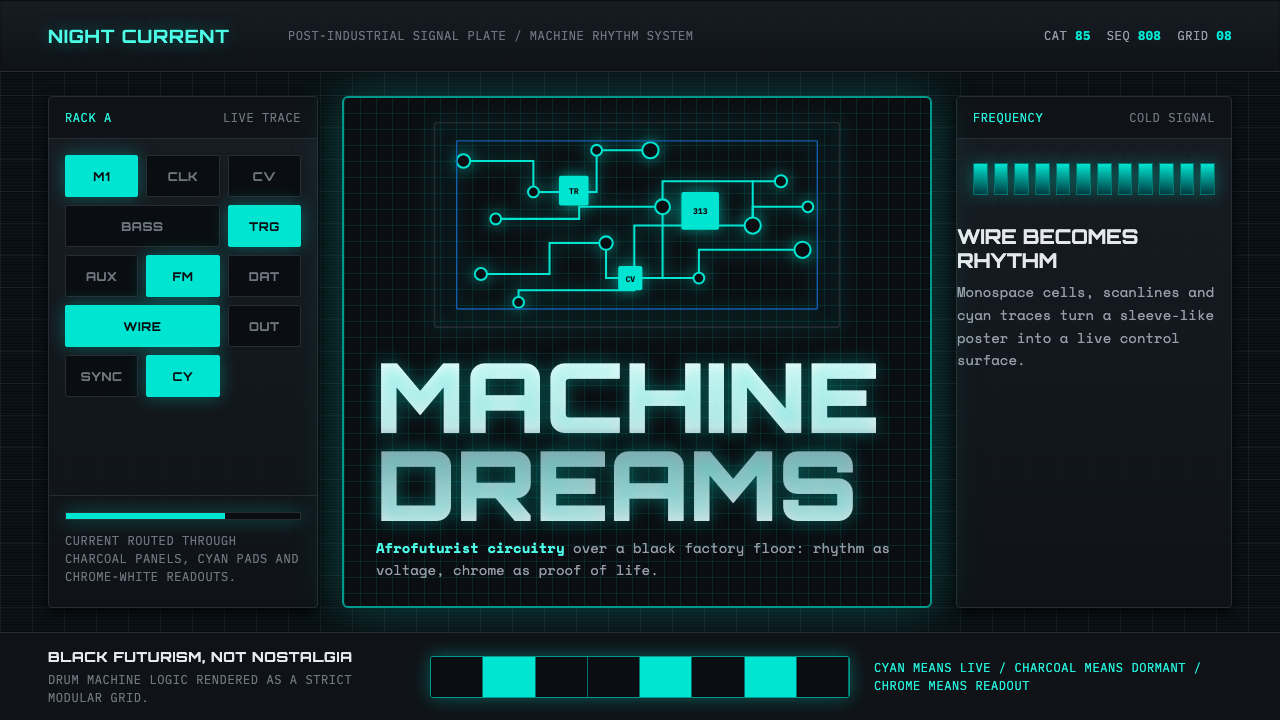 Detroit TechnoCold machines dream. Electric cyan circuits and chrome display type lock to a…
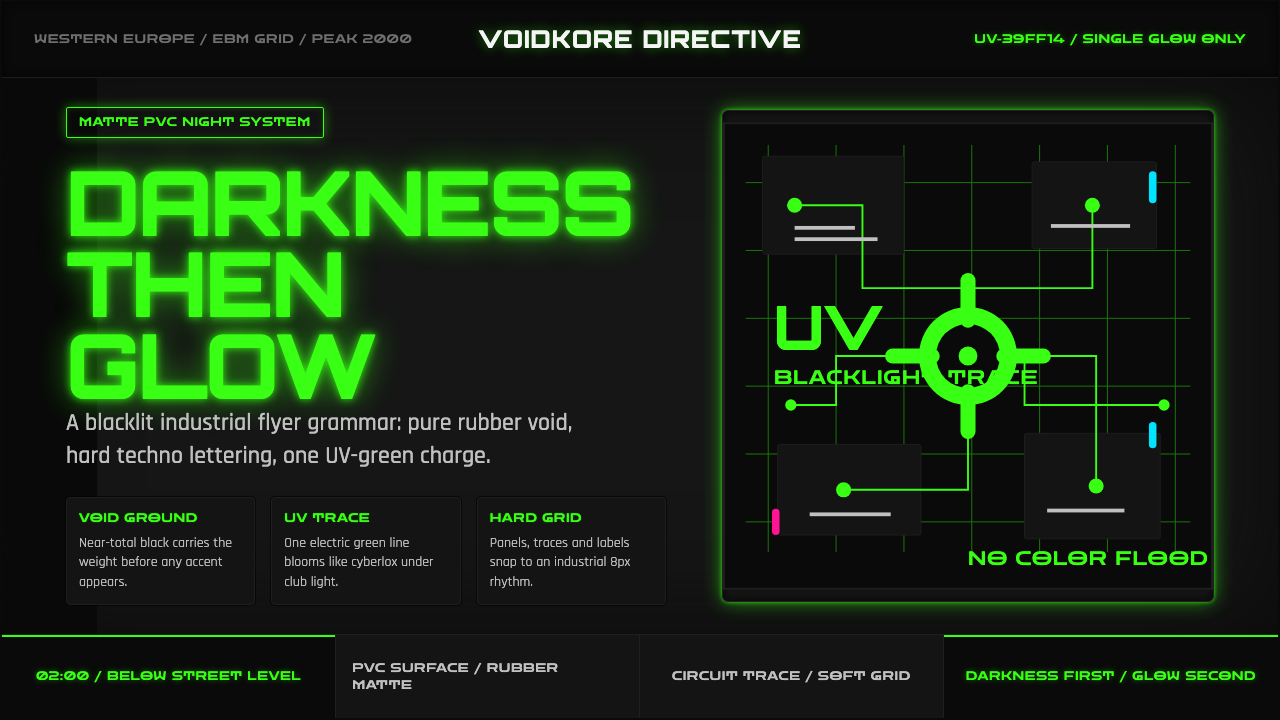 Cybergoth RaveDarkness rules. Pure black PVC is split by one UV-green circuit glow.
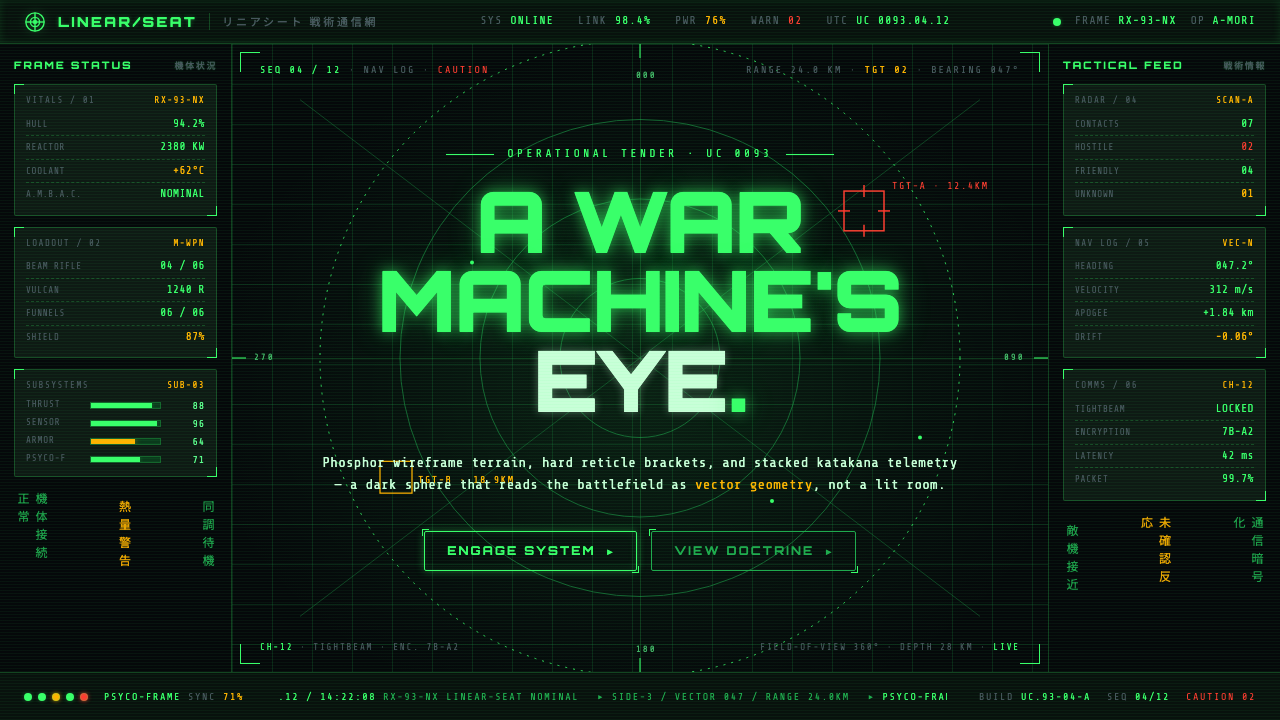 Gundam Universal Century UIA war machine's eye. Phosphor wireframe and katakana telemetry glow inside a…
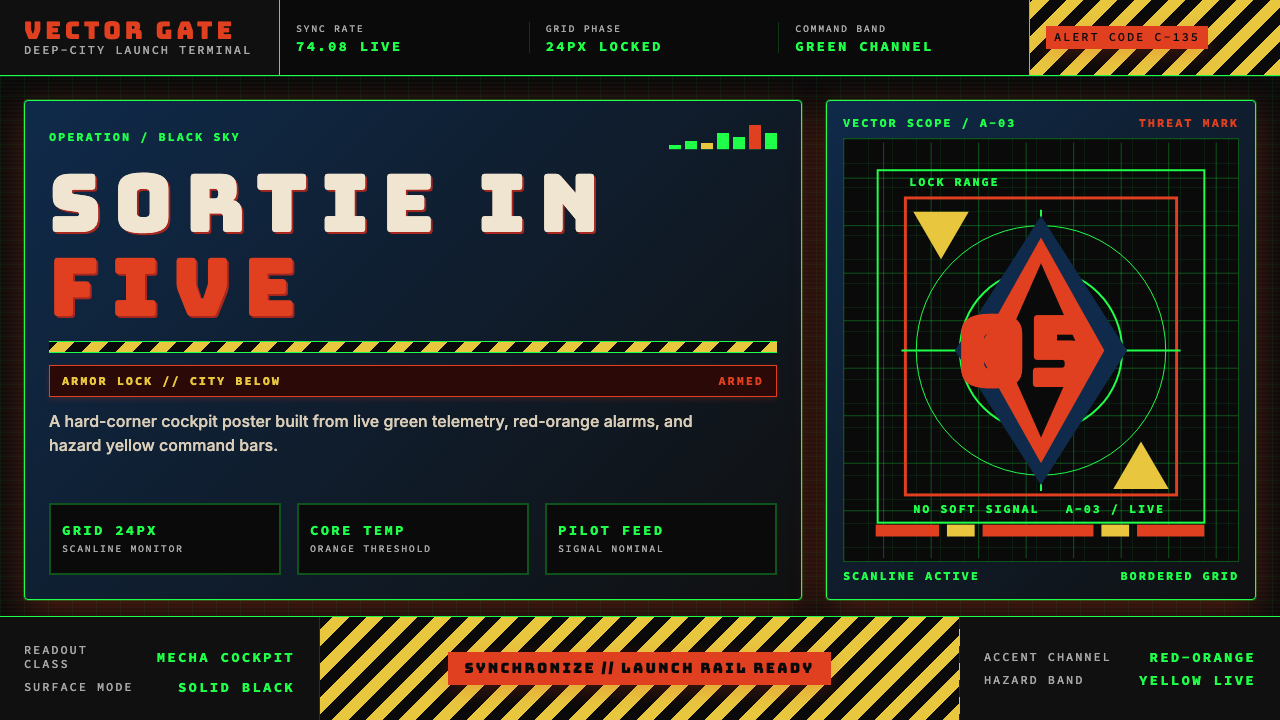 Neon Genesis EvangelionCockpit dread at launch. Tech-green grids, red-orange alarms, and hazard yell…
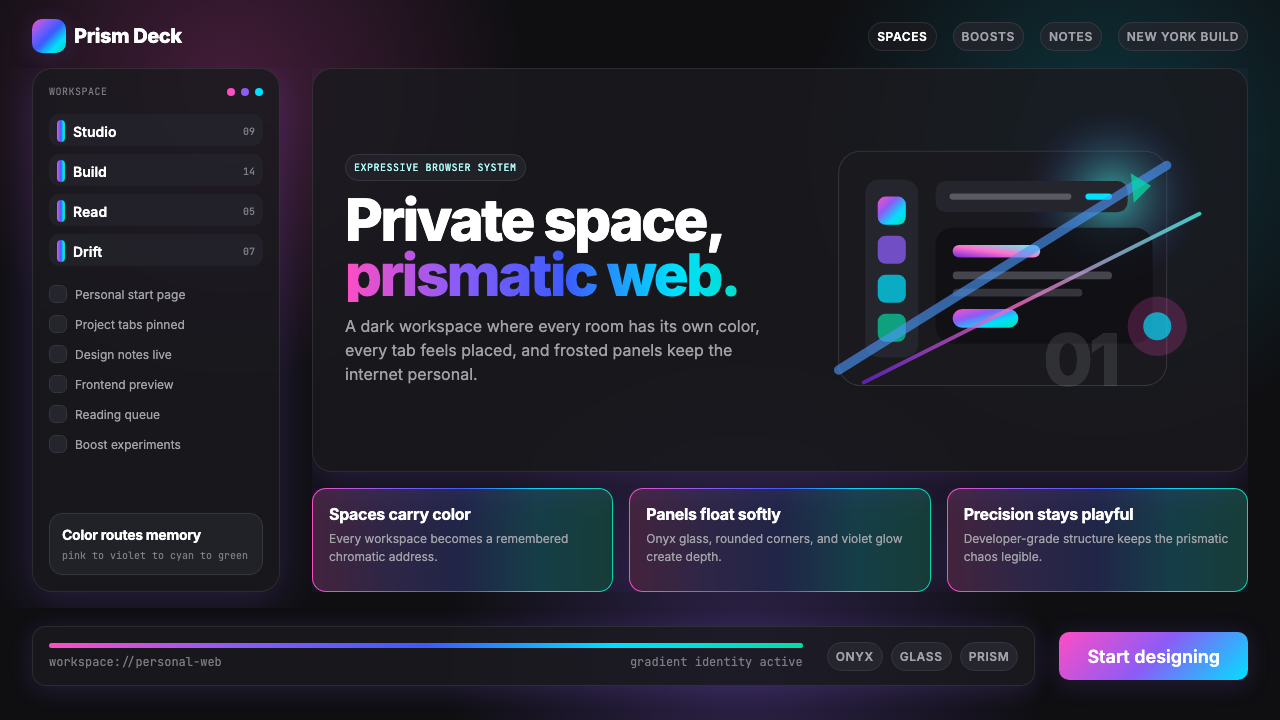 Arc Browser Prismatic (2023)Color is architecture. Pink-violet-cyan ribbons glow over onyx glass and roun…
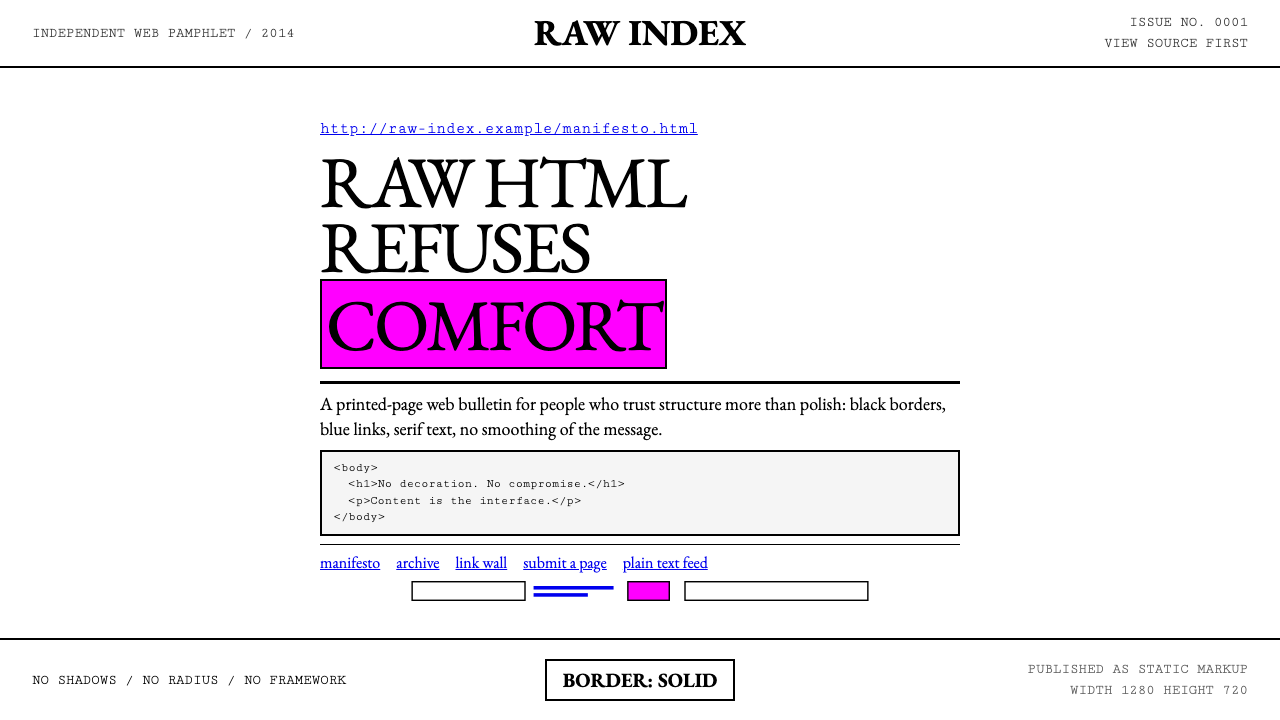 Brutalist Web 2014Browser defaults, weaponized. Times New Roman, electric-blue links — raw HTML…