What is Vietnamese Bamboo Basketry?
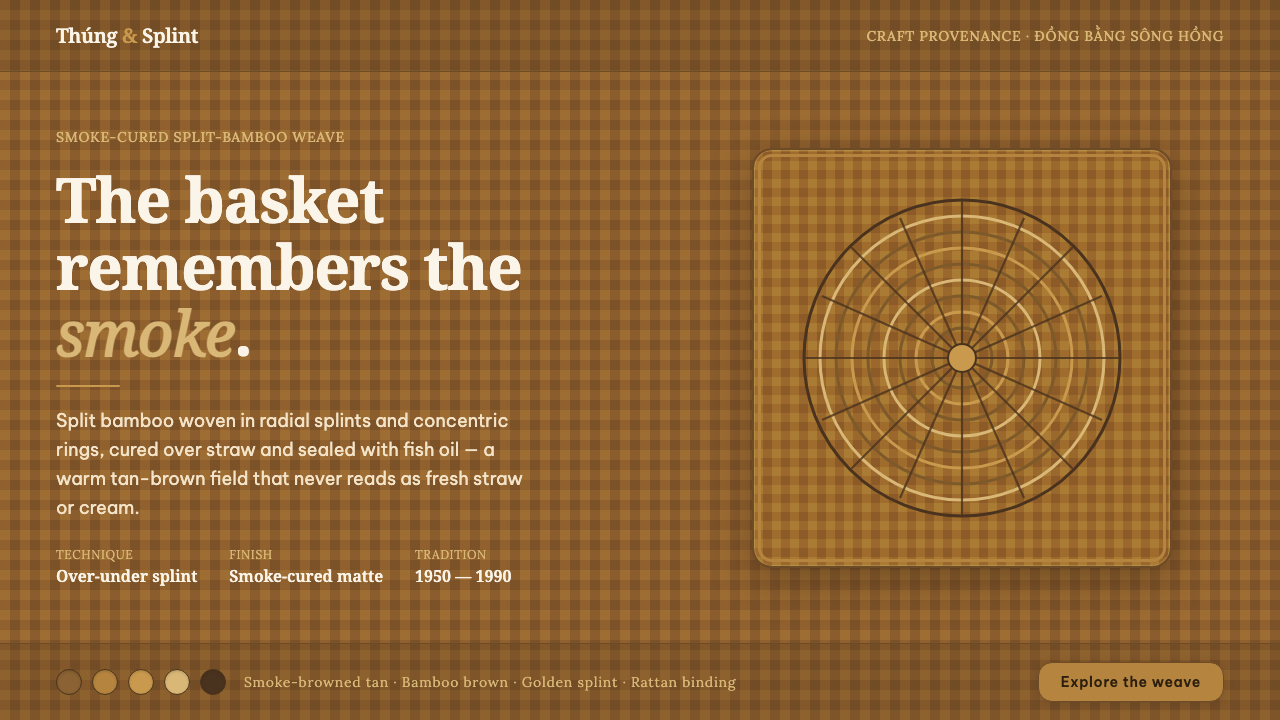
Vietnamese Bamboo Basketry begins where fresh bamboo ends: in the smoke-darkened weave, the radial discipline, and the quiet evidence of a hand-made object built to be used.
Vietnamese Bamboo Basketry in brief
Vietnamese Bamboo Basketry is a craft-derived visual language based on split-bamboo splints woven into dense radial and over-under structures. Its references are the thúng baskets and conical nón-lá frames made in craft villages across the Red River and Mekong deltas. Rather than treating bamboo as a pale, lightweight rustic material, this system centers the bamboo after it has been smoked with straw and bamboo leaves, then sealed with fish oil: deeper, warmer, and visibly marked by making.
The style is defined by a warm tan-brown woven ground, concentric construction rings, and a matte surface that suggests hand pressure rather than industrial finish. Lines do not appear as abstract decoration. They behave like splints: they cross, tighten, fan outward from a center, or follow the rim of a vessel. The visual field should feel assembled from material direction and tension, not printed with a generic basket pattern.
Its central contrast is between structure and softness. The geometry is exact enough to imply a basket, hat frame, or binding technique, yet the surface remains irregular in the small ways that make natural material convincing. A successful application feels smoke-cured, woven, and tactile. It never drifts toward pale fresh straw, creamy neutral minimalism, glossy tropical ornament, or a clean machine-made lattice.
Where does Vietnamese Bamboo Basketry come from?
This visual tradition belongs to Southeast Asia, specifically to Vietnam’s Red River and Mekong delta craft villages. The source material identifies its most active period as 1950–1990, while also describing it as a living tradition rather than a closed historical style. That distinction matters: the language is not a museum reconstruction. It comes from practical objects and continuing craft knowledge, shaped by the repeated work of splitting, arranging, weaving, smoking, binding, and sealing bamboo.
The thúng basket provides one of the clearest structural references. Its woven body makes radial order legible: splints move from a center, meet concentric reinforcement, and hold together through repeated over-under crossings. The visual result is neither purely linear nor purely circular. It is a field in which straight material is persuaded into curved form, allowing construction to become the image.
The nón-lá conical-hat frame contributes a second essential idea: the ring as a framework rather than a border. Concentric rings organize the cone, guide the placement of material, and make a light object hold a stable silhouette. In digital work, this suggests that circular motifs should retain a constructive role. Rings should appear to support, gather, or organize information, rather than merely decorate an empty background.
The finishing process explains the style’s distinctive atmosphere. Bamboo splints are smoked with straw and bamboo leaves, then sealed with fish oil. This moves the surface away from the look of newly cut bamboo and toward a warm smoke-browned field. The resulting design language is not about brightness or freshness. It is about material that has passed through heat, use, and preservation, and therefore carries a subdued depth that a pale straw palette cannot reproduce.
What defines the Vietnamese Bamboo Basketry look?
Smoke-Cured Ground
The base is a mid warm tan-brown field with the depth of bamboo that has been smoked and sealed, not newly cut. It should feel dry, subdued, and absorbent rather than bright, creamy, or polished. This ground carries the whole system: once it becomes pale or overly yellow, the connection to smoke-cured bamboo disappears and the style turns into generic rustic decor.
Radial Construction
Radial lines should imply splints travelling outward from a point of origin, as in a basket base or conical frame. Their purpose is to establish direction, gather attention, and suggest held tension. The center need not be perfectly exposed, but the composition should make clear that its lines belong to one constructed system rather than to a decorative sunburst.
Concentric Rings
Concentric rings are the style’s organizing framework. They recall reinforcement, rim binding, and the structural stages of a nón-lá frame. Use them to enclose a focal element, segment information, or give a field a sense of assembled depth. They should vary through material presence and spacing rhythm, not through glossy effects or decorative complexity.
Over-Under Weave
The crossing pattern is tight and purposeful. One splint appears to pass above another, then below the next, creating an alternating rhythm that holds the field together. In a digital interpretation, this rhythm can be simplified, but it must preserve the sense of interlocking material. Repeated lines that merely overlap without a visible weave logic will look printed rather than made.
Matte Handwork
Surfaces should absorb light and retain small irregularities in direction, density, and edge behavior. The aim is not distressed nostalgia or exaggerated roughness. It is the quieter evidence that natural splints vary, that smoke settles unevenly, and that hand assembly does not produce a sterile repetition. Texture supports the structure; it should never obscure text or become the main spectacle.
Material Direction
Every linear element should appear to have a grain and a route. It may bend around a rim, fan from a center, cross a perpendicular run, or terminate where a binding would logically hold it. This directional discipline is what separates the system from a neutral grid. The viewer should sense that the pattern could be built from splints, even when it is used only as a restrained visual reference.
Who shaped Vietnamese Bamboo Basketry?
The craft is carried by Vietnamese artisans working with rattan and bamboo weaving traditions in delta villages. Their significance is not individual authorship in the modern design sense, but the accumulated practical knowledge behind splitting material, controlling weave tension, forming radial structures, and finishing surfaces so that useful objects endure.
Nature Craft Vietnam cooperatives represent the collective craft-village dimension of the tradition. Their presence points to basketry as a shared production culture rather than an isolated studio practice. In design terms, that collective origin encourages systems built from repeatable structural rules, material consistency, and variations that remain visibly human.
Nón-lá frame-makers are central to the conical construction that gives this style its ring-based logic. Their work makes the frame visible as an active support system: circular reinforcements determine the silhouette, guide the material, and preserve lightness without sacrificing order. This is the source of the style’s most useful circular motifs.
How do you use Vietnamese Bamboo Basketry today?
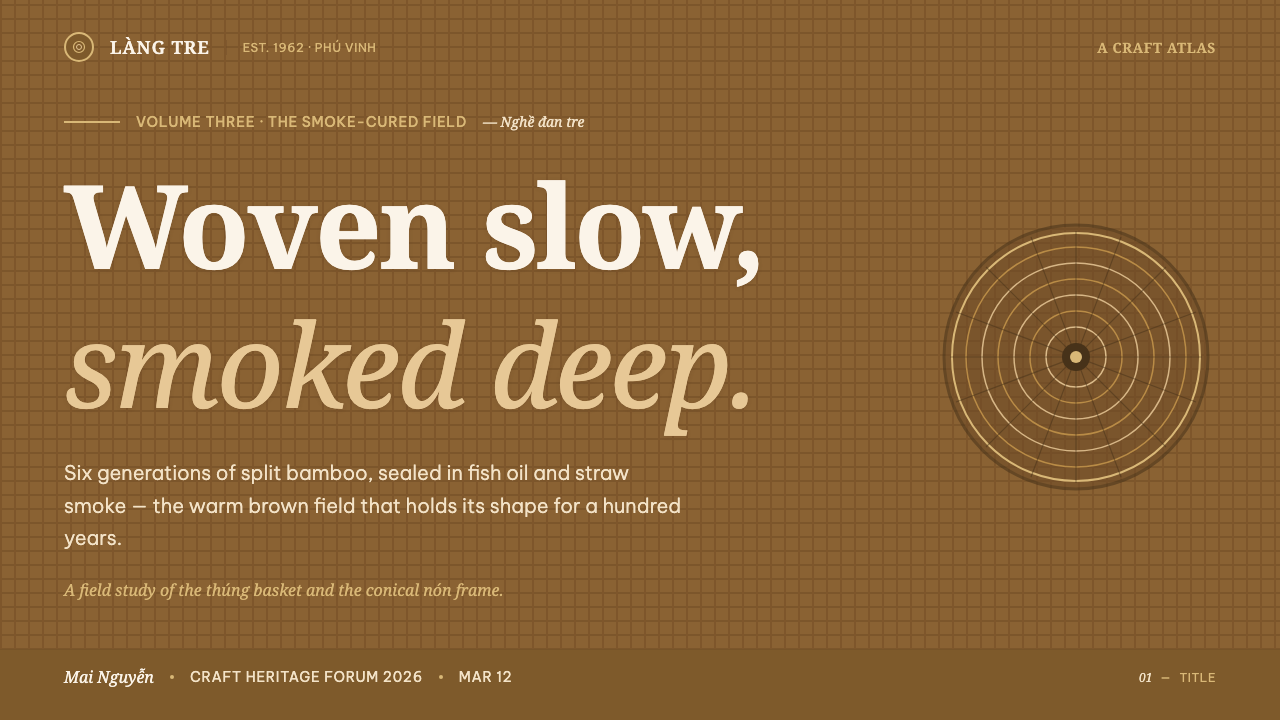
For presentation slides, use Vietnamese Bamboo Basketry to give a cover page a grounded, crafted authority. A smoke-browned woven field can hold a restrained title while a radial construction gathers toward an image, key word, or central mark. Keep the composition calm: one dominant structural gesture, room around the title, and texture that remains behind the information. The cover should feel like a surface made of material, not a photograph of a souvenir.
Content slides benefit from the style’s concentric and directional order. Treat a ring or woven field as a way to group ideas, frame a topic, or lead reading from one section to another. For data slides, use radial structures for relationships and concentric rings for nested categories or progress-like comparisons, while keeping labels clear against the matte ground. The craft reference should clarify organization, never turn a chart into an illustration that must be decoded before it can be read.
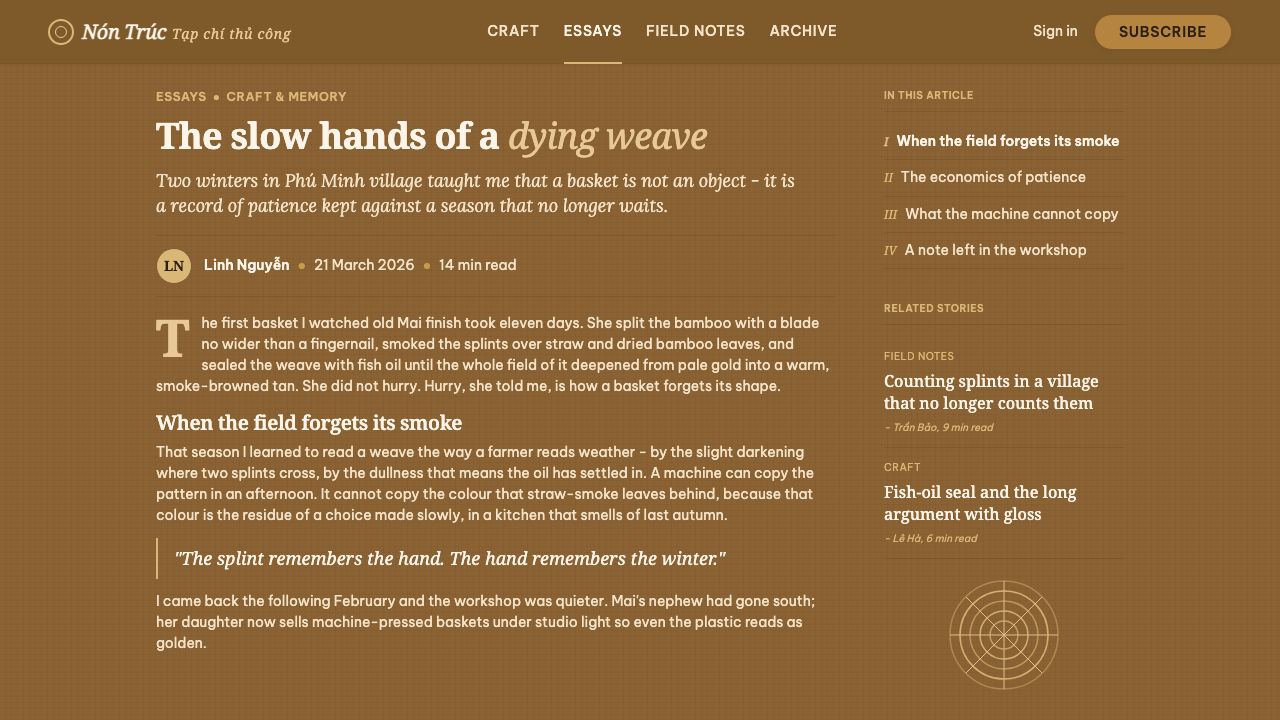
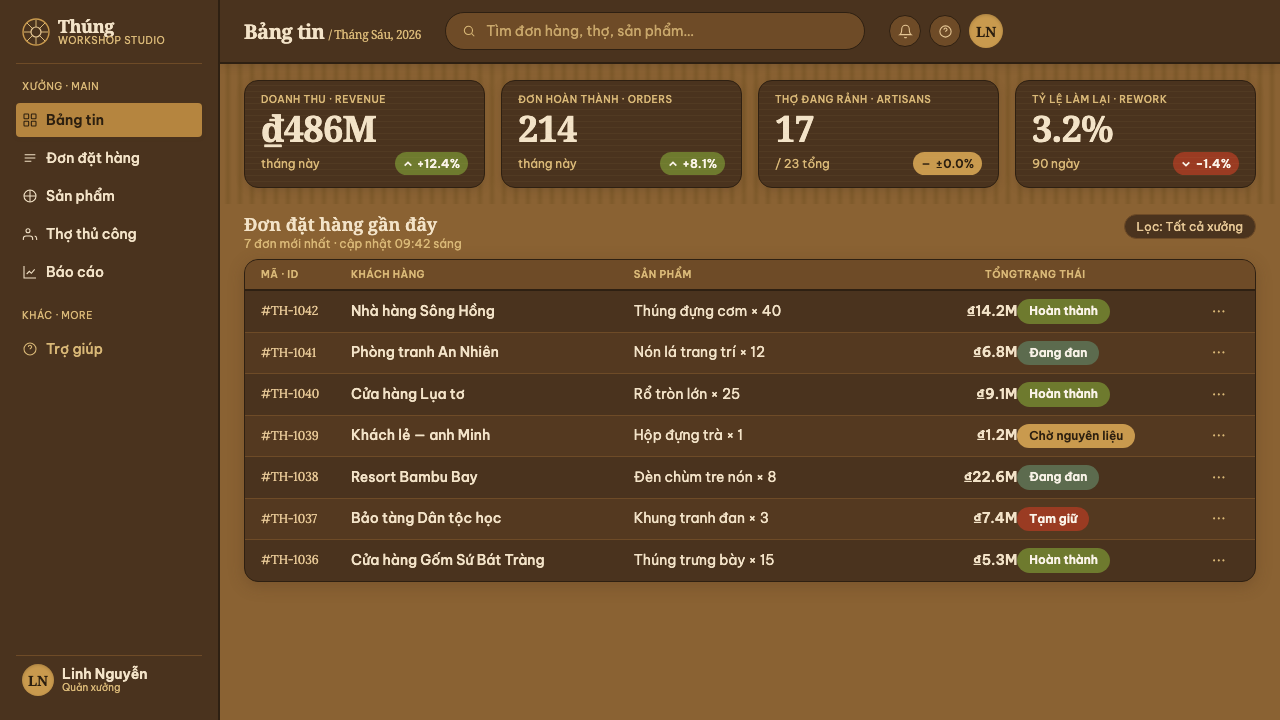
For web interfaces, the style suits dashboards, catalog views, and pricing or membership pages that need warmth without losing structure. The woven ground works best in controlled areas such as a hero panel, navigation band, summary card, or section divider, while denser information remains on quieter surfaces. Use rings to establish focal zones and crossings to signal relationships between modules. Interactions should remain plain and legible; the basketry language belongs in hierarchy, framing, and material atmosphere rather than in ornamental controls.
For editorial and marketing work, this system is especially effective when the subject involves craft, provenance, food culture, place, or objects made for daily use. A long-form layout can use woven strips as section boundaries, radial marks as pull-quote anchors, and smoke-browned fields for opening spreads or feature calls. Marketing compositions should allow the texture to breathe and pair it with direct language. The emotional effect is strongest when the copy is as unforced as the material reference.
A common mistake is to interpret the style as any pattern made from beige lines. That loses the defining conditions: smoke-cured warmth, radial construction, over-under logic, concentric reinforcement, and matte handwork. Another mistake is to use the weave everywhere, especially behind dense text or every interface component. The system becomes convincing when it is selective and structural. Let the woven field establish identity, then give information enough quiet space to remain useful.
Vietnamese Bamboo Basketry — FAQ
Is Vietnamese Bamboo Basketry simply a rustic or natural-material style?
No. Its identity comes from a specific construction logic: split-bamboo splints, radial organization, over-under crossings, concentric reinforcement, smoke curing, and a matte sealed surface. A generic rustic style may use pale straw, rough wood, or decorative foliage. Vietnamese Bamboo Basketry is more disciplined and more structural. It should make the viewer sense a formed basket or conical frame, even when no literal object is illustrated.
Why should the bamboo ground be smoke-browned rather than pale yellow?
Because the source material locates the character of the style in bamboo splints smoked with straw and bamboo leaves, then sealed with fish oil. The smoke-browned field is therefore not an incidental color preference. It communicates process, age, and material transformation. Pale fresh bamboo suggests a different stage of the material and removes the subdued depth that makes this system feel crafted rather than decorative.
Can the concentric rings be used as purely decorative motifs?
They can be visually subtle, but they should retain a structural reason. In the nón-lá frame, rings organize and reinforce the cone. In a digital composition, they work best when they frame a focal idea, group information, establish hierarchy, or suggest an assembled surface. Rings used only to fill empty space lose their connection to the craft and quickly become ornamental wallpaper.
How much handmade irregularity should a digital application show?
Enough to prevent sterile repetition, but not enough to interfere with reading or structure. Variation should appear in the quiet behavior of the weave: subtle shifts in splint direction, density, surface depth, and edge continuity. It should not become heavy distressing, visible damage, or chaotic noise. The reference is a durable object made by hand, not an abandoned object or a deliberately degraded texture.
What is the fastest way to make this style feel inauthentic?
Using pale fresh-straw tones, smooth glossy finishes, and a uniform lattice with no radial or over-under logic will break the system immediately. So will adding unrelated tropical decoration or treating every surface as a busy woven pattern. The style depends on restraint: a smoke-cured ground, a believable construction direction, and texture used as evidence of material rather than as visual noise.
Related design styles
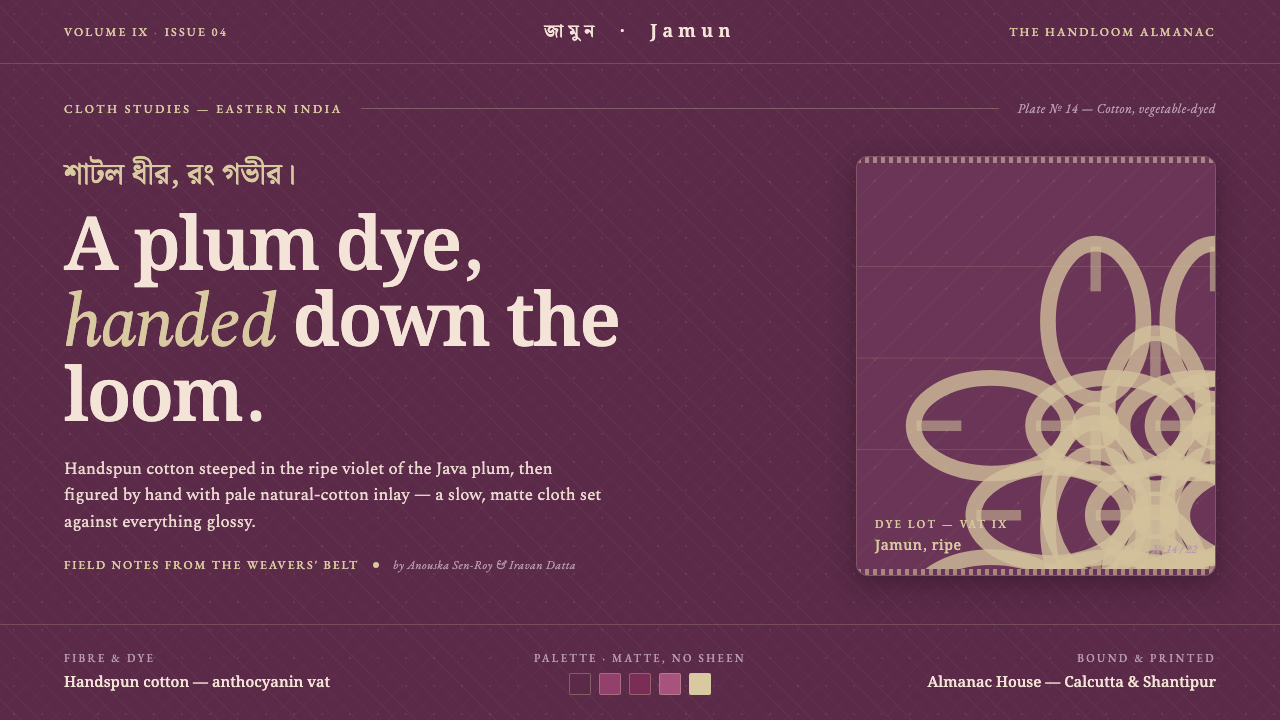 Indian Jamun Violet HandloomHandspun, never glossy. Jamun-violet dyed cotton figured with pale natural-th…
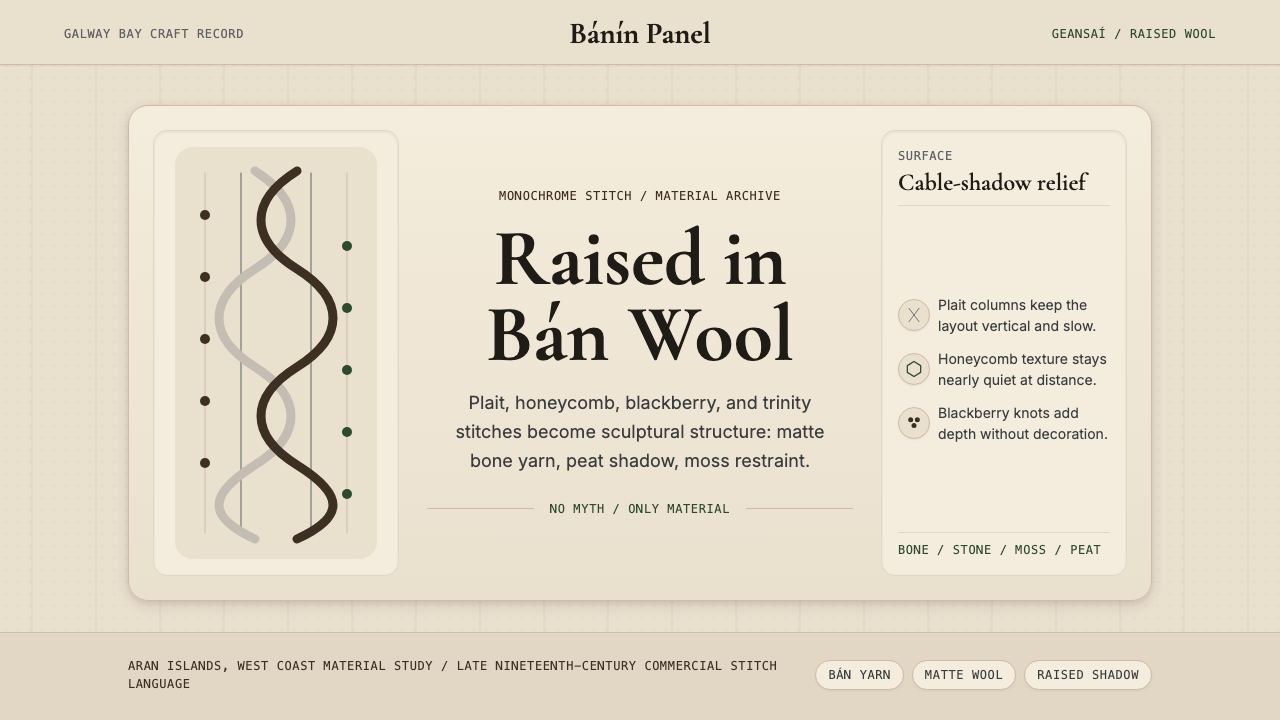 Irish Aran Island Cable KnitMaterial honesty raised in wool. Bone ground, moss ink, and cable columns cas…
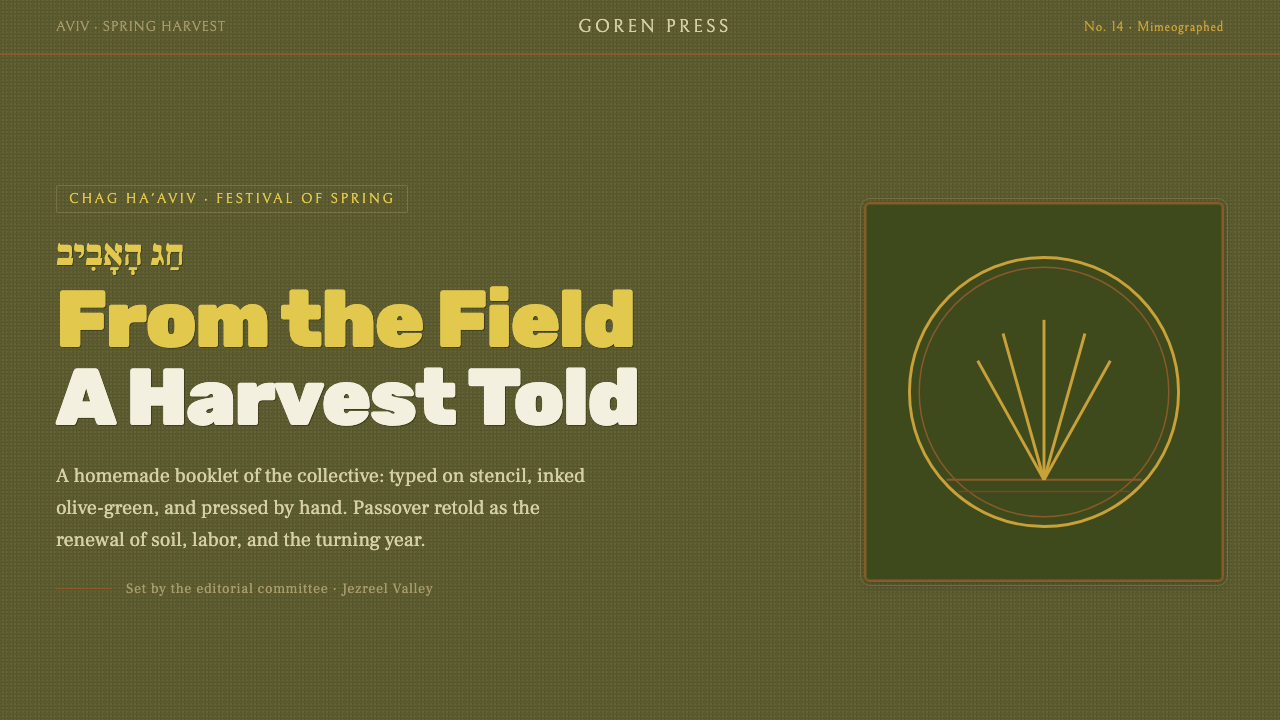 Kibbutz HaggadahHandmade harvest page. Olive stencil stock, wheat serif, deckled linocut geom…
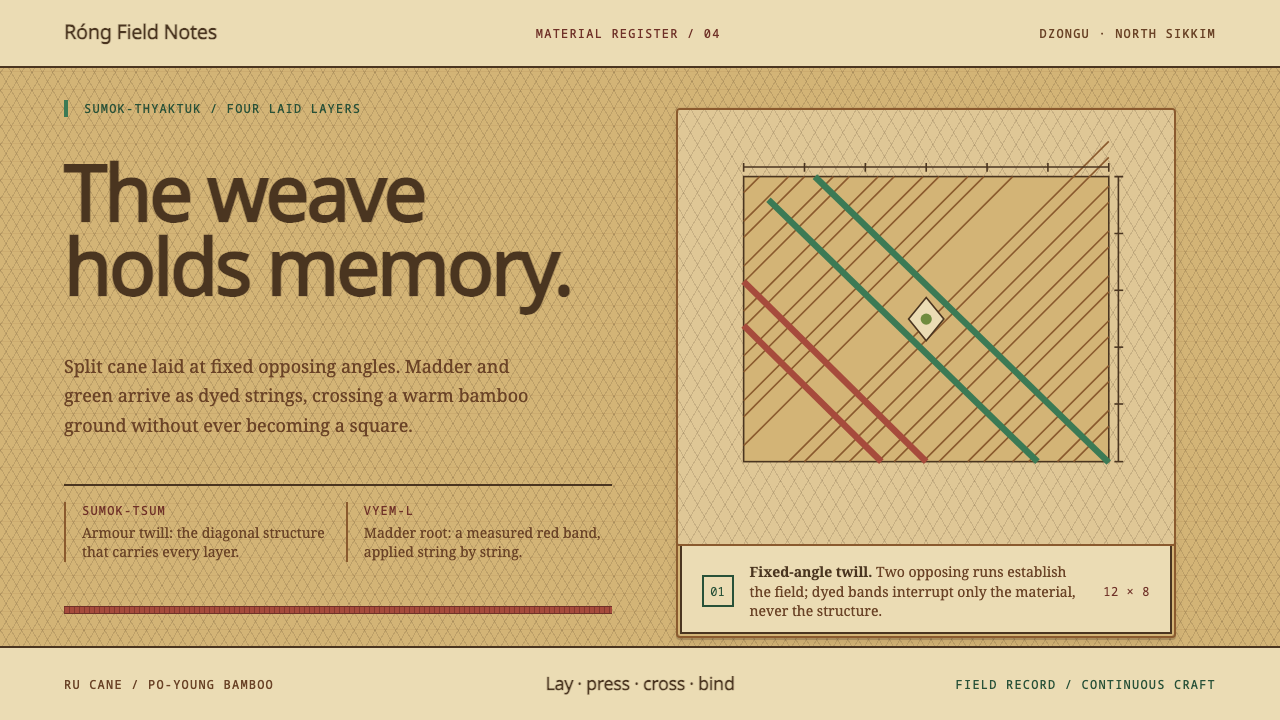 Lepcha Bamboo CraftThe weave holds memory. Madder and green bands cross split-bamboo diagonal tw…
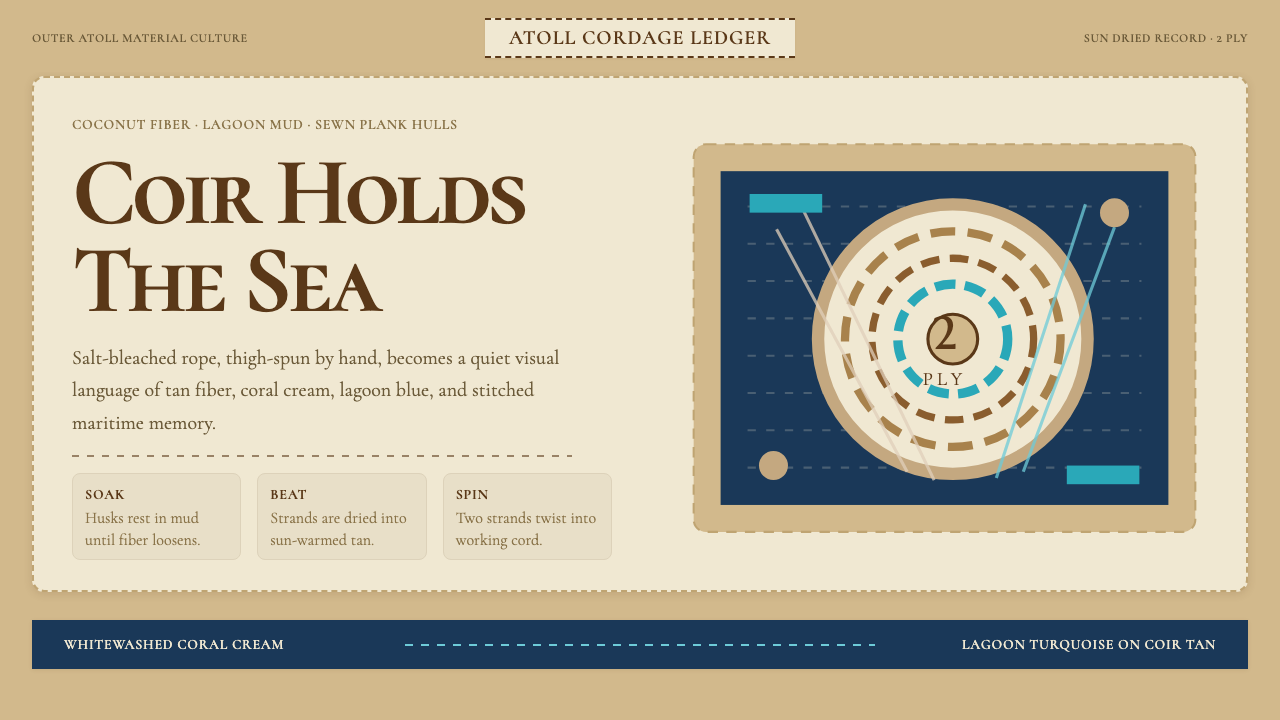 Maldivian Coir (Coconut Rope)Ocean-tested craft. Coir tan, coral cream, Cormorant type, and dashed seam ge…
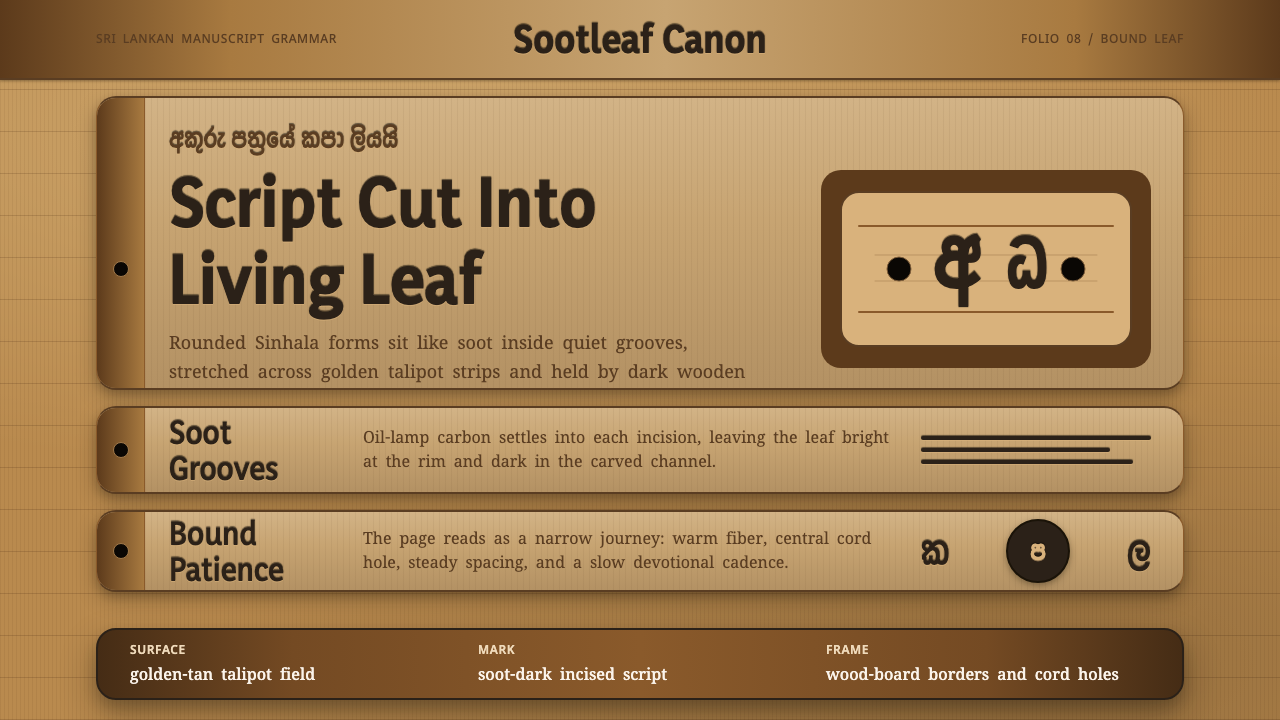 Sinhala Ola-LeafDevotion turns tactile. Soot text, Yaldevi curves, and palm-brown strips bind…