What is Maldivian Coir (Coconut Rope)?
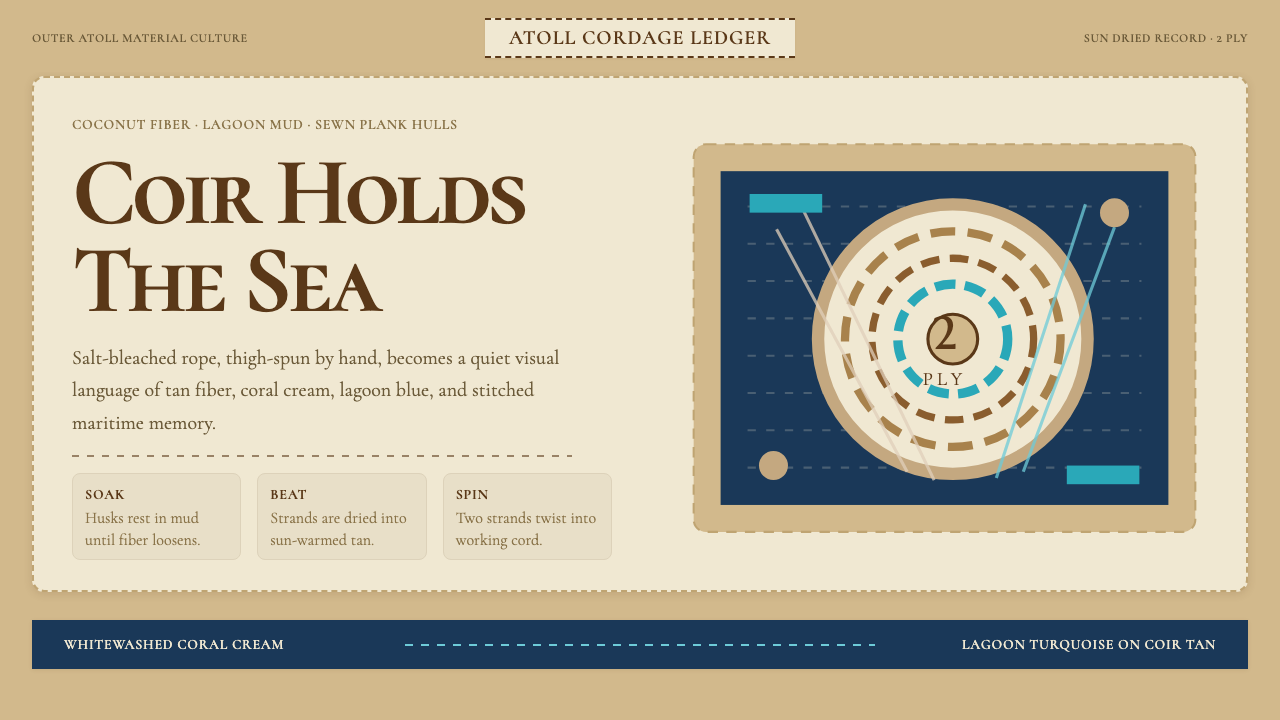
Maldivian coir design channels a millennium of ocean-tested craft — sun-bleached fiber tones, coral-inscribed letterforms, and the dashed geometry of hand-sewn dhoni hulls.
Maldivian Coir (Coconut Rope) in brief
Maldivian Coir (Coconut Rope) is a design system rooted in the material culture of the Maldivian outer atolls, where women have thigh-spun coconut-husk fibers into two-ply rope for over a thousand years. The system translates that tactile, ocean-weathered craft into a visual language: warm tan and whitewashed coral cream as the dominant grounds, lagoon turquoise and deep indigo as restrained accents, and the rhythmic dashed lines of sewn-plank boat seams as the primary decorative motif.
The palette takes its cue from the raw materials of coir production — the sun-bleached fiber, the lagoon mud in which husks were soaked to soften, the whitewashed coral walls of atoll villages, and the brief flash of turquoise water glimpsed between them. Typography draws from the tradition of incised coral signage, favoring letterforms with sharp, deliberate cuts rather than soft curves. Every visual decision points toward the village beach and the working harbor, not the resort terrace.
What distinguishes this style from generic coastal or nautical aesthetics is its specificity. It does not borrow the saturated blues and crisp whites of Mediterranean sailing imagery. It works instead with the muted, sun-faded warmth of the Indian Ocean craft tradition — a palette that feels worn in rather than designed, textured rather than polished, and grounded in a production culture where every material had to earn its place on a long ocean crossing.
Where does Maldivian Coir (Coconut Rope) come from?
The practice of coir rope-making in the Maldives dates to at least the ninth century, when Arab and Persian navigators documented the islands as a major supplier of coconut-fiber cordage for the Indian Ocean trade network. The archipelago's position along the monsoon trade routes — roughly equidistant between the Arabian Peninsula and the Indian subcontinent — made it a critical provisioning stop, and coir rope was among its most valued exports. Historical sources record Maldivian coir being used to lash together the planks of Arabian dhows and to rig vessels as far east as Java.
The production process was distinctly gendered and atoll-specific. On outer atolls such as Huvadhoo, Fuvahmulah, and Addu, women soaked coconut husks in lagoon mud for months to ret the fibers, then beat them into loose strands, and finally thigh-spun them into two-ply rope with a practiced rolling motion against the thigh. The resulting cordage was exceptionally resistant to saltwater degradation — a property that synthetic ropes did not reliably match until the late twentieth century. This material resilience gave Maldivian coir a premium position in the regional maritime economy that persisted across centuries.
The scholar H. C. P. Bell, who conducted the first systematic archaeological survey of the Maldives in the late nineteenth and early twentieth centuries, documented coir production in detail alongside the coral-stone architecture and carved woodwork that together define the visual culture the design system draws from. Clarence Maloney's ethnographic work in the mid-twentieth century traced the social organization of coir production, establishing how the craft was transmitted through female lineages and how atoll communities specialized in different grades of rope for different maritime applications.
Thor Heyerdahl's expeditions to the Maldives in the 1980s, and the subsequent research of Pierre Vérin, drew international attention to the question of how far Maldivian coir-lashed vessels had traveled and what role the archipelago played in early trans-oceanic contact. Their work situated the coir tradition within a broader argument about the sophistication of pre-modern Indian Ocean navigation — a context that gives the design system its characteristic tension between humble material and epic reach. The visual language that emerges from this tradition is not exotic or decorative: it is the look of tools that worked.
What defines the Maldivian Coir (Coconut Rope) look?
Color Palette
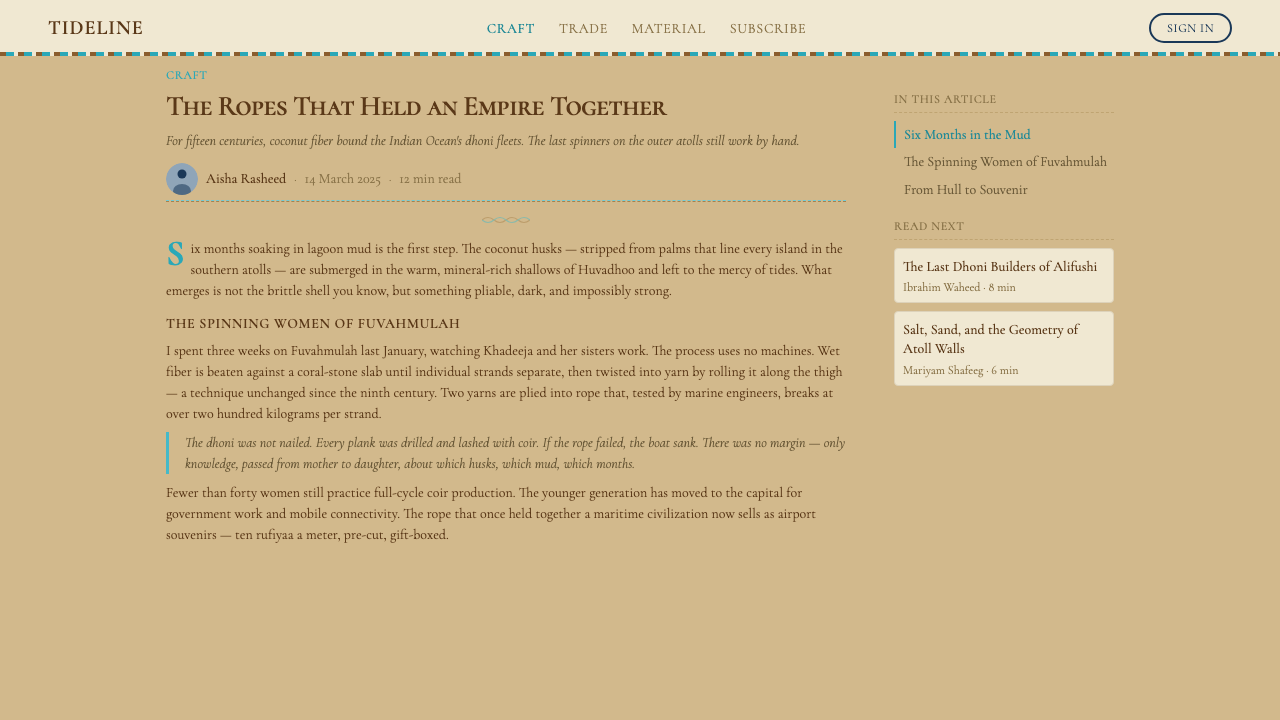
The palette is built around three anchoring tones: coconut-fiber tan, a warm mid-brown that reads as the dominant neutral; whitewashed coral cream, a near-white that carries the warmth of sun-bleached stone; and lagoon turquoise, a soft, slightly desaturated aqua used sparingly as an accent. Deep ocean indigo appears as a secondary accent for emphasis or structural contrast. The palette avoids both the cool clarity of Scandinavian minimalism and the vivid saturation of tropical resort branding — it sits in the middle register of sun-faded warmth, the look of materials that have been outside for years.
Typography
The defining typographic reference is incised coral stone — the signage tradition of Maldivian villages where letters were cut into pale coral rock with clean, decisive strokes. This points toward serif typefaces with visible contrast between thick and thin strokes and a quality of sharp deliberateness rather than calligraphic flow. Display type is set at generous sizes against open ground; body text is treated conservatively, with wide leading that evokes the measured spacing of hand-carved letterforms. Ligatures and historical alternates, where available, reinforce the sense of craft without tipping into ornate excess.
Texture and Line
Rope grain and sewn seams are the two primary textural references. Rope grain — the twisted, slightly irregular parallel lines of hand-spun two-ply cord — appears as a subtle background texture or as an explicit motif in dividers and section headers. Sewn seams translate into dashed lines: short, evenly spaced dashes that evoke the visible stitch of a coir-lashed plank joint. These dashes carry more visual weight than a simple rule; they have the presence of something functional, not merely decorative. Both textures are used sparingly so they read as material references rather than surface busyness.
Geometry and Form
The formal vocabulary favors the practical geometry of boat-building and rope-work: elongated rectangles that echo the proportions of a dhoni hull, circular forms that reference the cross-section of twisted cordage, and the slight irregularity that comes from hand rather than machine production. Grid systems are present but not rigidly mathematical — they allow for the gentle asymmetry of craft objects rather than the exact symmetry of industrial production. Decorative elements, where they appear, are reduced to their simplest geometric statement.
Warmth and Wear
Unlike coastal aesthetics that present a pristine, idealized version of the sea, this style carries the trace of use. Gradients and drop shadows are avoided not because of a strict no-decoration rule but because they would introduce a kind of photorealistic polish that conflicts with the hand-made register of the source material. Surfaces read as slightly worn, as though salt air and sun have muted the sharpest edges. This is achieved through palette choices and texture density rather than explicit aging effects — the warmth is structural, not applied.
Negative Space
Open space is treated as the visual equivalent of the lagoon itself — the clear, uncluttered water between islands that defines the atoll form as much as the land does. Layouts breathe generously. Elements are separated by margins that feel unhurried, reflecting the pace of craft production rather than the urgency of commercial design. This generosity of space is one of the style's most distinctive qualities and one of the easiest to sacrifice under production pressure — compressing the margins turns the style into generic coastal decoration.
Restraint in Accent
The turquoise and indigo accents are used at low frequency — as a single element on a page, a hover state, a data highlight, or a dividing line — never as a background or large surface. Overusing the accent colors collapses the system's contrast structure and, more importantly, destroys the sense that these colors are earned: in the source culture, the lagoon is visible only in glimpses between buildings and boats. That momentary quality is what makes it striking. The same logic governs the accent in the design system.
Who shaped Maldivian Coir (Coconut Rope)?
Henry Charles Purvis Bell conducted the first systematic archaeological surveys of the Maldives between 1879 and 1922, documenting coral-stone architecture, coir production, carved woodwork, and the material culture of outer atolls in detail that has not been surpassed. His reports established the scholarly record from which later researchers worked and remain the primary historical source for the visual traditions that underpin this design system.
Maloney's mid-twentieth century ethnographic research in the Maldives traced the social organization of coir production with particular attention to its gendered structure and its role in the atoll subsistence economy. His work documented how specific outer atolls specialized in different grades of rope for different maritime uses, and how the craft was transmitted through female lineages across generations — context that gives the design system its grounding in actual production culture rather than romanticized craft imagery.
Heyerdahl's expeditions to the Maldives in the 1980s, following his earlier Kon-Tiki and Ra voyages, investigated the question of how far coir-lashed vessels from the archipelago could have sailed and what role the Maldives played in early trans-oceanic contact. His popular accounts brought international attention to Maldivian maritime heritage and helped frame the coir tradition as part of a story about the deep history of human ocean navigation — a framing that resonates in the design system's emphasis on functional beauty over decorative display.
The French historian and archaeologist Pierre Vérin contributed foundational research on Maldivian material culture, trade connections, and the place of the archipelago in the wider Indian Ocean world. His work, often conducted alongside Bell's legacy documentation and in dialogue with Heyerdahl's expeditionary findings, helped establish the scholarly framework within which Maldivian coir production is understood not as a local curiosity but as a technology embedded in one of the world's most extensive pre-modern trade systems.
How do you use Maldivian Coir (Coconut Rope) today?
The Maldivian coir style transfers most naturally to contexts where warmth, tactility, and a sense of earned craft are valued over precision or clinical clarity. It is not a style for dashboards where every millisecond of scan speed matters; it is a style for contexts where the user is meant to slow down, feel a sense of quality, and trust the product's origins. Travel, hospitality, artisan goods, cultural heritage platforms, and editorial contexts centered on the Indian Ocean, South Asian craft, or the broader theme of human relationship with materials — these are its natural homes.
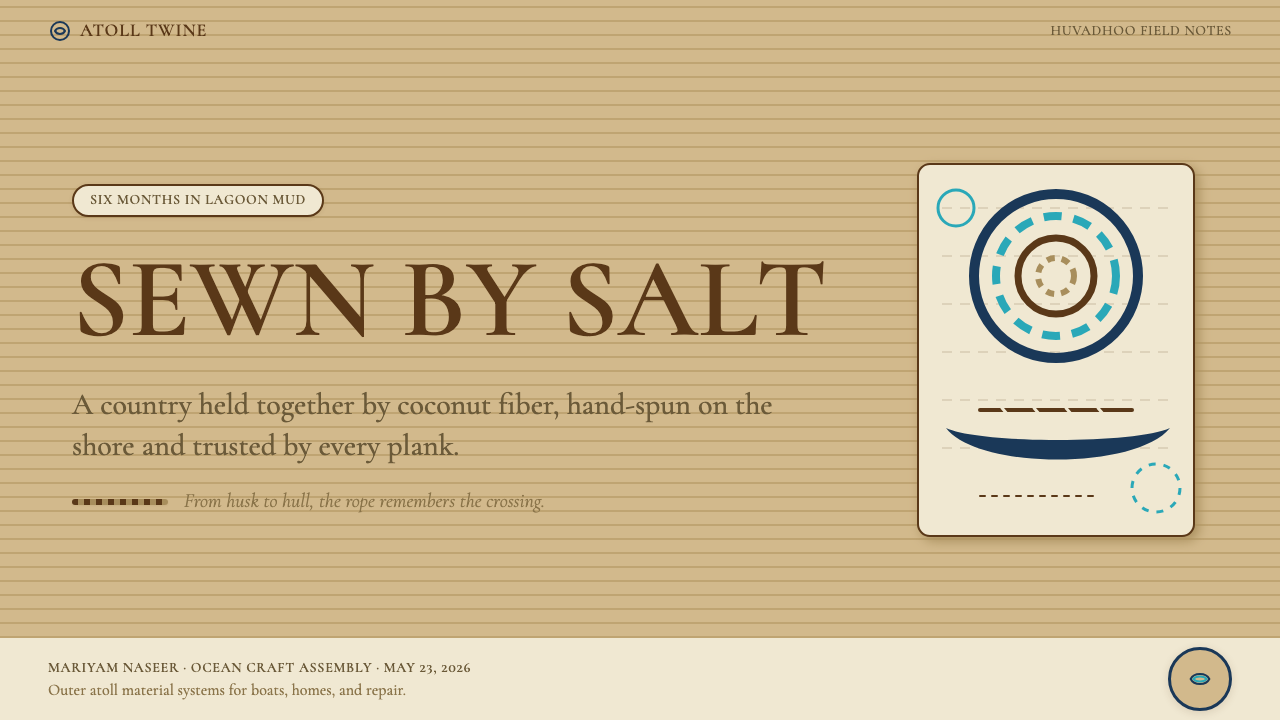
For presentation slides, the style works especially well on cover and section-break pages. A cover built in this system uses the coconut tan as the background, sets the title in a sharp serif at generous scale, and introduces a single dashed horizontal rule — the sewn-seam motif — below the headline. Section breaks use the lagoon turquoise accent sparingly: one ruled line, or a single geometric element, not a full-color panel. Content slides are clean and unhurried, with body text in a weight that reads easily against the warm ground, and data presented in a palette restricted to the two or three tones most needed for that slide's argument. The style struggles on dense data slides where many categories need visual differentiation — the restrained palette does not scale well beyond three or four distinct values.
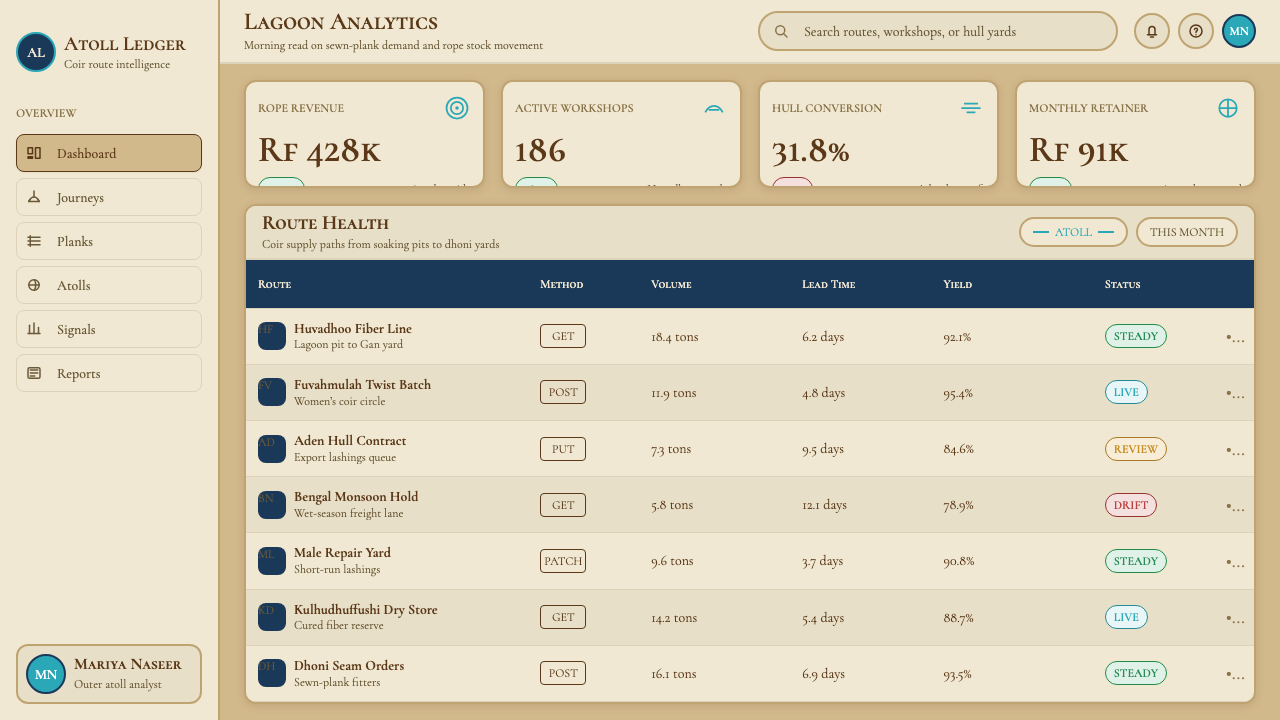
For web interfaces, the style suits editorial pages, about pages, product story pages, and any landing page where narrative pacing matters. The warm ground and generous spacing create a reading experience that feels considered rather than efficient. Pricing pages can work in this system if they are kept simple and the hierarchy is built through scale and spacing rather than color contrast. Dashboard interfaces are more difficult: the style's warmth and textural restraint do not naturally lend themselves to the density of information and the need for rapid visual differentiation that dashboards require. If a dashboard must be built in this system, treat the coir palette as the chrome and use the turquoise and indigo accents strictly for data encoding.
For editorial and marketing work, the style excels. An editorial layout using this system gives body text a wide measure with generous margins — the open space is non-negotiable. Pull quotes can be set in the display serif with visible contrast against the warm ground. Marketing pages benefit from the poster-like quality of the system: a full-width image of rope grain or water surface, a bold headline in the display weight, and a single call-to-action in the lagoon turquoise. The dashed-seam line motif makes an excellent section divider that carries visual meaning without being merely decorative.
A common mistake when applying this style is importing general coastal or tropical clichés — palm illustrations, wave motifs, saturated sunset gradients — that have no basis in the actual coir tradition and collapse the specificity that makes the style distinctive. Another error is over-saturating the turquoise accent, turning what should be a lagoon glimpse into a swimming-pool blue that reads as generic beach branding. A third mistake is using the texture references too heavily, so that every surface carries a rope-grain overlay and the work feels busy rather than grounded. The discipline of this style is restraint in every register: restrained palette, restrained texture, restrained accent use. Each element should feel like it is there because it had to be.
Maldivian Coir (Coconut Rope) — FAQ
How is this style different from generic coastal or nautical design?
Generic coastal design typically draws from a Mediterranean or Atlantic sailing vocabulary — crisp navy and white, rope-and-anchor motifs, clean sans-serif type, and a sense of recreational leisure. Maldivian coir is Indian Ocean in origin and craft in register: the palette is sun-faded and warm rather than cool and crisp, the reference materials are hand-made rope and coral stone rather than nautical hardware, and the tone is that of working maritime culture rather than recreational sailing. The specificity is what matters — this style carries the look of a particular place and practice, not a generalized sea-and-sun mood.
Can this style work for dark-background layouts?
A dark variant is possible but requires deliberate adjustment. The canonical version is light-ground — the cream and tan tones are the dominant surface, and the warm-ground logic depends on them. On a dark background, the system shifts toward its ocean-depth register: deep indigo as the ground, with cream and tan used as type and detail colors, and turquoise as the accent. This works for contexts with a nighttime or underwater association — a maritime heritage archive, a deep-sea research presentation — but loses the sun-bleached warmth that is the style's most distinctive quality. Treat the dark variant as a specific, intentional application rather than an automatic alternative.
Is the dashed-seam line motif essential to the style, or can it be omitted?
It is important but not mandatory. The dashed line is the most direct visual reference to the coir tradition — specifically to the sewn-plank construction technique of the dhoni — and it carries more semantic weight than a plain rule. However, overusing it (as a decoration on every element) undermines that weight. The principle is that every dashed line should feel like it is marking a joint, a seam, or a threshold — not merely breaking up space. If the design context does not support that reading, using a plain rule is preferable to turning the dashed line into ornament.
What kinds of imagery work with this style?
The most coherent imagery is documentary in register: close-up photographs of rope grain, woven fiber textures, worn coral stone, weathered wood, or still lagoon water. These images should be treated as flat elements — cropped tightly, allowed to fill a defined space without competing with type, and not subjected to filters that would introduce artificial warmth or color grading. Aerial imagery of atolls works well as an establishing shot but should be used once, not repeatedly. Avoid stock-photo tropical scenes with people on beaches or resort interiors — they read in a different register entirely and collapse the style's specificity. When no appropriate photography is available, the rope-grain and dashed-seam texture motifs carry the visual work without imagery.
Does this style suit luxury or premium positioning?
It suits a specific kind of premium positioning — one grounded in craft heritage, material honesty, and cultural depth rather than gloss, opulence, or contemporary minimalism. Think of the difference between a resort that markets itself through its infinity pool and a lodge that markets itself through its connection to local fishing culture. This style works for the latter. It does not suit brands whose premium claim rests on technical precision, clinical cleanliness, or aspirational modernity. The warmth and texture of the style read as approachable and grounded, which is a premium quality in contexts where authenticity is valued but a liability in contexts where efficiency or innovation are the primary signals.
Related design styles
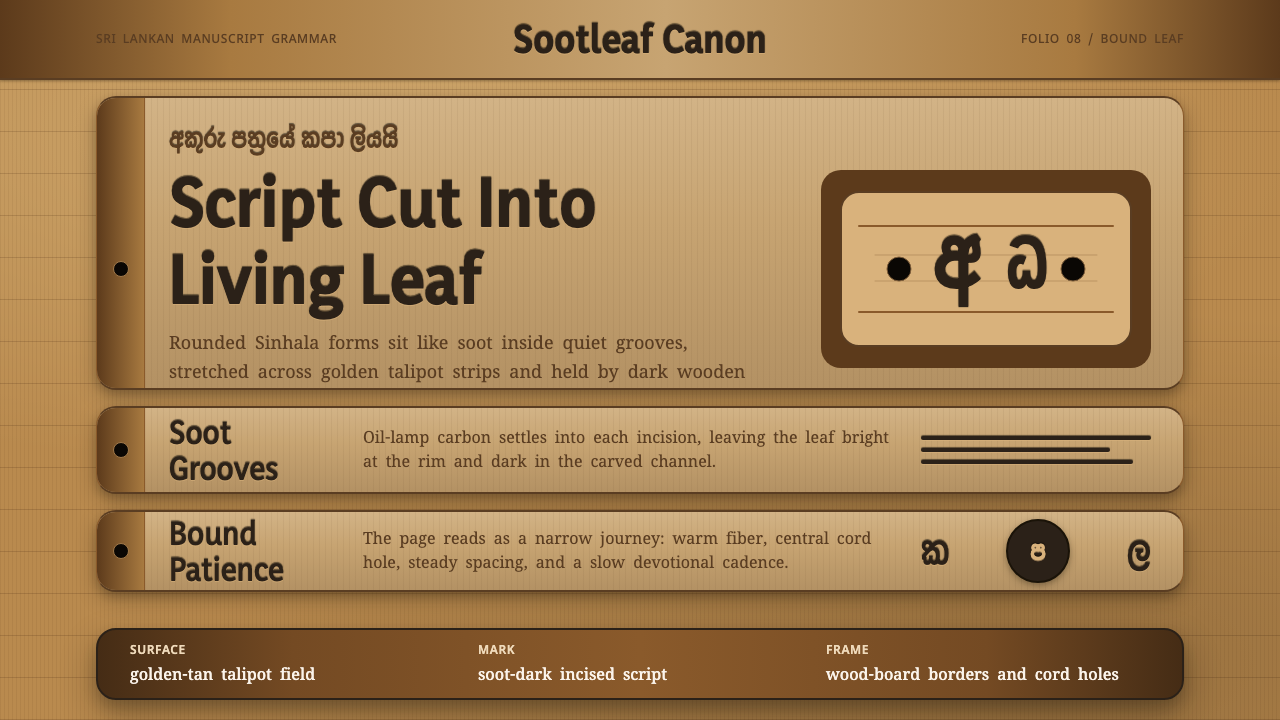 Sinhala Ola-LeafDevotion turns tactile. Soot text, Yaldevi curves, and palm-brown strips bind…
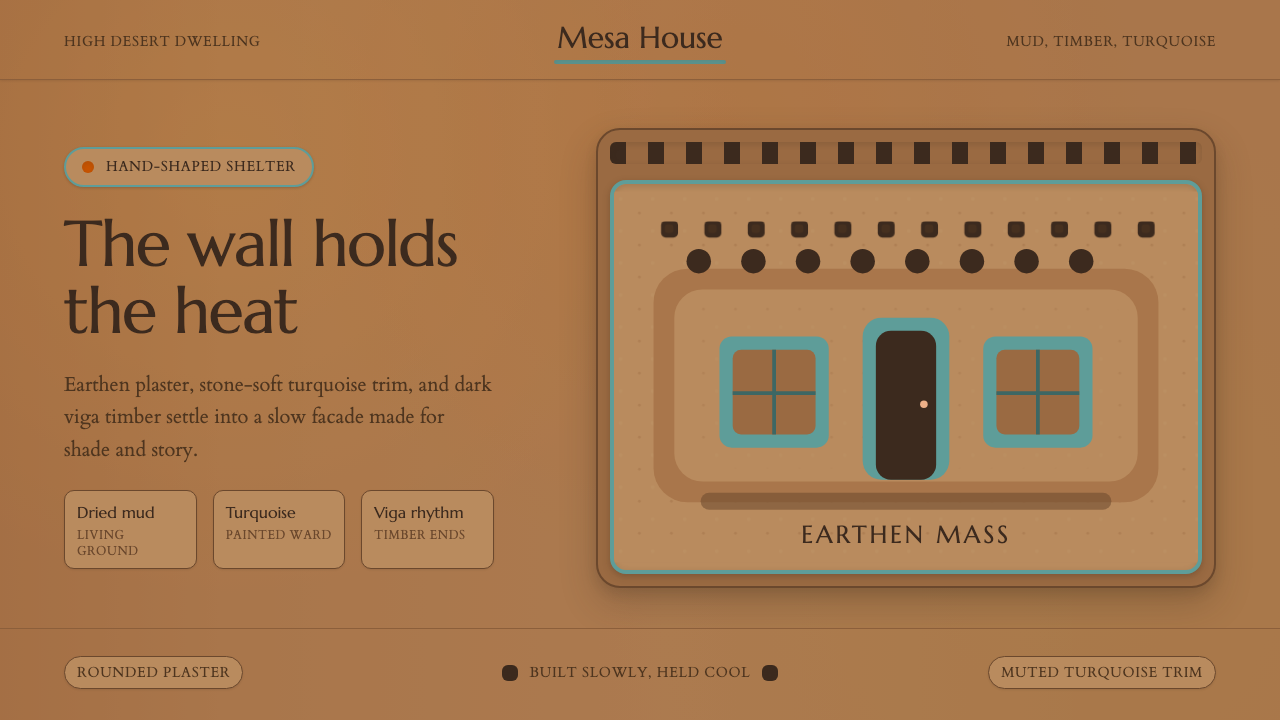 Adobe Pueblo SouthwestFeels made by hand. Earthen tan, turquoise trim, and viga rhythm shape the fr…
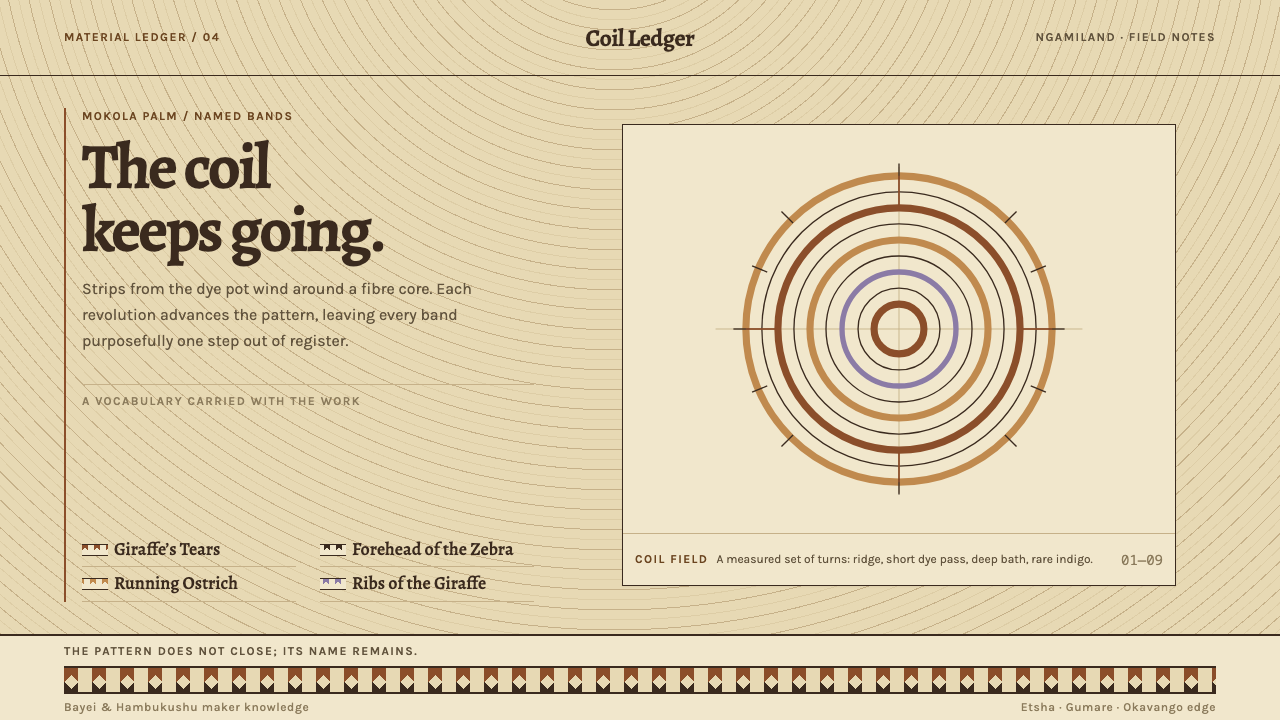 Botswana Coiled BasketThe pattern keeps travelling. Bark-brown stepped bands wind across a straw co…
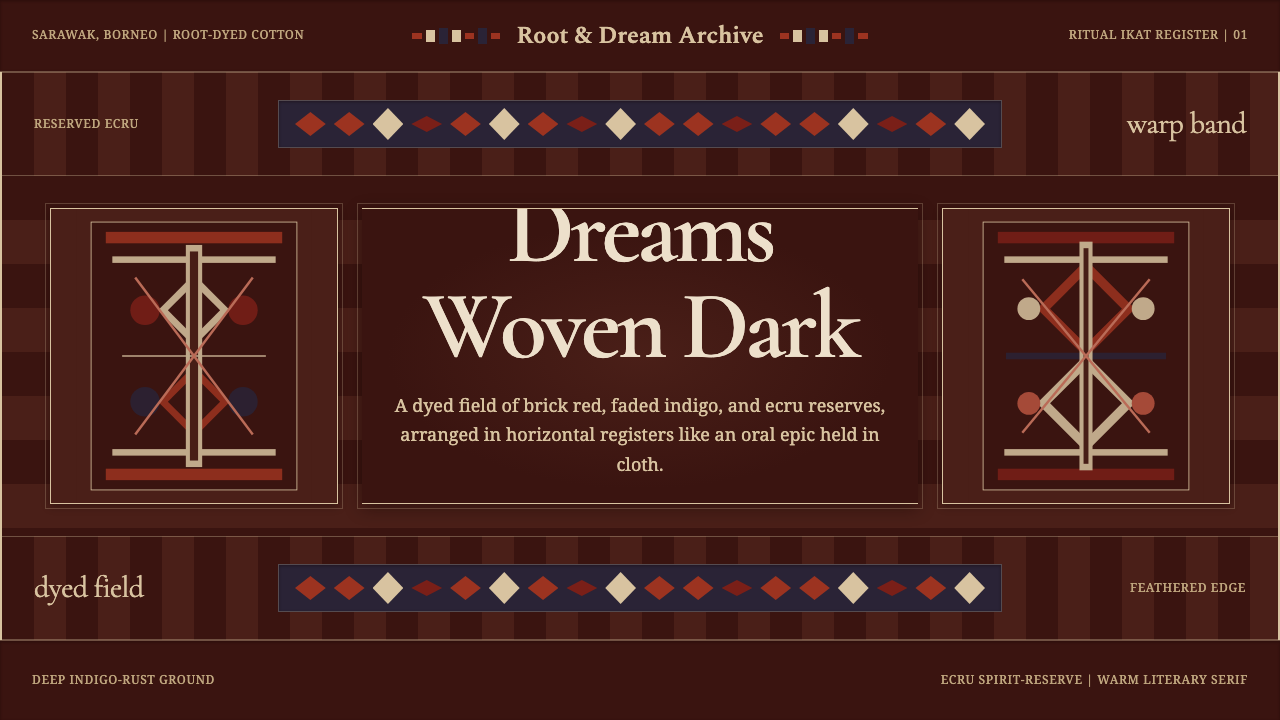 Iban Pua KumbuSacred cloth logic. Indigo-rust bands, ecru reserves, and blurred ikat edges…
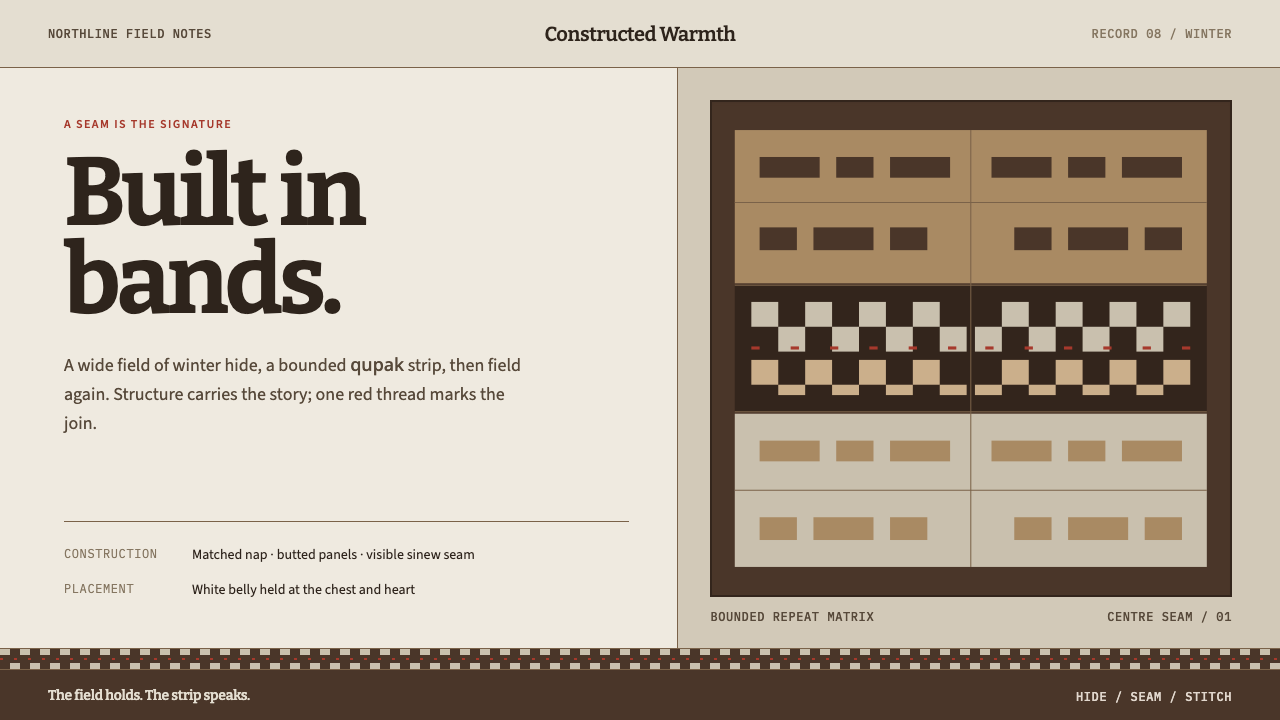 Iñupiat ParkaStructure carries the signature. Caribou-hide bands frame a bounded qupak rep…
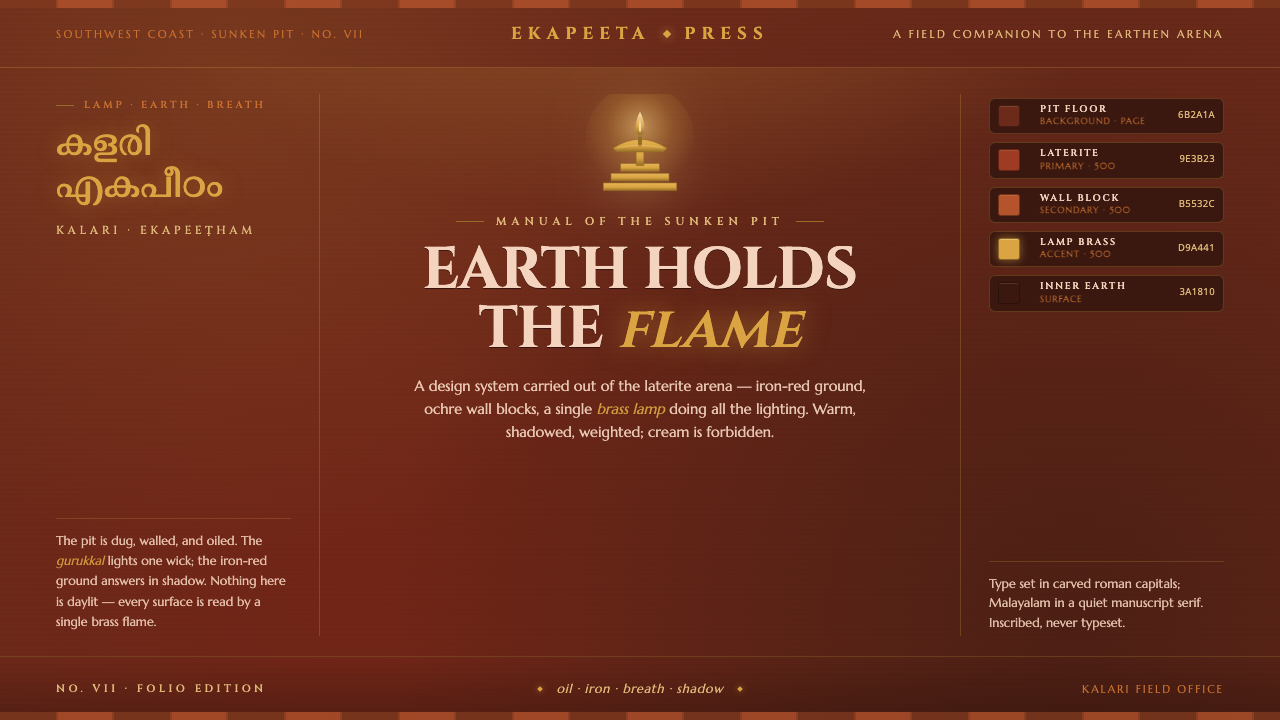 Kalaripayattu Kalari ArenaEarth holds the flame. Iron-red laterite, ochre wall blocks, a single brass l…