What is Venice Carnival Gondola?
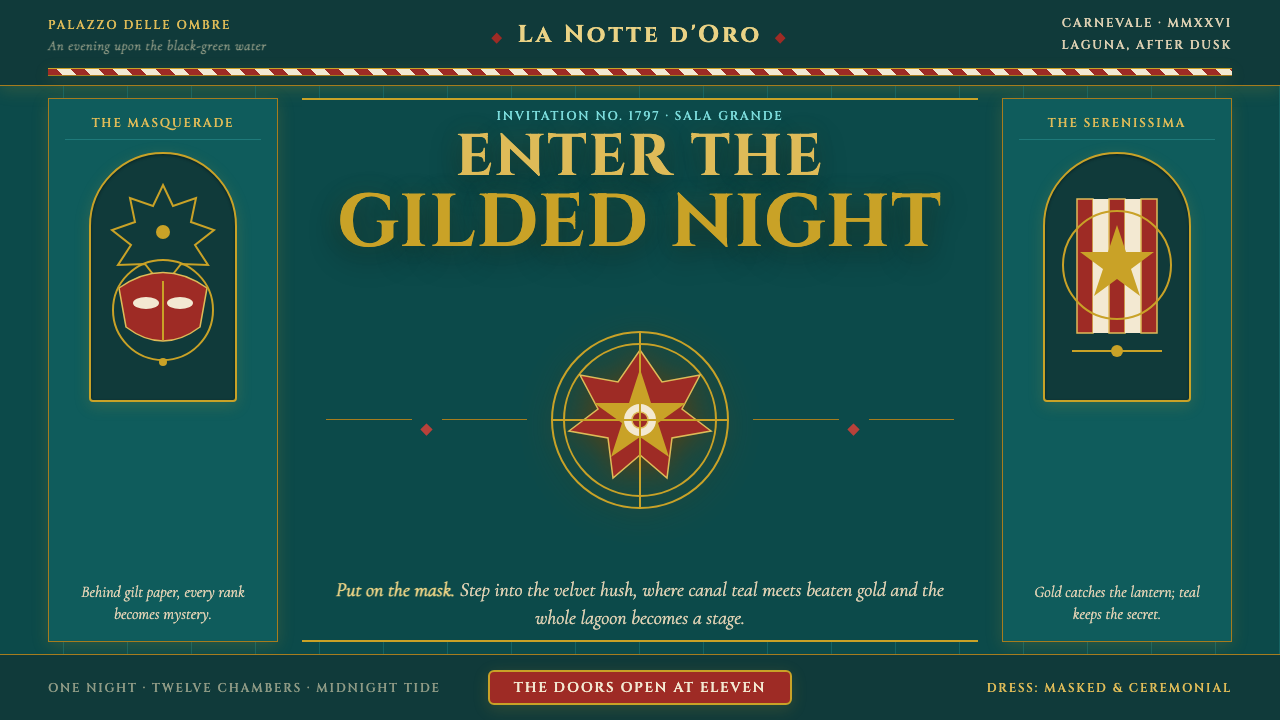
Venice Carnival Gondola turns masked-ball Venice into a design system — deep canal teal colliding with beaten mask-gold, ruled by the winged Lion of St Mark and the ceremonial weight of Baroque theater.
Venice Carnival Gondola in brief
This is a system built on one deliberate collision of color: deep, almost black-green canal teal against beaten mask-gold. There is no soft middle ground between them — the water of the lagoon and the gilding of a carnival mask sit at opposite ends of the palette and are meant to strike against each other rather than blend, the way lantern light catches gold leaf against a dark night canal.
Ceremony governs the whole visual language. The winged Lion of St Mark, symbol of the Venetian Republic, presides over compositions with the gravity of a coat of arms. Roman capital lettering is cut as if carved into stone above a palazzo doorway rather than set as ordinary text. Nothing is casual; every element is staged the way a masked procession is staged, with heraldic symmetry and theatrical weight.
Texture carries as much meaning as color. Surfaces are described with the density of brocade and damask and the hush of velvet — richly patterned, heavy, and layered rather than flat or minimal. This is a maximalist system in spirit, where Baroque ornamental abundance replaces restraint, and every surface behaves as though it has been dressed for a ball rather than left plain.
Where does Venice Carnival Gondola come from?
Carnevale di Venezia traces back to the masked seasons of the Venetian Republic, when the city permitted extended periods of masked anonymity across the winter months, allowing nobles and commoners alike to mingle, gamble, and perform without the usual constraints of social rank. The tradition reached its peak during the 1600s through 1797, the final years of the Republic before its fall to Napoleon, a period when Venice's wealth and theatrical culture were at their most elaborate.
This was also the golden age of Venetian veduta painting — detailed, panoramic views of the city's canals, palazzos, and festivals — practiced by artists whose work preserved exactly the kind of ceremonial urban spectacle this system draws from. Alongside the painters, the commedia dell'arte tradition of stock masked characters and improvised theater shaped how Venetians understood the mask itself: not a disguise for privacy alone, but a theatrical device, a role to step into.
Mask-making itself was governed by the mascherari, a dedicated craft guild responsible for producing the carnival's gilded, ornamented faces — a trade taken seriously enough to warrant its own guild statutes, distinct from ordinary artisans. The gold leaf and heavy ornamentation associated with carnival masks descend directly from this guild tradition of treating a mask as a crafted, valuable object rather than a disposable costume piece.
After Napoleon's conquest ended the Republic in 1797, Carnevale was suppressed for nearly two centuries before being formally revived in 1979 as a cultural and tourism initiative. The modern Carnevale draws deliberately on the imagery preserved in veduta paintings and the ceremonial mask tradition of the mascherari, restaging Baroque theatricality for a contemporary audience while keeping its visual core — gilded masks, canal-dark settings, and heraldic symbolism — intact.
What defines the Venice Carnival Gondola look?
Color Collision
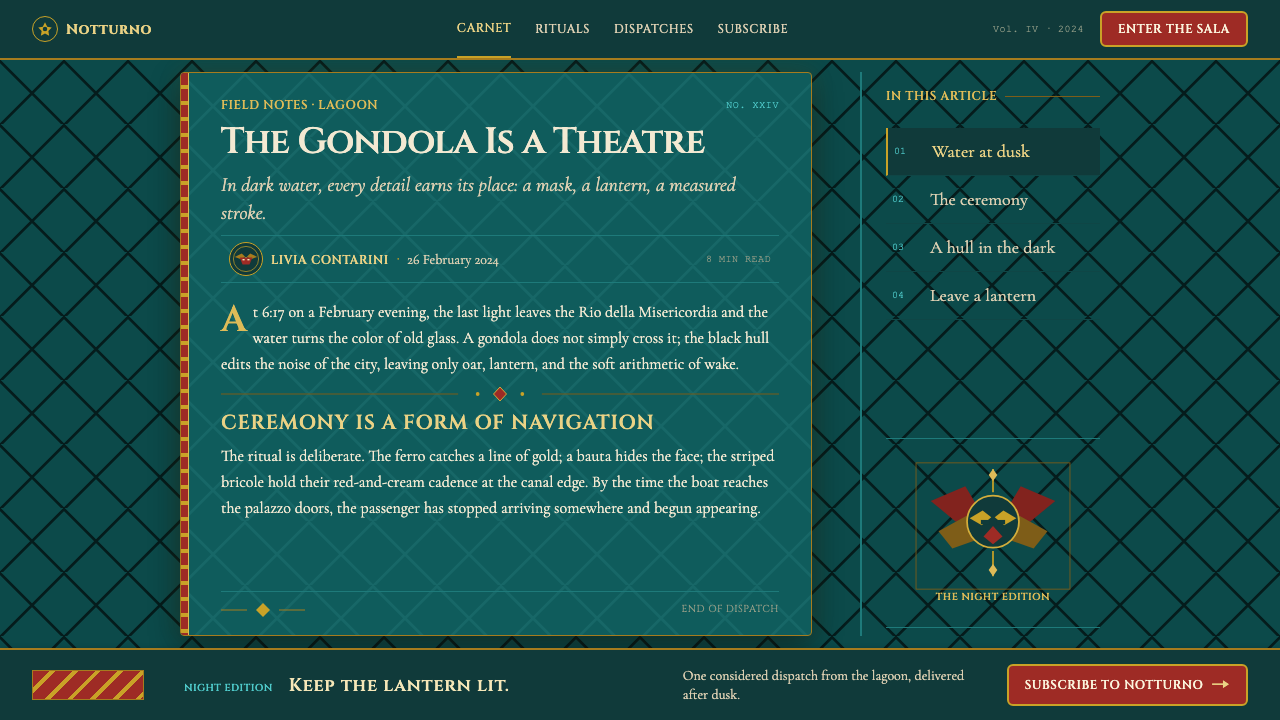
The system rests on a single deliberate opposition: deep, near-black canal teal against beaten mask-gold. The two colors are meant to strike against each other at full intensity rather than blend through intermediate tones — one cold and aquatic, the other warm and metallic, like lantern light catching gilt above dark water.
Heraldic Symmetry
Compositions are organized the way a coat of arms is organized — centered, balanced, and formal, with the winged Lion of St Mark or comparable emblematic motifs presiding over the layout. This is not the loose asymmetry of casual design; it is deliberate, ceremonial balance.
Carved Roman Lettering
Type is treated as though cut into stone above a palazzo doorway rather than printed on a page — Roman capitals, formal and monumental, carrying the same civic gravity as an inscription. There is no casual lowercase informality in the system's ceremonial moments.
Textile Density
Surfaces borrow the weight and pattern density of brocade and damask fabric — richly figured, layered, never flat or plain. This textile logic extends beyond literal fabric into how any surface in the system is treated: dense, patterned, and heavy rather than open and minimal.
Velvet Hush
Alongside the density of brocade sits a quieter texture: the muted, light-absorbing hush of velvet. This provides the system's moments of restraint — dark, soft-seeming grounds against which the gold ornament and jewel-toned accents can flare without competing surface noise.
Theatrical Staging
Every element is arranged as though for a masked procession rather than a casual layout — a central figure or emblem staged with lantern-lit drama, supporting elements arranged like a stage set rather than a grid. The overall effect favors ceremony and performance over everyday utility.
Who shaped Venice Carnival Gondola?
Carpaccio was a Venetian painter known for detailed narrative cycles depicting the ceremonial and civic life of Venice, an early forerunner of the veduta tradition of precisely rendered city views that later preserved the visual texture of Venetian festival and canal life that this system draws on.
Canaletto is the best-known practitioner of Venetian veduta painting, producing meticulously detailed panoramic views of the city's canals, palazzos, and public ceremonies. His paintings function almost as documentary evidence of how Baroque-era Venice staged its own civic spectacle, and this system's ceremonial staging draws directly on that visual record.
Longhi painted intimate scenes of Venetian social life, including masked gatherings and carnival-season interiors, offering a closer, more theatrical view of costume, mask, and social performance than the panoramic veduta tradition, directly informing this system's staged, ceremonial mood.
Lovato is credited with helping design the elaborate costumed masks that defined the look of Carnevale's 1979 revival, translating the historical mascherari guild tradition of gilded, ornamented mask-making into the modern festival's visual identity.
Goldoni, a Venetian playwright working in and against the commedia dell'arte tradition, shaped how masked stock characters and improvised theater were understood in Venetian culture, reinforcing the idea of the mask as a performed role rather than a simple disguise — a concept central to this system's theatrical framing.
How do you use Venice Carnival Gondola today?
This system works when a project wants to feel ceremonial, dressed-up, and theatrical rather than clean or minimal — applying it well means committing fully to the teal-and-gold collision and the density of ornament rather than diluting it with neutral space.
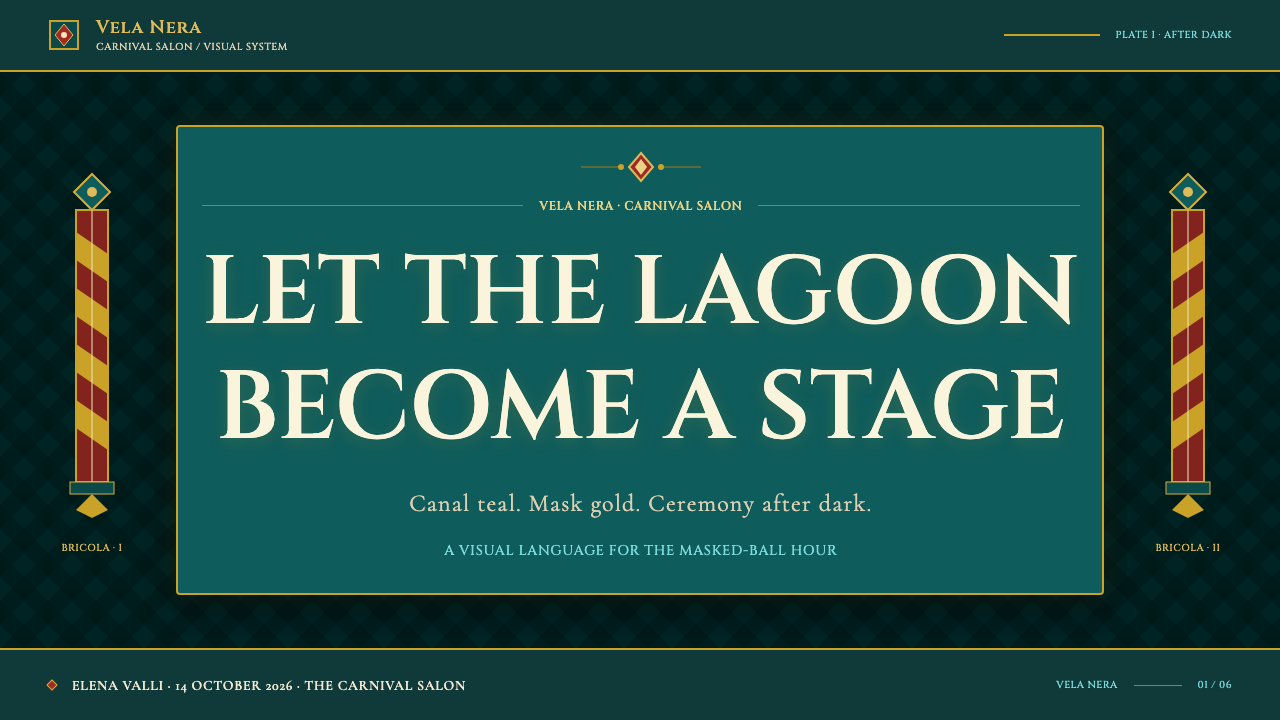
For presentation slides, the style is strongest on cover pages built around a single gilded emblem or masked figure staged against a deep teal ground, with carved-stone-style Roman capitals for the title. Content slides can carry heraldic dividers and gold rule lines between sections, though body text should stay legible against the dark ground rather than competing with the ornament. Data slides work best framed like a jewel-toned crest — a small number of figures given ceremonial emphasis rather than a dense grid of charts.
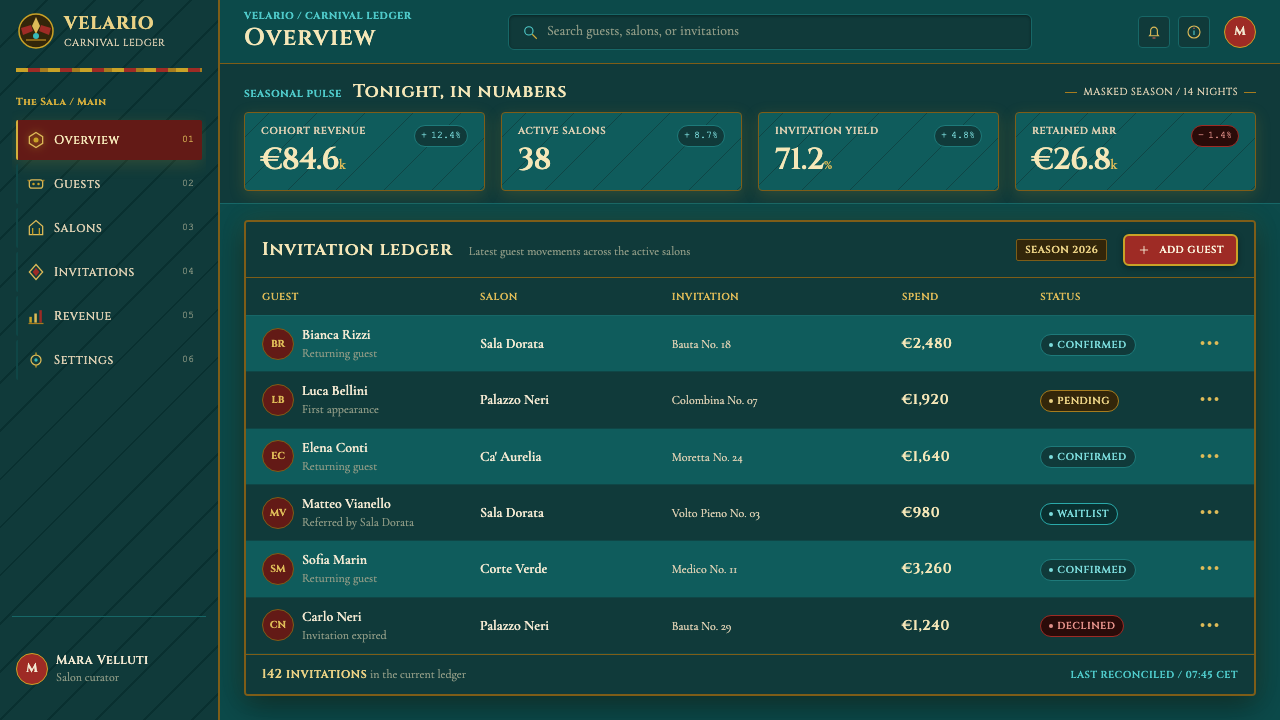
For web interfaces, the palette suits luxury hospitality, event and festival branding, and premium cultural or entertainment products where drama and occasion matter more than everyday utility. A dark teal base with gold accents for primary actions and dividers reads as an occasion rather than a tool; card and panel edges benefit from an ornamental border treatment rather than a plain line.
For editorial and marketing work, the system suits travel writing about Venice, festival and event promotion, and luxury brand storytelling built around theater and history. Treat a hero image like a staged tableau — a masked figure lit against dark water — rather than a candid photograph, and let pull-quotes or section breaks carry the carved-lettering treatment.
The most common mistake is treating this as generic 'Italian' or 'Mediterranean' styling with warm, sunny colors and casual lightness. Authentic Venice Carnival Gondola is nocturnal and theatrical rather than sunny and relaxed — the mood is masked ball, not seaside holiday, and diluting the teal-gold collision with pastel warmth undoes the system's ceremonial weight.
Venice Carnival Gondola — FAQ
Why does this system pair teal with gold specifically?
The pairing comes directly from the setting: deep canal teal represents the lagoon water of the Venetian Republic at night, while beaten mask-gold represents the gilded carnival masks produced by the mascherari guild. The two colors are meant to collide at full strength rather than blend, echoing the way lantern light catches gold leaf against a dark canal.
What is the significance of the winged Lion of St Mark?
The winged lion is the symbol of the Venetian Republic itself, historically appearing on the Republic's flags, coins, and civic architecture. Its presence in this system signals civic and historical authority — the same heraldic weight it carried when Venice was an independent maritime power — rather than serving as decoration.
How does this differ from generic 'masquerade ball' design?
Generic masquerade styling often reaches for glitter, purple-and-black color schemes, and mystery-themed decoration disconnected from any specific place. This system is anchored to a specific city and history — the actual teal of the Venetian lagoon, the actual gold of mascherari-crafted masks, the actual heraldry of the Republic — which gives it a documentary specificity that generic masquerade imagery lacks.
Can this style work with a lighter, daytime color scheme?
It resists it structurally. The system's drama depends on darkness — a near-black teal ground against which gold and jewel tones can flare, the way lantern light and torchlight defined the historical masked seasons. A daytime, light-ground version loses the nocturnal theatricality that distinguishes carnival ceremony from an ordinary sunny Venice postcard.
Is this system only suitable for travel or tourism content about Venice?
Travel content is a natural fit, but the underlying logic — ceremonial ornament, a single high-contrast color collision, heraldic symmetry — transfers to any brand or product that wants to feel like an occasion rather than a utility: luxury events, premium entertainment, formal invitations, or cultural institutions trading on history and theater rather than everyday convenience.
Related design styles
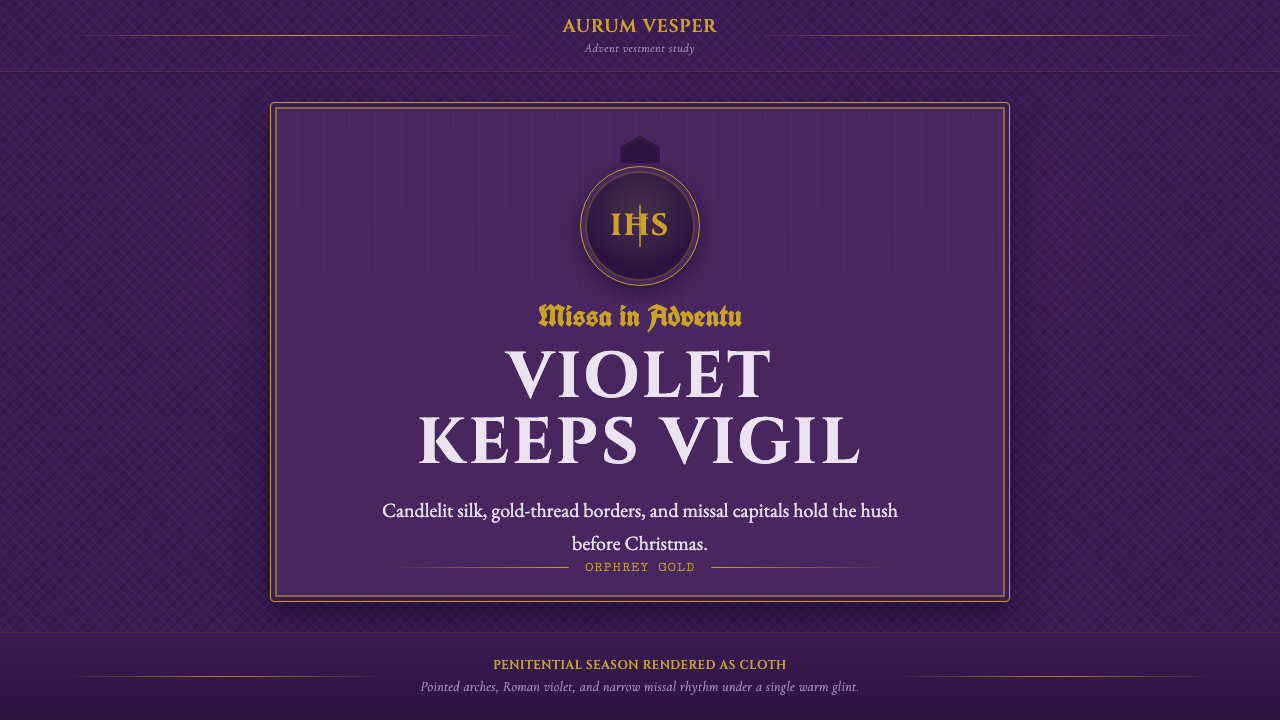 Liturgical Advent VioletReverence in violet. Roman capitals, gold hairlines, and pointed arches glow…
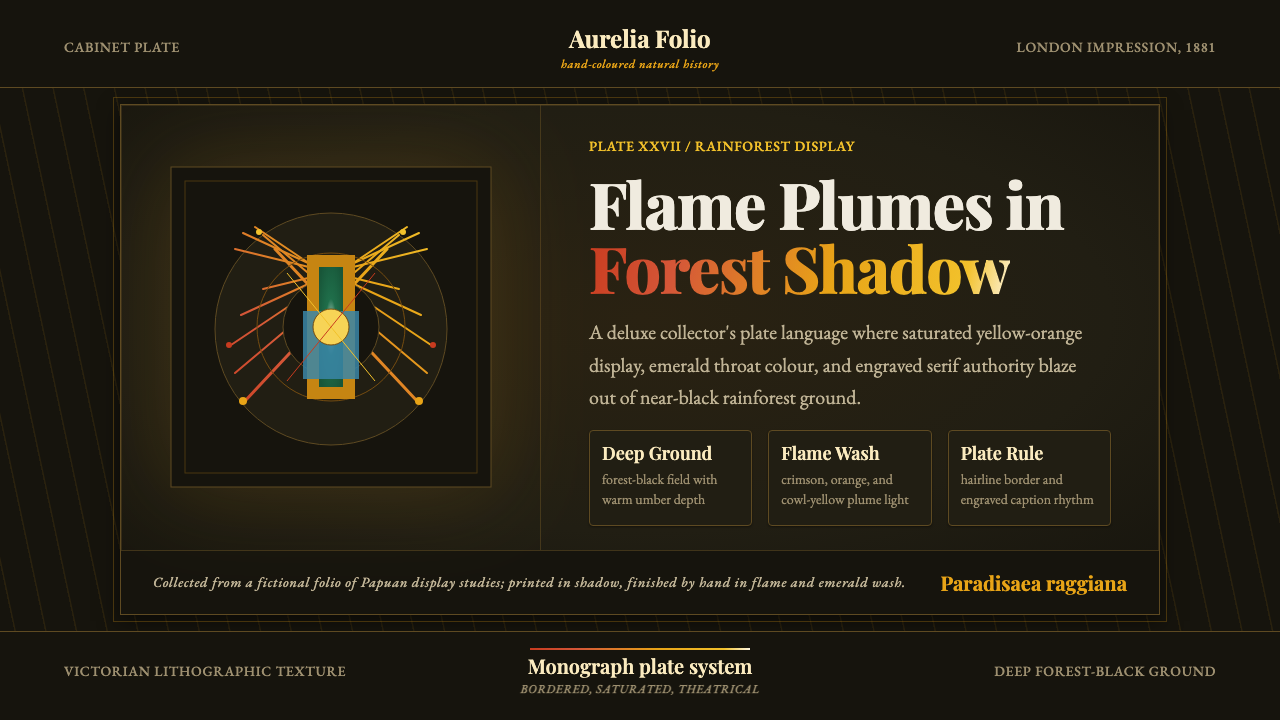 Bird of Paradise MonographTheatrical plate-book darkness. Flame plumes blaze from a bordered forest-bla…
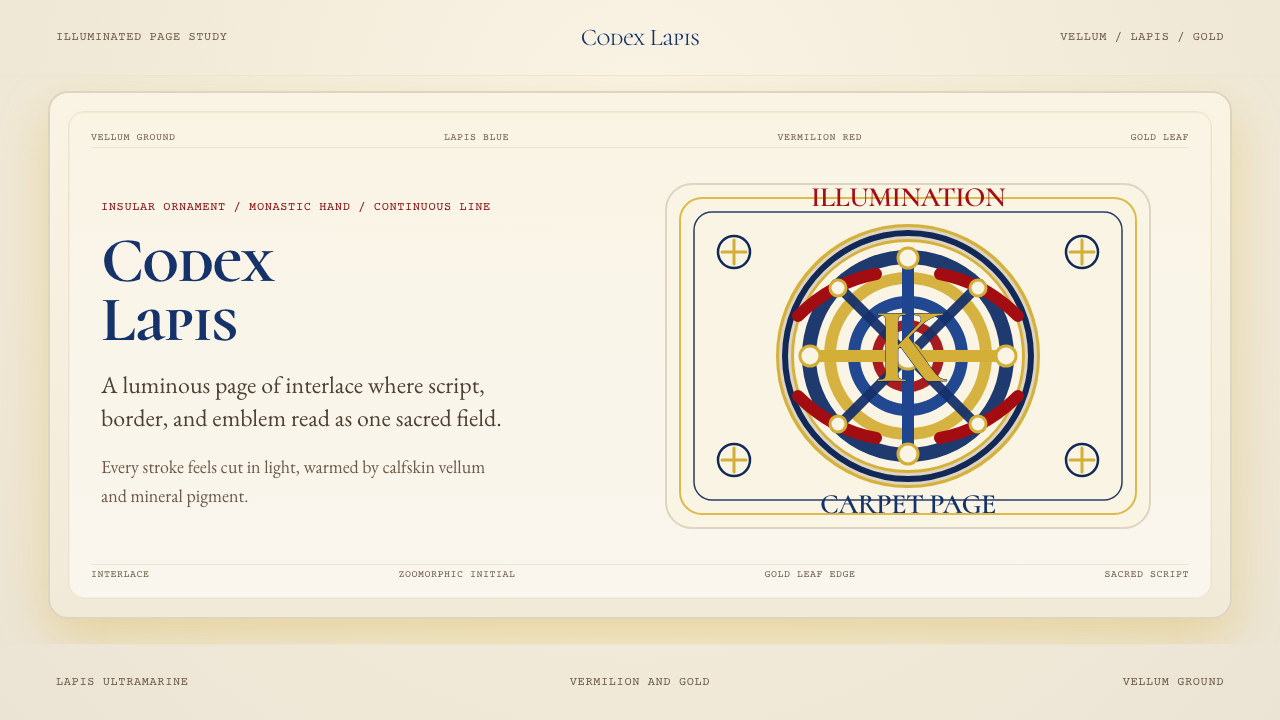 Book of Kells Celtic (800)Sacred and precise. Vellum cream, lapis, vermilion, and gold knotwork.
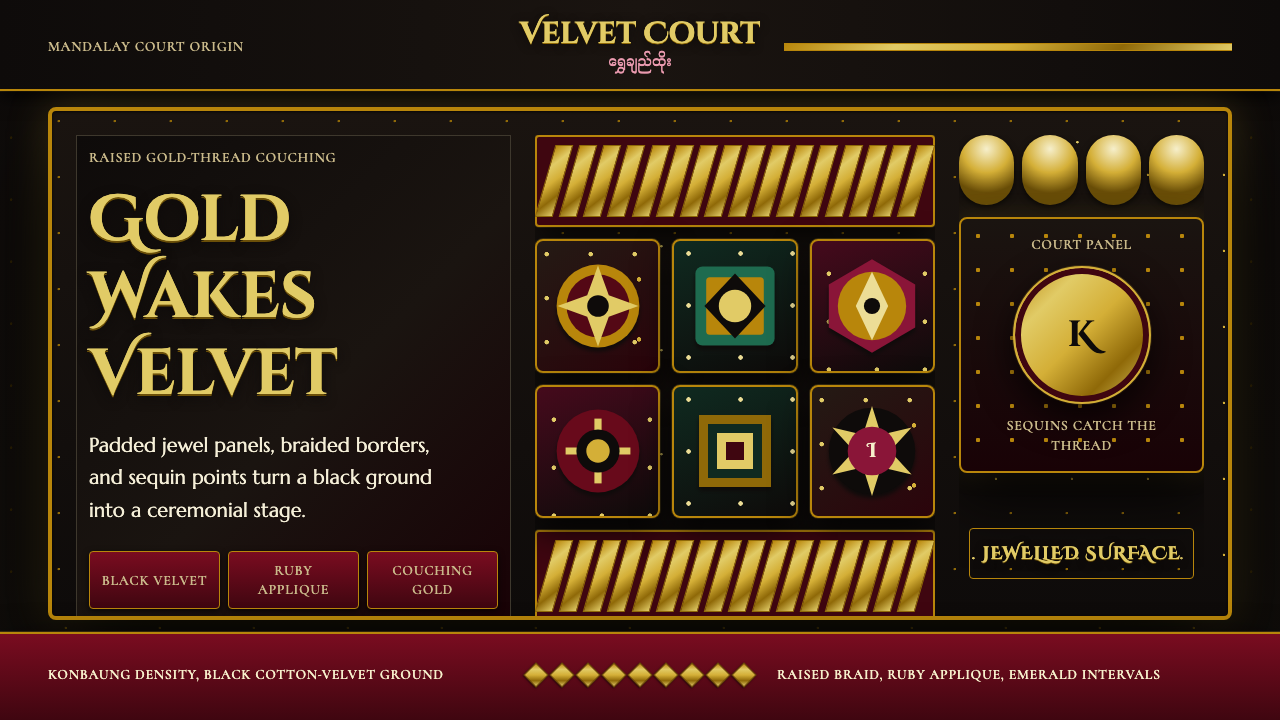 Burmese Kalaga TapestryVelvet becomes theater. Black ground, gold-thread borders, ruby and emerald p…
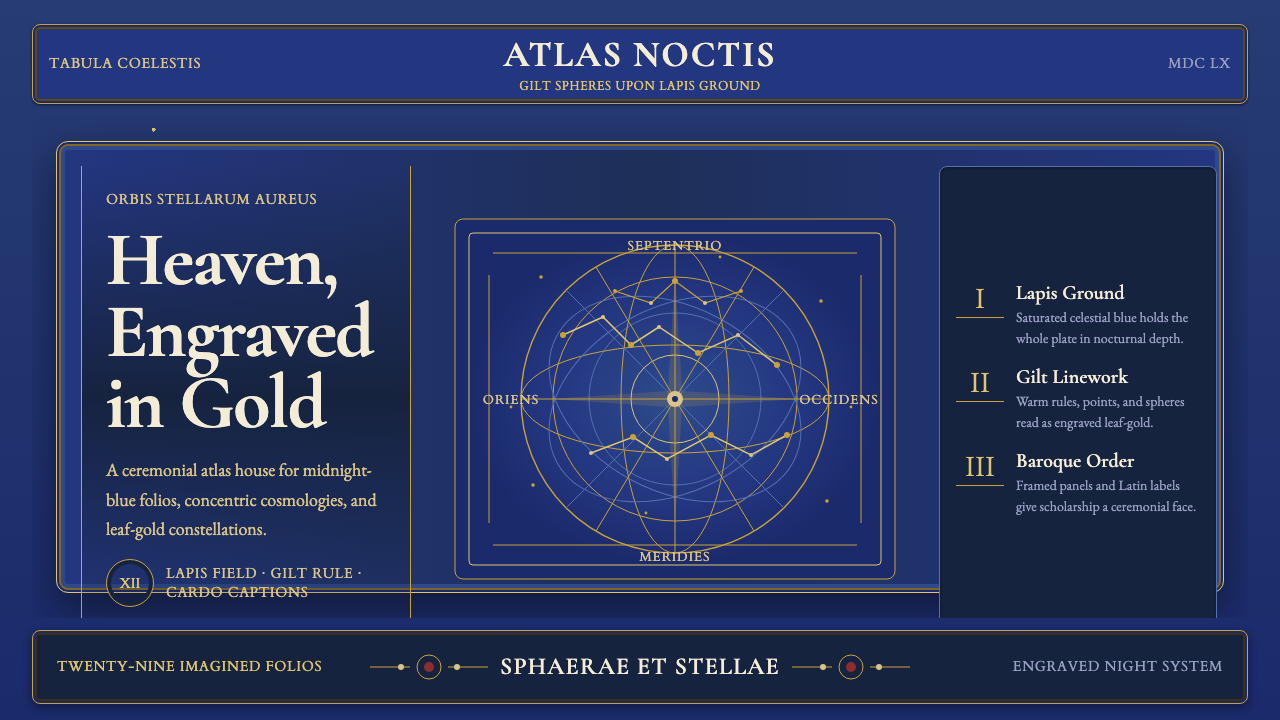 Cellarius Celestial AtlasCelestial luxury on lapis. Gilt serif type, star fields, and concentric chart…
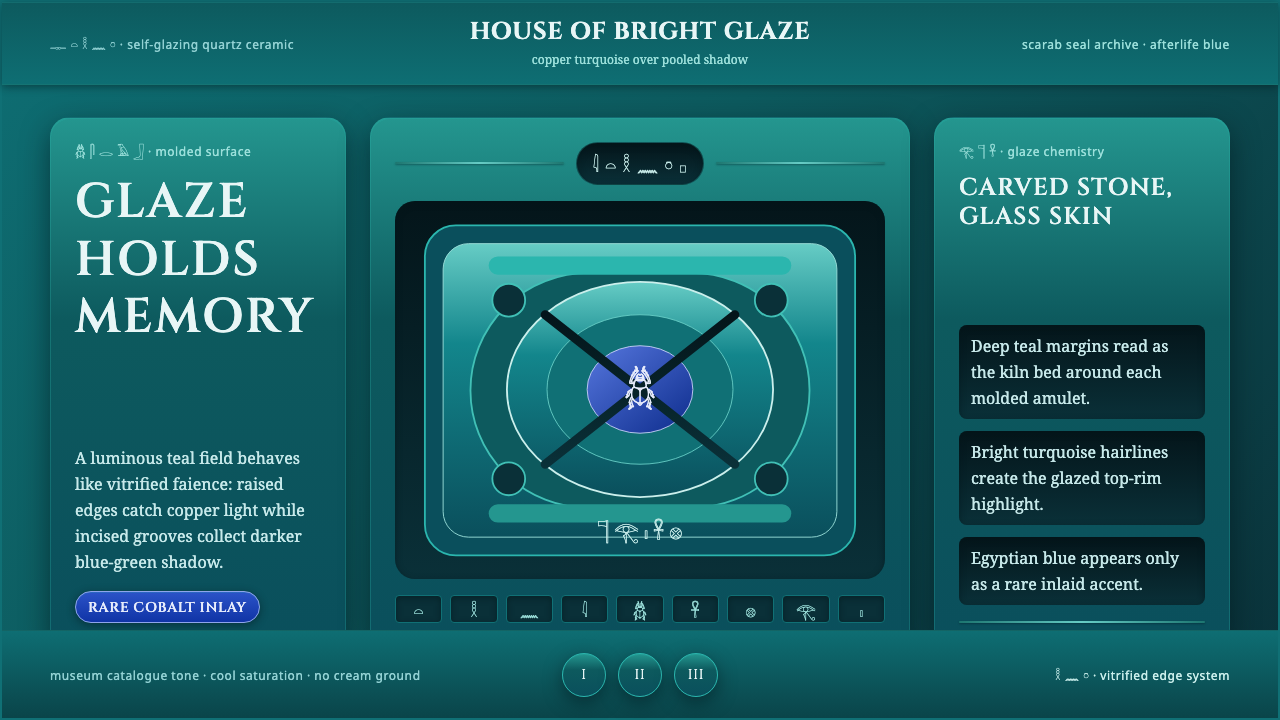 Egyptian FaienceGlaze carries the afterlife. Deep teal grooves, copper-turquoise rims, rare c…