What is Uyghur Muqam & Dap Drum?
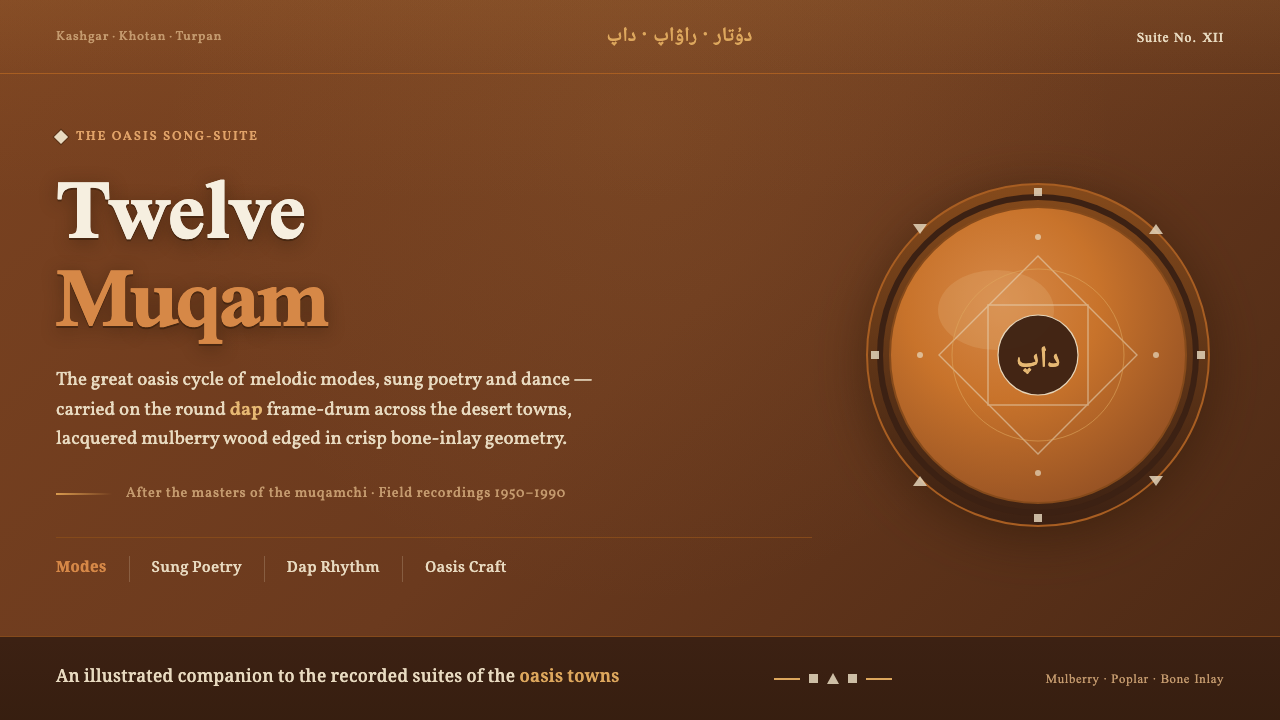
Uyghur Muqam & Dap Drum brings the warmth of oasis music into digital space — lamplight on carved wood, amber resonance, and bone-inlay geometry held against deep mulberry brown.
Uyghur Muqam & Dap Drum in brief
Uyghur Muqam & Dap Drum is a design language derived from the Uyghur Twelve Muqam and the crafted instruments associated with oasis musical life in Xinjiang: the round dap frame-drum, the long-necked rawap, and the two-stringed dutar. Its central impression is not spectacle but resonance. The visual world feels made rather than generated: carved wood, lacquered surfaces, warm reflected light, and pale inlay set carefully into darker material.
The system begins with a deep mulberry-brown ground, then lets orange-ochre, amber, and terracotta emerge as if they have caught lamplight. Golden-brown surfaces suggest turned wood through visible grain, restrained highlights, and shadow that follows the curve of an instrument. Bone-inlay cream is used in small, deliberate intervals: a square, a triangle, a ruled line, or a border fragment that sharpens the composition without making it busy.
Its character depends on the relationship between warmth and discipline. The palette is earthy and luminous, but never sugary; the decorative language is intricate, but never diffuse. Geometry does not float as abstract ornament. It behaves like embedded craft, giving edges, rhythm, and points of emphasis to surfaces that otherwise carry the tactile calm of polished wood.
Where does Uyghur Muqam & Dap Drum come from?
The source tradition is the Uyghur Twelve Muqam, identified here as the great oasis song-suite tradition of Xinjiang. Its revival and notation form the historical frame of this design system, alongside the continuing presence of oasis instrument craft. Rather than treating music as an illustration topic, the style takes its cues from the physical culture through which music is carried: circular drum skins, long necks, carved bodies, and hands meeting wood and rhythm.
From the mid-twentieth century onward, the tradition was carried by the dap, rawap, and dutar. That instrument family gives the visual system its material logic. Mulberry and poplar wood suggest dark, durable foundations; lacquered golden-brown surfaces suggest depth built from grain and reflection rather than flat color alone. The result is a language of surfaces that seem shaped, polished, and touched over time.
Bone-inlay woodwork provides the counterpoint. Crisp white squares, triangles, and lines interrupt darker wood with precision, producing a decorative grammar that is both structural and musical. Turdi Akhun, Uyghur muqamchi, and oasis instrument luthiers stand in the source material as the human anchors of this world: performers and makers whose traditions join repertoire, instrument, and ornament into a single oasis register.
What defines the Uyghur Muqam & Dap Drum look?
Mulberry-Brown Ground
Deep mulberry brown is the visual ground, not an incidental backdrop. It establishes the density of aged wood and lets every lighter mark feel embedded, illuminated, or inlaid. Large fields should remain calm enough for the grain, glow, and geometry to register clearly.
Oasis Lamplight
Orange-ochre and amber behave as reflected light rather than arbitrary accents. They gather around focal elements, curved surfaces, and moments of invitation. Their warmth should feel local and directional, as though it comes from a lamp near carved wood, not from a uniformly lit digital canvas.
Turned-Wood Surface
Golden-brown planes carry the grain, highlight, and shadow of turned wood. Depth comes from curvature and finish: a highlight catching the body of an instrument, a shadow settling near an edge, or grain following the implied direction of carving. The surface should feel lacquered, not glossy for its own sake.
Bone-Inlay Geometry
Cream geometry appears as bone inlay: crisp, pale, and materially specific. Squares, triangles, and lines work best in small formations along frames, labels, dividers, and key focal points. Their role is to cut clarity into the darker field, not to cover it with pattern.
Circular Rhythm
The dap frame-drum gives the style a natural circular motif. Circles can anchor a cover, hold a portrait or image crop, frame a metric, or organize a featured action. They should suggest pulse and instrument form, especially when paired with restrained rings, radial grain, or a warm rim of light.
Crafted Restraint
The system is richly tactile but sparing in use. Terracotta and cream are accents, not competing backgrounds; texture supports information instead of obscuring it. The intended effect is composed and intimate: decorative enough to reveal craft, restrained enough to preserve the gravity of the musical tradition.
Who shaped Uyghur Muqam & Dap Drum?
Turdi Akhun is named in the source material as a key figure within the Uyghur Twelve Muqam revival and notation context. In this design language, that role points back to transmission: a repertoire becomes durable because it is carried, remembered, and given form across generations.
Uyghur muqamchi, or muqam masters, represent the performing knowledge at the center of the tradition. Their presence keeps the aesthetic from becoming a generic regional pattern: the warm ground, rhythmic circle, and measured ornament should remain connected to performed music and its living discipline.
Oasis instrument luthiers provide the material foundation for the system. Their work joins mulberry and poplar wood, carved form, lacquered finish, and bone inlay. The design vocabulary follows that sequence closely: first material depth, then shaped surface, then precise pale detail.
How do you use Uyghur Muqam & Dap Drum today?
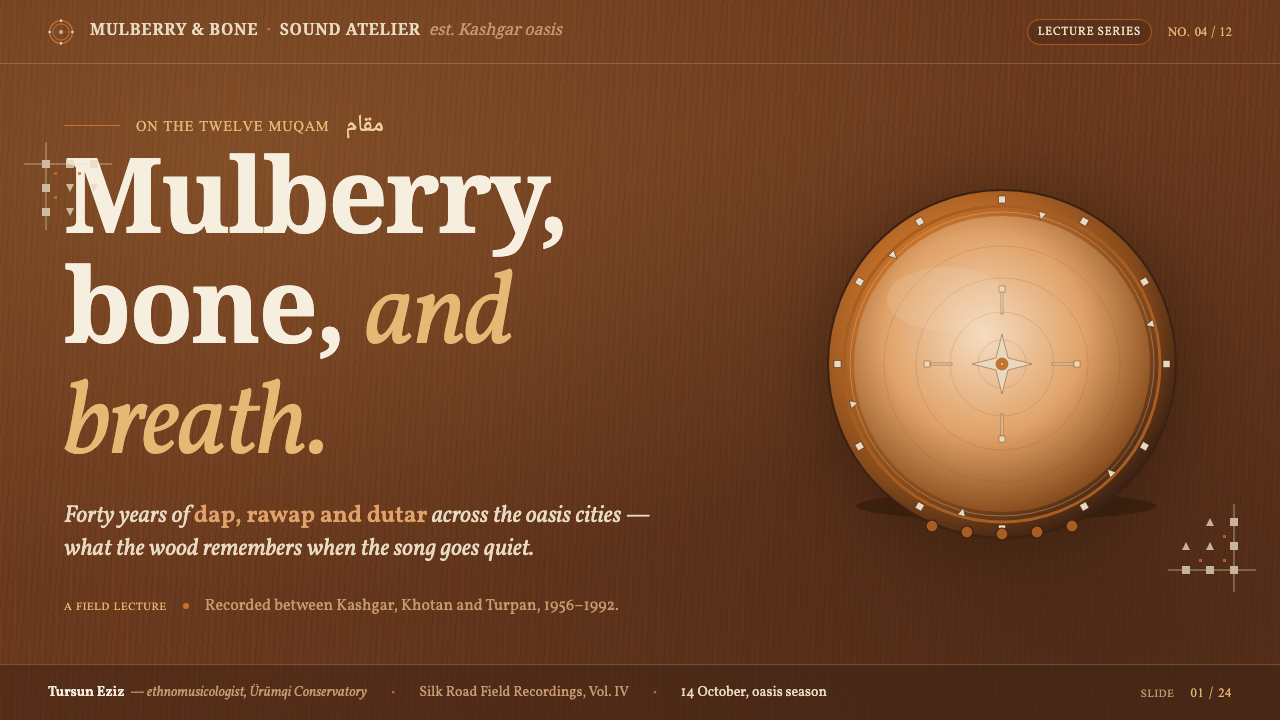
For presentation covers, build around one resonant object: a large drum-like circle, a carved golden-brown field, or a cropped inlay detail held against mulberry brown. Place the title as a calm counterweight rather than filling every open area. Content slides should preserve that same material hierarchy, using a dark ground, warm section markers, and cream geometry only where it clarifies sequence or grouping.
Data slides work when numbers are treated as part of the instrument-inspired composition. Use amber or ochre to identify the primary story, terracotta for a secondary contrast, and pale inlay-like marks for rules, labels, and reference points. Circular charts can echo the dap particularly well, but only when the circular form helps the reader understand the data rather than becoming decorative scenery.
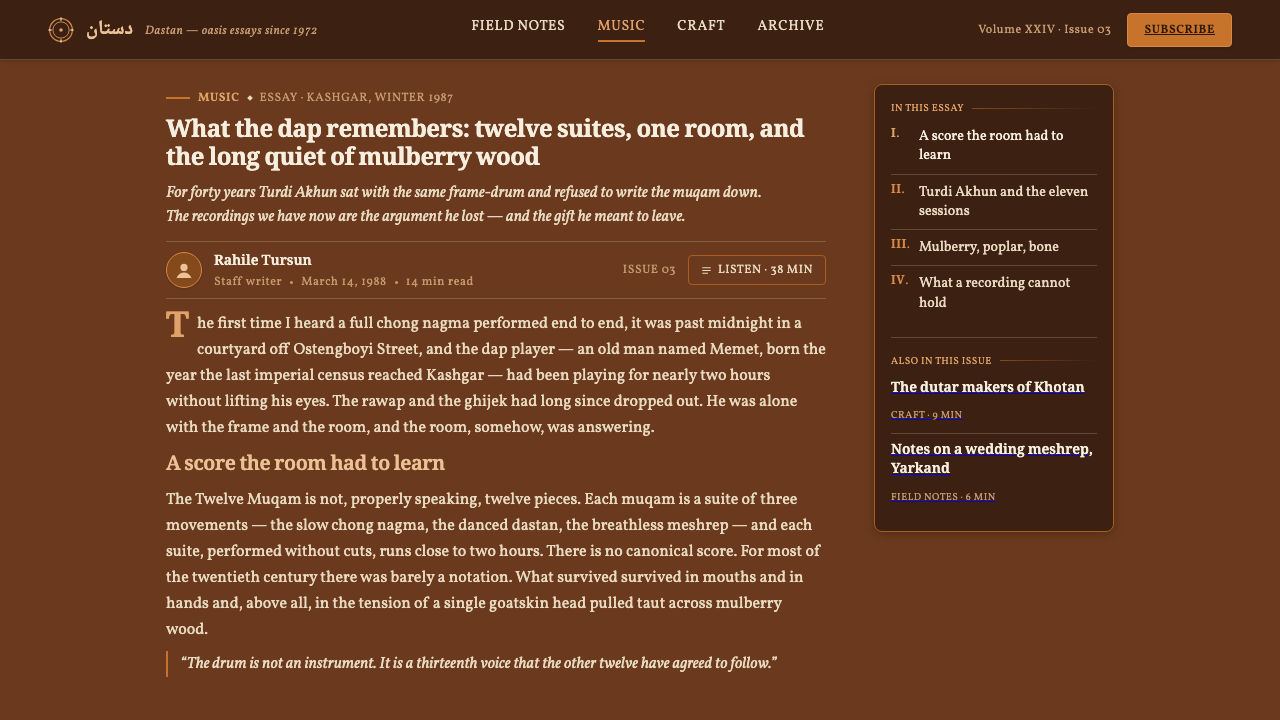
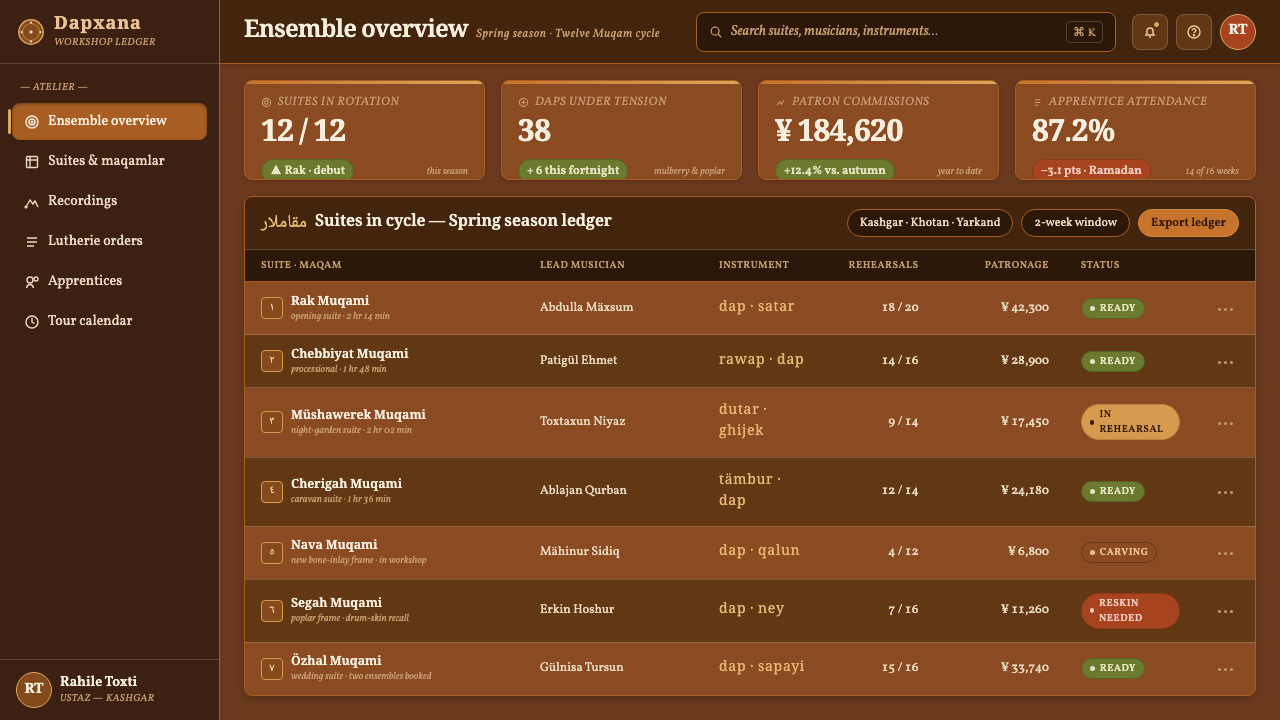
For web interfaces, this language suits cultural archives, event platforms, editorial dashboards, and pricing or membership pages that need warmth without losing authority. Mulberry-brown panels can hold navigation and key summaries, while golden-brown surfaces separate featured content from supporting detail. Buttons, tabs, and status signals should rely on the same small vocabulary of warm highlights and cream geometric cues.
For editorial and marketing work, use texture to establish atmosphere before introducing ornament. A feature story can begin with a broad wood-like field, then move into clearer reading surfaces marked by a narrow inlay motif or circular section sign. The common mistake is to turn every background into highly visible wood grain and every edge into an ornate border. That erases the contrast between crafted surface and useful information; let the material mood lead, and let ornament arrive sparingly.
Uyghur Muqam & Dap Drum — FAQ
Is this style only appropriate for music-related projects?
No. Its strongest applications are projects that benefit from cultural depth, crafted warmth, and measured visual rhythm: archives, exhibitions, learning materials, events, editorial products, and membership experiences. The connection to the source tradition should remain visible in the material logic, however; using the palette without the discipline of wood, inlay, and restraint makes the result feel generic.
How should the circular dap motif be used?
Use it as a rhythmic organizer rather than a repeated logo. A single circle can frame a featured image, establish a focal point, collect an important metric, or mark a major section. Repetition is useful when it suggests beat or sequence, but a field crowded with circles loses the quiet authority of the drum form.
Can cream geometry become a full-page pattern?
Usually it should not. The pale geometry is most convincing when it reads as bone inlay set into a darker crafted surface. Reserve it for borders, separators, focal corners, and small symbolic formations. Expanding it across the entire page weakens its material specificity and can make the composition feel louder than the source register.
What is the biggest mistake when adapting the style to digital products?
Confusing richness with excess. The source language has depth because dark wood, warm light, and pale inlay are carefully separated. If every card glows, every panel carries grain, and every control receives geometric decoration, hierarchy collapses. Keep the richest material treatment for key moments and let ordinary interface tasks remain simple and readable.
Related design styles
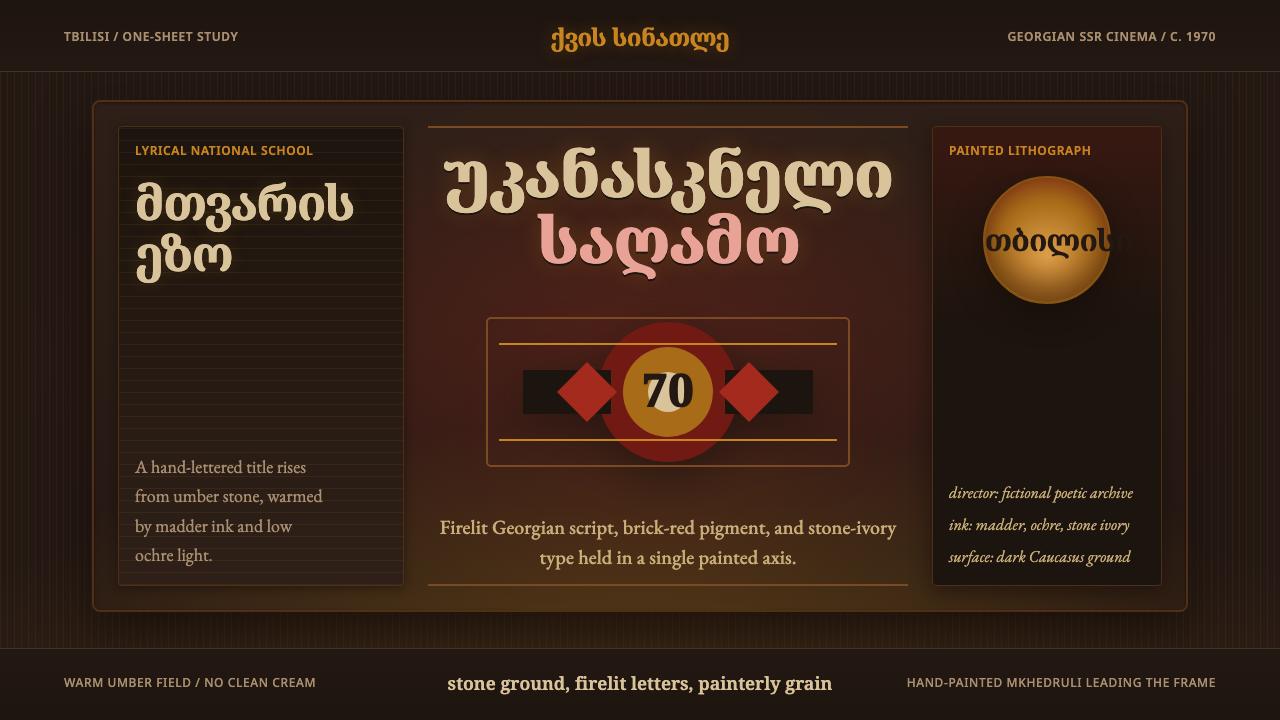 Georgian Soviet Cinema PosterFirelit and handmade. Mkhedruli serif titling glows in madder red and ochre o…
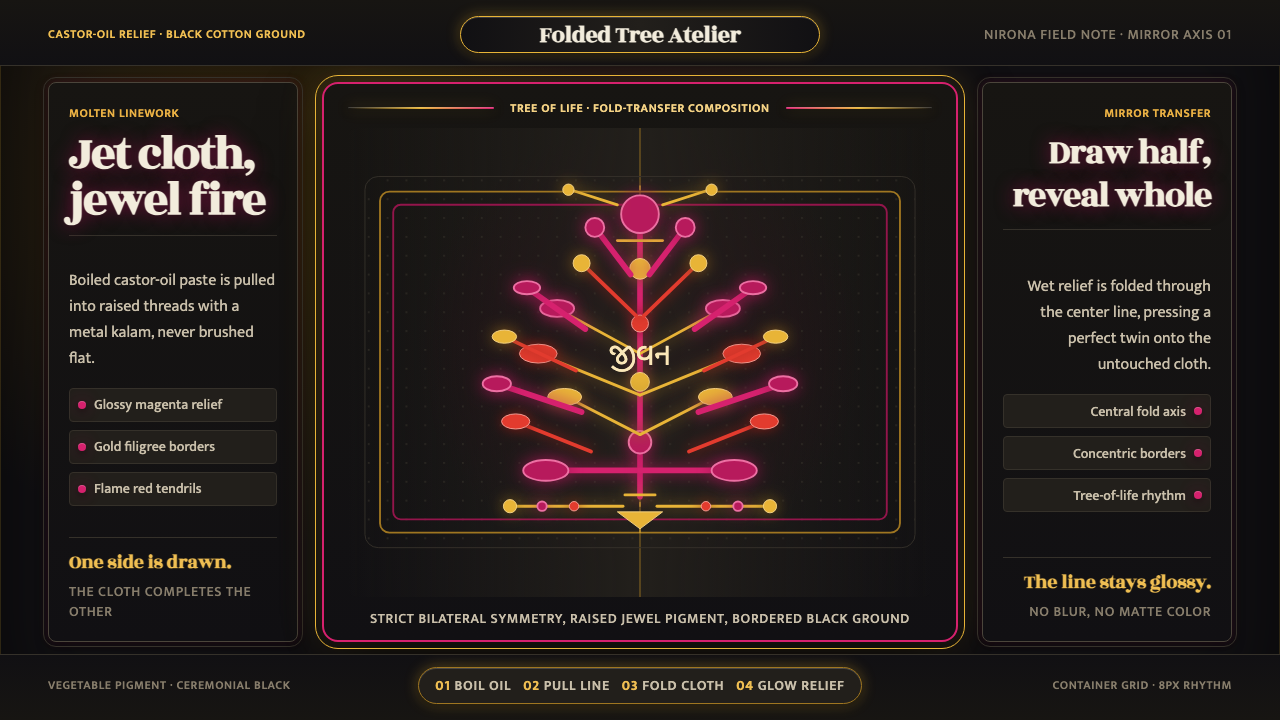 Kutch Rogan Castor-Oil PaintingGlossy symmetry holds the dark. Magenta castor-oil lines mirror across black…
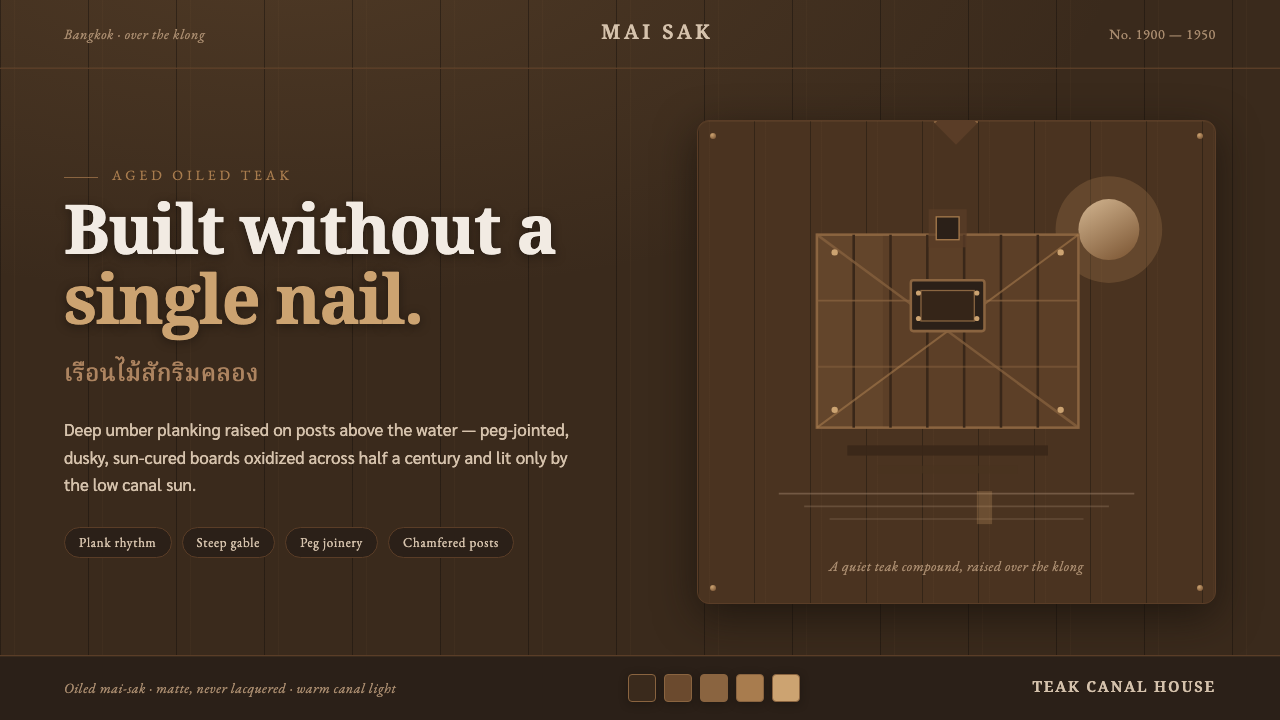 Thai Teak Canal HouseAged oiled teak, never fresh-sawn. Deep umber planks raised over the klong, l…
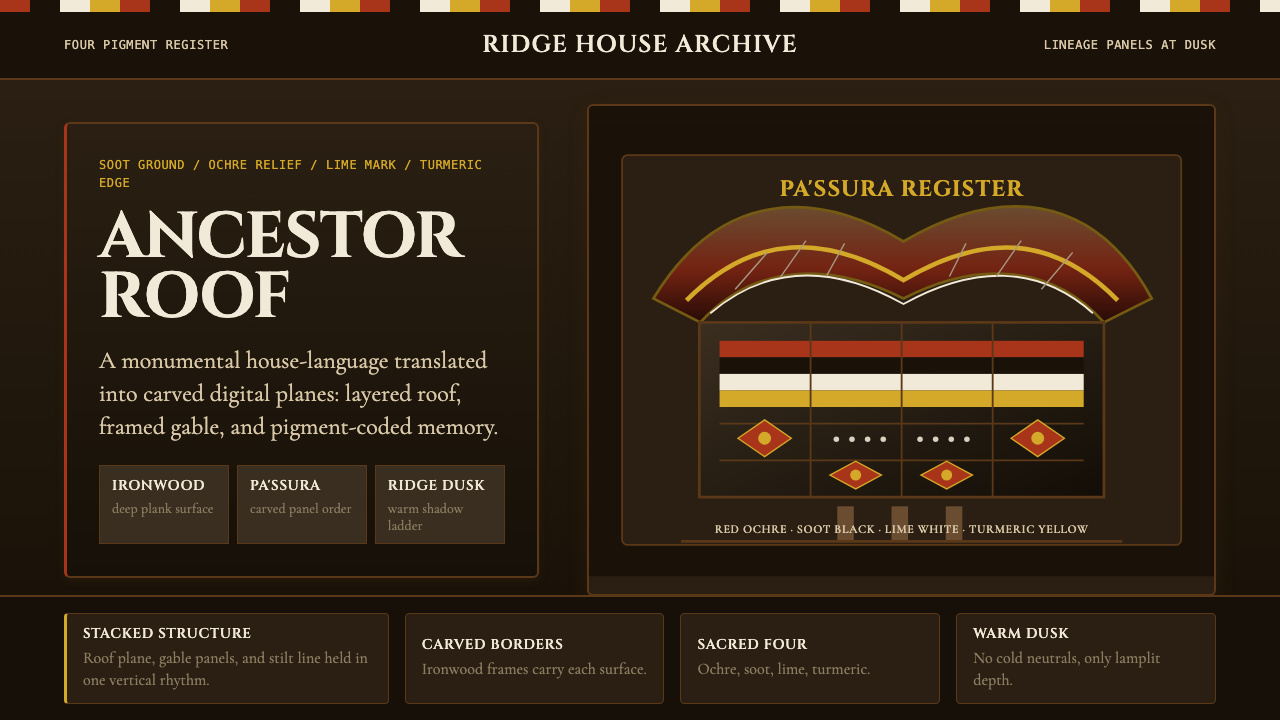 Torajan Tongkonan (Boat-Roof House)Ancestral dusk, carved in color. Soot black frames ochre, lime white, and tur…
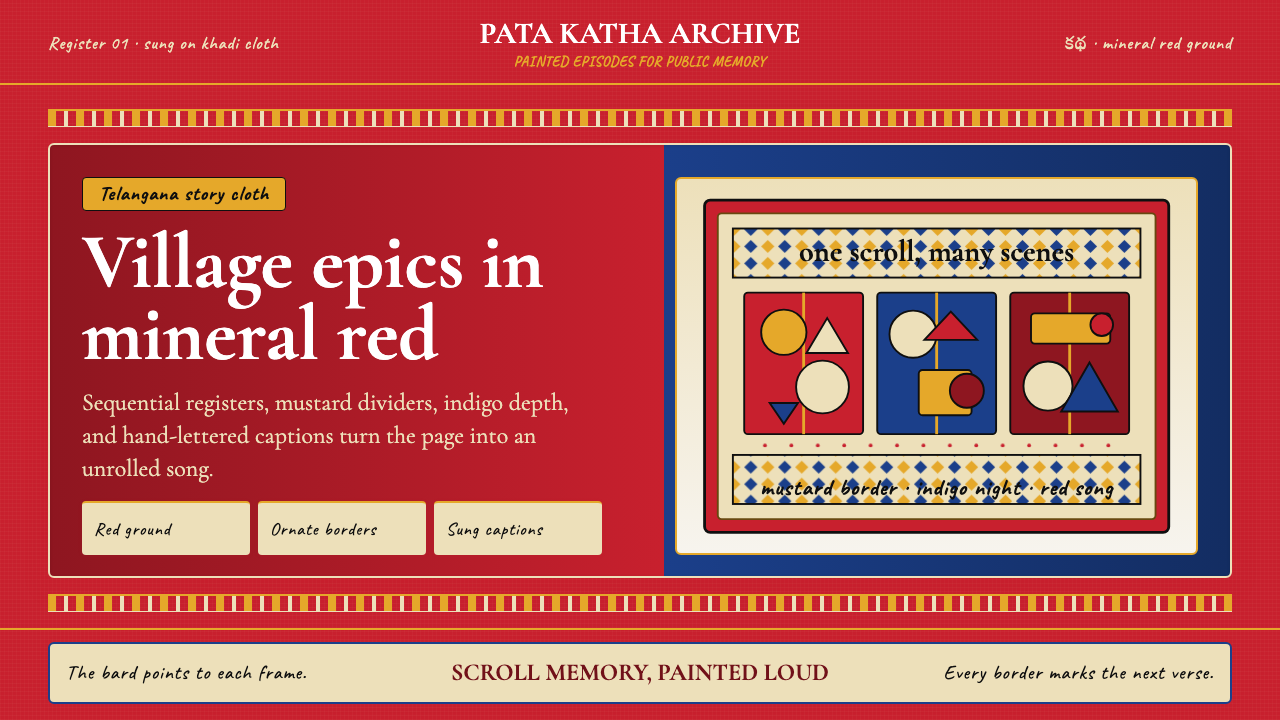 Andhra Cheriyal Scroll PaintingSaturated oral memory. Mineral red registers, mustard diamonds, and serif son…
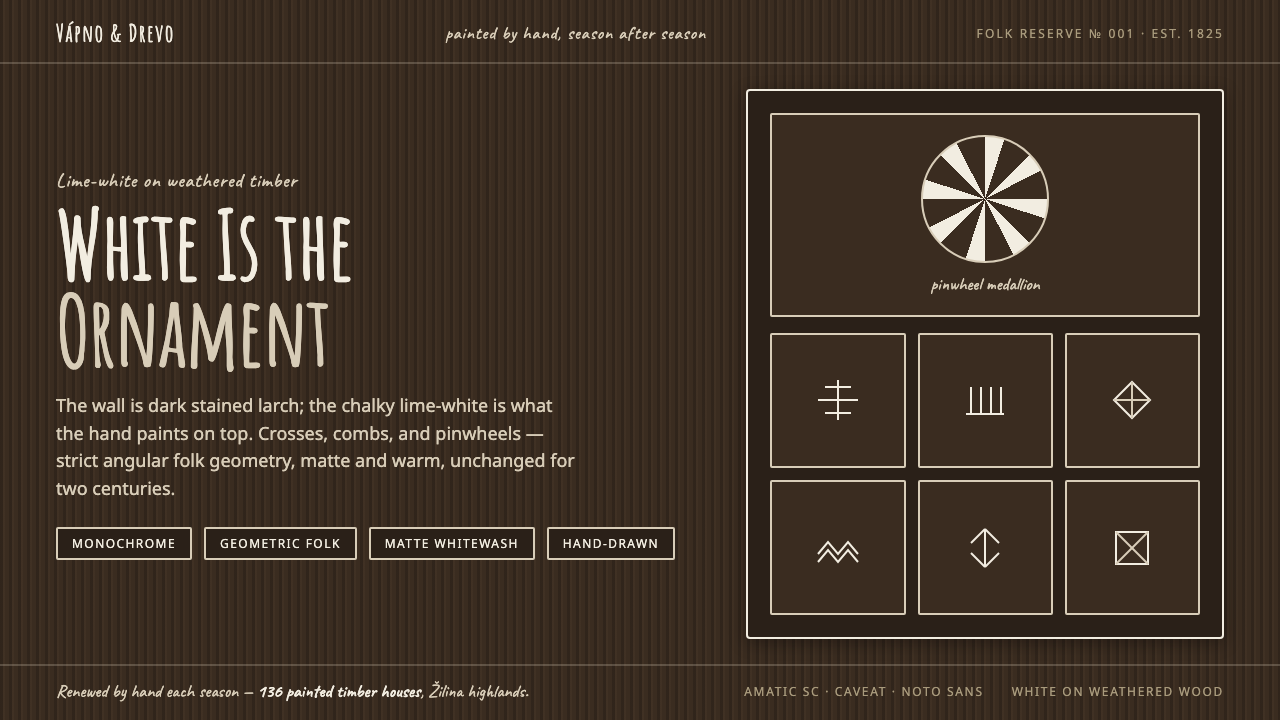 Čičmany Painted House OrnamentWhite is the ornament, not the page. Lime-white folk geometry on dark weather…