What is Twitter (Classic Bird)?
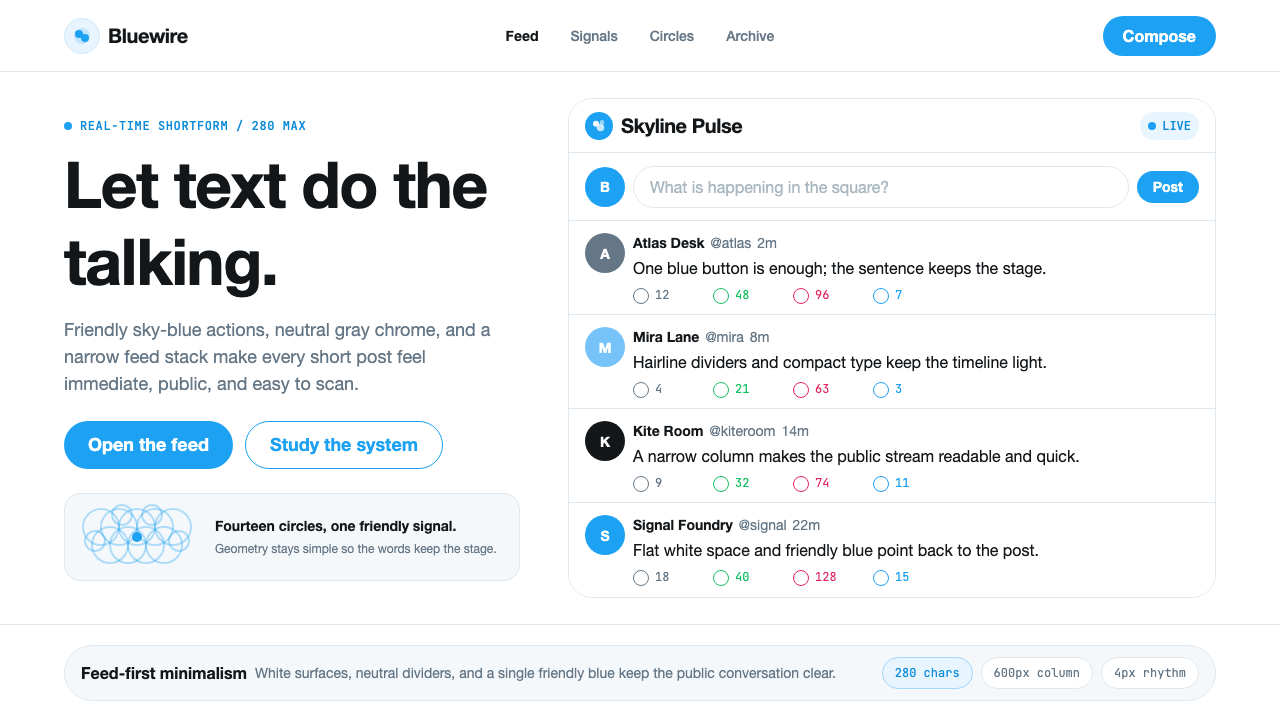
One sky-blue silhouette, a chronological feed, and the discipline to let text do all the work — Twitter's classic bird era proved that a social platform could be a design statement.
Twitter (Classic Bird) in brief
Twitter's classic bird design system — active roughly from 2012 until the platform's rebranding to X in 2023 — is a case study in restraint at internet scale. The visual language was built on a single strong hue (a vivid sky blue that became instantly synonymous with the service), flat white surfaces, a family of rounded pill-shaped buttons, and hairline dividers that organized the feed without ever competing with it. Every interface decision subordinated itself to the tweet.
What made the system coherent was not just its palette but its hierarchy of priorities. Typography was set at generous reading sizes on white backgrounds, interaction affordances were colored in that signature blue, and structural chrome — sidebars, nav rails, loading states — was kept in quiet neutral grays. The result was a UI that felt less like software and more like a well-edited newspaper: you noticed the content, not the container.
The bird mark itself — popularly called Larry, after NBA player Larry Bird — was an emblem of this philosophy. Constructed in 2012 by designer Martin Grasser from exactly fourteen perfect circles, it achieved the seemingly contradictory qualities of geometric precision and organic warmth. The logo lived at every touchpoint and at every scale, and its single-color flat rendering meant it reproduced cleanly on a phone screen, a billboard, or an embroidered polo shirt.

Where does Twitter (Classic Bird) come from?
Twitter was founded in San Francisco in 2006 by Jack Dorsey, Biz Stone, Noah Glass, and Evan Williams, emerging from a brainstorming session at podcasting startup Odeo. The original concept — a short-message dispatch service, initially limited to 140 characters — was inspired partly by SMS culture and partly by the real-time nature of emergency dispatch logs. The name itself came from Dorsey's research into the word 'twitter': a short, inconsequential burst of information, the sound birds make. From the beginning, the bird was not merely a mascot but a conceptual anchor for the service's core metaphor.
The visual identity in Twitter's early years was relatively informal — a text-driven wordmark in a rounded sans-serif, the original light blue bird drawn in a loose, illustrative style. The major turning point came in 2012, when the company retired the last vestiges of its illustrated bird in favor of the pure geometric mark designed by Martin Grasser. The new Larry bird mark dropped the wordmark entirely: the silhouette was now confident enough to stand alone. Simultaneously, the interface underwent a comprehensive redesign under creative director Doug Bowman, who had previously pioneered CSS-based web design at Google. Bowman's team established the flat, white-surface, blue-action vocabulary that would define the platform for a decade.
The timing of this 2012 redesign was significant. It coincided with the explosive growth of mobile internet and the transition of most users from desktop browsers to smartphone apps. The design system Bowman's team built was not just aesthetically flat — it was architected for multiple screen densities, multiple platform conventions (iOS and Android had different navigation patterns), and the specific ergonomics of thumb-driven touch interaction. The pill-shaped button, the generous tap target, the bottom navigation bar on mobile: each was a response to the new physical reality of how people actually held and used their phones.
The decade from 2012 to 2023 saw gradual evolution within the established language: night mode arrived as a dark-surface variant, the character limit doubled from 140 to 280 in 2017, and the product expanded to include multimedia tweets, threads, Spaces, and Communities. Through all of this, the core visual vocabulary remained remarkably stable. The sky-blue primary, the white card surface, the rounded corner radius, the hairline divider — these persisted as constants while individual features came and went. That stability was itself a design achievement: in an era when most major platforms redesigned aggressively every two to three years, Twitter's visual language aged into something that felt almost timeless.
What defines the Twitter (Classic Bird) look?
Sky-Blue Primary Action
The platform's signature blue — a vivid, medium-saturation sky tone — served as the single source of interactive intent across the entire system. Links, buttons, verified badges, interactive counters, and the primary call-to-action (the Tweet button) all shared this hue. By reserving it exclusively for affordances and actions rather than decoration, the design made the blue itself a signal: wherever you saw it, something was tappable or meaningful. The color's specific tone sat at a friendly midpoint — neither the cold authority of a corporate navy nor the energetic aggression of a saturated primary — which matched the platform's aspiration to feel simultaneously credible and approachable.
White Feed Surface
The default timeline was rendered on a clean white or very lightly tinted near-white ground, with individual tweets separated by hairline dividers rather than card containers or visible gutters. This surface treatment made the feed feel like a continuous document — closer to a typeset broadsheet than to a grid of cards — and it placed maximum emphasis on the text content itself. The approach was intentionally newspaper-like: a legacy medium that had solved the problem of presenting dense text at high velocity and high volume, and whose authority Twitter's feed borrowed by visual association.
Pill-Shaped Buttons
Every button in the classic Twitter system — from the primary Tweet action to secondary follow and reply buttons — used a fully rounded corner radius that produced the characteristic pill or capsule shape. This choice was not arbitrary: the soft rounded form read as inherently friendly and accessible rather than corporate or bureaucratic, and it distinguished interactive elements from structural rectangles (cards, panels, dividers) that used sharper corners. The pill button became one of the most widely imitated interface patterns of the 2010s, spreading across social media competitors and eventually becoming a default pattern in mainstream design systems.
Neutral Gray Chrome
Everything that was not content and not an interactive action was rendered in a family of quiet, desaturated grays: the navigation rail, the sidebar widgets, the timestamp text, the secondary metadata (retweet counts, impression numbers), and the placeholder states. This gray vocabulary served a crucial structural function — it made the hierarchy legible at a glance without asserting itself visually. Users learned to read the color temperature intuitively: white and gray meant structure, blue meant action, and the full richness of color in any tweet came from the content itself (images, link previews, emoji) rather than the interface.
Typography First
The classic Twitter interface was fundamentally a typographic system. Body text — the tweet content — was set at a generous, comfortable reading size with ample line spacing, reflecting the platform's roots in a text-centric microblogging format. Display names, handles, and timestamps established a clear three-tier hierarchy through size and weight contrast alone, with no color differentiation at the typographic level (color being reserved for interactive states). This typography-first approach meant the interface scaled gracefully across contexts: the same hierarchy worked whether a tweet contained a single word or the full 280 characters.
Flat and Icon-Light Interaction
Interaction affordances — like, retweet, reply, and share — were represented through a set of minimal line-art icons: a heart, two curved arrows, a speech bubble, an upload arrow. These icons were deliberately simple, almost diagrammatic, using only a single stroke weight and no fills in their resting state. They filled with the action blue on hover or selection, making state change clear without animation complexity. This flat icon approach was a direct application of the interface principle that every interaction element should communicate its function without theatrical embellishment — the iconography worked because of what it did not add.
The Larry Bird Mark
The 2012 geometric bird — constructed by Martin Grasser using a system of overlapping perfect circles — represented the distillation of the platform's design values into a single mark. The bird faces right and slightly upward, an orientation that reads as forward-looking and open. Every curve in the mark is derived from the same circle geometry, giving it a mathematical coherence that holds at any scale: identically legible on a browser favicon sixteen pixels across and on a building-side mural several stories tall. Its single-color flat rendering — always the platform blue or white, never shadowed or textured — embodied the same flatness principle that governed the entire interface.

Who shaped Twitter (Classic Bird)?
Dorsey co-founded Twitter in 2006 and served as its original CEO, stepping back and then returning as CEO in 2015 and again in 2022. His vision for Twitter as a real-time communication utility — closer to a city square than a social network — shaped the product's priority of speed, brevity, and public accessibility. Dorsey's product instincts consistently favored simplicity: he pushed for the platform to do fewer things better and resisted feature bloat, values that aligned with the restraint embedded in the classic visual system.
Bowman served as Twitter's first Visual Design Lead and later Creative Director, joining the company in 2009 after a celebrated tenure as Google's first Visual Designer. At Google, he became known for his frustration with data-driven design culture — famously recounting the company testing forty-one shades of blue. At Twitter, Bowman had greater authority to make bold aesthetic decisions, and the 2012 redesign that established the definitive classic visual language bears his mark most strongly. He also hired the design team that would maintain and evolve the system through Twitter's peak years.
Grasser designed the 2012 Larry bird mark that became one of the most recognized logos in internet history, replacing the earlier illustrated bird with a geometrically precise silhouette constructed from fourteen overlapping circles. The design process involved extensive mathematical work — each curve in the final mark is derived from the same circle geometry, ensuring harmonic proportion at every scale. Grasser's approach demonstrated that geometric construction methods, long associated with print and branding design, could produce marks that performed as well in digital interface contexts as on physical merchandise.
Stone co-founded Twitter alongside Dorsey and played a significant role in shaping the platform's cultural identity and tone of voice — factors that directly influenced how the visual design was expected to feel. He consistently advocated for Twitter as a force for openness, conversation, and even social good, an aspirational positioning that the friendly, approachable blue-and-white visual system was designed to support. Stone's public-facing communication style — warm, witty, and non-corporate — set the brand personality that the design needed to embody.
How do you use Twitter (Classic Bird) today?
The classic Twitter visual system transfers well to presentation design precisely because it solved the same problem slides must solve: how to present a high volume of text-heavy information at speed without visual noise overwhelming the signal. On a slide cover, the approach works through confident simplicity — a white or near-white background, the primary action blue used for a single headline or keyline accent, and a generously scaled display typeface set in a rounded, approachable weight. The composition should feel like the front page of a well-edited publication rather than an elaborate graphic. Avoid filling the slide with imagery; if imagery is used, it should be a single strong photograph treated as a full bleed, with text placed over a clean white zone.
Content and data slides benefit from the same typographic rigor. Body text should be set at a size that feels almost too large — generous readability was a Twitter hallmark — with secondary metadata (dates, sources, captions) stepped down clearly in size and rendered in a quiet gray rather than the action blue. For data visualization, the classic Twitter approach would treat charts as typographic objects: bar charts and line charts in the primary blue for the primary series, neutral gray for comparative or secondary series, and axis labels in the same quiet gray as other metadata. Gridlines, if present, should be the lightest possible weight — barely visible, purely structural.
For web UI work — dashboards, pricing pages, analytics interfaces — the classic Twitter vocabulary provides a ready-made clarity framework. Establish a clean light background as the base surface, use the sky-blue primary exclusively for actionable elements (buttons, active tabs, selected states, links), and render all structural chrome (navigation, sidebars, dividers, borders) in a family of neutral grays. Pill-shaped buttons are appropriate and period-accurate, but even if a different button shape is preferred, the color discipline — blue for action, gray for structure, white for content — is the core transferable principle. Card components work best when they are minimal: a white surface, a hairline border or very subtle shadow, and content that relies on typographic hierarchy rather than graphic decoration.
In editorial and marketing contexts, the style supports authoritative, text-forward communication. A newsletter or blog layout in this idiom would use a narrow content column for maximum reading comfort, with metadata (author, date, reading time) in a small gray treatment above the headline, and section breaks marked by a simple hairline rather than decorative elements. The blue accent color should appear sparingly — reserved for links, for pull-quote markers, or for a single highlighted call-to-action button at the end of an article. Marketing landing pages can leverage the style's poster-like clarity by alternating between white and a very light tinted section background, with blue used only at moments of conversion intent.
A frequent mistake when working in this style is treating the sky blue as a decorative background color. In the authentic Twitter system, blue was never used as a surface — it appeared only on interactive elements and the bird mark itself. Using blue as a panel background, section fill, or illustrative element immediately breaks the system's logic and undermines the clear signal that blue means action. A related mistake is using multiple rounded shapes (circles, bubbles, abstract blobs) as visual interest — the Twitter system's geometry was functional (pill buttons, the bird's circles) rather than decorative. If your layout needs visual texture, reach for typographic contrast and scale before reaching for shapes.

Twitter (Classic Bird) — FAQ
How does the classic Twitter style differ from generic flat design?
Generic flat design, as it proliferated after iOS 7 in 2013, often means simply removing gradients and drop shadows — the surface gets flat, but the underlying system thinking may not deepen. Classic Twitter's flatness was part of a more specific discipline: a strictly reserved color system (blue for action only), a typographic hierarchy built on just two or three levels, and a neutral gray chrome that never competed with content. The result felt editorial rather than merely modern. Where generic flat design can produce layouts that look clean but feel arbitrary, classic Twitter's system had rules that explained every absence and every color choice.
Can this style work for a product that is not a social platform?
Yes, and it often performs better outside social media than within it — because the core virtues of the style (clear action hierarchy, typographic emphasis, minimal chrome) are universally valuable in information-dense products. The style is particularly well-suited to communication tools, news readers, productivity applications, and any interface where the user needs to process large amounts of text quickly. It performs less well for products that are primarily visual or experiential — photo editing tools, creative applications, consumer lifestyle brands — where the neutral gray and minimal decoration can feel sparse rather than purposeful.
How do you apply this style in dark mode?
Twitter itself introduced a dark mode (and later a true black variant for OLED screens) that demonstrated how the system translates. The key insight from that implementation: the blue primary color shifts slightly in both saturation and lightness to maintain its action-signal legibility against a dark surface, while the gray family inverts — what was light gray structural chrome becomes dark gray, and what was near-white becomes dark near-black. The white card surface becomes a dark elevated surface. Crucially, the color logic does not change: blue remains the exclusive signal of action, gray remains structural, and the darkest surface is reserved for the background. A common dark-mode error is simply inverting all colors — the result tends to feel harsh and loses the original system's warmth.
What is the relationship between this style and other minimalist tech platforms?
The classic Twitter system sits in a family of platform-specific minimalist styles that emerged in the early 2010s, including early Stripe, early Medium, and the first Notion — all of which shared the white surface, generous typography, and reserved accent-color approach. Where Twitter was distinctive was in the specificity of its blue (a signature identity color rather than a neutral accent) and in the pill-button morphology, which neither Stripe nor Medium adopted. These styles were also influenced by the concurrent Swiss-derived design systems popularized in print and corporate communication, but applied the Swiss emphasis on grid and typographic hierarchy to touch-first mobile interaction rather than to static print.
Why did the classic Twitter visual language feel so durable across a decade?
Several factors contributed. First, the system was built on principles rather than trends — the decision to let text dominate, to use color as function rather than decoration, to reserve complexity for content rather than interface, are all things that age well because they are in service of legibility rather than style. Second, the platform's core use case — reading and writing short text, in public, in real time — did not change fundamentally across the decade, so the visual system did not need to reinvent itself to remain fit for purpose. Third, and perhaps most importantly, the bird mark and the sky blue became genuinely cultural artifacts: recognized globally, associated with consequential events (elections, breaking news, social movements), and therefore carrying a weight of meaning that made casual redesign feel high-risk. The classic system's durability was earned by becoming irreplaceable.
Related design styles
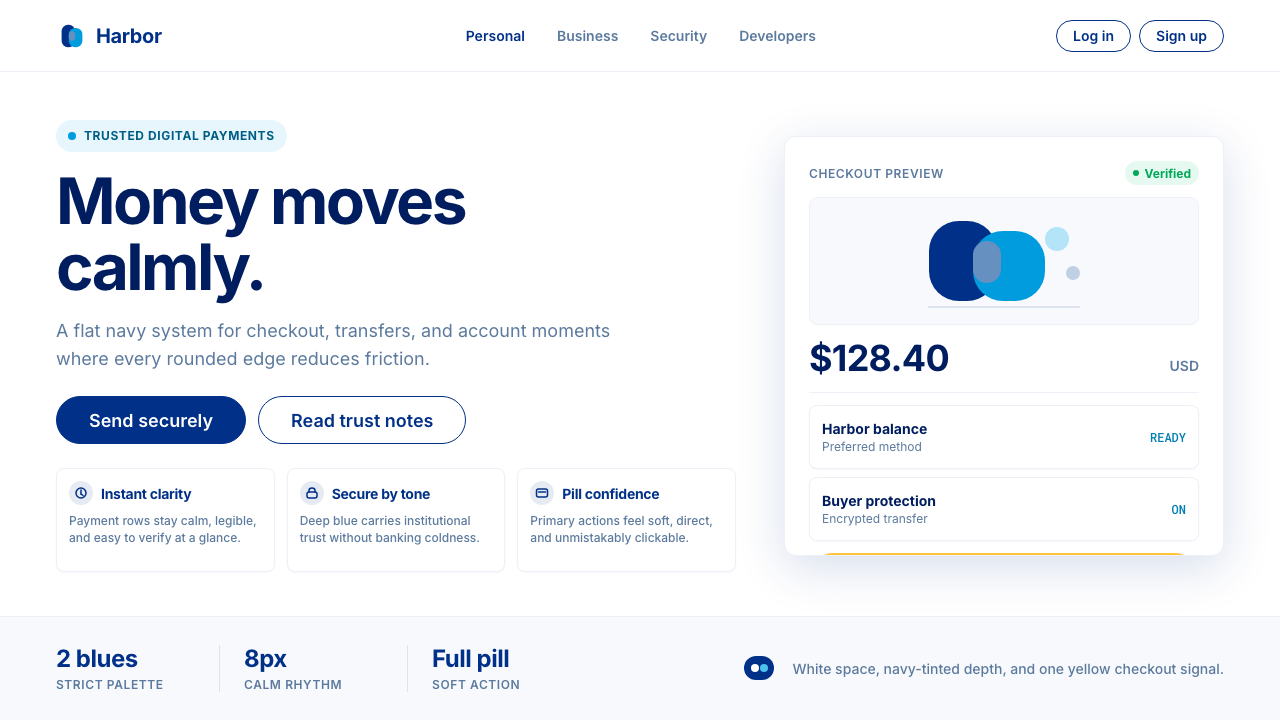 PayPalTrust without coldness. Deep navy, sky cyan, white cards, and pill checkout c…
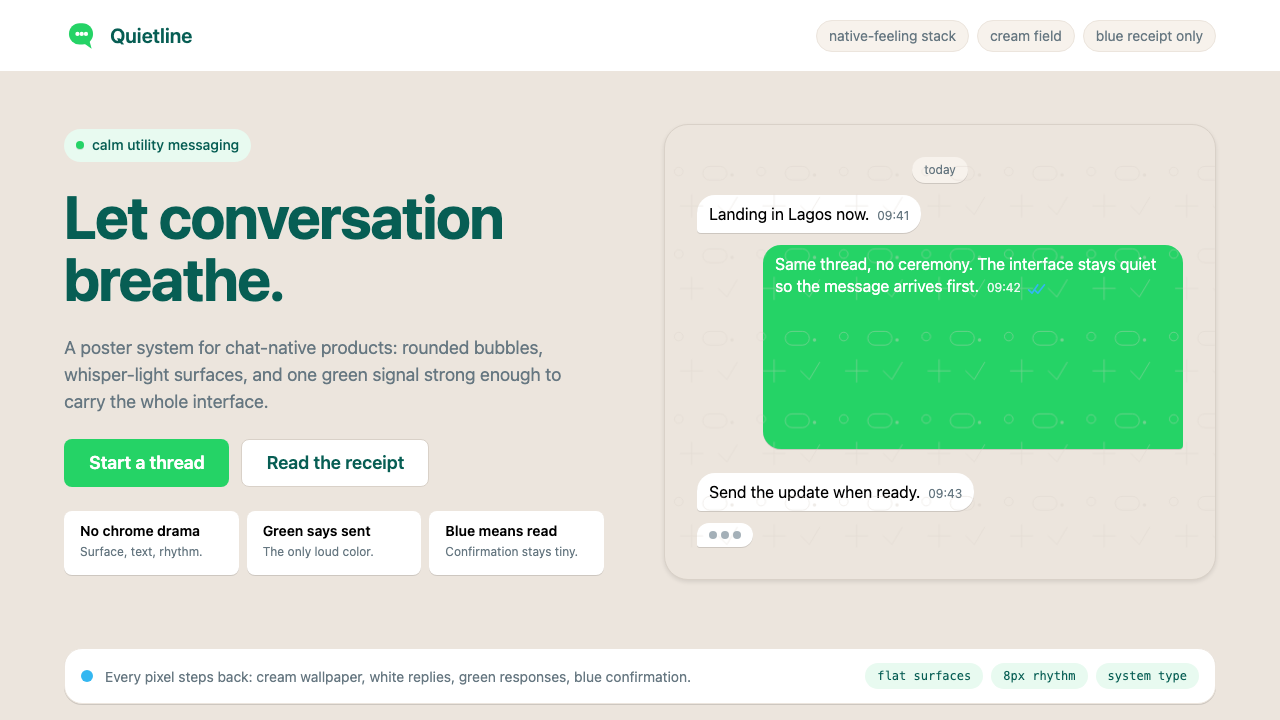 WhatsAppConversation is the interface. Cream wallpaper, green bubbles, and tiny blue…
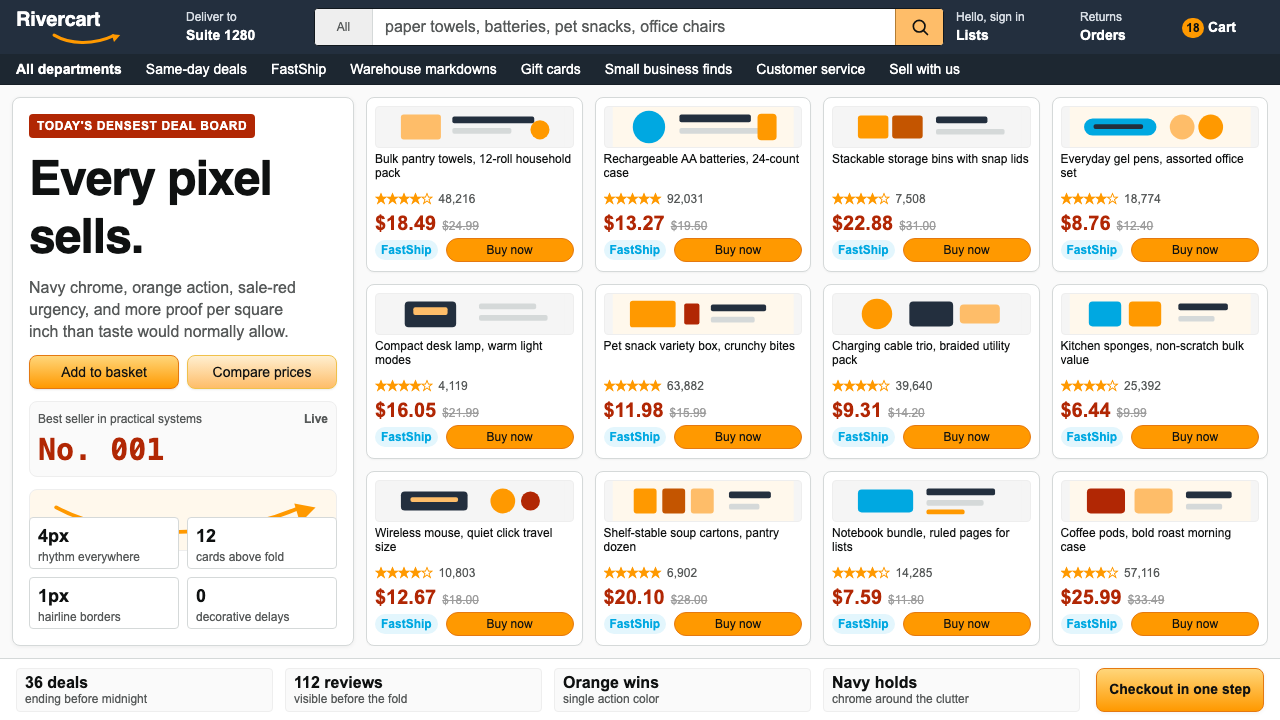 AmazonUgly sells efficiently. Navy chrome, orange buttons, red prices crowd a dense…
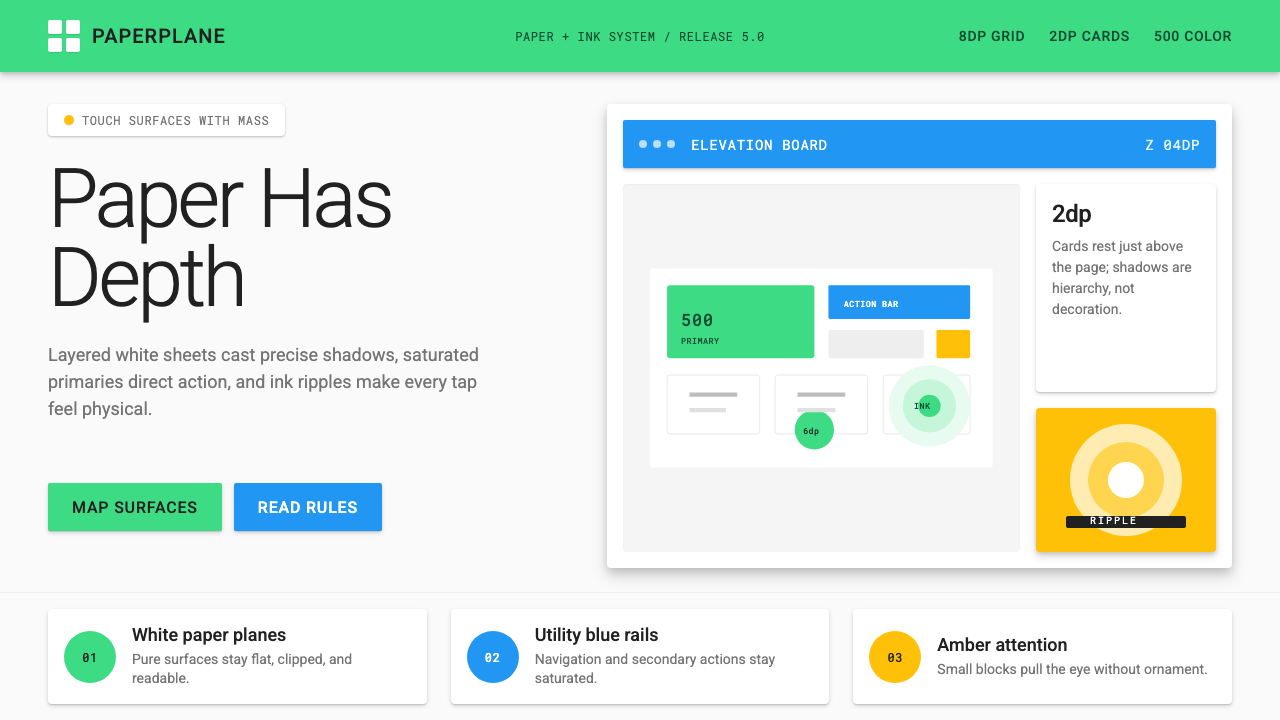 Android Lollipop (Material 1.0)Paper becomes physical. Roboto, green FABs and sharp shadows give white cards…
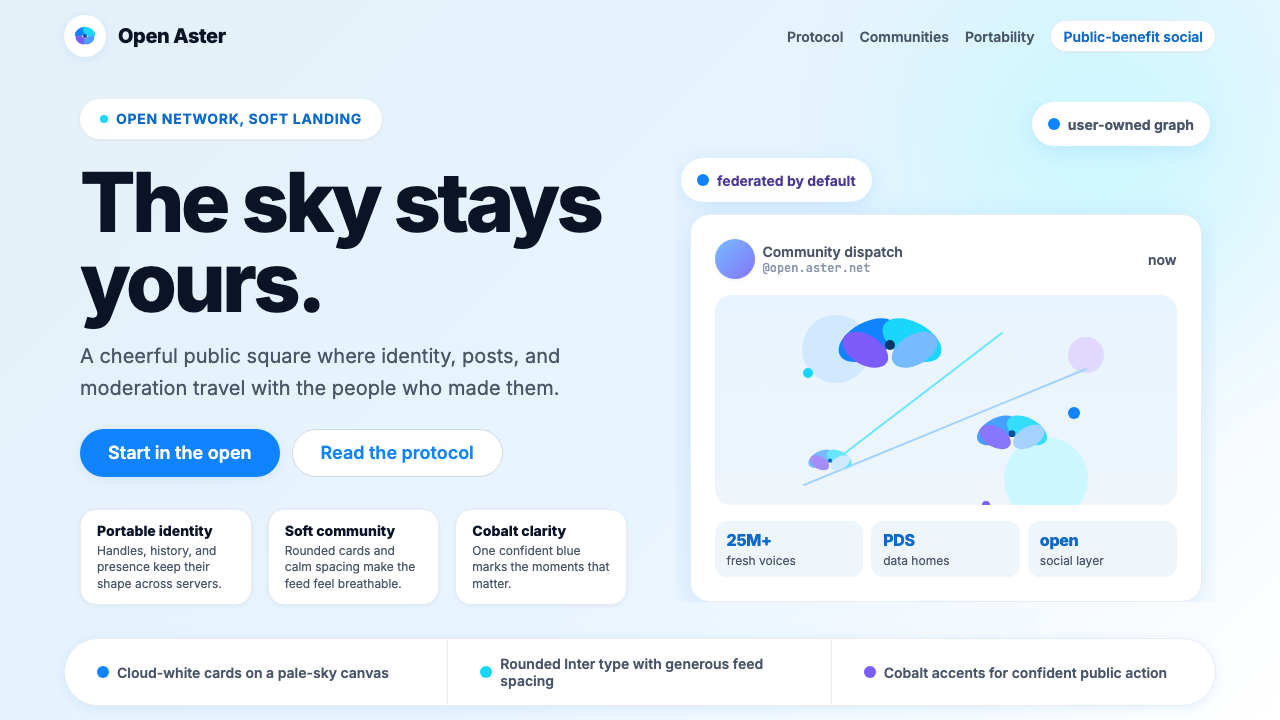 Bluesky AT Protocol 2024Open tech feels warm. Pale sky, cloud cards, Inter, and one cobalt accent car…
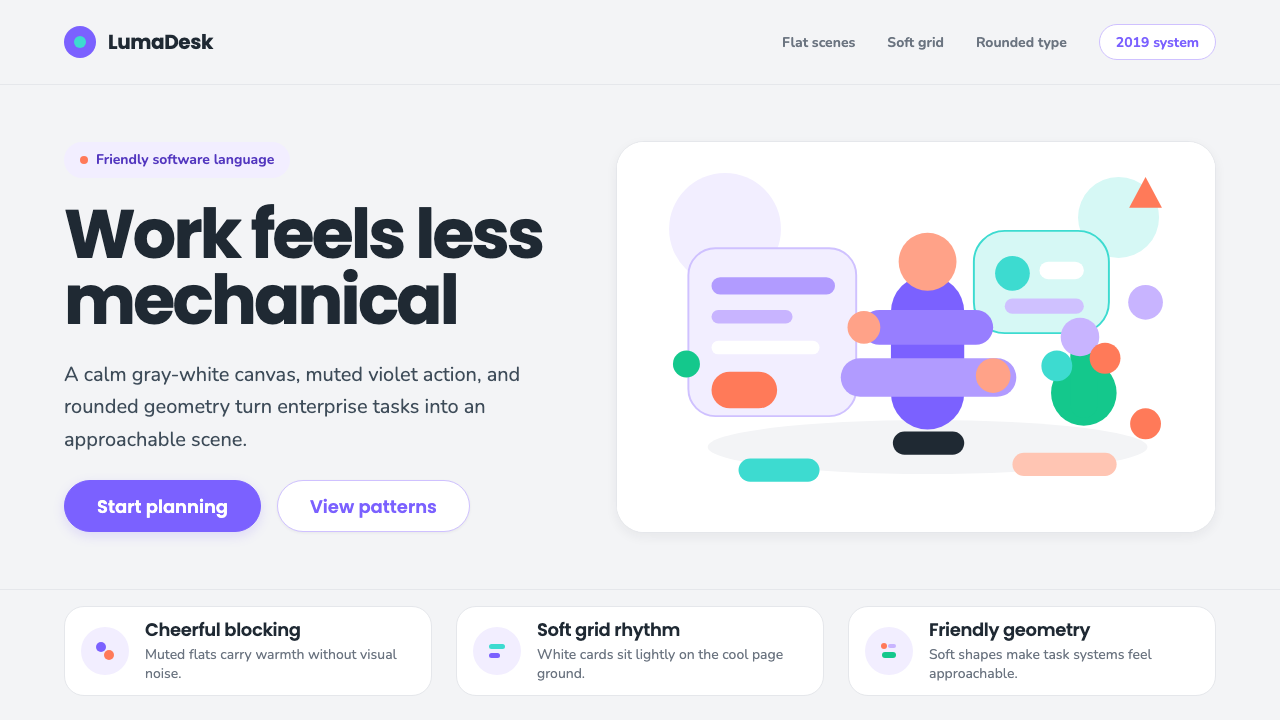 Corporate Memphis (Alegria)Friendly by design. Violet flats and rubber-hose geometry soften the SaaS gri…