What is Tuvaluan Kolose?
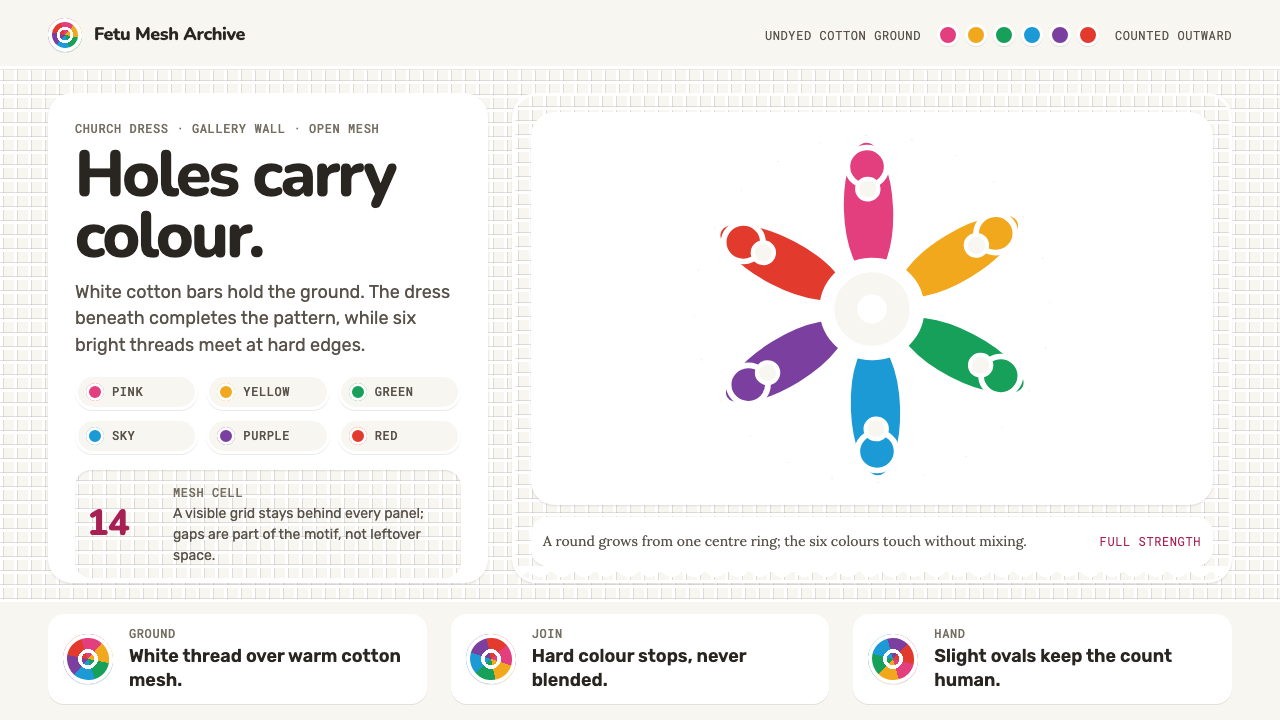
Kolose turned crochet into a Tuvaluan art: a white openwork mesh whose holes carry the colour behind them, set with six unmixed colours at full strength.
Tuvaluan Kolose in brief
Kolose is the Tuvaluan word for crochet, borrowed from English and then made into something else entirely. The ground is a fine openwork mesh in undyed white mercerised cotton. Into that mesh go motifs in the brightest colours the maker can get, pink, yellow, red, sky blue, green and purple, set side by side at full strength with nothing blended between them. The tradition belongs to Tuvalu, a Pacific nation of low-lying atolls, and to Tuvaluan communities in Aotearoa New Zealand.
The idea that organizes everything is that the holes are not absence. A kolose tiputa is worn to church over a coloured dress, so the open mesh reads as whatever is behind it. Fill the holes and the pattern is gone. Everything is worked in the round from a centre ring and counted by hand, so each motif is slightly oval, because hands are not machines.
Taken as a design system, kolose gives you two rules to hold on to: let things show through from below, and do not mix the colours. That is a very different logic from a standard palette-and-surface system. It treats transparency and hard colour as structure, and it treats hand-made irregularity as a feature that proves a person was there.
Where does Tuvaluan Kolose come from?
The word kolose is the English word crochet, heard and taken in. The craft arrived in the early twentieth century through the mission and church women's groups, and was localised over the following decades into something Tuvaluans recognise as their own. It is a useful lesson in design history: a technique came in from outside, and the community kept the tool and rewrote the aesthetic. By the middle of the century the form was mature, and it is still growing, which is why the style reads as a living practice rather than a museum artefact.
What was rewritten is the relationship between thread and ground. Where the introduced craft could have produced dense, tonal fabric, Tuvaluan makers chose a fine openwork mesh in undyed white mercerised cotton, with motifs set into it in the brightest colours available. Mercerised cotton is cotton thread treated to take a smooth, slightly lustrous finish, so the white mesh carries a soft sheen. The motifs are not shaded or mixed: pink sits against yellow, red against sky blue, green against purple, each at full strength.
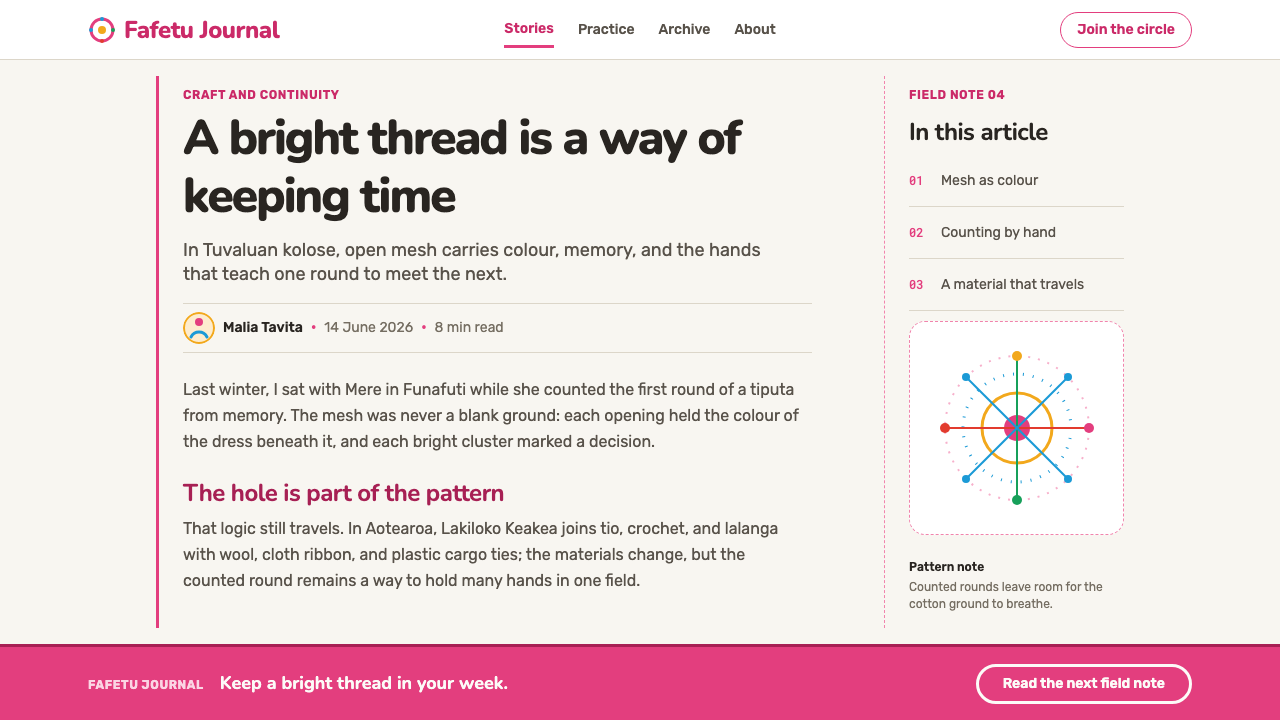
The wearing context explains the logic of the holes. A tiputa is worn to church over a coloured dress, which means the mesh is always seen against colour. The open spaces therefore take on whatever lies behind them and become a second layer of the pattern. That is why filling the holes would destroy the work: transparency is the pattern's other half. The making is just as deliberate. Each motif begins at a centre ring and grows outward in rounds, counted by hand, into stars, rosettes and radiating points, which are then joined into a whole piece.
Today the practice lives in Tuvalu and in Tuvaluan communities in Aotearoa New Zealand, where kolose also appears within contemporary Pacific art. Lakiloko Keakea, Tuvaluan church women's groups and Pātaka Art + Museum are the names attached to the style. The design system places it among the Pacific fibre arts, keeps the two core rules of transparency underneath and colour unmixed, and takes care to present them as Tuvaluan work with Tuvaluan makers, not as a general lace or doily aesthetic.
What defines the Tuvaluan Kolose look?
Open Mesh Ground
The ground is a fine openwork mesh in undyed white, with the soft sheen of mercerised cotton. It is mostly air: a regular lattice of thread and gap. In layout terms the white is a structure, not a page, and it should be lightweight, even and recognisably made of thread.
Holes as Pattern
The open spaces are the other half of the design. Because a tiputa is worn over a coloured dress, the holes show whatever lies behind them, so the mesh and its backing form one image. Fill the holes and the pattern is gone. Transparency is therefore a structural decision, not a finish.
Six Unmixed Colours
Pink, yellow, red, sky blue, green and purple sit side by side at full strength. There are no tints, no gradients and no blended in-betweens. The colours get along because the white mesh separates them, and because each one is allowed to be entirely itself.
Rounds From a Centre Ring
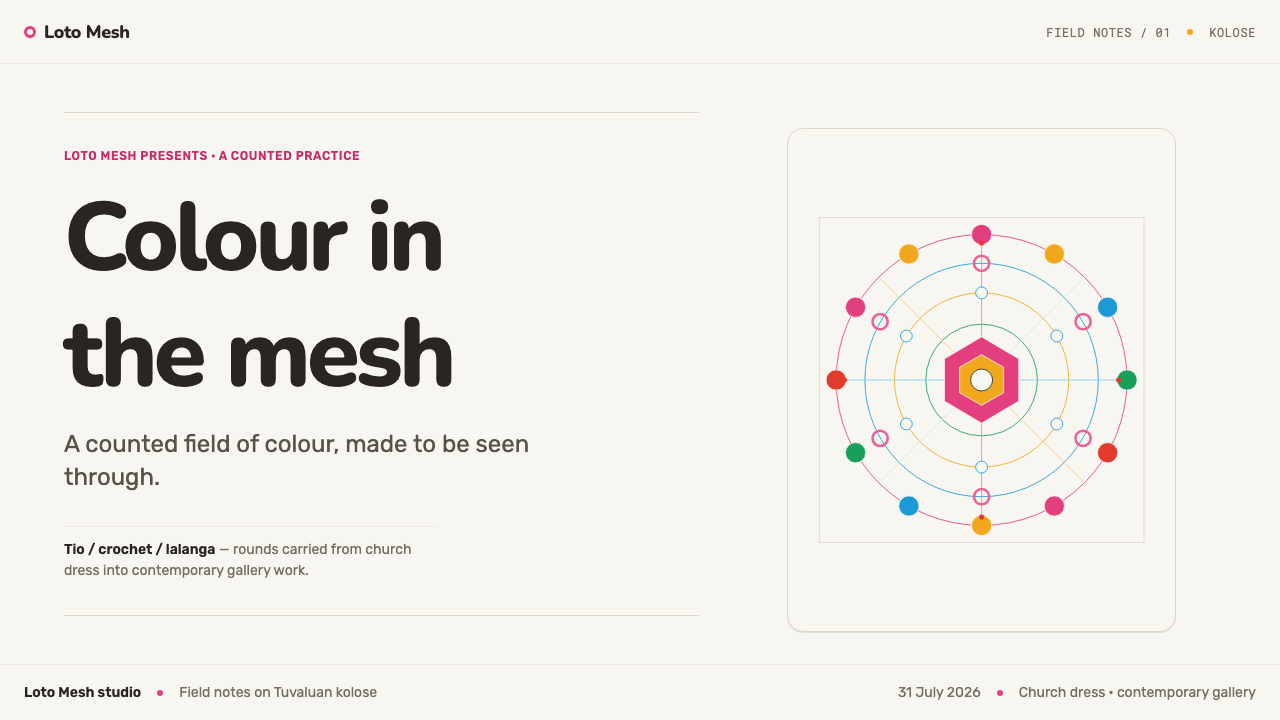
Every motif is worked in the round from a centre ring and grows outward in successive rounds: stars, rosettes and radiating points. Circles and radial symmetry are the basic shapes. Layouts built on this logic tend to have focal centres with rings of detail around them.
Hand-Counted, Slightly Oval
Because the stitches are counted by hand, every round drifts a little and the motifs come out slightly oval. The irregularity is not a flaw to correct but evidence of a person. A kolose-inspired layout should keep some of that softness in its geometry.
Motifs Joined Into a Whole
Individual motifs are joined edge to edge into a single piece, so the whole is a patchwork of rounds. The joins are visible and part of the pattern. It suggests a modular layout where many small repeated units add up to one object.
Thread Presence
Edges are clean but fibrous. Each shape is made of thread, so it has a slight softness at the boundary and a visible direction to its stitches. The effect is crisp colour with a tactile edge, closer to cloth than to a vector fill.
Who shaped Tuvaluan Kolose?
One of the individual names attached to kolose in this style's reference. As with much Pacific fibre art, individual makers sit inside a wider community of church-based makers, so crediting the tradition well means naming people and groups alongside the craft.
The channel through which crochet arrived in the early twentieth century, and the community that made it Tuvaluan. Their role is the heart of the story: they received an outside technique and localised it into a national art with its own rules about mesh, colour and the round.
A museum in Aotearoa New Zealand associated with presenting kolose within contemporary Pacific art. Its place in the story shows that the tradition continues in the Tuvaluan diaspora and is read as living contemporary work, not only as heritage.
How do you use Tuvaluan Kolose today?
Kolose is a style for warmth, celebration and community. It suits products that want to feel joyful, handmade and generous, and that can use transparency honestly. Its difficulty is restraint: bright colours at full strength work only if the mesh organises them. Without that structure, the same colours become noise. In practice, put the white structure first: decide where the mesh is, where the gaps are and what sits behind them, and drop the colour in last. Designers who start from the colours and add the mesh afterwards usually end up with decoration instead of structure.
A slide cover can be a white openwork field with a single round motif, or a cluster of rounds, in full-strength colour, with the title in a plain face at a clear distance. Content slides can keep a white ground and use motif rounds as numerals or bullets, with the text sitting in the open spaces. For data, pie and donut charts are natural because the motif is radial: each segment takes one flat colour from the six, side by side with no tints or gradients. Keep the number of colours in a chart to what the data needs.
In interfaces, use real transparency, not blur: panels that let the layer behind show through crisply, cut-out shapes, lattices over coloured backgrounds. Cards can be white mesh frames over a coloured section, and buttons can be flat full-strength colour, round or radial. Dashboards in this style are friendliest for community, education and celebration products. Pricing tiers can each take one colour from the six, side by side, with nothing blended. Watch contrast: text stays on the white ground and does not sit on mid-strength colour.
For editorial and marketing, layered compositions work well: a coloured photograph or block beneath, with a white openwork frame over it, so that the colour appears through the holes. Round motifs can serve as section markers, avatars or stamps. Joined motif grids make good backgrounds for events, family and community content, kept away from body text so reading stays easy. Captions and short headings can sit in the open spaces of the mesh or on plain white, with colour reserved for the motifs, which keeps text legible and makes the colour feel earned.
The usual mistake is to soften it. Pastel tints, gradients between colours, blur-based glass effects and drop shadows undo both core rules at once: they mix the colour and they fill the holes. The second mistake is machine perfection, since perfectly circular vector motifs lose the slight oval that proves a hand counted them. The third is treating it as generic lace or doily decoration. It is a Tuvaluan art, with its own makers.
Tuvaluan Kolose — FAQ
Is kolose the same as lace or a doily style?
No. Kolose is a Tuvaluan art with its own rules: undyed white mesh, six unmixed colours at full strength, motifs worked in the round from a centre ring, and holes that carry the colour behind them. A generic lace or doily look tends to be tonal and decorative. Present kolose as Tuvaluan work, and name Tuvalu when you use it.
How do I use the holes in a flat interface?
Use real transparency rather than blur. Cut shapes out of a white layer so the coloured section behind shows through crisply, or lay a lattice frame over a colour block. Avoid frosted-glass effects, which soften the edges and mix the colours, and avoid filling the gaps with a tint.
Why six colours at full strength with no blending?
Because that is how the tradition works: pink, yellow, red, sky blue, green and purple are set side by side, and the contrast of unmixed hues is the point. The white mesh separates them so they can sit together without clashing. Tints and gradients would turn the colours into a pastel wash and lose the energy.
Does the style work in dark mode?
The white mesh is the core of the style, so keep it white, even in a darker design. Let a deep colour sit behind the mesh so it shows through the holes, and keep the six motif colours at full strength. A fully dark page with no white mesh would lose the logic and read as a different style.
How should I credit or describe this style?
Call it kolose, name Tuvalu and Tuvaluan makers, and where possible mention the church women's groups who made crochet their own. Borrow the logic of transparency and unmixed colour rather than reproducing specific garments or motifs, and avoid describing it as generic Pacific or tropical decoration.
Related design styles
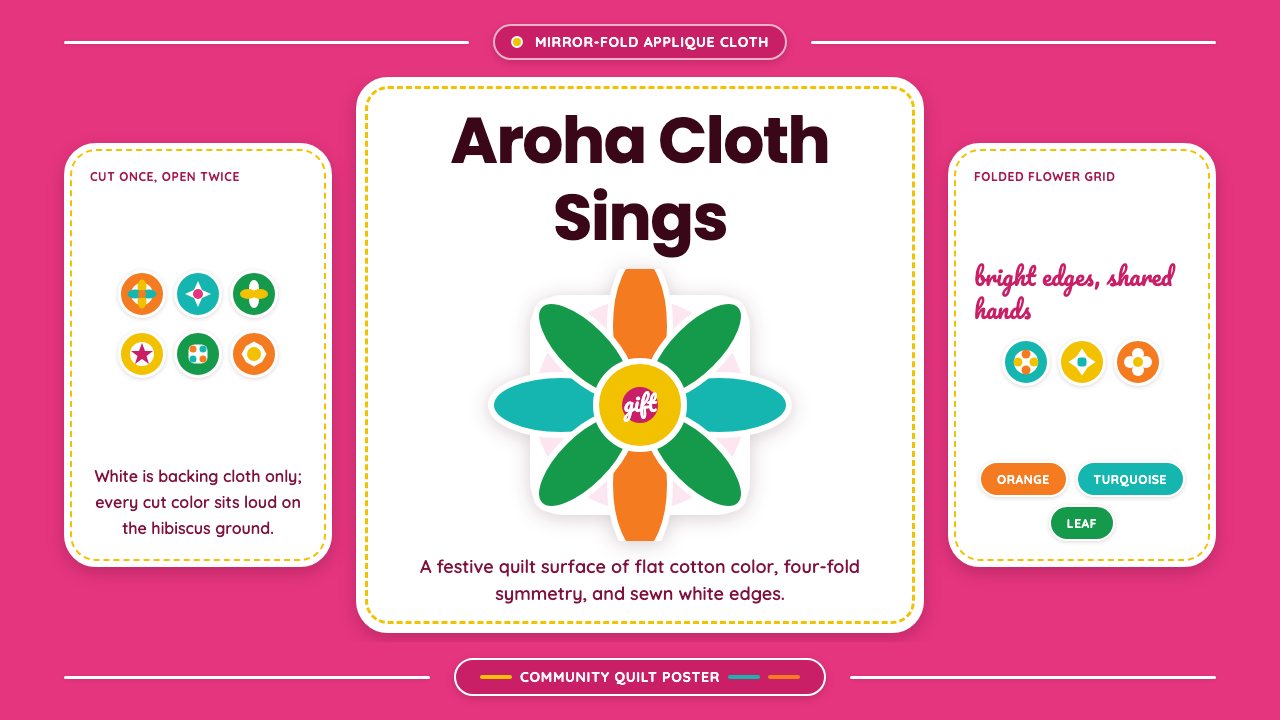 Cook Islands TivaevaeSaturated craft sings. Hibiscus pink carries mirror-fold florals in flat appl…
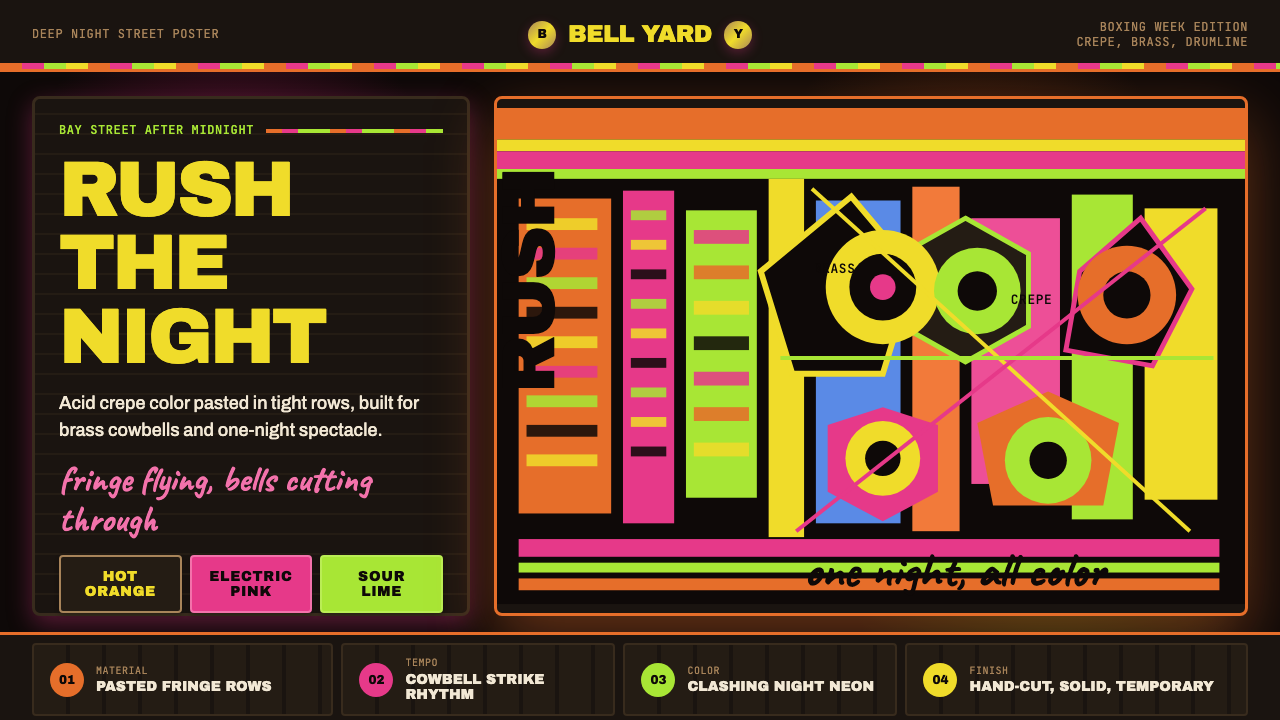 Bahamian Junkanoo CowbellNight refuses silence. Acid crepe stripes and block type collide like cowbell…
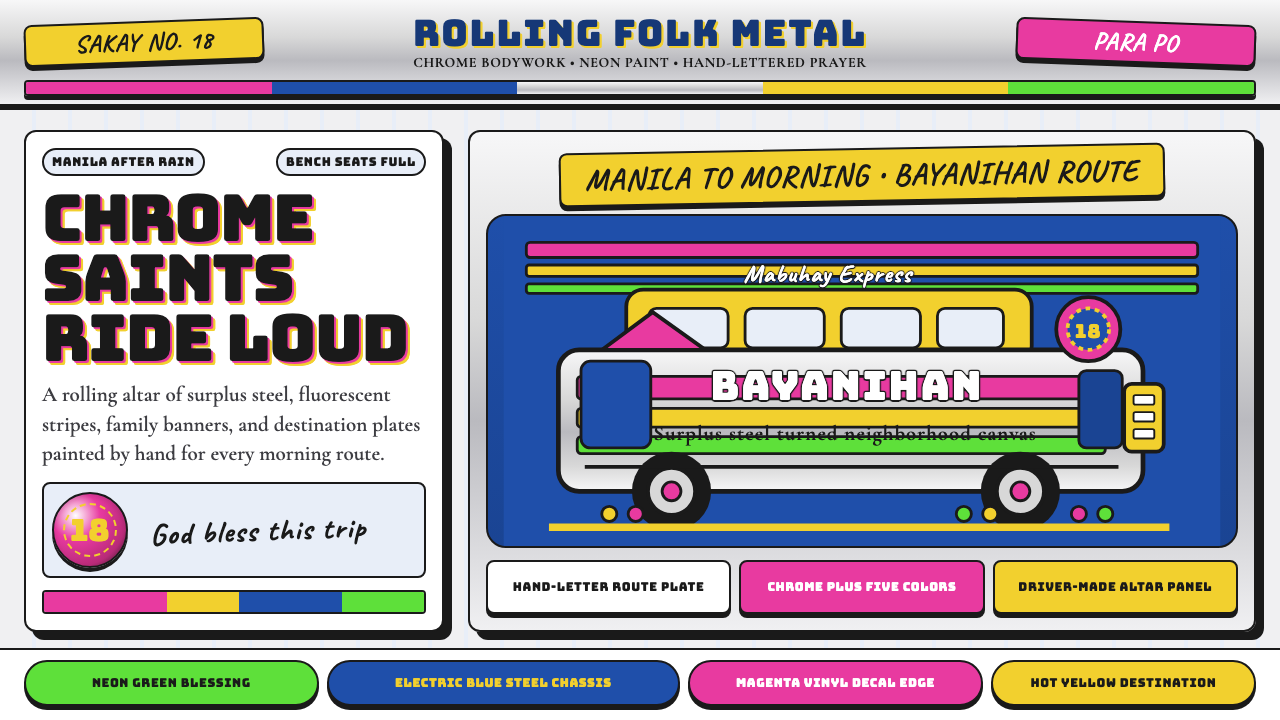 Filipino JeepneyLoud steel, made personal. Chrome gradients carry neon stripes and hand-lette…
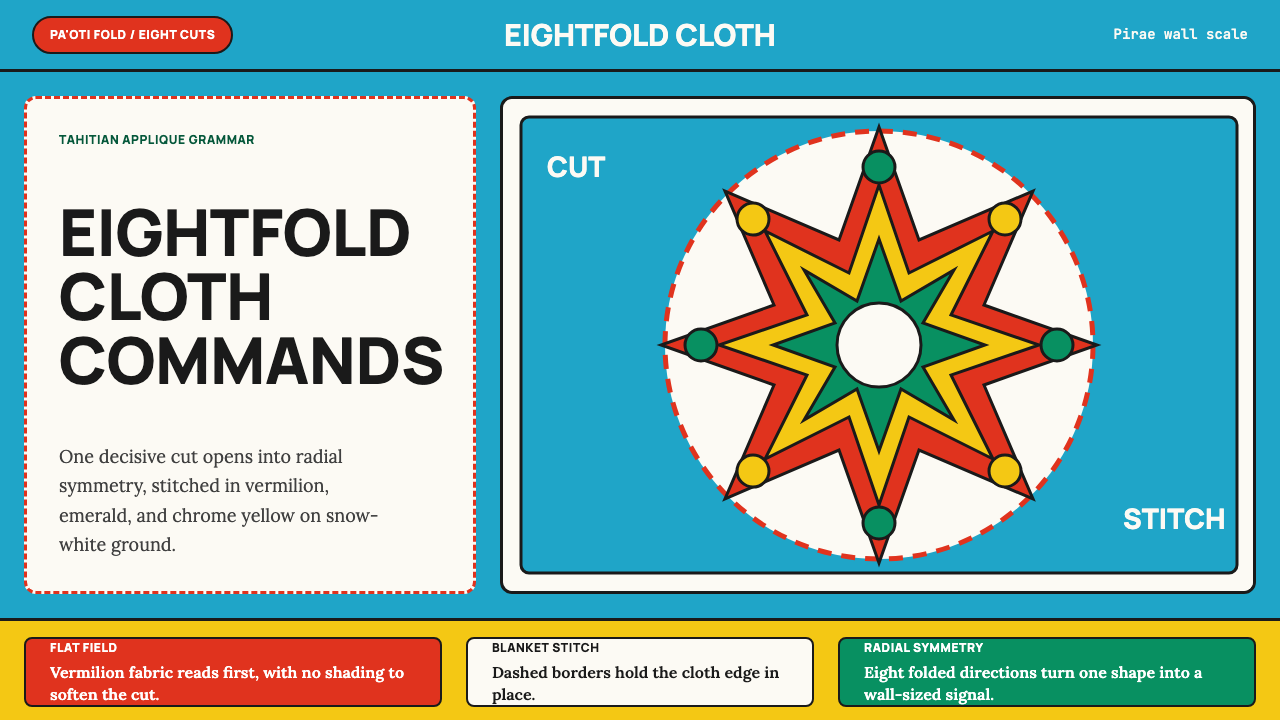 Tahitian Tifaifai (Appliqué Quilt)Flat fields command the room. Vermilion radial applique sits on Pacific cyan…
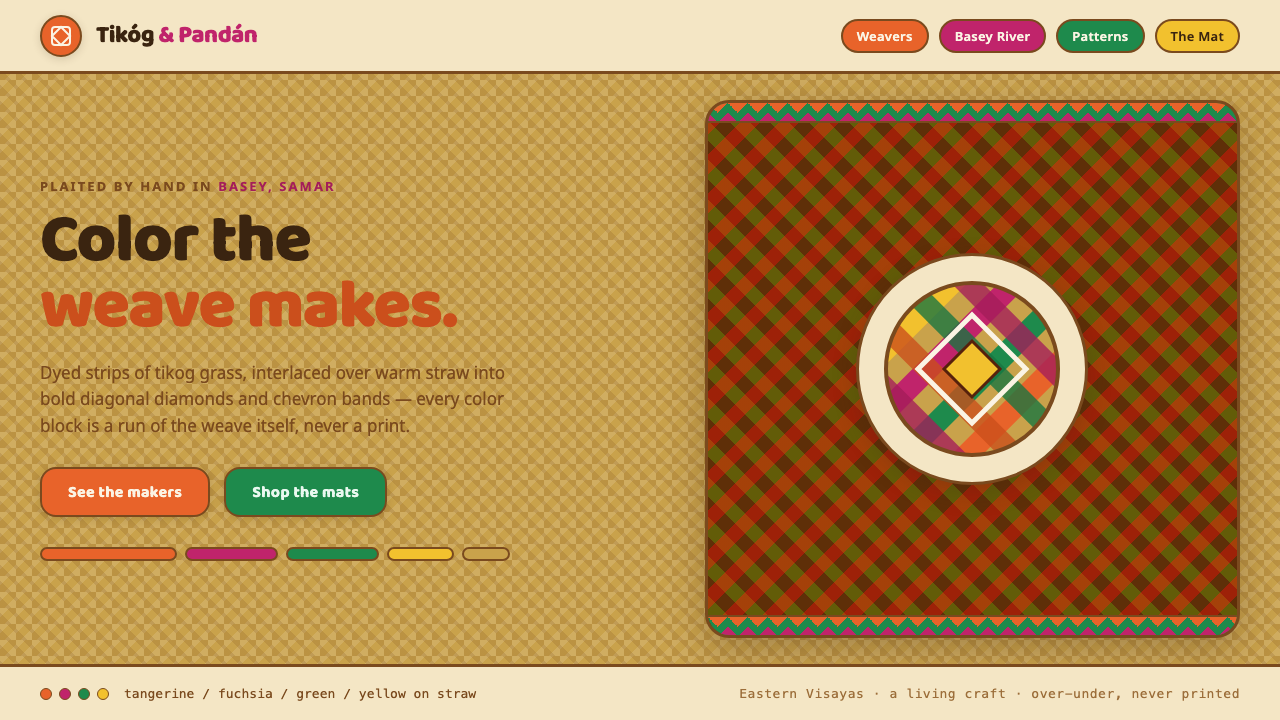 Banig Pandan MatHandwoven Filipino joy. Tangerine, fuchsia and green strips plaited into diag…
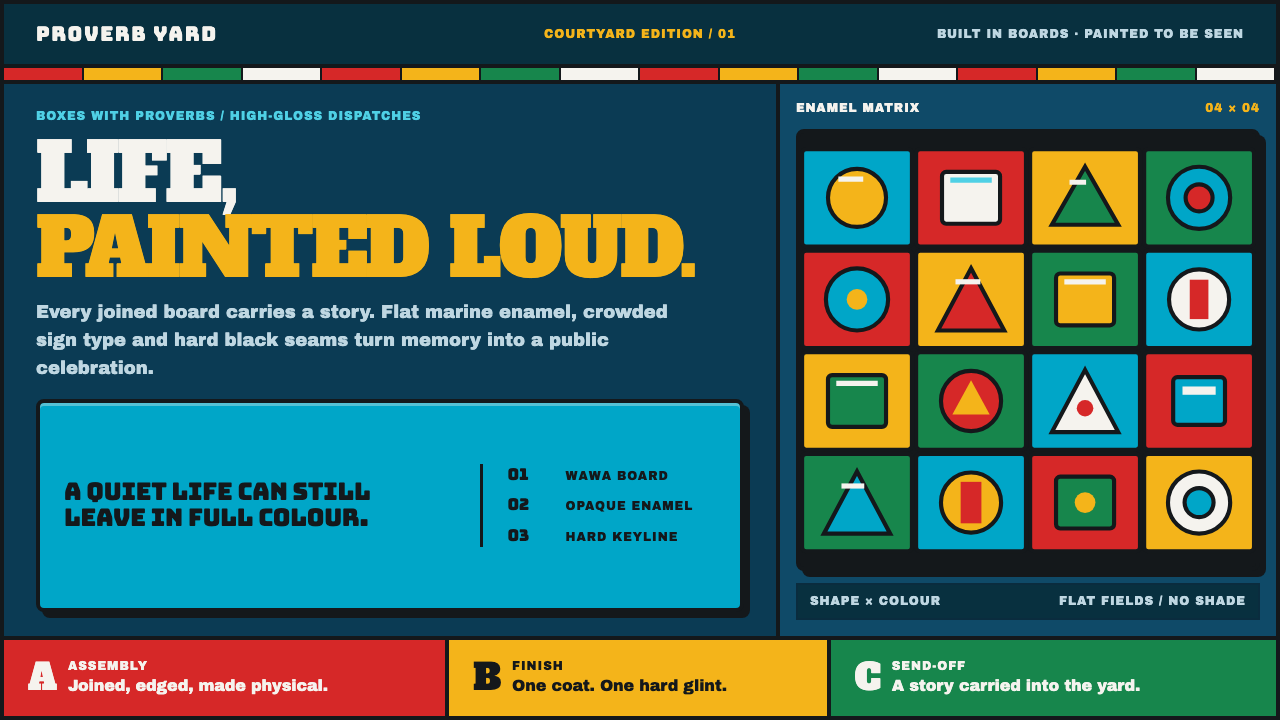 Ga Fantasy CoffinMemory refuses to whisper. Marine enamel, fat sign type and hard black seams…