What is The Economist (Red-Banner)?
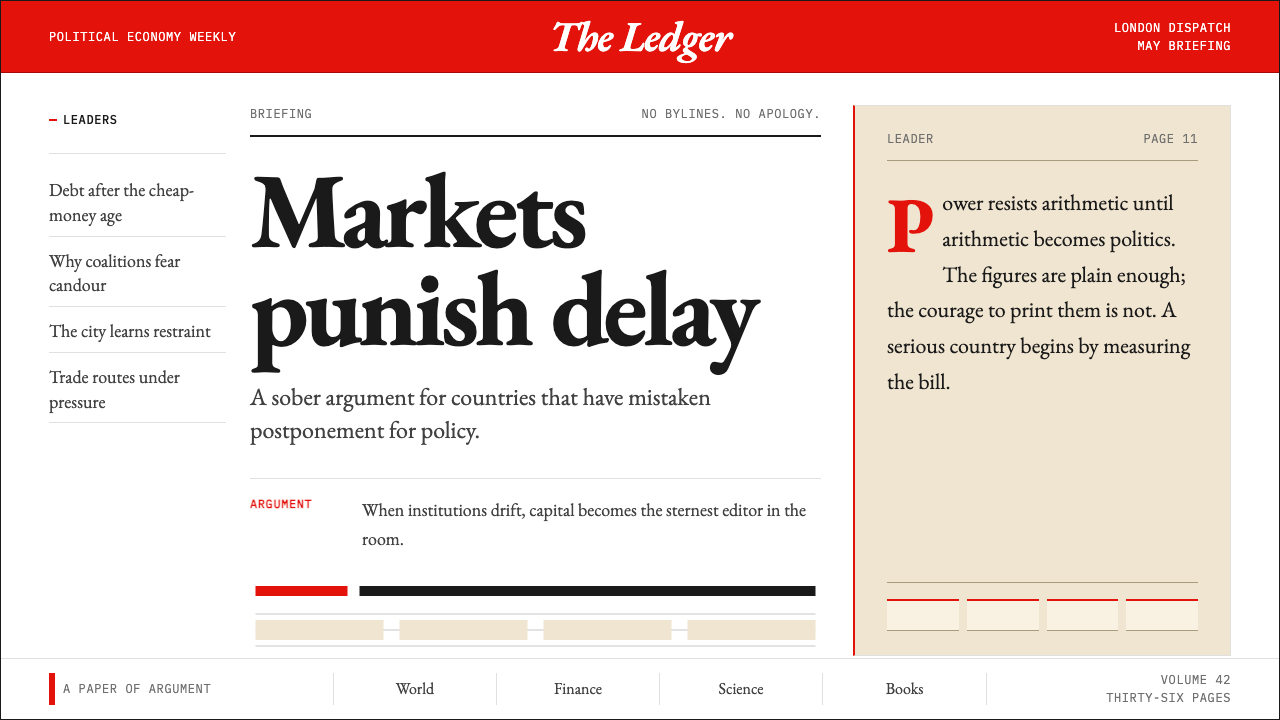
Economist Red crowns every cover like a verdict — a saturated banner that has made editorial conviction visible since 1843.
The Economist (Red-Banner) in brief
The Economist visual identity is one of the most disciplined systems in global journalism. A deep, fully saturated red banner anchors the top of every cover; below it, the masthead lettering — set in a condensed serif that reads with unmistakable authority — names the publication without flourish or variation. Warm cream and deep charcoal govern the interior, where generously leaded serif columns carry long-form prose without typographic decoration of any kind. The system has no decorative motifs, no gradient fills, and no ornamental borders.
What gives the identity its power is not its color alone but the relentlessness of its application. Every element — from cover illustration margins to the rule weight separating rubrics — is derived from the same underlying grid. Typography observes a strict hierarchy: the banner is bold and commanding, section headers are measured and restrained, and body text is set at a size and leading that rewards sustained reading. Nothing competes with anything else. The page enforces attention in the same way an authoritative argument does: by refusing to equivocate.
The overall aesthetic sits at the intersection of British editorial tradition and editorial modernism. It borrows the authority of the Victorian broadsheet — confident serif type, a controlled palette, no bylines — and strips away all the period ornament, leaving a system that feels both classic and contemporary. The red is not decorative; it is positional. It announces that an opinion follows, and that the publication stands behind it without apology.

Where does The Economist (Red-Banner) come from?
The Economist was founded in London in September 1843 by James Wilson, a Scottish hat manufacturer turned political economist who believed that free trade, and specifically the repeal of the Corn Laws, was the most urgent question facing Britain. The publication was not conceived as a newspaper in the conventional sense but as an argument in periodical form — a weekly instrument of advocacy whose purpose was to persuade Parliament and the commercial classes that protectionist tariffs were economically irrational. This founding commitment to a single, prosecuted thesis shaped the publication's voice and, eventually, its visual character.
For most of its first century, The Economist looked broadly similar to other British weeklies of the Victorian and Edwardian periods — dense text columns, modest illustration, a sober masthead. Its visual distinctiveness was born gradually through the twentieth century as it evolved from a specialist commercial paper into a global current-affairs weekly with international ambitions. The saturated red banner became the fixed element that unified otherwise evolving covers, and its consistency across decades created the recognition that now makes the publication identifiable at a glance from across a newsstand.
The modern typographic identity — centered on the Milo serif family, commissioned for the publication's editorial use — arrived in the early 2000s as part of a systematic effort to bring coherence to body text, headlines, and display type across print and emerging digital editions. Milo was chosen for qualities that aligned with the publication's editorial character: legibility at small sizes, authority at display scales, and a proportional system that works within narrow columns without losing rhythm. The transition from earlier type arrangements to Milo consolidated what had been a gradually evolving identity into a deliberately engineered one.
The editorial decision to omit bylines — continued to the present — is not a visual choice but a philosophical one that has direct visual consequences. Without named authors, every article is presented as the considered institutional position of the publication, and the layout reflects this: no author photographs, no biographical pull-quotes, no personality-driven design elements. The page speaks for itself. This convention, rooted in Walter Bagehot's editorial stewardship in the 1860s and 1870s, created a visual field that is unusually clean by the standards of any era's journalism. The current editor, Zanny Minton Beddoes, has maintained the tradition, and the visual system has evolved without departing from it.
What defines the The Economist (Red-Banner) look?
The Red Banner
The saturated red that crowns every cover is not merely a brand color — it functions as a structural announcement. It signals that what follows is not neutral reporting but argued position, and it does so without any supporting text or symbol. The red is deployed at full saturation against white or cream lettering, creating a contrast ratio that commands attention before a single word is read. Crucially, the banner's red never migrates into the body of the publication as a tinting or accent color; its power depends entirely on its containment and its exclusivity.
Serif Typography with Editorial Authority
The body typeface is a purpose-designed serif whose proportions and weight distribution are tuned for newspaper-grade column widths. It is legible at small sizes, authoritative at headline scale, and designed to carry dense, argument-driven prose without fatigue. The letterforms are neither the extreme contrast of classical Didones nor the low contrast of slabs — they occupy a measured middle register that reads as serious without feeling archaic. Headlines are set at a weight and size that creates clear hierarchy without resorting to sans-serif contrast or color differentiation.
Warm Cream and Charcoal Interior
Inside the publication, the background shifts from pure white to a warm, slightly tinted cream that softens the reading experience without diminishing legibility. Body text runs in deep charcoal rather than absolute black, reducing the starkness of ink-on-paper contrast to something more sustained over long reading sessions. This palette choice is functional as much as aesthetic: cream ground and charcoal type reproduce consistently across different paper stocks and printing conditions, ensuring the publication looks authoritative whether printed on high-grade coated stock or on the more porous newsprint of emerging markets.
Rigorous Columnar Grid
The layout system is founded on a multi-column grid that has remained essentially stable for decades. Column widths are narrow enough to enforce a short, readable line measure but consistent enough that the eye can settle into a rhythm across sections. Margins are generous: the white space surrounding text columns is not wasted space but the structural counterpart to the density of the prose. Section breaks are marked by ruled lines and typographic changes in weight rather than by images or colored bands. The grid creates coherence without monotony because the hierarchy within it is carefully calibrated — a short news brief reads as a distinct register from a lengthy briefing or leader article, even though both share the same underlying column structure.
Restrained Use of Illustration and Data Graphics
The Economist's cover illustrations are among the most recognized in magazine publishing: they are typically figurative, often allegorical, and always conceptually pointed — a visual argument in miniature that parallels the cover story's thesis. Inside the publication, illustration is rare and purposeful. Data graphics, on the other hand, are a signature element: charts and maps are rendered in a house style that prioritizes readability and precision over decoration. Chart lines are clean, axes labeled economically, and a restricted set of shading patterns and accent colors is used consistently to distinguish data series without creating visual noise.
No Bylines, No Visual Personality
The absence of author bylines is the invisible design principle that makes all the other principles legible. Without names attached to articles, the layout has no need for author photographs, biographical sidebars, or the personality-inflected typographic treatments common in publications where individual writers are part of the editorial product. The result is a visual field of remarkable consistency: every section, every page, every article is presented at the same institutional register. The reader's attention is directed entirely toward the content and the argument, never toward the author's persona. This restraint is not a limitation — it is the foundation of the publication's editorial voice.
Consistent Cross-Media Discipline
The visual system transfers with remarkable fidelity from print to digital. The Economist's app and website maintain the same typographic hierarchy, the same restrained palette, and the same grid-derived spacing that governs the print edition — not as a nostalgic gesture but as a deliberate choice to present a coherent identity regardless of medium. The red banner appears in digital contexts as a header element rather than a physical stripe, but its function — positioning the reader's relationship to the content as one of engaged argument rather than passive consumption — remains unchanged. This media-agnostic consistency is itself a design statement about the publication's values.

Who shaped The Economist (Red-Banner)?
Wilson founded The Economist in 1843 with the explicit goal of opposing the Corn Laws and advocating for free trade. A self-educated political economist who had made his fortune in the hat trade, he brought to the publication the conviction that economic argument, clearly made, could change policy. His decision to publish under a single institutional voice — with no bylines, no named editors, only 'The Economist' as author — established the editorial personality that every subsequent visual identity has served. Wilson died in 1860 while serving as Finance Minister in India, but the argumentative format he instituted survives essentially unchanged.
Bagehot served as editor from 1861 to 1877 and is largely responsible for developing the publication's distinctive analytical voice — confident, occasionally ironical, always willing to reach a conclusion when others hedged. His essay 'The English Constitution' and his financial journalism in 'Lombard Street' demonstrated that serious argument could be made in prose that was also pleasurable to read. The typographic restraint of the publication — no exclamation points in headlines, no bold emphasis within body text — reflects the same temperament Bagehot modeled in his prose. He is considered the intellectual architect of the publication's editorial character.
Parker was a typographer and type director whose work at Linotype helped shape the digital type landscape of the late twentieth century, and his influence touched the typefaces available to publications including The Economist during key transitional periods in typographic technology. His advocacy for type that served reading rather than display — for faces with genuine editorial utility rather than novelty — aligned with the philosophy embedded in The Economist's body type choices. Though not exclusively associated with the publication, his broader contribution to the culture of serious editorial typography represents the tradition from which the publication's typographic decisions draw.
Minton Beddoes became the first woman to serve as editor-in-chief of The Economist when she was appointed in 2015. Under her tenure, the publication has navigated the transition to digital-first journalism while preserving the visual and editorial identity that distinguishes the brand. The decision to maintain print and digital editions with consistent visual language — rather than developing separate identities for each medium — reflects a stewardship philosophy that treats the publication's visual character as inseparable from its editorial one. Her editorship demonstrates that the red-banner identity is robust enough to survive and remain relevant across profound changes in how journalism is produced and consumed.
How do you use The Economist (Red-Banner) today?
The Economist red-banner aesthetic is one of the most directly applicable editorial styles in contemporary design. Its principles — restrained palette, strict typographic hierarchy, grid discipline, and the total absence of decorative flourish — transfer cleanly to digital and presentation contexts because they were developed to serve argument and reading, not to decorate surfaces. Applying the style correctly requires understanding what each visual decision is doing functionally, not just replicating its surface appearance.
For presentation slides, the style works with exceptional clarity on both cover and content layouts. A cover slide benefits from the full-width saturated red header band — deep and commanding — set against a cream or near-white field, with the presentation title in a confident serif at a scale that claims the space without overcrowding it. Content slides should be structured as reading grids: a single organizing column, typographic hierarchy established through weight and scale alone, and absolutely no decorative dividers, gradient panels, or icon clusters. Data slides take on the diagrammatic character the publication's charts are known for: clean lines, economically labeled axes, and a restricted set of distinguishing tones for different data series. Avoid adding shadows, glows, or three-dimensional treatments to charts — they undermine the precision the style requires.
For web interfaces and dashboards, the red-banner system is particularly well-suited to contexts where information density is high and hierarchy must be immediately legible — analytics dashboards, research platforms, pricing pages, and editorial portals. The approach: establish a strict column grid, use cream or near-white as the primary background, reserve deep charcoal for all body text, and deploy the saturated red only for primary navigation elements, active states, or the most structurally significant calls to action. Card components should use thin borders and minimal elevation rather than soft shadows; section headers should be typographic rather than color-blocked. The result is a digital environment that feels authoritative and scannable without being cold or clinical.
For editorial and marketing work, the style supports strong information hierarchy and a recognizable voice of conviction. An editorial layout in this system uses a narrow column measure with generous outer margins — the margin is functional, used for call-outs, pull quotes marked by a single ruled line, or date and metadata that the body text need not interrupt. Section breaks are marked by a fine horizontal rule and a weight change in the section header, never by a decorative device. Marketing pages translate the style's poster-like authority into feature blocks: alternating panels with typographic headlines at a bold scale, restrained body copy, and a single red accent used consistently to mark the most important action on each page. The style works particularly well for publications, financial services, professional analytics tools, and any brand that wants to signal intellectual seriousness without sacrificing modernity.
A common mistake when applying this style is treating the red as an accent color to be distributed liberally across the interface — used for hover states, icon fills, link underlines, chart bars, and background panels simultaneously. In the source identity, the red does one job: it is the banner. Everything else is cream, charcoal, or white. When red appears in more than one structural role at a time, its positional authority dissolves. A second common error is choosing a serif typeface that reads as decorative or period-specific rather than editorially neutral — ornate serifs, high-contrast Didones, or slab serifs with strong personality all work against the style's fundamental restraint. The typeface should feel like the prose: authoritative, readable, and entirely in service of the content.

The Economist (Red-Banner) — FAQ
Can I use the red as an accent color throughout a layout, or does it need to be confined to a header?
Confinement is the principle. In the source identity, the red performs a single structural role — the banner that positions the entire publication. When you distribute red across multiple elements simultaneously (links, icons, chart bars, hover states, and a header all in red), it loses its ability to declare position and becomes decoration. The most authentic application gives the red one job per layout. In a slide, that might be the header band. In a web dashboard, it might be the primary navigation bar or the single most important action button. Everywhere else, charcoal, cream, and white carry the load.
What kind of serif typeface works best if I am recreating this style?
Look for a text-optimized serif with moderate stroke contrast, low-key serifs that do not draw attention to themselves, and proportions designed for narrow column widths. Avoid extremes in either direction: a high-contrast Didone reads as fashion-forward and fragile; a chunky slab reads as too muscular and editorial-casual. The target character is a face that feels like it has been in serious use for a long time — authoritative through familiarity rather than through visual novelty. Old-style and transitional serifs with generous lowercase x-heights tend to perform well in this register.
Does this style work for consumer-facing products, or is it mainly suited to B2B and professional contexts?
The style is strongly associated with editorial authority and intellectual seriousness, which makes it a natural fit for professional services, financial products, research platforms, and publications targeting educated general audiences. It is less naturally suited to products where warmth, sensory pleasure, or cultural identity are primary values — food, travel, wellness, children's products, and lifestyle brands typically need more organic visual texture and more emotional palette range than the style provides. The honest question to ask is whether your product's values include the kind of conviction and directness that the red banner embodies. If they do, the style will feel genuinely aligned; if they do not, it risks reading as borrowed authority.
How does this style handle data visualization differently from other editorial styles?
The Economist's chart house style is one of the most studied in data journalism precisely because it achieves high information density without visual clutter. The key principles: every chart element that does not carry information is removed — no decorative background panels, no gradient fills on bars or areas, no three-dimensional effects. The chart itself sits on the cream or white ground of the page with no containing box; a single thin ruled line marks the top of the chart field. Labels are placed directly adjacent to their corresponding data series rather than in a separate legend box wherever layout permits. Color is used to distinguish data series but is kept to a minimal, easily distinguishable set. The result is a chart that reads as part of the argument rather than as a decoration of it.
Is the style too serious for a startup or a younger brand?
Serious is not the same as old or inaccessible. The red-banner system reads as confident and direct rather than stiff or bureaucratic — the difference lies in how the typographic hierarchy is managed and how much air the layout is given. Applied with generous white space, a readable type scale, and covers or heroes that use illustration in the pointed, conceptual way the publication does, the style can feel modern and even energetic. The mistake would be to adopt it ironically or superficially — the red and the cream without the underlying grid discipline and typographic restraint. In those cases the result is a costume, not a system. For startups positioning around analysis, research, financial tools, or principled argument, the style offers a powerful differentiator in a landscape dominated by rounded corners and gradient-heavy interfaces.
Related design styles
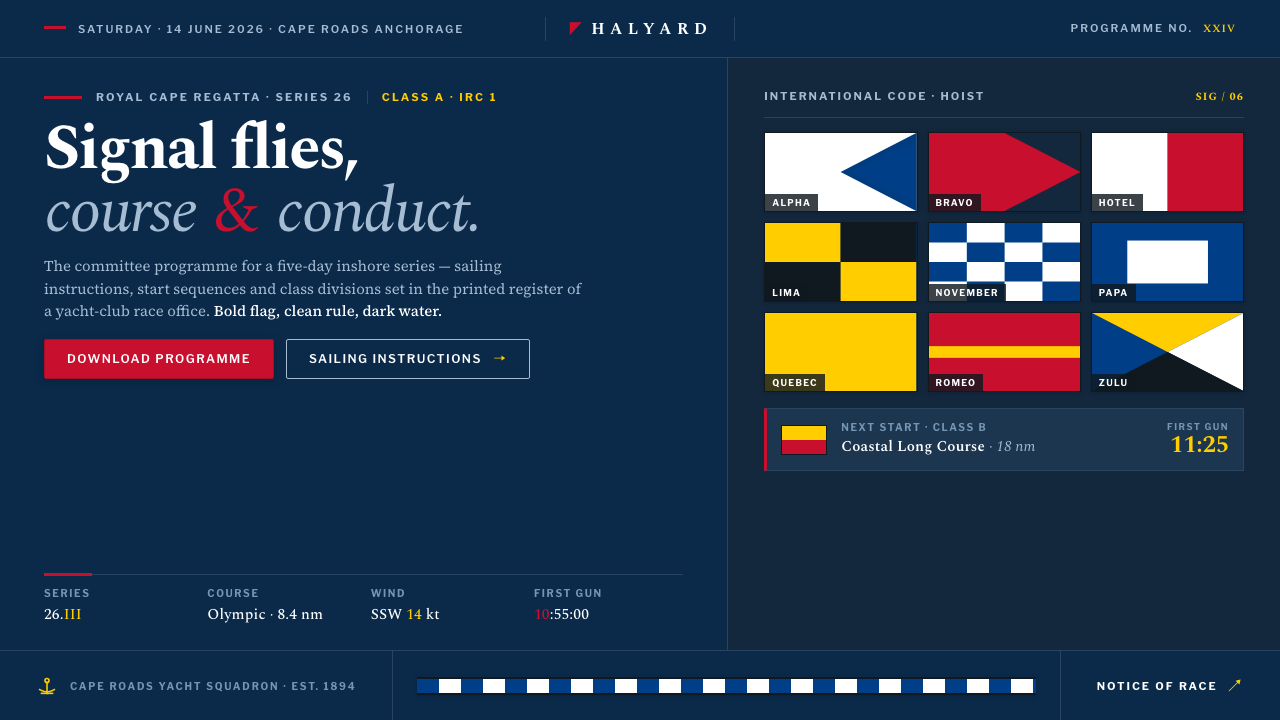 Sailing RegattaSignal-flag discipline on dark water. Rectilinear red-blue-yellow blocks on d…
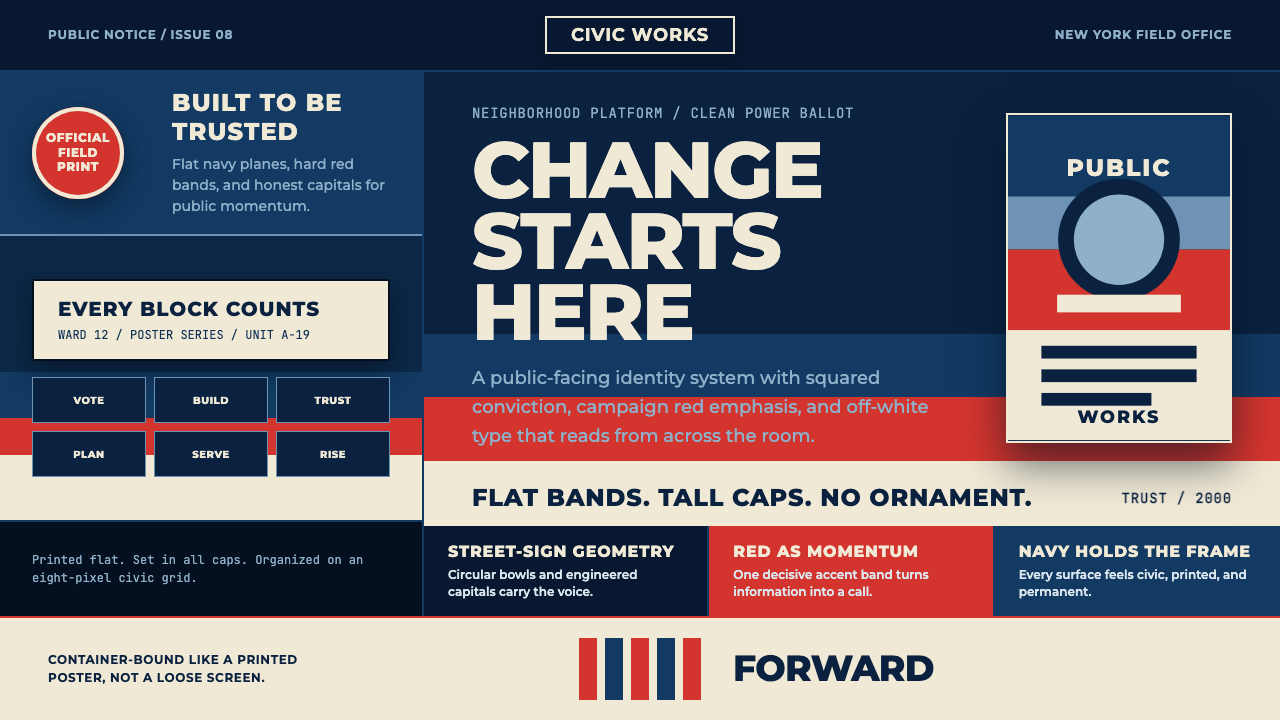 Gotham Geometric SansCivic trust in tall caps. Navy, red, and off-white bands turn geometry into c…
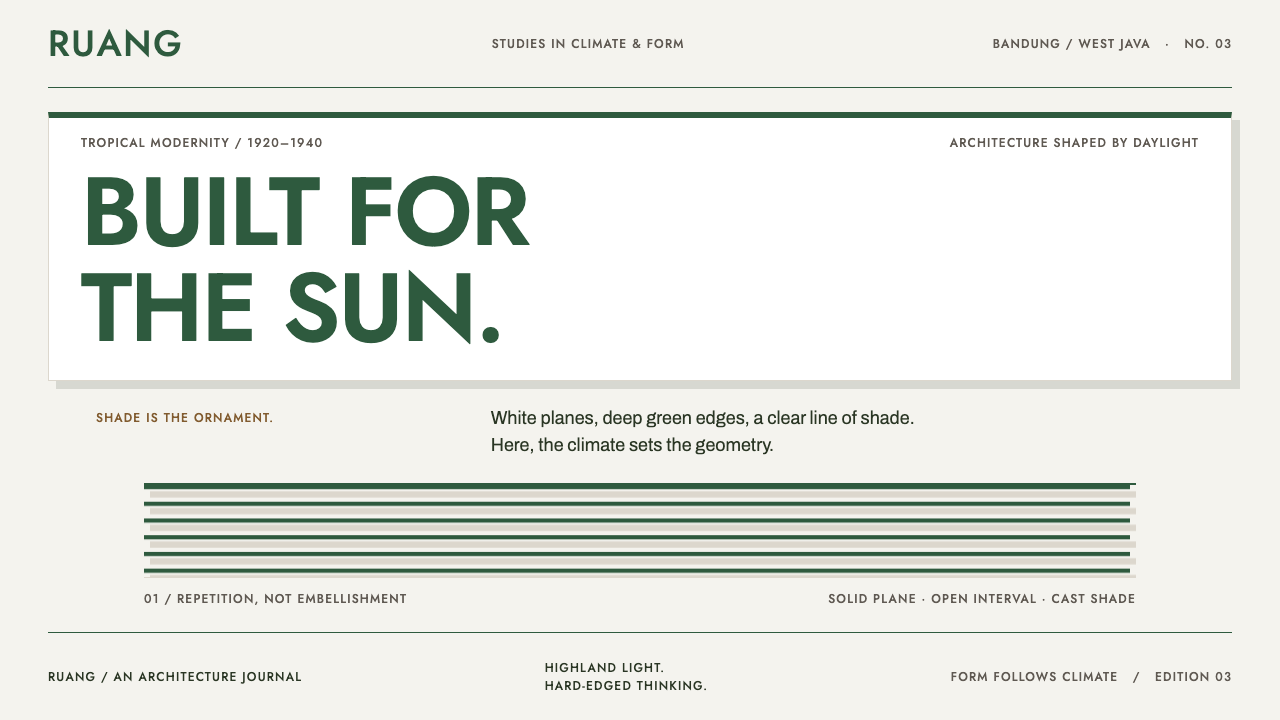 Bandung Tropical Art DecoClimate writes the geometry. Bottle-green bands on stucco white make hard sha…
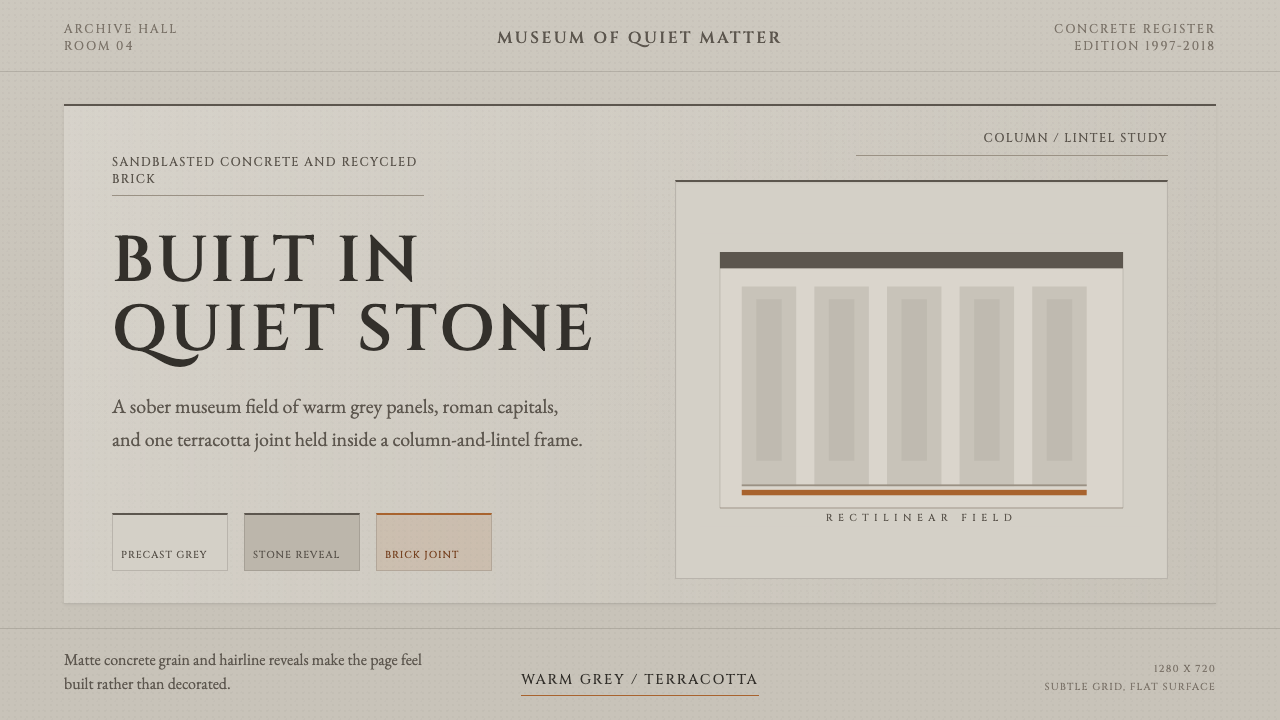 Chipperfield Museum GrayMuseum gravity, rendered quietly. Warm concrete grey, roman capitals, one ter…
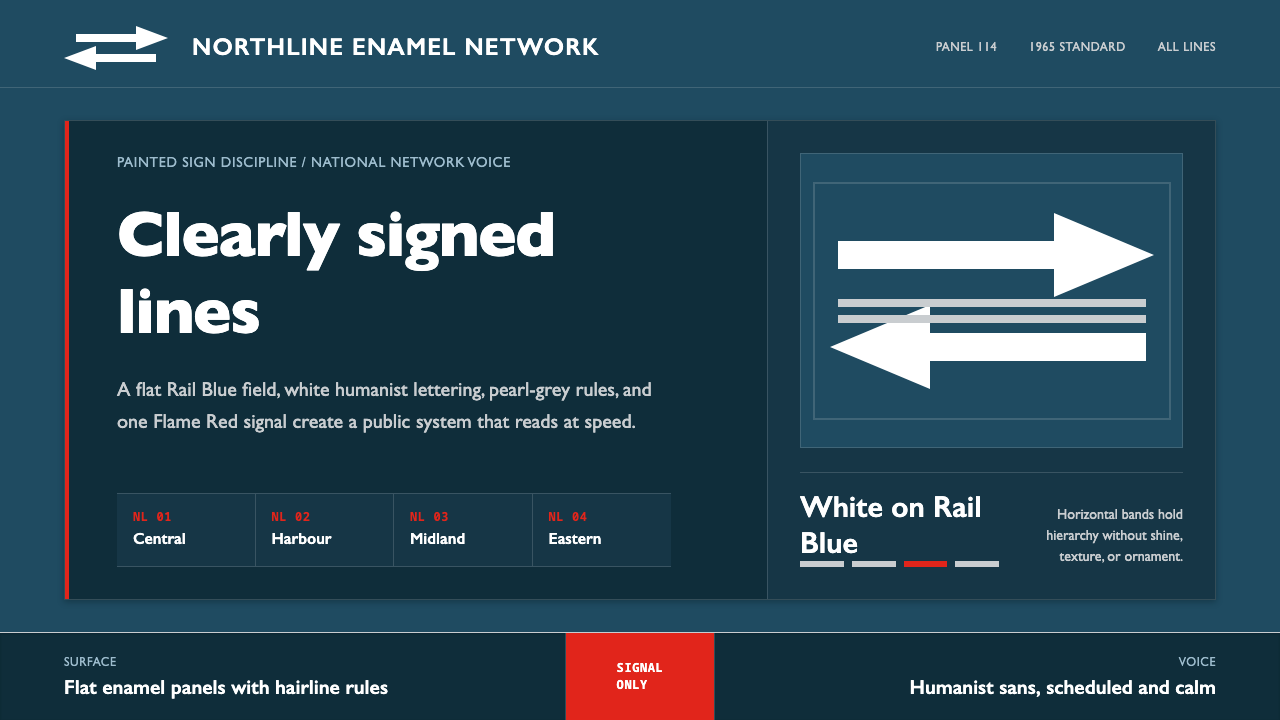 Gill Sans British RailPublic authority, enamel-flat. Rail Blue bands, white humanist type, one red…
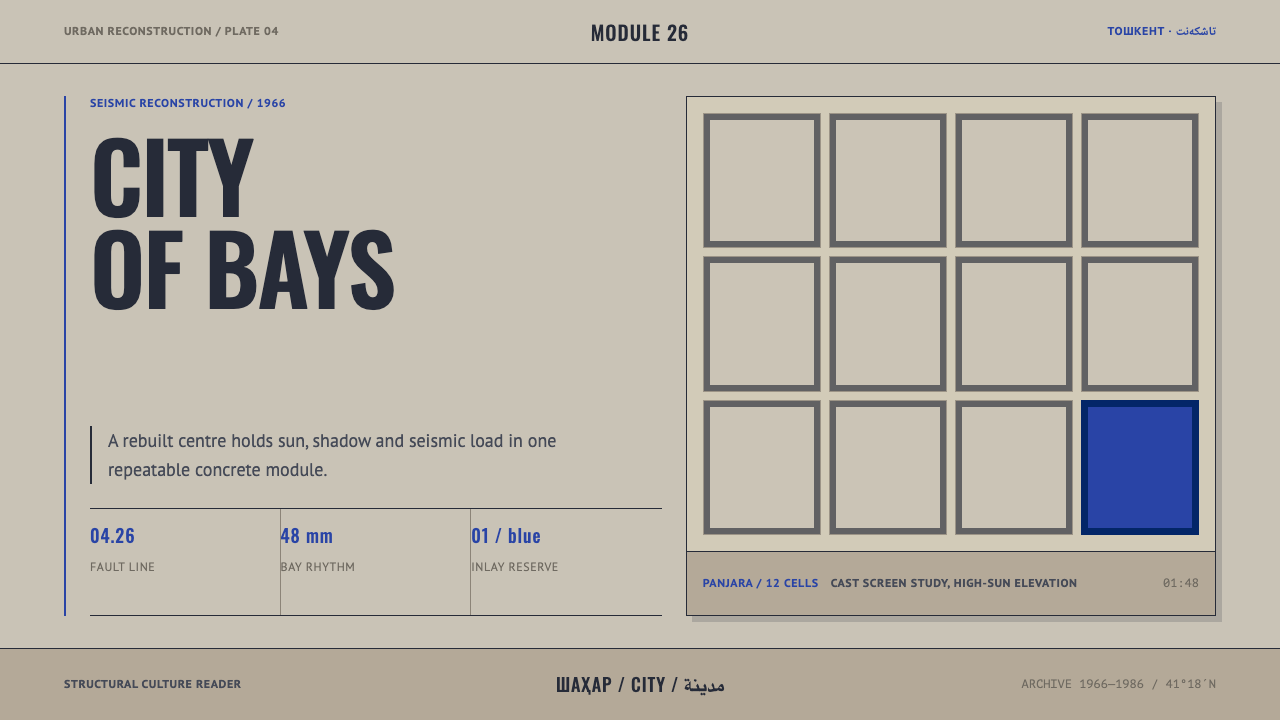 Tashkent Seismic ModernismStructure keeps its cool. Sun-bleached concrete grids hold one reserve of Tim…