What is Thai Spirit House (San Phra Phum)?
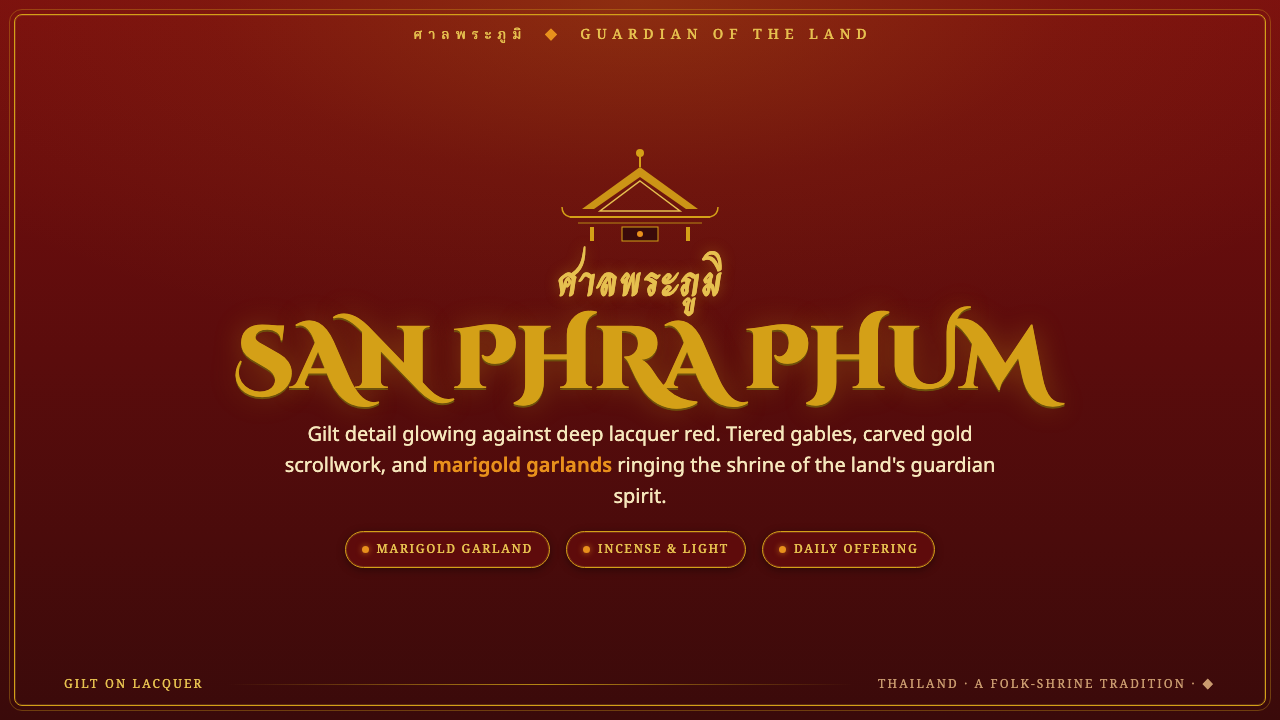
Thai Spirit House design holds devotion inside a deep lacquer-red chamber, where gilt ornament, ritual offerings, and tiered architecture turn decoration into a visible act of care.
Thai Spirit House (San Phra Phum) in brief
The Thai san phra phum is a miniature shrine raised on a single post for the Phra Phum, the guardian spirit of the land. Found at homes, shops, and hotels across Thailand, it is a daily devotional object rather than a detached ornament. Flowers, incense, and red Fanta gather around it; the shrine becomes a small inhabited threshold between a household or business and the spirit believed to watch over its ground.
Its visual language is concentrated and ceremonial. Tiered gables, carved scroll trim, and gold-leaf detail surround a recessed cavity of deep lacquer red. The effect depends on contrast: gilt catches attention and appears precious, while the dark red interior gives that brilliance somewhere to live. White plaster may support the composition, but it never becomes the dominant field. The shrine reads as a protected interior, dense with color, offering, and reverence.
As a contemporary design system, Thai Spirit House is not a neutral Thai-inspired decoration layer. It is a composition built around enclosure, hierarchy, and ritual attention. Gold ornament acts as framing structure; red acts as the sacred interior; floral and offering-like accents introduce moments of life. The atmosphere should feel sheltered, luminous, and deliberately adorned, as though every surface has been prepared for an act of respect.
Where does Thai Spirit House (San Phra Phum) come from?
Thai Spirit House belongs to a continuous folk-religious tradition associated with Thailand from 1950 to 1990 and continuing through everyday use. Its setting is nationwide rather than confined to a single formal monument or institution: private homes, commercial storefronts, and hotels can all become sites for a shrine. That distribution matters to the style. The form is intimate enough to stand close to ordinary life, yet elevated enough to mark a distinct spiritual presence.
The tradition is described through Thai animist-Buddhist folk shrine craft and tiered ornamental architecture. These terms explain why the shrine can carry both architectural order and devotional density. The raised body, layered gables, and framed cavity establish a clear hierarchy from ground to shelter to interior. Within that hierarchy, offerings are not incidental accessories. Marigold garlands, incense, and red Fanta make the shrine visibly active and connect its crafted form to repeated daily attention.
Its makers are not presented as a single named school or a roster of celebrated authors. Spirit-house artisans and shrine workshops shape the physical vocabulary, while Phra Phum guardian households sustain its meaning through use. This is important when adapting the style: its authority comes less from an individual signature than from a shared practice of making, placing, maintaining, and honoring. The result is richly ornamental, but the ornament is inseparable from the shrine’s role as a dwelling for reverence.
What defines the Thai Spirit House (San Phra Phum) look?
Lacquer-Red Interior
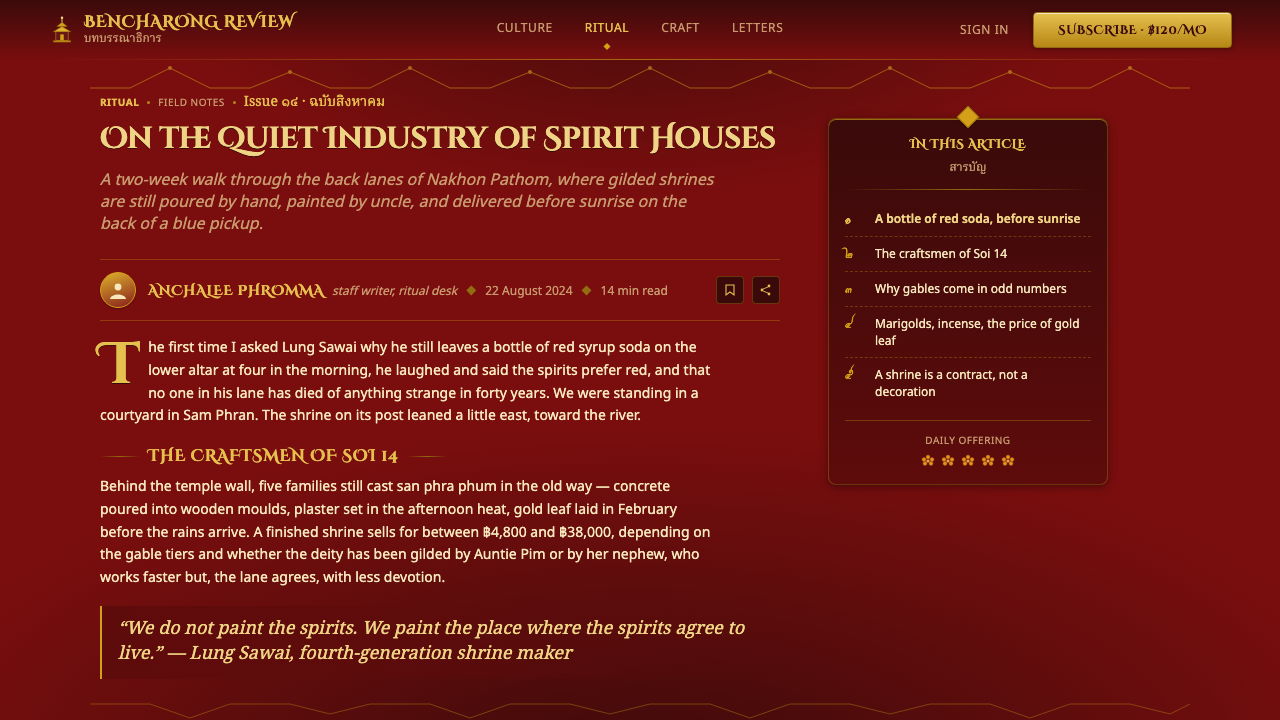
The page behaves like the shrine’s recessed interior: dark, warm, and enclosing. Deep lacquer red is the primary atmospheric field, not a small accent. It should make gold detail feel lit from within and make pale supporting surfaces appear deliberate rather than empty. Bare or pale overall backgrounds break the system’s central spatial idea.
Gilt Ornament as Structure
Gold-leaf gables and carved scroll trim do more than enrich the surface. They define edges, establish ceremonial hierarchy, and direct the eye toward the protected cavity. Use gilded motifs as borders, crowns, dividers, and frames with a job to do. Ornament should appear carved into the composition, never sprinkled across it as generic luxury.
Tiered Shelter
Tiered gables create a roofed, ascending silhouette. In layouts, this translates into nested bands, stepped headers, or layered framing that visibly protects the most important content. The motion is upward and inward: outer ornament leads to a threshold, then to a central devotional focus. Flat, unranked sections lose this architectural sense of shelter.
Ceremonial Contrast
The style relies on bright gilt against dark red, with white plaster serving as a restrained support tone. This is not a broad decorative palette. The contrast should feel concentrated and reverent, allowing the gold to glint rather than flooding every object with equal brightness. Supporting light areas work best as relief around dense red and gold passages.
Offering-Like Detail
Marigold garlands, incense, and red Fanta establish a vocabulary of lived devotion. In design, these references suggest clustered accents, suspended garland-like rhythms, and small moments of brightness gathered near a focal object. They should preserve the sense of offering and care. Random floral scatter or novelty beverage imagery reduces ritual materials to decoration.
Sacred Density
Thai Spirit House is richly detailed without becoming visually casual. The cavity, trim, gables, garlands, and offerings are held together by a strong center and a clear boundary. Dense detail belongs near the shrine-like focal area; quieter fields allow it to register. The design should feel prepared and attended, not merely maximal.
Who shaped Thai Spirit House (San Phra Phum)?
Spirit-house artisans represent the makers who give the tradition its miniature architectural form. Their craft is visible in the single-post shrine body, tiered gables, carved scroll trim, and gilt detail. In a design interpretation, they remind us that ornament is built around the shrine’s structure rather than added after the structure is complete.
Shrine workshops carry the style through repeatable material practice. They are the setting in which ornamental architecture, carved framing, lacquer-red interiors, and devotional presentation become a coherent vocabulary. Their importance is collective: the visual system belongs to an enduring workshop tradition rather than a single proprietary signature.
Households and places that honor Phra Phum give the shrine its daily life. Their offerings of flowers, incense, and red Fanta keep the object from becoming static display. For designers, this living relationship is the key distinction between reverent adaptation and empty imitation: the style should communicate attention, protection, and repeated care.
How do you use Thai Spirit House (San Phra Phum) today?
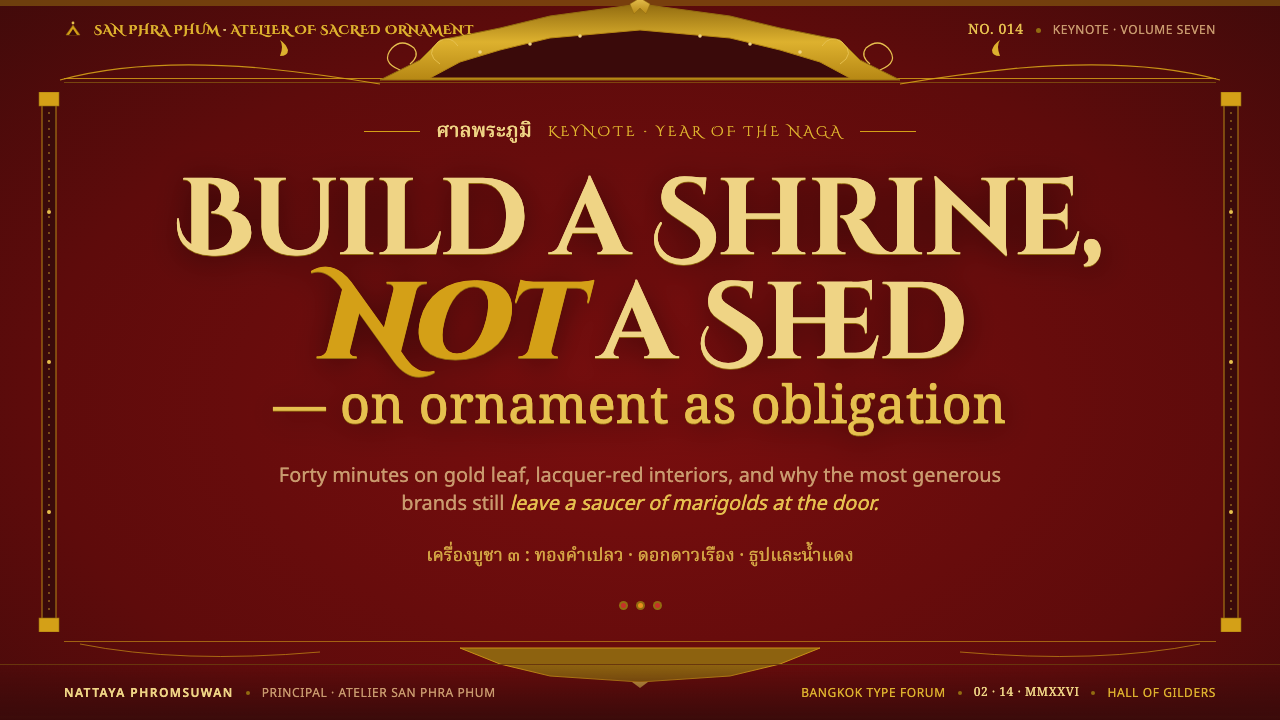
For presentation slides, treat the cover as a shrine entrance. Build a dark lacquer-red field, give the title a protected central or recessed position, and use gilt ornamental framing to establish ceremony before any content appears. The cover should have a visible hierarchy of roof, frame, and interior rather than a free-floating title placed on a decorative background.
Content slides should use the same enclosure more quietly. Let a gilt divider, stepped header, or carved corner treatment establish the reading order, then keep explanatory text within calm red panels or restrained pale supports. For data slides, charts should feel like offerings arranged around a central point: emphasize a primary measure, use gold for significance, and reserve floral or garland-like accents for annotations rather than chart decoration.
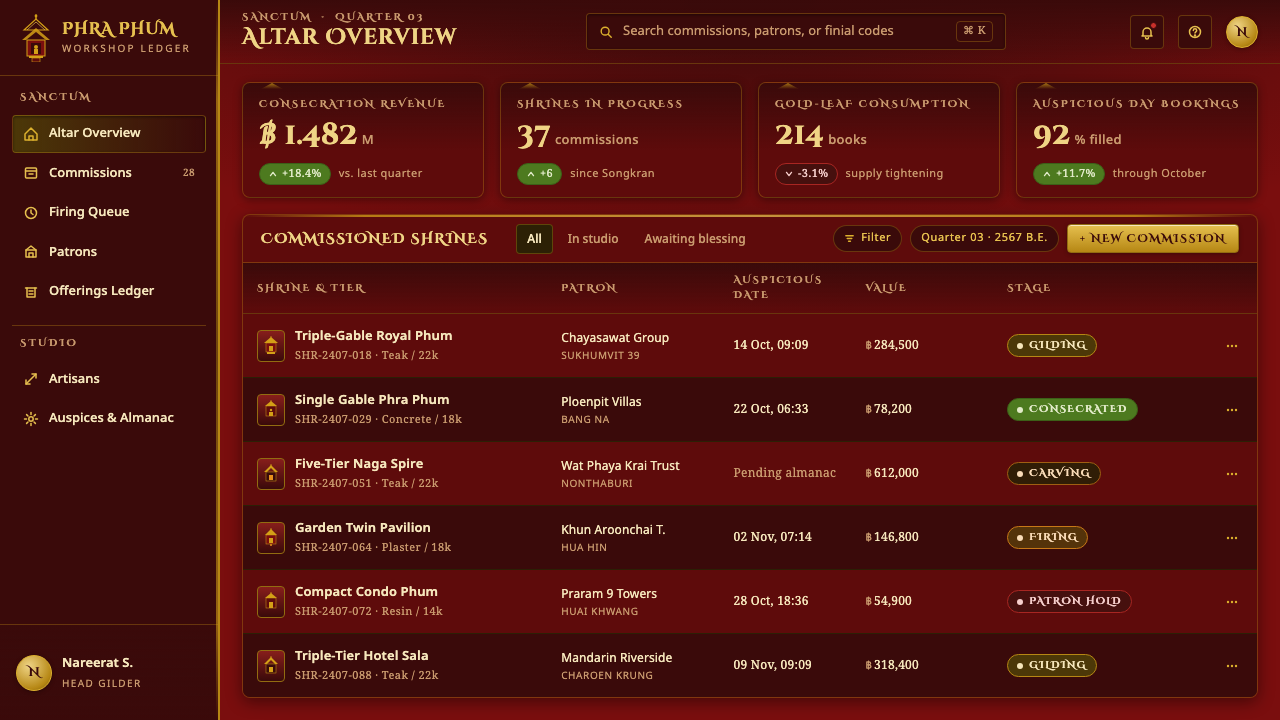
For web interfaces, the style suits hospitality pages, cultural programs, ceremonial bookings, and destination storytelling more naturally than dense utilitarian tools. A dashboard can still use the language if its panels feel like framed recesses and its status signals are treated as precious, deliberate markers. Pricing pages benefit from tiered presentation, where offers are visibly sheltered within gabled or framed containers rather than arranged as anonymous boxes.
For editorial and marketing work, use the deep red field to create an immersive stage for stories, events, menus, or invitations. Sections can move between quiet plaster-like supports and richly framed lacquer-red moments, but the red interior must remain the emotional anchor. Gold scrollwork is especially effective around titles, pull quotes, key dates, and calls to action when it functions as a ceremonial threshold rather than an all-purpose border.
The common mistake is turning Thai Spirit House into generic ornate luxury: scattering gold flourishes over a pale page, using floral decoration without ritual context, or treating red Fanta as a playful visual joke. The system needs its dark interior, its framed hierarchy, and its sense of care. If every element glitters equally, the shrine loses its focal cavity and the design loses the disciplined contrast that makes it convincing.
Thai Spirit House (San Phra Phum) — FAQ
Is Thai Spirit House simply an ornate Thai decorative style?
No. Its ornament is tied to a shrine for Phra Phum and to daily offerings. Gilt gables, carved trim, the red cavity, flowers, incense, and red Fanta together express a devotional setting. A useful adaptation preserves enclosure, hierarchy, and care instead of extracting gold flourishes as detached luxury symbols.
Can the style work on a pale background?
Pale plaster-like surfaces can support content, but they should not replace the deep lacquer-red interior as the dominant atmosphere. The key contrast is gilt detail glowing against a dark red cavity. If pale space takes over, the composition loses its sheltered depth and begins to resemble a generic ornamental layout.
How should gold ornament be used without overwhelming the interface?
Give it structural responsibility. Use it to frame a focal section, cap a heading, mark a threshold, or distinguish a meaningful action. Leave quieter red fields around it so the ornament can glint. When gilt scrollwork appears on every edge and every component, it stops communicating hierarchy and becomes visual noise.
Are marigolds, incense, and red Fanta interchangeable decorative motifs?
They are better understood as signs of offering and daily attention. They can inspire clustered accents, floral rhythms, or small vivid focal details, but should not be emptied of their role in the shrine setting. Use them sparingly and near moments that benefit from a sense of dedication, welcome, or care.
Related design styles
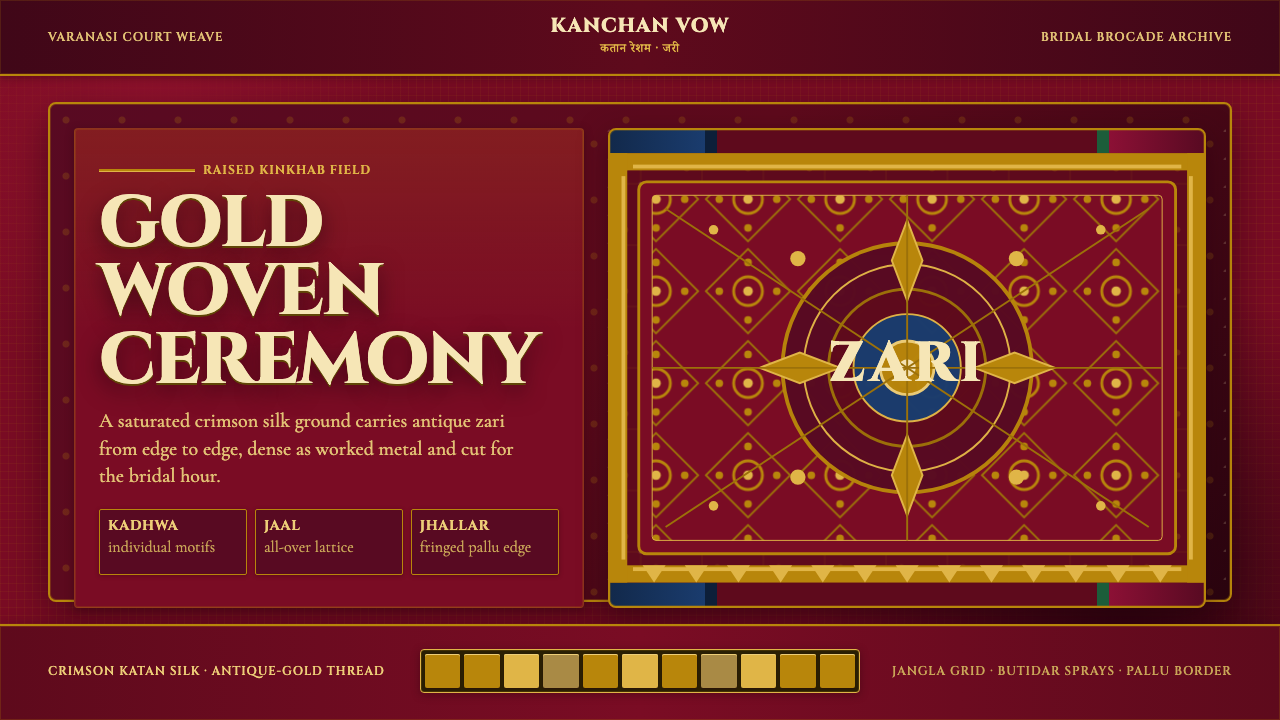 Banarasi Brocade SareeBridal maximalism, woven dense. Crimson silk grid carries raised antique-gold…
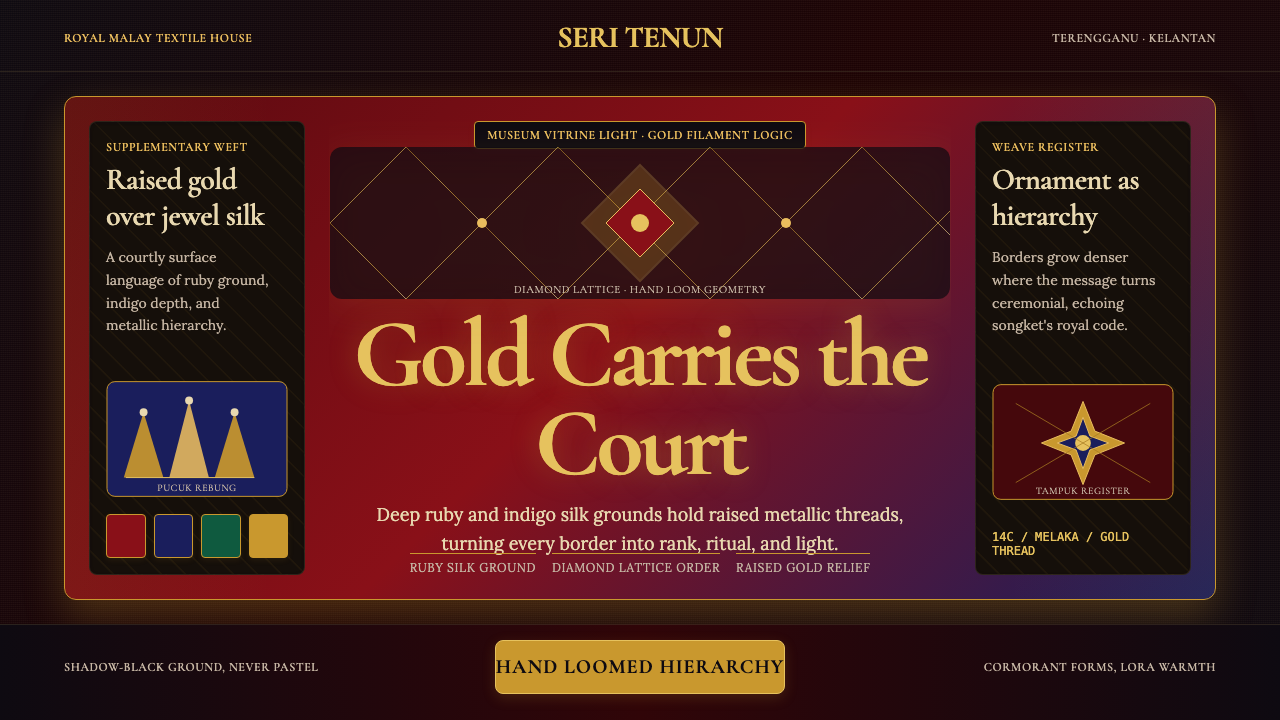 Malaysian Songket (Gold-Thread Weave)Royal textile opulence. Ruby and indigo silk grids lift gold-thread relief.
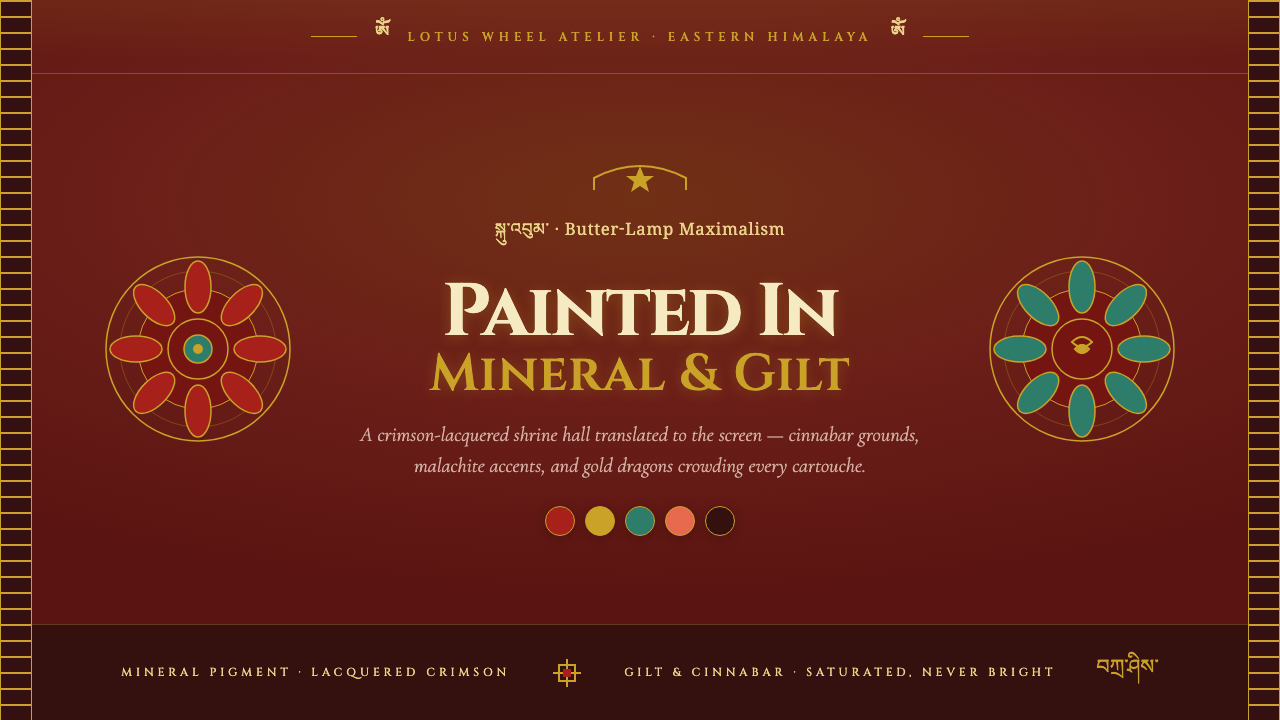 Sikkim Monastery MuralsButter-lamp maximalism. Cinnabar ground, gilt cartouche borders, mandala symm…
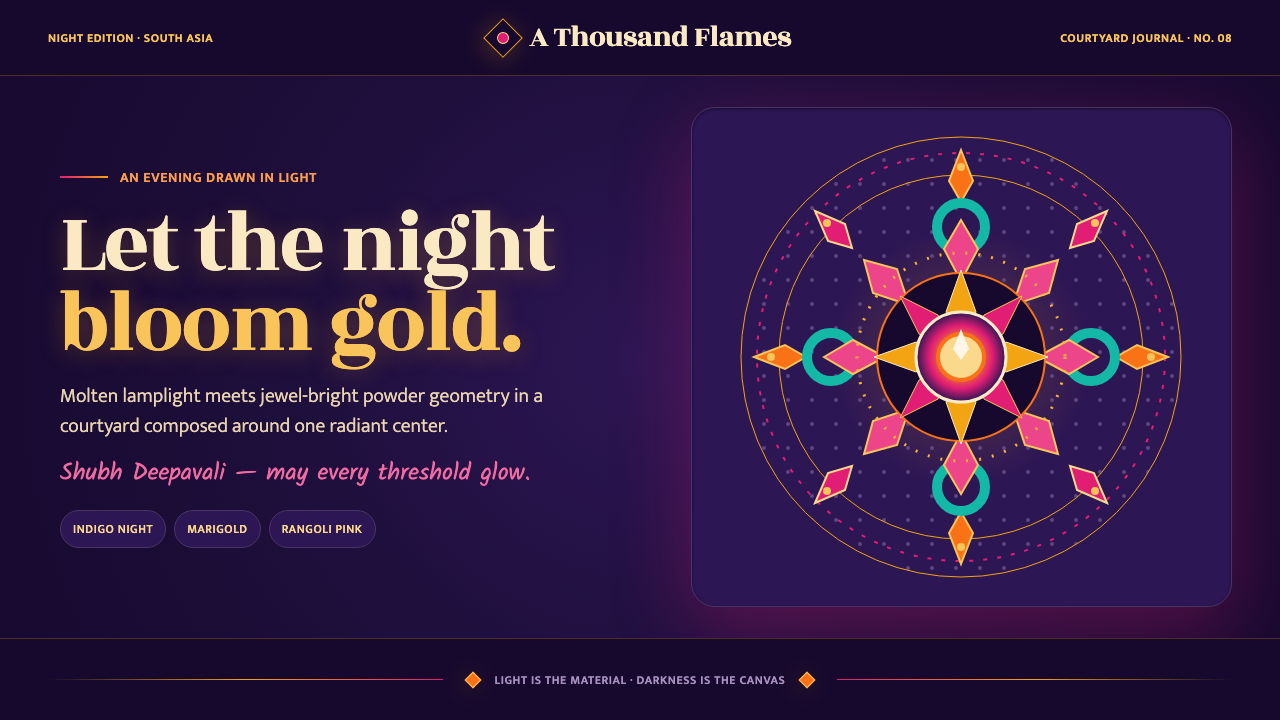 Diwali Festival of LightsNight blooms from within. Molten gold and jewel-bright rangoli radiate across…
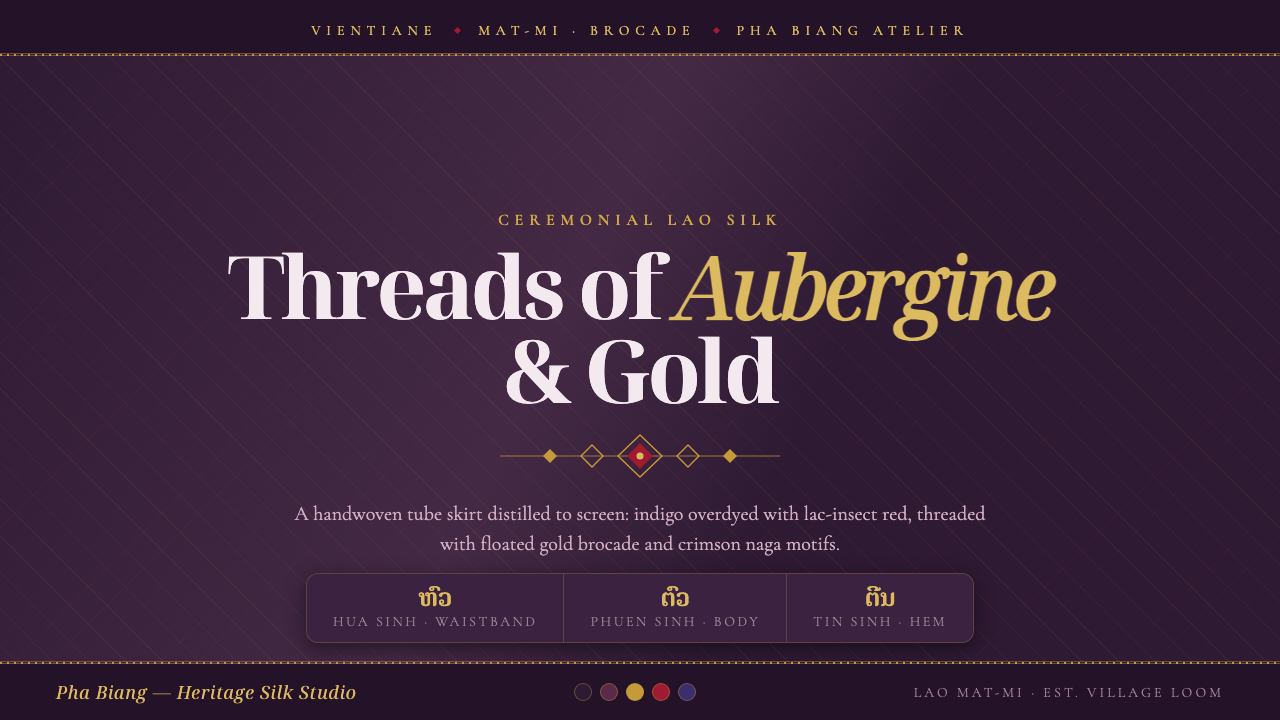 Lao Sinh Silk WeaveCeremonial Lao silk on screen. Dark aubergine ground threaded with gold mat-m…
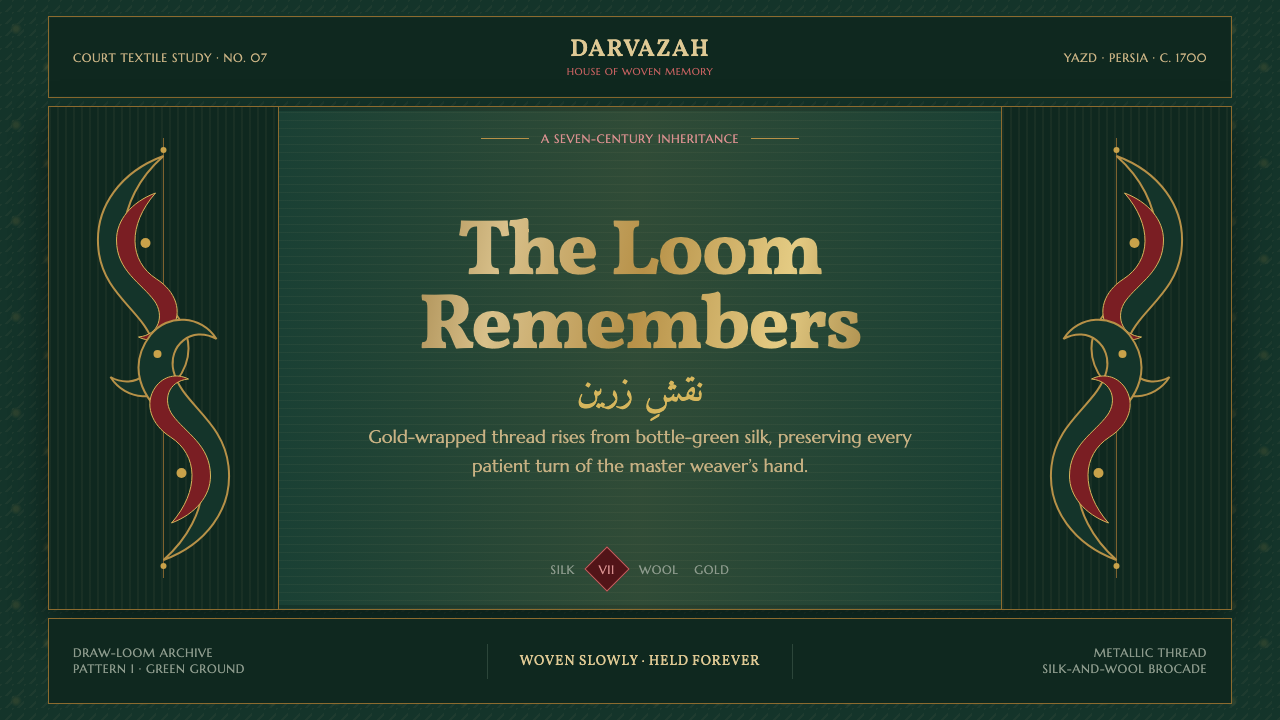 Persian Termeh BotehRoyal brocade, densely alive. Antique-gold boteh climbs across lustrous bottl…