What is Persian Termeh Boteh?
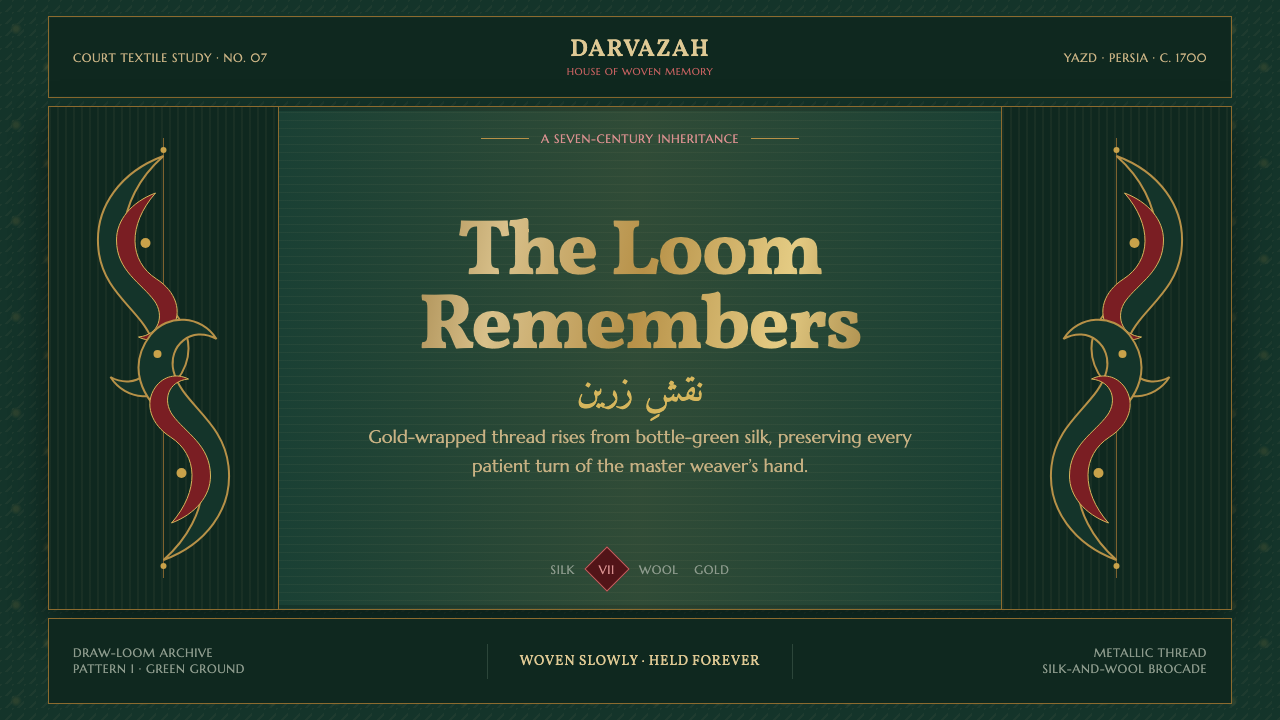
Persian Termeh Boteh turns royal brocade into atmosphere: antique-gold paisley rising through a lustrous bottle-green field, dense enough to feel woven rather than merely decorated.
Persian Termeh Boteh in brief
Termeh is the handwoven silk-and-wool brocade associated with Yazd, Iran. Its visual system comes from court textiles in which fine threads, wrapped in gold or silver, were worked into densely repeated boteh and Shah-Abbasi ornament for royal khalaat robes. The style is not minimalist, rustic, or casually decorative. It is ceremonial surface design: richly patterned, tightly controlled, and built to reward close looking.
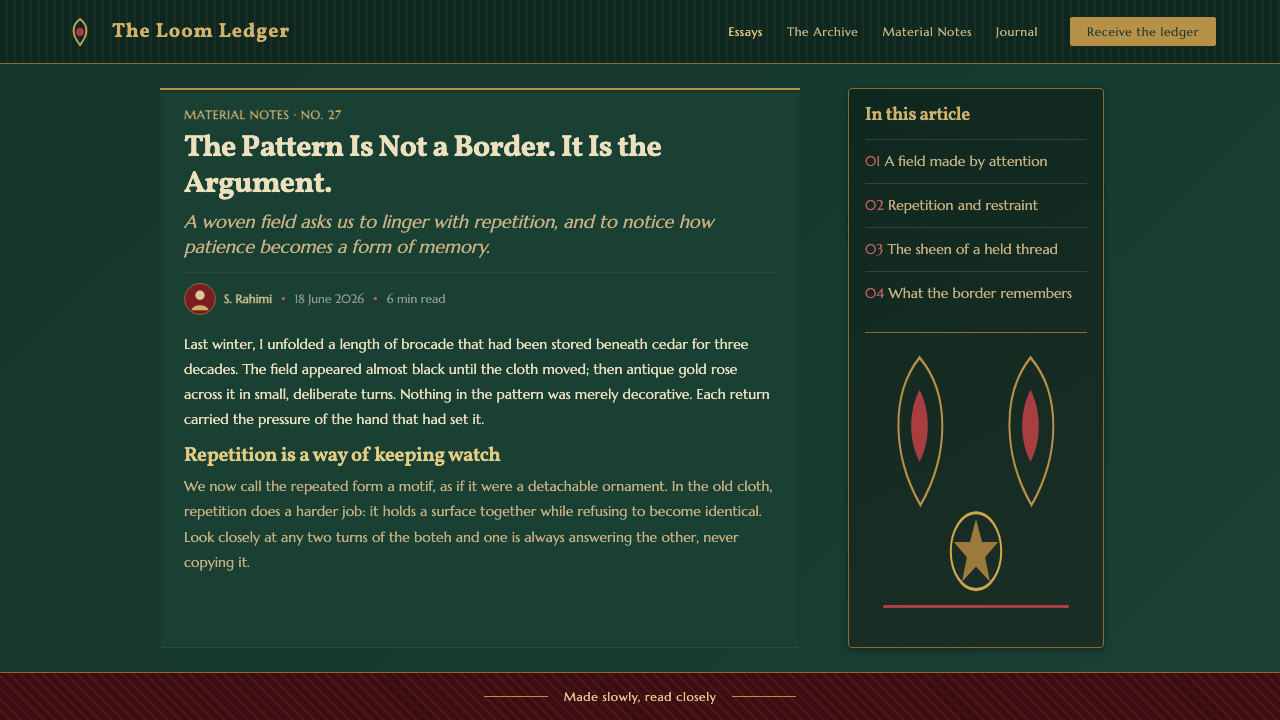
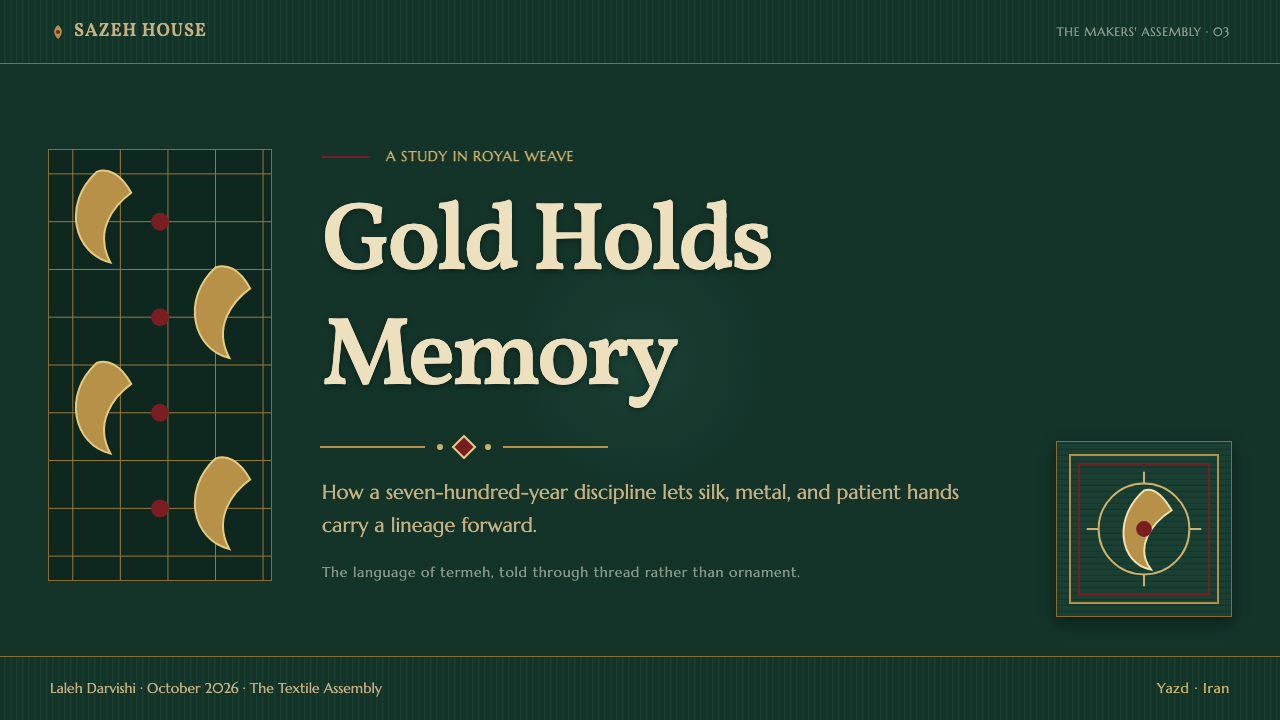
This interpretation begins with the dark bottle-green ground of a green-ground court brocade. Across that deep, lustrous field, muted antique-gold boteh motifs climb, overlap, and repeat. Small jujube-red accents interrupt the gold with a restrained flash of warmth. The result should suggest metallic thread raised above silk, with pattern catching light at different angles while the dark ground keeps the composition dignified and inward-looking.
The boteh is often recognized today through its later paisley associations, but here it should be understood as part of a woven ornamental language rather than a standalone icon. Its force comes from repetition, directional movement, and variation within a disciplined field. Shah-Abbasi repeats give the system another register of courtly continuity, helping the pattern read as an expansive textile structure instead of a scattered collection of motifs.
Where does Persian Termeh Boteh come from?
The tradition belongs to Yazd, an Iranian center of termeh weaving whose craft history extends across more than seven centuries. Termeh joined silk and wool in a handwoven brocade tradition distinguished by densely worked ornament and by the visual richness of precious-thread effects. Its identity is inseparable from the loom: surface, motif, sheen, and hierarchy are conceived as one fabric system rather than as separate layers applied after the fact.
By around 1700, during the Safavid-era zenith named in this tradition, courtly textile ornament had become a particularly concentrated expression of status and ceremony. Boteh and Shah-Abbasi repeats were worked for royal khalaat robes, giving the textile an inherently formal role. The garment context matters: such pattern was designed to move across the body, reveal itself in folds, and retain visual authority from both near and far.
The making of this vocabulary depended on Yazd termeh master-weavers and Safavid draw-loom naqsheh drafters. The master-weavers translated material knowledge into a dense woven surface, while the drafters organized the ornamental plan that the loom would carry. Their work makes clear that the style is neither freehand floral decoration nor simple repeated wallpaper. It is a coordinated relationship among thread, motif, repeat, ground, and the changing reflection of the textile.
What defines the Persian Termeh Boteh look?
Bottle-Green Ground
The dark bottle-green field is the style's visual reservoir. It is not a blank background but a lustrous woven depth against which every metallic motif becomes legible. The ground should feel saturated and textile-like, with the quiet darkness of silk rather than the flat certainty of ordinary black.
Antique-Gold Thread
Gold appears muted, aged, and materially present rather than bright or glossy in a modern metallic sense. It should read as wrapped thread worked into the weave, rising gently from the ground. Its warmth creates rank and ceremonial emphasis without turning the composition into spectacle.
Climbing Boteh
Boteh motifs should seem to climb through the field instead of sitting in isolated rows. Their directional curve creates a living upward motion, while the repeated structure prevents that motion from becoming loose or botanical in a casual way. Density is essential: the eye should travel from one turn of the motif to the next.
Shah-Abbasi Repeats
Shah-Abbasi ornament gives the fabric a courtly cadence. Repetition is organized rather than mechanical, establishing a field that can extend beyond the visible edge. This sense of continuity makes the pattern feel inherited and architectural, as though it belongs to a larger ceremonial textile rather than a single framed panel.
Raised Brocade Surface
Everything should imply a raised, tactile weave. Motifs are not printed flatly on top of a color field; they appear embedded in and lifted from the fabric. Subtle sheen, compressed detail, and the impression of piled thread create depth without relying on pictorial illusion.
Jujube-Red Glints
Jujube red is an accent, not a competing field. Used in small intervals between antique-gold elements, it resembles a warm glint caught in the pile. Its role is to animate the dark green and gold relationship, offering a pulse of warmth while preserving the textile's solemn overall register.

Who shaped Persian Termeh Boteh?
The master-weavers of Yazd represent the material intelligence behind termeh. Their contribution is not merely the execution of a decorative pattern: it is the control of silk, wool, precious-thread effects, density, and woven relief as a unified surface. Through this craft, boteh and Shah-Abbasi ornament become textile structure rather than illustration.
The naqsheh drafters organized the ornamental plans used by Safavid draw-looms. Their role reveals the style's dependence on systems thinking: a successful brocade requires motifs to be composed as repeat, direction, hierarchy, and interval before they can become cloth. The drafter's plan turns ornamental abundance into disciplined order.
Although not individual people, these paired ornamental vocabularies are the central visual actors of the style. Boteh supplies climbing movement and recognizable silhouette; Shah-Abbasi repetition supplies continuity and courtly rhythm. Together they let a dense field remain coherent, ceremonial, and visibly woven.
How do you use Persian Termeh Boteh today?
For presentation covers, use the dark green ground as a stage for a concentrated cluster of antique-gold boteh and a restrained title area. The strongest covers do not try to explain the entire pattern at once. Let one dense ornamental region establish the mood, then give the title enough calm space to read as part of the textile's hierarchy. Content slides should become quieter, using small border motifs, framed headings, and deep fields only where a section needs ceremony.
Data slides require particular restraint. Termeh Boteh can frame a chart, title panel, or key conclusion, but it should not run behind dense data labels. Keep analytical information on an uncluttered surface, then use bottle green, antique gold, and jujube red to distinguish emphasis and significance. The pattern should act like an inherited frame around information, never like a veil over it.
In web interfaces, the style suits premium editorial dashboards, members' spaces, heritage collections, and pricing pages that need gravitas rather than speed-driven visual noise. Use the dark field for hero areas, navigation bands, premium tiers, or contained panels. Maintain generous quiet zones for navigation, forms, and readable text; dense boteh belongs at edges, within expandable surfaces, or in moments intended to feel ceremonial.
For editorial and marketing work, the system is especially effective when a story concerns craft, provenance, rarity, collecting, hospitality, or ritual. A long-form page can open with a close ornamental crop, then alternate rich brocade panels with calm reading surfaces. Product campaigns should let material language lead: sheen, weave, repeat, and layered motif are more persuasive than generic luxury signals.
The common mistake is treating Persian Termeh Boteh as a decorative paisley wallpaper. That strips the style of its woven logic and makes the result busy without feeling precious. Do not scatter bright motifs evenly across every surface, turn the gold into a glossy novelty finish, or use red as a dominant signal. Preserve the hierarchy: dark silk-like ground first, antique-gold woven ornament second, and jujube-red glints only where the field needs life.
Persian Termeh Boteh — FAQ
Is Persian Termeh Boteh simply a paisley style?
No. Boteh is an essential recognizable motif, but the style is defined by more than its silhouette. Authentic Termeh Boteh depends on a handwoven brocade logic: a deep lustrous ground, densely organized repeat, precious-thread character, raised textile presence, and the courtly relationship between boteh and Shah-Abbasi ornament. Using paisley alone misses the system that gives the motif its authority.
Why is the background so dark?
The bottle-green field is central to this interpretation of a green-ground court brocade. Darkness gives antique gold a material contrast that resembles thread catching light over silk. It also prevents dense ornament from becoming visually frantic: the ground absorbs visual pressure, allowing the pattern to feel sumptuous, layered, and controlled rather than merely crowded.
Can this style work with modern typography?
Yes, provided typography does not compete with the weave. Modern type can bring clarity to a dense ornamental field when it is given calm space and a clear hierarchy. The text should feel deliberately placed over or beside the brocade, not trapped inside it. The goal is contrast between contemporary readability and inherited textile richness, not the imitation of historical garments on a screen.
Where should the full pattern be used most sparingly?
Avoid placing the full dense repeat behind long paragraphs, detailed tables, forms, or charts. Those tasks demand immediate legibility, while termeh asks for slow visual attention. Use complete pattern fields for openings, feature panels, premium moments, and generous image-like surfaces. In functional areas, reduce the vocabulary to a border, a cropped boteh, or a quiet glint of color.
Related design styles
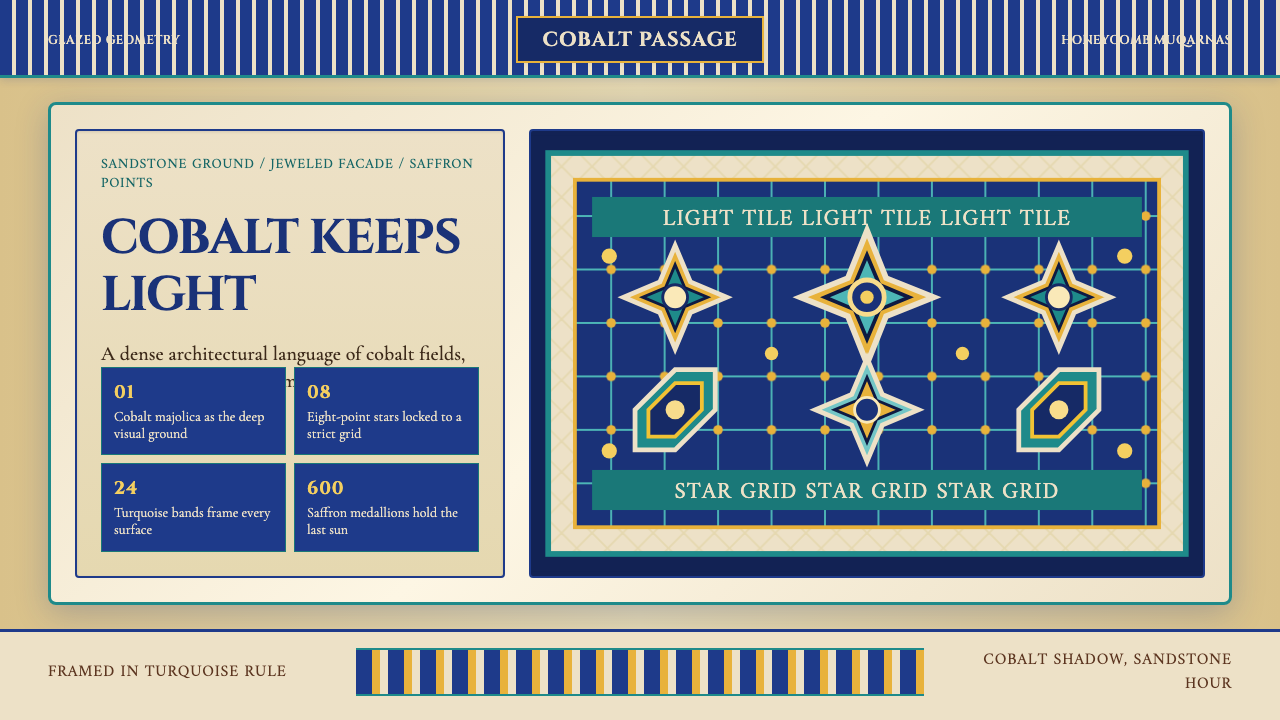 Uzbek Samarkand Shah-i-ZindaOpulent tile memory. Cobalt grids, turquoise bands, and saffron medallions cr…
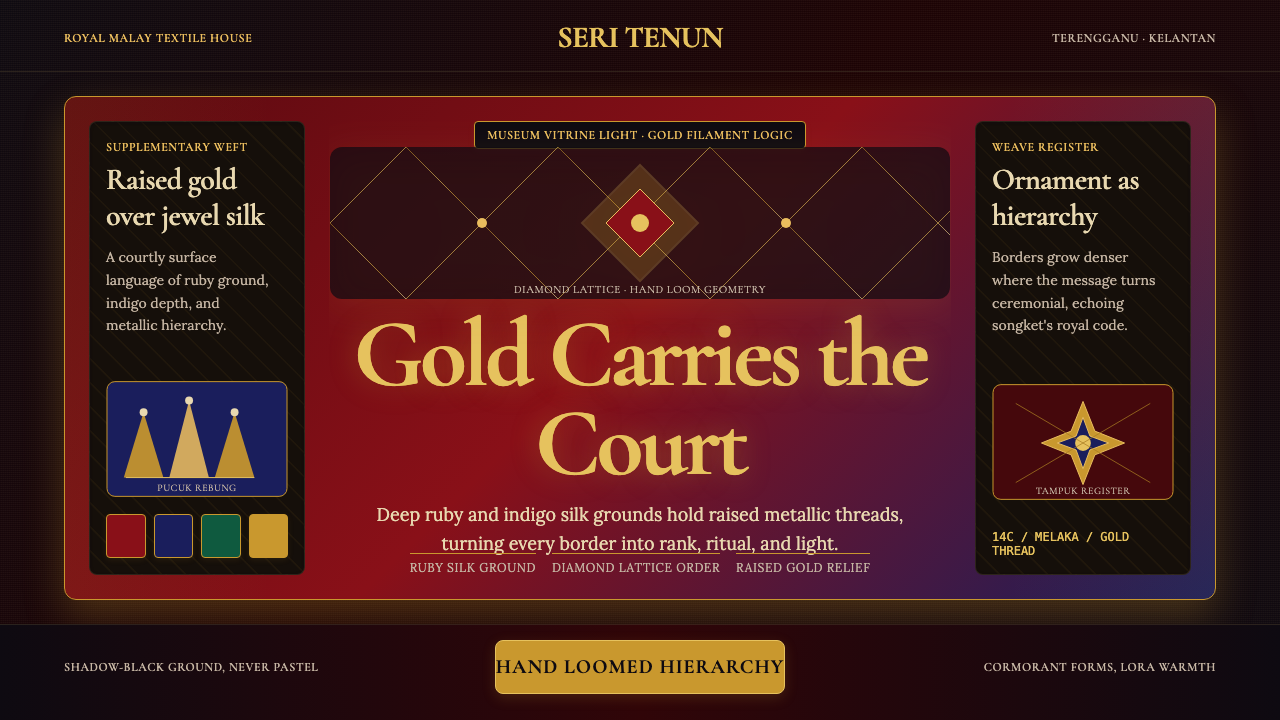 Malaysian Songket (Gold-Thread Weave)Royal textile opulence. Ruby and indigo silk grids lift gold-thread relief.
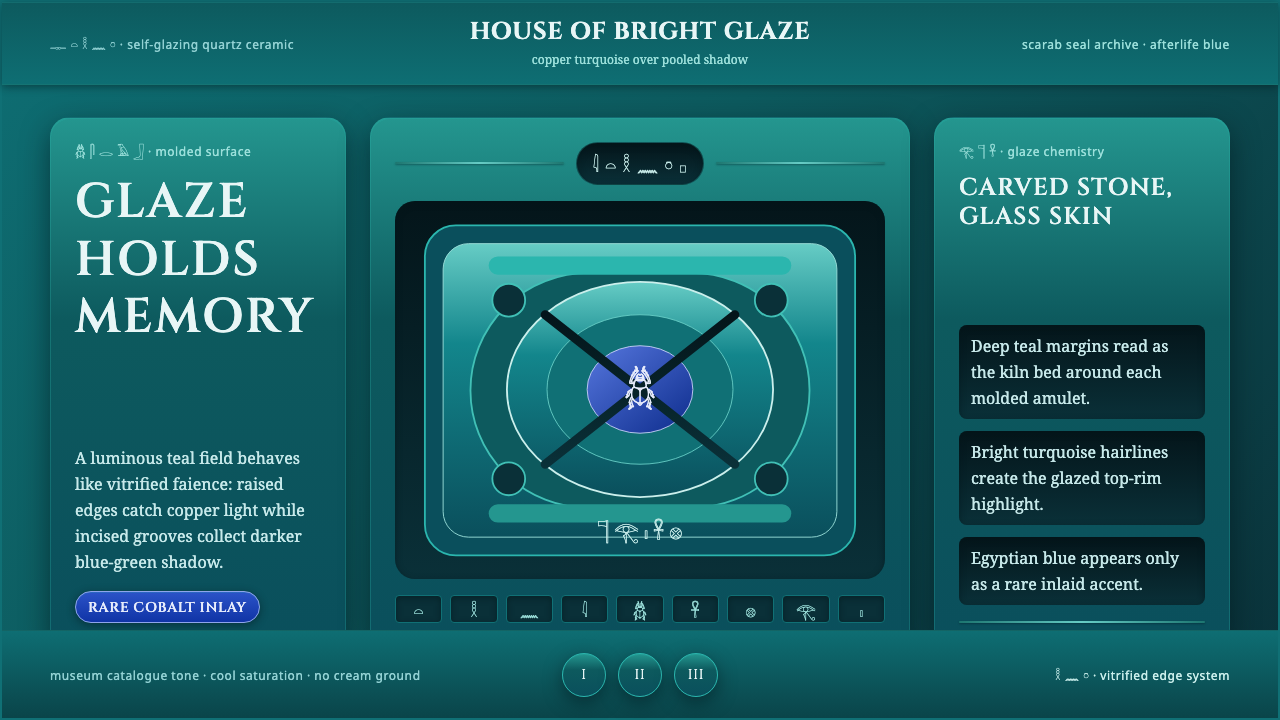 Egyptian FaienceGlaze carries the afterlife. Deep teal grooves, copper-turquoise rims, rare c…
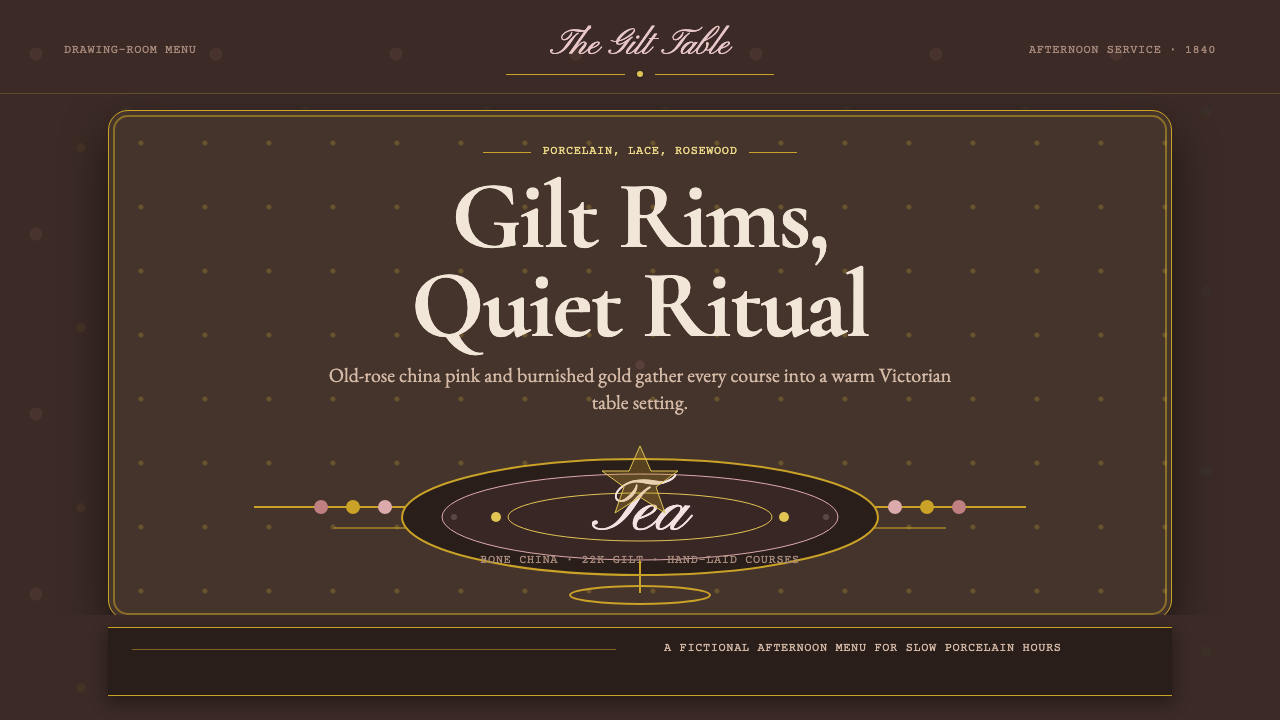 English Afternoon TeaOrnament is the ritual. Old-rose porcelain, gilt rims, and script rest on ros…
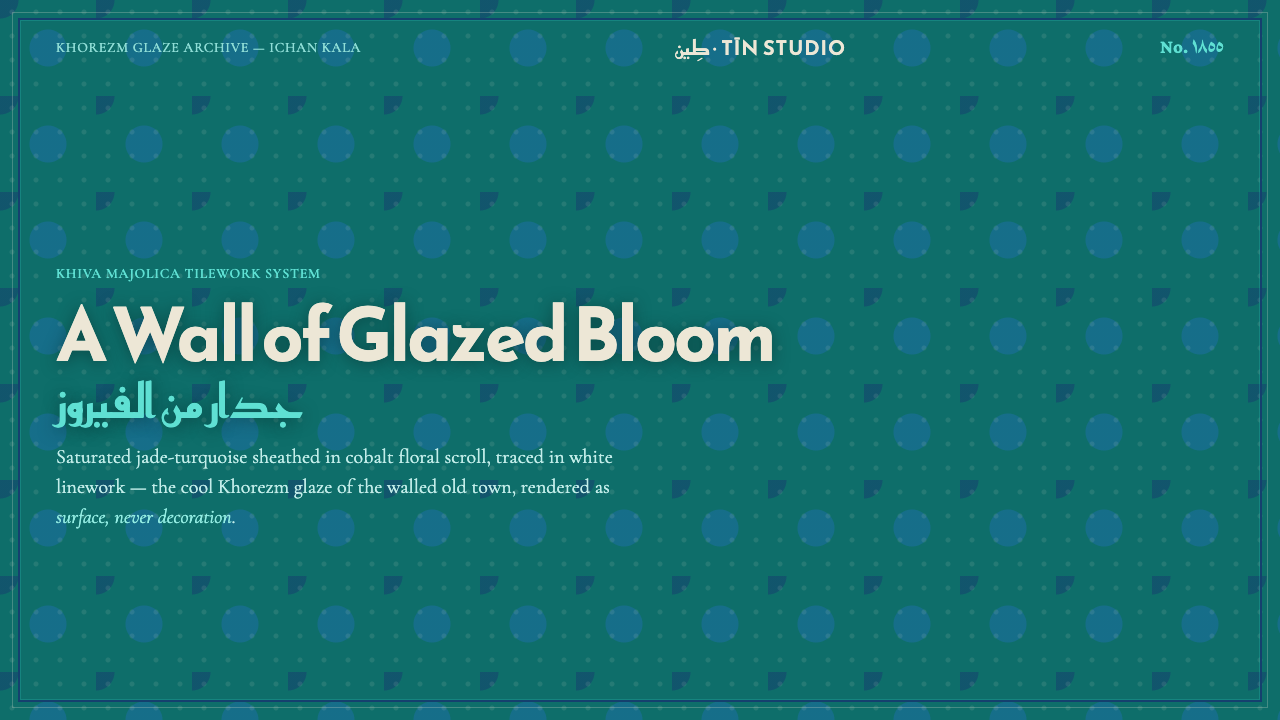 Khiva Ichan-Kala MajolicaJade becomes architecture. Cobalt bands and white tracery lock the surface in…
 Safavid Charbagh PlanParadise made axial. Turquoise cross-channels divide viridian quadrants in go…