What is Ramadan Lanterns (Fanous Nights)?
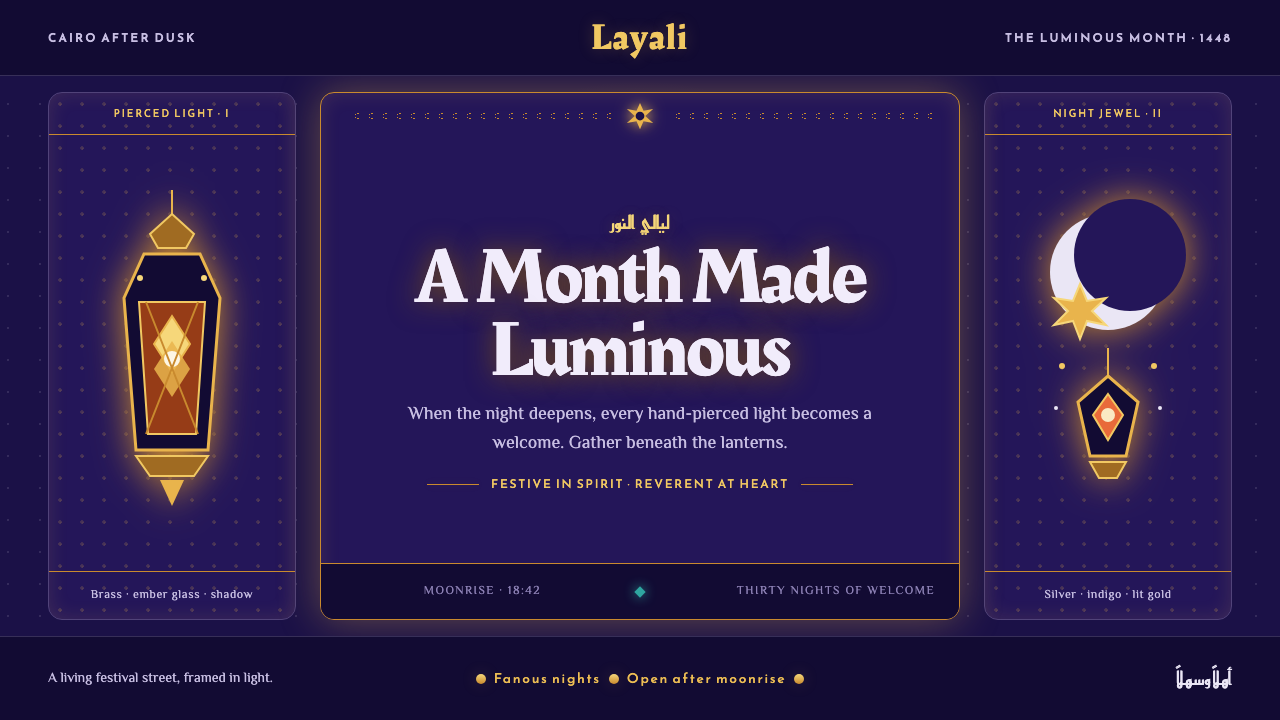
Ramadan Lanterns turns the night into a sacred instrument — pierced brass, amber fire, and star-lattice ornament rising from an indigo depth where darkness is not absence but the ground that makes light visible.
Ramadan Lanterns (Fanous Nights) in brief
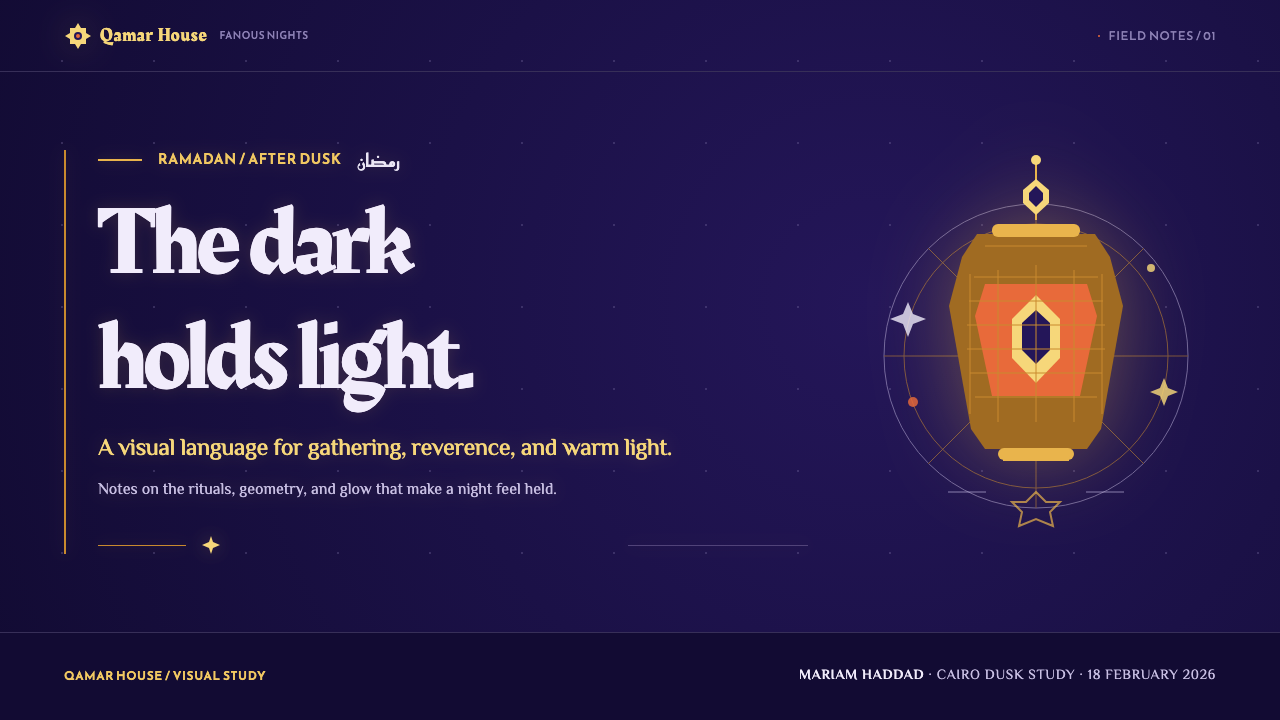
Ramadan Lanterns, also known as Fanous Nights, is a visual language rooted in the illuminated streets and evening souks of Cairo during Ramadan. Its central image is the fanous: a pierced brass lantern whose cutwork releases amber-gold light through geometric apertures. Around it gather a silver crescent, strings of hanging lamps, rooftop silhouettes, and star-lattice patterns that scatter small points of brightness across a deep indigo-violet night. The result is festive without becoming loud, devotional without becoming severe.
The style is built on contrast, but not the ordinary contrast of a modern dark interface. Its cool ground is saturated, immersive, and almost bottomless; its warm metallic elements appear only as things that are lit. Gold is not a flat accent color applied to borders or labels. It belongs to flame, reflected brass, glowing glass, sugared dates, and the edge of a crescent. The darker the surrounding field becomes, the more precious every illuminated form feels.
Ornament is structural in this system. Eight-point Rub el Hizb stars, girih strapwork, scalloped Mamluk arches, pierced frames, and garland-like lantern silhouettes organize the space rather than merely decorating it. Panels feel assembled from crafted screens and metalwork. Light bleeds past edges, shadows remain deep, and every surface suggests a hand-cut aperture or a warm object suspended in the night.
Where does Ramadan Lanterns (Fanous Nights) come from?
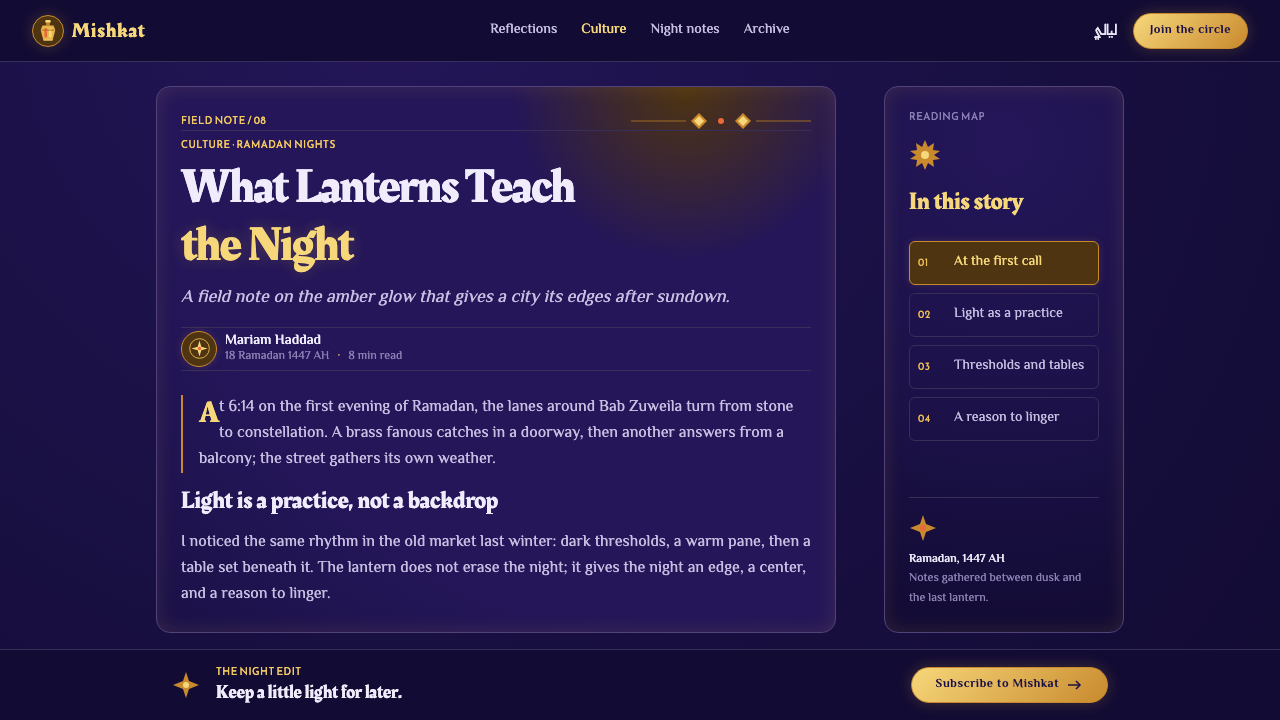
The fanous is traced to Cairo and to Fatimid origins in the tenth through twelfth centuries, with its story closely tied to the city's Ramadan nights. The material language is inseparable from Cairo's role as a center of craft, ceremony, and urban gathering. A lantern carried through a dark street is not simply a source of visibility. It marks arrival, welcomes neighbors, gives shape to a shared evening, and turns the ordinary movement of the city into a seasonal ritual.
The style draws on Fatimid and Mamluk metalwork, especially the idea that a vessel or architectural surface can become more expressive through pierced pattern. The lantern's surface is both enclosure and image: solid brass protects the light while cut openings give it a visible rhythm. This dual role explains why the visual language resists blank panels and unmodulated surfaces. A frame, grille, arch, or star is not an accessory placed on top of the object; it is the means through which the object becomes legible.
Mashrabiya lattice craft provides another important lineage. Lattice screens mediate between interior and exterior, conceal and reveal, shade and illuminate. In a Ramadan Lanterns composition, that same logic becomes atmospheric. A pattern can be read as a border, a window, a shadow, or a field of stars depending on how much light passes through it. The viewer is always moving between enclosure and openness, between the protected warmth of the lantern and the vast coolness of the night.
The broader vocabulary also belongs to Islamic geometric ornament, with its repeated stars, interlocking straps, and disciplined symmetry. The style is not a museum reconstruction of one historical moment. It is a living folk craft that continued through the nineteenth, twentieth, and twenty-first centuries across Egypt, the Levant, the Gulf, and the greater Middle East and North Africa. Its contemporary power comes from that continuity: the forms remain recognizably traditional while adapting to streets, homes, celebrations, stories, and digital surfaces.
What defines the Ramadan Lanterns (Fanous Nights) look?
Indigo Night
The ground is deep, cool, and saturated, leaning toward indigo and violet rather than neutral charcoal. It should feel atmospheric rather than merely dark, like a sky that continues beyond the edge of the composition. Near-black passages create depth, while slightly lighter blue-violet fields allow architectural silhouettes and lattice patterns to emerge without weakening the nocturnal mood.
Lit Metal
Warm gold belongs to illuminated material: pierced brass, amber glass, candle flame, and reflected metal. It should shimmer, pool, and radiate rather than sit as a uniform painted field. The most convincing use of gold is selective. A single lantern or crescent can carry the visual center, while smaller points of light repeat its warmth across the scene.
Pierced Geometry
Geometric pattern is experienced through openings. Stars, straps, arches, and repeated apertures should create a rhythm of solid brass, darkness, and released light. The pattern can be dense around a frame and more open near a glowing center, allowing ornament to describe both enclosure and illumination.
Mamluk Arch
Scalloped arches provide a civic and architectural register. They can frame a title, shelter a lantern, or define the edge of a content panel. Their repeated curves soften the strictness of the lattice without becoming delicate; the arch remains a structural threshold between the interior glow and the surrounding night.
Crescent and Stars
The crescent works as a suspended counterform to the lantern: cool silver against hot amber, a clean celestial shape against crafted terrestrial detail. Stars should appear as punctures or distant points rather than scattered decoration. Their role is to extend the composition upward and outward, making the night feel inhabited rather than empty.
Layered Glow
Light should have a source, a body, and a surrounding atmosphere. The brightest area sits within the lantern or along the crescent; a softer amber halo stains nearby metal and glass; the outer edge returns to indigo shadow. This layered relationship gives the interface depth and prevents glow from becoming a generic luminous effect.
Crafted Density
Ramadan Lanterns does not treat every empty area as a virtue. Dense ornament can gather around important objects, especially at thresholds, corners, headers, and card edges. The discipline lies in controlling density: a patterned frame should make the central content easier to notice, while quieter intervals keep the composition from becoming visually clogged.
Who shaped Ramadan Lanterns (Fanous Nights)?
Mahfouz belongs to the Cairo cultural imagination that gives Ramadan Lanterns its human scale. His name connects the style to the lived city: evening streets, neighborhood thresholds, rooftops, marketplaces, and the layered social life that gathers around seasonal light. In this visual system, the lantern is not an isolated object but part of an inhabited urban night.
Ahmed Mostafa represents the continuing relationship between Arabic visual culture and the disciplined construction of letterform and ornament. His presence in the source tradition supports a reading of Ramadan Lanterns in which typography should feel integrated with the pattern system, not pasted over it. Headings can behave like carved signage, while text remains clear enough to preserve the interface's practical purpose.
Hassan Fathy anchors the style in architecture and material culture. His association with the source material encourages an understanding of arches, screens, courtyards, shadow, and local craft as spatial principles rather than surface motifs. Ramadan Lanterns therefore works best when panels feel built, openings feel purposeful, and light appears to travel through a constructed environment.
Doris Behrens-Abouseif represents the scholarly attention given to Cairo's Islamic art, architecture, and material history. Her place among the key figures reinforces the importance of treating the style as culturally situated rather than as an exotic decorative filter. The forms carry histories of craft, urban life, and religious seasonality, and should be used with that specificity intact.
How do you use Ramadan Lanterns (Fanous Nights) today?
For presentation slides, use the cover as a night scene rather than a title card with decoration added afterward. Let a large crescent, a dominant fanous, or a scalloped arch establish the composition against the indigo ground. Content slides should preserve the same logic in quieter form: titles sit within crafted frames, section transitions can use garlands of lanterns, and body copy should remain surrounded by enough darkness to make the lit elements feel intentional. Data slides benefit from diagrammatic star geometry, crescent-shaped emphasis, and amber highlights reserved for the most important comparison or conclusion.
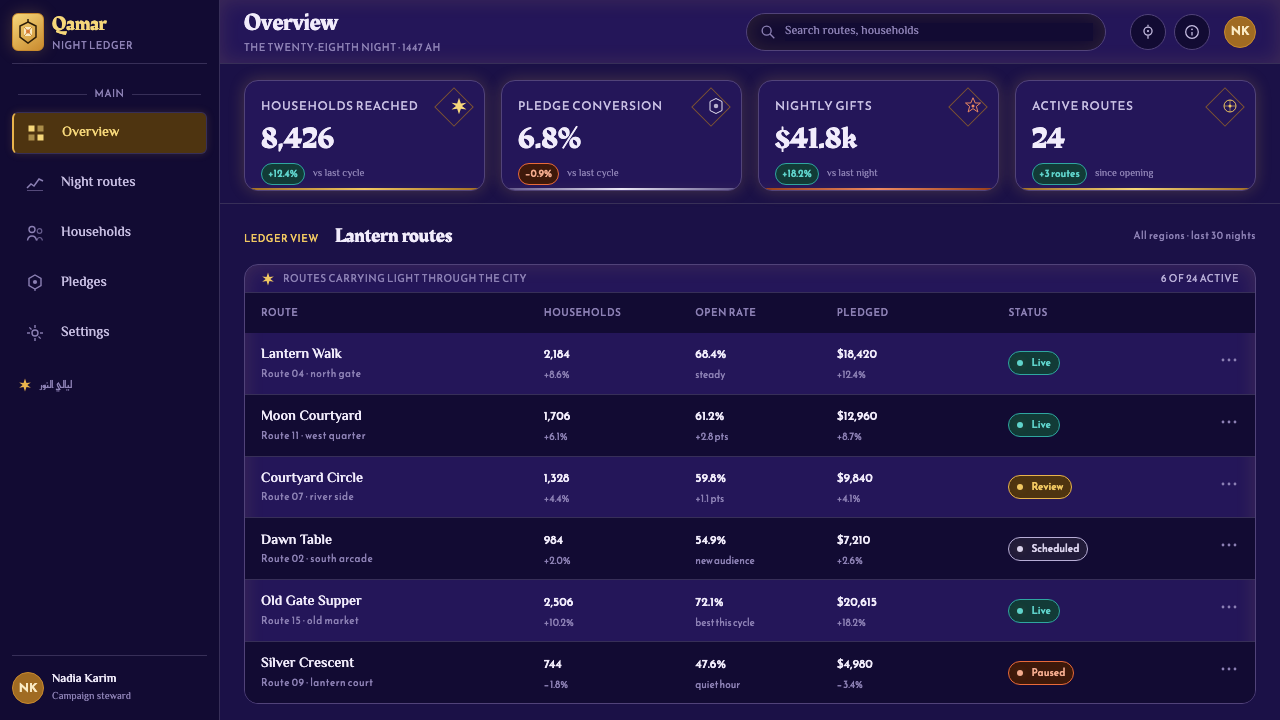
For web interfaces, Ramadan Lanterns is especially effective for dashboards, event platforms, cultural archives, and pricing pages that need atmosphere without sacrificing hierarchy. Use the deep night ground as the continuous field, then assign warm light to active states, selected cards, progress indicators, or the most important tier. Panels should feel edged, screened, or arched rather than floating as generic rectangles. A dashboard can use small lantern markers for status, while a pricing page can make the recommended plan feel illuminated instead of merely outlined.
For editorial and marketing work, the style creates a strong sense of place. Articles can begin with a dark atmospheric opening, followed by sections framed like windows or shopfronts. Pull quotes work well when treated as inscriptions within a pierced panel, while metadata can sit along a subtle lattice edge. Marketing pages should use ornament to establish rhythm across the scroll: garlands for transitions, crescent forms for invitations, and controlled pools of amber light for calls to action. Photography, when used, should feel integrated with the night rather than pasted onto it.
The style also suits seasonal campaigns, cultural programming, hospitality, and products whose identity depends on warmth, ritual, craft, or evening gathering. Its strongest quality is emotional contrast: a cool, quiet field makes a small illuminated object feel intimate and valuable. This allows a page to be visually rich without making every element equally loud. One lantern can carry more meaning than a full field of gold if the surrounding darkness has been given enough authority.
The common mistake is turning the style into a generic dark theme with gold buttons. Flat gold borders, random stars, unrelated Arabic-looking ornament, and uniform glow erase the distinction between craft and decoration. Another mistake is filling every surface with pattern until the lantern loses its role as a source of light. Use motifs with structural purpose, reserve the warmest glow for hierarchy, and remember that the night is not a background to overcome. It is the condition that makes the celebration visible.
Ramadan Lanterns (Fanous Nights) — FAQ
Is Ramadan Lanterns simply a gold-on-black dark theme?
No. A generic dark theme treats darkness as a neutral container and gold as an accent applied wherever emphasis is needed. Ramadan Lanterns treats darkness as an atmospheric and cultural space, closer to an indigo-violet night, while gold belongs specifically to illuminated material. The distinction matters: brass, flame, glass, and reflected metal should appear to emit or receive light, not merely share a color token.
How much ornament is too much?
Ornament becomes excessive when it competes with the object it is meant to frame. Use lattice, arches, stars, and pierced borders to establish thresholds, hierarchy, and rhythm. Leave quieter intervals around reading-heavy content and let the brightest glow identify the most important action or object. The style can be dense, but its density should feel crafted and directional rather than uniformly busy.
Can the style work without literal lantern illustrations?
Yes, provided the underlying logic remains. Use pierced geometry, selective amber illumination, deep indigo space, crescent-like counterforms, architectural arches, and shadowed layers to preserve the language. A literal fanous is a useful anchor, but the deeper system is about light passing through crafted structure. Removing the object while keeping that relationship can produce a more abstract and adaptable result.
How should typography behave in this aesthetic?
Typography should feel integrated with the architecture of the page. Strong display type can sit within arches, frames, or illuminated thresholds, while body text should remain calm and highly legible against the night field. Avoid decorative lettering that imitates ornament without serving communication. The most successful approach lets typography carry cultural atmosphere through proportion, spacing, and placement while keeping the words direct.
Where does Ramadan Lanterns struggle?
It can struggle in products that require clinical neutrality, extreme operational density, or a completely secular visual tone. The style carries associations of sacred seasonality, evening gathering, craft, and regional cultural history. Applying it to a utility interface without acknowledging those associations can feel superficial. It is strongest when the product welcomes atmosphere, ritual, hospitality, storytelling, or a deliberate sense of place.
Related design styles
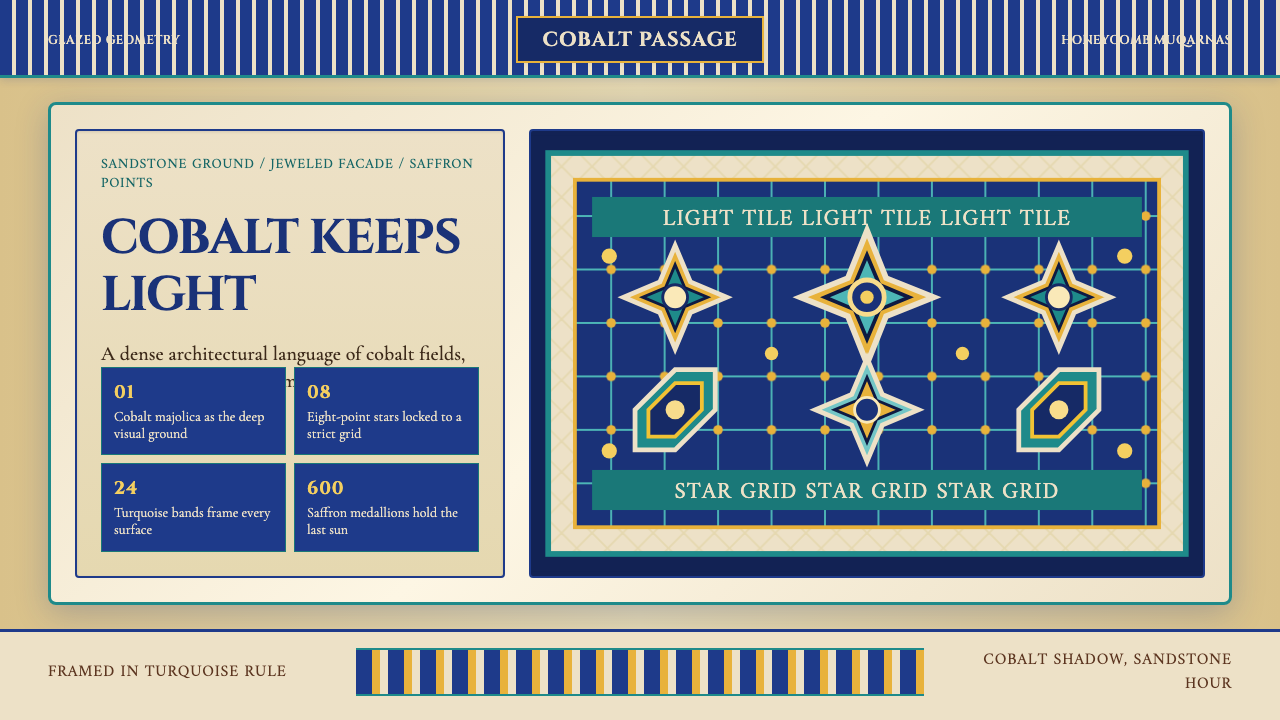 Uzbek Samarkand Shah-i-ZindaOpulent tile memory. Cobalt grids, turquoise bands, and saffron medallions cr…
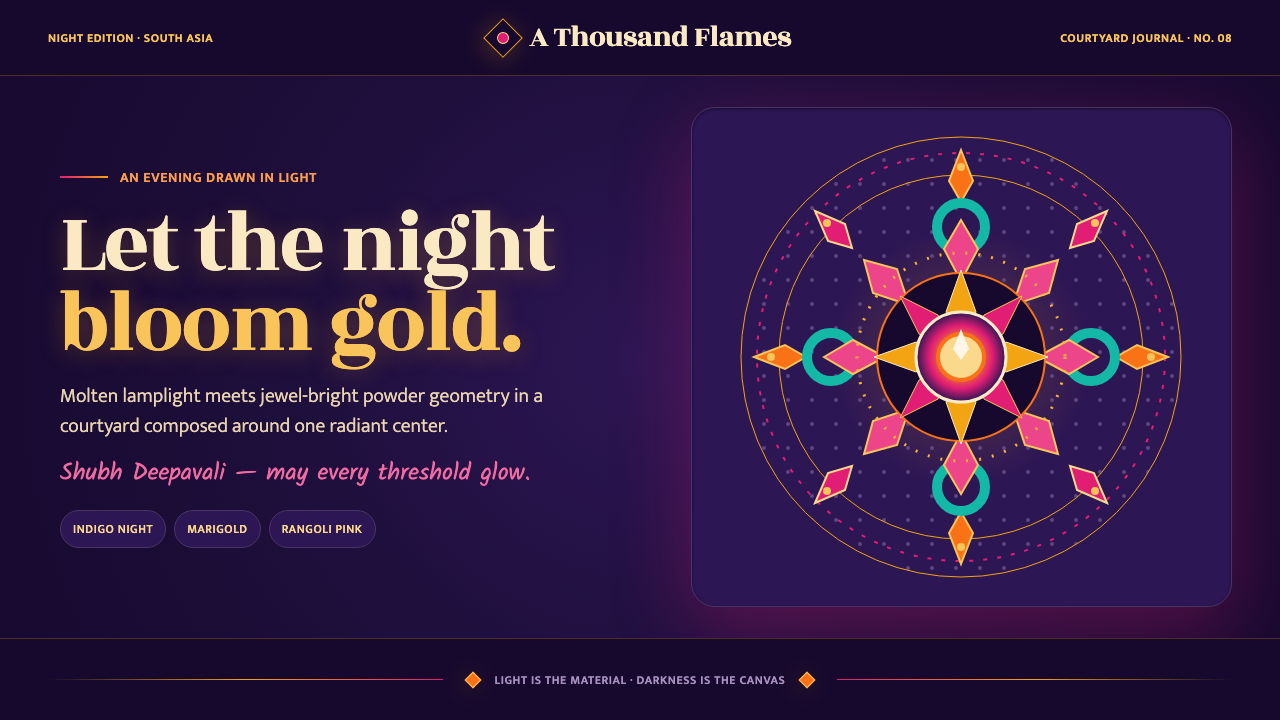 Diwali Festival of LightsNight blooms from within. Molten gold and jewel-bright rangoli radiate across…
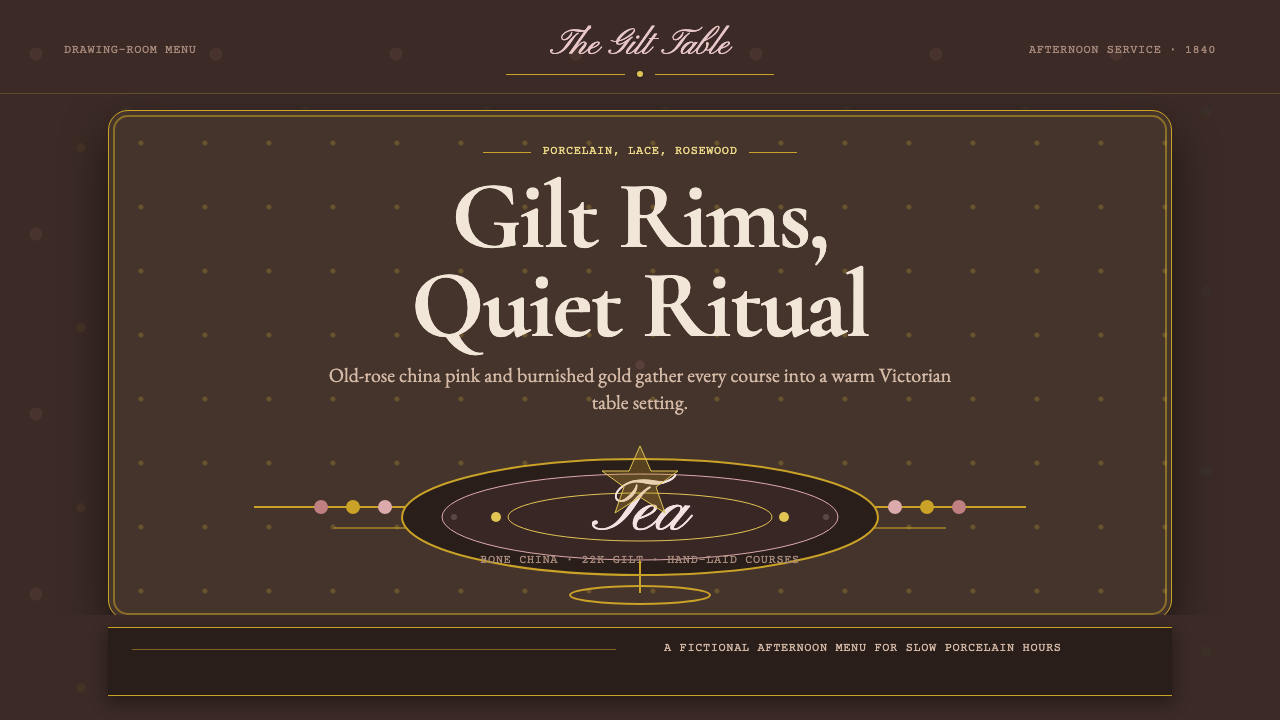 English Afternoon TeaOrnament is the ritual. Old-rose porcelain, gilt rims, and script rest on ros…
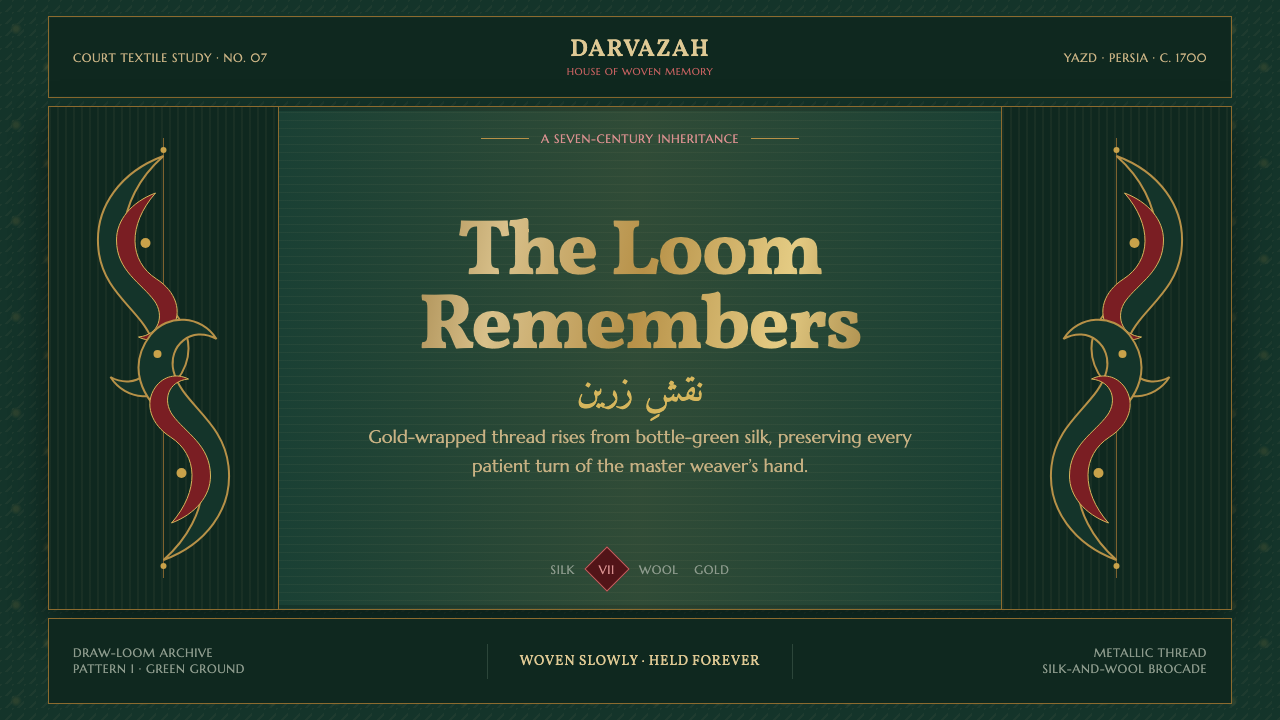 Persian Termeh BotehRoyal brocade, densely alive. Antique-gold boteh climbs across lustrous bottl…
 Babylonian Ishtar GateMonumental by procession. Lapis brick, gold registers, and carved capitals ho…
 Isfahan Minakari EnamelJewel-bright ceremony. Cobalt enamel, gold cloisonné lines, and radial blooms…