What is Lao Sinh Silk Weave?
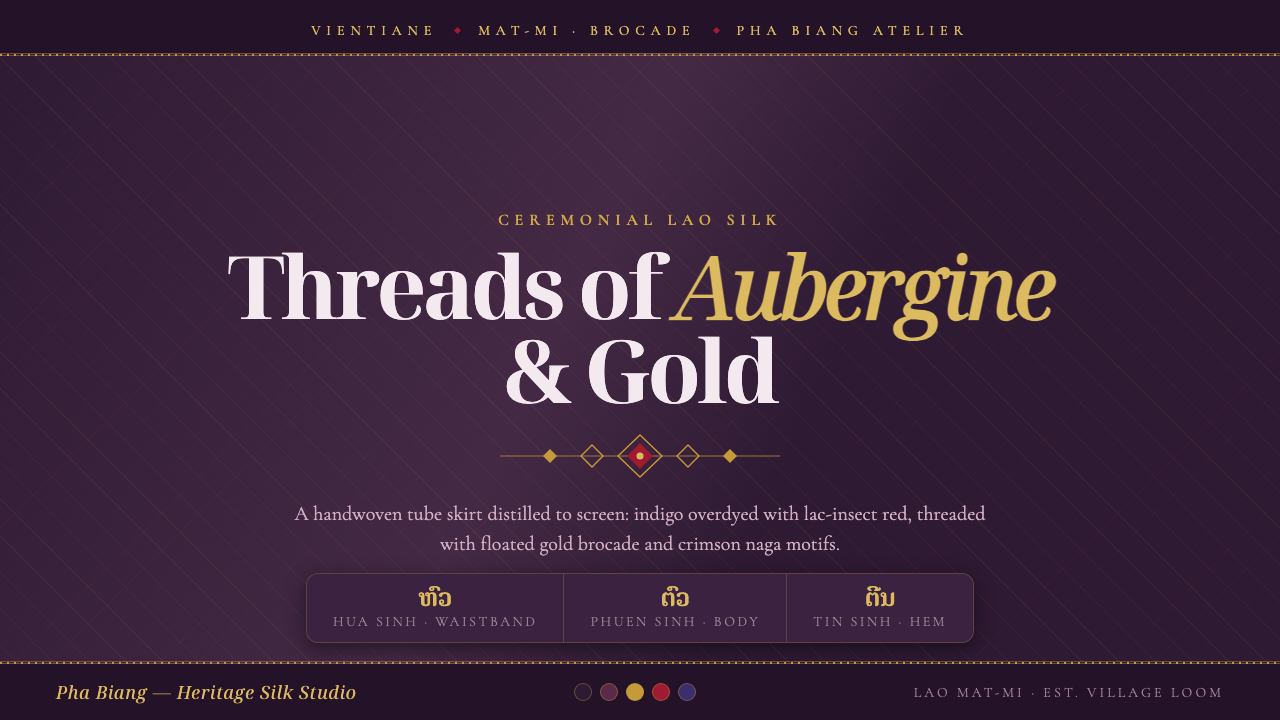
Lao Sinh Silk Weave turns ceremonial Lao silk into a dark, luminous screen language of aubergine, gold thread, ikat diamonds, and naga rhythm.
Lao Sinh Silk Weave in brief
Lao Sinh Silk Weave is a screen-oriented interpretation of the Lao sinh, or pha sin, a handwoven silk tube skirt traditionally paired with the pha biang shoulder cloth. Its visual character comes from the textile itself: a deep aubergine field produced by indigo overdyed with lac-insect red, softened by the natural sheen of silk and animated by gold, silver, and crimson accents.
The design system translates textile construction into interface structure. A dark dyed-silk ground becomes the visual field; fine gold thread-lines become rules, borders, and connective details; mat-mi diamonds become repeating geometry; and naga motifs introduce a ceremonial, temple-associated rhythm. The result should feel woven rather than assembled, with order emerging through bands, repetition, and controlled ornament.
Its mood is ceremonial without becoming theatrical. Gold appears as a glint against darkness, not as a broad metallic surface. Red acts as a concentrated spark inside the aubergine field. Symmetry and tiered horizontal organization echo the sinh hem, while restrained variation keeps the composition visibly hand-informed. The system is rich because its materials and motifs carry meaning, not because every surface is decorated.
Where does Lao Sinh Silk Weave come from?
Lao Sinh Silk Weave is grounded in a living textile tradition associated with Laos in Southeast Asia. The source tradition is framed across 1950–1990 while remaining rooted in older village weaving, so its identity is neither an archaeological reconstruction nor a purely contemporary invention. It belongs to an ongoing culture of making in which the sinh remains legible through cloth, pattern, and social pairing.
The sinh is a handwoven silk tube skirt, shaped as a textile garment rather than a cut-and-sewn composition. It is paired with the pha biang shoulder cloth, creating a ceremonial relationship between the lower garment and the draped upper textile. That pairing matters to the digital system: the design language should feel assembled from coordinated bands and layers, with each part supporting a larger textile whole.
Its material vocabulary combines Lao mat-mi, a weft-ikat practice, with supplementary-weft brocade. Mat-mi introduces the softened irregularity of resist-dyed patterning, especially in the diamond forms. Supplementary-weft brocade introduces raised or visually distinct thread-work, represented on screen through fine gold and silver accents that sit against the dark field like carefully inserted strands.
The key makers are Lao village master weavers and ethnic Tai-Lao silk-weaving households. Their presence in the source material directs attention away from anonymous ornament and toward skilled domestic and village production. The digital interpretation should therefore preserve a sense of patient construction: repetition may be disciplined, but it should not become sterile; symmetry may be clear, but it should retain the warmth of a hand-guided loom.
What defines the Lao Sinh Silk Weave look?
Aubergine Ground
The dominant field is a deep aubergine derived from indigo overdyed with lac-insect red. It should read as dyed silk rather than flat black: dark, saturated, and subtly alive. This ground gives the system its ceremonial gravity and allows gold, silver, and crimson details to surface with controlled intensity.
Threaded Metallic Detail
Gold and silver function as supplementary threads, not as broad metallic fills. Use them for fine rules, small marks, borders, and moments of emphasis. Their visual role is to catch attention like light on a loom, creating a sense of labor and richness without flattening the composition into luxury decoration.
Mat-Mi Diamonds
The diamond is the clearest geometric expression of mat-mi in the system. It should repeat with slight visual softness rather than behaving like a perfectly mechanical pattern. Diamonds can organize bands, mark transitions, or sit behind content as a subdued woven field, always supporting structure instead of competing with language.
Naga Motifs
Naga imagery introduces a ceremonial and temple-associated register. It works best as a selective border motif, emblem, or linear flourish placed where the composition needs cultural emphasis. The motif should remain legible and deliberate, surrounded by dark space so that its symbolic presence feels discovered rather than repeated as wallpaper.
Banded Symmetry
Layouts echo the sinh's tiered hem through horizontal bands and balanced alignment. Symmetry creates the ceremonial order, while changes in density, motif, and metallic detail keep the result from feeling rigid. Sections may be stacked like woven registers, with each band carrying a distinct role in the reading sequence.
Silk Sheen
Depth comes from restrained sheen rather than gradients or heavy effects. Surfaces can suggest the way silk catches light, but the interface should remain composed and dark. Subtle tonal shifts, glinting thread-lines, and carefully placed highlights are enough to imply woven material while preserving legibility.
Who shaped Lao Sinh Silk Weave?
Lao village master weavers represent the skilled human knowledge behind the textile reference. Their contribution is not a decorative signature but an understanding of tension, repetition, dye, thread, and pattern. In the digital adaptation, this figure argues for visible craft: motifs should feel placed with intention, and repeated structures should retain a small degree of warmth rather than becoming anonymous ornament.
Ethnic Tai-Lao silk-weaving households anchor the style in domestic and community-based production. The sinh is understood here as part of a living textile environment, connected to the pha biang and to coordinated garment composition. This makes the design system feel relational: bands, borders, and motifs should speak to one another as parts of a textile ensemble.
The Lao mat-mi and supplementary-weft tradition supplies the system's essential tension between softened pattern and raised detail. Weft ikat gives the diamond language its dyed, slightly atmospheric character; supplementary-weft brocade gives the surface its selective glints. Together they prevent the style from becoming either purely geometric or merely ornamental.
How do you use Lao Sinh Silk Weave today?
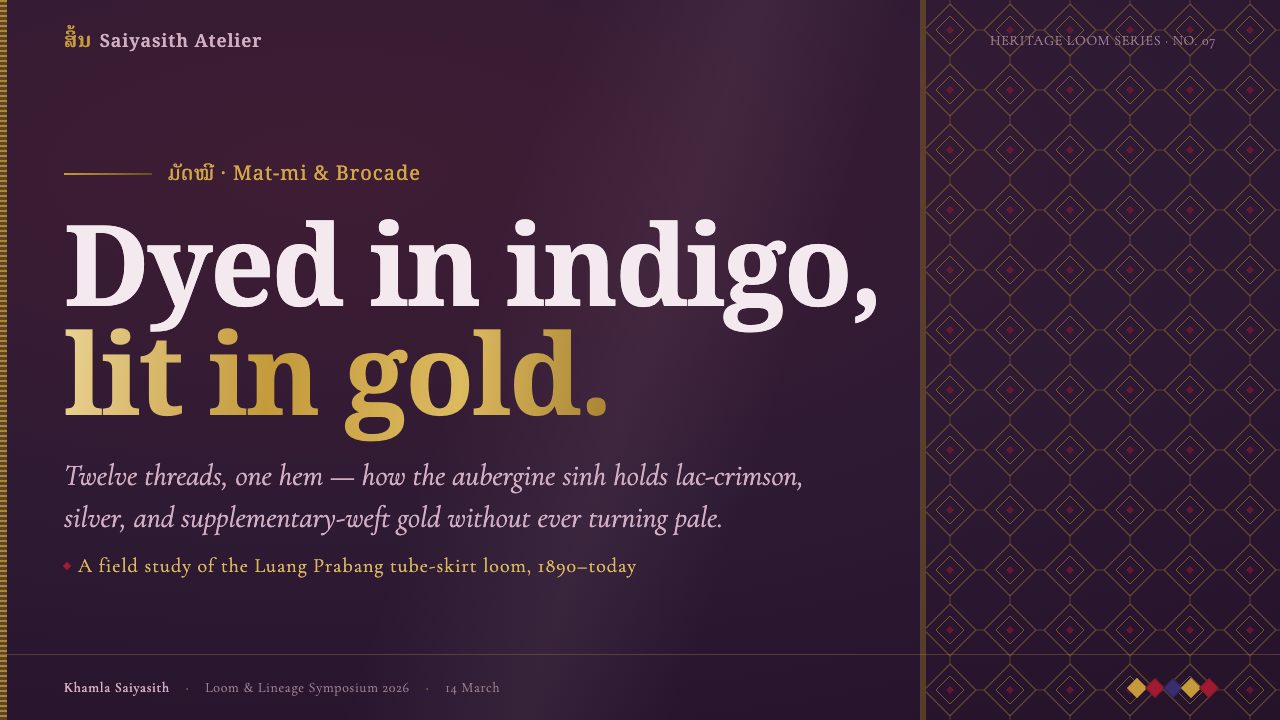
For presentation covers, begin with the dark aubergine field and let one ceremonial band establish the visual identity. A title can sit within generous darkness, with a restrained gold rule or a small diamond cluster providing orientation. Content slides should use repeated horizontal registers to separate sections, while data slides can translate charts into woven bands, diamond fields, and concentrated crimson or metallic signals.
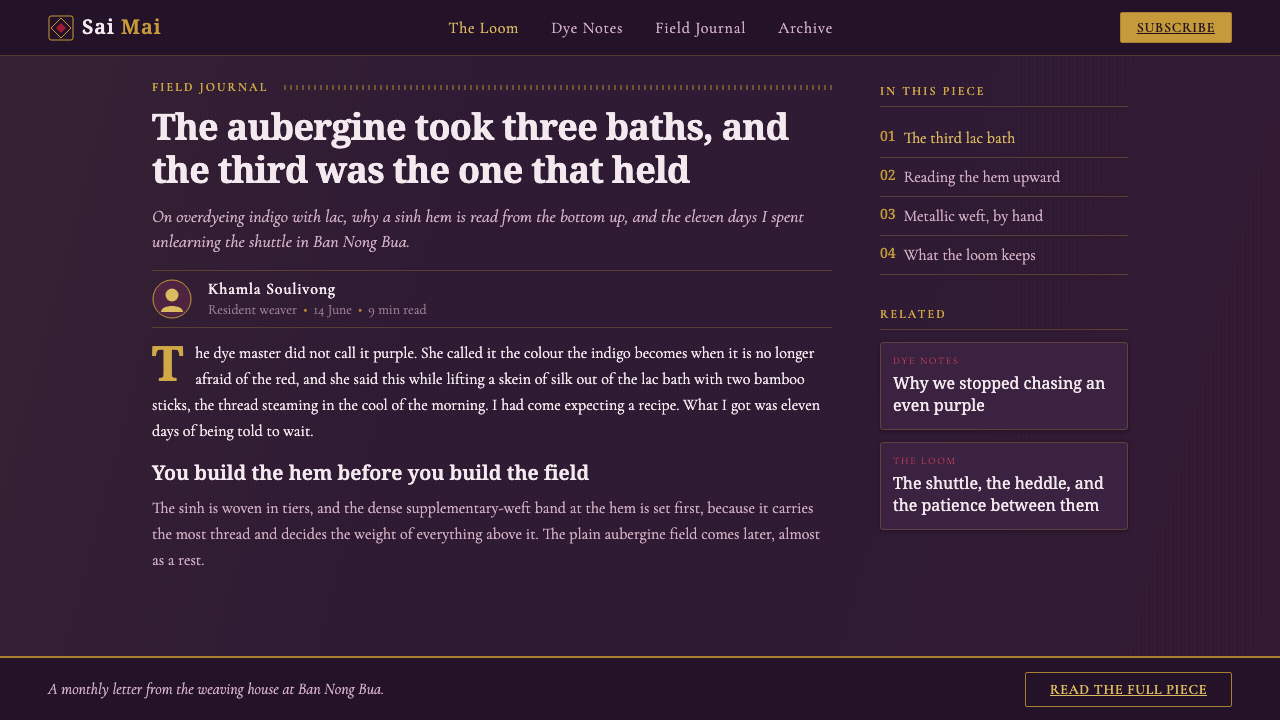
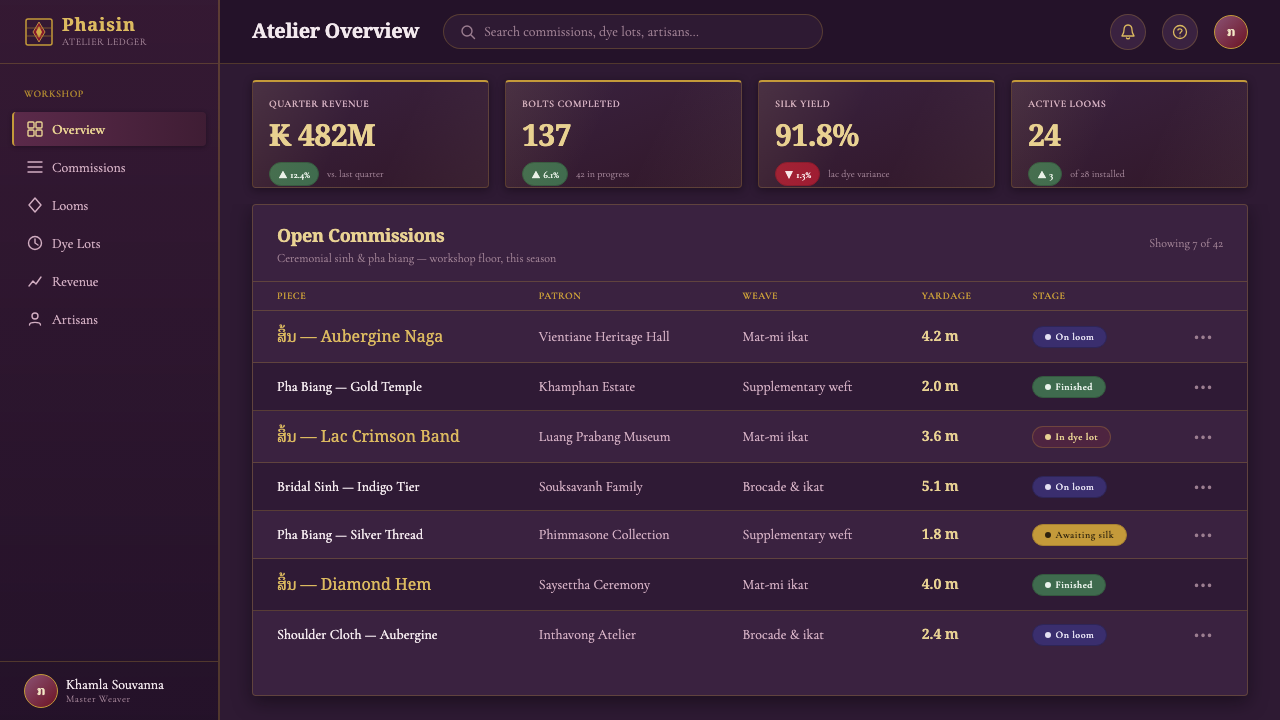
For web interfaces, the system suits dashboards, pricing pages, and other products that need authority with a strong cultural material presence. Keep navigation quiet and legible, use gold for selected states or key actions, and reserve lac red for alerts, emphasis, or decisive transitions. Panels should feel inset into a dyed textile field, with borders and thread-like separators carrying more weight than floating effects.
For editorial and marketing work, build a clear reading path through layered bands that echo a sinh hem. Long-form pages benefit from a dark field, narrow text measure, and occasional motif borders that mark chapter changes. Marketing pages can use the contrast between aubergine, gold, and crimson to make a product feel ceremonial and considered, especially when imagery is cropped or framed as a textile panel rather than treated as a glossy advertisement.
For identity systems and cultural storytelling, the style is strongest when material references remain visible but controlled. A wordmark or title can be paired with a naga border, mat-mi diamond field, or metallic thread accent, provided the motif has a clear role. The system should communicate continuity, craft, and occasion rather than generic exoticism.
The common mistake is turning every element gold, red, and patterned at once. Lao Sinh Silk Weave depends on the dark aubergine ground as a field of rest; metallic thread should glint, not flood; diamonds should organize, not fill every empty area; and naga motifs should appear selectively. Removing one more ornament often makes the remaining textile references feel more authentic and more powerful.
Lao Sinh Silk Weave — FAQ
What is Lao Sinh Silk Weave based on?
It is based on the Lao sinh, or pha sin, a handwoven silk tube skirt traditionally paired with the pha biang shoulder cloth. The system draws specifically from its deep aubergine dye logic, silk sheen, mat-mi weft ikat, supplementary-weft brocade, metallic thread, tiered hem, and naga-associated ornament.
Why is the ground dark aubergine rather than black?
The aubergine field reflects the source textile's indigo overdyed with lac-insect red. It carries more material and ceremonial character than a neutral black, while still providing the darkness needed for gold, silver, and crimson details to emerge. The color should feel dyed and lustrous, not digitally flat.
How should the gold and silver accents be used?
Treat them as fine supplementary threads. They are most effective in narrow rules, borders, small motifs, and carefully chosen highlights. Broad metallic surfaces weaken the woven reference by making the interface feel glossy rather than crafted. Metallic detail should catch the eye briefly and then return attention to the content.
Can the style be used without naga motifs?
Yes. Naga motifs are an important ceremonial reference, but they are not required in every application. A system can remain recognizably Lao Sinh Silk Weave through the aubergine ground, mat-mi diamonds, banded symmetry, silk-like sheen, and restrained metallic thread. Omitting naga imagery may be appropriate when the interface needs a quieter or more universal register.
What makes this style feel woven instead of merely patterned?
The woven quality comes from relationships: repeated bands should have hierarchy, diamonds should organize rather than decorate, metallic details should behave like inserted threads, and dark space should remain visible between motifs. Slight softness and controlled irregularity can suggest handwork, while clear alignment preserves the discipline of the textile structure.
Related design styles
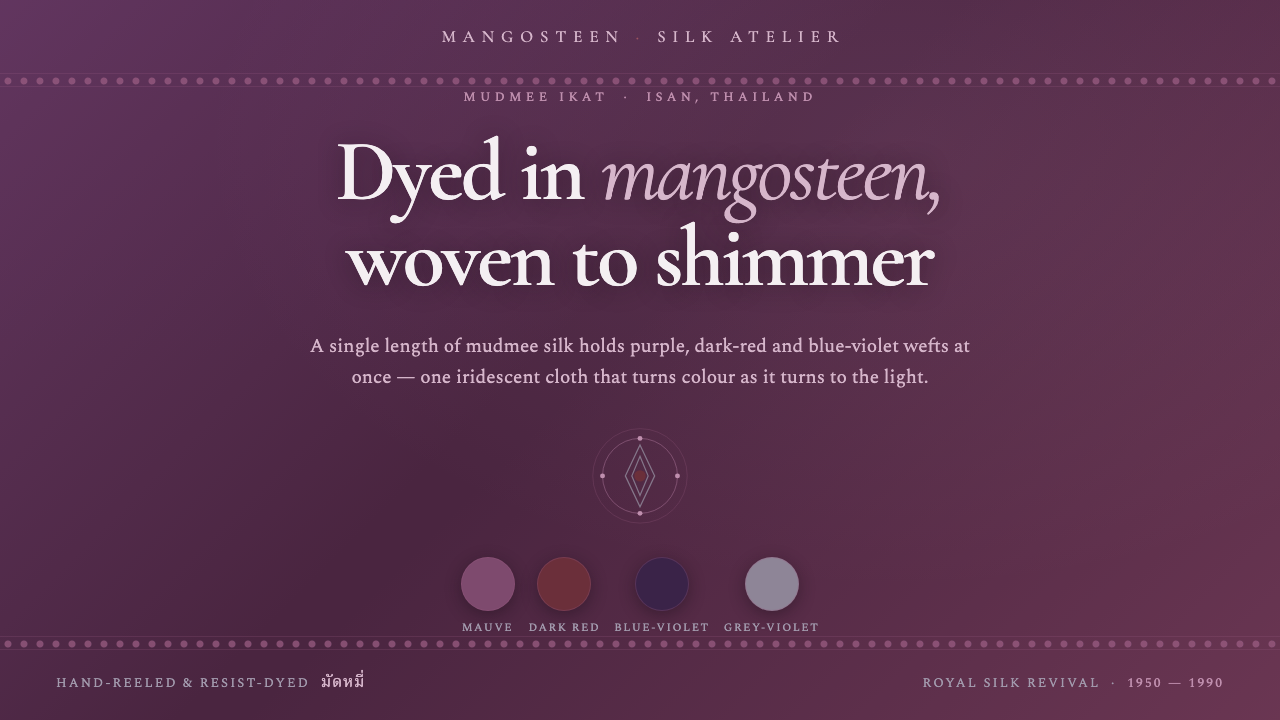 Thai Mangosteen SilkOne cloth, many colours. Mangosteen-dyed mauve ground, layered red and blue-v…
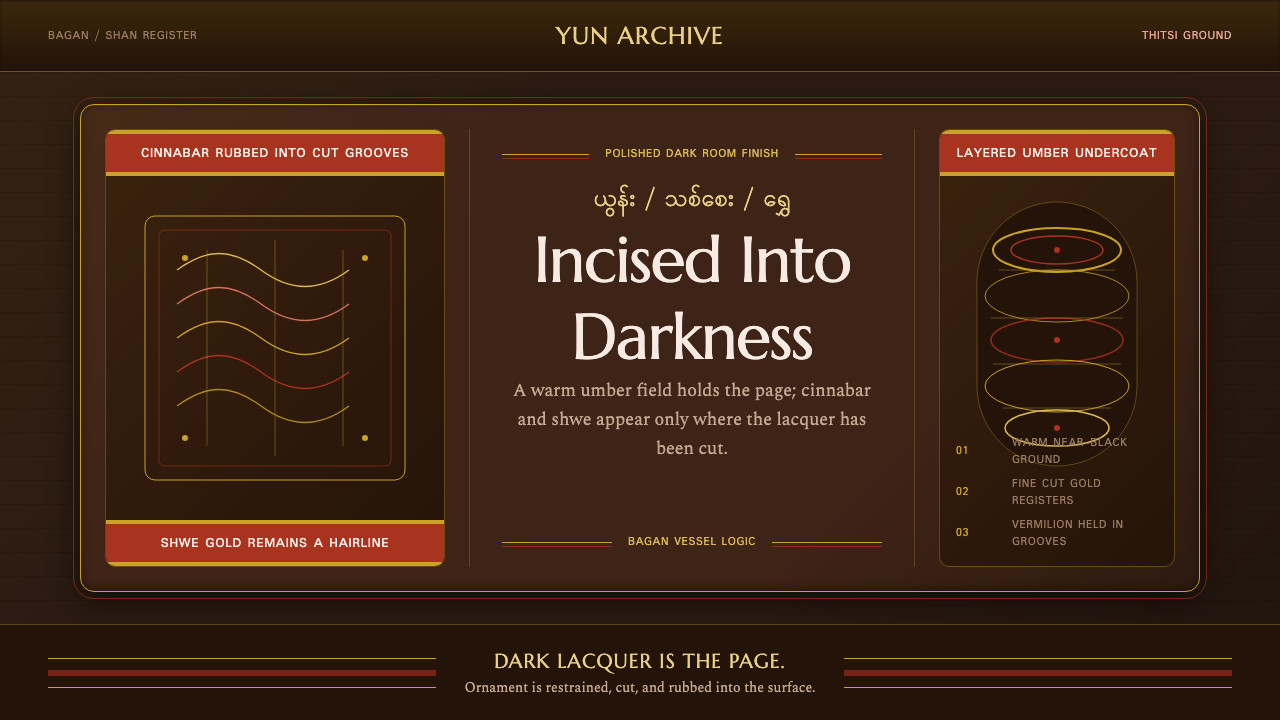 Burmese Shan Lacquer BrownDark lacquer leads. Cinnabar bands and shwe hairlines cut across a warm umber…
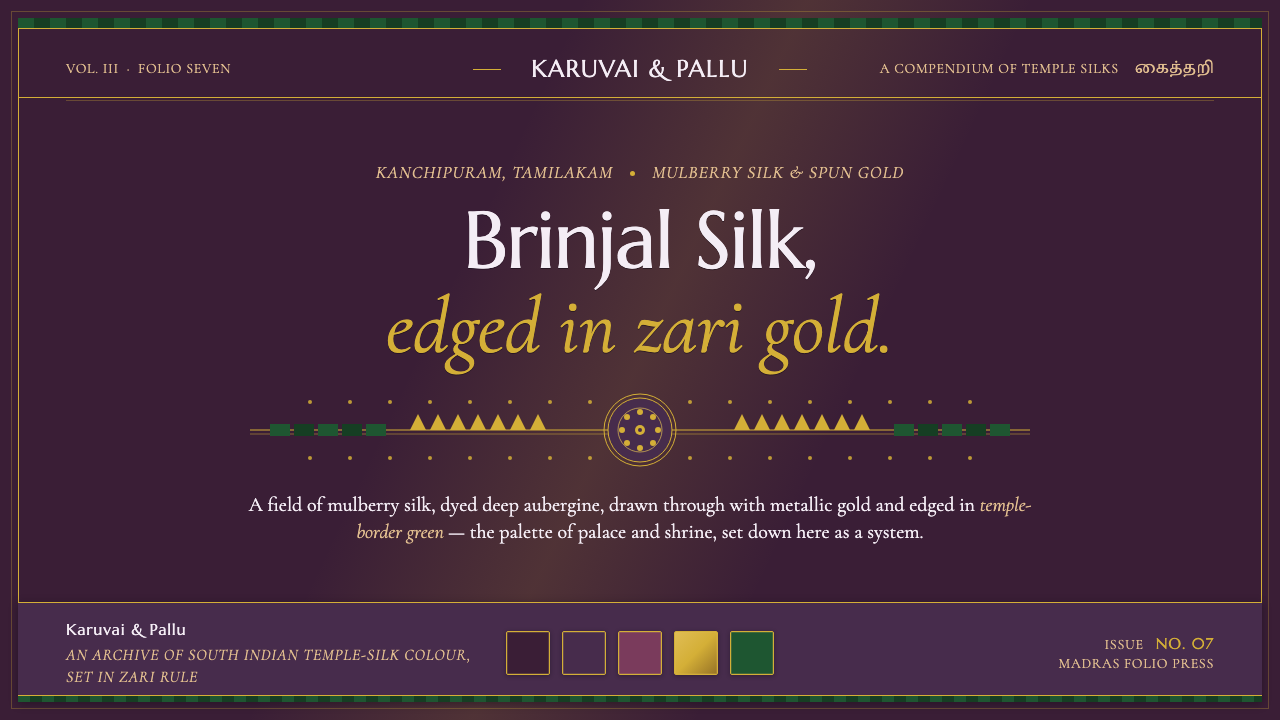 Indian Brinjal Temple TextilePalace silk, systematised. Brinjal violet ground edged in zari gold, korvai g…
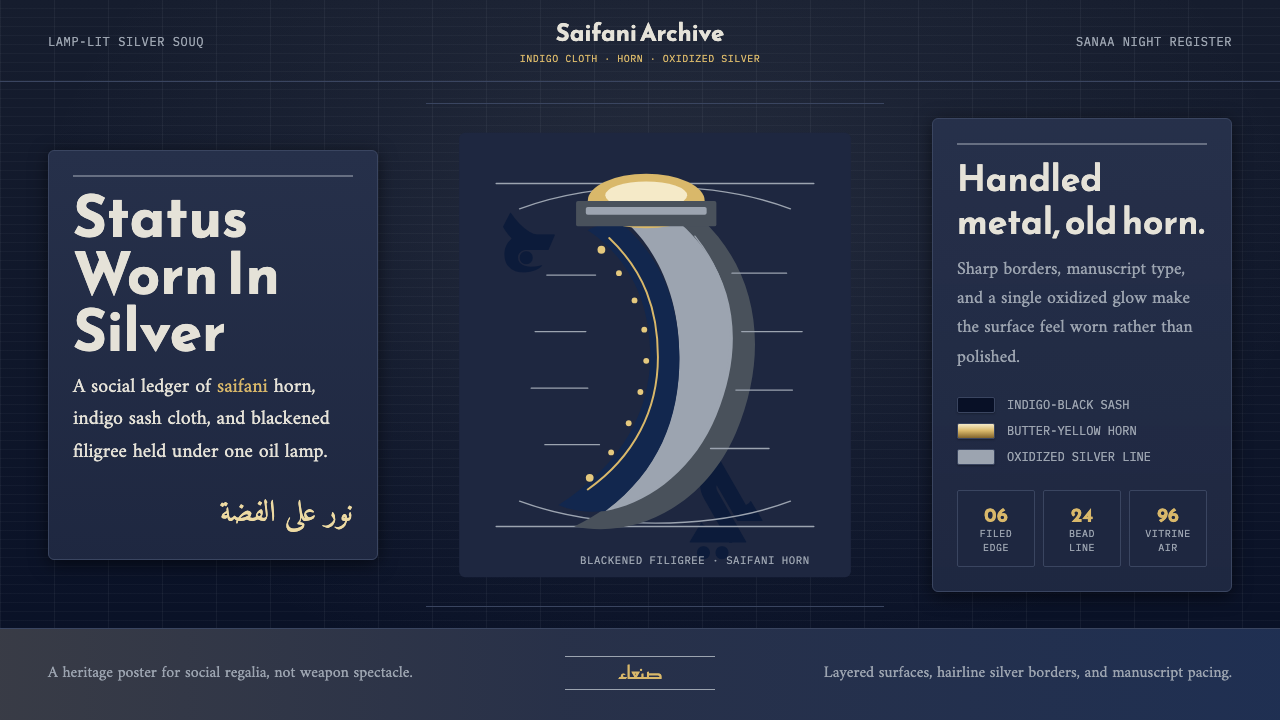 Yemeni Jambiya Curved DaggerLamp-lit status. Indigo-black fields, butter-yellow horn, and silver filigree…
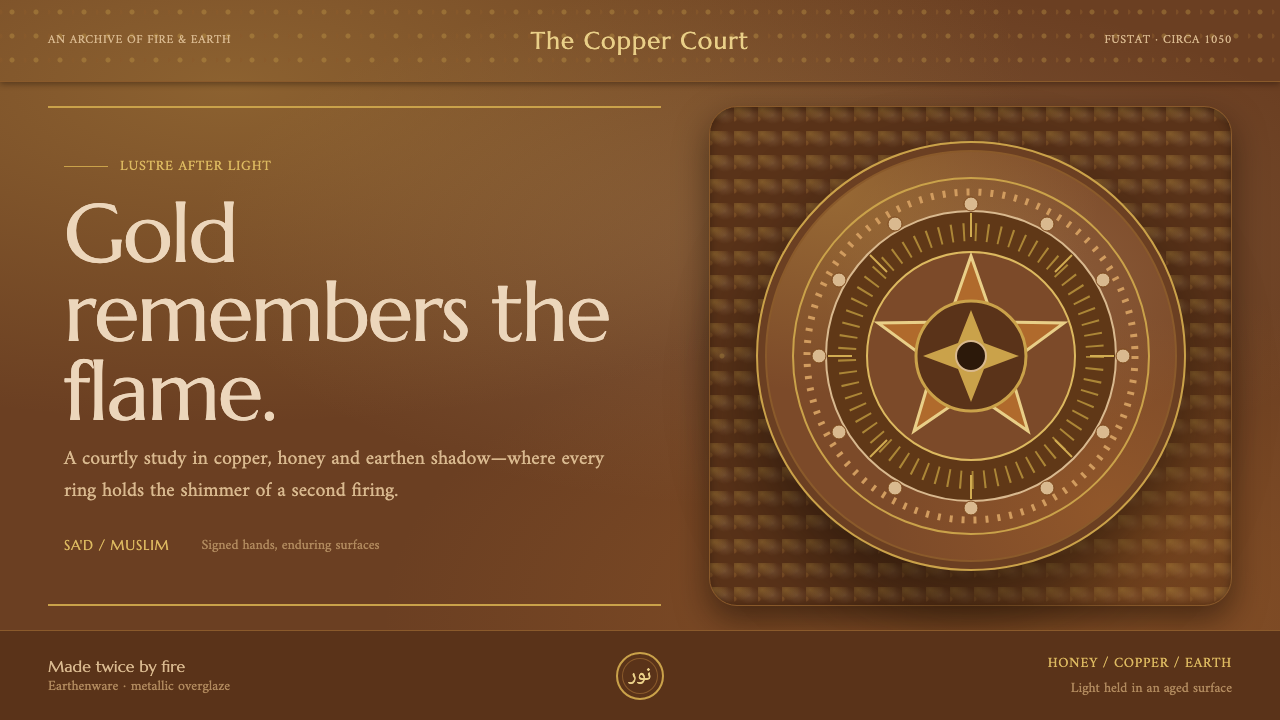 Fatimid LustrewareOpulence fired into earth. Copper-gold lustre glows through dense medallions…
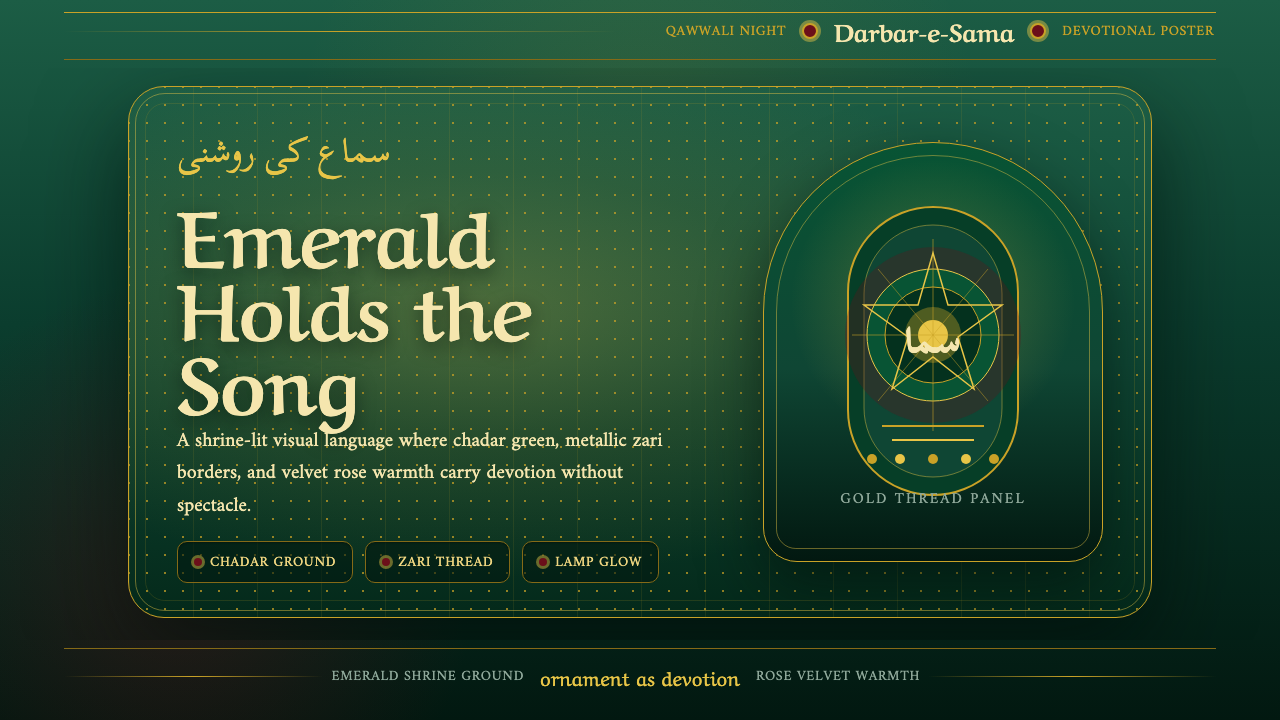 Qawwali DevotionalSacred warmth glows. Emerald cloth, zari gold borders, and Nastaliq rhythm ho…