What is Fatimid Lustreware?
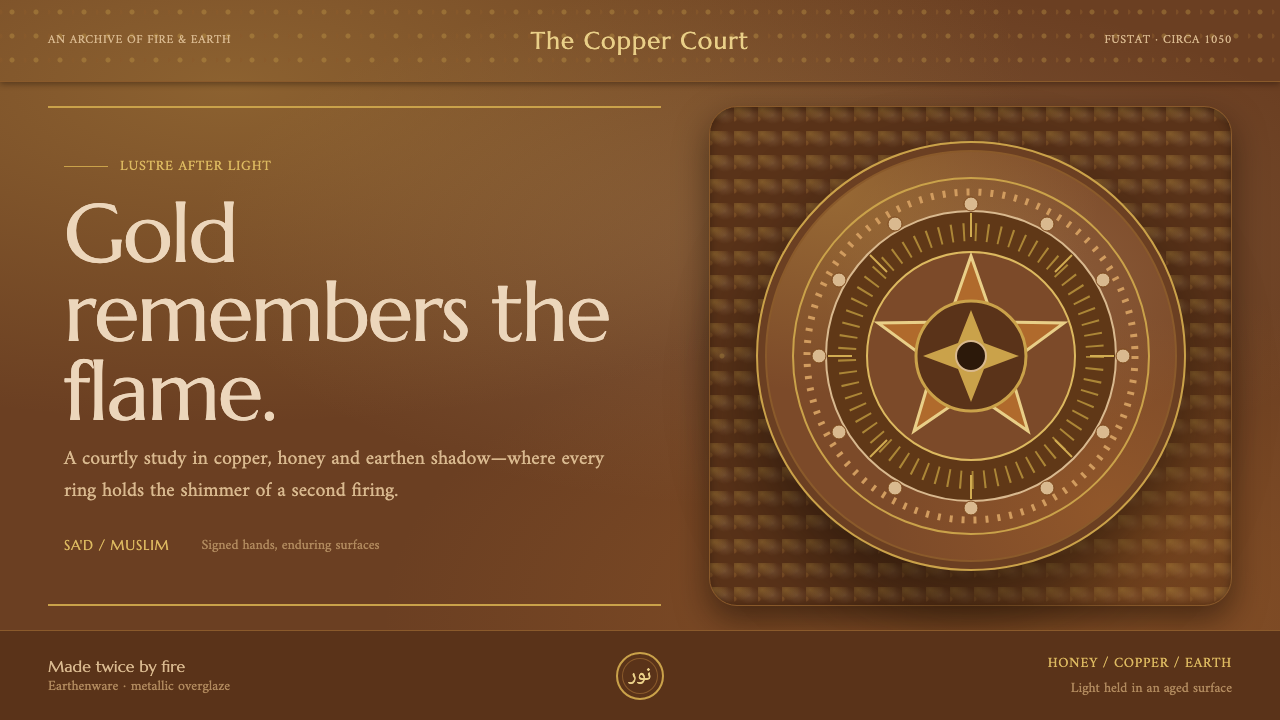
Fatimid lustreware turns fired earth into courtly light—copper-gold radiance, crowded medallions, and an aged surface that refuses to sit still.
Fatimid Lustreware in brief
Fatimid lustreware is an earthenware tradition from Fustat, the city known today as Old Cairo, made around 1050 during the Fatimid Caliphate. It represents the earliest large-scale production of metallic copper-gold lustre glaze, giving ordinary fired earth a surface that appears to hold metal, light, and age within it.
Its visual language is built around courtly imagery. Musicians, dancers, and auspicious birds appear inside roundels and medallions, painted in brown-gold tones that sit against a warm, reflective field. The surrounding ground is filled with dense split-palmette scrollwork, leaving almost no empty space and making the vessel feel richly occupied from edge to edge.
The effect is opulent but tactile rather than merely brilliant. The glaze mottles and iridesces over time, shifting across a honey-to-copper range instead of remaining flat. Nothing feels cold, bare, or mechanically uniform; the surface carries the irregularity of fired earth and the authority of an object made for a courtly world.

Where does Fatimid Lustreware come from?
Fatimid lustreware belongs to the decorative arts of the Fatimid Caliphate, which lasted from 909 to 1171. Its named place of origin is Fustat in Egypt, a setting identified in the source material with Old Cairo. The style therefore carries a strong sense of place: it is not an abstract metallic effect, but a visual language tied to earthenware vessels made in a particular Egyptian city and historical period.
The defining technical achievement is the large-scale use of metallic copper-gold lustre glaze around 1050. This gave ceramic surfaces an unusual visual tension: the vessel remained visibly earthenware, yet its glaze could catch light like a precious material. The richness came from the meeting of humble fired earth and a surface whose warmth suggested copper, gold, and accumulated time.
Court potters developed the decorative vocabulary through figurative scenes and auspicious motifs. Musicians and dancers bring movement into the roundels, while birds introduce a sense of blessing and formal balance. These subjects are not isolated illustrations; they are held inside medallions and surrounded by split-palmette scrollwork, so image, border, and ground operate as one continuous field.
Some vessels were signed by workshops such as Sa'd and Muslim. Those signatures matter to the character of the style because they make the object feel made rather than anonymous: a courtly vessel with a trace of workshop identity. The aged glaze completes that impression, turning each surface into a combination of crafted ornament, fired material, and changing light.
What defines the Fatimid Lustreware look?
Copper-Gold Lustre
The defining color sensation is metallic warmth rather than pure shine. Brown-gold glaze moves through honey, copper, and darker earthen notes, creating the impression of light held beneath the surface. The palette should feel burnished and mineral, never chrome-like or artificially bright.
Aged Iridescence
The surface is mottled, uneven, and alive to changing light. Iridescence is not a decorative sparkle placed on top; it is the visible record of age across the glaze. Variation gives the style its tactile authority and keeps the metallic field from becoming flat or synthetic.
Medallion Composition
Figures and animals are organized inside roundels or medallions, producing a sequence of contained scenes across the vessel. These circular enclosures create rhythm without requiring empty separation. Each emblem feels complete, while the repeated structure makes the whole surface feel ceremonial.
Courtly Figures
Musicians and dancers introduce human presence, movement, and social refinement. They should read as composed figures within an ornamental system, not as casual narrative illustration. Their value lies in the union of gesture, costume-like silhouette, and the formal enclosure of the medallion.
Auspicious Birds
Birds function as compact emblems of grace and good fortune within the decorative field. Their silhouettes can be read quickly, but their placement remains formal and deliberate. They provide an organic counterpoint to the scrolling vegetation while preserving the overall density of the composition.
Dense Scrollwork
Split-palmette scrollwork fills the ground around the medallions, turning background into an active participant. The pattern is continuous, curling, and closely packed, with very little bare field. Density is essential: removing too much ornament changes the style from Fatimid lustreware into a generic metallic surface.

Who shaped Fatimid Lustreware?
Sa'd is named as one of the workshops that signed Fatimid lustreware vessels. The signature connects the opulent surface to a specific making tradition and reinforces the sense that these objects were crafted, handled, and identified rather than produced as anonymous decoration.
Muslim is another named workshop associated with signed vessels. Within the style, that name represents the close relationship between workshop identity and surface richness: the intricate ground, medallion imagery, and changing glaze belong to an object with a traceable maker.
The court potters are the collective makers behind the style's most recognizable vocabulary: musicians, dancers, auspicious birds, medallions, and dense split-palmette scrollwork. Their achievement was to make earthenware feel tactile, ceremonial, and opulent through image, pattern, and glaze working together.
How do you use Fatimid Lustreware today?
Fatimid lustreware works best when treated as a surface system rather than a metallic color scheme. Begin with a warm, darkened ground, introduce copper-gold variation, and let medallions, figures, birds, and scrollwork establish the hierarchy. The goal is accumulated richness: every element should feel embedded in the same fired and aging material.
For presentation slides, the cover can use a single commanding medallion or cropped courtly figure against a deep honey-to-copper field. Content slides should keep the ornament concentrated around the edges or within contained panels, leaving the text readable without abandoning density. Data slides can treat charts as ceremonial emblems, using circular groupings, repeated motifs, and restrained metallic contrast rather than bright modern gradients.
For web interfaces, the style suits dashboards and pricing pages that want to feel premium, historical, and tactile. Use dark earthen backgrounds, warm metallic accents, bordered panels, and compact ornamental marks for status or category. Cards should feel like inset plaques or fragments of decorated pottery, while navigation remains quiet and legible so the surface richness does not compete with the interface.
For editorial and marketing work, the vocabulary supports luxury culture, craft, hospitality, heritage, and product stories. A feature page can pair a large medallion-like image with narrow text columns, dense patterned bands, and small workshop-style signatures. Marketing compositions benefit from controlled repetition: one figure, one bird, or one ornamental field can carry more authority than a crowded collection of unrelated motifs.
The common mistake is confusing opulence with indiscriminate excess. Adding random gold effects, glossy highlights, or ornamental fragments will produce a generic luxury look. Authentic direction depends on coherence: the warm field, mottled surface, contained imagery, and continuous scrollwork must appear to belong to one earthenware object. If everything shines equally, the glaze loses its age and the composition loses its hierarchy.

Fatimid Lustreware — FAQ
What is Fatimid lustreware?
It is an earthenware tradition from Fustat, Egypt, made around 1050 during the Fatimid Caliphate. Its defining feature is large-scale metallic copper-gold lustre glaze, combined with medallions, courtly figures, auspicious birds, and dense split-palmette scrollwork.
Is the style simply gold on a dark background?
No. Its richness depends on variation rather than a flat metallic fill. The surface moves through brown-gold, honey, and copper notes, while mottling and age create iridescence. The imagery and dense scrollwork are equally important; removing them leaves only a generic luxury effect.
How should figures and birds be used in a contemporary layout?
Treat them as contained emblems rather than casual illustrations. Place musicians, dancers, or birds inside circular or medallion-like enclosures, then let surrounding scrollwork connect the separate scenes. This preserves the formal, courtly character while allowing the imagery to organize the page.
Can Fatimid lustreware work in a dark interface?
Yes, especially because the source style already depends on a warm, darkened field and reflective copper-gold surface. The dark ground should remain earthen and textured rather than becoming a cold digital black. Metallic accents need variation, and text should be given enough quiet space to remain readable beside the ornament.
What makes the style feel authentic rather than generically luxurious?
Authenticity comes from relationships: earthen material with metallic light, enclosed figures with continuous scrollwork, and opulence with visible age. Avoid treating gold, pattern, and imagery as separate effects. They should read as parts of one signed, fired vessel whose surface changes as light moves across it.
Related design styles
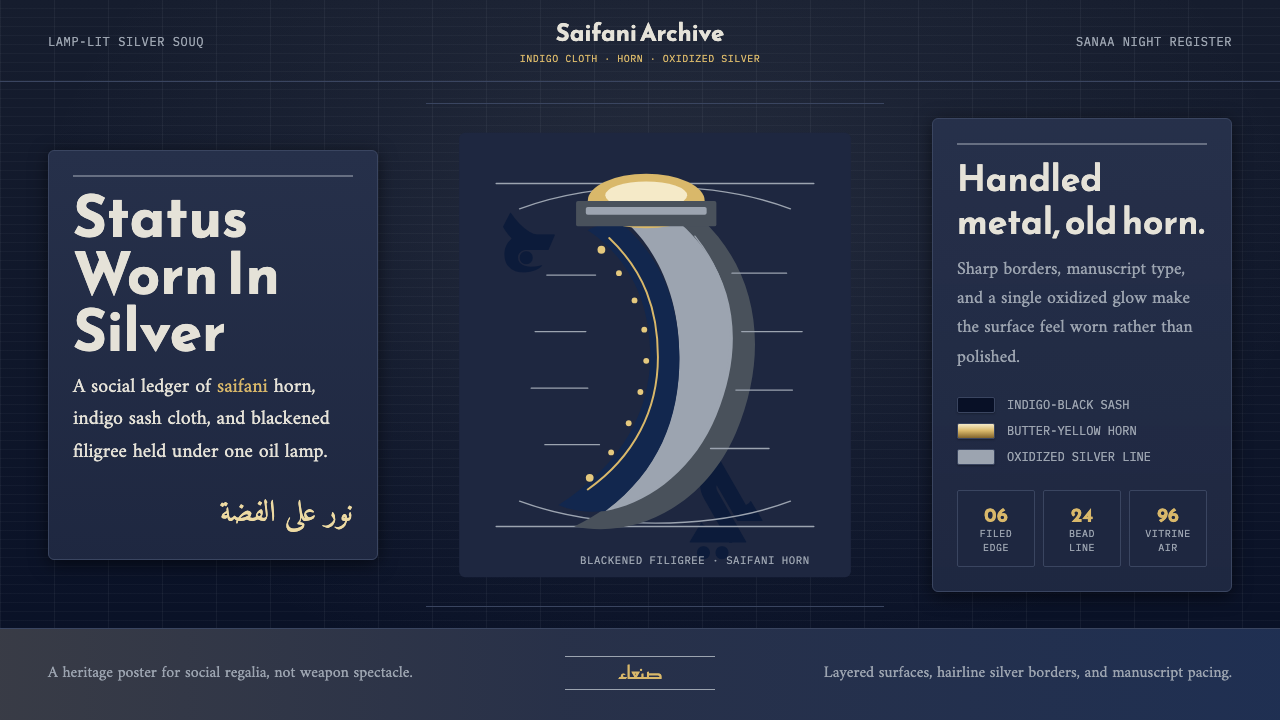 Yemeni Jambiya Curved DaggerLamp-lit status. Indigo-black fields, butter-yellow horn, and silver filigree…
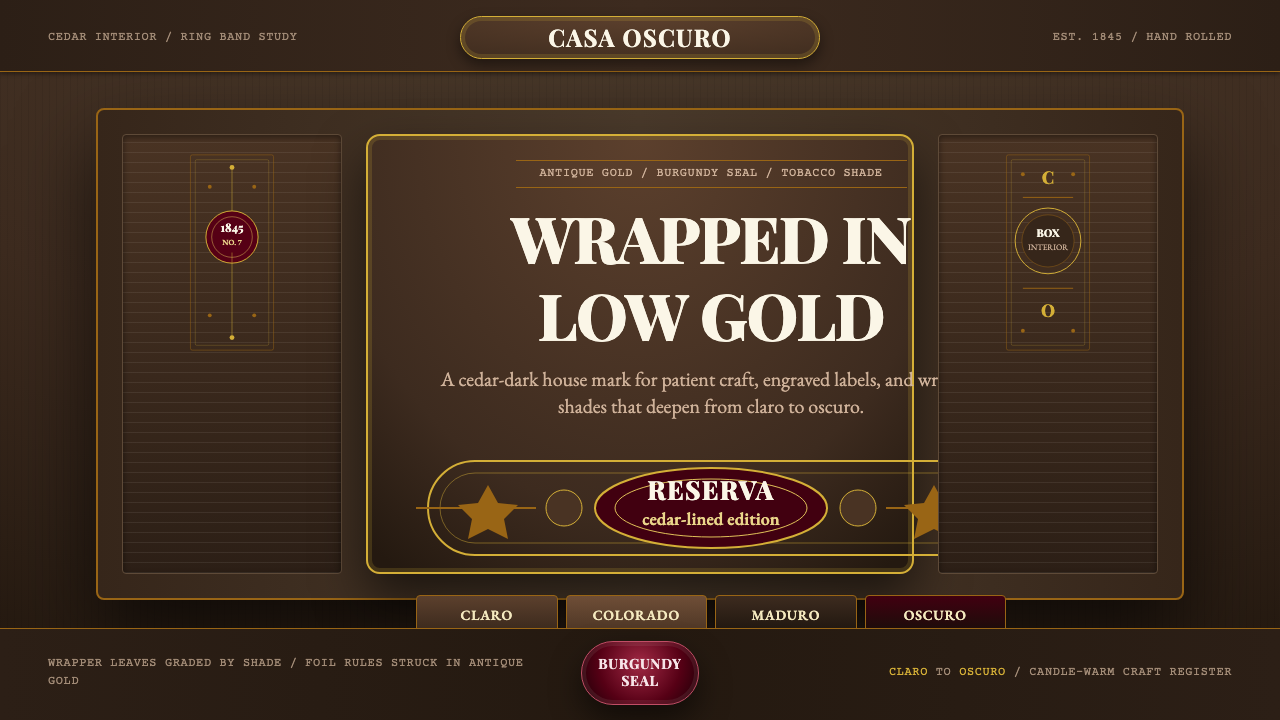 Cuban Habano CigarLuxury sleeps in shadow. Tobacco brown, antique gold rules, and burgundy seal…
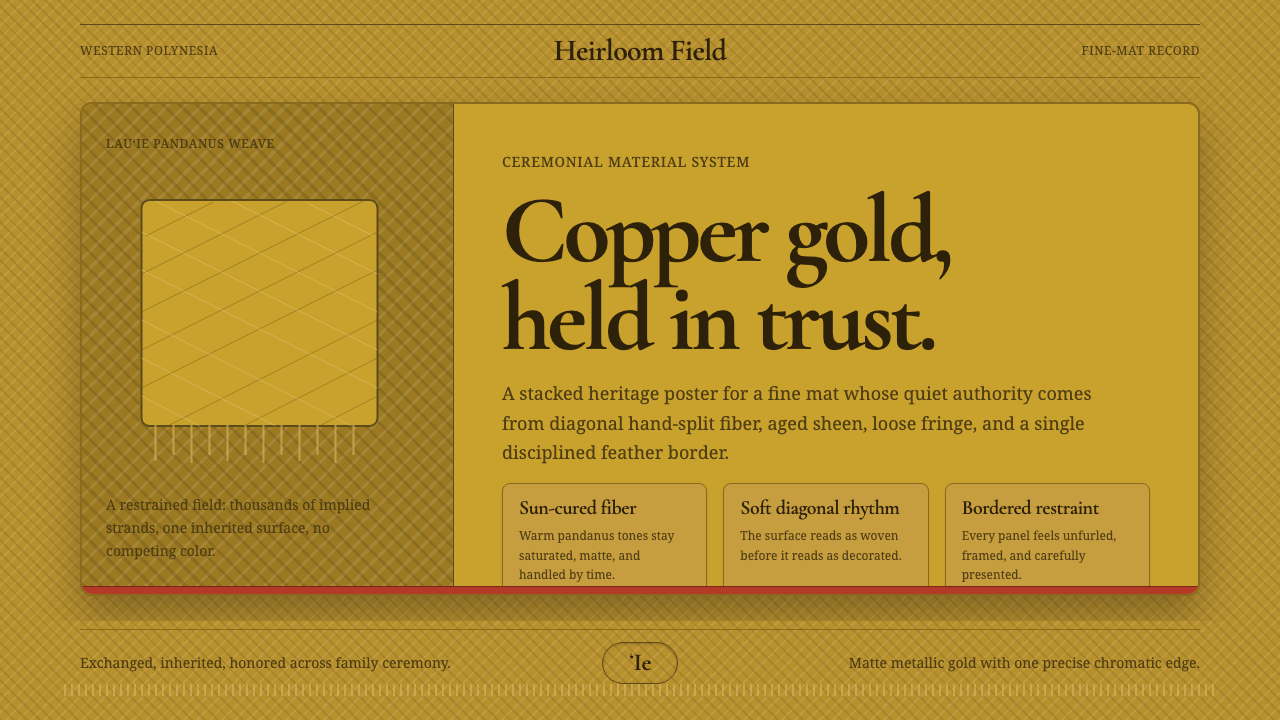 Samoan ʻIe Tōga Fine MatCeremony in restraint. Copper-gold weave, loose fringe, one red feather line.
 Armenian Khachkar Cross-StoneStone becomes memory. Tuff grey, pomegranate red, and carved borders hold the…
 Syriac EstrangelaAncient warmth survives. Brown parchment, right-to-left columns, rationed rub…
 Afghan Baluchi Prayer RugDevotional darkness glows. Plum field, oxblood mihrab, and camel borders surf…