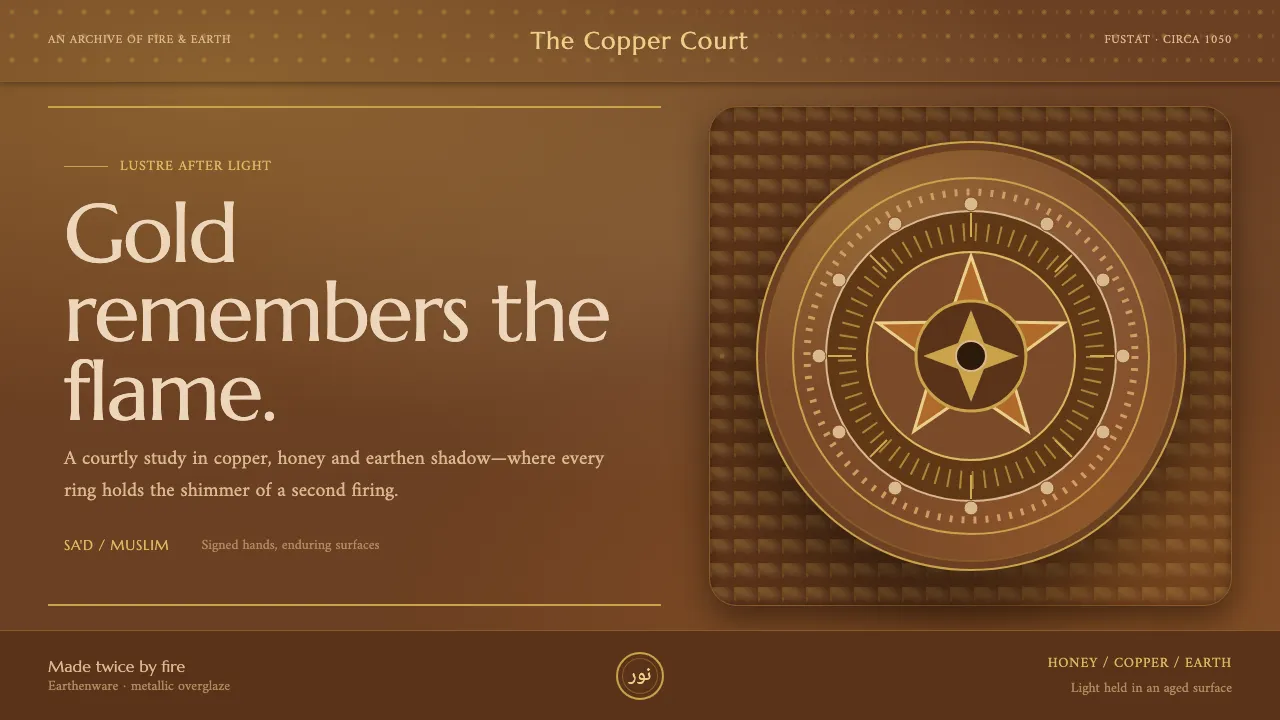
About Fatimid Lustreware
Fatimid lustreware from Fustat, made around 1050, was the earliest large-scale production of metallic copper-gold lustre glaze. Court potters painted musicians, dancers and auspicious birds in brown-gold tones inside roundels and medallions, filling the ground with dense split-palmette scrollwork.
Signed by workshops such as Sa'd and Muslim, these earthenware vessels read as opulent, tactile and courtly. The glaze mottles and iridesces with age, catching light across a warm honey-to-copper field — never flat, never cold, never bare.
- Origin
- Fustat (Old Cairo), Egypt
- Era
- c. 1050 (Fatimid Caliphate, 909–1171)
- Key figures
- Sa'd · Muslim
- Movements
- Islamic lustreware · Fatimid decorative arts
Fatimid Lustreware design spec
Colors
Typography
The other 11 sections — buttons, cards, spacing, motion, techniques and more — open once you unlock. Download the DESIGN.md or send it to your AI in one click. Unlock once, yours forever.
Sign up nowStyles similar to Fatimid Lustreware
Also inspired by crafts & folk art, with a close feel.
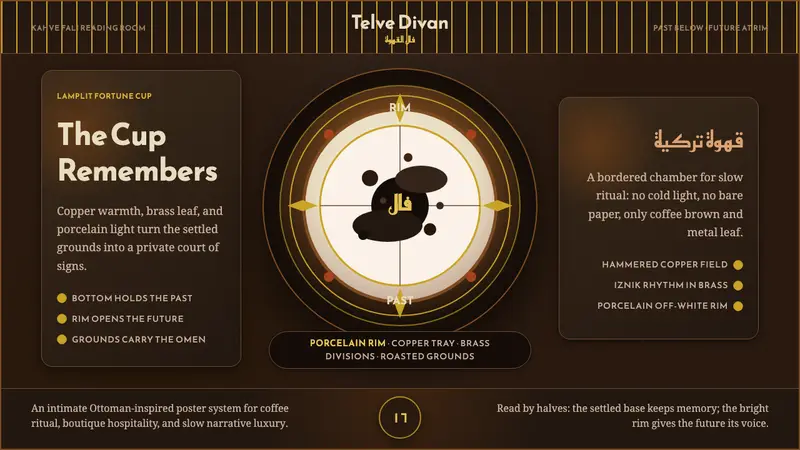 Turkish Coffee FortuneLamplit ritual, richly framed. Copper, brass, and Reem Kufi orbit a porcelain cup.
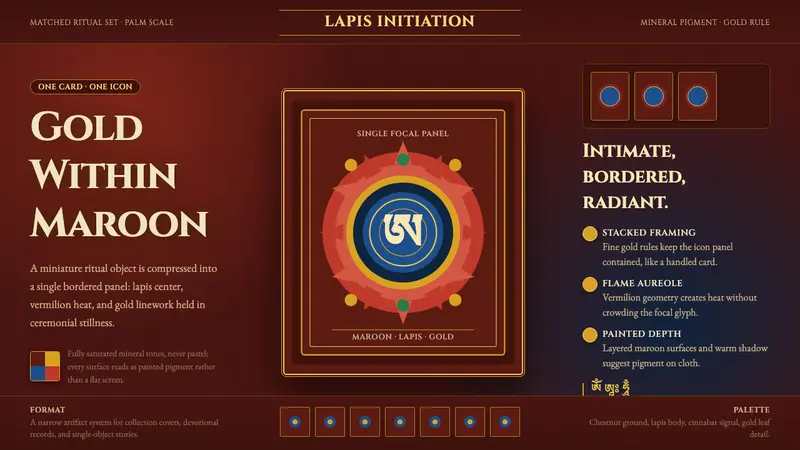 Tibetan Tsakli Initiation CardsPalm-sized radiance. Gold rules, lapis centers, and vermilion flame on maroon pigment.
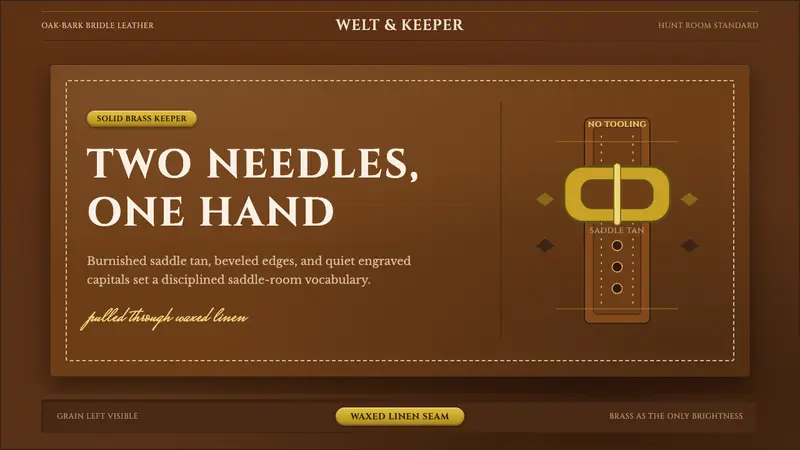 English Saddlery TanQuiet hand-made luxury. Saddle tan leather, brass accents, and waxed-linen stitch lines.
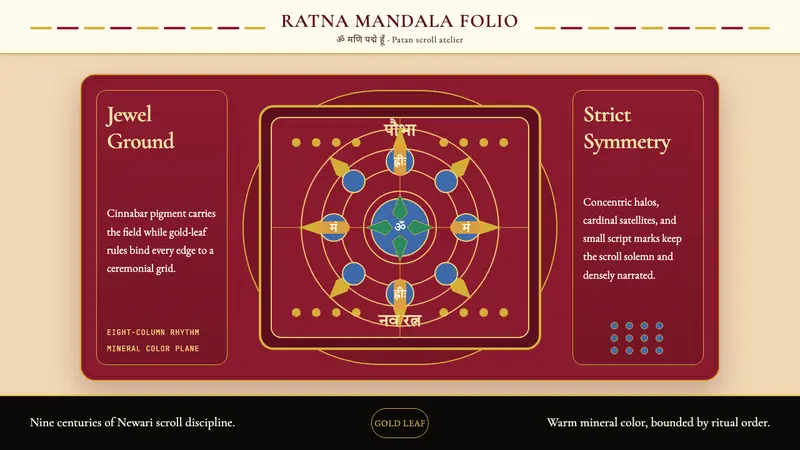 Nepali Paubha (Newari Scroll)Sacred density. Cinnabar ground, gold-leaf frame, lapis rings in strict symmetry.