About Nepali Paubha (Newari Scroll)
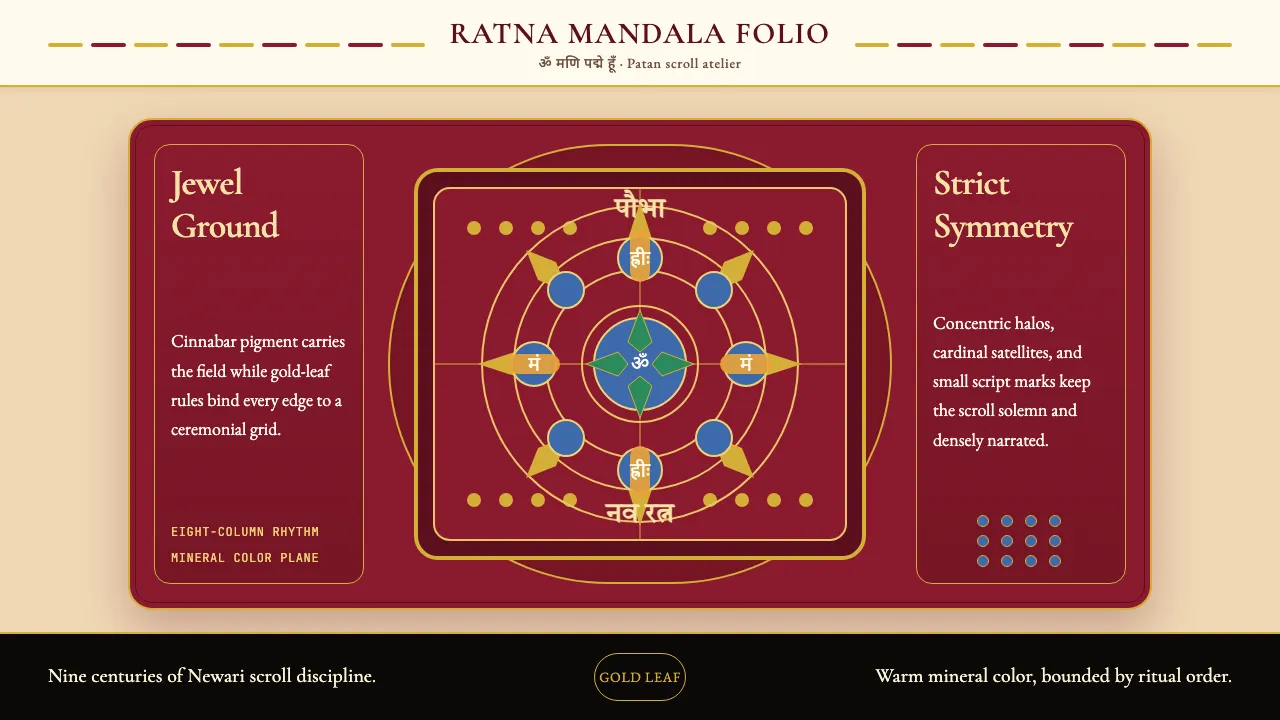
Paubha is the Kathmandu Valley Newari scroll-painting tradition, older than Tibetan Thangka and visually distinct from it — denser micro-detail, warmer Hindu-Buddhist chromatic chord, and a strict bilateral symmetry around a centered deity on a lotus throne.
Every Paubha is a mandala-frame: jewel-red ground, gold-leaf border-band, concentric prabhamandala halo, and rings of micro-deities radiating in the cardinal directions. The Newari Chitrakar painter caste of Patan has rendered Tara, Avalokiteshvara, and the Sapta-Buddha cycle this way for nine centuries.
- Origin
- Kathmandu Valley, Nepal (Patan, Bhaktapur, Kathmandu)
- Era
- 11th century onward; peak Malla-dynasty production 1200–1768; continuous tradition to present
- Key figures
- Lok Chitrakar · Anant Karma Charya · Arniko · Lokesh Chandra
- Movements
- Vajrayana Buddhist art · Newari Hindu-Buddhist syncretism · Pala-Sena Indian Buddhist iconography descent
Nepali Paubha (Newari Scroll) design spec
Colors
Typography
The other 11 sections — buttons, cards, spacing, motion, techniques and more — open once you unlock. Download the DESIGN.md or send it to your AI in one click. Unlock once, yours forever.
Sign up nowStyles similar to Nepali Paubha (Newari Scroll)
Also inspired by crafts & folk art, with a close feel.
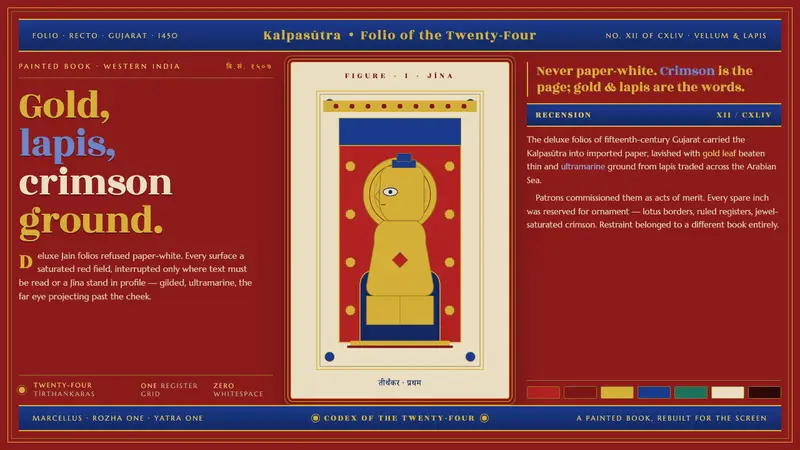 Jain Kalpasutra ManuscriptNever paper-white. Gold leaf and lapis figures on jewel-crimson, lotus-ruled like a 15th-c folio.
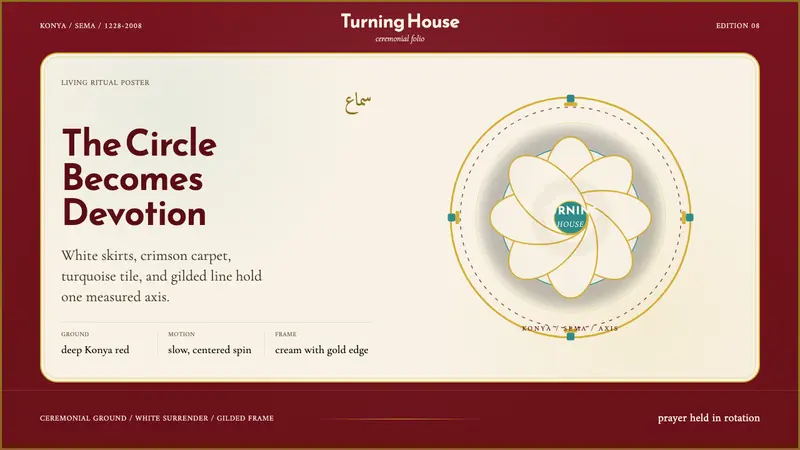 Sufi Whirling (Konya)Ritual in motion. Crimson field, white arcs, turquoise tile, and gold filigree.
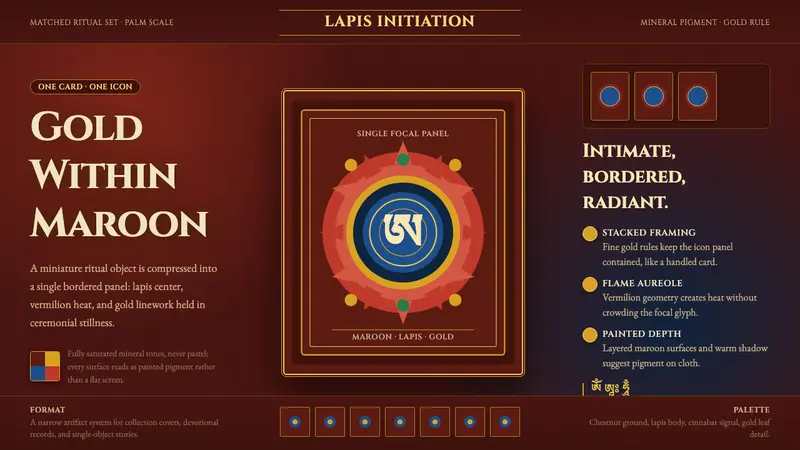 Tibetan Tsakli Initiation CardsPalm-sized radiance. Gold rules, lapis centers, and vermilion flame on maroon pigment.
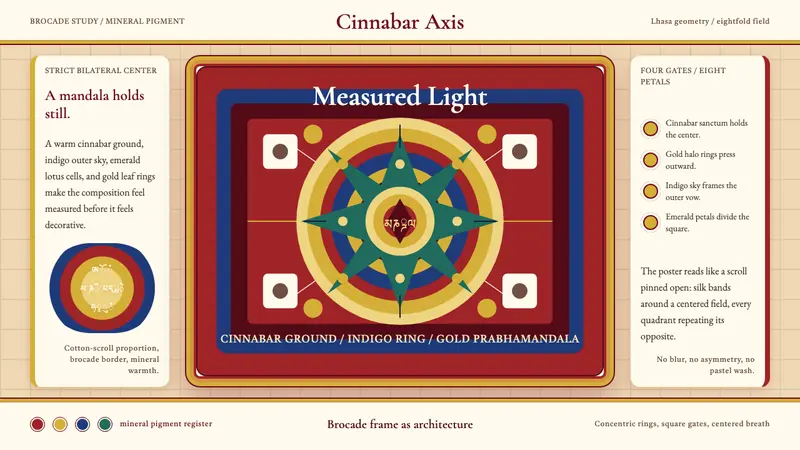 Tibetan Thangka MandalaSacred order burns warm. Cinnabar symmetry, gold halos, indigo rings, brocade frame.