What is Thai Khon Hanuman Mask?
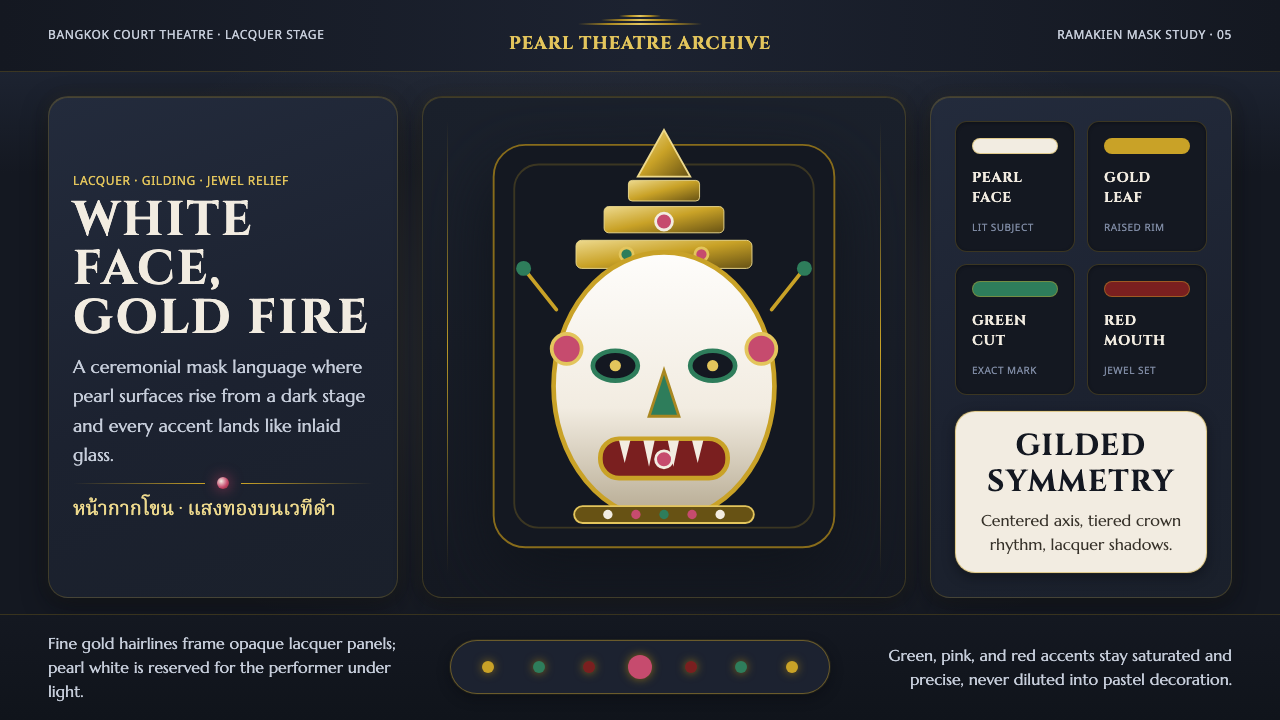
Thai Khon Hanuman Mask brings the ceremonial force of royal dance-drama into a digital field of dark lacquer, pearl-white presence, and concentrated gilt splendor.
Thai Khon Hanuman Mask in brief
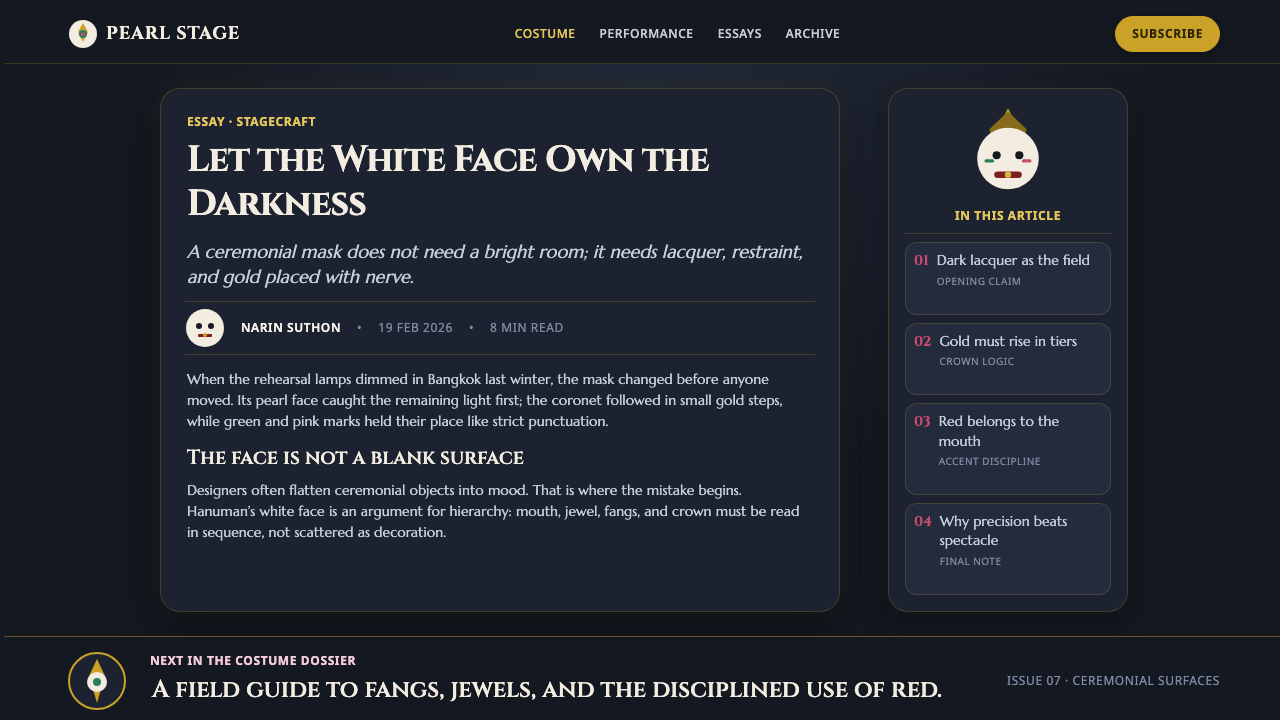
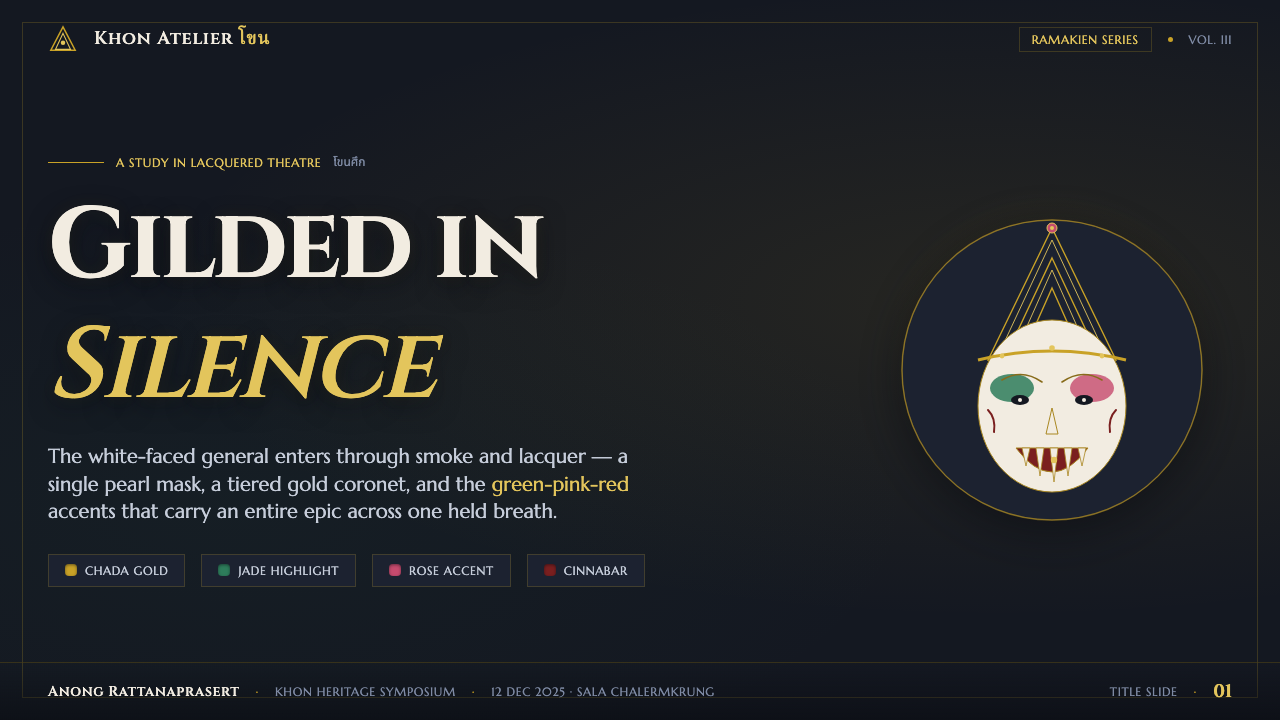
Thai Khon Hanuman Mask draws from Khon, Thailand’s masked royal dance-drama tradition, and from the Ramakien performance world in which Hanuman appears as the white monkey warrior. Its central image is immediately theatrical: a pearl-white face, precise green and pink highlights, a gaping fanged mouth with a jewel, and a tiered gold coronet known as a chada.
The physical mask is a lacquered and gilded headpiece made by chang hua khon, court mask-makers who build its relief and ornament through layered craft. The digital style does not attempt to flatten that object into generic decoration. It treats the mask as an illuminated subject: something ceremonial, sculptural, and carefully revealed against a field that feels dark, polished, and deep.
Its visual language depends on contrast with discipline. Pearl-white surfaces establish presence; gold creates hierarchy and ritual gravity; green, pink, and deep red arrive in small saturated intervals. The result should feel less like a colorful costume pattern and more like a courtly object emerging from darkness, where every bright detail has been deliberately placed.
Where does Thai Khon Hanuman Mask come from?
The style belongs to the Ayutthaya–Rattanakosin court tradition, a lineage associated with Central Thailand from the seventeenth century onward and still living in Bangkok today. Its historical setting is not an abstract decorative past, but the royal performance culture in which costume, mask, movement, and dramatic identity work together.
Khon masked dance-drama provides the performance framework. Within that framework, the Ramakien gives Hanuman his dramatic role as the white monkey warrior. The mask is therefore not merely a portrait or a prop: it is the visual vessel through which a performer assumes a recognizable character on stage.
Chang hua khon, the royal Khon mask-makers, shape the material language that makes this identity legible. Lacquer relief, gilding, the white face, the tiered coronet, and tightly placed colored details all belong to a system of crafted distinction. Royal Khon dance-drama troupes give the finished object its purpose, activating it through performance rather than displaying it as isolated ornament.
A digital adaptation should preserve that relationship between object and staging. The dark lacquer ground recalls the visual conditions in which illumination matters; the pale face and gold coronet become the principal event; saturated accents remain controlled. The goal is not historical simulation, but a contemporary composition with the same ceremonial logic of reveal, hierarchy, and concentrated attention.
What defines the Thai Khon Hanuman Mask look?
Dark Lacquer Ground
The ground is dark, lacquer-like, and visually recessive. It should create depth through stillness rather than through busy texture, allowing bright elements to appear surfaced, polished, and deliberately lit. Blackness here is not emptiness; it is the stage that gives the subject ceremonial presence.
Pearl-White Subject
Pearl-white is the primary visual signal, derived from Hanuman’s face. It should read as luminous but solid, never as a sterile blank. Against the dark field, this pale surface carries the composition’s attention and gives the style its unmistakable masked-theatre identity.
Gilt Hierarchy
Gold is not a blanket luxury effect. It is reserved for coronet-like structure, sacred emphasis, borders of importance, and moments requiring elevation above the surrounding field. Its function is hierarchical: gilt tells the eye where ceremony, craft, and status concentrate.
Jewel Accents
Green, pink, and deep red operate as tight accents rather than broad fields. Their saturation gives them a jewel-like intensity, especially beside pearl-white and gold. Each accent should seem intentional and precious, echoing the mask’s highlighted facial details and jeweled mouth.
Relief and Layering
The source object is built in lacquer relief, so digital elements should suggest assembled layers rather than flat random decoration. A coronet can rise through repeated ornamental tiers; panels can feel inset or surfaced; highlights can clarify edges. Depth should remain crafted and controlled, not soft or atmospheric.
Ritual Focus
Composition should behave like a staged reveal. One central emblem, title, object, or action receives the brightest treatment, while surrounding information supports it with restraint. The style gains force from concentrated attention, not from filling every area with ornament or color.

Who shaped Thai Khon Hanuman Mask?
Hanuman is the white monkey warrior of the Ramakien performance world and the character embodied by the mask. His pearl-white face, colored highlights, fanged mouth, jewel, and rising coronet establish the visual vocabulary from which this digital style is drawn.
Chang hua khon are the court mask-makers responsible for the lacquered and gilded construction of Khon headpieces. Their work gives the mask its relief, ornament, and crafted identity, making material precision central rather than incidental to the style.
Royal Khon dance-drama troupes provide the mask’s living performance context. Their role reminds designers that the headpiece belongs to an art of enacted character, movement, and ceremony, not to a detached archive of decorative motifs.
How do you use Thai Khon Hanuman Mask today?
For presentation covers, use the dark lacquer field as a stage and give one title, emblem, or pearl-white form the clearest visual priority. Gold can frame or crown the central idea, while green, pink, or deep red delivers a single controlled note of intensity. Content slides should retain that hierarchy through quiet fields, pale text, and restrained ornamental dividers.
Data slides work best when treated as ceremonial information panels rather than generic dashboards. Use pearl-white and gold to establish primary readings, then reserve jewel accents for meaningful distinctions or alerts. Decorative motifs should remain secondary to labels and comparisons; the drama comes from contrast and reveal, not from obscuring information.
For web interfaces, this style is especially suited to premium dashboards, member spaces, editorial experiences, and pricing surfaces that need a sense of occasion. Dark lacquer-like backgrounds can hold content panels with pale surfaces and gilt emphasis. Navigation should remain clear and measured, while key actions receive the concentrated brightness usually given to the mask itself.
In editorial and marketing work, use the style to turn a feature, collection, or launch into a staged object of attention. A restrained dark opening can lead into pearl-white text fields, gilded section markers, and occasional jewel accents. Photography or illustration, if used, should support the central reveal rather than compete with it through visual noise.
The common mistake is to scatter gold, bright green, pink, and red across every component until the hierarchy disappears. This is not a maximalist color scheme. Its authority depends on dark space, a dominant pearl-white subject, and small moments of saturated emphasis. Another mistake is treating the chada and mask details as interchangeable ornament rather than as character-bearing ceremonial forms.
Thai Khon Hanuman Mask — FAQ
Is this style simply a Thai decorative pattern?
No. The style is rooted in the Khon Hanuman headpiece and its role in royal Ramakien dance-drama. Its strongest applications preserve the relationship between character, mask, ceremony, and staged attention instead of reducing the source to a repeatable ornamental surface.
Why is the background so dark?
The dark lacquer ground creates the conditions for pearl-white surfaces and gold ornament to read as illuminated subjects. It provides visual recession and ceremony, allowing the bright mask-derived elements to appear deliberate, elevated, and sculptural.
Can green, pink, and deep red become the main colors?
They can appear prominently in a focused moment, but the system is strongest when they remain deliberate accents around pearl-white and gold. Their jewel-like intensity depends on contrast and scarcity; broad, constant use weakens their role as highlighted detail.
Does the style work for information-heavy interfaces?
Yes, if ceremonial contrast is translated into functional hierarchy. Dark fields can separate areas, pale surfaces can establish primary reading, gold can mark importance, and saturated accents can signal exceptions. Information must remain legible before ornament is introduced.
What should designers avoid when adapting the mask?
Avoid treating its facial details, coronet, and color accents as disconnected luxury symbols. The source gains meaning through Hanuman’s character, court mask-making, and Khon performance. A respectful adaptation uses its visual logic of focus and ceremony without claiming to reproduce the performance object itself.
Related design styles
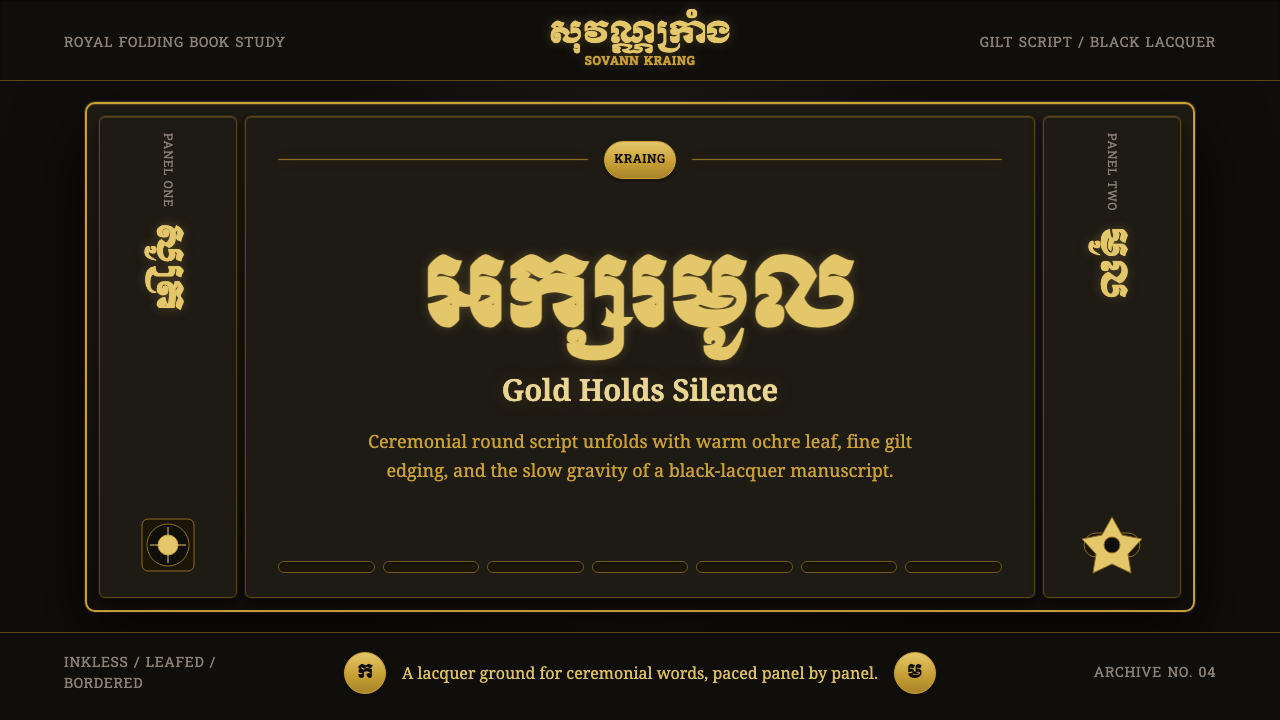 Khmer Aksar MulCeremony held in gold. Moul type glows on black lacquer with panel-by-panel g…
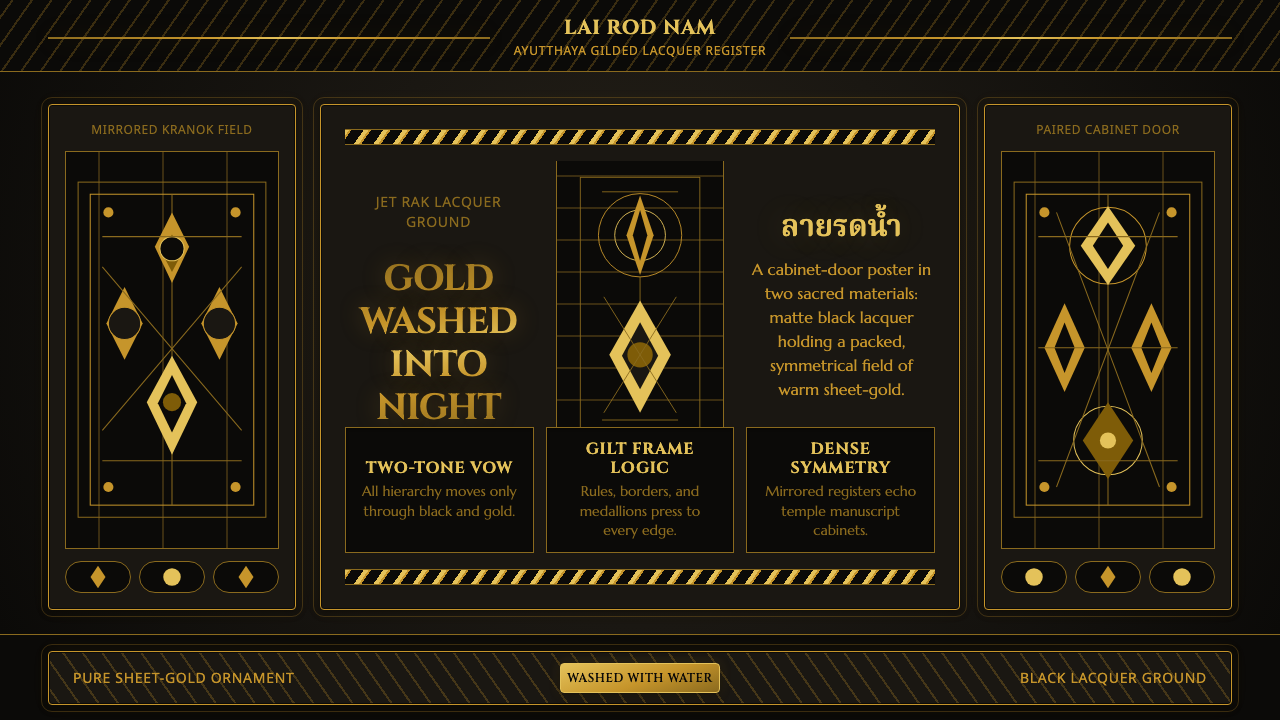 Thai Lai Rod Nam Gold-Black LacquerGold leaves no silence. Warm leaf gradients and mirrored borders pack a black…
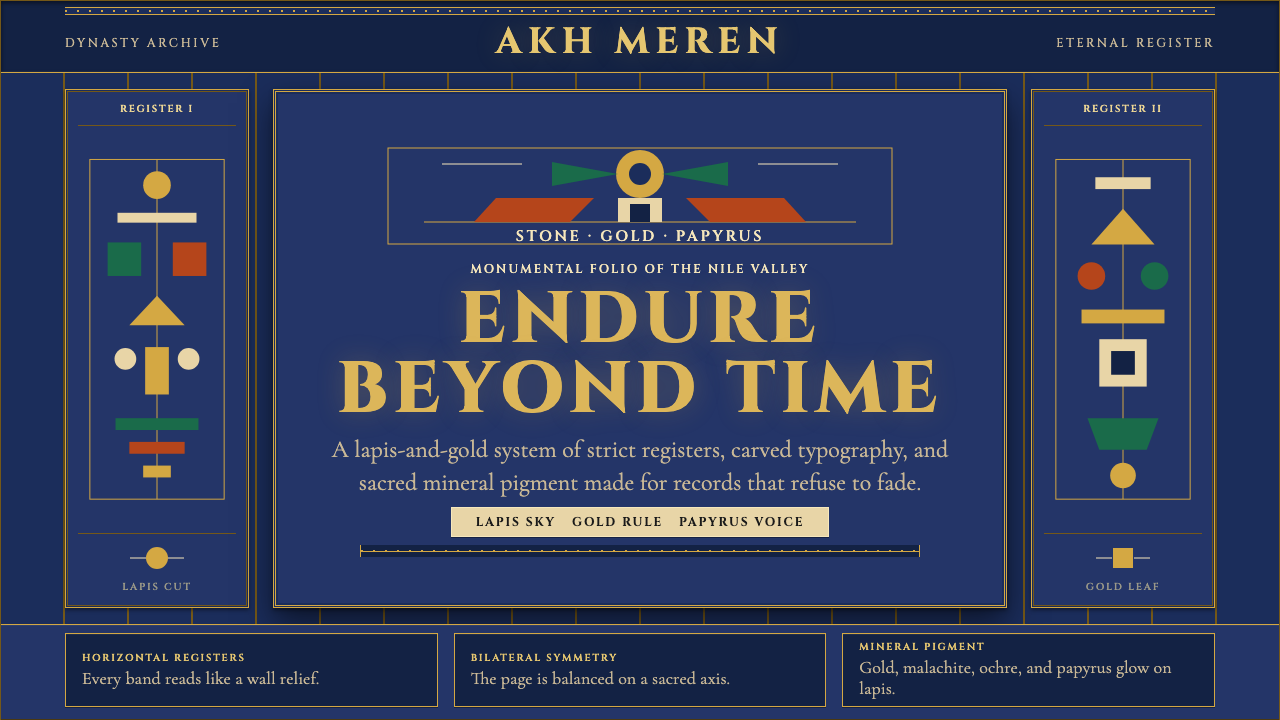 Egyptian PharaonicRegal permanence. Gold rules and Cinzel capitals carve papyrus registers into…
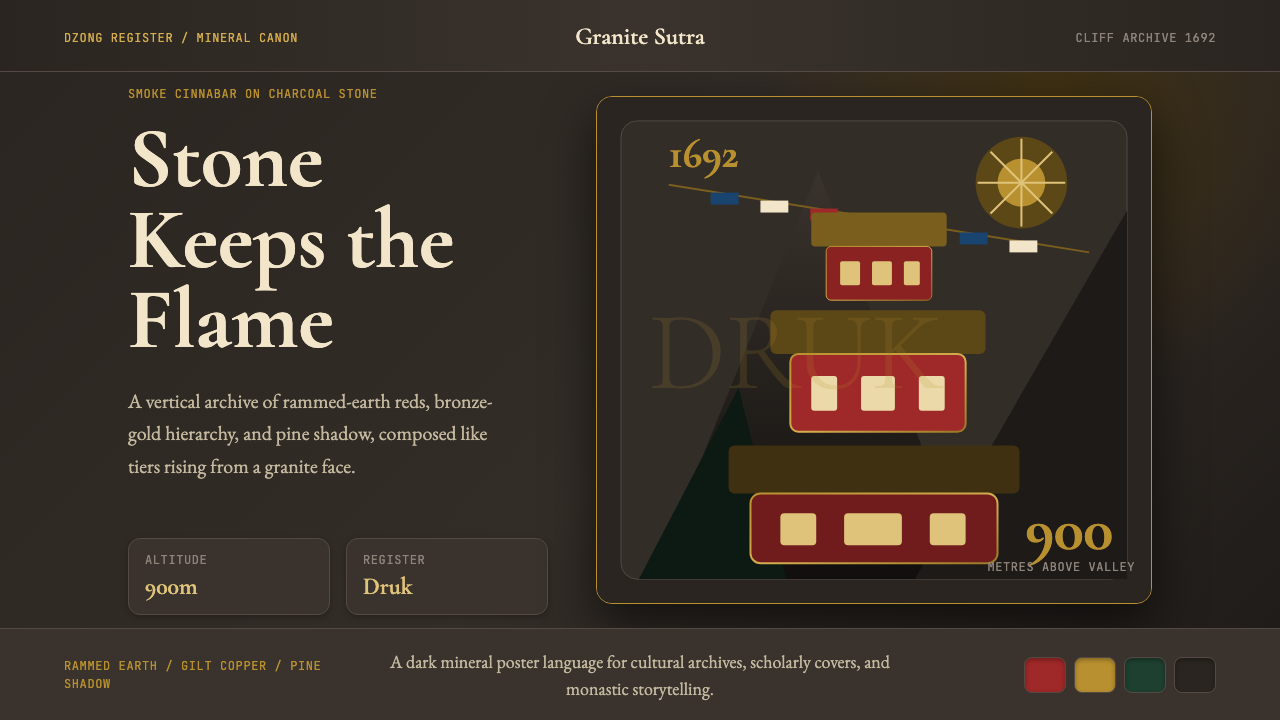 Bhutanese Tiger's Nest Cliff MonasterySacred altitude, mineral-dark. Cinnabar tiers and bronze rules climb charcoal…
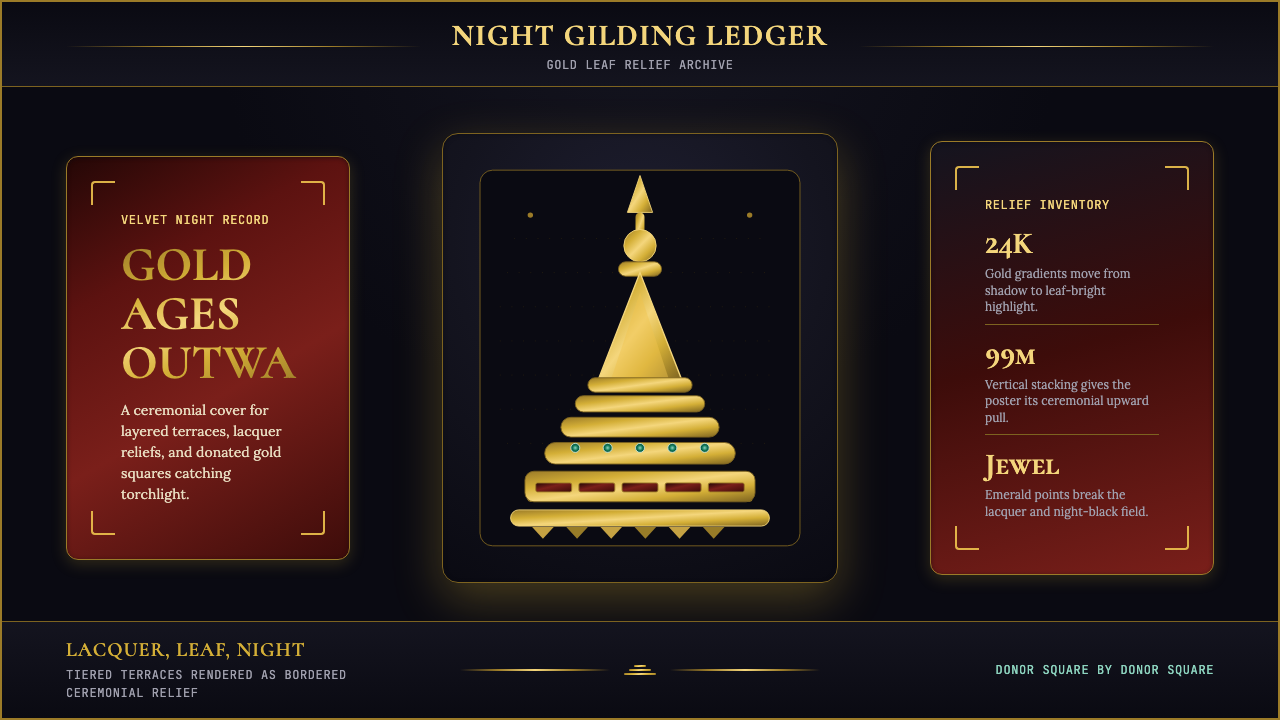 Burmese Shwedagon Stupa ReliefGold refuses restraint. Velvet black, teak-red lacquer, and tiered gradients…
 Deccan Basalt TempleMonumental shadow, carved. Near-black basalt, Cinzel capitals, and relief gri…