What is Tatar Leather Mosaic Ichigi?
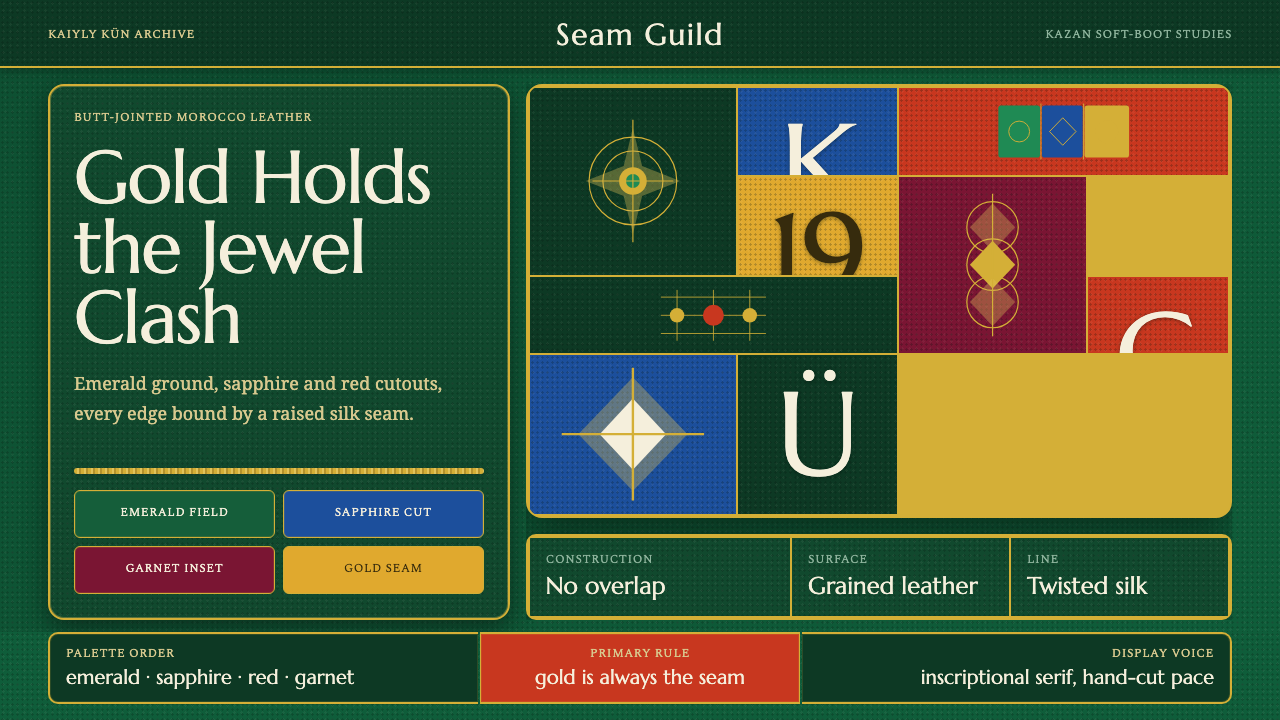
Tatar Leather Mosaic Ichigi turns a soft Kazan boot into a field of jewel-toned leather, where every gold-outlined seam is both construction and ornament.
Tatar Leather Mosaic Ichigi in brief
Tatar ichigi is a traditional soft boot from Kazan and the Volga-Tatar cultural region, made through the Kaiyly Kün leather-mosaic technique. Its surface is assembled from colored morocco leather, a supple goatskin material cut into separate shapes and joined edge to edge. Emerald, sapphire, red, and golden-yellow pieces create a saturated ornamental field, usually held together by a dominant deep-emerald ground.
The defining fact is that this is leather mosaic rather than embroidery or appliqué. Each colored fragment meets its neighbor directly, without one piece sitting on top of another. Twisted gold thread and colored silk are pulled through the seams by hand, making the joins visible rather than concealing them. The line is therefore not a finishing detail added after construction; it is the visible record of how the object was made.
As a design language, ichigi suggests an interface of dark leather-like fields, densely colored inlays, and luminous contour lines. Its richness does not come from diffuse effects or piled-on decoration. It comes from contrast between grained material, jewel-like color blocks, curling vegetal cutwork, and the continuous gold thread that gives every shape a deliberate boundary.
Where does Tatar Leather Mosaic Ichigi come from?
Ichigi belongs to the traditional craft culture of Tatarstan, especially Kazan in the Volga region of Eastern Europe. The form is a soft boot, while its most distinctive decorative method is Kaiyly Kün leather mosaic. Documentation of this craft reaches into the nineteenth century, establishing it as a durable vernacular practice rather than a recent ornamental revival.
The technique depends on colored morocco leather cutwork. Rather than painting a pattern onto a single hide or decorating a finished boot with stitched imagery, makers build the patterned surface from separate leather pieces. The colored components are butt-jointed edge to edge, so the pattern and the construction emerge together. This method gives the motif a physical presence: each leaf, curl, or contrasting area is a distinct piece of leather.
Kazan Tatar leather-mosaic masters and ichigi guild boot-makers preserved the craft through specialized handwork. Their visual vocabulary joins soft leather construction with tightly controlled ornamental geometry and vegetal movement. Gold and colored silk thread unify the separate pieces, producing a surface in which craftsmanship remains legible at every seam. That relationship between visible assembly and visual splendor is the foundation of the style's contemporary design value.
What defines the Tatar Leather Mosaic Ichigi look?
Jewel-Tone Leather
The palette is saturated and precious in feeling: deep emerald dominates, while sapphire, red, and golden-yellow appear as sharply defined companions. These colors should feel embedded in material rather than applied as a loose graphic overlay. The dark field gives the brighter fragments weight, making color read as an inlaid substance with tactile presence.
Butt-Jointed Mosaic
The central structural principle is the butt joint: colored leather pieces meet directly at their edges, with no overlap and no appliqué layer. In a visual adaptation, adjacent forms should feel intentionally fitted rather than casually stacked. Every boundary must communicate contact, precision, and interdependence between separate pieces.
Gold Seam Outline
Twisted gold thread is the system's defining contour. It outlines the seams and turns construction into a luminous graphic language. Gold should therefore be reserved for edges, dividers, selected labels, and moments where the interface needs to reveal structure. Used everywhere as a fill, it loses the disciplined clarity of a thread tracing leather joins.
Vegetal Cutwork
The motif language is curling and vegetal rather than rigidly mechanical. Scrolls, leaf-like turns, and flowing cutout silhouettes bring movement to the dark leather field. They should remain clearly constructed from individual pieces, not dissolve into painterly foliage. The effect is ornamental, but its ornament is governed by cut edges and seams.
Grained Material Presence
Morocco leather gives the style a grained, supple material character. A digital interpretation should imply material richness through restrained texture, tonal variation, and the visual weight of leather-like fields, without pretending that the screen is a physical boot. The goal is tactile suggestion, not literal imitation.
Dark Ornate Contrast
The style works through a dark, dominant ground interrupted by bright inlays and thin luminous seams. This creates an ornate atmosphere without making the entire surface equally loud. Space between motifs matters: darkness gives the colored leather room to register, while the gold contour organizes visual complexity into a readable whole.
Who shaped Tatar Leather Mosaic Ichigi?
Kazan Tatar leather-mosaic masters are the custodians of the Kaiyly Kün technique. Their work joins colored morocco leather through hand-pulled gold and silk thread, keeping the relationship between cut pieces, seams, and ornamental pattern inseparable. The tradition matters because it treats decoration as a result of exact construction rather than a separate layer applied afterward.
Ichigi guild boot-makers represent the specialized makers associated with the soft-boot craft. Their practice brings the mosaic system into a wearable form, where flexibility, leather construction, and visual complexity must coexist. The boot is not merely a support for pattern; its assembled surface is the product of craft knowledge applied across the whole object.
Kaiyly Kün leather mosaic is the technique at the center of the visual system. Its edge-to-edge construction distinguishes it from appliqué, while its thread-outlined joins distinguish it from a flat printed pattern. For contemporary designers, it offers a useful model of expressive boundaries: lines can organize, join, and ornament at the same time.
How do you use Tatar Leather Mosaic Ichigi today?
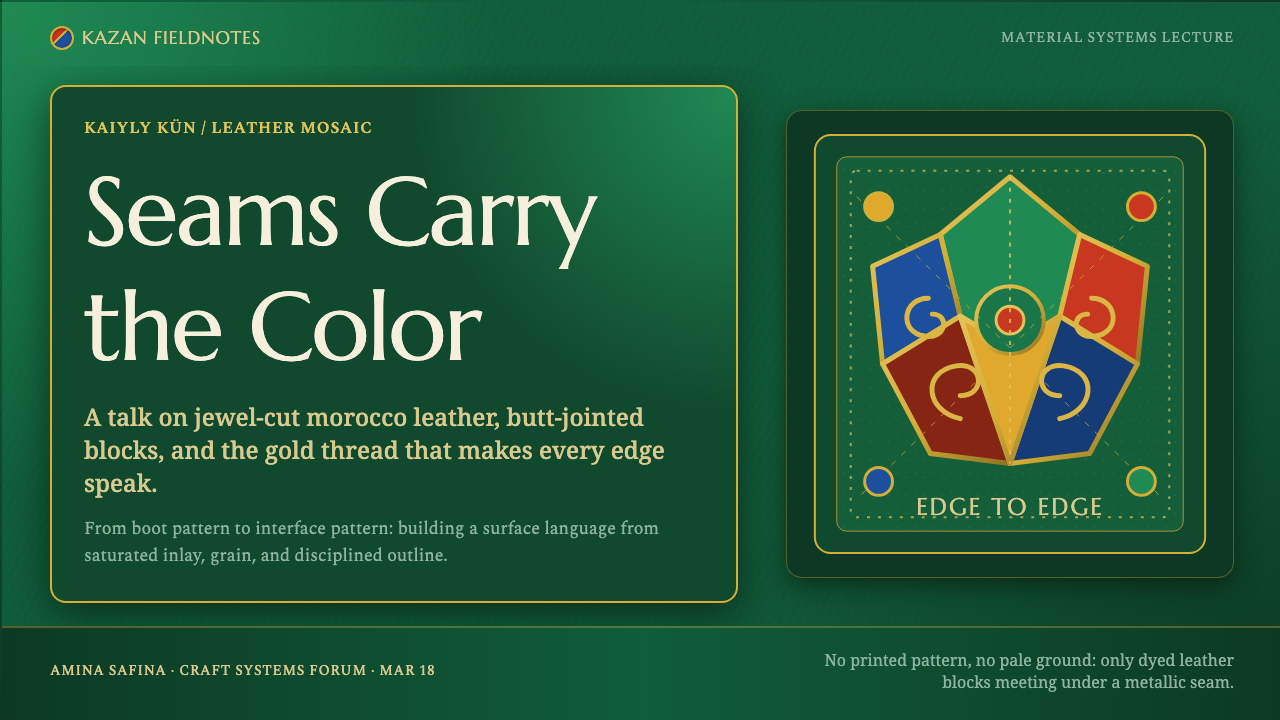
For presentation covers, use a dark leather-like field as the stage for one dominant vegetal mosaic gesture. A deep-emerald area can hold the title, while a limited cluster of sapphire, red, and golden-yellow cutouts moves across one edge or corner. Let a gold seam line guide the eye toward the title rather than surrounding every object. Content slides should become quieter: use gold contours to establish hierarchy, reserve jewel-tone inlays for section markers, and leave dark breathing room around text.
Data slides benefit when the mosaic logic is used structurally rather than decoratively. Treat categories as fitted colored pieces within a dark field, with gold lines clarifying their boundaries. Charts should remain readable before they become ornate; the embroidery-like complexity belongs at the frame, the legend, or a carefully chosen focal area. The important lesson from ichigi is that visible joins can explain how a composition is organized.
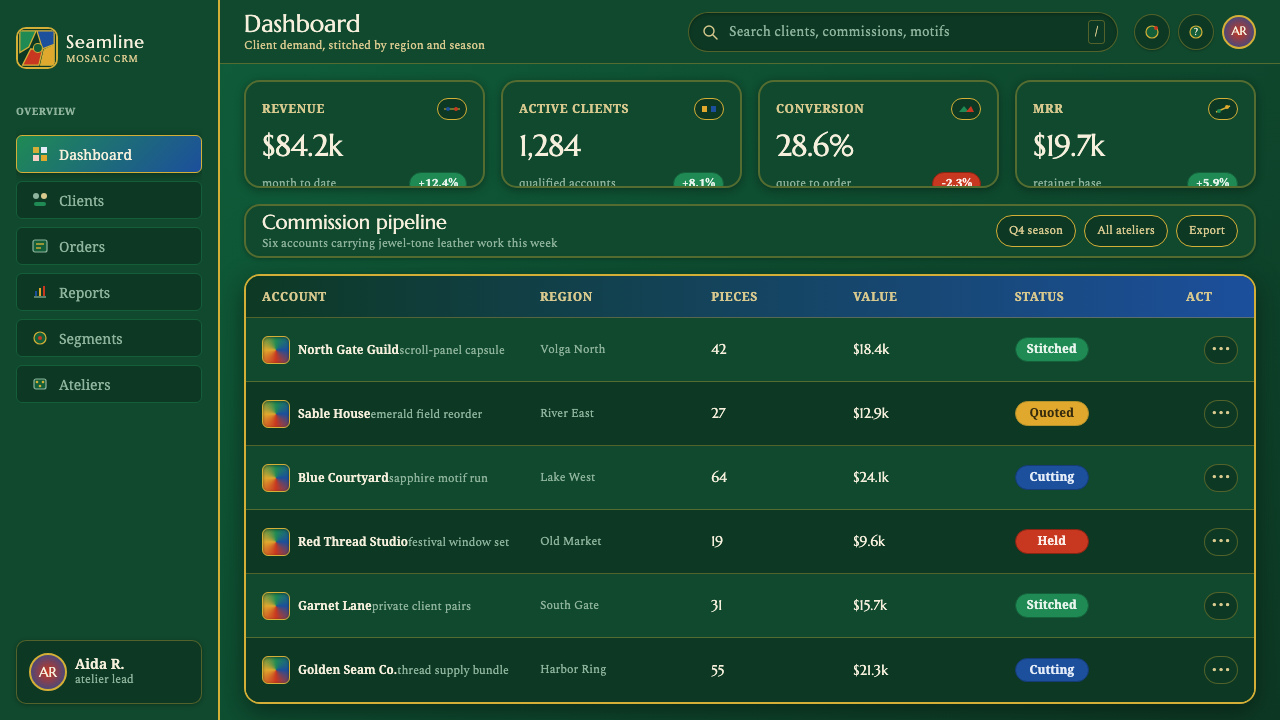
For web interfaces, the approach is strongest on dashboards, member spaces, premium catalogs, and pricing pages where a dark, crafted sense of value supports the product. Use the deep field for the overall environment, gold seam-like dividers for navigation and cards, and jewel-tone panels to distinguish important states or tiers. Components should look fitted into a shared surface, with each boundary carrying more purpose than a generic border.
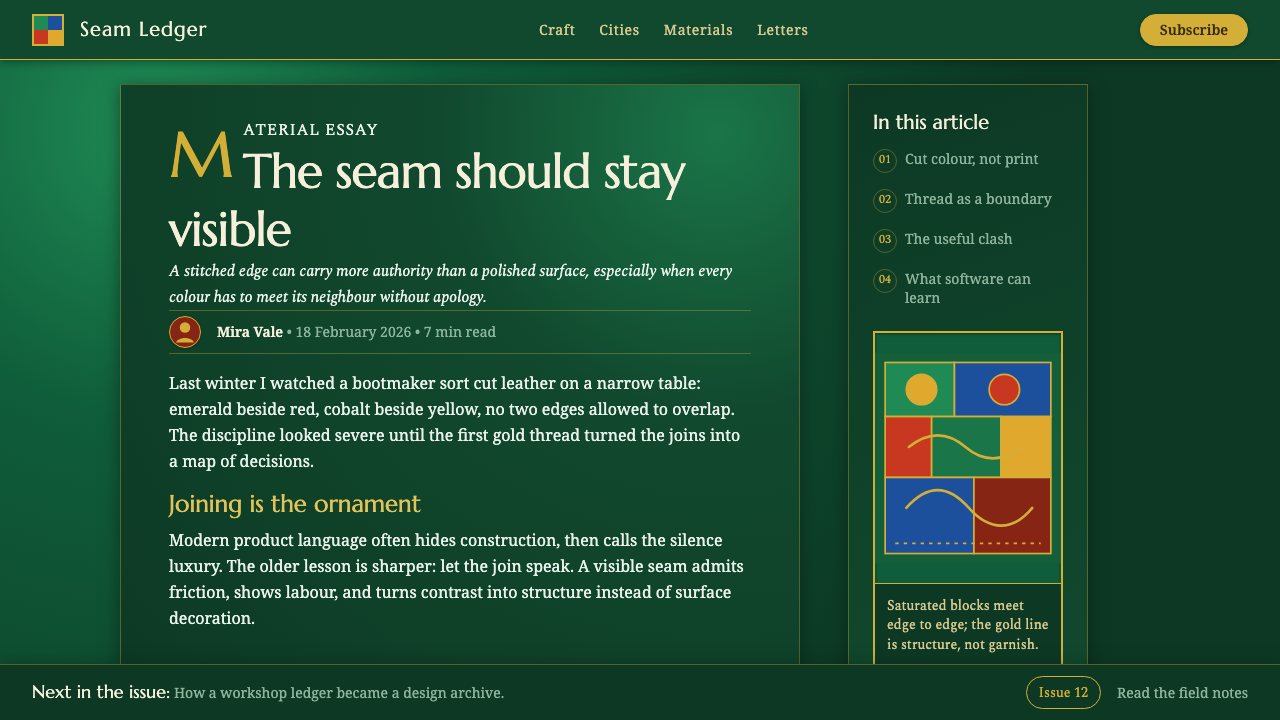
Editorial and marketing layouts can use the style to create ceremonial, material-rich storytelling. A feature article may open with a broad dark panel, a vegetal mosaic crop, and a gold-thread-like rule leading into the headline. Product pages can alternate quiet deep fields with close, colorful inlay moments. The style is particularly effective when copy is concise enough to leave room for the pattern, rather than forcing every section to compete with the ornament.
The common mistake is to treat Tatar leather mosaic as a generic dark luxury theme. Random gold effects, loose jewel colors, and decorative flourishes without seam logic miss the craft entirely. Keep the palette disciplined, make color blocks feel physically fitted, and let gold lines describe genuine divisions. If every element glows or every panel is equally ornate, the result loses the quiet authority created by a dark field and carefully joined fragments.
Tatar Leather Mosaic Ichigi — FAQ
Is Tatar leather mosaic the same as embroidery?
No. Embroidery places thread-based imagery or decoration onto a surface. Kaiyly Kün constructs the surface itself from separately cut leather pieces joined edge to edge. Gold and colored silk thread are crucial, but they outline and secure the joins between leather fragments rather than replacing the leather mosaic with stitched imagery.
Why are the seams so visually prominent?
Because the seams reveal the craft's central logic. Each visible gold or silk outline marks a real meeting point between separate colored leather pieces. Making those joins prominent turns assembly into ornament and gives the surface its characteristic precision. In a design adaptation, the equivalent is to use lines where components genuinely need organization, not as arbitrary decoration.
Can this style work without a dark background?
It can, but the dark field is important to the supplied visual character because it gives emerald, sapphire, red, golden-yellow, and gold thread their concentrated presence. A lighter interpretation should still preserve the logic of fitted leather blocks and seam outlines. Without a strong supporting field, the jewel-tone pieces can become scattered graphic accents rather than a unified mosaic surface.
What should designers avoid when adapting ichigi?
Avoid treating gold as a generic luxury signal, turning every surface into an equally busy ornament, or layering colored shapes as though they were appliqué. The source craft depends on direct edge-to-edge contact, visible thread-defined joins, and a dark dominant leather field. The most convincing adaptation preserves those relationships, even when it simplifies the motifs for a contemporary interface.
Related design styles
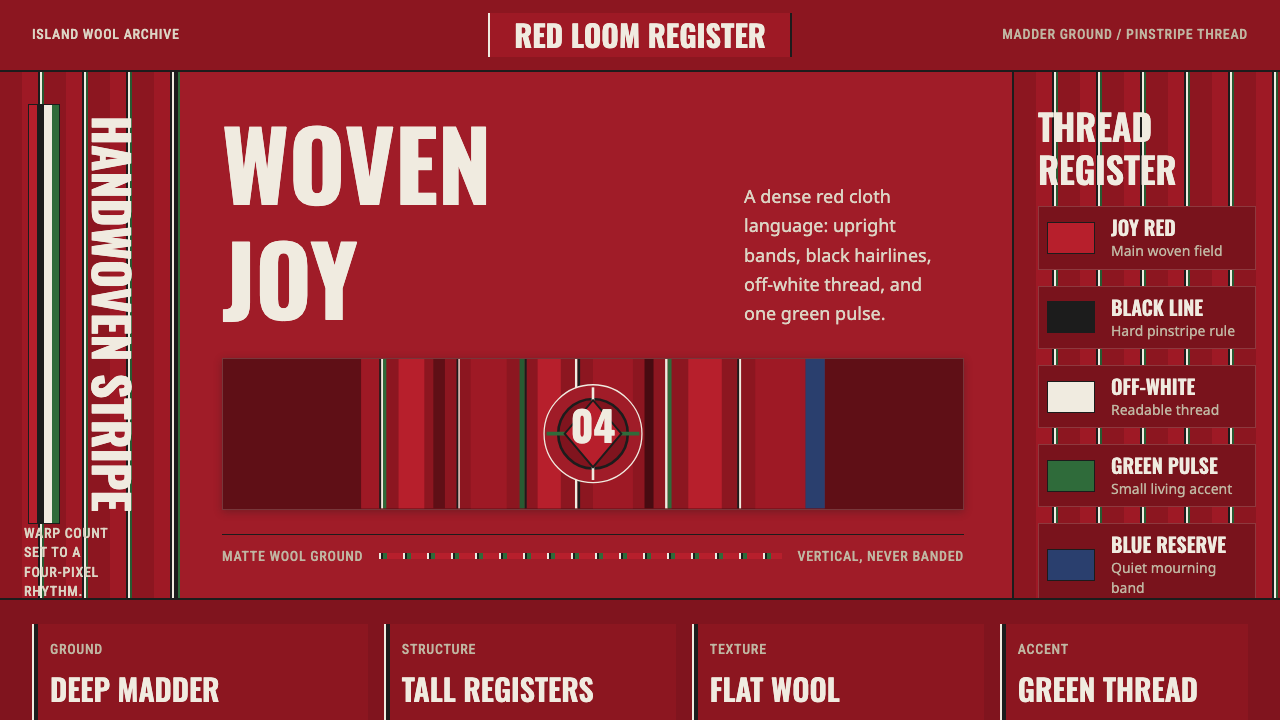 Estonian Kihnu Island SkirtJoy is woven vertical. Madder red ground, Oswald stripes, black and green pin…
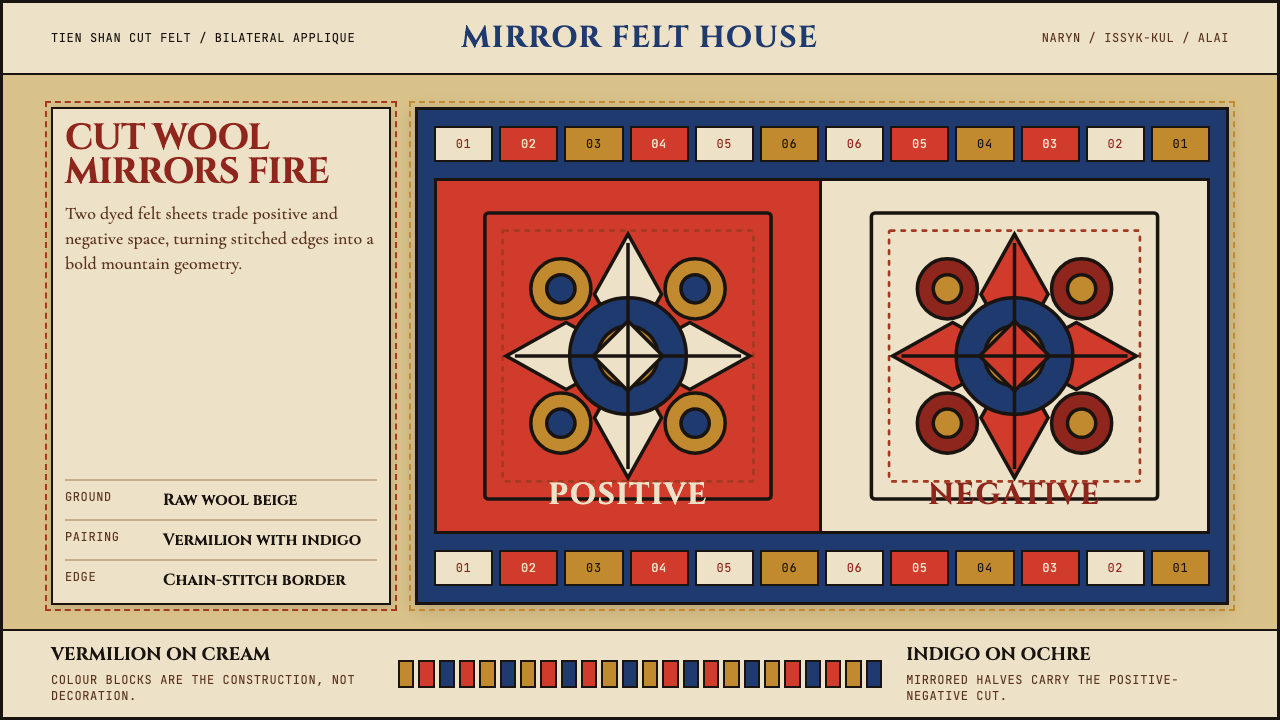 Kyrgyz Shyrdak Felt RugCut felt becomes structure. Vermilion-indigo mirror blocks stitch positive to…
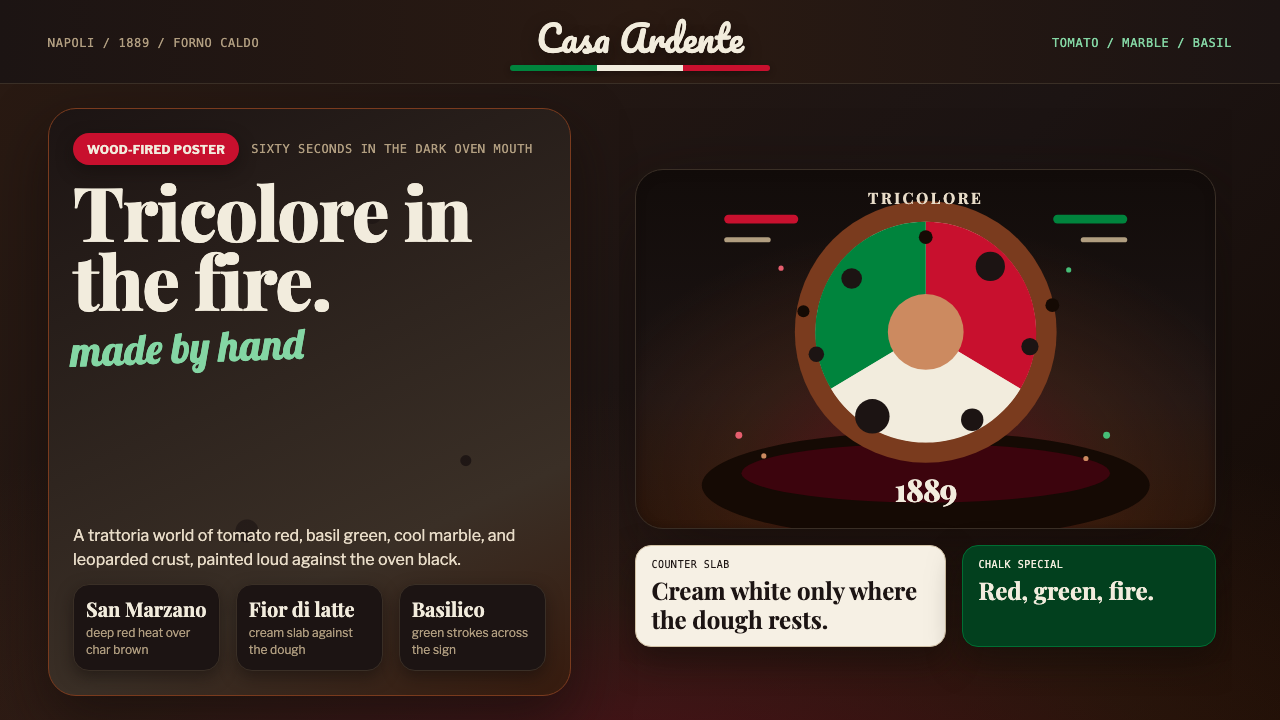 Neapolitan PizzaHot, handmade abundance. Tomato red and basil green flare on charred oven bro…
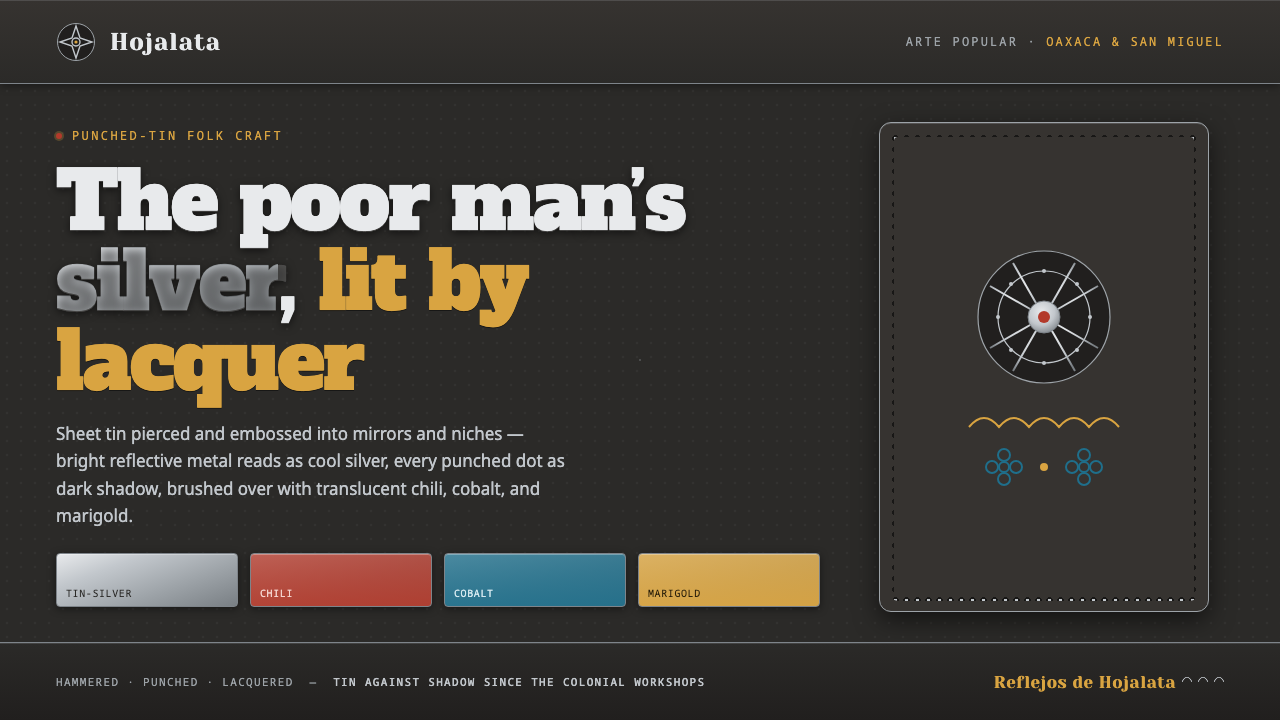 Punched Tin HojalataThe poor man's silver. Pierced tin on oxidized shadow, washed in chili, cobal…
 Mossi Burkina Plank MaskCarved, not rendered. Charcoal fields, dust-red cuts, and kaolin bands stack…
 Sindhi Ralli QuiltSings in squares. Vermilion, gold, green, and indigo lock into piped tile rhy…