What is Tajik Chakan Embroidery?
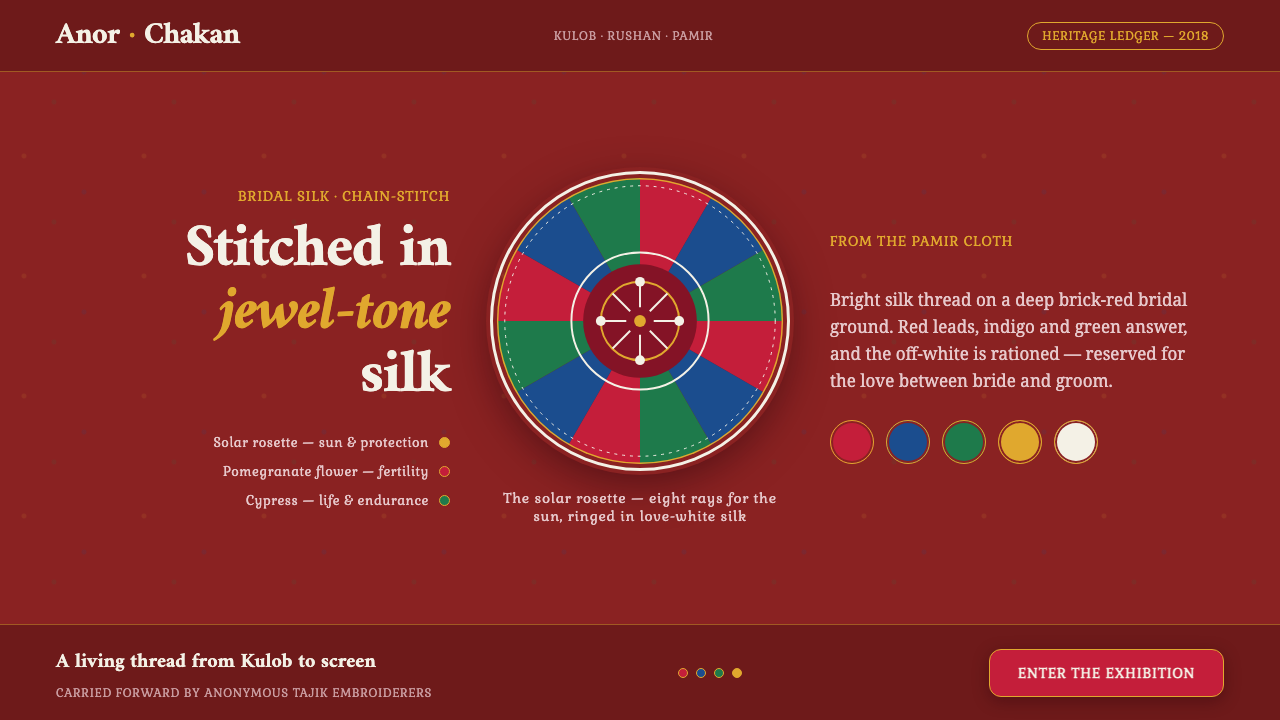
Tajik Chakan turns bridal silk into a field of living symbols — jewel-tone chain-stitch set against deep brick-red, with every motif allowed to speak before the ground.
Tajik Chakan Embroidery in brief
Chakan is the Tajik chain-stitch embroidery tradition associated with Kulob and the Pamir, worked in bright silk thread on cotton and silk garments for brides. Its visual language is built from solar rosettes, the pomegranate flower of fertility, and the cypress of life. Red, indigo, and green carry the main chromatic force, while gold, violet, and off-white add ceremonial richness. The result is not an ornamental surface placed over clothing; it is a symbolic textile in which pattern is the principal subject.
The defining visual relationship is figure against ground. Deep brick-red functions as the bridal ground: saturated, warm, and continuous, but deliberately quieter than the stitched motifs. The embroidery appears as a concentrated field of color and rhythm, with off-white and jewel tones creating the strongest moments of recognition. A Chakan-inspired interface should preserve this hierarchy. The page is the cloth; the motif is the message.
The design system carries this tradition to screen through a symmetrical bridal-panel rhythm. Repeated motifs create ceremony and continuity, while strong color contrast gives the interface a textile-like presence without imitating fabric literally. The effect should feel assembled, stitched, and culturally specific: vivid but controlled, richly patterned but never visually confused.
Where does Tajik Chakan Embroidery come from?
Chakan belongs to the bridal textile culture of Tajikistan, particularly the regions of Kulob and Rushan in the Pamir. The approved tradition window places its documented design reference between 1950 and 1990, while its wider significance was recognized when Chakan was inscribed as UNESCO Intangible Cultural Heritage in 2018. Its medium is intimate and ceremonial: silk thread worked into cotton and silk for bridal dress.
The motifs carry meanings that make the embroidery more than a decorative vocabulary. Solar rosettes bring the image of radiance and vitality into the garment. The pomegranate flower signifies fertility, an especially resonant meaning in bridal dress. The cypress represents life. These symbols should remain legible as a family of forms rather than being dissolved into generic floral pattern.
The tradition is carried by makers whose names are not supplied as individual biographies: anonymous Tajik women embroiderers, Kulob bridal-dress makers, and Pamir chakan masters. Their collective role matters to the design interpretation. Chakan is not presented as the signature of one inventor but as a living practice sustained through making, repetition, and regional knowledge.
On screen, the design system does not attempt to reproduce a physical garment. It extracts the relationships that make the textile recognizable: a deep bridal ground, vivid silk-like color, symbolic motifs, and a symmetrical panel rhythm. The translation is therefore structural rather than literal. Digital surfaces should feel like a respectful continuation of the visual logic, with the motif retaining authority over the page.
What defines the Tajik Chakan Embroidery look?
Bridal Ground
Deep brick-red establishes the emotional and visual ground of the system. It is warm, ceremonial, and dense enough to support brilliant embroidery, but it should not compete with the motifs. Large uninterrupted areas of ground create composure between patterned zones and give the interface the feeling of a continuous textile rather than a collection of unrelated cards.
Jewel-Tone Silk
Red, indigo, green, gold, violet, and off-white are treated as stitched accents rather than a flat rainbow palette. Their intensity should feel concentrated, like silk catching light against a dark garment. A leading color can carry a section while the others articulate hierarchy, symbolism, or emphasis. Saturation is purposeful: it signals ceremony and attention, not casual decoration.
Motif as Figure
The solar rosette, pomegranate flower, and cypress of life provide the system's symbolic vocabulary. Motifs should be allowed to read as distinct figures, with enough surrounding ground to preserve their silhouette and meaning. They can appear as marks, panels, section emblems, or repeated borders, but they should never become anonymous texture. Recognition is part of the visual experience.
Chain-Stitch Rhythm
Chain-stitch embroidery implies continuity through linked marks. In digital applications, that continuity can guide repeated borders, connected dividers, looping ornaments, and rhythmic interface accents. The movement should feel hand-guided rather than mechanically sterile. Curves and repeated units are welcome when they preserve the sense of a line being carried forward from one stitch to the next.
Symmetrical Bridal Panels
Symmetry gives the system its ceremonial posture. Layouts can be organized around mirrored panels, centered emblems, and balanced columns that recall the front of a bridal garment. Symmetry should create dignity and orientation, not rigidity. Small shifts in motif density or color emphasis may add life, provided the overall structure remains visibly composed and balanced.
White as Affection
Off-white is not merely a neutral contrast against brick-red. In the source tradition it signals love between bride and groom, giving the lightest motif a specific emotional role. Use it where an interface needs tenderness, welcome, or a moment of emphasis. Because it carries meaning, it should remain selective and luminous rather than becoming an indiscriminate background replacement.
Who shaped Tajik Chakan Embroidery?
The anonymous Tajik women embroiderers represent the collective hands through which Chakan remains a living practice. Their contribution is expressed through the continuity of chain-stitch work, the preservation of symbolic motifs, and the intimate connection between embroidery and bridal dress. A design system inspired by Chakan should acknowledge this collective authorship rather than forcing the tradition into the story of a single named genius.
Kulob bridal-dress makers connect Chakan directly to the garment for which its visual language is especially significant. Their work gives the embroidery a compositional context: motifs are not isolated samples but parts of a ceremonial dress with a clear ground, repeated rhythm, and concentrated areas of color. In digital translation, this supports panel-based layouts and a sense of designed frontal presentation.
The Pamir chakan masters embody the regional knowledge associated with Rushan and the wider Pamir. Their place in the source material emphasizes that Chakan is both a recognizable tradition and a practice shaped by locality. For design work, that means preserving the relationship between symbolic form, saturated thread color, and ceremonial use instead of reducing the style to generic Central Asian ornament.
How do you use Tajik Chakan Embroidery today?
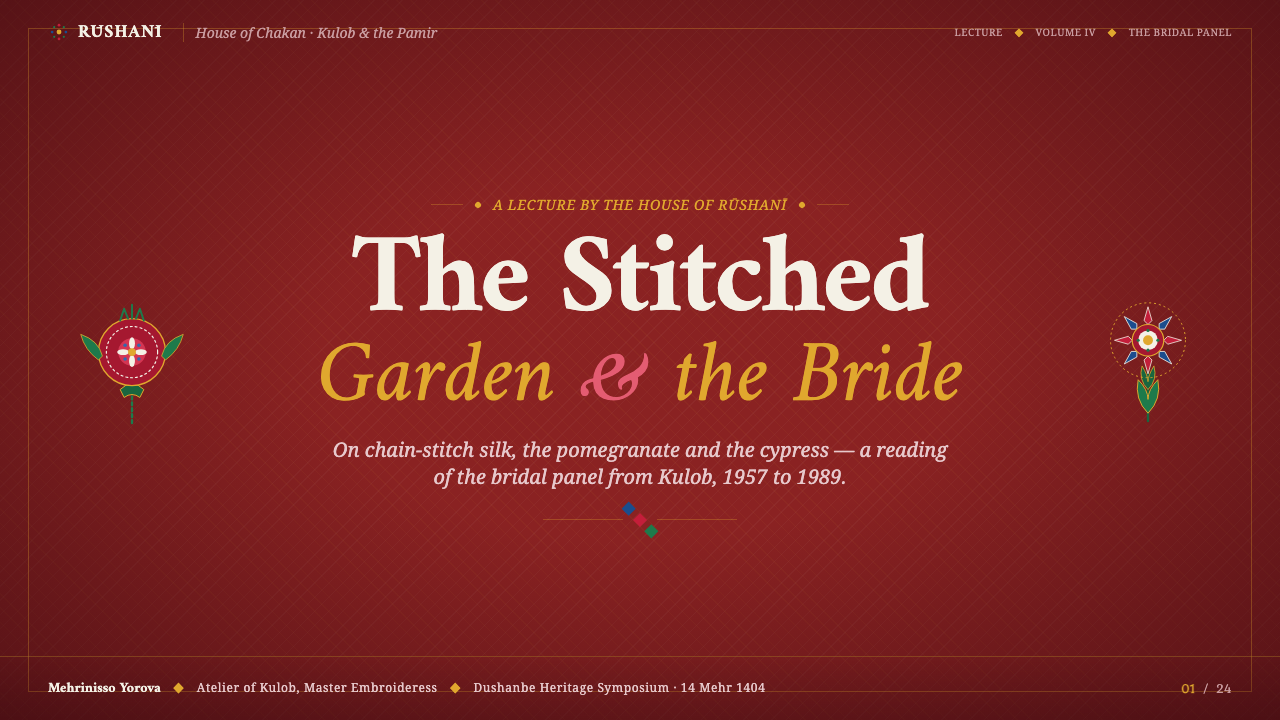
For presentation slides, use the deep brick-red ground as a calm ceremonial field and let one major motif establish the cover. A solar rosette, pomegranate flower, or cypress can act as the visual anchor beside the title, while symmetrical framing recalls a bridal panel. Content slides should rely on repeated alignment, clear motif-led section markers, and restrained use of jewel tones. Data slides can turn categories into embroidered emblems or color-linked panels, but the pattern must support reading rather than become a competing illustration.
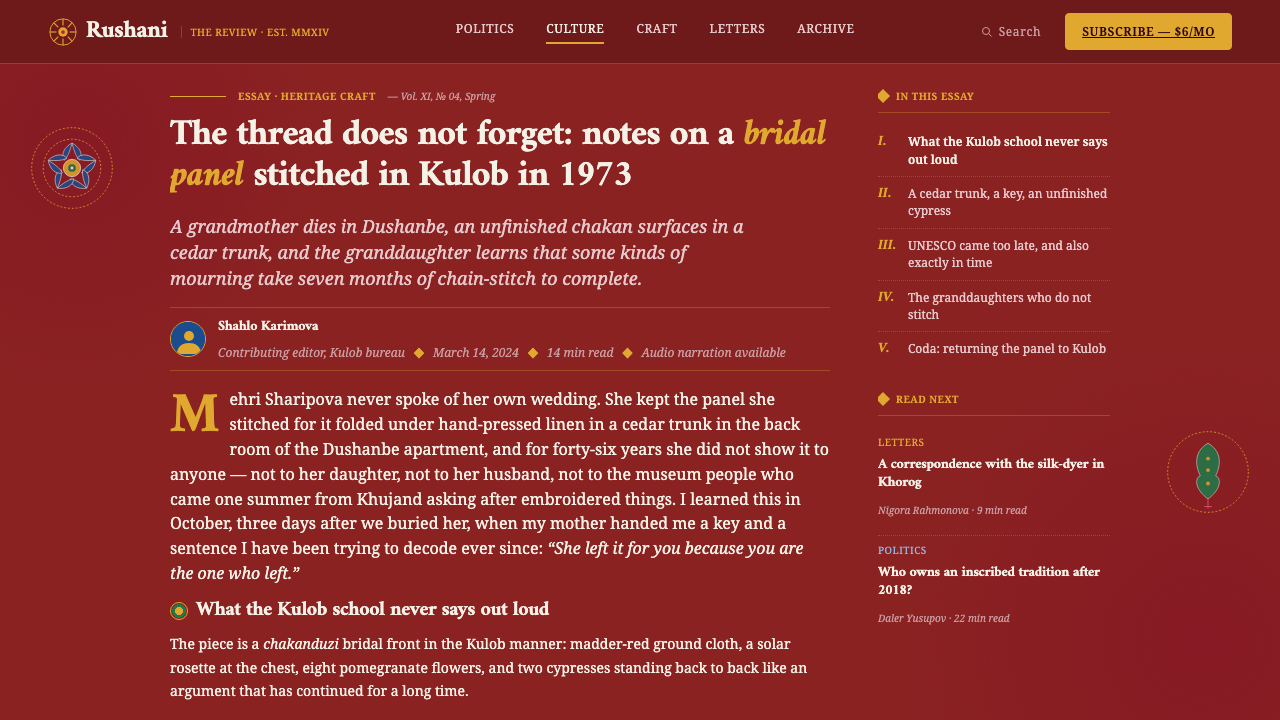
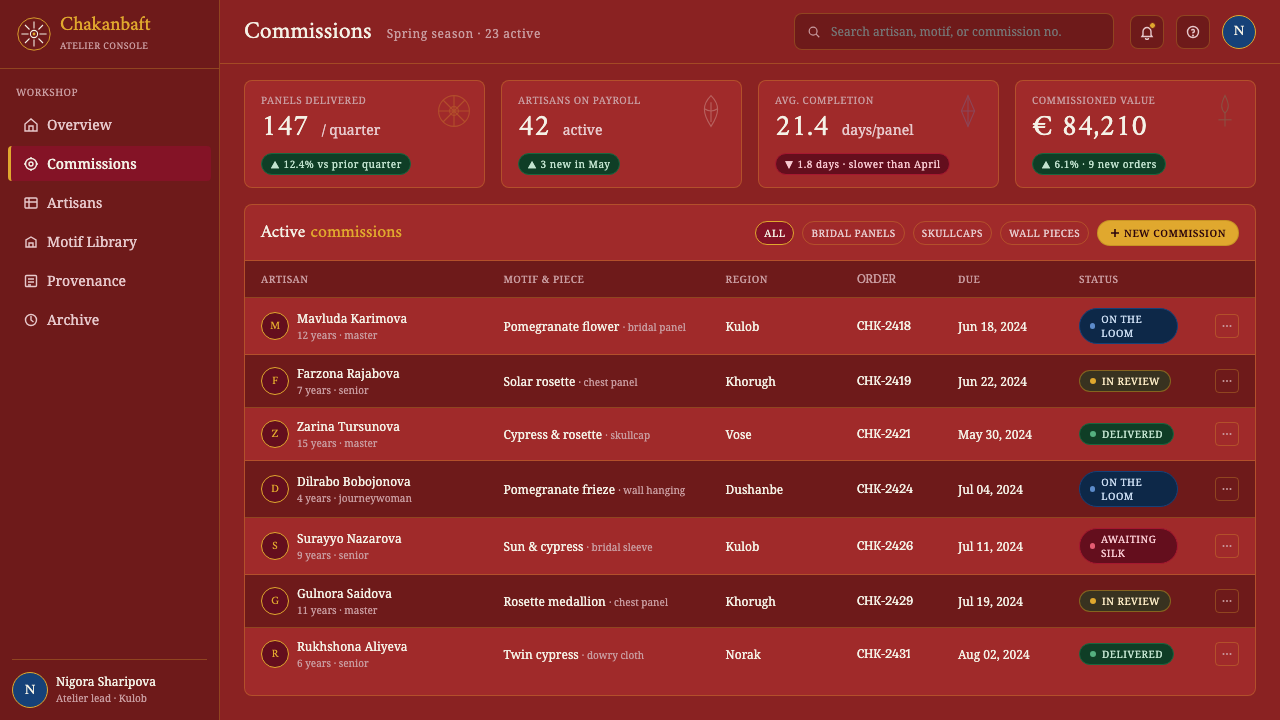
For web interfaces, the system suits dashboards and pricing pages that need a strong identity without sacrificing hierarchy. Keep the ground continuous across navigation and major surfaces, reserve the brightest silk colors for selected states and meaningful distinctions, and use off-white for primary reading moments or welcoming actions. Symmetrical panels can organize plans, metrics, or feature groups. The interface should feel richly authored, yet every motif, color, and repeated border should have a navigational or communicative role.
For editorial and marketing work, Chakan offers a distinctive way to frame stories about craft, culture, ceremony, and human connection. A feature article can use a deep red opening field, a centered symbolic mark, and recurring panel rhythms to carry the reader through sections. Marketing layouts can place a single jewel-tone motif beside a clear message, then repeat that motif as a recognizable signature. The strongest compositions allow generous ground around the embroidery so the pattern retains authority and does not become visual noise.
For brand systems, use the motifs as a small family of identifiable signs rather than an unlimited ornament library. The solar rosette may introduce radiance or occasion, the pomegranate flower may support themes of growth and abundance, and the cypress may mark continuity or life. Repetition should create recognition across surfaces. Color can change emphasis, but the underlying relationship between brick-red ground and luminous stitched figure should remain stable.
The common mistake is to treat Chakan as permission to combine every bright color and every floral symbol at once. That approach buries the very hierarchy that makes the tradition legible. Another mistake is replacing the deep brick-red ground with a neutral surface and leaving the motifs as decorative stickers. The system works when the ground is continuous, the symbols remain distinct, and color behaves like concentrated thread: vivid, selective, and tied to meaning.
Tajik Chakan Embroidery — FAQ
Is Tajik Chakan mainly a floral decorative style?
No. Flowers are part of its vocabulary, but the motifs carry specific meanings. The solar rosette suggests radiance and vitality, the pomegranate flower signifies fertility, and the cypress represents life. Treating them as generic decoration removes the cultural logic that makes Chakan distinctive. In a digital system, each motif should remain recognizable and should be used in contexts that respect its symbolic role.
Why is the deep brick-red ground so important?
The ground establishes the bridal context and creates the contrast that allows the jewel-tone embroidery to read as the figure. It is not just a background color selected for atmosphere. It acts like the continuous cloth beneath the stitches, giving the interface composure and unity. Removing it or making it compete with the motifs weakens the system's central relationship between ground and pattern.
Can Chakan-inspired design use a dark interface?
Yes, provided the dark surface behaves as a bridal ground rather than as generic black. Deep brick-red should remain the dominant field, with jewel-tone color and off-white reserved for the stitched figures and meaningful emphasis. A dark interface becomes less convincing when every element is equally saturated or when motifs are scattered without panel structure. The system depends on a clear ground, concentrated color, and composed rhythm.
How should off-white be used in this design system?
Use off-white as a luminous, emotionally specific accent. In the source tradition it signals love between bride and groom, so it can support moments of welcome, intimacy, or special emphasis. It should not become an automatic replacement for every light surface. When used selectively against brick-red, off-white reads as a meaningful stitched motif rather than a neutral utility color.
What distinguishes a respectful adaptation from a generic textile theme?
A respectful adaptation preserves the specific relationships supplied by the tradition: Tajik bridal context, chain-stitch rhythm, symbolic motifs, jewel-tone thread, deep brick-red ground, and symmetrical panel structure. A generic textile theme may borrow saturated colors and floral shapes while ignoring their meaning and hierarchy. The difference is not surface resemblance alone. It is whether the design keeps the motif as figure, the ground as support, and the cultural symbols as more than decoration.
Related design styles
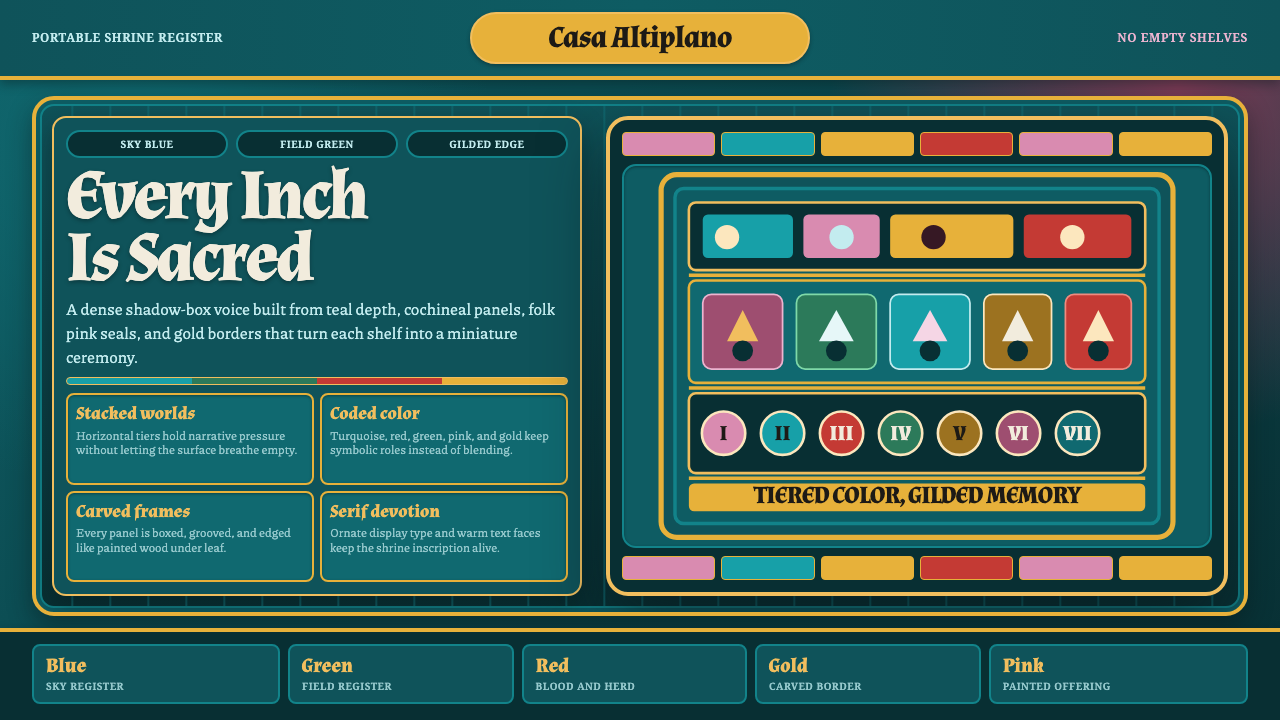 Ayacucho Retablo BoxSacred density. Deep teal shelves pack turquoise, cochineal, folk pink, and g…
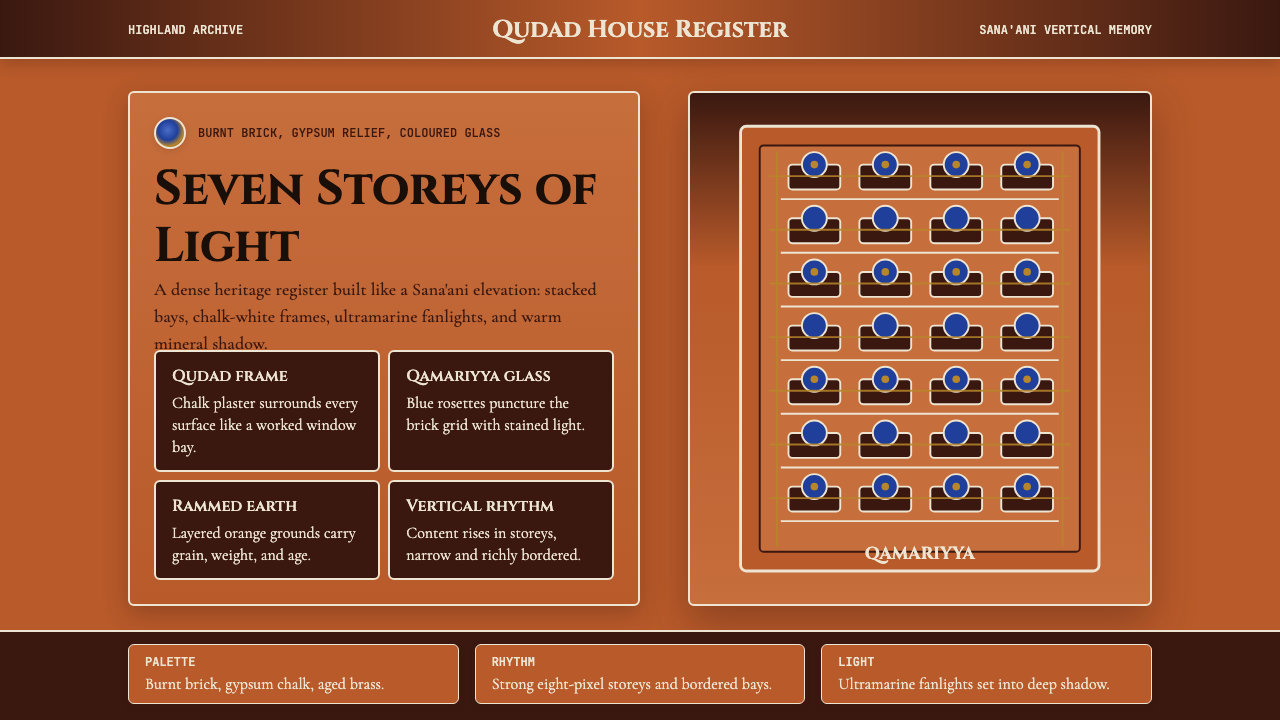 Yemeni Sana'a Old City Tower-HouseVertical memory, densely framed. Brick orange, gypsum white, and blue rosette…
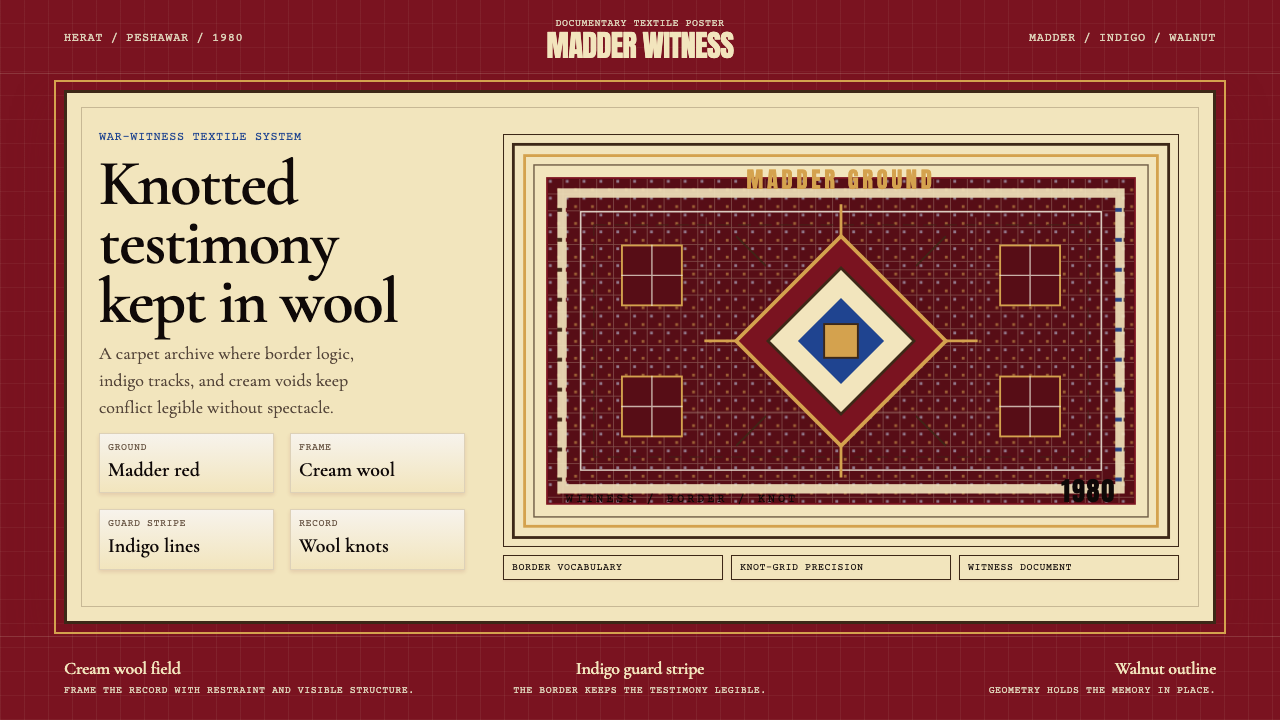 Afghan War Rug (1980)Witness in wool. Madder red, indigo, and cream borders knot testimony into a…
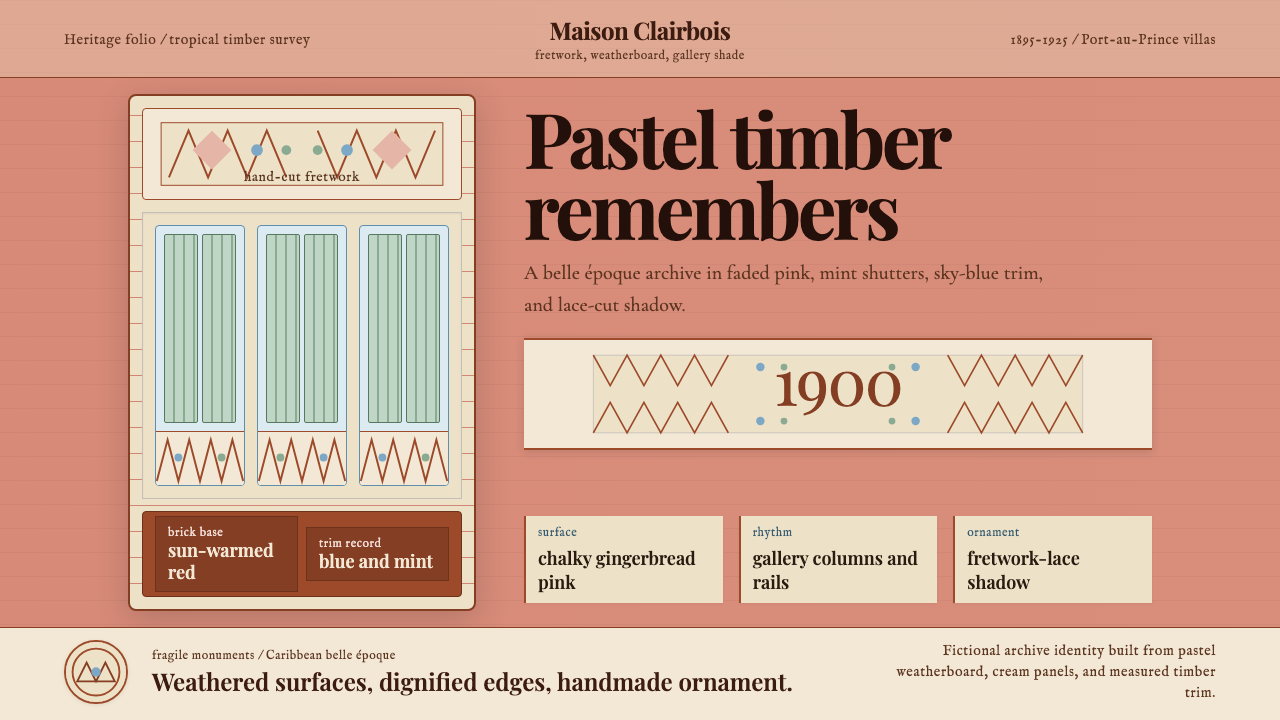 Haitian Gingerbread House (1900)Fragile elegance endures. Faded pink walls carry mint shutters and fretwork-l…
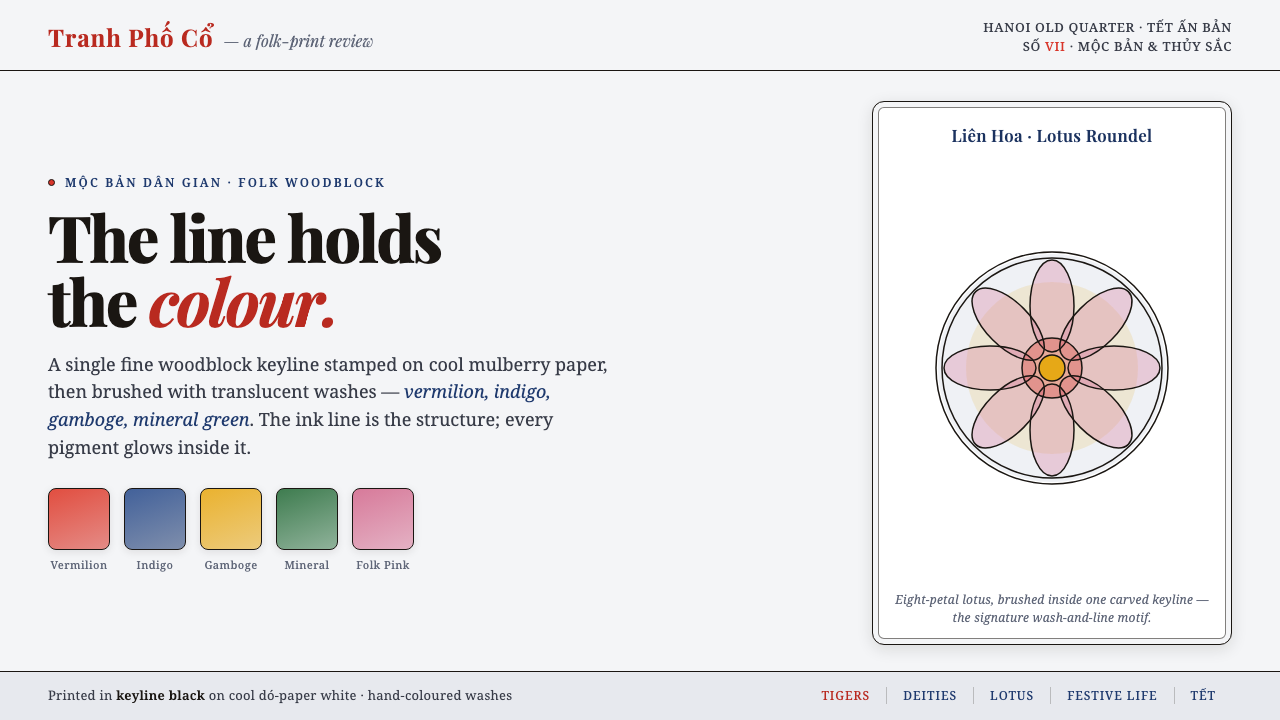 Hàng Trống Folk PrintBright folk colour, never loud. Translucent vermilion-indigo washes held insi…
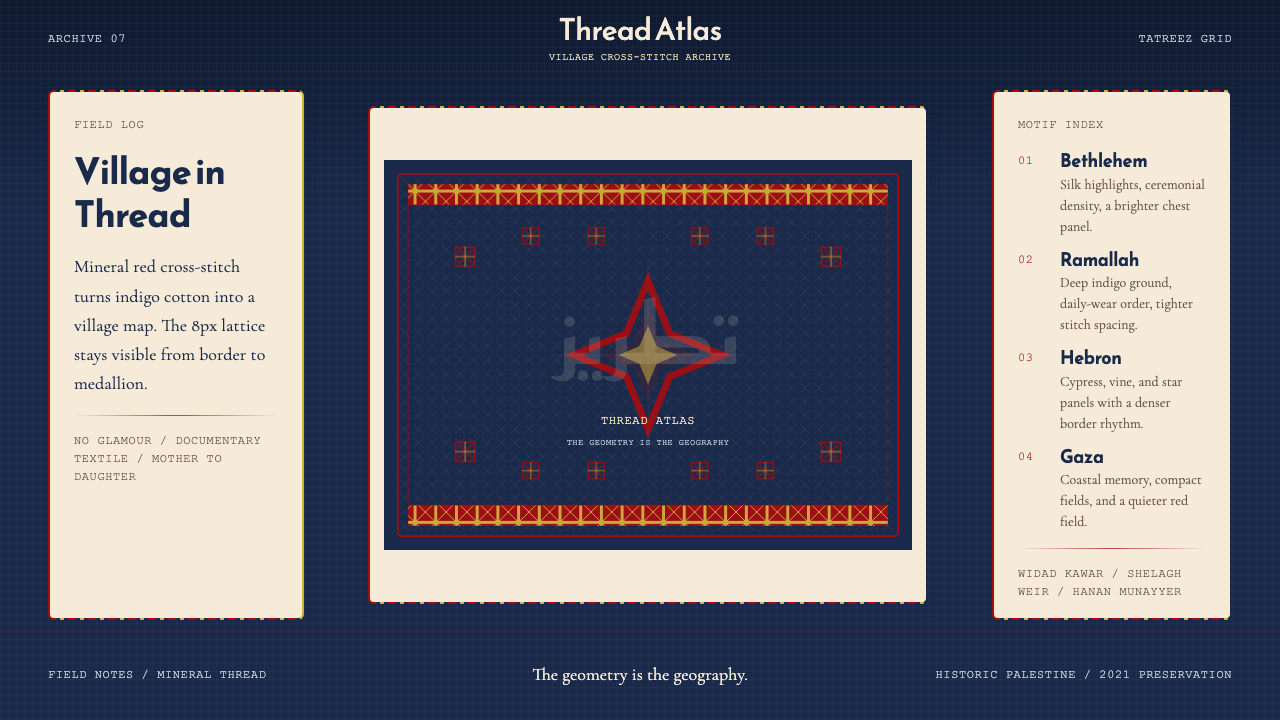 Palestinian Tatreez Cross-StitchMemory in thread. Red cross-stitch on indigo cotton, built on an 8px grid.