What is Solana (Magenta Gradient)?
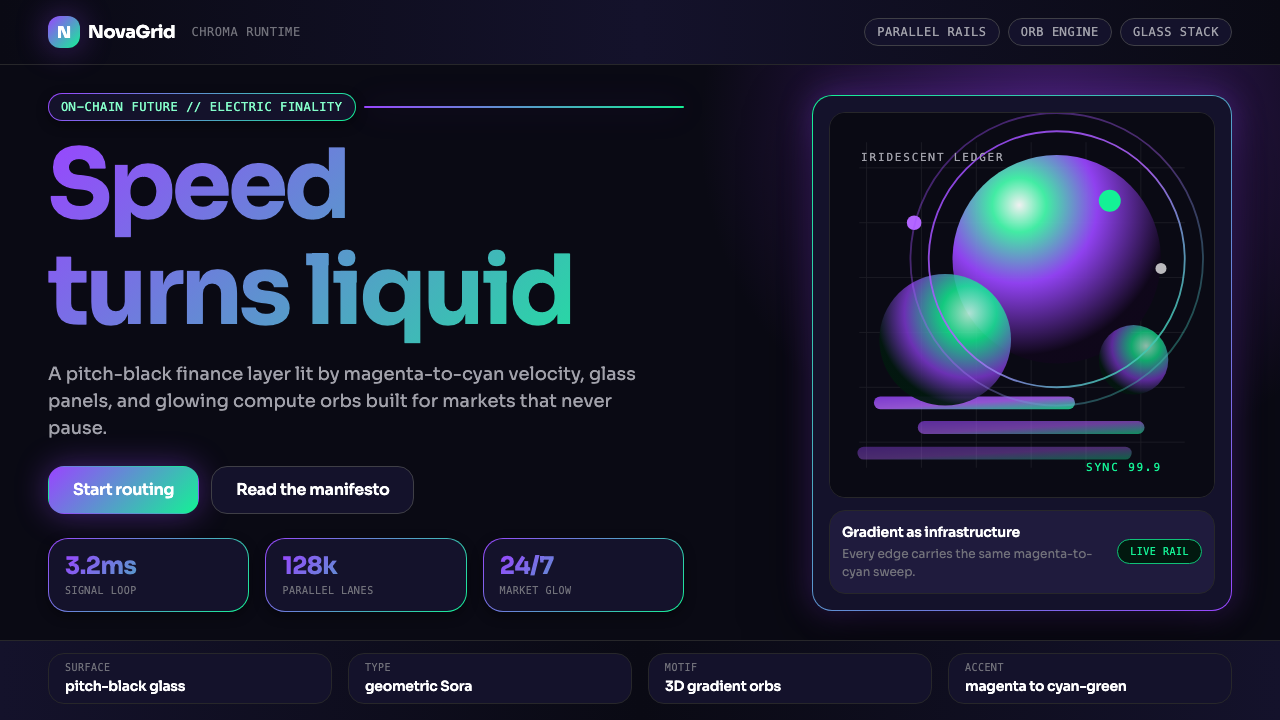
Solana's visual identity is the loudest chromatic statement in crypto — a pitch-black canvas electrified by a gradient that sweeps from deep magenta through vivid cyan-green, where speed itself seems to glow.
Solana (Magenta Gradient) in brief
Solana Magenta Gradient is a dark-ground visual identity system built around a single signature gradient — a bold sweep from deep magenta at one pole to vivid cyan-green at the other, deployed across a near-black canvas. Unlike most blockchain visual identities that default to conservative blues and flat logos, Solana committed from early on to chromatic intensity as a brand argument: if speed and throughput are the product, the design should feel fast and luminous.
The system's defining elements are its black or near-black foundations, its gradient fills applied to both type and three-dimensional objects, and its use of iridescent halo effects that suggest surfaces alive with energy. Three-dimensional orbs — spherical objects rendered with surface lighting that transitions through the same magenta-to-cyan spectrum — appear throughout conference materials, product launches, and marketing campaigns as the movement's most recognizable signature. These orbs are not decorative flourishes; they function as focal anchors that concentrate the chromatic language into a single, instantly readable form.
At its core, the Solana visual system is about controlled contrast: extreme darkness set against extreme luminosity. The black ground absorbs everything around the gradient, making the color appear to radiate rather than merely occupy space. This optical behavior — gradient-as-light-source rather than gradient-as-fill — is what distinguishes the style from superficially similar chromatic aesthetics in adjacent industries.

Where does Solana (Magenta Gradient) come from?
Solana the blockchain launched in March 2020, but its visual identity did not consolidate into the system recognized today until the Breakpoint conference series took shape in 2021 and 2022. The earliest Solana brand materials were relatively restrained — a dark background, a logo, the characteristic gradient applied to wordmarks. It was the demands of large-format keynote staging and conference environments that pushed the design language toward the full chromatic intensity it now carries. When you need a visual system to read from a hundred meters across a convention hall, you need contrast and luminosity at a scale that polite brand guidelines rarely permit.
Solana Labs' in-house design team collaborated with Buck Studio — a New York and Los Angeles motion design and visual effects studio known for work with major technology and entertainment clients — to develop the three-dimensional orb language that became the ecosystem's most iconic visual asset. Buck's contribution was the translation of the two-dimensional gradient into rendered three-dimensional form: the orb. This object — simultaneously a planet, a lens, a data node, and a generative art piece — gave the visual system a sculptural center of gravity that flat gradient applications lacked. The partnership produced motion sequences, key art, and brand films that circulated widely within the cryptocurrency community.
The aesthetic draws from several converging influences. The chromatic gradient language had precedents in the vaporwave and synthwave aesthetics that circulated through internet culture in the mid-2010s — both movements used magenta-to-cyan spectrums against dark grounds as shorthand for a kind of retrofuturist technological sublime. Solana absorbed this visual vocabulary but stripped it of its nostalgic irony, deploying the same chromatic range with earnest confidence rather than pastiche. The result was a design language that felt simultaneously familiar to the audience that had grown up with vaporwave imagery and genuinely forward-looking in its application.
The Solana Mobile initiative, which produced the Saga Android device in 2023, extended the visual language into product and packaging design, bringing the dark-ground gradient aesthetic into physical retail contexts for the first time. Conference identity, digital product UI, hardware packaging, and third-party ecosystem applications all converged on the same visual principles through 2022 and 2023, effectively establishing the system as the de facto visual standard for an entire blockchain ecosystem — not just the company that built it. By 2024, the Solana gradient had become shorthand within the cryptocurrency industry for high-performance claims and aspirational consumer positioning.
What defines the Solana (Magenta Gradient) look?
Black Ground
Every surface in the system begins from near-total darkness. The background is not simply dark gray or navy — it approaches true black, creating the maximum possible contrast differential with the luminous gradient accents placed against it. This depth of field is non-negotiable: reduce the darkness and the gradient loses its glow quality, becoming a flat color transition rather than a light source. The black ground also ensures that gradient elements — whether text, orbs, or interface components — feel emergent rather than applied, as if lit from within rather than colored from without.
Magenta-to-Cyan Gradient
The signature gradient moves from a warm, saturated deep magenta — reminiscent of concentrated neon light — through to a vivid cyan-green that carries connotations of both technological luminescence and biological bioluminescence. The transition is not a simple two-stop ramp; in executed materials it often passes through intermediate purples and teals, giving the spectrum a sense of depth and organic variation. The direction of the gradient matters: horizontal sweeps read as speed and momentum, while radial or spherical gradients suggest depth and dimensionality. Both applications are valid within the system; context determines which is appropriate.
3D Rendered Orbs
The spherical orb is the system's most iconic single element. Rendered with the magenta-to-cyan gradient wrapping its surface and iridescent specular highlights suggesting a glassy or liquid outer skin, the orb appears in keynote presentations, product marketing, and ecosystem art in forms ranging from heroic single objects filling entire screens to constellations of smaller orbs in motion. Its power derives from its combination of mass and luminosity — it appears both heavy and weightless, material and ethereal. The orb translates the otherwise abstract promise of blockchain speed into something tangible enough to hold visual attention across media formats.
Gradient Typography
Headline type in the system is frequently treated with gradient fills rather than solid colors. This is a meaningful departure from conventional typographic practice, which typically treats color as a uniform property of letterforms. In the Solana system, type becomes a second surface on which the gradient signal can land, connecting the textual content to the larger visual logic of the layout. The technique works because the typefaces selected tend toward the geometric and the bold — letter bodies wide enough to hold the gradient transition visibly across a single character. Fine or narrow letterforms would fragment the gradient and lose the effect.
Iridescent Surface Lighting
Beyond simple gradients, the system employs iridescent lighting effects — surface treatments that suggest the material changes color as the viewing angle shifts, as seen in oil films, beetle shells, or holographic foils. This quality appears on orbs, on abstract background environments, and occasionally on product photography and interface mockups. The iridescent effect adds temporal dimension to a static image: it implies that the object is alive and responsive, that its appearance would shift in motion. This is a deliberate correspondence with Solana's core performance narrative — the technology is fast and dynamic, and the visual language should feel the same way.
Minimal Type and Generous Space
Despite the chromatic intensity, the Solana system is restrained in its use of text and compositional density. Layouts tend toward large areas of unbroken black, with gradient elements and type occupying a relatively small portion of the total surface. This restraint serves two purposes: it preserves the visual weight and drama of the gradient by ensuring it is never crowded, and it allows individual chromatic elements to breathe and register cleanly. Body text, when it appears, is set in clean, legible type at high contrast against the dark ground — unadorned and functional, serving as the quiet infrastructure that lets the gradient elements command attention.
Motion and Glow Halo
Even in static applications, the system implies motion through compositional direction and the use of soft radiating glow halos around gradient elements. These halos — diffuse light fields that bleed outward from the primary gradient objects into the surrounding black space — reinforce the sense that the design is luminous rather than merely colored. In animated contexts, these properties animate naturally: gradients cycle, orbs rotate, halos pulse. The glow halo is the visual system's equivalent of a photographic long-exposure light trail: it freezes motion as an afterimage, suggesting speed that has just passed or is about to arrive.

Who shaped Solana (Magenta Gradient)?
Yakovenko co-founded Solana and serves as its CEO. A former Qualcomm engineer, he designed the Proof of History consensus mechanism that underpins Solana's performance claims. While his primary contribution is technical, the brand identity built around Solana has consistently amplified the engineering achievement through visual language — the speed and luminosity of the gradient aesthetic is, in a meaningful sense, a translation of Yakovenko's architectural priorities into a form that non-technical audiences can feel rather than measure. His public profile and conference presentations have shaped the contexts in which the visual system most dramatically performs.
Gokal co-founded Solana alongside Yakovenko and has served as the public face of the ecosystem's consumer and cultural strategy. His approach to community building — emphasizing aesthetic quality, cultural credibility, and creative partnerships alongside technical performance — created the conditions under which the Solana design language could evolve into something more ambitious than a conventional corporate brand identity. Gokal's articulation of Solana as a cultural as well as technical movement gave the design team permission to develop a visual system that matched that ambition in chromatic intensity.
Buck is the motion design and creative production studio most closely associated with the development of Solana's three-dimensional visual language. Working with the Solana Labs brand team, Buck translated the two-dimensional gradient identity into the rendered orb and environmental lighting language that became the ecosystem's most recognizable imagery. Buck's technical expertise in three-dimensional rendering and motion graphics, combined with their background in commercial advertising aesthetics, produced the polished, cinematic quality that distinguished Solana's brand materials from the more rough-edged visual communication typical of early cryptocurrency projects. Their influence on the overall system's visual ambition is substantial.
The team behind the Saga smartphone — Solana's 2023 hardware product — extended the design language into physical product and retail packaging contexts that most blockchain brands never encounter. Designing for a physical object at consumer retail required translating the screen-native dark-ground gradient into materials, finishes, and packaging structures. The decisions made at this translation point — how to represent the gradient on a physical surface, how to carry the black-ground aesthetic into a box and a device chassis — shaped how the brand handles material applications and informed subsequent ecosystem hardware partnerships and merchandise design.
Solana's annual Breakpoint developer conference, held in locations including Lisbon, Amsterdam, and Singapore, served as the primary stage on which the visual identity was pushed to its most ambitious scale. The demands of conference design — stage lighting, projection, wayfinding, merchandise, and digital backdrops at architectural scale — required the visual system to prove itself across formats that digital brand guidelines rarely test. The creative direction teams responsible for Breakpoint effectively stress-tested and expanded the visual language each year, establishing the design norms that downstream ecosystem participants adopted when building their own Solana-adjacent products and communications.
How do you use Solana (Magenta Gradient) today?
The Solana Magenta Gradient system translates into practical design work most successfully when the dark ground is treated as a non-negotiable foundation rather than a stylistic option. The entire visual logic depends on the luminosity differential between near-black space and chromatic gradient elements. Any significant lightening of the background — moving toward dark gray, dark navy, or dark purple — diminishes this differential and weakens the effect. Begin every layout by committing to a deep, near-black base, and build upward from there.
For presentation slides, the style is particularly effective for conference keynotes, product launch decks, and investor materials where visual impact and a sense of technological ambition are strategic goals. Cover slides should feature a large gradient object — an orb, a bold gradient headline, or an abstract environmental form — against expansive black space. The gradient element should occupy a meaningful portion of the composition, not be tucked into a corner. Content slides work best when they maintain the dark ground but reduce the chromatic intensity: white or very light type for body content, with gradient accents reserved for section headers, key statistics, or call-outs. Data visualization on this ground works well in chart formats where the gradient can be used to encode meaning — using the spectrum to represent a performance range or a progression through time adds informational value rather than mere decoration.
For web interfaces and dashboards, the system suits products where a high-performance, premium, or forward-looking positioning is desired. The approach requires discipline: use the dark background consistently across all surfaces, choose a single primary chromatic element per section rather than scattering gradient accents indiscriminately, and ensure that functional interface elements — inputs, tables, navigation — remain highly legible by keeping them in high-contrast light type or neutral tones against the dark ground. Gradient fills should be reserved for interactive states, hero imagery, and tier or status indicators where the visual weight of the effect carries communicative meaning. Pricing pages and feature comparison tables in this style carry a natural premium signal; status dashboards feel live and dynamic.
For editorial, marketing, and social content, the style supports bold single-image formats: a full-bleed dark ground with one gradient element — a headline, a product photograph lit with matching chromatic halo effects, or a three-dimensional rendered object — produces materials with immediate visual authority. Marketing sequences benefit from chromatic consistency: the gradient direction, color temperature, and luminosity level should remain stable across a campaign so that individual pieces read as a family. When placing this style in editorial contexts alongside body text, use a neutral, highly legible typeface for reading text and reserve gradient treatment for display headings only — mixing gradient typography into running text creates legibility problems and diminishes the special-occasion quality that gives gradient type its visual weight.
A common and damaging mistake when applying this style is over-saturating the gradient or multiplying gradient elements until the design reads as chaotic rather than luminous. The system's power derives from contrast between darkness and concentrated chromatic energy — when gradients appear everywhere simultaneously, that contrast collapses and the layout loses its hierarchy. Similarly, introducing competing chromatic ranges — adding greens that don't connect to the cyan pole, or blues that don't anchor to the magenta pole — breaks the visual coherence that makes the system recognizable. The gradient is a spectrum, not a permission to use all colors. A second common error is applying the aesthetic to light-background layouts in the belief that the gradient alone carries the style; without the black ground, the gradient becomes merely decorative, losing the luminosity that defines the system's character.

Solana (Magenta Gradient) — FAQ
Can the Solana gradient style work on a light background?
Not successfully, in the sense that the defining quality of the style — the luminous glow of the gradient against deep black — does not survive the translation to a light ground. On white or light gray, the magenta-to-cyan gradient becomes a pleasant but unremarkable chromatic decoration. The system depends entirely on the contrast between darkness and concentrated color intensity. A light-background project that wants to reference Solana should instead consider using the gradient sparingly as a single accent against a near-white ground — a gradient headline, a gradient rule line, a gradient icon — while treating the rest of the layout in neutral tones. This is a related aesthetic, not the same one, and should be understood as such.
How is this style different from general vaporwave or synthwave aesthetics?
Vaporwave and synthwave aesthetics share the dark ground and the magenta-to-cyan chromatic range, but their use of these elements is nostalgic and ironic — they quote the visual language of 1980s consumer electronics, Japanese retail, and early desktop computing as a form of cultural commentary. The Solana system removes the nostalgia and irony entirely. There are no retro grid floors, no glitchy text artifacts, no pastel bleed into the background, no cultural reference to past decades. The gradient is deployed with earnest confidence and pointed toward a future-oriented narrative: performance, speed, and on-chain technology. The orb forms are not retrofuturist; they are contemporary three-dimensional rendering. The difference is one of intent — pastiche versus sincerity — and it registers clearly in how finished work reads.
Is this style appropriate for financial products outside of crypto?
The style carries strong crypto-native connotations as of its maturity period (2021–2024), and this association is a double-edged consideration for non-crypto financial applications. For fintech products targeting audiences that view crypto positively — payments technology, digital banking aimed at younger demographics, investment platforms with a technology-forward positioning — the association is an asset: it reads as modern, confident, and technically ambitious. For products targeting more traditional financial audiences, or in regulatory contexts where association with cryptocurrency carries reputational risk, the style would require significant adaptation before it could be safely deployed. The gradient itself can travel; the specific orb forms and some of the chromatic intensity are more closely tied to the crypto-native context.
How should gradient type be used without becoming illegible?
Gradient type legibility depends on three factors: letterform weight, type size, and the luminosity of the gradient relative to the background. Heavy or bold letterforms provide enough interior surface area for the gradient to resolve into a readable color across the character; light or thin letterforms do not. Type size matters similarly — gradient fills on very small type break down into visual noise. The third factor is luminosity: the gradient must be bright enough against the dark ground to maintain contrast for legibility, which means the midtones of the gradient (where it transitions between magenta and cyan) must not dip below the contrast threshold for readable text. A practical rule is to reserve gradient fills for display type and headlines only, and to never apply gradient treatment to body text, captions, or any type intended for sustained reading.
What distinguishes successful three-dimensional orb work in this style from generic CGI?
The difference lies in surface quality, lighting specificity, and compositional restraint. Generic three-dimensional spheres rendered with gradient textures read as stock assets because the lighting is often generic — diffuse, lacking strong directional conviction — and the gradient mapping is mechanical, moving from one color to another without the sense of internal depth that iridescent surface lighting produces. Successful orbs in the Solana tradition have strong specular highlights that suggest a near-glassy or liquid outer surface, subsurface scattering effects that give the object apparent volume rather than shell-like thinness, and lighting that is directionally specific enough to feel like a considered artistic decision rather than a default render setting. Compositionally, the orb should have enough surrounding dark space to breathe — cropped too tightly or crowded by other elements, the form loses its gravitational quality.
Related design styles
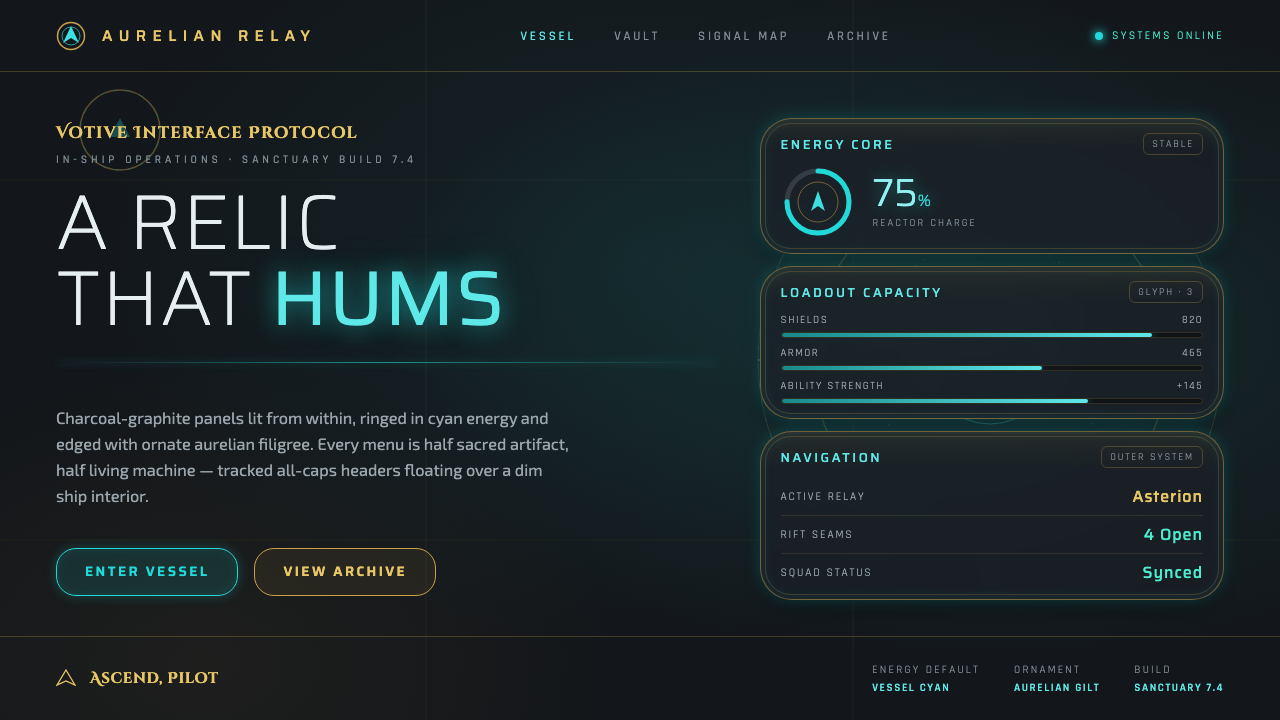 Warframe Orbiter UIHalf sacred relic, half living machine. Cyan energy rims, gold Orokin filigre…
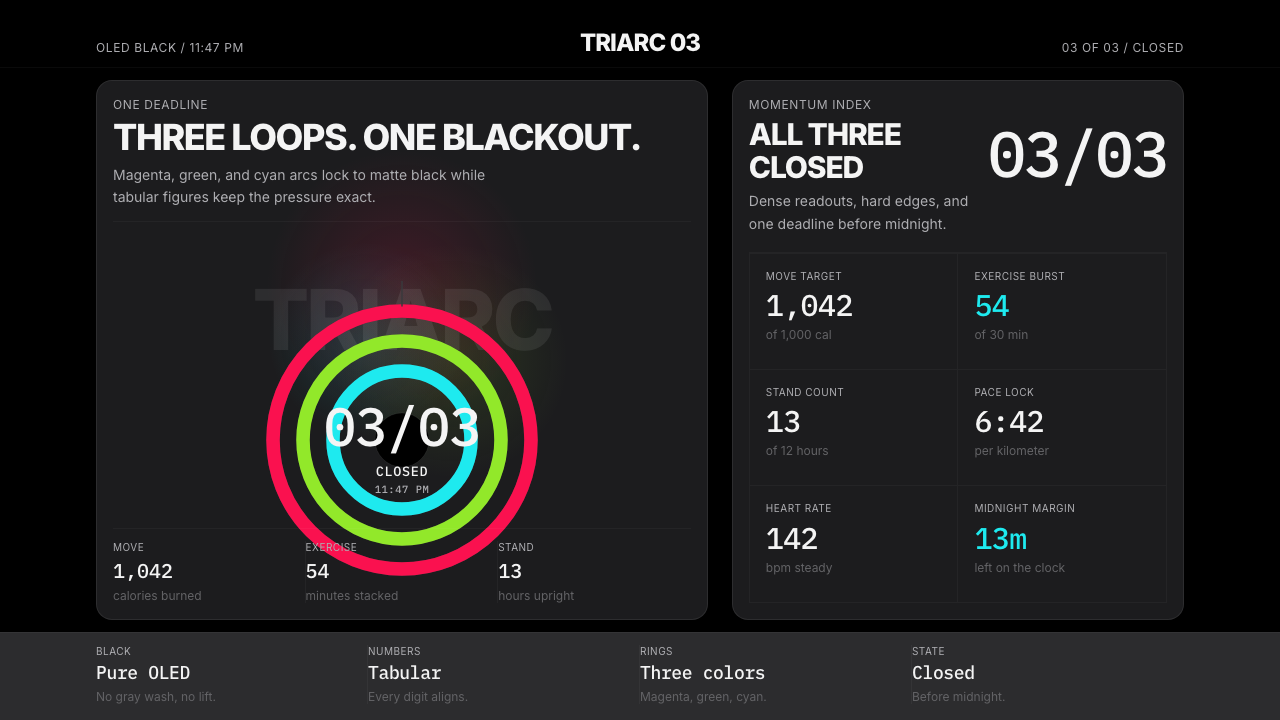 Apple Fitness Rings Closed (2024)Midnight feels exact. Magenta, green, and cyan rings lock onto OLED black.
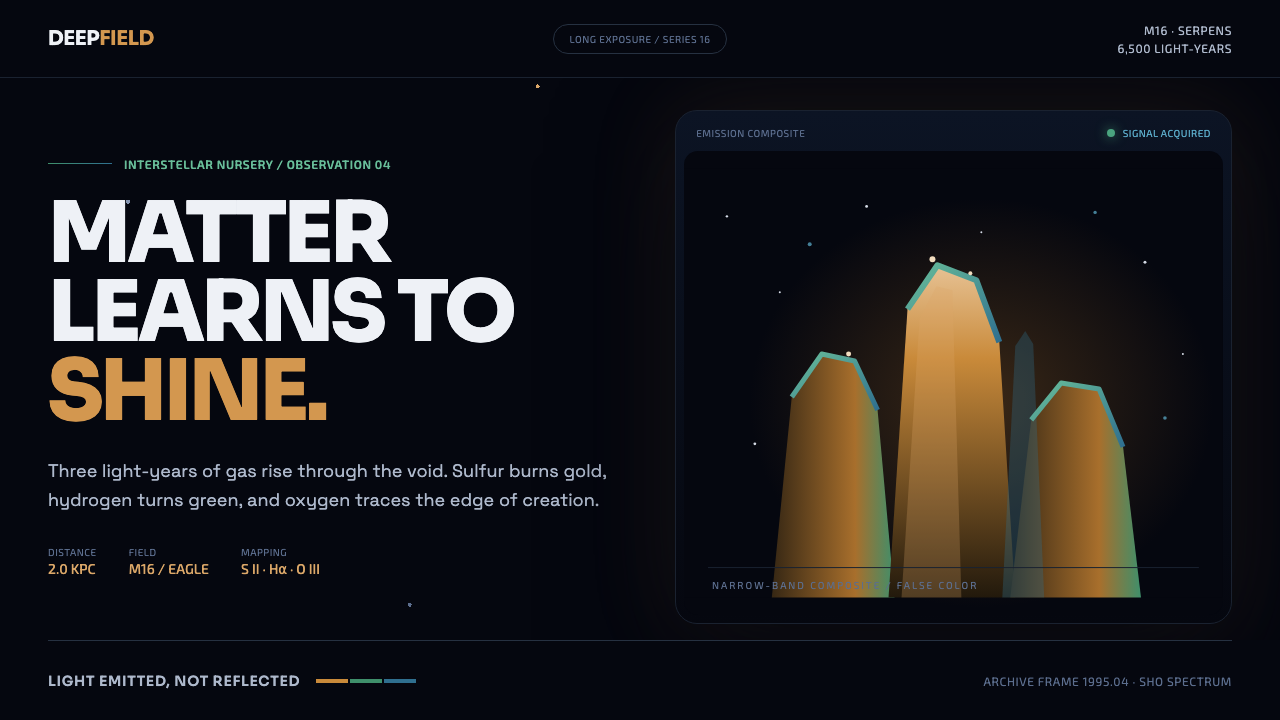 Hubble Pillars of CreationCreation glows from within. Amber towers rise through a cyan-green rim into t…
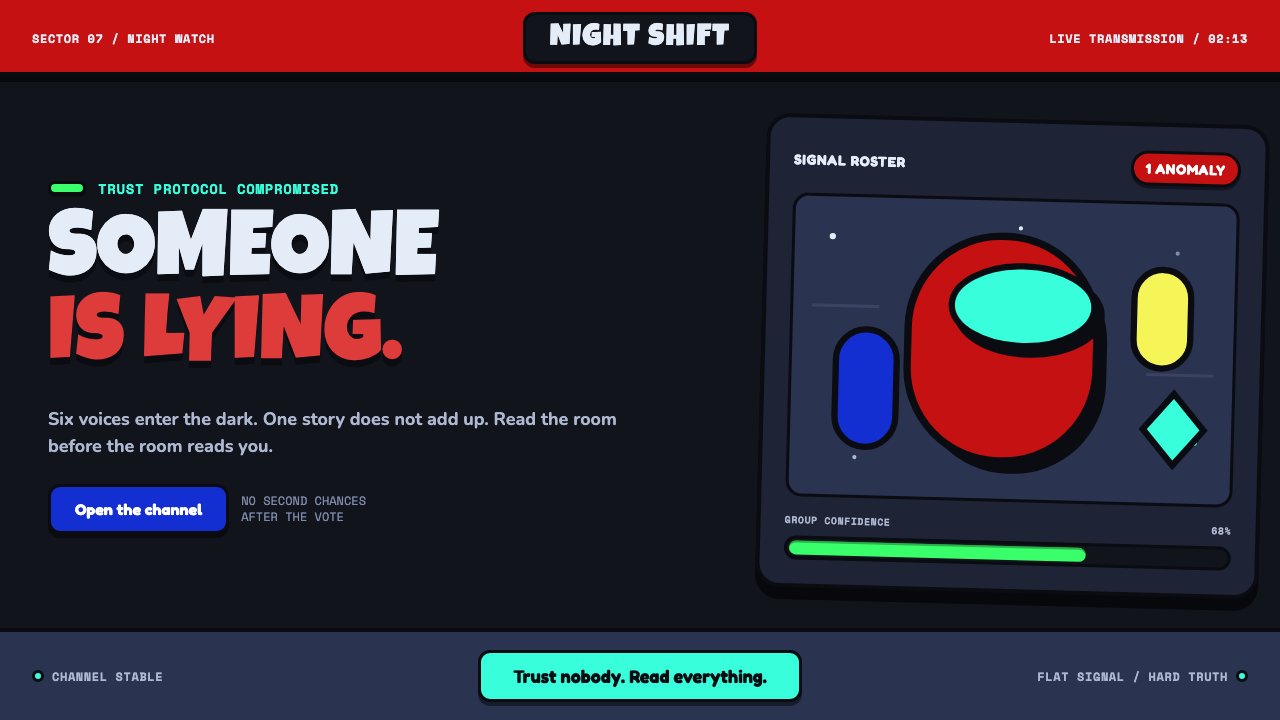 Among Us (crewmate space)Trust is ready to break. Loud capsule colors cut through a navy void with har…
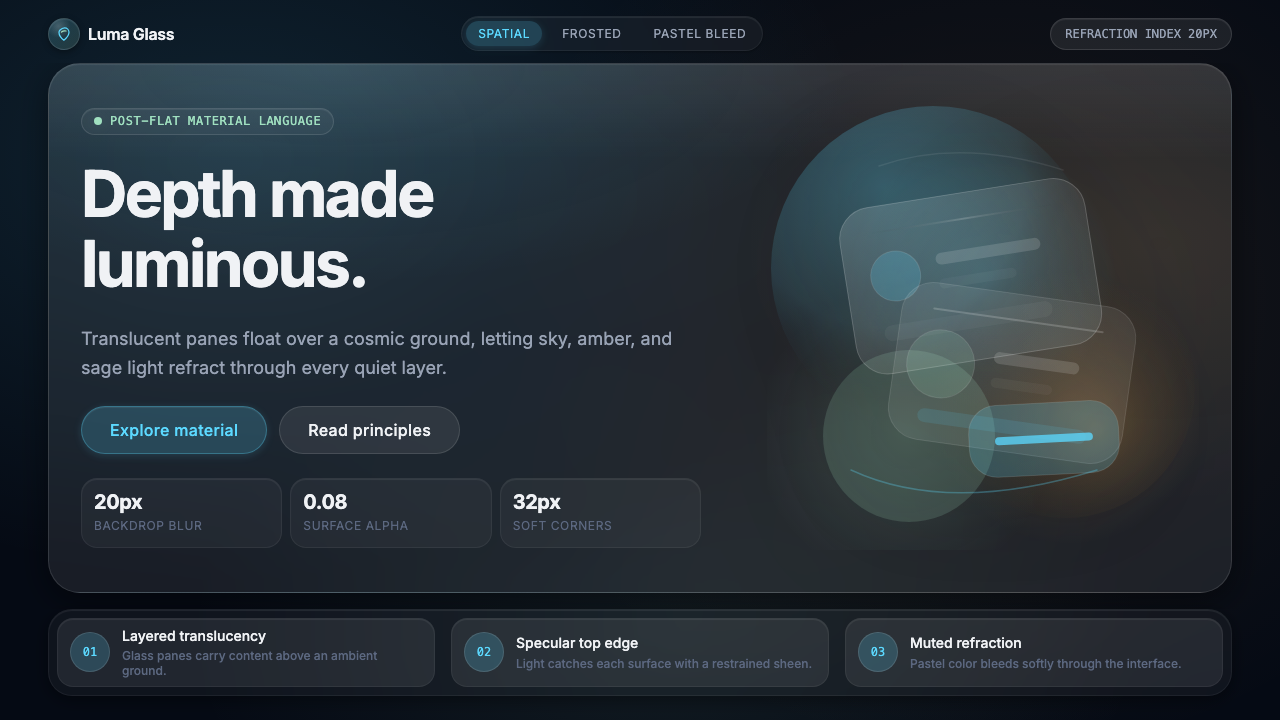 Apple Liquid Glass 2024Skeuomorphism, reborn for spatial. Frosted panels, specular highlights, depth…
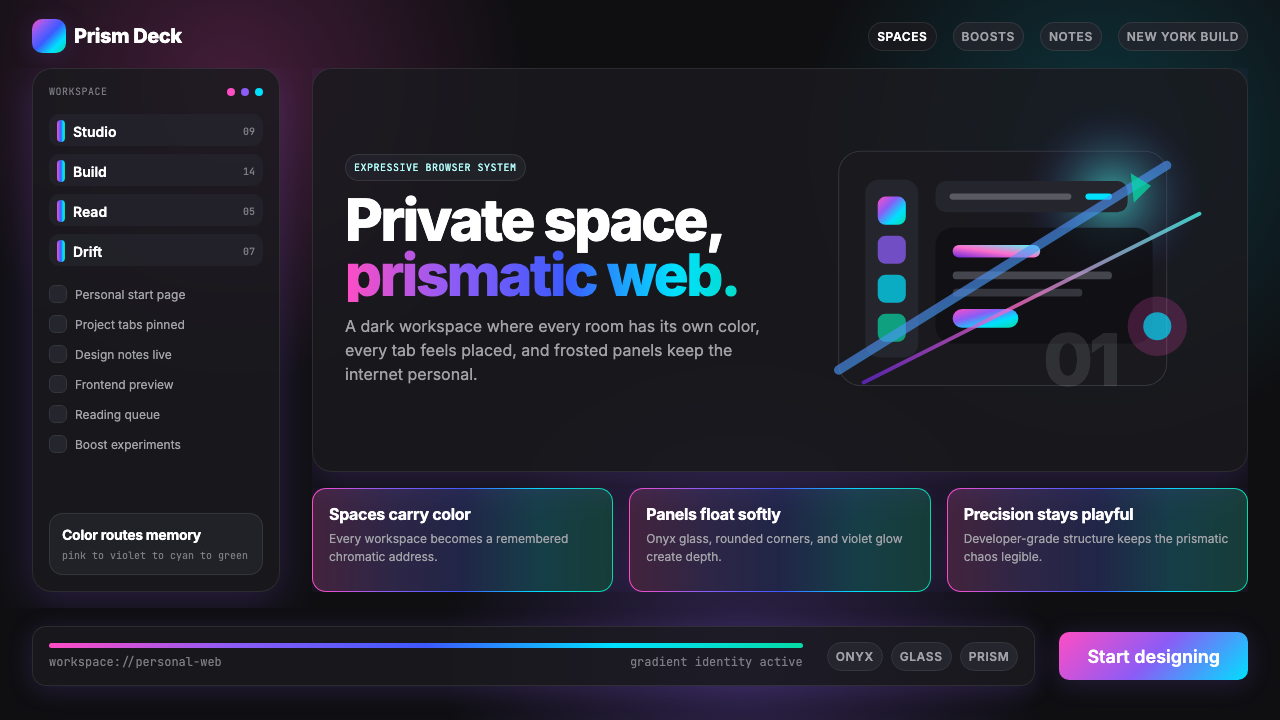 Arc Browser Prismatic (2023)Color is architecture. Pink-violet-cyan ribbons glow over onyx glass and roun…