What is Cash App 2024?
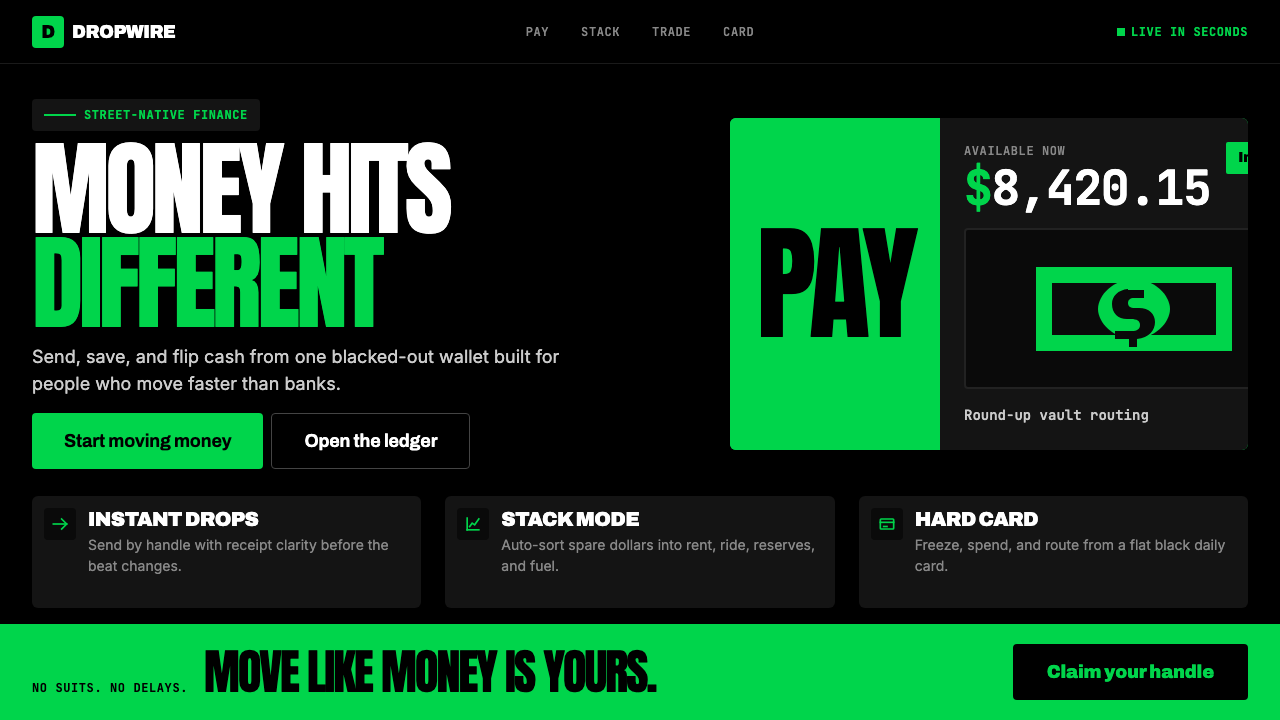
Cash App tore up fintech's visual rulebook — pure black, dollar-bill green, and type scaled to billboard proportions, making money feel like culture.
Cash App 2024 in brief
Cash App is the consumer fintech product from Block, Inc. that proved a payments app could carry genuine cultural identity. Where established banking brands reach for trust-blue and conservative serif type, Cash App arrived with pure black backgrounds, a green that reads immediately as folded currency, and display typography scaled to the proportions of an outdoor billboard. The visual language is unmistakable at a glance and intentionally so.
The design system that emerged across the 2022-to-2024 period is not merely a dark-mode alternative to conventional finance UI. It is a coherent aesthetic position: rectilinear and shadow-free, with chromatic restraint that makes every deliberate accent feel like a statement. Text carries the structural load that imagery might carry in another system, and the generous scale of headlines transforms routine account balances and transfer confirmations into graphic objects with presence.
Cash App demonstrates that fintech can operate on the same cultural frequency as a music label or a streetwear brand without sacrificing the clarity and trust that financial products require. The result is a visual identity that feels both earned and specific — rooted in the San Francisco and Oakland context of Block, Inc., conversant with hip-hop and Bitcoin culture, and rigorously functional underneath the attitude.

Where does Cash App 2024 come from?
Cash App launched in 2013 as Square Cash, a simple peer-to-peer payment utility from the company that would later rename itself Block, Inc. In those early years the product wore the polished, rounded, blue-accented visual conventions common to consumer apps of the period — friendly, approachable, and largely indistinct from competing fintech offerings. The brand did not yet have a point of view; it had a function.
The transformation accelerated after 2018, when Cash App grew rapidly by reaching demographics — younger, unbanked or underbanked, urban — that conventional banking had largely ignored. The product began to compete less with PayPal and more with the cultural spaces its users actually inhabited: music streaming, streetwear drops, sneaker resale, and the informal economies of social media. Block leadership, including co-founder Jack Dorsey, saw the brand's cultural position as a genuine strategic asset rather than a marketing afterthought.
By the early 2020s the visual system had sharpened into something genuinely distinct. Black became the dominant ground — not as a dark-mode concession but as a primary design commitment. The green accent was codified as the brand's chromatic signature, its specific quality evoking the green of American paper currency with a directness that felt almost confrontational in a sector addicted to soft palettes. Typography moved toward display scales normally associated with transit advertising and concert posters rather than banking interfaces.
The cultural collaborations that accompanied the visual evolution were not incidental. The Cash by Cash App fashion line, Bitcoin marketing campaigns featuring rap artists, and the brand's presence at music festivals positioned Cash App as a participant in Black American culture and hip-hop economy — not a vendor to it. This cultural seriousness is what separates the Cash App design language from mere cosmetic edginess: the aesthetic is a consequence of genuine community alignment, not a superficial demographic play. Hannah Beachler, the Academy Award-winning production designer known for her work on Black Panther and Beyoncé's Lemonade, contributed to creative work associated with the brand, signaling the level of cultural credibility the team sought.
What defines the Cash App 2024 look?
Black-First Ground
The foundational choice in Cash App's visual system is total black as the default background — not charcoal, not near-black, but an absolute absence of light. This is not a dark mode applied to a light-first system; it is a primary design decision that reverses the conventions of both finance UI and mainstream consumer apps. Against this ground, every typographic element and color accent achieves maximum contrast without effort, and the absence of a complex background forces all visual energy into content itself.
Dollar-Bill Green as Signature
The brand green is the system's only sustained chromatic statement, chosen for its immediate associative pull with American paper currency. Applied to interactive elements, highlights, iconography, and key data points, it functions simultaneously as a brand identifier and a semantic cue — green means go, green means money, green means actionable. The color appears with restraint: large areas of pure green are reserved for hero moments rather than distributed across the interface as decoration.
Billboard-Scale Typography
Headlines and key figures — account balances, transfer amounts, feature names — are set at scales that would be appropriate for outdoor signage. This typographic boldness serves two purposes: it creates an unmistakable visual signature, and it makes the most functionally important information impossible to miss. The type is characteristically heavy, condensed or wide in proportion, and set with tight leading that makes headlines feel like solid blocks of graphic mass rather than lines of readable text.
Rectilinear, Shadow-Free Structure
Cards, containers, and UI components are defined by hard right angles with no rounding and no softening shadows. In an industry that defaults to rounded rectangles and ambient drop shadows as signals of approachability, Cash App's sharp-cornered geometry reads as confident and direct. The absence of shadows means depth is communicated through layering and color contrast rather than simulated lighting — the interface remains visually flat even when components overlap or nest within each other.
Cultural Imagery over Abstract Illustration
When imagery enters the system, it tends to reference the cultural worlds in which Cash App users actually participate — music, fashion, streetwear, sneakers, and the visual language of hip-hop promotion — rather than the stock-imagery vocabulary of financial services. Photography, when used, is treated with graphic directness: high contrast, often paired with typographic overlays, and composed to feel like promotional material rather than editorial or lifestyle documentation.
Restraint Outside the Accent
Beyond black, white, and brand green, Cash App's palette is nearly empty. Secondary colors appear only in specific functional contexts — status indicators, error states, category tags — and always subordinate to the primary chromatic logic. This restraint is what gives the green its authority: a single chromatic statement carries more weight when the surrounding field is achromatic. The discipline also ensures legibility at small screen sizes and in ambient-light conditions where many fintech interfaces falter.
Tone of Voice Embedded in Design
The visual system and the verbal system operate in full alignment. Microcopy is direct, informal, and occasionally irreverent — closer to a text message than a bank notice. Error messages address users as peers; confirmation screens celebrate rather than merely confirm. This tonal unity between visual boldness and verbal directness is what makes Cash App feel like a coherent personality rather than a designed product. The type choices, the copy, and the graphic language all express the same point of view.

Who shaped Cash App 2024?
As co-founder and long-serving CEO of Square (later Block, Inc.), Dorsey set the strategic direction that allowed Cash App to position itself as a cultural participant rather than merely a financial utility. His personal interest in Bitcoin and hip-hop culture shaped the product roadmap and the brand strategy that made Cash App's visual and cultural ambitions commercially viable. Under his leadership, the company made the deliberate choice to pursue underbanked communities as a primary market rather than an afterthought.
The in-house brand and design team at Cash App is the primary author of the visual system described here. Working across product design, marketing, and cultural collaborations, the team is responsible for maintaining the internal consistency that makes the aesthetic legible as a unified language rather than a collection of stylistic choices. Their work on the Cash by Cash App fashion line and on event and campaign design extended the visual vocabulary from digital UI into physical and experiential contexts.
The Academy Award-winning production designer, best known for her visual world-building on Black Panther and her collaboration with Beyoncé on Lemonade, contributed creative work to Cash App brand campaigns. Her involvement signals the level of cultural seriousness with which Cash App approached its brand identity — choosing collaborators whose creative authority derives from Black cultural production at the highest level rather than from the conventional design industry.
The parent company's evolution from Square — a point-of-sale hardware startup — into Block, Inc., a financial ecosystem spanning payments, Bitcoin infrastructure, and music streaming, directly shaped Cash App's brand ambitions. The renaming itself was a statement of identity: Block positions itself as infrastructure for an alternative economic system, and Cash App's visual language carries that ambition. The corporate context explains why the brand could afford to be as culturally specific as it is — the parent company's broader mission aligned with rather than constrained it.
How do you use Cash App 2024 today?
Cash App's design language translates best into contexts where boldness and cultural legibility are strategic assets rather than liabilities — products and brands that want to communicate confidence, directness, and an alignment with contemporary street and digital culture rather than institutional authority. Applying the style requires committing to its core logic: black grounds, a single chromatic accent used with restraint, and typography scaled to communicate from across a room.
For presentation slides, the style works most powerfully in cover and section-break pages. A full-bleed black cover with the presentation title set at maximum display scale — heavy, possibly condensed — and the brand green applied to a single word or phrase creates an immediate statement of visual authority. Content slides should maintain the black ground and rely on typographic hierarchy for structure: the primary claim at a large scale, supporting information at a much smaller scale beneath it, with the green accent reserved for the one number or word that demands attention. Data slides benefit from the same logic — a single dominant figure rendered at display scale with supporting data subordinated visually, rather than complex comparative charts where no element leads.
For web UI, the aesthetic is well-suited to product landing pages, feature announcement pages, and pricing pages for products targeting younger, digitally native audiences. The approach: full-width sections on a black ground, headlines set at proportions that fill the horizontal measure, and interactive calls to action in the brand green. Navigation should be typographically minimal — wordmarks and labels without decorative icon systems. For dashboards, the system translates into a high-contrast dark interface where key metrics are given dominant typographic scale and secondary data is visually deprioritized, creating at-a-glance readability for the figures that matter most.
For editorial and marketing contexts, the style supports campaign materials, event graphics, social cards, and promotional posters where maximum visibility and cultural recognition are required. A marketing page built in this language alternates between full-bleed black sections — text-heavy and typographically bold — and moments of chromatic release where the brand green grounds a key message. Social card templates work especially well when they commit to a single large typographic statement per card rather than attempting to pack multiple messages into one frame. The style's poster-like quality also makes it effective for physical applications: signage, merchandise, packaging, and event collateral all carry the aesthetic coherently.
A common mistake when applying Cash App's visual language is importing the surface without understanding the underlying discipline. Using black grounds with multiple bright accent colors simultaneously — adding red for errors, purple for categories, orange for promotions alongside the green — dissolves the system's logic immediately. The green reads as a brand signature only because everything else is achromatic; introduce competing colors and it becomes decoration. Similarly, softening the typography — reducing scale, adding letter-spacing for elegance, choosing a geometric sans that reads as refined rather than bold — eliminates the visual weight that makes the system distinctive. The style demands commitment to its extremes; a moderated version is typically indistinguishable from generic dark-mode design.

Cash App 2024 — FAQ
Is Cash App's visual style the same as general dark-mode design?
No. Most dark-mode design systems are inversions of a light-first palette — they use dark grays, muted backgrounds, and preserve the typographic scales and rounded forms of their light counterparts. Cash App's visual language treats black as a primary design commitment, not a mode toggle. The typography scale, the absence of shadows, the sharpness of component geometry, and the specific chromatic logic of using a single culturally loaded accent color are all decisions that exist independently of light-versus-dark. A Cash App-influenced design applied to a light background would still be recognizable by its typographic boldness and chromatic restraint; a standard dark-mode design applied to a black background would not produce the same result.
Can this design language work for brands outside fintech?
Yes, with caveats. The visual system's core logic — black ground, single bold accent, display-scale typography, shadow-free geometry — transfers well to music, fashion, entertainment, cryptocurrency, gaming, and any brand context where confidence and cultural alignment with youth and street culture are valued. It struggles in contexts requiring warmth, softness, or organic texture: food, wellness, children's products, luxury goods positioned on heritage rather than attitude, and institutional contexts where the visual language of authority and stability is expected. The brand must have something to say culturally for the style to feel earned; applied to a product with no cultural stake, it reads as costume.
How does Cash App's typography approach differ from, say, Bauhaus or Swiss Style?
All three systems use sans-serif type at considered scales, but their underlying logic and cultural references diverge. Bauhaus typography derives from a rationalist critique of ornament — serifs were historically vestigial decoration to be eliminated. Swiss International Style derives from a commitment to mathematical grids and objective information delivery. Cash App's typographic approach derives from the vernacular of outdoor advertising, concert posters, and hip-hop promotional graphics — it is not rationalist but expressive, not about eliminating excess but about maximizing visual impact. Where Bauhaus and Swiss Style use scale to organize information hierarchically, Cash App uses scale to create presence and energy. The resulting feel is closer to street culture ephemera than to designed information architecture.
What are the most important things to get right when adapting this style?
Three things matter above all. First, commit to black — any dilution of the ground toward dark gray immediately softens the visual impact and removes the style's graphic authority. Second, hold the accent color to one — the system's chromatic power depends entirely on contrast between a singular color and an achromatic field; adding a second accent halves the first one's impact. Third, scale the typography beyond your instinct — the natural impulse when sizing display type is to stop before it feels imposing, but this style requires you to cross that threshold. If the headline does not feel slightly too large when you first set it, it is probably not large enough. Everything else — component sharpness, copy tone, imagery selection — matters, but these three decisions determine whether the result reads as the style or merely as dark design with green in it.
Does the style require licensed or proprietary typefaces to work?
No. The visual principles underlying Cash App's typography — extreme weight, display scale, tight leading, and a sans-serif construction that reads as bold rather than refined — are achievable with a wide range of commercially available typefaces. What matters is the weight and behavioral category: the typeface should read as assertive at headline scale and maintain legibility at small body sizes without requiring excessive spacing to do so. Typefaces at the heavier end of extended sans-serif families — the kind designed for signage and advertising rather than long-form reading — are typically the right starting point. The specific typeface is a detail; the weight, scale, and set-width decisions are where the character of the system lives.
Related design styles
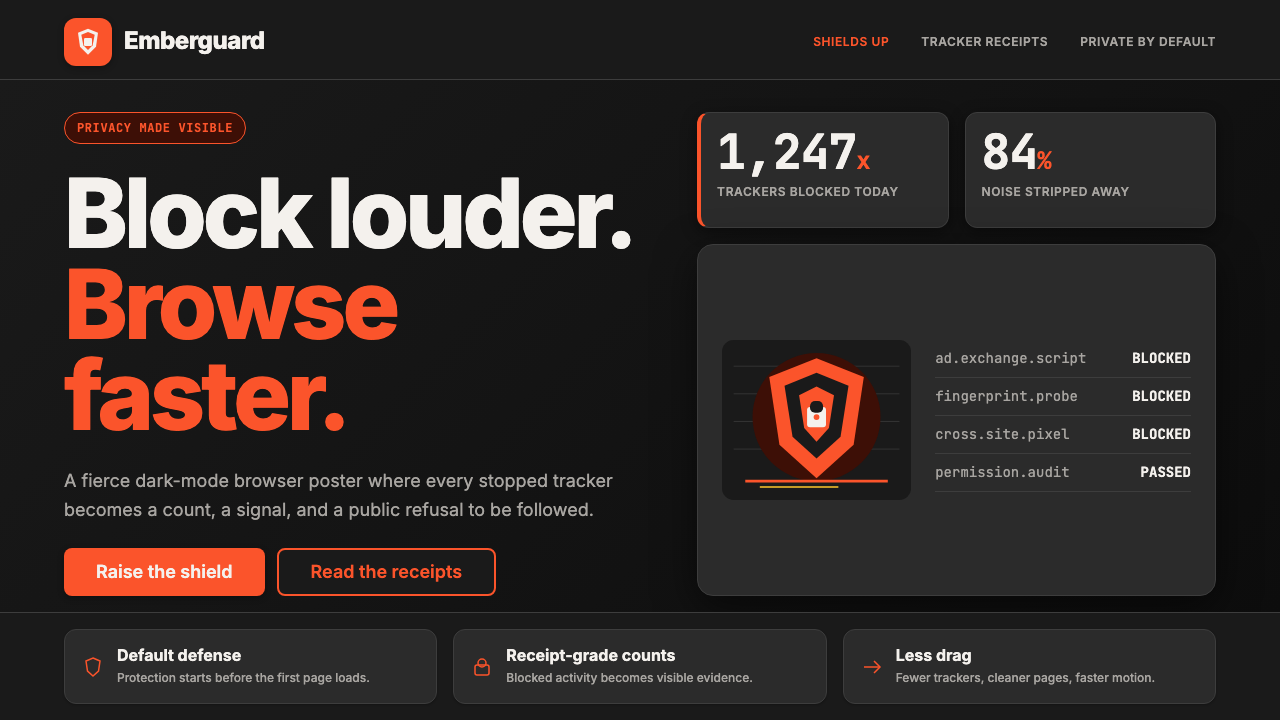 Brave Browser Lion OrangePrivacy gets loud. Lion-orange counters and shield geometry cut through warm…
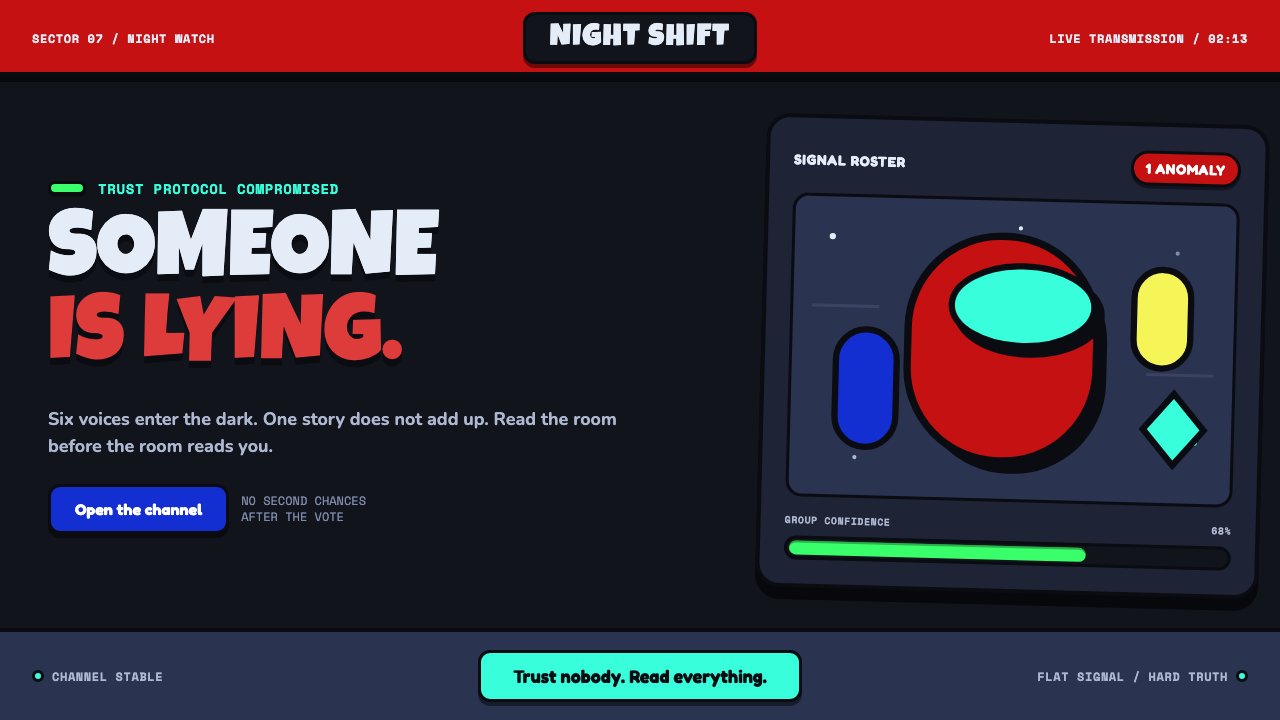 Among Us (crewmate space)Trust is ready to break. Loud capsule colors cut through a navy void with har…
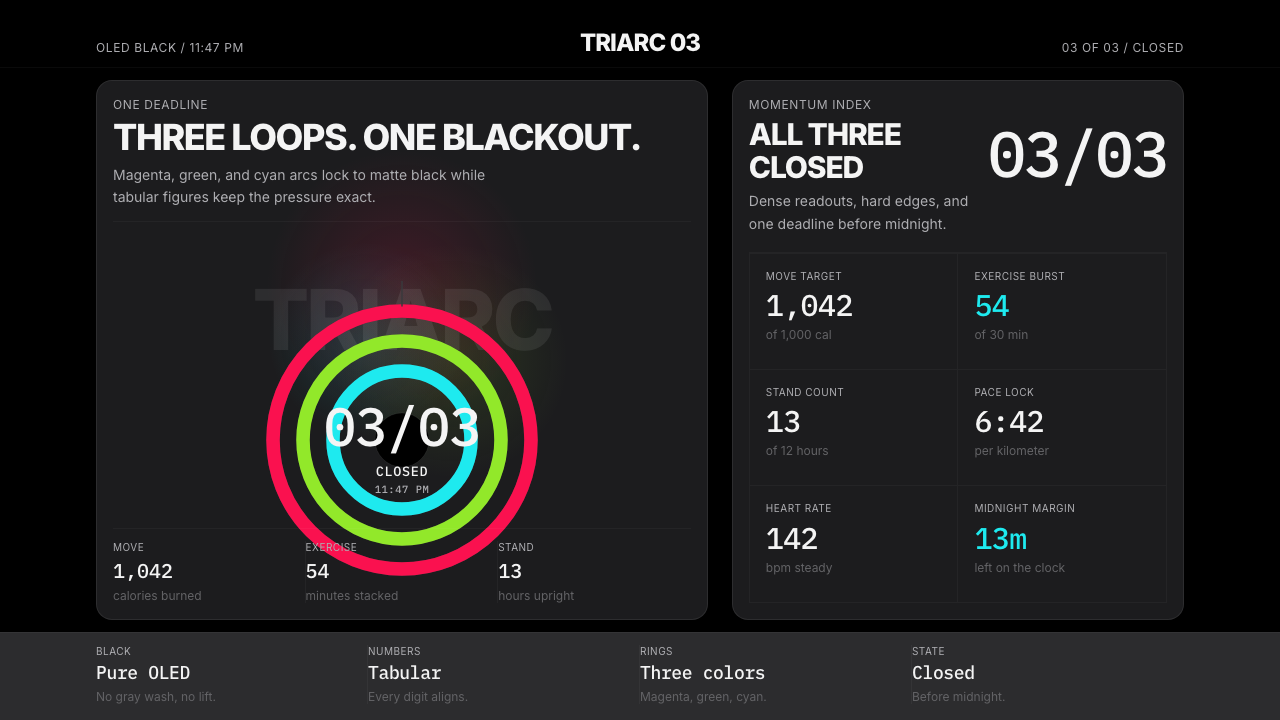 Apple Fitness Rings Closed (2024)Midnight feels exact. Magenta, green, and cyan rings lock onto OLED black.
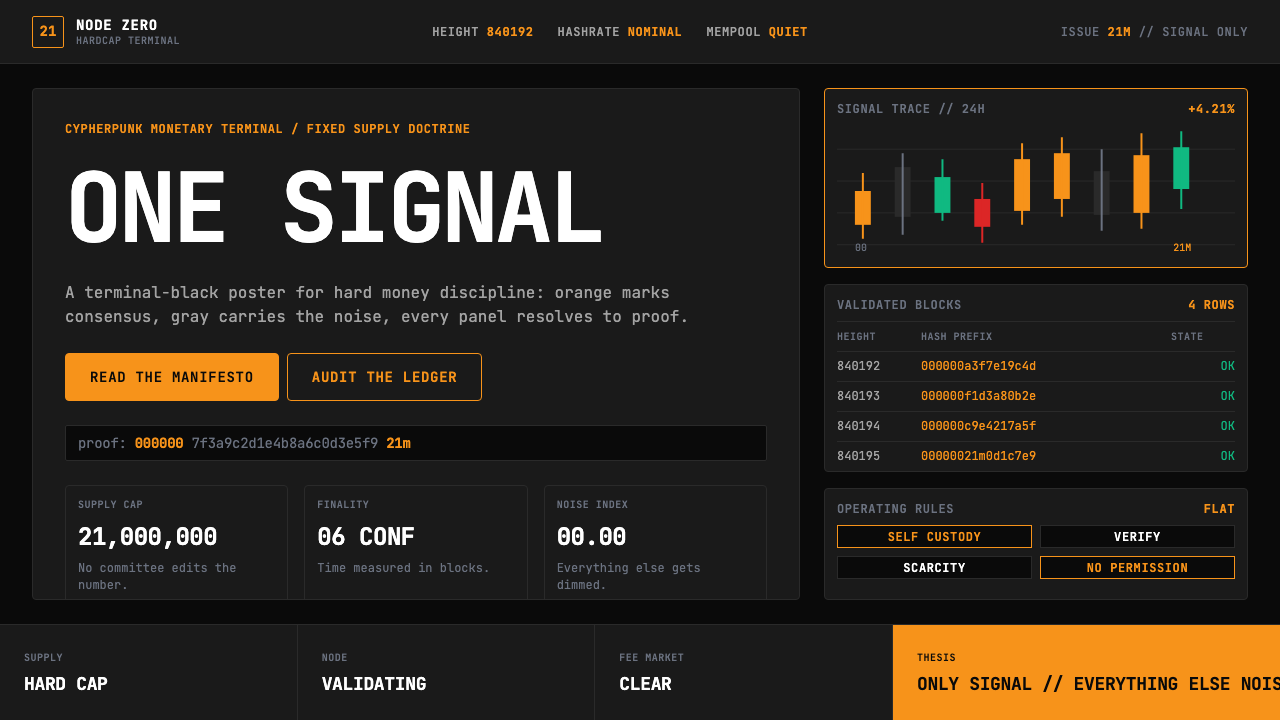 Bitcoin Maximalist OrangeOnly signal, zero spectacle. Orange mono data grids on terminal black enforce…
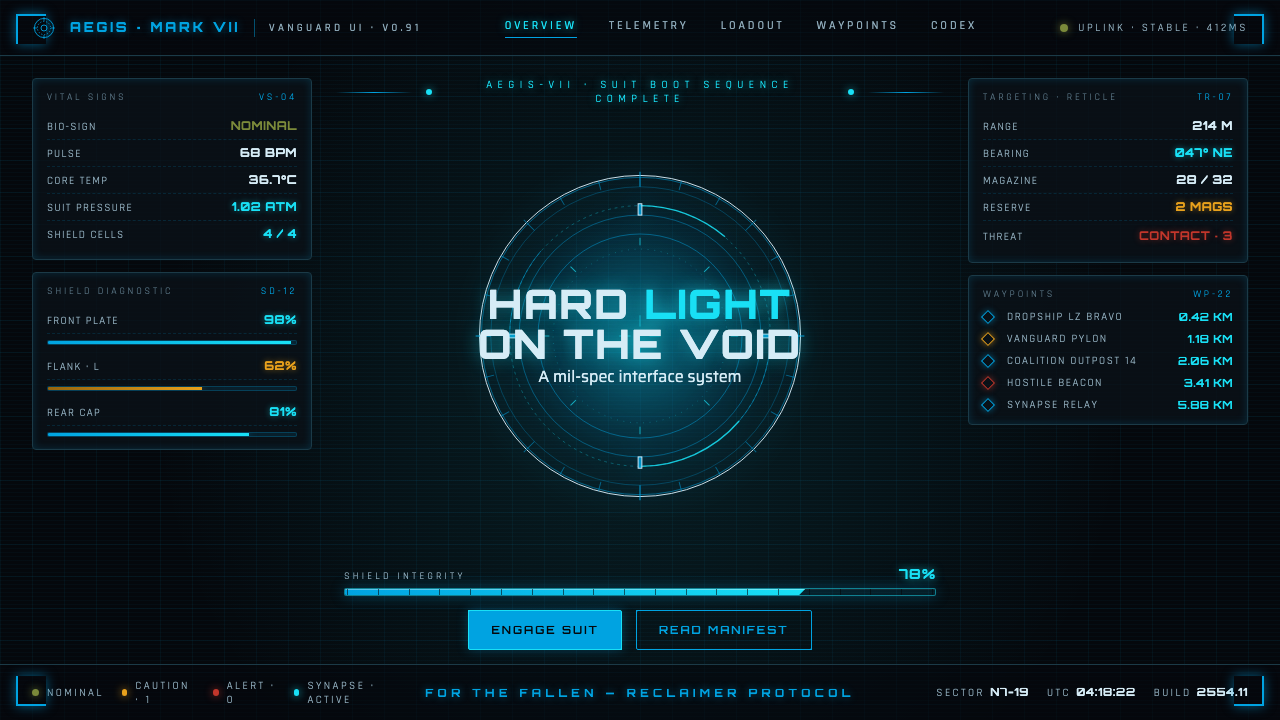 Halo (Forerunner UI)Hard light on the void. Cyan shield bars and concentric glyph rings glow on a…
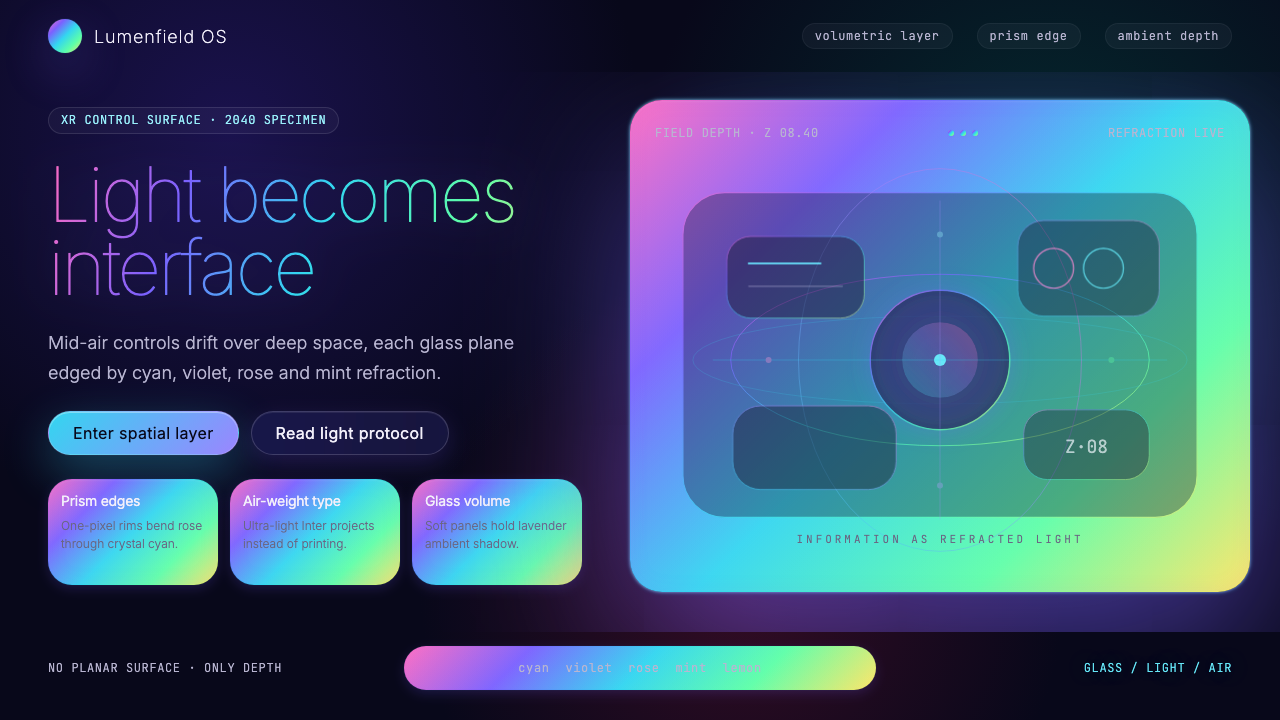 Holographic UI 2040Information made of light. Deep-space black, ultra-light Inter and prismatic…