What is Sogdian Fresco?
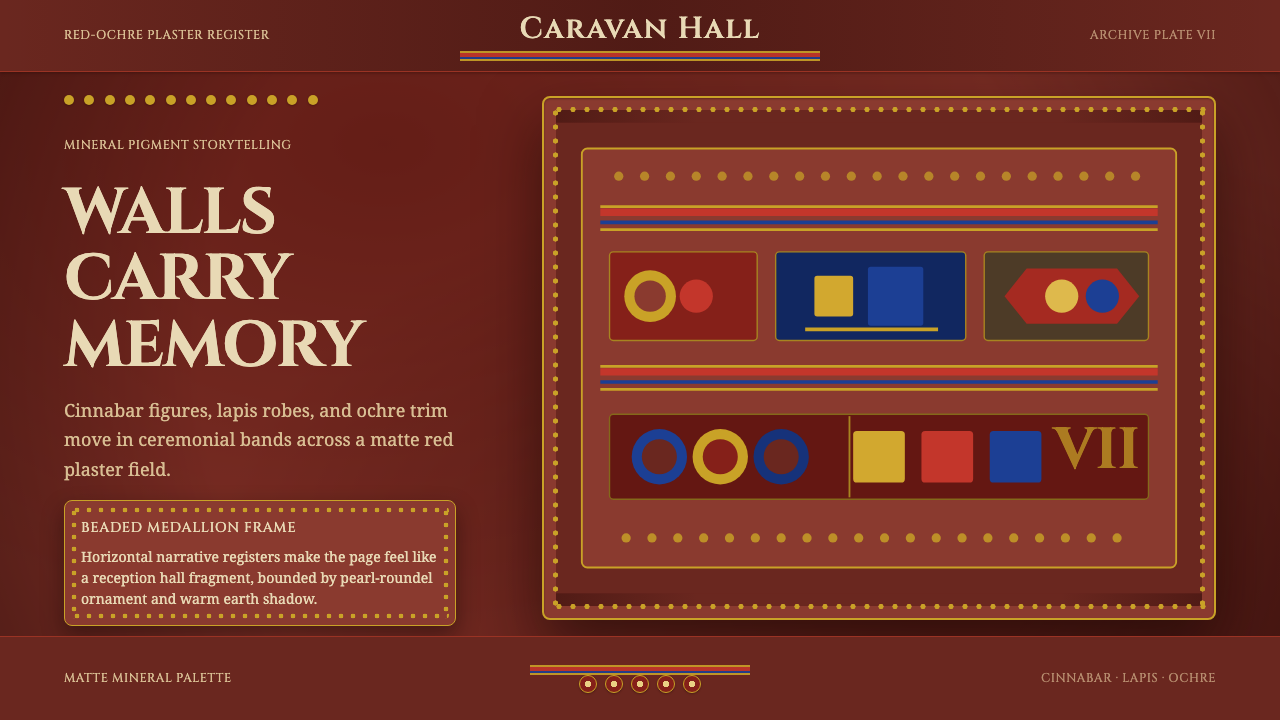
On the walls of Panjakent, merchants and nobles process in painted friezes — an ancient ceremony told entirely in mineral pigment, before the Silk Road ever needed a single word.
Sogdian Fresco in brief
Sogdian Fresco is a design language drawn from the wall paintings of Panjakent, a merchant city of ancient Sogdiana that flourished in the seventh and eighth centuries CE. Sogdiana was a Central Asian civilization of merchant city-states that controlled much of the Silk Road's central trade routes, and Panjakent's mansions and reception halls were decorated floor to ceiling with narrative murals depicting the cosmopolitan life its wealthy merchant elite led — banqueting nobles, camel caravans laden with goods, mounted warriors, and mythological and epic scenes drawn from a shared Iranian and Central Asian cultural repertoire.
Visually, the frescoes are built from matte mineral pigments applied directly to plastered walls: cinnabar red for figures and flesh tones, lapis-blue for the flowing robes of nobles and deities, and ochre-gold for ornament, jewelry, and architectural detail, all set against a deep red-ochre plaster ground that unifies the entire wall surface. Scenes are organized in horizontal registers — friezelike bands stacked one above another — each telling a discrete episode of a longer narrative, bordered top and bottom by pearl-roundel patterns, a beaded circular motif that recurs throughout Sogdian and broader Central Asian decorative art.
The overall effect is that of a storytelling system rather than a purely decorative one: the reception hall itself functioned as a painted world that framed the actual social and ceremonial life taking place within it, and the mood the style carries is warm, ceremonial, and ancient — evoking the cosmopolitan, multiethnic Silk Road culture that flourished before the seventh-century Arab conquests reshaped Central Asia's political and religious landscape.

Where does Sogdian Fresco come from?
Sogdiana was a Central Asian civilization centered in the fertile valleys around the Zeravshan River, in what is now Uzbekistan and Tajikistan, organized not as a single unified empire but as a network of independent merchant city-states — including Samarkand, Bukhara, and Panjakent — that grew wealthy by controlling key overland trade routes connecting China, India, Persia, and the Byzantine world. Sogdian merchants were renowned throughout medieval Eurasia as some of the Silk Road's most successful long-distance traders, establishing merchant communities as far east as China.
Panjakent, located in what is now western Tajikistan, was one of Sogdiana's principal cities and is today one of the most extensively excavated Sogdian archaeological sites, thanks largely to decades of Soviet and post-Soviet archaeological work. The city flourished particularly during the seventh and early eighth centuries CE, and its wealthy merchant households decorated their private mansions and public reception halls with extensive fresco cycles covering entire interior walls — a visual investment reflecting both genuine religious and mythological belief and a conspicuous display of the wealth Silk Road trade generated.
The frescoes depict a wide range of subject matter: religious and mythological scenes drawing on Zoroastrian, Hindu, Buddhist, and local Sogdian belief systems reflecting the genuinely cosmopolitan, multi-religious character of Silk Road cities; epic and legendary narratives, some connected to the Persian Shahnameh tradition; and scenes of contemporary court and social life — banqueting nobles, musicians, mounted warriors, and camel caravans — that recorded the actual mercantile and aristocratic culture of the city's elite.
Panjakent, along with much of Sogdiana's independent urban civilization, was overtaken by the Arab conquests of Central Asia in the early eighth century, a political transformation that brought Islam to the region and gradually ended the tradition of figurative fresco painting that Sogdian culture had sustained for centuries. The city was largely abandoned by the eighth century's end, which paradoxically helped preserve its frescoes for modern archaeological recovery — work led significantly by Soviet archaeologist Aleksandr Belenitsky, whose excavations beginning in the mid-twentieth century uncovered the mural cycles now central to our understanding of Sogdian visual culture.
What defines the Sogdian Fresco look?
Color
A deep red-ochre plaster ground unifies the entire wall surface, with cinnabar red for figures and flesh tones, lapis-blue for robes and mythological figures, and ochre-gold for ornament and jewelry. All pigments are matte and mineral in character rather than glossy or synthetic-looking, reflecting the actual materials — ground cinnabar, lapis lazuli, and ochre — used in the original frescoes.
Horizontal Narrative Bands
Content is organized into stacked horizontal registers, each a discrete narrative frieze, echoing the way Panjakent's murals told extended stories across multiple bands running around a room's walls. Each band should read as a complete episode, with the vertical stacking implying a sequence to be read from one to the next.
Pearl-Roundel Borders
A beaded, circular pattern — small round forms strung together like pearls on a string — frames the top and bottom of each narrative band, a recurring decorative motif across Sogdian and broader Central Asian art. This border should read as a consistent structural device separating one narrative register from the next, not a one-off decoration.
Procession and Frieze Composition
Figures — caravans, banqueting nobles, warriors — are arranged in horizontal, processional compositions moving across the frame, rather than in centered, isolated portrait arrangements. This processional quality gives the style its narrative momentum, implying movement and continuation beyond the visible frame.
Matte Mineral Surface
Surfaces should read as pigment applied to plaster — flat, matte, and slightly textured — rather than glossy or digitally smooth. This grounds the style in its actual physical medium and distinguishes it from more modern illustrative or vector-flat treatments of similar subject matter.
Cosmopolitan Iconography
Imagery draws on a shared, multi-religious Central Asian repertoire — Zoroastrian, Hindu, Buddhist, and Persian epic figures alongside contemporary courtly and mercantile life — reflecting the genuinely cosmopolitan character of Silk Road city culture. No single religious tradition should dominate exclusively, since the historical frescoes themselves drew on multiple coexisting belief systems.
Ceremonial Warmth
The overall register is warm and ceremonial rather than cool or clinical, reflecting the fact that these murals decorated lived-in reception halls where actual banquets, ceremonies, and social life took place. The mood should feel ancient and dignified, evoking a scene meant to be inhabited rather than merely viewed.

Who shaped Sogdian Fresco?
A Soviet archaeologist whose excavations at Panjakent, beginning in the mid-twentieth century, uncovered the extensive mural cycles now central to modern understanding of Sogdian visual culture. His decades of fieldwork established Panjakent as one of the most thoroughly documented Sogdian archaeological sites, providing the primary visual source material this style draws on.
The anonymous artists and workshops responsible for painting Panjakent's mansions and reception halls developed the specific pigment palette, procession-based composition, and pearl-roundel bordering convention that defines the style. Working across generations, they established a shared visual vocabulary applied consistently across the city's wealthy households.
The broader mercantile civilization of Sogdiana — a network of independent city-states controlling key Silk Road trade routes — created the wealth, cosmopolitan religious diversity, and appetite for narrative self-representation that produced Panjakent's fresco tradition in the first place. This commercial and cultural context, more than any individual figure, is the true origin of the style.
How do you use Sogdian Fresco today?
Sogdian Fresco transfers well to any digital product wanting to signal ancient ceremony, cosmopolitan cultural exchange, and narrative depth rather than modern minimalism — heritage and museum platforms, cultural storytelling sites, luxury goods drawing on Silk Road provenance, or any brand wanting to evoke a warm, ancient sense of narrative gravity. Applying it correctly means preserving the horizontal, procession-based narrative structure rather than collapsing it into a single static hero image.
For presentation slides, a cover works well built on the deep red-ochre ground with a centered figure or motif rendered in cinnabar and lapis, bordered top and bottom by a pearl-roundel pattern echoing a fresco band's frame. Content slides benefit from the horizontal-band structure directly: each slide or section reads as one register in a longer procession, with pearl-roundel dividers marking the transition from one to the next. Data visualization is a difficult fit for this style, since the mineral, narrative register resists the clean abstraction data charts typically require; where data must appear, it is better rendered as simple labeled figures within a narrative band than as a distinct chart object.
For web interfaces, the style suits landing pages, museum and cultural archive interfaces, and heritage brand storytelling far better than data-dense dashboards, where the warm, textured ground and narrative band structure would reduce functional clarity. A hero section might use the red-ochre ground with a procession-style banner illustration bordered by pearl-roundel motifs, and section transitions can echo the frieze-to-frieze structure of the original murals.
For editorial and marketing work, the style rewards long-form cultural and historical storytelling: features on the Silk Road, museum exhibition materials, or heritage brand narratives built around ancient trade and cultural exchange. Pull quotes and captions read well set against the red-ochre ground in a warm, classical typeface, and imagery should favor genuine fresco photography or careful illustrative recreation over generic 'ancient world' stock imagery.
A common mistake is treating the style as generic 'ancient world' decoration and mixing in unrelated cultural motifs — Egyptian, Greco-Roman, or generic Orientalist imagery — that dilute its specific grounding in Sogdian Central Asia. A second common mistake is rendering the pigments as glossy or overly saturated digital color, losing the matte, mineral quality that gives the frescoes their specific material authenticity.

Sogdian Fresco — FAQ
What distinguishes Sogdian Fresco from generic 'ancient world' or Silk Road decorative styles?
The specific pigment palette (cinnabar, lapis, ochre on a red-ochre ground), the horizontal narrative-band structure bordered by pearl-roundel patterns, and the specific cosmopolitan iconographic mix of Zoroastrian, Hindu, Buddhist, and Persian epic imagery all anchor this style in a documented, archaeologically excavated source — Panjakent — rather than a generic, imagined 'ancient civilization' aesthetic that mixes unrelated cultural references freely.
Why are the murals organized in horizontal bands rather than single large scenes?
Because Panjakent's murals told extended narratives — mythological cycles, epic tales, sequences of courtly life — that required multiple episodes to unfold across a wall, similar to how a comic strip or frieze sequence tells a story panel by panel. Collapsing the narrative into one large static scene loses this sequential, storytelling quality that defines the tradition.
Should the pigments look glossy or matte?
Matte, consistently. The original frescoes were painted with mineral pigments directly on plaster, producing a flat, absorbent, non-reflective surface quality. Rendering them as glossy or high-sheen digital color loses this material authenticity and shifts the style toward a more generic, less historically grounded decorative look.
Can this style incorporate imagery from a single religious tradition exclusively?
It can, but doing so understates the tradition's actual character. Panjakent's frescoes drew on Zoroastrian, Hindu, Buddhist, and Persian epic sources simultaneously, reflecting Silk Road cities' genuinely multi-religious, cosmopolitan makeup. A version restricted to a single tradition is historically accurate as a narrower subset but loses the cosmopolitan breadth that is one of the style's most distinctive qualities.
Does this style suit modern, technology-focused products?
Generally not directly — its matte mineral palette, narrative bands, and ancient ceremonial mood sit far from the crisp, functional register most technology products require. It is much better suited to cultural, heritage, museum, and luxury storytelling contexts where evoking ancient narrative depth and cosmopolitan grandeur is the actual communicative goal.
Related design styles
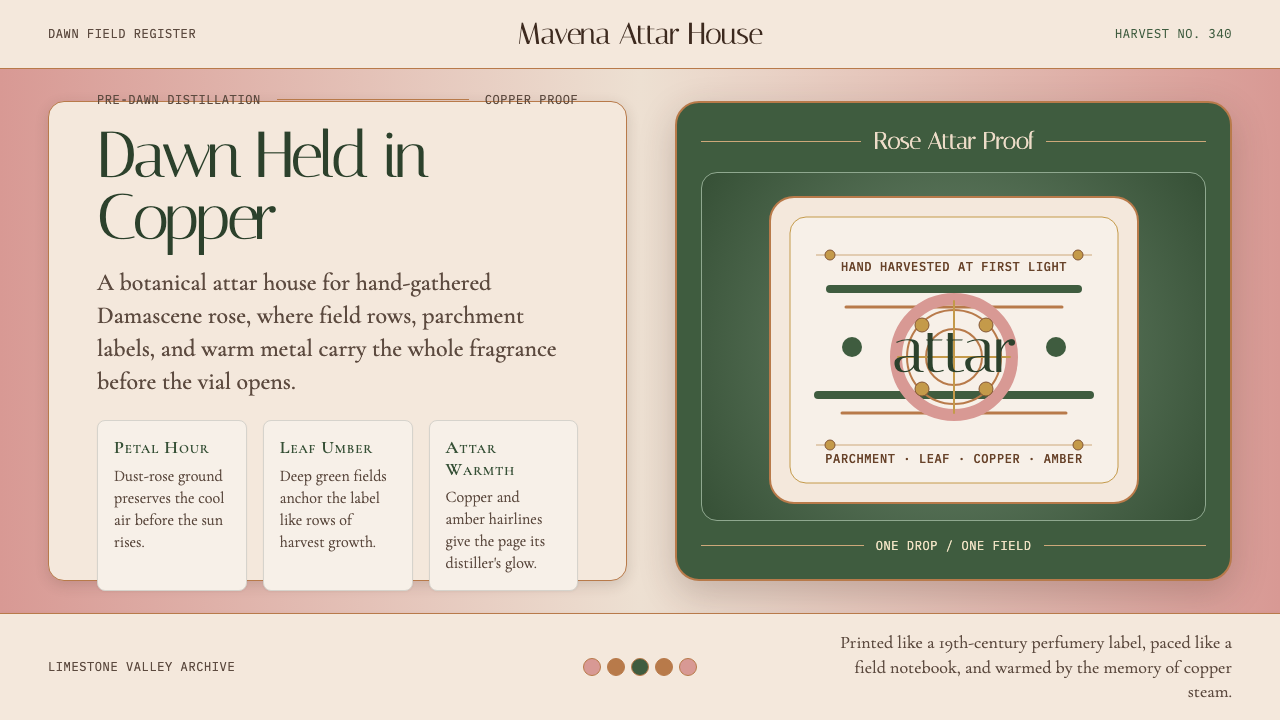 Bulgarian Kazanlak Rose ValleyDawn feels distilled. Dust-rose ground, leaf green, and copper label geometry…
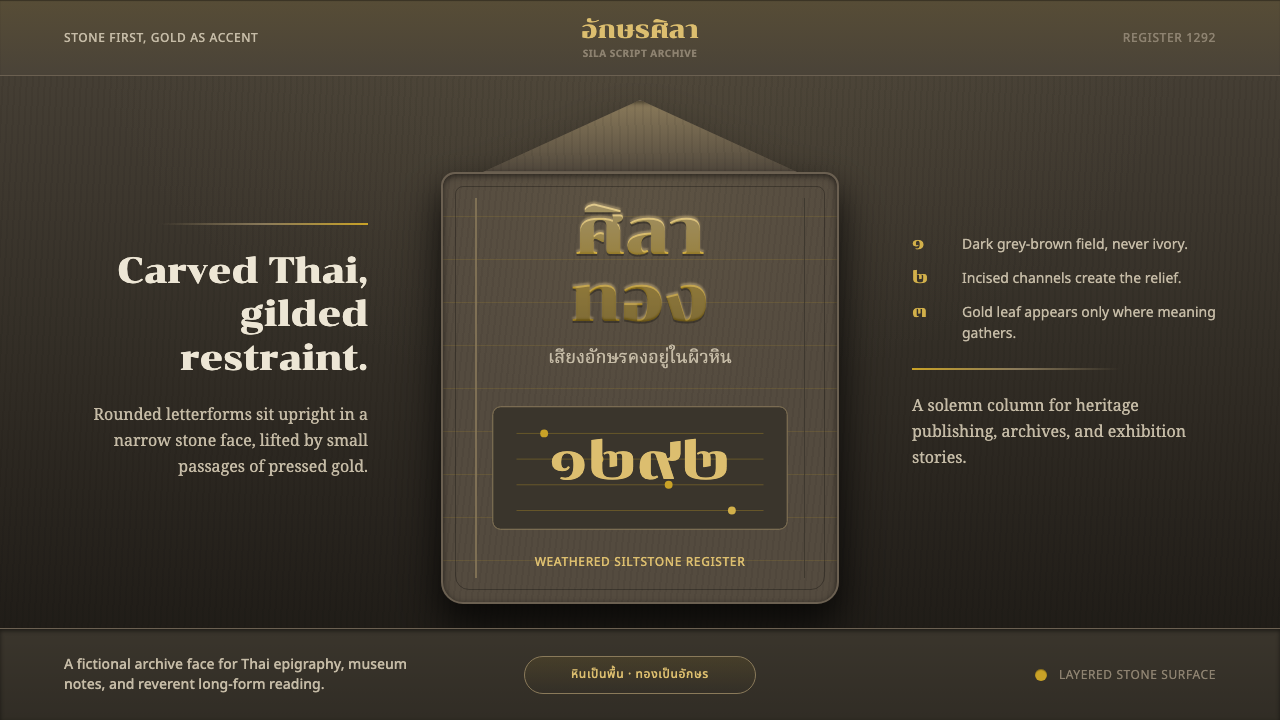 Sukhothai Thai ScriptStone carries the script. Chonburi Thai letters glint gold on dark siltstone.
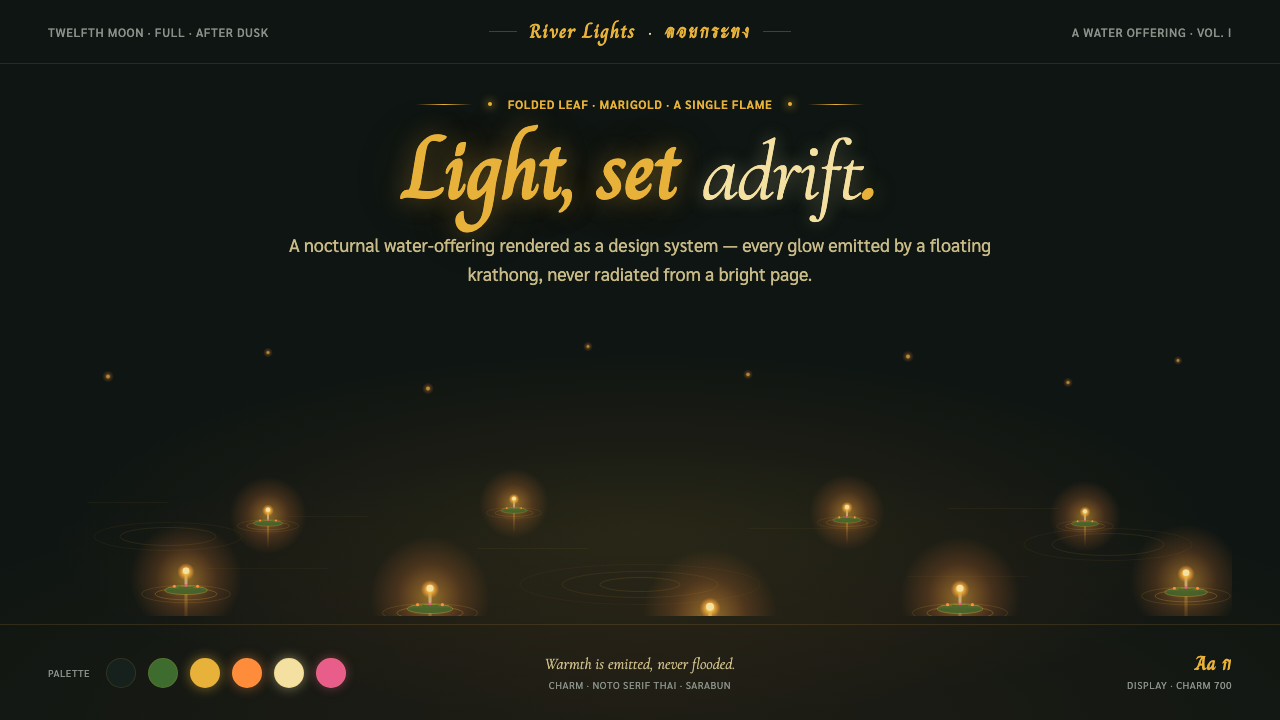 Loy KrathongLight, set adrift. Candle-gold flames on near-black river water — warmth emit…
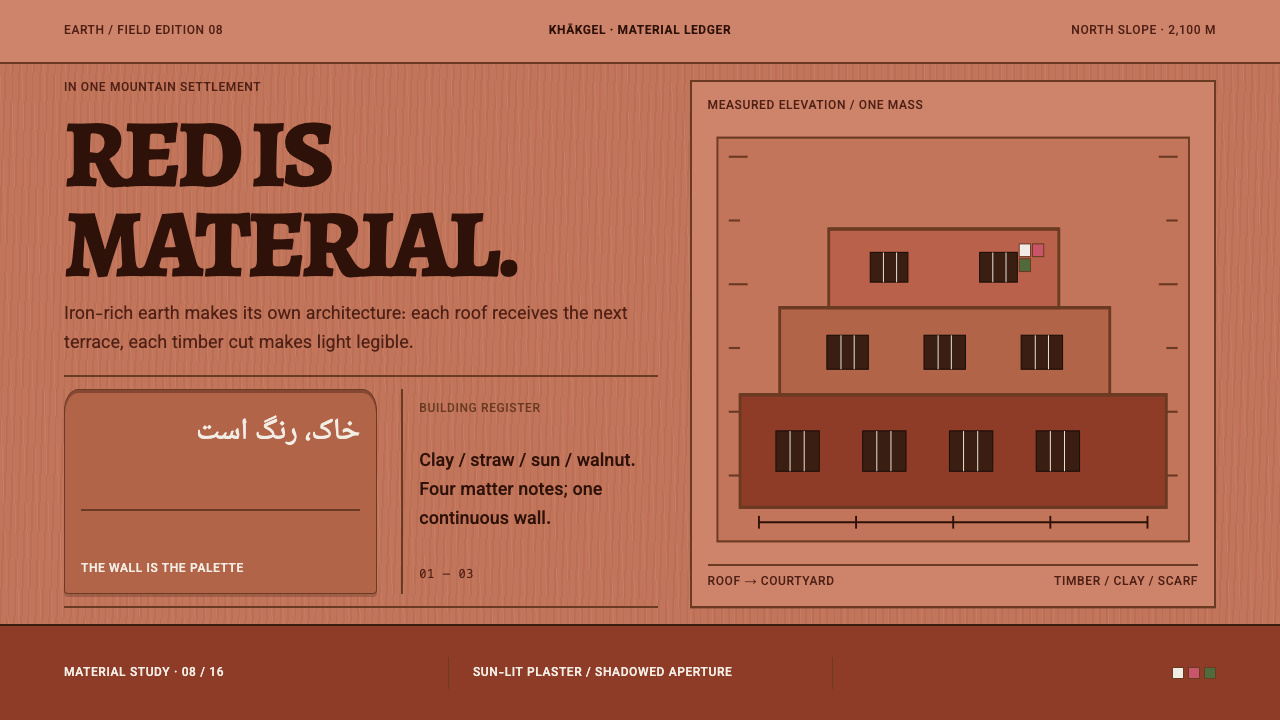 Abyaneh Red VillageRed is material, not decoration. Stepped clay bands and dark timber apertures…
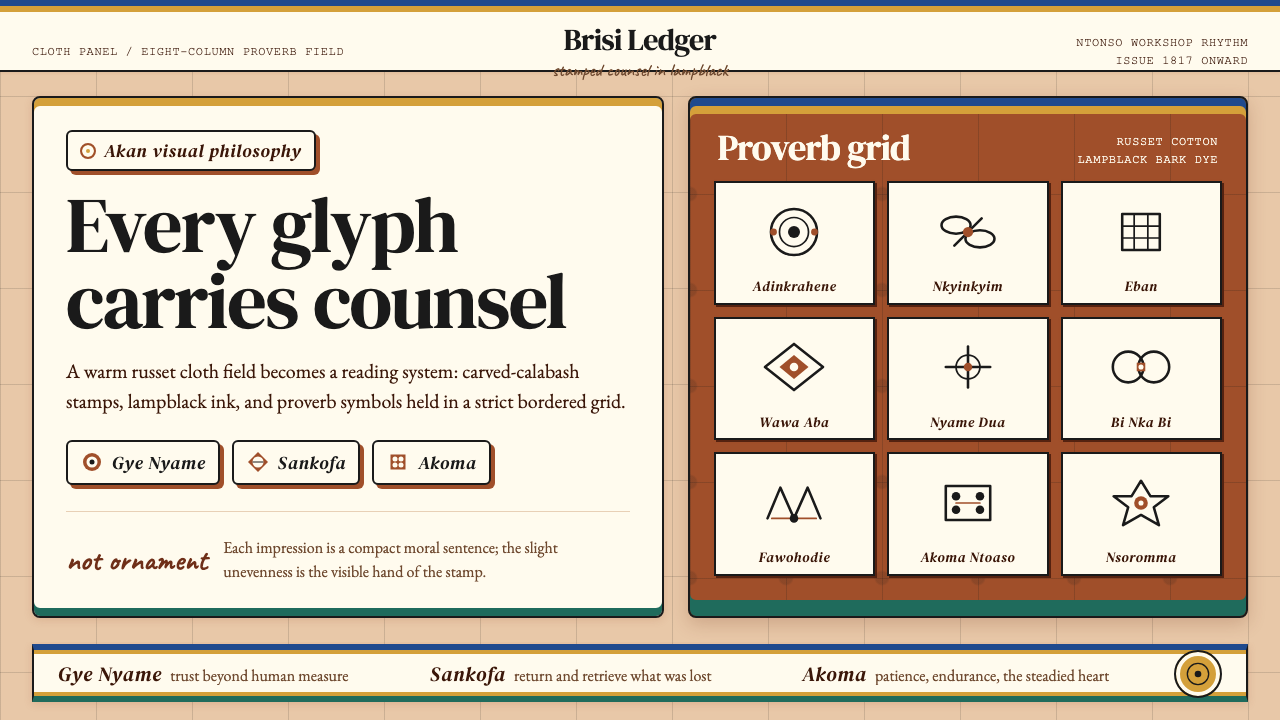 Akan Adinkra (Ghana)Proverbs become cloth. Russet grids, lampblack serif marks, and gold-edge ban…
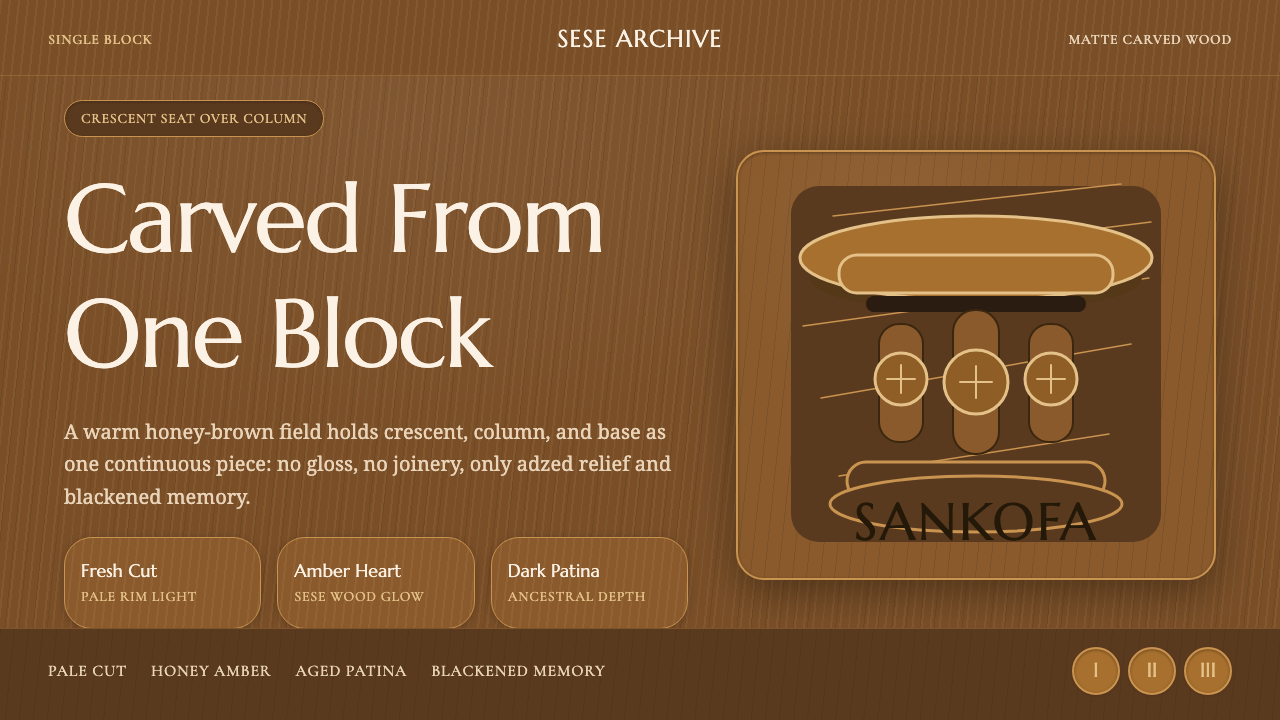 Akan Carved StoolMatte wood carries memory. Honey amber, Marcellus type, and crescent-column r…