What is Loy Krathong (River Lights)?
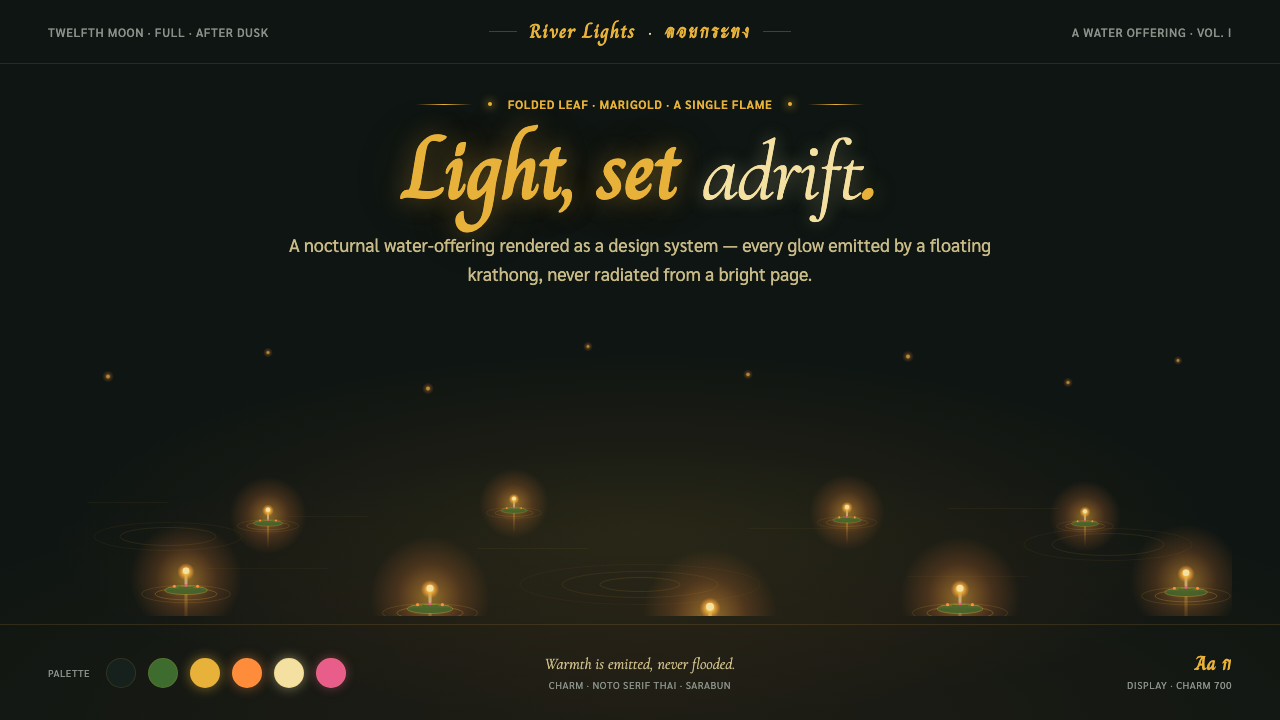
Loy Krathong turns darkness into a vessel — candle-gold flames drift across near-black water, carrying warmth outward without ever flooding the scene.
Loy Krathong (River Lights) in brief
Loy Krathong is a pre-1900 Thai festival of lights observed on the full moon of the twelfth month. After dark, people float banana-leaf krathongs on rivers and canals, each one cradling a single lit candle and incense. The defining image is not a brightly illuminated celebration but a near-black water surface scattered with drifting points of warm gold and their wavering reflections.
As a design style, Loy Krathong translates that nocturnal water offering into a visual system of restraint. The page is the river: deep, quiet, and almost black. Light belongs to the floating candle, not to the background. Warmth appears in small emitted accents, while concentric ripples, leaf folds, and floral forms provide structure without competing with the flame.
The style feels atmospheric yet disciplined. Its contrast is concentrated rather than evenly distributed, its ornaments are drawn from banana-leaf craft and marigold-and-lotus motifs, and its movement is implied through drifting placement and reflected light. The result should feel ceremonial, handmade, and calm — a field of darkness in which every warm point has a reason to exist.
Where does Loy Krathong (River Lights) come from?
The approved source places Loy Krathong in a traditional Siamese and Thai festival culture that existed before 1900 and was observed on the full moon of the twelfth month. Its essential setting is water after sunset: rivers and canals become the receiving surface for small crafted offerings, and the darkness makes each candle visible as an independent point of warmth.
The style grows from Southeast Asian Buddhist festival craft, banana-leaf folding traditions, and the making of floral offerings. These are not interchangeable decorative references. The leaf provides the vessel, the candle provides the emitted light, the incense extends the offering, and flowers bring a tactile, organic counterpoint to the dark water. Together they create a visual language grounded in making and placement.
The krathong is central because it joins material craft with movement. It is folded, assembled, and then set adrift; its form is therefore never entirely static. The visual system inherits that quality through floating clusters, gentle irregularity, reflected flame, and ripples that spread away from a point rather than filling the entire field.
The source names Nang Noppamas, Brahmin-Buddhist water-offering priests, and Sukhothai-era folk craftspeople as key figures connected with the tradition. Their inclusion locates the style between festival practice, water offering, and vernacular handcraft. A faithful adaptation should preserve that relationship: it should feel made by hand and placed with intention, not assembled from generic tropical decoration.
What defines the Loy Krathong (River Lights) look?
Night Ground
The ground is near-black, resembling river water after dark rather than a flat digital black. It should absorb most of the scene and leave generous quiet around every illuminated detail. The darkness is not an empty backdrop; it is the visual condition that allows the candle to read as a source of warmth.
Candle-Gold Light
Warm gold is used as emitted light, not as a general accent wash. It belongs to candle flames, small highlights, and their trembling reflections. The brightest marks should remain isolated and precious, with surrounding warmth falling away softly enough to suggest glow without turning the page into an illuminated surface.
Water and Reflection
Water is expressed through wavering reflection and concentric ripples rather than realistic rendering. Lines should feel lightly disturbed, as though moved by a current or a passing krathong. Reflections may elongate or break apart, giving the composition a quiet sense of motion while preserving the calm of the night.
Banana-Leaf Craft
Banana-leaf folds bring the human hand into the system. Their edges should be layered, folded, and slightly irregular, with enough structure to suggest a crafted vessel. Avoid polished botanical illustration; the leaf is valuable because it shows assembly, texture, and the evidence of being made.
Floral Warmth
Marigold and lotus motifs provide an organic counterpoint to the dark water and geometric ripple marks. They should appear as crafted offerings or quiet pattern fragments, not as a continuous floral wallpaper. Petal shapes can gather near the candle, frame a krathong, or surface briefly before returning to darkness.
Quiet Hierarchy
Hierarchy comes from contrast, isolation, and drift rather than dense ornament. A candle is more important because the surrounding field recedes; a krathong is legible because its leaf folds are separated from the water. Typography should remain calm and readable, allowing the visual event to be the relationship between darkness, craft, flame, and reflection.
Who shaped Loy Krathong (River Lights)?
Nang Noppamas is named in the approved source as a key figure associated with Loy Krathong. Because the source provides no further biography, the figure should be treated with restraint: as a point of cultural reference within the festival tradition, not as an invitation to invent a legend, portrait, or narrative detail. In design, her name can support a historical note or caption while the visual system remains centered on the krathong and its light.
Brahmin-Buddhist water-offering priests are identified as key figures in the source material. Their presence clarifies that the style is not merely about floating lights or tropical color; it carries the atmosphere of an offering placed on water after dark. References to this figure group work best in contextual writing, ritual notes, or archival framing, supported by a quiet visual language rather than theatrical religious imagery.
Sukhothai-era folk craftspeople represent the hands behind the crafted krathong tradition in the approved source. Their importance is material: folded leaf, assembled vessel, floral detail, and the practical knowledge required to make an offering that can float. A design adaptation honors them by allowing irregularity and visible construction to remain, instead of polishing every form into a sterile symbol.
How do you use Loy Krathong (River Lights) today?
Loy Krathong is most effective when treated as an atmosphere with rules rather than a collection of festival symbols. Begin with a deep night ground and let the visual hierarchy emerge from a few warm points of light. Use water, leaf, and flower references to explain movement and craft, while keeping the overall field quiet enough for each candle-like accent to feel intentional.
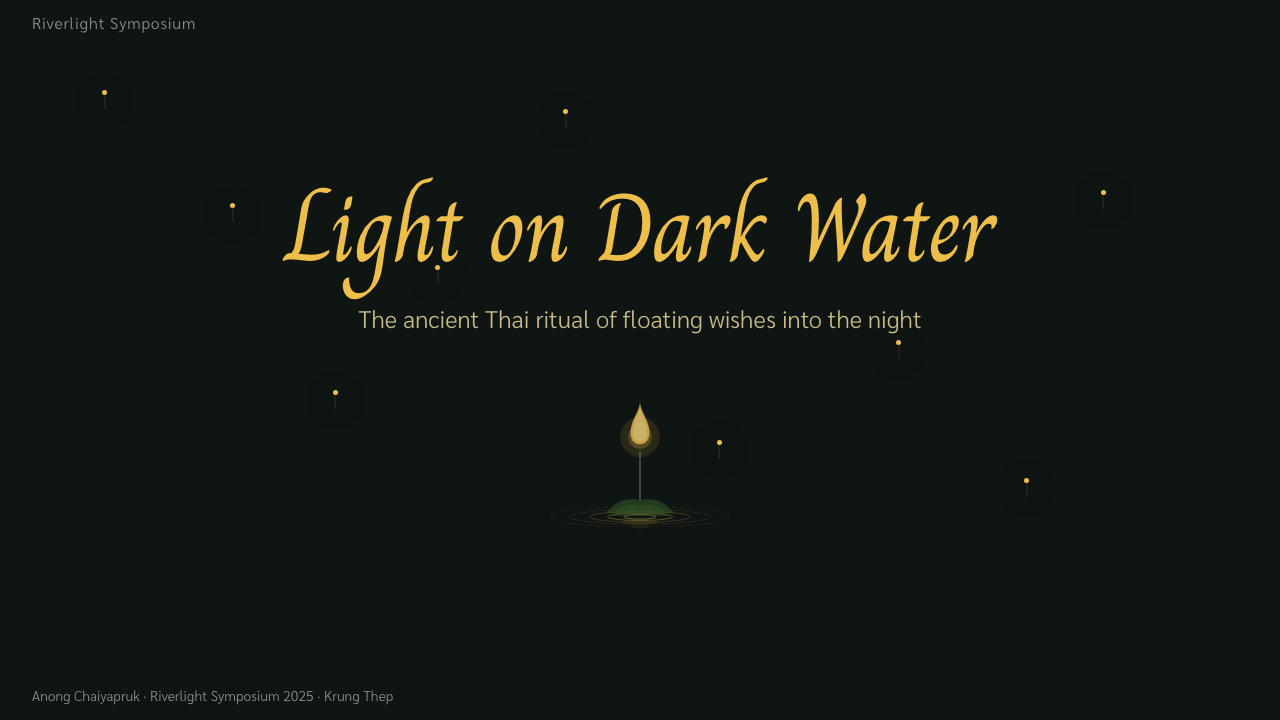
For presentation slides, the cover can open like a night river: a near-black field, a restrained title, and a small drifting arrangement of candle-gold points with broken reflections. Content slides should preserve that calm by separating information into clear islands rather than covering the page with glow. Data slides can turn charts into floating forms, with warm highlights marking the most important values and ripple-like lines suggesting continuity or movement without becoming decoration.
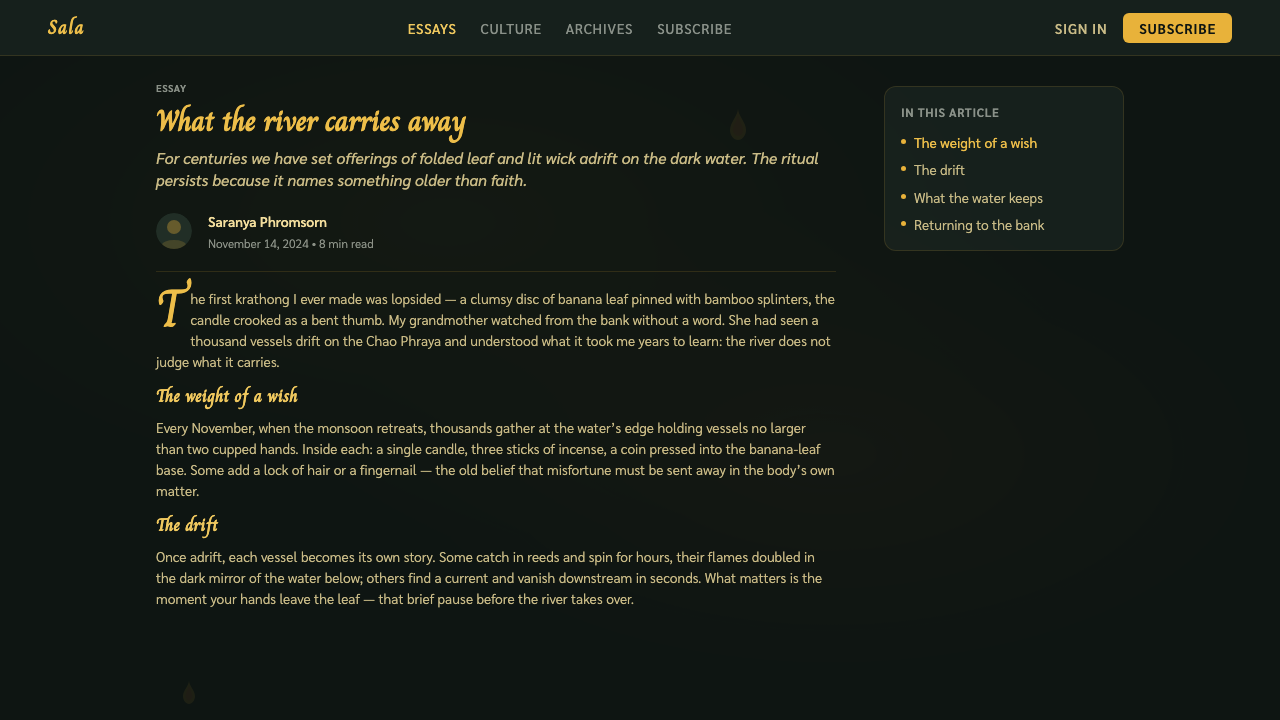
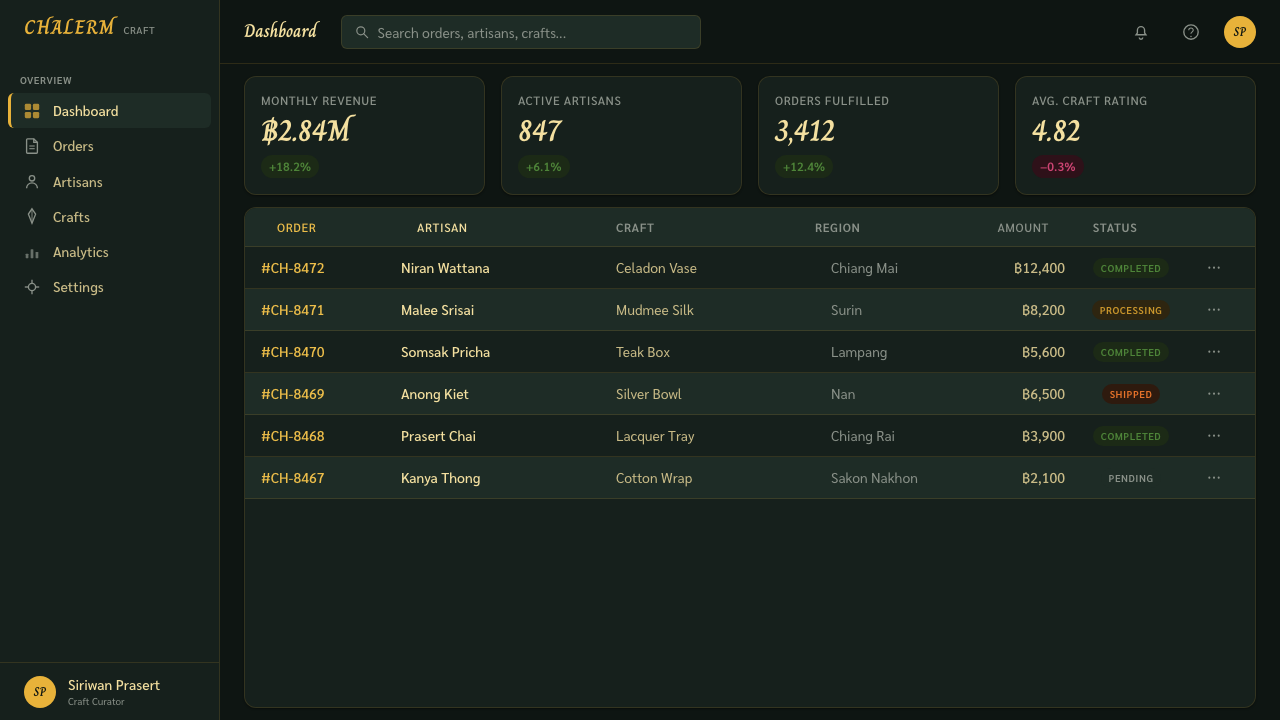
For web interfaces, the style suits dashboards and pricing pages that need a dark, focused environment. Keep the main surface close to black, reserve candle-gold for active states and primary actions, and use muted warm neutrals for supporting information. Ripple marks can indicate progression or interaction, while krathong-like cards can group related content. The interface should feel navigable and calm, never like a brightly lit festival poster.
For editorial and marketing work, the system supports a strong contrast between expansive darkness and small moments of human warmth. A feature page can place a large title beside a crafted leaf or floral detail, while campaign sections can use drifting lights as a recurring visual thread. Photography or illustration should favor close material details, reflected flame, and water surface; the story is strongest when the image suggests offering and movement rather than spectacle.
The common mistake is making every element glow. A convincing Loy Krathong treatment depends on scarcity: the dark field must remain dominant, gold must stay attached to candle-like sources, and botanical motifs must feel made rather than pasted on. Another failure is turning the style into generic tropical decoration. Without near-black water, floating placement, wavering reflection, and visible craft, the palette loses its cultural and visual logic.
Loy Krathong (River Lights) — FAQ
Is Loy Krathong a literal festival theme or a broader design style?
It can be used more broadly, but the translation should preserve its central relationship: warm light emerges from darkness and moves across water. The style is not defined by adding candles, flowers, or leaf shapes everywhere. It is defined by restraint, floating placement, crafted material cues, and a clear distinction between the dark receiving field and the small sources of warmth within it.
Can the style work on a light background?
A light variation is possible, but it moves away from the authentic scene described by the source. The defining image is candle light on near-black river water after dark, so a light ground should be used only when the surrounding system can still preserve concentrated warmth, quiet space, and the feeling that light is being emitted by an object rather than by the page itself.
How much candle-gold should appear?
Use it as a scarce source of warmth, not as a dominant surface color. It works best on candle flames, selected highlights, active states, and broken reflections. If the gold spreads evenly across backgrounds, borders, cards, and text, the distinction between darkness and emitted light disappears. The viewer should feel that the warmth is drifting through the scene, not that the scene has been coated in gold.
How should banana-leaf and floral motifs be handled?
Treat them as evidence of making. Banana-leaf forms should show folds, layers, and a crafted vessel logic. Marigold and lotus motifs should appear as gathered offerings or restrained fragments, not as a continuous decorative pattern. Their purpose is to bring organic tactility into the night scene and connect the light to a floating object with human construction behind it.
What products suit this style best?
It suits experiences that benefit from focus, atmosphere, and a sense of deliberate passage: night-mode interfaces, cultural or editorial sites, event pages, reflective storytelling, dashboards, and pricing flows that need a calm dark environment. It is less suitable when the product depends on constant brightness, dense ornament, or a cheerful daytime mood. The key question is whether the product can give darkness enough space to make warmth meaningful.
Related design styles
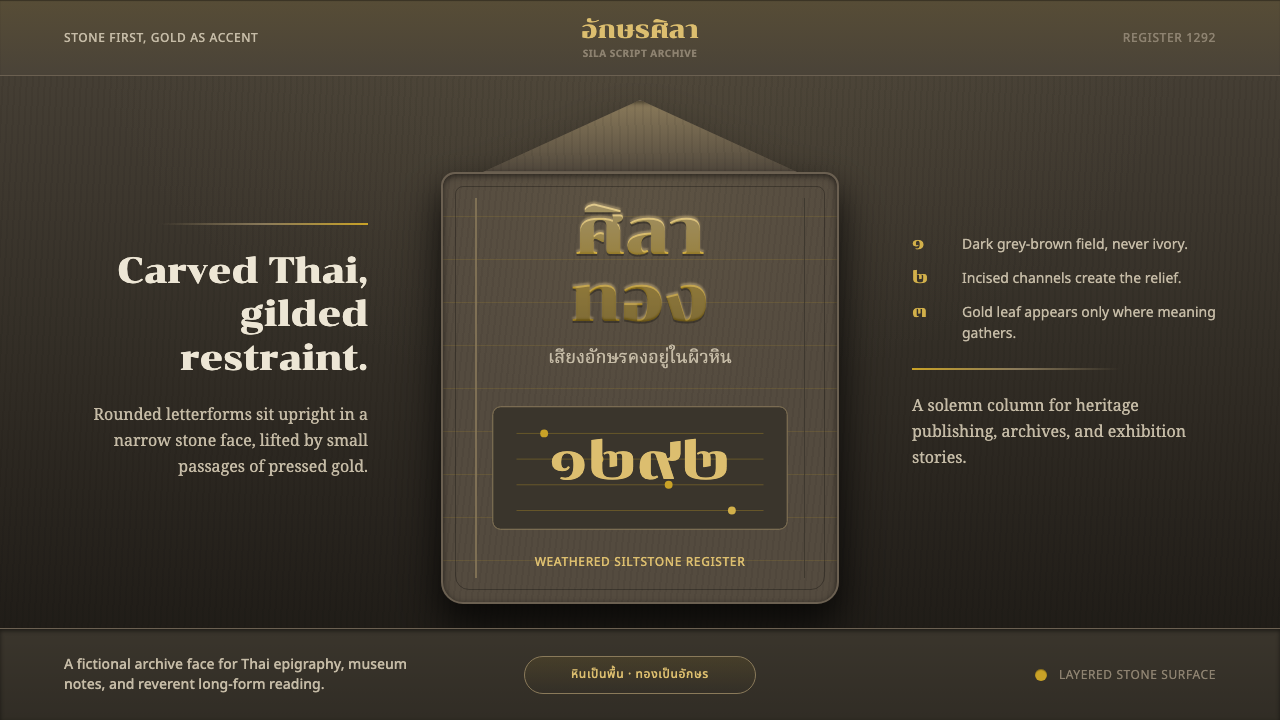 Sukhothai Thai ScriptStone carries the script. Chonburi Thai letters glint gold on dark siltstone.
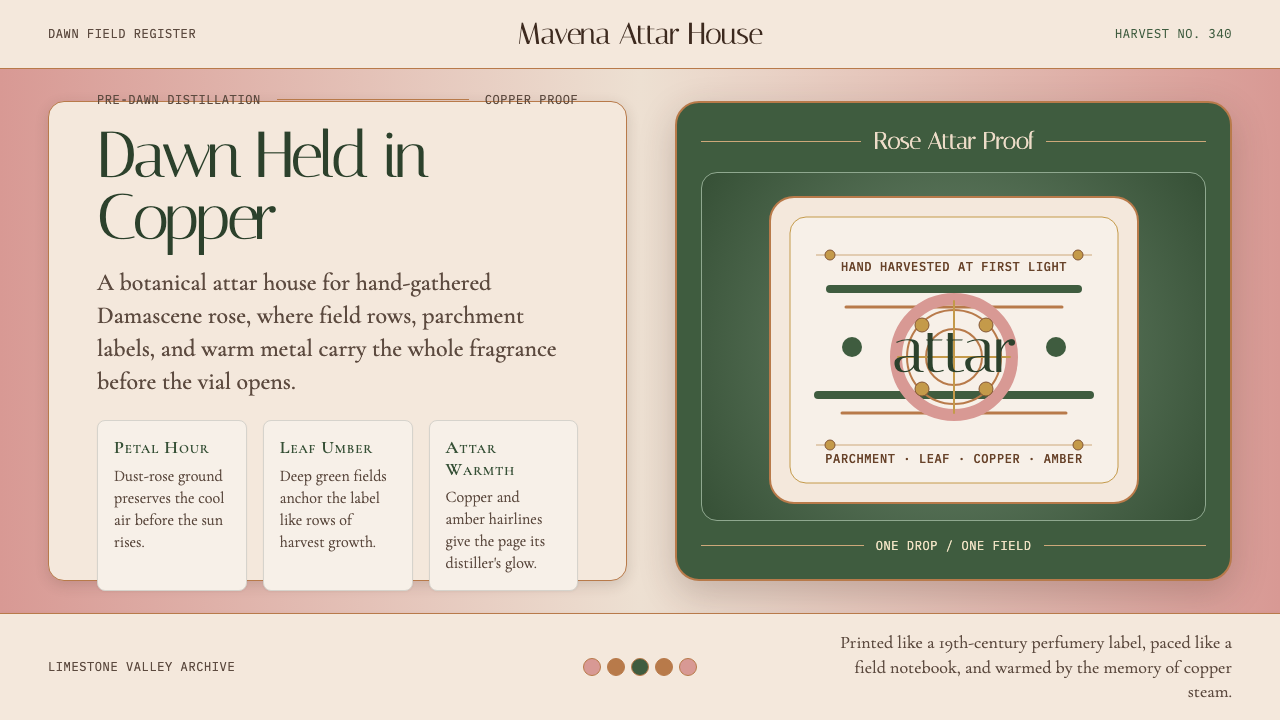 Bulgarian Kazanlak Rose ValleyDawn feels distilled. Dust-rose ground, leaf green, and copper label geometry…
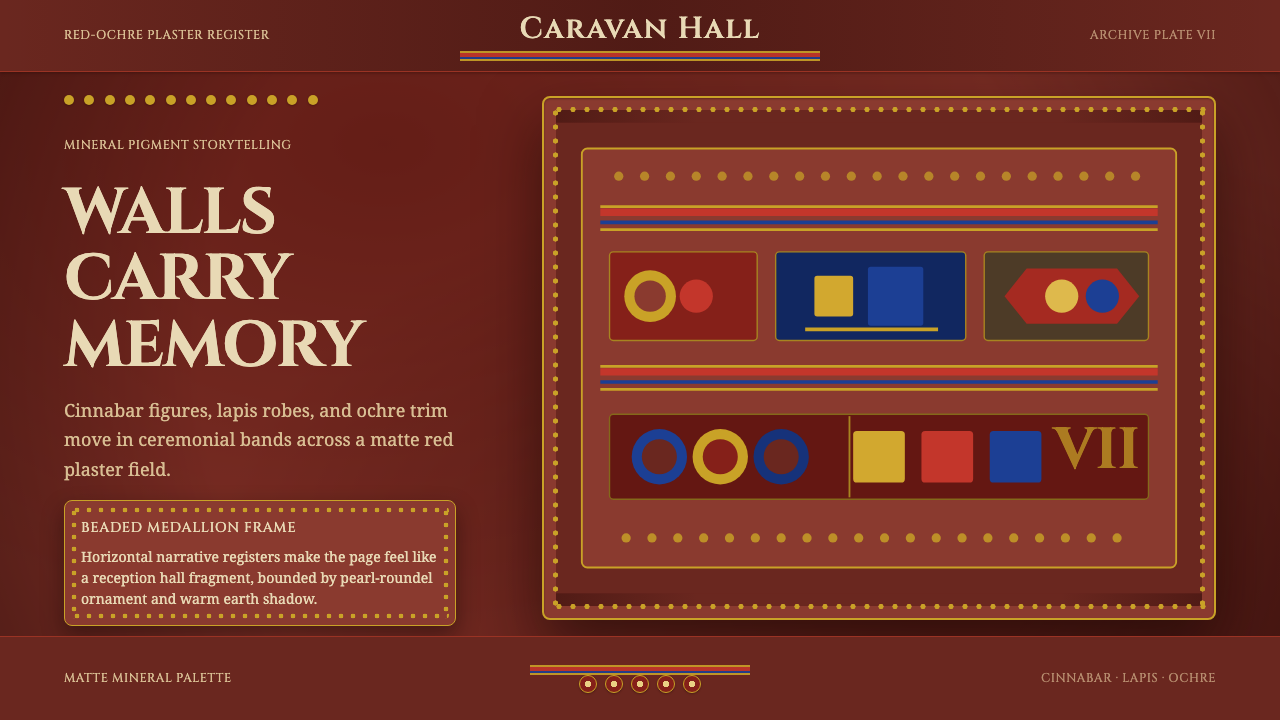 Sogdian FrescoAncient ceremony glows. Cinnabar, lapis and ochre stack into beaded fresco ba…
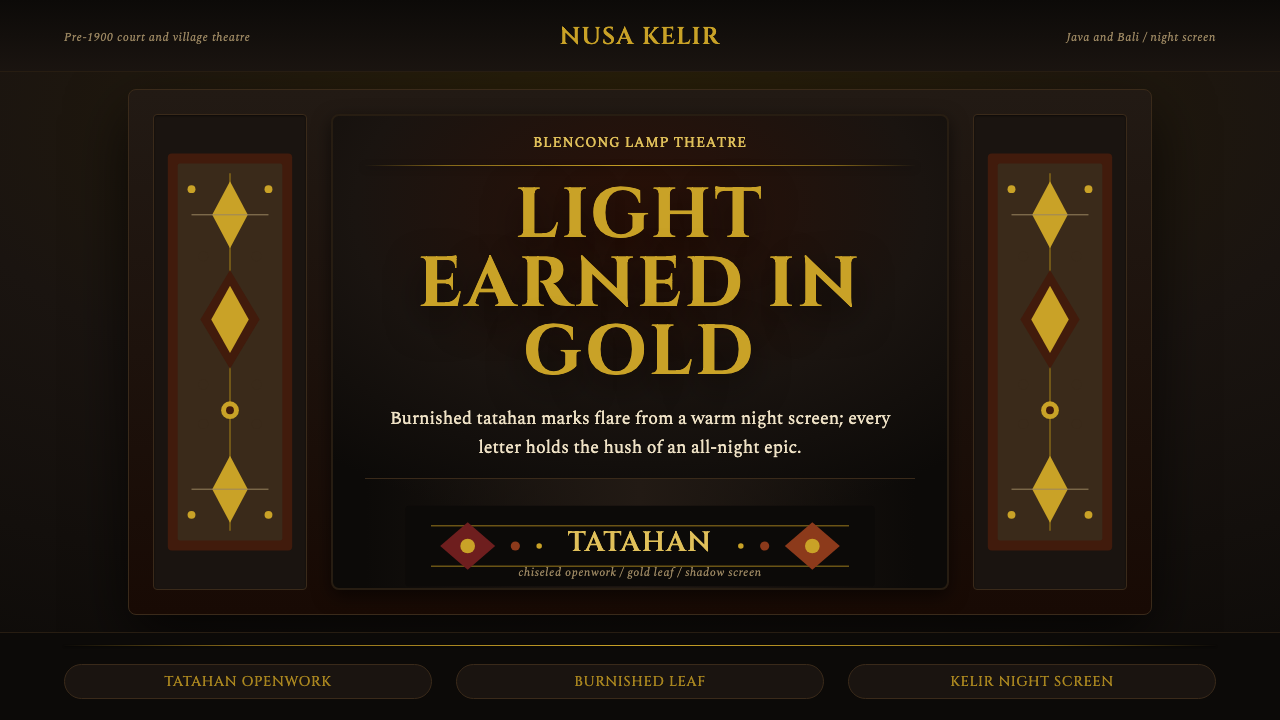 Wayang Kulit ShadowNight makes gold sacred. Cinzel capitals and perforated ochre frames glow lik…
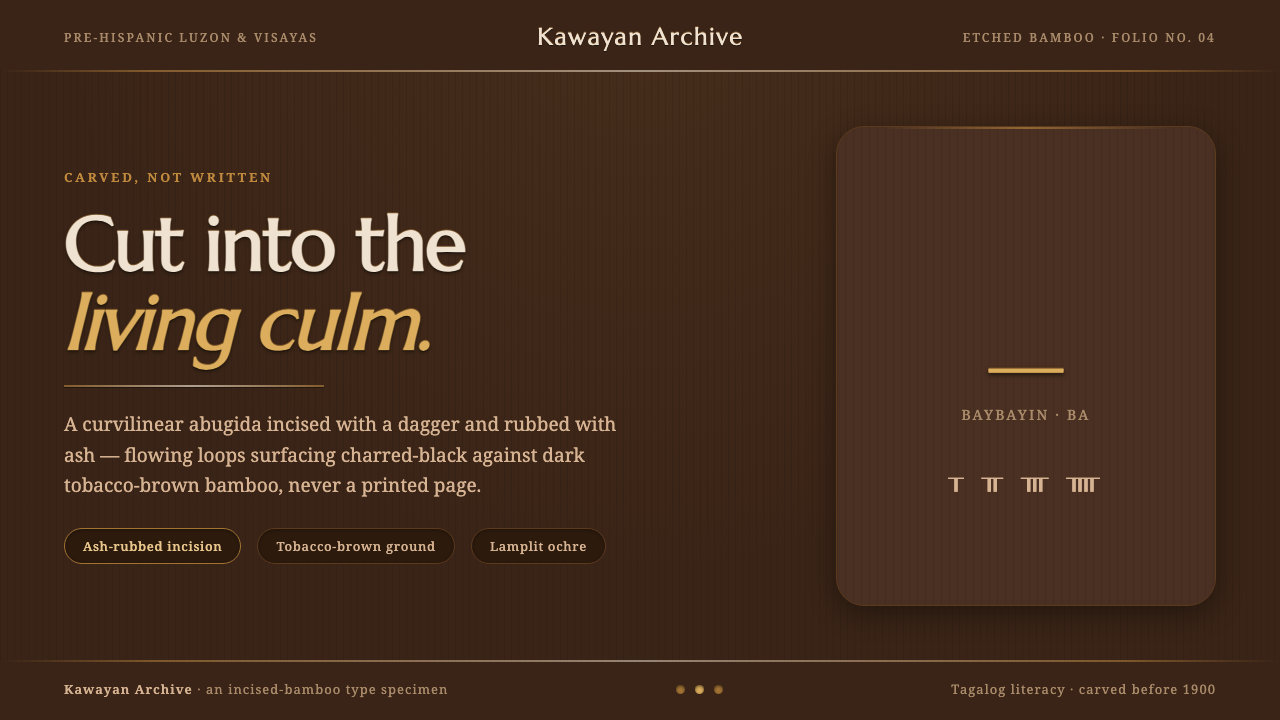 Baybayin ScriptCarved, not written. Curvilinear baybayin ash-rubbed into tobacco-brown bambo…
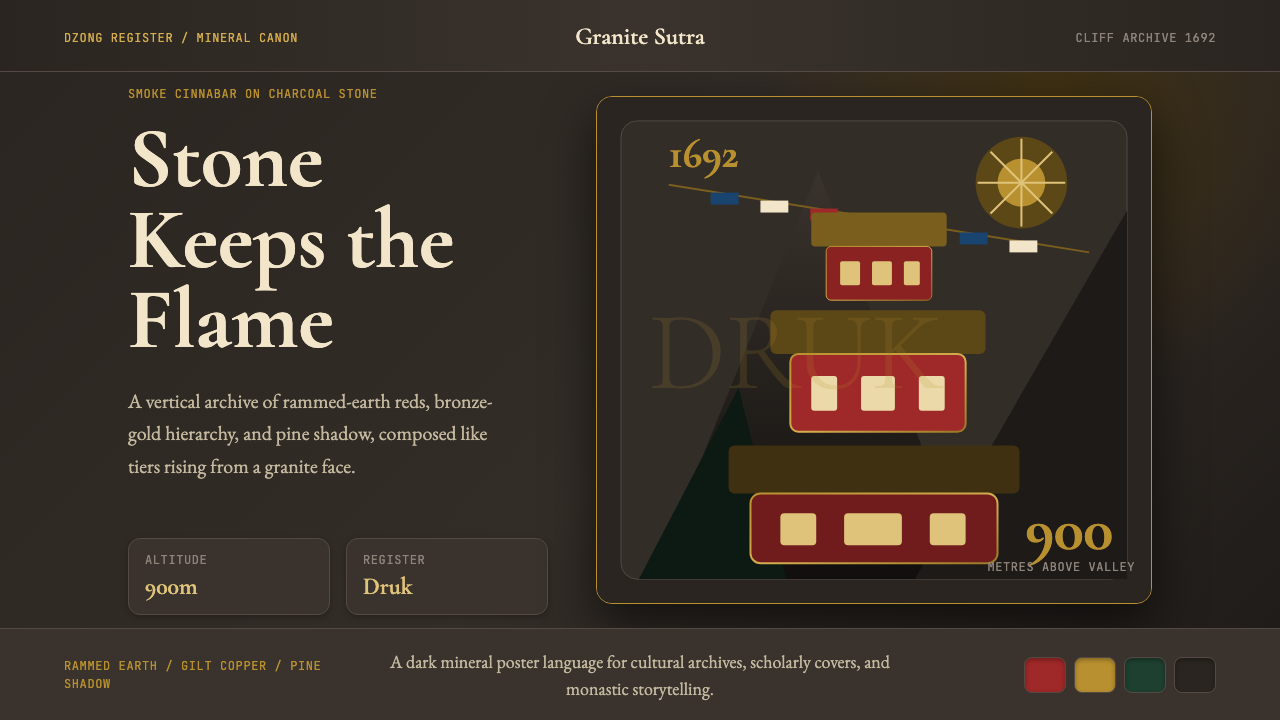 Bhutanese Tiger's Nest Cliff MonasterySacred altitude, mineral-dark. Cinnabar tiers and bronze rules climb charcoal…