What is Wayang Kulit Shadow?
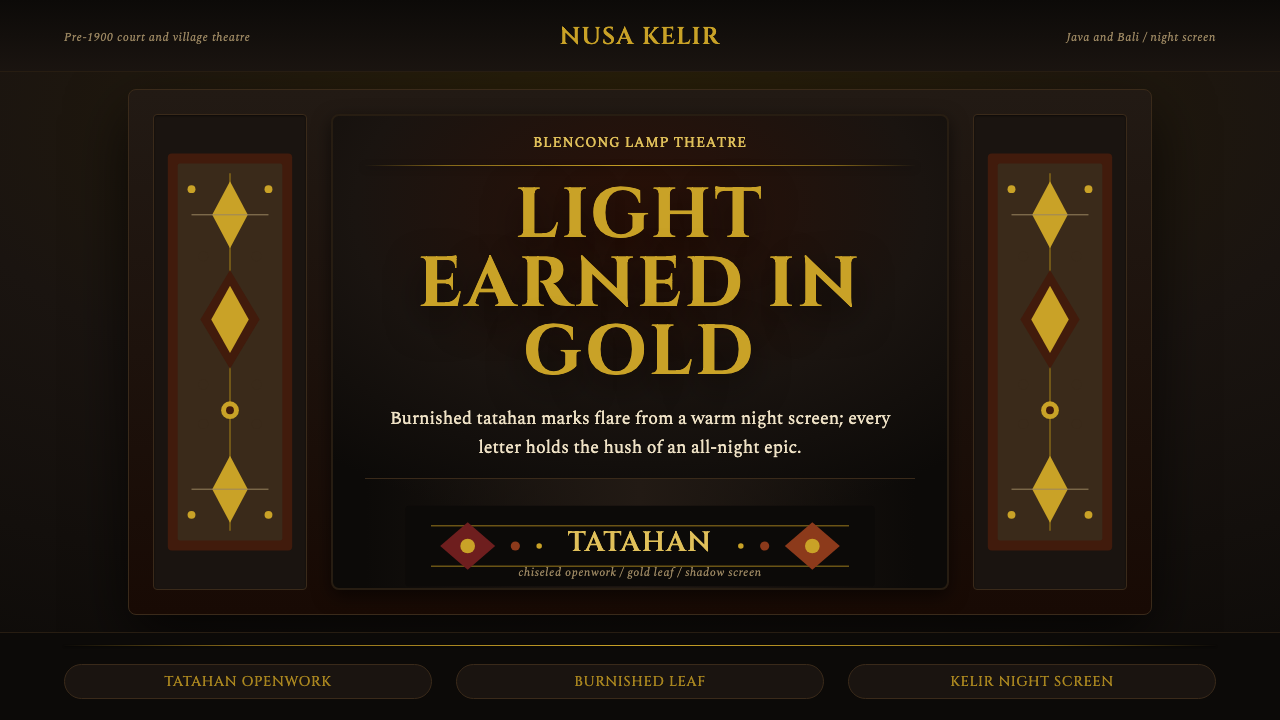
Wayang kulit turns darkness into a stage — gold leaf and lamp-cut silhouettes that make light itself feel like a thing worth earning.
Wayang Kulit Shadow in brief
Wayang kulit is the shadow-puppet theatre of Java and Bali, and the design language this system carries forward comes directly from its material craft: translucent figures chiseled from water-buffalo hide, painted in water-based pigment, finished in burnished gold leaf, and performed against a taut cotton screen called the kelir, lit from behind by a flickering oil lamp known as the blencong. As a visual system, it reads as gold and ochre emerging out of a warm, near-black ground — never a cold black, never a clean white, but the color of a room lit by a single small flame.
The defining visual habit of the style is openwork: every puppet is pierced with tatahan, the chiseled perforations that let lamplight leak through the hide in fine, lace-like patterns. Translated to a screen or a page, this becomes a taste for filigree edges and fine linework doing the job a heavy outline would do elsewhere — definition through absence, not added weight. Forms are elongated, profile-oriented, and flattened, the way a puppet must be flattened to throw a clean silhouette.
Nothing in this system is casual about light. Because the entire tradition exists to project shadow and glow across a screen, gold is treated as precious and rationed rather than applied everywhere — it appears where the lamp would catch hide and pigment, while the surrounding field stays in shadow. The result feels ceremonial and nocturnal at once: a style built for a night that never quite ends until the story does.
Where does Wayang Kulit Shadow come from?
Wayang kulit predates any single recorded founder or founding date — it is a long-standing performance tradition of Java and Bali whose puppet-carving and gilding crafts were refined over centuries within court workshops and village guilds, reaching the form recognized today well before 1900. Unlike a movement with a manifesto and a school, wayang kulit's visual language was authored collectively and anonymously: by generations of hide-carvers who developed the tatahan perforation technique, and by gilders who established the conventions for where gold leaf belongs on a puppet's silhouette.
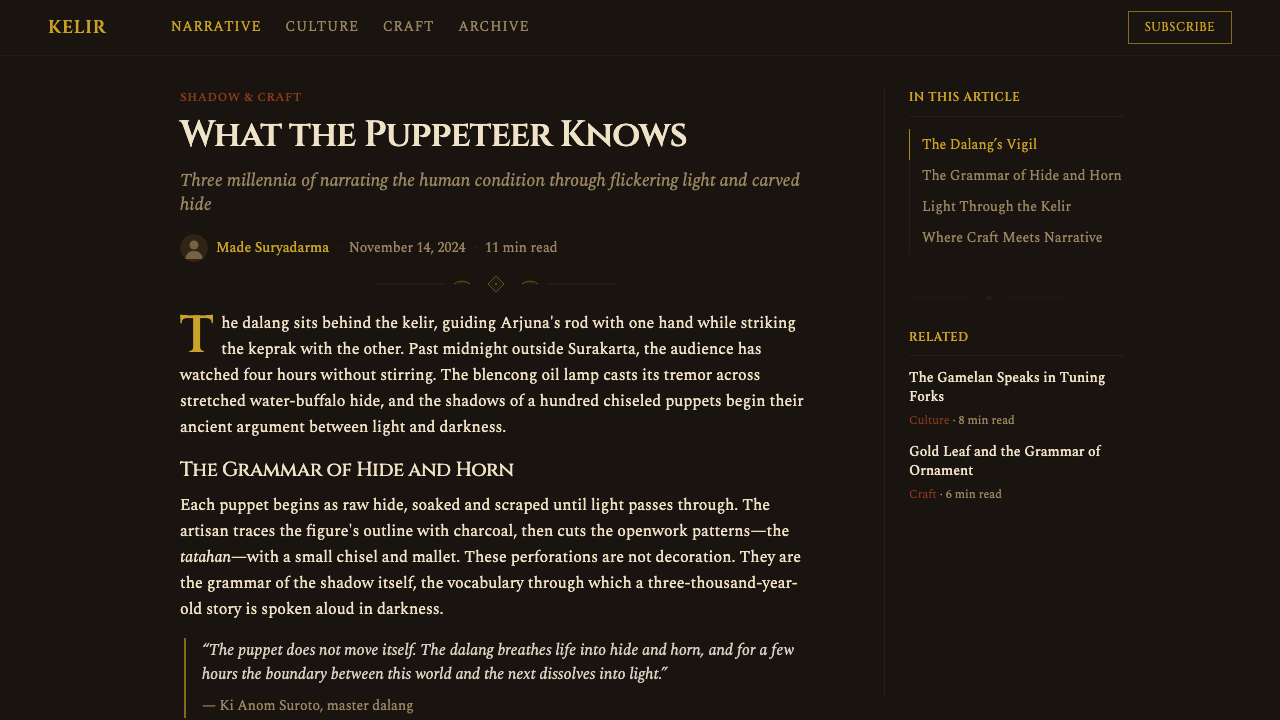
At the center of every performance stands the dalang — puppeteer, narrator, musical director, and often spiritual figure in one. Working alone behind the kelir screen, the dalang manipulates dozens of puppets and voices every character across an all-night performance watched from either side of the screen — one side seeing painted color and gold in lamplight, the other seeing pure shadow. This dual audience is not incidental to the visual system; it is the reason the puppets are pierced and painted with equal care on both faces, legible as silhouette and as gilded object at once.
The repertoire performed is overwhelmingly drawn from the Ramayana and Mahabharata, the two great Hindu epics that arrived in Java through centuries of Indian cultural contact and were then thoroughly localized with Javanese and Balinese court sensibilities. The puppets themselves became a way of encoding this hybrid identity: figures are carved and gilded according to strict iconographic conventions where posture, headdress, and color signal a character's moral nature and rank, refined generation after generation by anonymous craft lineages rather than by any single named artist.
Because the tradition has no founding date and no manifesto to point to, its authority comes instead from continuity and craft transmission — a workshop lineage of carvers, painters, and gilders passing technique hand to hand. What this design system inherits is not a period style tied to one decade, but a material logic refined over an extremely long duration: gold means light, perforation means light passing through darkness, and the near-black ground is simply the truth of the medium — night, screen, and lamp.
What defines the Wayang Kulit Shadow look?
Color
The ground is a warm near-black, never a cold or pure black — closer to the color of a dim room lit by one small flame than to ink or void. Against it, gold and ochre carry almost all of the visual weight, used sparingly and where it counts, like lamplight catching gilded hide rather than flooding a whole surface. There is no white in this system; light is always warm, always a little scarce, and always earned rather than given freely.
Silhouette and Line
Forms are elongated and shown in profile, flattened the way a puppet must be flattened to throw a clean shadow on a screen. Definition comes from fine, lace-like linework rather than heavy outlines — the visual memory of tatahan, the chiseled openwork that lets lamplight pierce the hide in perforated patterns. A border or divider in this system reads as pierced filigree, not a solid ruled line.
Ornament and Openwork
Ornament in this style is functional before it is decorative: perforation exists to let light through, and only secondarily to please the eye. This produces a density of fine detail at the edges of forms — headdresses, borders, framing devices — that thins out toward flatter interior fields, mirroring how a real puppet concentrates its chiseled openwork at the silhouette and drapery while leaving broader planes of hide comparatively plain.
Ground and Contrast
The near-black ground is not a backdrop to be filled but the visual subject in its own right — it is the night the story happens in. Contrast is therefore extreme and deliberate: gold against near-black reads with the intensity of a flame in a dark room, and this system resists softening that contrast with mid-tone fills or muted secondary colors, since doing so would dilute the very drama the tradition is built on.
Composition and Staging
Because the source medium is a performance staged on a screen, composition in this style favors a sense of staging over a sense of static layout: a clear central figure or focal element, supporting elements arranged with the deliberateness of puppets positioned around a dalang's central action, and generous darkness left around the gold — negative space is not empty, it is the night the figures are performing against.
Motion and Flicker
The historic light source is a live oil flame, so any sense of glow or highlight in this system should feel warm and slightly alive rather than fixed and mechanical — closer to candlelight catching an edge than to an even studio wash. Where interactive or animated elements are used, a gentle, flame-like unevenness in a highlight is more faithful to the tradition than a perfectly uniform glow.
Material Presence
The tradition's materials — cured hide, water-based pigment, burnished gold leaf — all carry a handmade, slightly imperfect warmth that a system built from this style should preserve. Surfaces should feel like burnished metal and painted skin rather than uniform digital gradients; gold especially should read as leaf catching light unevenly, not as a flat metallic fill.
Who shaped Wayang Kulit Shadow?
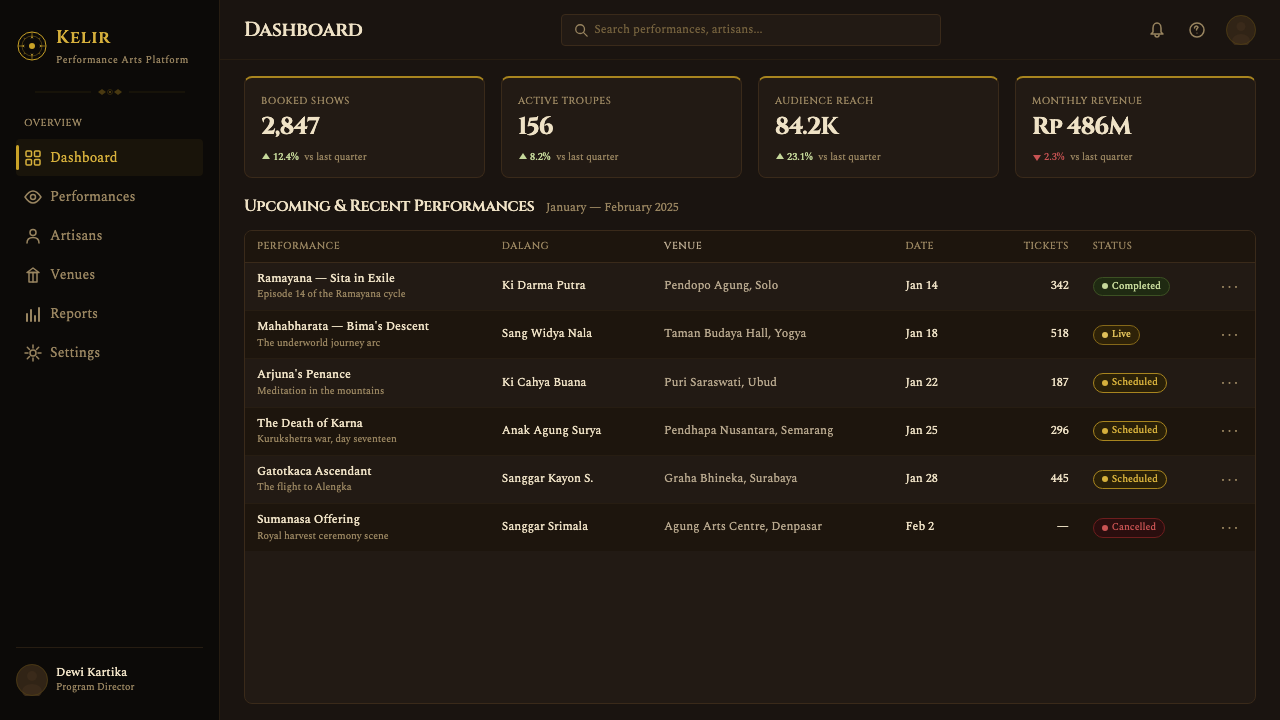
The dalang is puppeteer, narrator, and musical director combined — the single performer who manipulates every puppet, voices every character, and cues the gamelan ensemble across a performance that can run through the night. Because the dalang works alone behind a screen seen from both sides, the entire visual and dramatic system had to be legible as both painted color and pure shadow simultaneously, which is the root of this style's obsession with silhouette clarity and light-through-openwork.
The generations of unnamed craftsmen who developed and refined tatahan — the chiseled perforation technique that lets lamplight pierce a puppet's hide in fine patterns — are the true authors of this style's signature openwork. Their work was passed down through workshop lineages rather than attributed to individuals, and the conventions they established for where a puppet should be pierced, and how densely, remain the structural logic behind this system's approach to ornament and edge detail.
The craftsmen responsible for applying burnished gold leaf to finished puppets established the tradition's core visual economy: gold is rationed, placed only where it will catch the lamp's light, and never applied as a flat, even coating. This is the direct source of this system's central design principle — that gold and light are precious, deployed with intention against a dark field rather than spread indiscriminately.
As the overwhelming source of wayang kulit repertoire, these two Hindu epics — absorbed into Java over centuries and thoroughly localized with Javanese and Balinese court sensibilities — shaped not just the stories told but the iconographic conventions for how characters are carved, posed, and gilded according to rank and moral nature. The epic tradition is the reason this style carries a sense of ceremony and narrative gravity rather than reading as purely decorative.
How do you use Wayang Kulit Shadow today?
This style transfers well wherever a product wants to feel ceremonial, nocturnal, and precious rather than bright and utilitarian — the core discipline to preserve is treating gold as scarce and earned, not as a decorative accent scattered everywhere. Applying it correctly means starting from the near-black ground and asking where light would actually fall, rather than starting from a light background and adding gold trim.
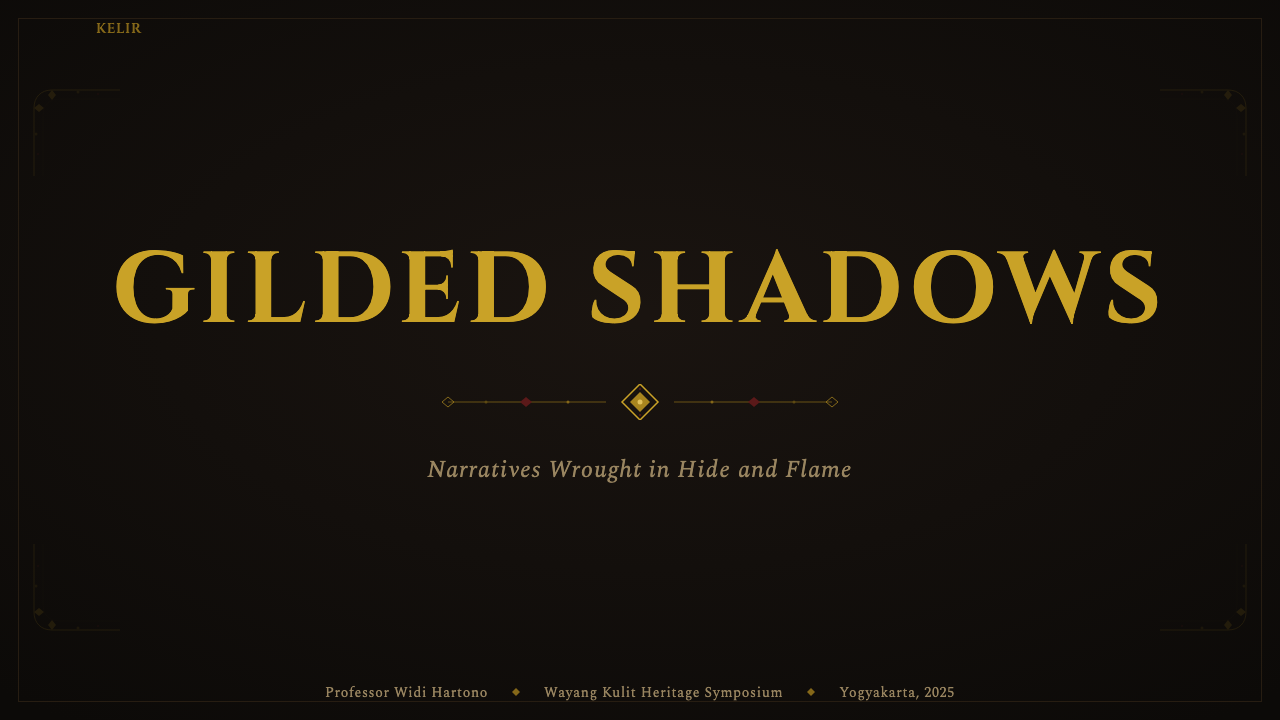
For presentation slides, this style is strong on cover and narrative-heavy content slides. A cover works well as a near-black field with a single gilded silhouette or emblem placed with the deliberateness of a puppet on a kelir screen, title type kept restrained so the gold detailing carries the drama. Content and data slides should use gold sparingly for the figure that matters most — a single highlighted metric or headline — while supporting text stays in muted ochre or warm grey, preserving the sense that gold marks what the lamp is meant to catch.
For web interfaces, this style suits dashboards and pricing pages that want to feel premium and considered rather than clinical — a near-black canvas, fine perforated or filigree dividers standing in for hard rules, and gold reserved for the single most important call to action or the tier the product wants to feel most desirable. Overusing gold across every button and icon collapses the hierarchy the style depends on; a page should have only one or two gold moments per view, exactly as a puppet's gilding concentrates at specific points rather than covering the whole hide.
For editorial and marketing work, the style rewards long-form, narrative-driven layouts — a large near-black hero field, an elongated silhouette treatment, and pull-quotes rendered in fine openwork rather than bold rules. Marketing pages benefit from the ceremonial pacing of a performance: a slow reveal of gold detail against darkness reads as considered and premium rather than simply festive.
The common mistake is treating this as a generic 'gold-on-black luxury' template and losing the openwork and staging that make it specific — flooding a layout with gold trim, using cold pure black instead of a warm near-black ground, or adding hard, evenly-lit shadows instead of the soft, flame-like glow the tradition implies. Without the fine perforated linework and the sense of light being rationed, the result reads as generic opulence rather than wayang kulit.
Wayang Kulit Shadow — FAQ
Is wayang kulit the same thing as shadow puppetry in general?
Wayang kulit is a specific tradition of shadow puppetry native to Java and Bali, distinguished by its particular materials and craft — hide chiseled with tatahan openwork, water-based pigment, and burnished gold leaf — and by its performance context, staged behind a kelir screen lit by an oil lamp and narrated by a single dalang. Other cultures have their own shadow-puppet traditions with different materials, iconography, and staging conventions. This design system draws specifically from the Javanese and Balinese wayang kulit vocabulary, not from shadow puppetry as a generic category.
Why is the background never pure black or pure white in this style?
The visual world of wayang kulit is defined by a single warm flame lighting a screen from behind — that is a warm near-black, not the cold black of ink or a digital void, and it is never white because the entire tradition exists precisely because true daylight brightness is absent. A pure black ground loses the sense of a lived, flickering light source; a white ground abandons the nocturnal premise entirely. The warmth of the near-black ground is what makes the gold read as earned light rather than as an arbitrary color choice.
How much gold is too much gold in a wayang kulit-derived layout?
As a rough discipline, gold should mark the one or two elements per view that the eye is meant to land on first — a headline number, a primary call to action, a focal emblem — while everything else stays in muted ochre, warm grey, or the near-black ground itself. This mirrors how a physical puppet concentrates gold leaf at specific points of its silhouette rather than covering the entire hide. If gold appears on every button, icon, and border in a layout, the hierarchy collapses and the effect reads as generic opulence rather than the rationed, precious light the tradition is built on.
Can this style work in a light, daytime-feeling product?
It resists this more than most historical styles, because the near-black ground and the drama of gold against darkness are not surface decoration — they are the entire premise, rooted in a performance staged specifically at night against a lamplit screen. A daytime or light-background adaptation tends to lose the sense of scarcity and ceremony that makes the style legible, and risks becoming generic gold-accent decoration disconnected from its source. This style is best reserved for contexts that genuinely want a nocturnal, ceremonial register rather than forced onto a bright, daytime product.
What is the relationship between the puppet's function and the design system's ornament rules?
Every ornamental choice in this style traces back to a functional origin: perforation exists so lamplight can pass through hide, gold is placed so it will catch that same light, and silhouettes are flattened and elongated so they throw a legible shadow. This means ornament in a wayang kulit-derived system should always answer the question 'where would light actually fall or pass through here,' rather than being applied as generic decorative flourish. Treating the openwork and gold placement as arbitrary decoration — rather than as light-carrying structure — is the fastest way to produce a pastiche that borrows the palette without the logic.
Related design styles
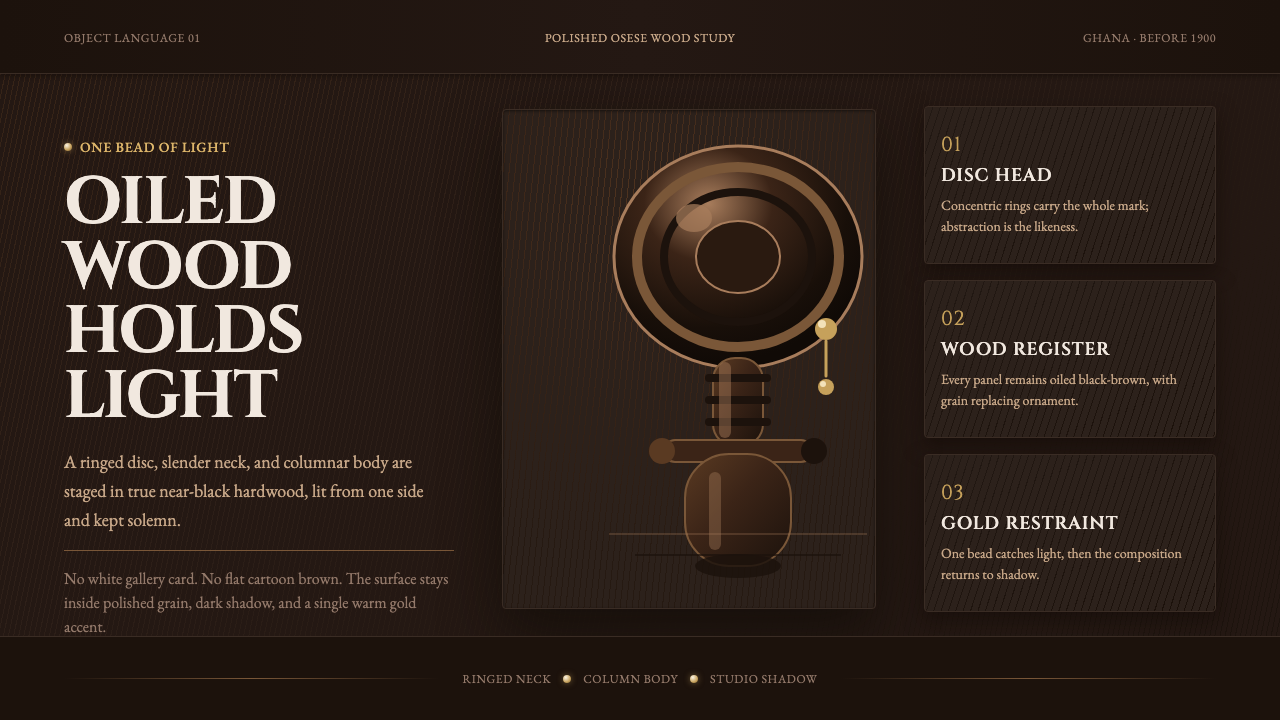 Akuaba Akan Fertility DollDarkness becomes sculpture. Near-black wood, ringed geometry, and one gold be…
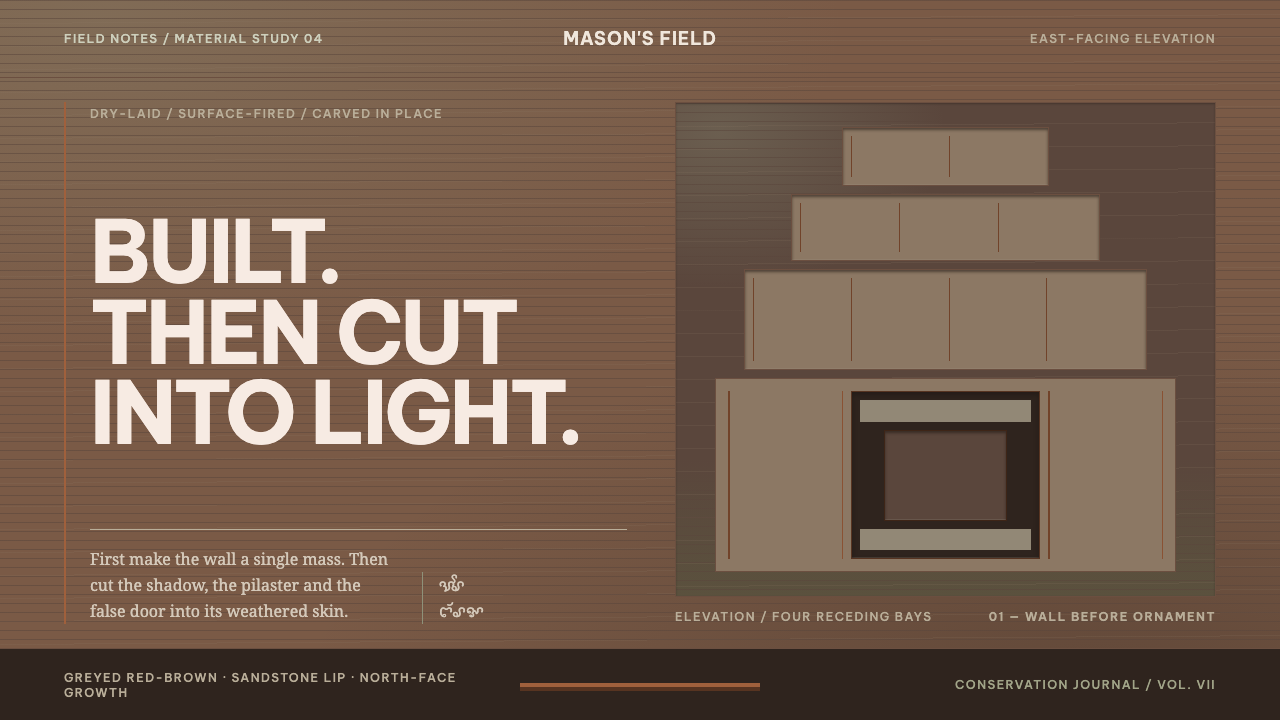 Cham My Son TowersWall before ornament. Greyed brick bays recede around cut shadows and sandsto…
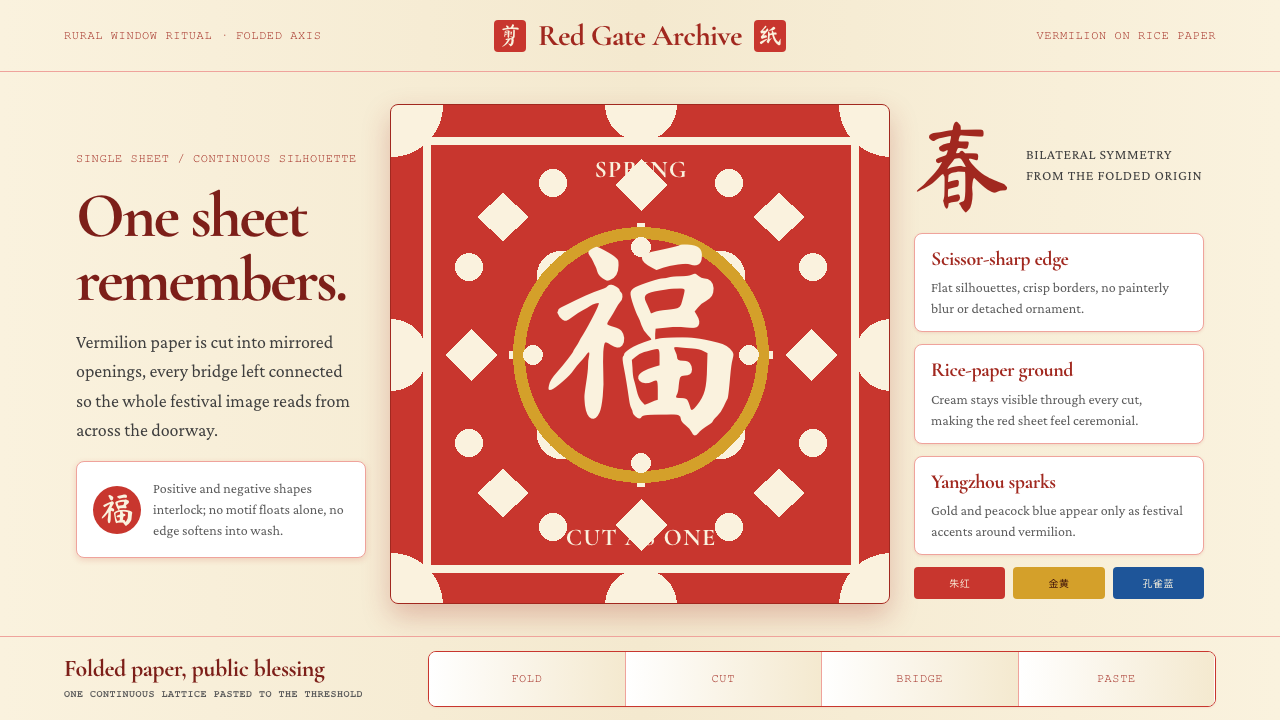 Chinese Jianzhi Paper-CuttingRitual red, cut as one. Vermilion lacework on rice-paper cream locks every sh…
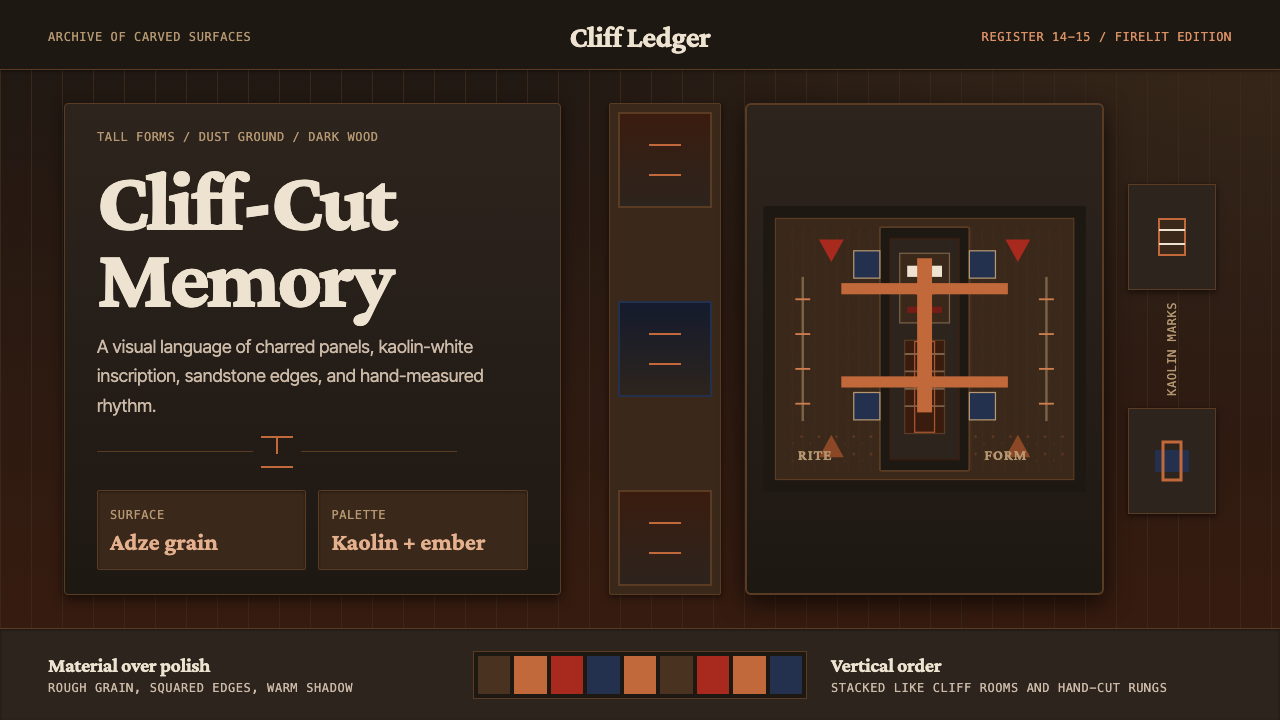 Dogon Bandiagara Cliff MaskHand-hewn gravity. Charred wood, kaolin type, and sandstone geometry stack li…
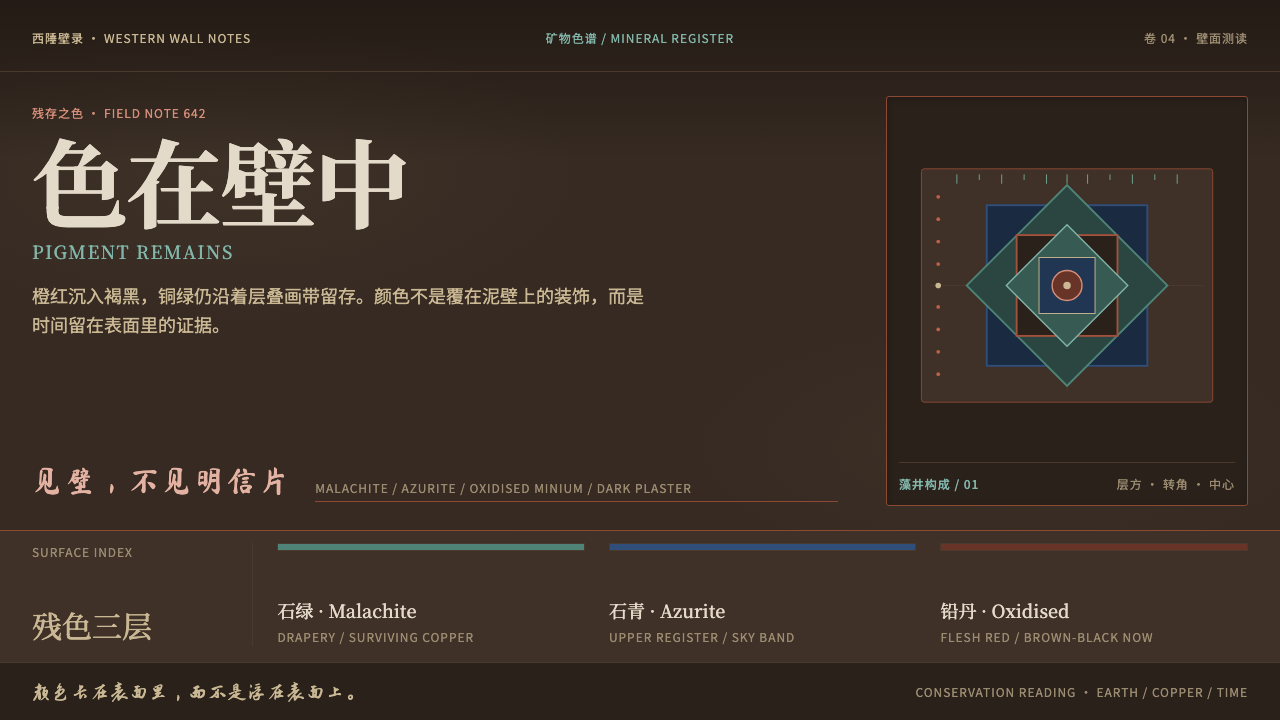 Dunhuang Mogao MuralsTime lives in the wall. Mineral green and azurite endure on oxidised brown pl…
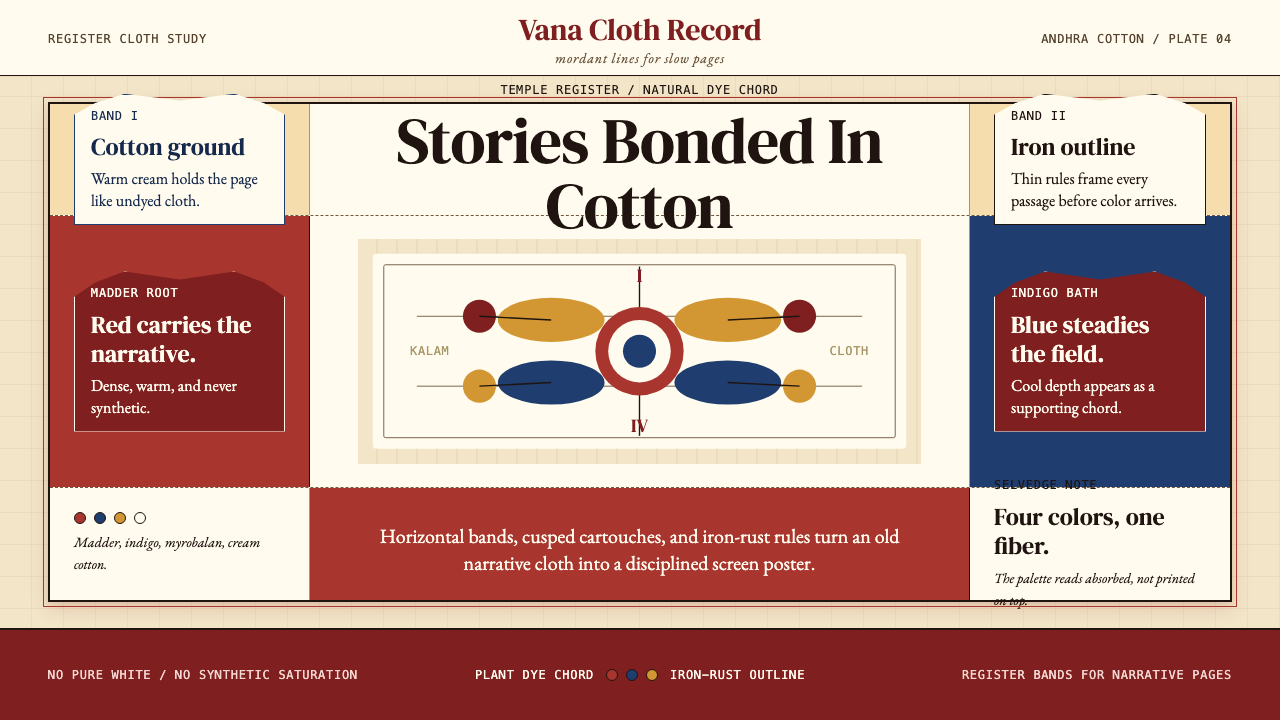 Kalamkari (Andhra Pradesh)Cloth becomes narrative. Madder bands, indigo panels, and iron rules stack li…