What is Bambara Chi Wara Antelope?
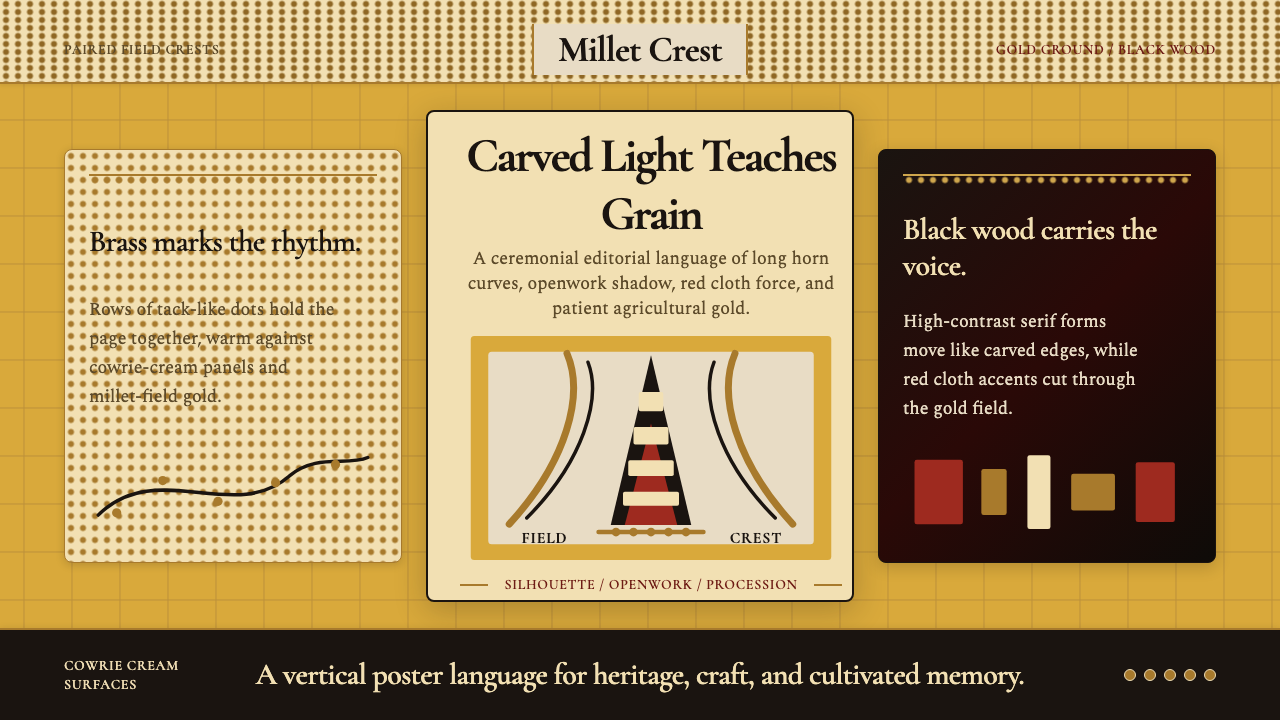
Chi Wara is the carved antelope headdress of the Bamana people of Mali — a silhouette of myth, ritual, and agricultural devotion that translates into a visual language of gold grounds, lacquered wood type, and brass-tack dot borders.
Bambara Chi Wara Antelope in brief
Bambara Chi Wara Antelope is a West African design aesthetic rooted in the carved ceremonial headdresses of the Bamana (also called Bambara) people of southern Mali. The Chi Wara headdress — depicting a mythical antelope who taught humanity to farm — is worn in paired male-and-female form during agricultural initiation dances, its long curved horns and openwork mane rising dramatically above the dancer's head. The visual system derived from this tradition is defined by bold silhouette, organic curvilinear geometry, millet-field gold grounds, lacquered-wood dark type, and an accent vocabulary of cowrie shells and brass tack dots.
Unlike geometric abstraction rooted in European modernism, the Chi Wara aesthetic is simultaneously symbolic and ornamental in a purposeful sense: every element carries ritual meaning. The curving horn-arc is not mere decoration but a representation of the antelope's mythic power; the brass-tack dot border is an echo of the actual hardware applied to ceremonial objects; the deep warm gold evokes both the millet grain and the ochre-rich soils of the Sahel. This is a visual language where ornament and meaning are inseparable — closer in spirit to illuminated manuscript borders or Kente cloth pattern than to the zero-ornament traditions of Western modernism.
As a contemporary design style, Chi Wara occupies a rare position: it is simultaneously ancient and immediately legible, culturally specific and visually universal. The sweeping horn-arc divider, the warm ground, and the silhouette-forward composition communicate authority and warmth in equal measure, making it valuable for contexts that require both gravitas and approachability — cultural institutions, arts organizations, premium food and agricultural brands, and editorial work that seeks a non-Western referent without resorting to cliché.
Where does Bambara Chi Wara Antelope come from?
The Bamana people of southern Mali — whose major cultural centers include the Ségou, Bamako, and Koulikoro regions — have sustained one of the most sophisticated sculptural traditions in sub-Saharan Africa over several centuries. The Chi Wara society, an initiation association tied to agricultural knowledge and productivity, was among the most significant social institutions in Bamana life from at least the eighteenth century through the early twentieth century. Membership in Chi Wara conveyed both agricultural skill and spiritual standing; the association's initiation dances, in which paired male and female headdresses were worn, marked the transitions of the farming calendar and honored Ci Wara, the mythical being who is said to have descended to earth and taught the first humans to cultivate the land.
The headdresses themselves represent the pinnacle of Bamana carving. Executed in hardwood — typically darkened with lacquer or oil — each crest combines the body of an antelope with symbolic additions: the zigzag mane, which references the motion of agricultural cultivation; the elongated horns, which in the vertical style of the Ségou region reach dramatically upward; and in the horizontal style of the Bougouni area, sweep out laterally like the horns of the roan antelope. Brass tacks were hammered into the surface not merely as decoration but as a mark of status and completion; cowrie shells, threaded at the base, connected the object to trade networks that spanned from the West African coast to the Saharan interior. The aesthetic vocabulary that results — silhouette, curve, punctuated dot, warm dark ground — is not arbitrary but carries the full weight of the object's social and spiritual function.
European contact with Chi Wara objects began in earnest during the French colonial period in the late nineteenth and early twentieth centuries. French ethnographers and colonial administrators collected hundreds of headdresses, and by the early twentieth century Chi Wara crests were entering European museum collections and private hands with increasing speed. The French sculptor Henri Matisse is among those documented to have studied African sculptural forms, including Mande objects, during the period when primitivist interest in non-Western art was reshaping European modernism. Scholars including Dominique Zahan, who published foundational ethnographic studies of Bamana initiation societies in the 1960s, and Patrick McNaughton, whose research on Mande blacksmiths and sculptors established the social and technical context for Chi Wara production, have since built a substantial body of knowledge about the headdresses as art-historical objects. Pascal James Imperato's documentation of Chi Wara performance practices added the crucial dimension of the objects in use — not static carvings but animate presences in ritual space.
The Chi Wara tradition underwent significant transformation during the twentieth century. French colonial policy disrupted initiation societies across the Sahel region, and the pace of Chi Wara production as an active ceremonial practice slowed substantially by mid-century. However, the form never disappeared: Bamana sculptors continued to produce Chi Wara headdresses for both continuing local ritual use and the expanding international art market. Mali's independence in 1960 brought renewed attention to Chi Wara as a symbol of national identity — the image of a Chi Wara crest became one of the country's most recognized cultural emblems. Today, Chi Wara imagery appears on Malian currency, in official state contexts, and in the work of contemporary African designers and artists who engage with the tradition as both historical inheritance and living aesthetic resource.
What defines the Bambara Chi Wara Antelope look?
Silhouette-Forward Composition
The defining compositional logic of Chi Wara is the bold silhouette read at a distance. Forms are designed to be immediately legible as outlines — the antelope's horns, mane, and body are comprehensible as a flat shape before any surface detail registers. In interface and print applications, this translates to compositions where key visual elements are anchored by strong outline shapes rather than modeled or photographic imagery, and where figure-ground contrast is maximized.
Warm Gold Ground
The characteristic ground of this aesthetic is a saturated, earthen gold — evoking millet grain, sun-baked Sahel soil, and the burnished surfaces of ceremonial objects. This is not the cool metallic gold of European heraldry but a warmer, more organic tone with amber and ochre undertones. It reads as simultaneously luminous and grounded, creating a visual warmth that distinguishes Chi Wara-inspired work from both stark monochrome traditions and the cooler color fields of European design history.
Lacquered Wood Typography
Type in this system draws its character from the dark, lacquered surface of the Chi Wara headdress wood. Text is rendered in deep, warm blacks and dark browns — not a neutral digital black but a color with depth and slight warmth, as if the ink itself has absorbed some of the material's richness. Letterforms tend toward the substantial and considered: serifs carry historical weight appropriate to the aesthetic's ceremonial origins, and scale contrast between headline and body text is pronounced, evoking the visual hierarchy of an object designed to be read from a distance.
Brass-Tack Dot Borders
One of the most distinctive surface qualities of Chi Wara headdresses is the pattern of brass tacks hammered into the wood — a rhythmic, dotted border that marks the object's edges and articulates its surfaces. In graphic applications, this translates into dot or small-circle border treatments: regular, evenly spaced sequences of small golden dots that frame sections, divide content areas, or accent headings. The dot border carries a material memory — it signals craft, deliberateness, and the vocabulary of decorated ceremonial objects — without requiring any literal reference to the source tradition.
Horn-Curve Dividers
The sweeping arc of the Chi Wara's horns — rising in a long, graceful curve from the base to the tip — provides the aesthetic's most distinctive compositional element: the horn-curve divider. In layout applications, this appears as a bold curvilinear line or band that separates sections of content, not as a mechanical rule but as a drawn, organic gesture. The curve has direction and energy; it implies motion and growth rather than static boundary-setting, evoking the agrarian mythology of the headdress without literal representation.
Openwork and Negative Space
The mane of the Chi Wara headdress is traditionally carved in openwork — a latticed or pierced pattern that lets light through. This creates a visual dynamic where the positive form (the carved wood) and the negative space (the voids) are equally active. In graphic work, this principle manifests as generous negative space treated as a compositional element in its own right: breathing room that is as deliberate as any solid element, and layouts where the ground — the gold field — is not a passive background but an active participant in the composition's balance.
Ritual Warmth and Material Memory
Unlike cool, industrial design systems, the Chi Wara aesthetic carries what might be called ritual warmth: the sense that designed objects have been handled, used in ceremony, and bear the traces of human presence. This manifests in slight organic variation rather than mechanical precision — borders that feel drawn rather than programmatically generated, type that carries the weight of carved or stamped letterforms, and color palettes where even the gold reads as slightly variable, like a material surface rather than a flat digital fill. The result is a visual system that feels authoritative without coldness.
Who shaped Bambara Chi Wara Antelope?
McNaughton's ethnographic and art-historical research on Mande blacksmiths established the social, technical, and cosmological context in which Chi Wara headdresses were produced. His work demonstrated that Chi Wara carving was not a generic craft practice but a specialized activity embedded in the social structure of Bamana communities, carried out by blacksmiths whose ritual status gave them unique access to the materials and knowledge required. This scholarship fundamentally shaped how Chi Wara is understood as an art-historical category rather than a generic label for West African sculpture.
The French ethnographer Zahan produced foundational studies of Bamana initiation societies — including the Chi Wara association — in the 1960s, based on fieldwork conducted in the Ségou region of Mali. His accounts established the ritual function of the headdresses within the agricultural calendar and the social organization of the Chi Wara society itself. Zahan's work provided the interpretive framework through which subsequent scholars and, eventually, designers have understood the symbolic content embedded in the headdress's visual vocabulary.
Matisse is among the European artists documented to have engaged with West African sculptural forms — including objects from the Mande tradition — during the early twentieth century, when primitivist interest in non-Western art was reshaping the French avant-garde. While Matisse did not produce a systematic engagement with Chi Wara specifically, his work demonstrates the pathways through which Bamana sculptural aesthetics entered European visual culture and influenced the development of modernist form language, particularly in the treatment of silhouette, organic curve, and decorative pattern.
Imperato's documentation of Chi Wara performance practices — recording the headdresses as they were actually used in agricultural initiation dances across southern Mali — added the essential dimension of the object in motion and in ritual context. His accounts made clear that Chi Wara aesthetics are inseparable from the kinetics of ceremonial use: the paired male and female headdresses were designed to be read in movement, their curves and silhouettes animated by the dancers' gestures. This understanding of the aesthetic as a performance object, not merely a static sculpture, informs how the visual system functions most authentically.
How do you use Bambara Chi Wara Antelope today?
The Chi Wara aesthetic is most effectively applied in contexts where warmth, authority, and cultural depth are valued simultaneously — contexts that want to signal heritage and craft without sacrificing clarity or contemporary legibility. This is a style that rewards careful placement: it can anchor an entire visual system or function as a distinguished accent within a broader design language, but it requires that the designer understand the difference between reference and appropriation, and bring a corresponding specificity to the application.
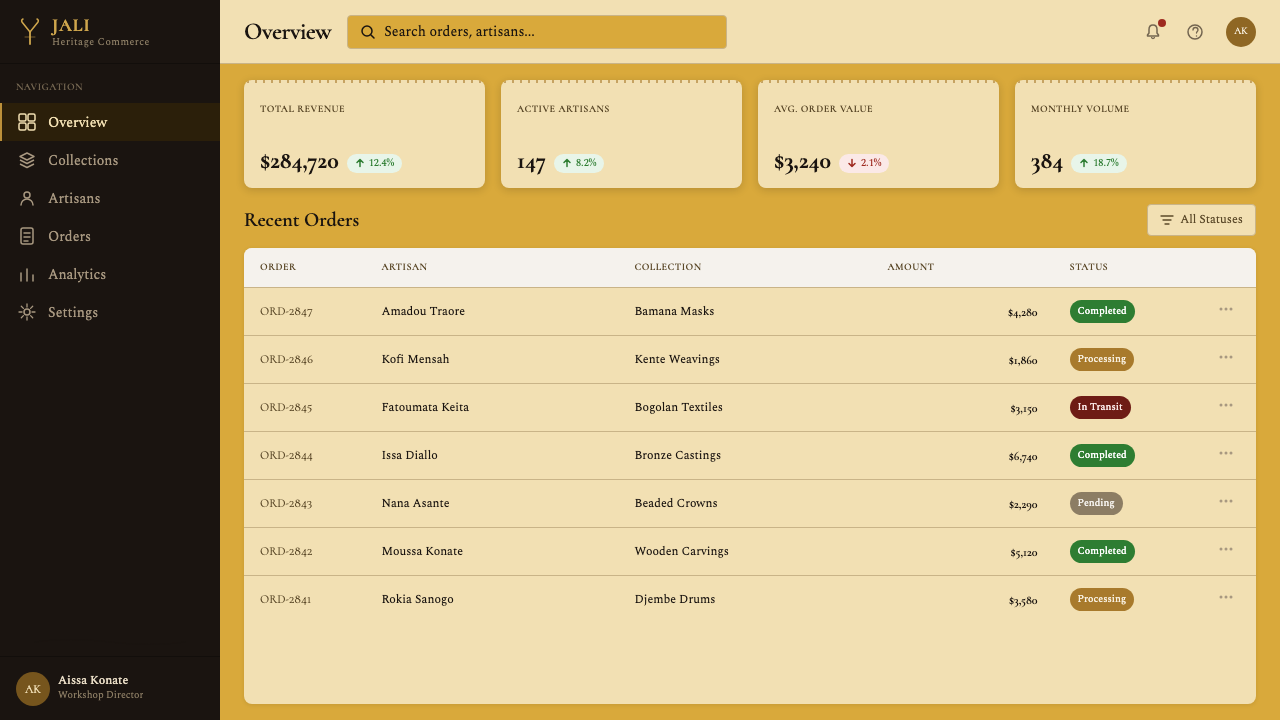
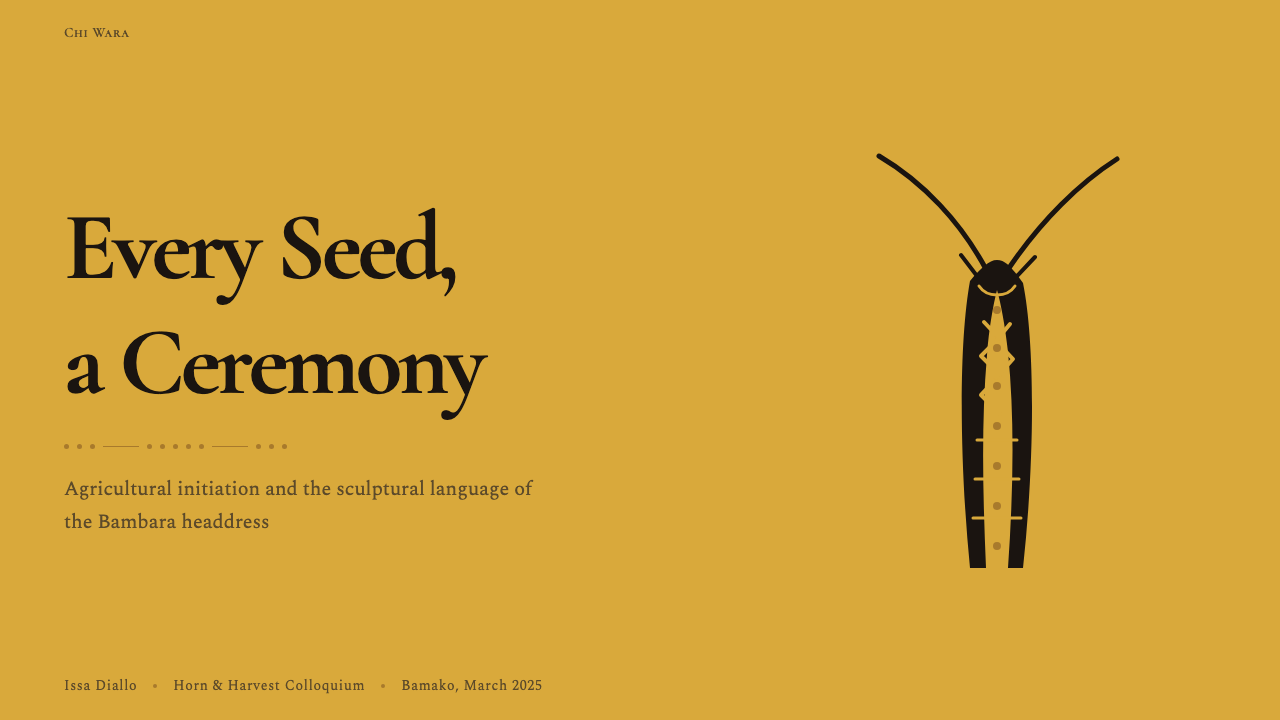
For presentation slides, Chi Wara works with particular power on cover and section-divider pages. A cover built in this system places a bold antelope silhouette or horn-curve element in the upper field against a saturated gold ground, with the title in deep lacquered-wood dark type at substantial scale. The brass-tack dot border treated as a rule or frame introduces the decorative rhythm without cluttering content. Section dividers can use the sweeping horn arc as a full-bleed compositional element that simultaneously separates and propels content forward. Content slides should restrain themselves: the gold ground is used sparingly as an accent or header field, with white or near-white as the primary body ground to maximize legibility, and dot accents deployed to mark key data points or callouts rather than frame every element.
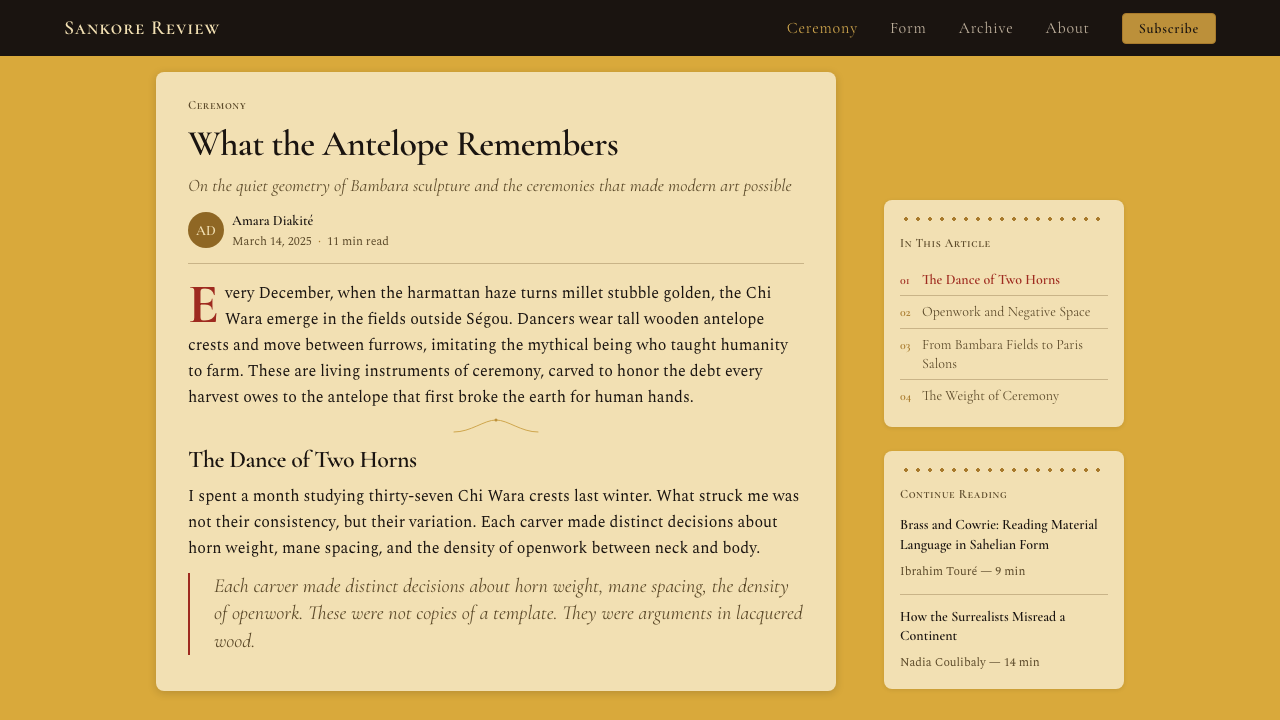
For web interfaces, this aesthetic is well-suited to cultural institution sites, premium agricultural and food brands, arts organization platforms, and editorial publications that want to position themselves as rooted, considered, and culturally engaged. The approach: treat the gold as a hero background for the landing section only, transitioning to a near-white or warm off-white for content areas; use deep warm dark type throughout; introduce the horn-curve element as a section separator or decorative band rather than a structural grid line; and reserve dot borders for featured content blocks or call-to-action areas. Navigation should be typographic and restrained — the wordmark and labels carry the identity load without requiring icon decoration.
For editorial and marketing work, Chi Wara supports the kind of bold, poster-informed visual language that makes a page stop a reader. Magazine feature spreads can open with a full-bleed gold field anchoring a large silhouette element, transitioning to white for the body columns, with a dot border running along the inner margin as a throughline. Marketing campaigns benefit from the style's clarity of symbol: a single strong Chi Wara-derived motif — the horn arc, the dot border, the silhouetted form — can carry a campaign across formats from billboard to social card to letterhead, because the silhouette reads at any scale. Annual reports and institutional communications gain authority without severity from the warm ground and considered type.
A common mistake when applying this aesthetic is treating the gold ground as a universal background rather than a deliberate accent. Used across every surface at full saturation, it becomes visually exhausting and loses its associative warmth. The most effective applications lead with gold in hero positions and transition to neutral grounds for sustained reading. Similarly, combining the horn-curve, dot border, and silhouette motif on every page quickly tips from richness into clutter; the system is most powerful when its elements are distributed with restraint, each one given room to carry its symbolic weight without competition.
Bambara Chi Wara Antelope — FAQ
Is using Chi Wara aesthetics in design a form of cultural appropriation?
The question is real and deserves a substantive answer. Applying a culturally specific aesthetic vocabulary in a commercial or design context is appropriation when it reduces a living tradition to a surface pattern, strips it of its meaning, and benefits the adopter without acknowledgment or reciprocity. It is reference when it is accompanied by knowledge, attribution, and specificity about what is being drawn from and why. The Chi Wara tradition is documented, named, and studied — the specific people, region, ritual function, and historical context are all knowable. Design work that engages with Chi Wara visuals while naming the tradition, acknowledging its origins, and avoiding the claim that the resulting work is 'African design' in some generic sense is operating in the space of informed reference rather than appropriation. The strongest applications of this aesthetic are built on understanding, not just imitation.
How does Chi Wara differ from other West African design aesthetics?
West African visual traditions are highly regional and culturally specific — 'West African design' as a unified category does not exist, just as 'European design' would not usefully describe both Bauhaus and Baroque. Chi Wara is specifically Bamana, from the Mande cultural world of southern Mali. It differs substantially from, for example, Kente cloth aesthetics from Ghana (rectilinear, multicolor, woven pattern logic), Adinkra symbolism also from Ghana (a symbolic alphabet of stamped motifs), Ndebele geometric painting from southern Africa (bold geometric color bands), or Tingatinga painting from Tanzania (rounded, colorful, figurative). Chi Wara's distinguishing qualities within this field are its silhouette-centricity, its warm dark grounds, its curved organic geometry derived from animal form, and its brass-dot accent vocabulary — none of which appear in the same combination elsewhere.
Can this aesthetic work in a digital-first context, or is it inherently analog in feeling?
The aesthetic's origins are material and ceremonial, but its visual principles translate well to digital contexts. The silhouette-forward composition reads at any resolution. The warm gold ground is highly effective on high-resolution displays where color depth can be fully rendered. The dot border and horn-curve elements are clean vector forms that scale without degradation. The one adjustment digital applications require is attention to the background: on screen, a fully saturated gold field at full-page scale can read as aggressive at typical ambient light conditions. The most effective digital applications use the gold in hero sections or as a scroll-triggered reveal, reserving warm off-white or soft warm gray for extended reading sections. The overall effect on screen, when calibrated well, is distinctive and contemporary — nothing about the aesthetic requires or implies print.
Which industries or project types are least suitable for this aesthetic?
Chi Wara's warmth and cultural specificity make it unsuitable for contexts that require neutral universalism or cool technical authority. Enterprise software interfaces, medical or clinical applications, financial platforms targeting institutional clients, and any context where cultural neutrality is a design requirement will not be served well by this aesthetic's warm ground and ceremonial warmth. It also does not suit contexts associated with speed, precision, or reduction — minimalist fintech, performance-driven athletic brands, or ultra-clean direct-to-consumer tech brands — where the ornamental dot border and organic curve would read as distracting noise. The style's strengths are warmth, depth, and cultural resonance; it should be deployed where those qualities are valued.
Is the Chi Wara headdress tradition still practiced today?
The Chi Wara society as a functioning agricultural initiation institution has diminished significantly since the mid-twentieth century, primarily due to the disruptions of French colonial administration and subsequent social and economic changes in Mali. However, the tradition has not disappeared entirely. Bamana sculptors continue to produce Chi Wara headdresses, both for communities that maintain ceremonial use and for collectors and cultural institutions worldwide. The form has also entered contemporary Malian cultural identity — the Chi Wara image appears on national currency and in official contexts — and contemporary African artists and designers engage with it as both historical inheritance and living aesthetic resource. The tradition occupies a common position in world cultural heritage: its classical period has passed, but it remains a living form, evolving as the communities that created it navigate the present.
Related design styles
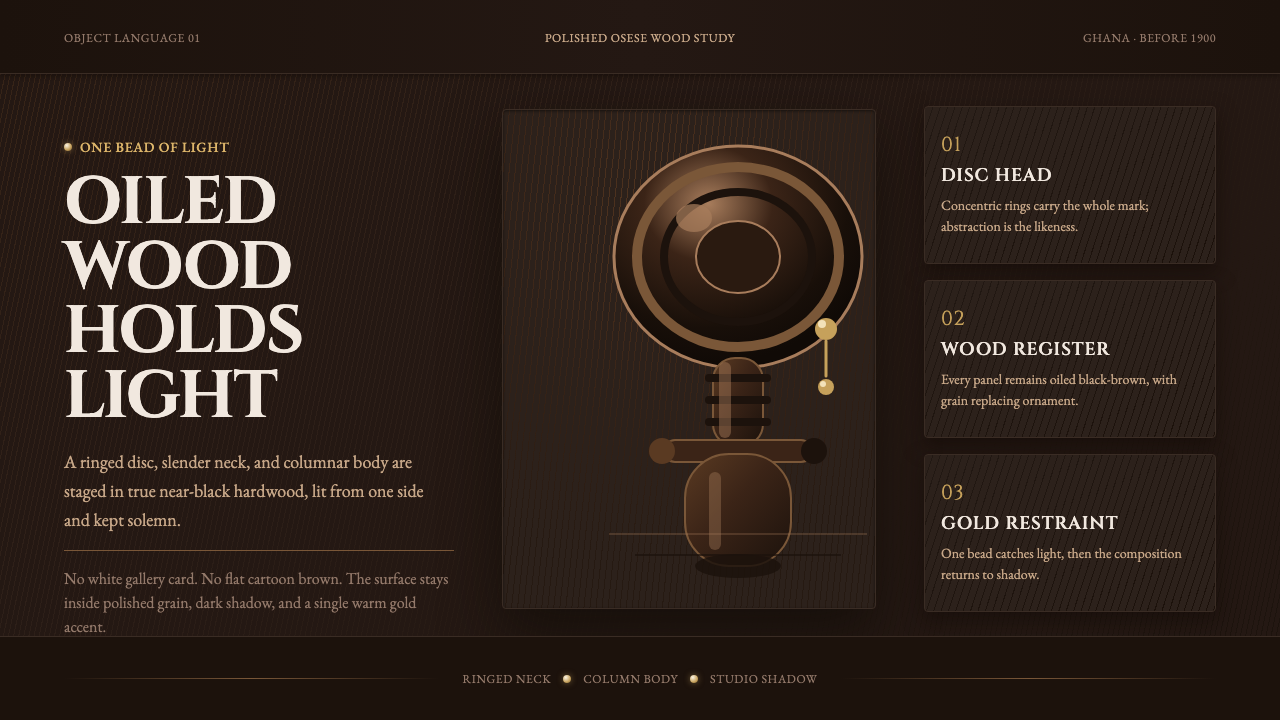 Akuaba Akan Fertility DollDarkness becomes sculpture. Near-black wood, ringed geometry, and one gold be…
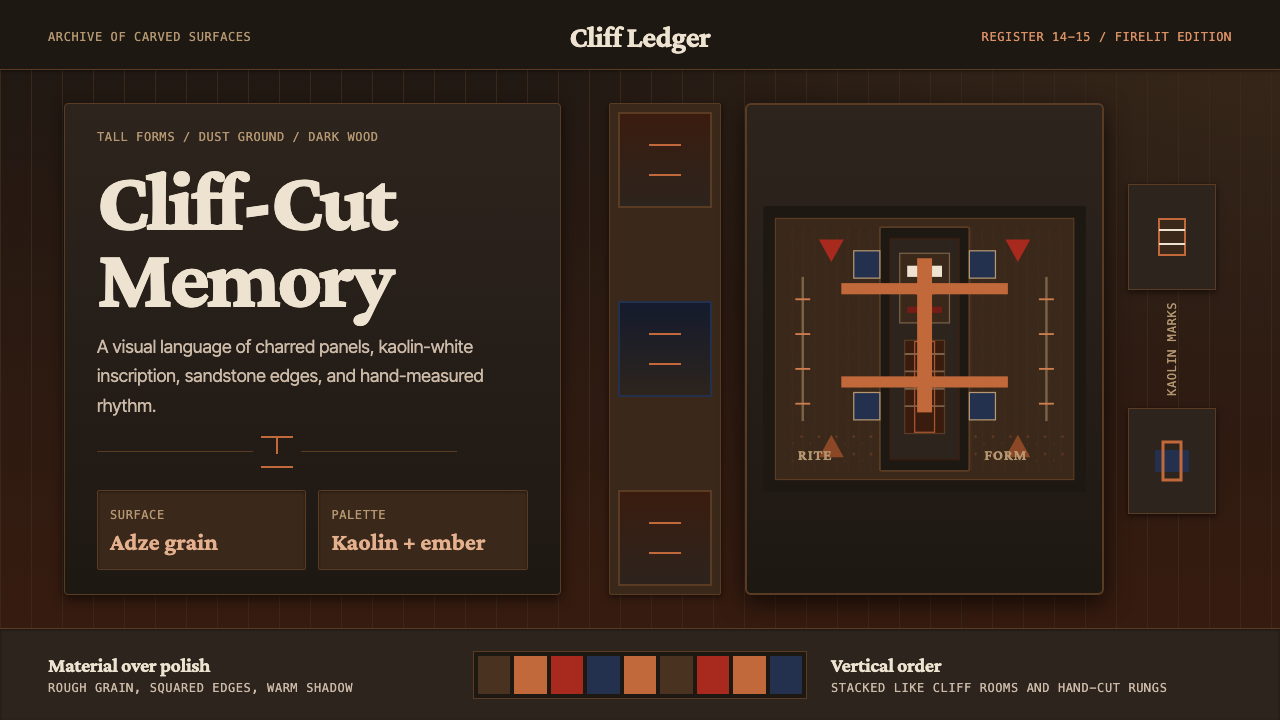 Dogon Bandiagara Cliff MaskHand-hewn gravity. Charred wood, kaolin type, and sandstone geometry stack li…
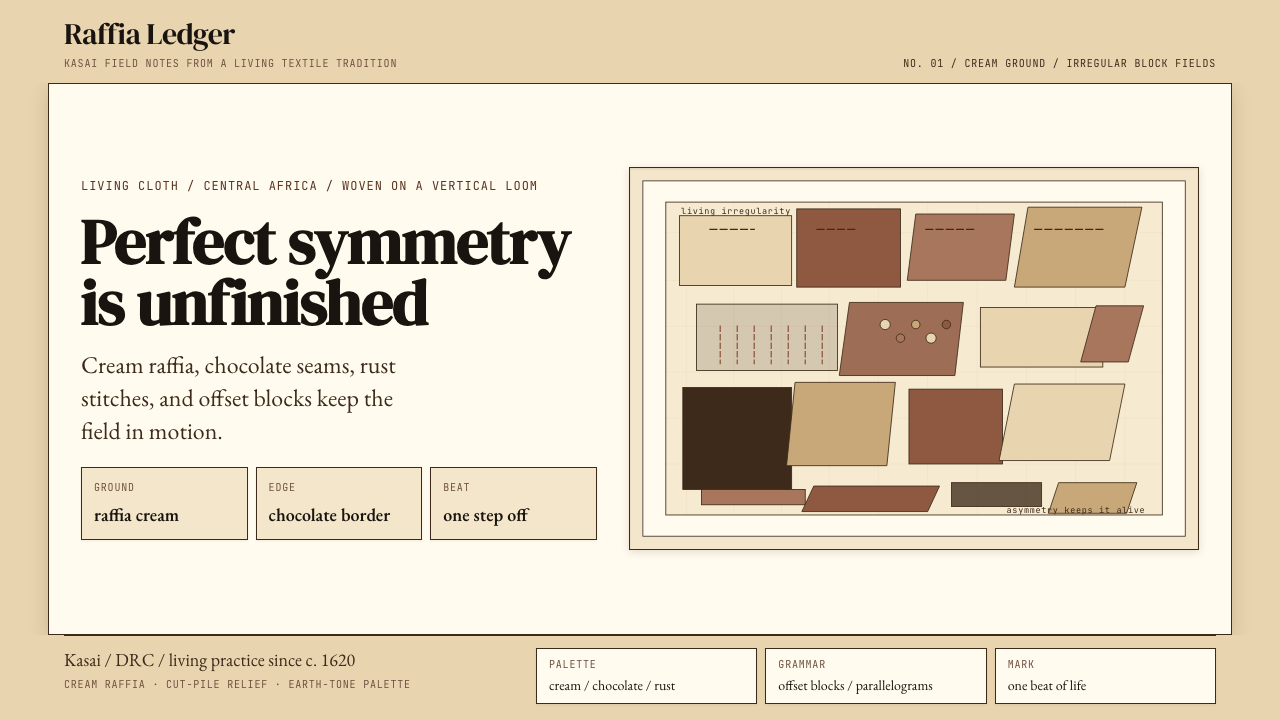 Kuba Raffia Cloth (Congo)Deliberate asymmetry lives. Cream raffia, chocolate seams, and rust blocks.
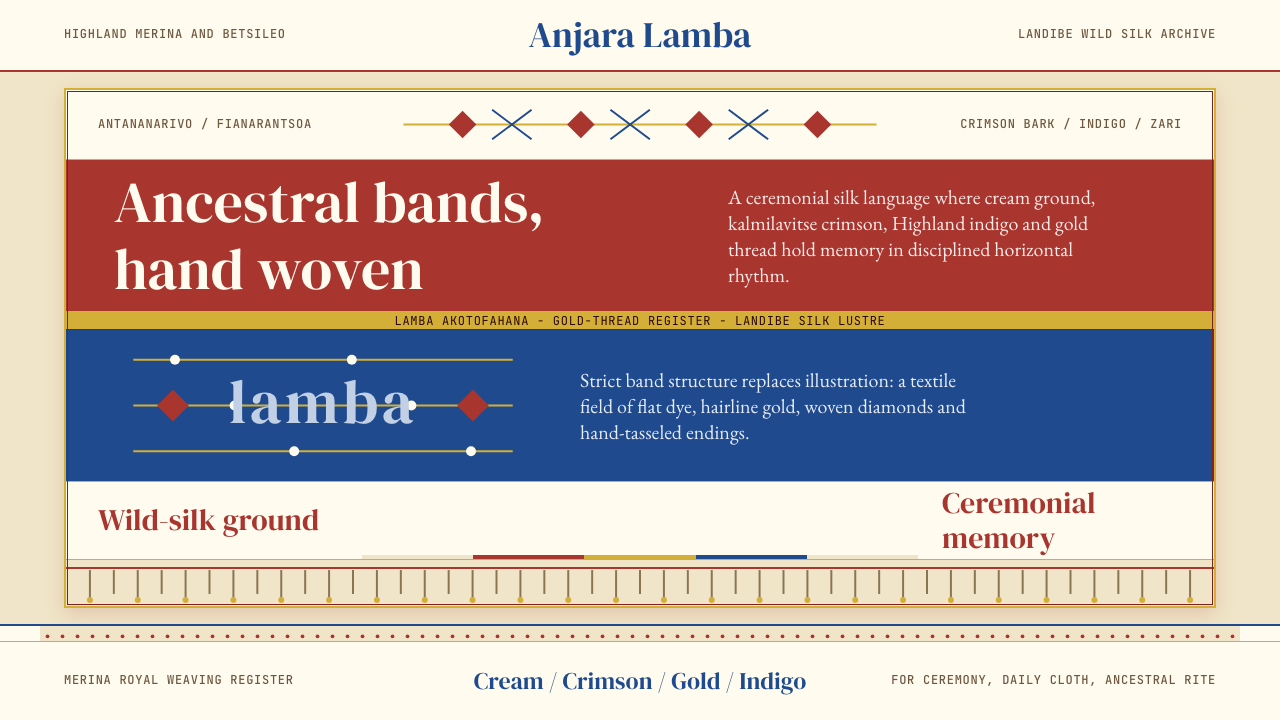 Madagascan Lamba SilkAncestry is woven flat. Crimson, indigo, cream and gold run in strict silk ba…
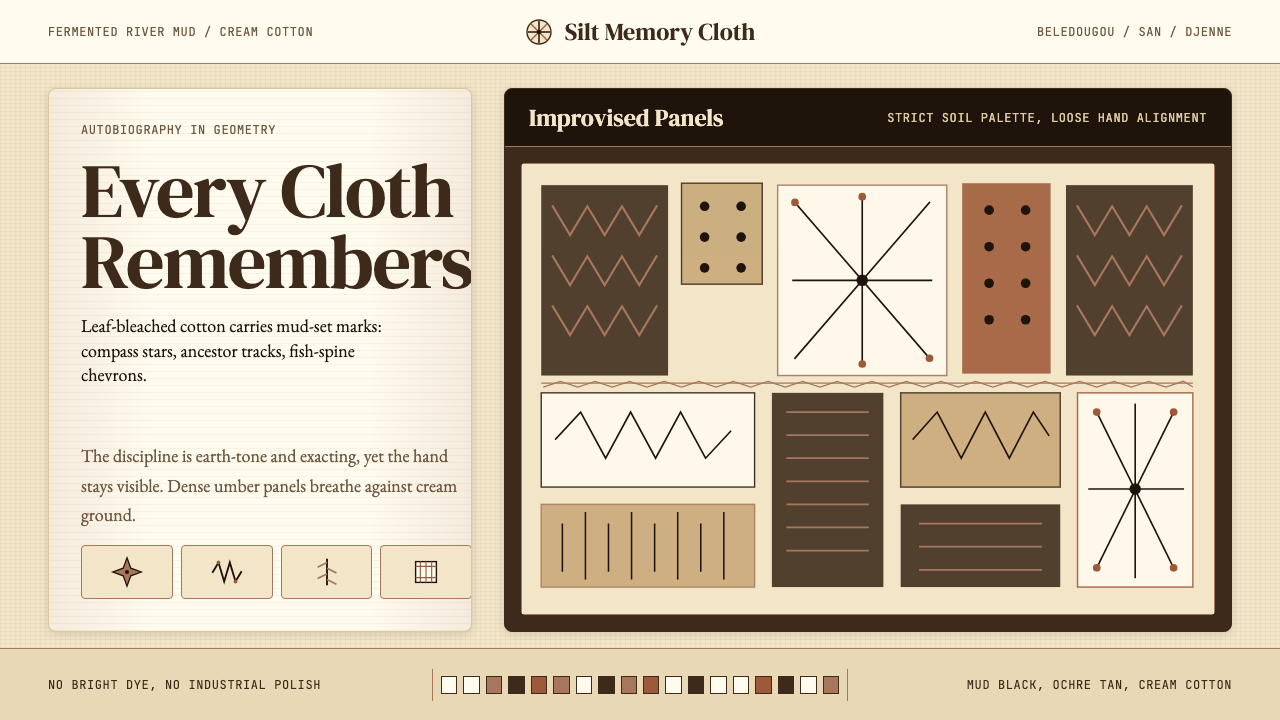 Mali Bògòlanfini (Bambara Mud-Cloth)Autobiography in geometry. Deep umber motifs breathe across cream cotton.
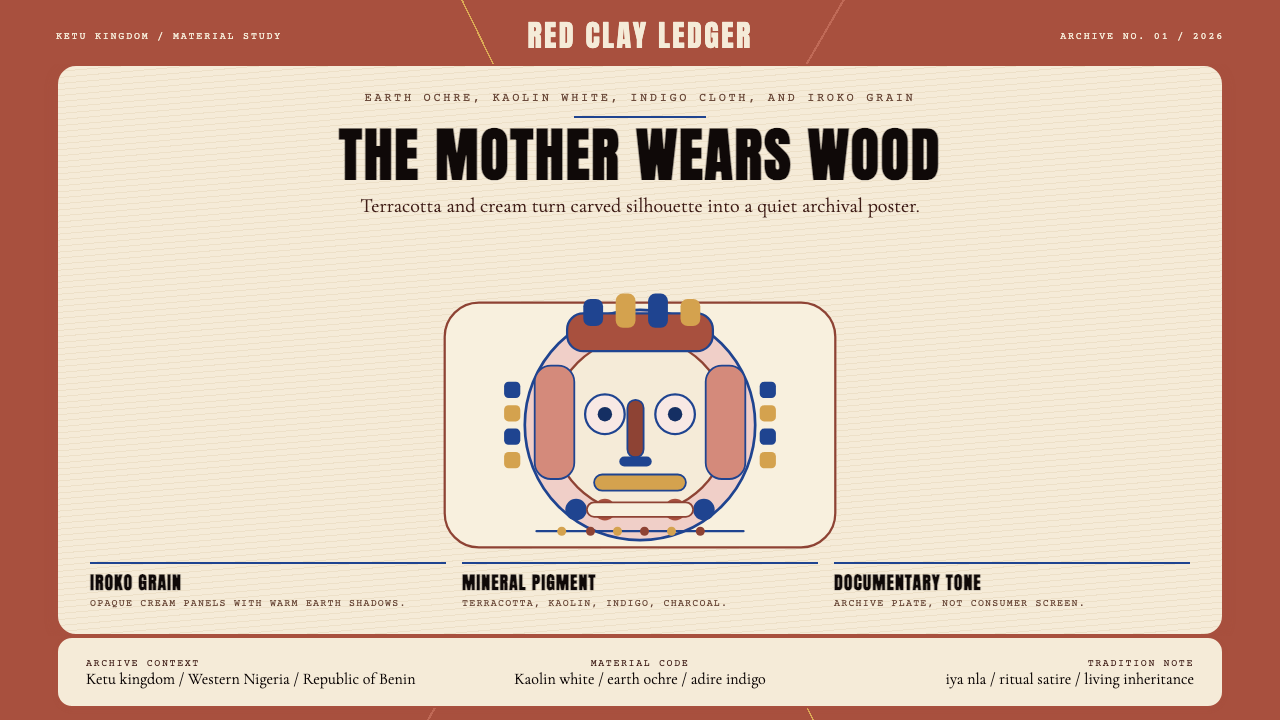 Yoruba Gelede MaskRitual weight, not spectacle. Terracotta, kaolin, and indigo frame a carved-m…