What is Setu Leelo Silver?
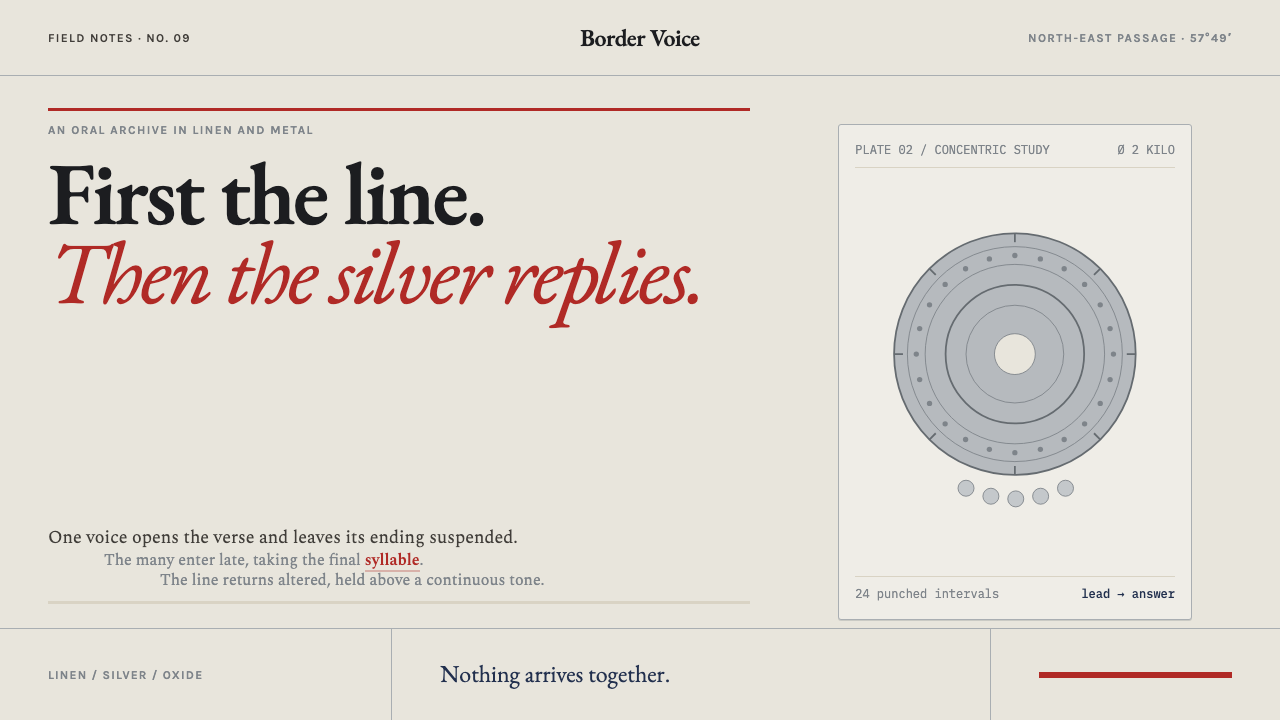
Seto leelo gives every verse line two voices, a leader and then a choir answering half a beat late, and this style turns that call-and-echo into linen, punched silver and a single narrow band of red.
Setu Leelo Silver in brief
Setu Leelo Silver is a design style drawn from two linked pieces of Seto culture: seto leelo, the polyphonic folk song of the Seto people of south-eastern Estonia and the neighbouring Pskov region of Russia, and the costume that Seto women wear when they sing it. Its visual language is a bleached-linen ground, matte silver worked into concentric rings, and one narrow band of Seto red, composed in layouts that lead with a statement and answer it a beat later.
The idea underneath is structural rather than decorative. In seto leelo the lead singer, the sõnolinõ, speaks a verse line alone; the choir catches its last syllables and then repeats the whole line over a held drone. Nothing arrives together, and nothing arrives twice in quite the same way. The style carries that logic into layout: a first voice, a close but not identical reply, and something steady holding the floor underneath. The costume follows the same grammar, since the large circular silver breastplate, the suur sõlg, is a disc built from rings that repeat outward from a centre, the way a sung line repeats outward from its first words.
In practice this reads as a quiet, tactile, warm-neutral style. Surfaces are natural and matte, metal looks hammered rather than mirrored, and red is rationed so tightly that it becomes a signature. It suits subjects that need weight without noise — heritage, craft, music, cultural institutions, slow-reading editorial — and any interface that wants to feel handmade without sliding into rustic cliché.

Where does Setu Leelo Silver come from?
Seto leelo belongs to the old Baltic-Finnic tradition of runic song, known in Estonian as regilaul, and the Seto keep it as a living practice rather than a museum piece. The source places it in a living tradition older than 1900, and in 2009 it was inscribed on the UNESCO Representative List of the Intangible Cultural Heritage of Humanity. Its home is Setomaa, a borderland that straddles south-eastern Estonia and the adjoining Pskov region of Russia.
The song form itself explains the design. A leelo performance is not a melody with accompaniment. The sõnolinõ, the one who speaks the word, gives out a line on her own. The choir does not join in unison; it catches the line's last syllables and repeats the full line, while beneath everything a drone is held steady. The result is polyphony built from offsets — a lead, a repeat, a pedal note — in which each repetition changes slightly what the line means because it arrives from a different place in the sound. It is a texture more than a tune, and that texture is what the design system tries to make visible: repetition with variation, with nothing locked to a single beat.
The costume supplies the material half of the style. Over white linen sits the suur sõlg, a circular silver breastplate punched in concentric rings and hung with coin chains and hollow silver beads; the whole assembly weighs about two kilograms. Local people say that you hear a Seto woman before you see her, because the silver announces her, and the saying is a useful key to the design: sound and ornament belong together, and both arrive before the person does. The source places the costume forms as they were fixed in the nineteenth century and names Seto silver smithing among the crafts the style draws on. The silver is struck and punched rather than polished to a mirror, which is why the system insists on a matte, worked finish.
The wider context is the Estonian folk-costume revival and the scholarly collecting that preceded it. In the nineteenth century the folklorist Jakob Hurt helped organize the gathering of Estonian oral tradition, and in the twentieth century scholars such as Herbert Tampere worked to document folk singing, while singers like Anne Vabarna and Hilana Taarka are remembered as great voices of the Seto tradition. The revival of folk costume in Estonia kept these garments visible as living dress rather than archive objects. The design system sits at the end of that chain. It does not reproduce a costume or transcribe a song; it translates the song's grammar and the costume's materials into a layout language.
What defines the Setu Leelo Silver look?
Linen Ground
The base is bleached linen: a warm, slightly textured off-white that reads as cloth rather than paper. It is not the cold white of a screen default, and it is not a cream tinted to look antique. The ground should feel woven, dry and matte, the surface on which everything else is laid, the way the silver is laid on a white shirt.
Matte Punched Silver
Silver in this style is struck, not plated. It reads as a mid-light grey metal with a dull, slightly granular sheen, closer to pewter and hand-worked sheet than to chrome. Highlights are minimal and never glassy; there is no mirror reflection and no glossy gradient banding.
One Band of Seto Red
Red appears once per composition, and it appears narrow: a band, a rule, a single stripe. It is the only saturated colour in the system, which gives it the force of a signature. Used in more than one place it stops functioning as an accent and starts competing with the silver. Its job is to cut across the composition and give the eye a place to cross, the way a line of red cuts across white linen.
Concentric Rings
The master motif is the ring: circles stacked outward from a centre, each repeating the one inside it at a larger scale. In the finished work it appears as a large focal disc, as ring-patterned bullets and dividers, and as the underlying logic for charts and diagrams. Rings are rendered as repeated punched marks rather than as clean vector strokes, so they feel struck by hand.
Call and Answer
Layouts are built in pairs. A heading or statement leads, set alone with generous room; a second element answers it a half beat later, offset in position or scale and repeating the key words or shape of the first. The offset is deliberate and slightly off-grid, never a mirror image. Reading therefore moves in a stepped rhythm: lead, echo, move on. It is the layout equivalent of the choir catching the last syllables of the sõnolinõ's line.
The Held Drone
Beneath the call and answer sits something that does not move: a long horizontal field, a constant footer, a steady baseline of repeated rings, or a quiet band of tone running the width of the page. This is the layout's drone. It keeps the composition from drifting apart while the lead and the echo play out above, and it is why the style can hold a lot of content without feeling busy.
Mass and Open Space
The suur sõlg is heavy, and the style gives its focal disc real visual mass, then lets the linen around it stay empty. Weight is concentrated in one or two objects rather than spread evenly. The result is an asymmetrical balance in which a single large form and a wide quiet field balance each other, with small chain-like details, such as hanging dots or fine dotted rules, carrying the eye away from the mass.

Who shaped Setu Leelo Silver?
A nineteenth-century Estonian folklorist whose name is attached to the large, organized effort to collect Estonian oral tradition, including the old runic songs. His work is a reason such verse forms were written down at all, and it is part of the scholarly background against which Seto singing came to be recognized as a distinct, valued repertoire. For the design system he stands for the archive: the patient gathering that preceded any revival.
A Seto singer remembered as one of the outstanding voices of the tradition. Singers of her stature are the reason the lead line, the sõnolinõ's solo statement, is understood as an art in its own right and not just an introduction to the chorus. The design system takes from performers like her the principle that the first voice must be clear and self-sufficient before anything answers it.
Another celebrated Seto singer, named alongside Vabarna as a bearer of the tradition. Together they stand for the continuity of leelo as something passed from voice to voice within a community, which is also how the costume forms and the silver craft have travelled. In the design they are the human reference behind the call-and-answer rhythm: a style cannot be understood only from its objects, it has to be heard.
A twentieth-century Estonian folk-song scholar whose work belongs to the documentation of regilaul and related singing. Scholars of his kind turned a spoken and sung practice into a body of recorded and published material that later makers, including designers, can study. His presence in the key figures marks the point where the tradition becomes available as reference without ceasing to be alive.
How do you use Setu Leelo Silver today?
Setu Leelo Silver is a strong choice when content has to feel rooted, crafted and calm. It works best when you borrow its grammar — lead, answer, drone, ring — rather than only its surface. A page that has linen, silver and a red line but no structure of call and answer will look like a theme; a page that has the structure will look like a system.
For presentation slides, a cover can set a large silver ring motif in one corner or just off centre, a single narrow red band crossing the composition at one edge, and a title that leads on a linen ground with a short subtitle that answers it, offset slightly. Content slides work in pairs: a statement on one side and its supporting explanation or figure on the other, with a thin continuous band behind them as the drone. Data slides suit radial and ring-based charts, such as donut charts, concentric rings and radial bars, in graded tones of silver, with the red band reserved for the one series or value the audience must remember.
For web interfaces the style suits heritage, music, publishing and craft products, and calm dashboards. The page ground stays linen; cards sit on it as flat matte panels with fine borders, not floating glass. Primary actions can be dark and quiet, while red is held back for the one live signal, such as the track now playing, the selected plan, or the single item that needs attention. Pricing pages benefit from the call-and-answer pattern: the plan name leads, the price answers, and the feature list runs as a quiet drone beneath.
For editorial and marketing work the style fits long reads, exhibition and festival pages, catalogues and brand storytelling for makers. Article layouts can set a pull quote that is answered a line later by its source or a caption, and use rings as section markers. Photography of textiles, metalwork and people in traditional dress sits well; keep the images on the same linen ground rather than inside heavy frames.
The common mistake is to treat the style as an ornament pack: scattering ring patterns across every surface, polishing the silver to a chrome sheen, or using the red as a general highlight. Another is to lift costume imagery wholesale for decoration. The system is about the song's structure and the metal's materials, and it works best when its Seto source is credited rather than costumed. Keep rings to one or two statements per view, keep the metal matte, and keep the red to a single narrow line.

Setu Leelo Silver — FAQ
What does the name Setu Leelo Silver refer to?
It names three things at once. Setu points to the Seto people of the Estonia and Pskov borderland; leelo is their polyphonic folk song, in which a lead singer's line is caught and repeated by a choir over a held drone; and silver refers to the suur sõlg, the large punched silver breastplate worn over white linen. The style takes the song's call-and-answer structure and the costume's materials as its two sources.
Is this a folk-pattern or ethnic-ornament style?
No. It borrows structure and materials, not a catalogue of motifs. The only recurring shape is the ring, and it is used as a compositional device. Most of the work is done by the lead-and-answer layout, the held drone, the matte metal finish and a single band of red. A page that scatters decorative patterns across every surface has misread the system.
Why does the silver have to be matte?
Because the source silver is struck, punched and worn, not electroplated. A mirror finish would turn the metal into a generic luxury cue and erase the sense of handwork, which is the style's whole point. Matte silver also keeps the page quiet: without strong highlights the eye stays on the structure of the layout instead of on a shine.
How should the red band be used?
Once per view, and narrow. Treat it as a signature line or the single live signal on the screen: a rule across the cover, the current item in a list, the one warning in a dashboard. If you need a second emphasis, use weight, scale or position instead of adding another red. The moment red appears in several places, it stops reading as a deliberate accent and starts to compete with the silver.
Can the style work on a dark background?
It is conceived as a light, linen-ground style, and that is where its balance is strongest. A dark version is possible, but silver on a dark field tends to look brighter and more jewel-like than the dull, hand-worked metal the style is built around, and the textile quality of the ground is lost. If you go dark, keep the metal subdued, keep the ring and echo structure, and still allow only one band of red.
Related design styles
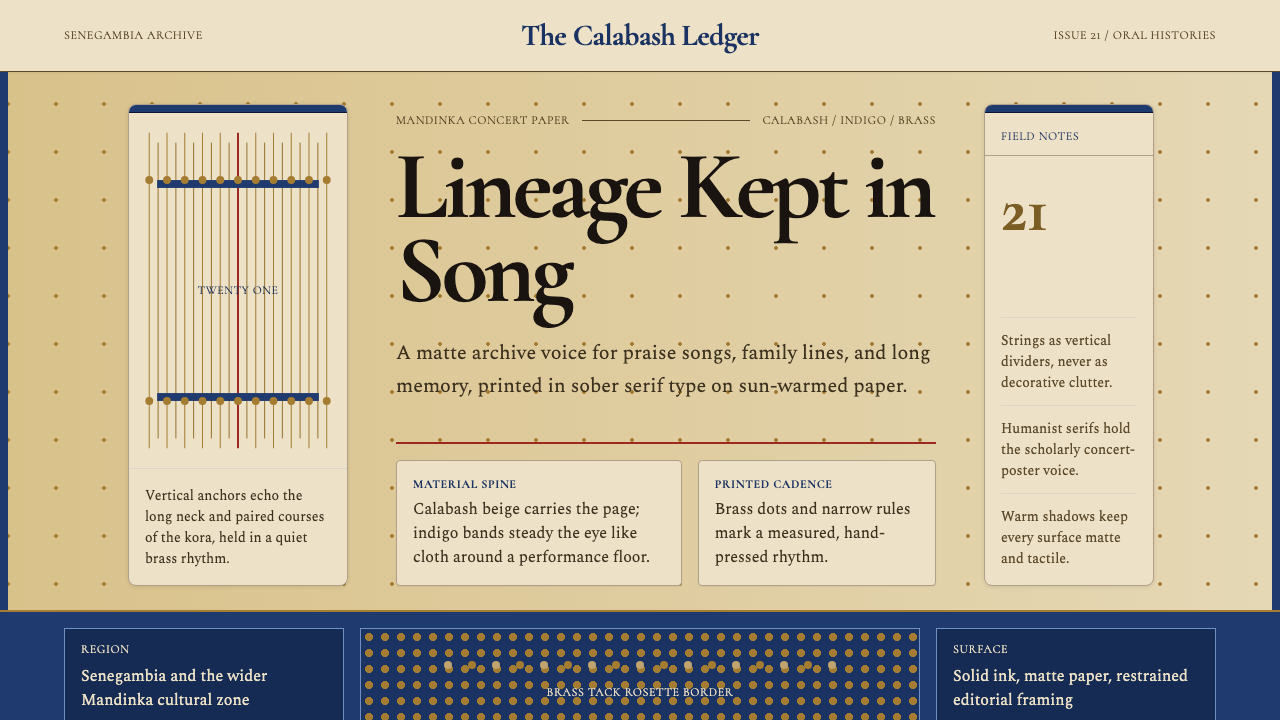 Gambian Griot Kora (21-string)Oral history feels tactile. Calabash beige, indigo bands, and 21 brass string…
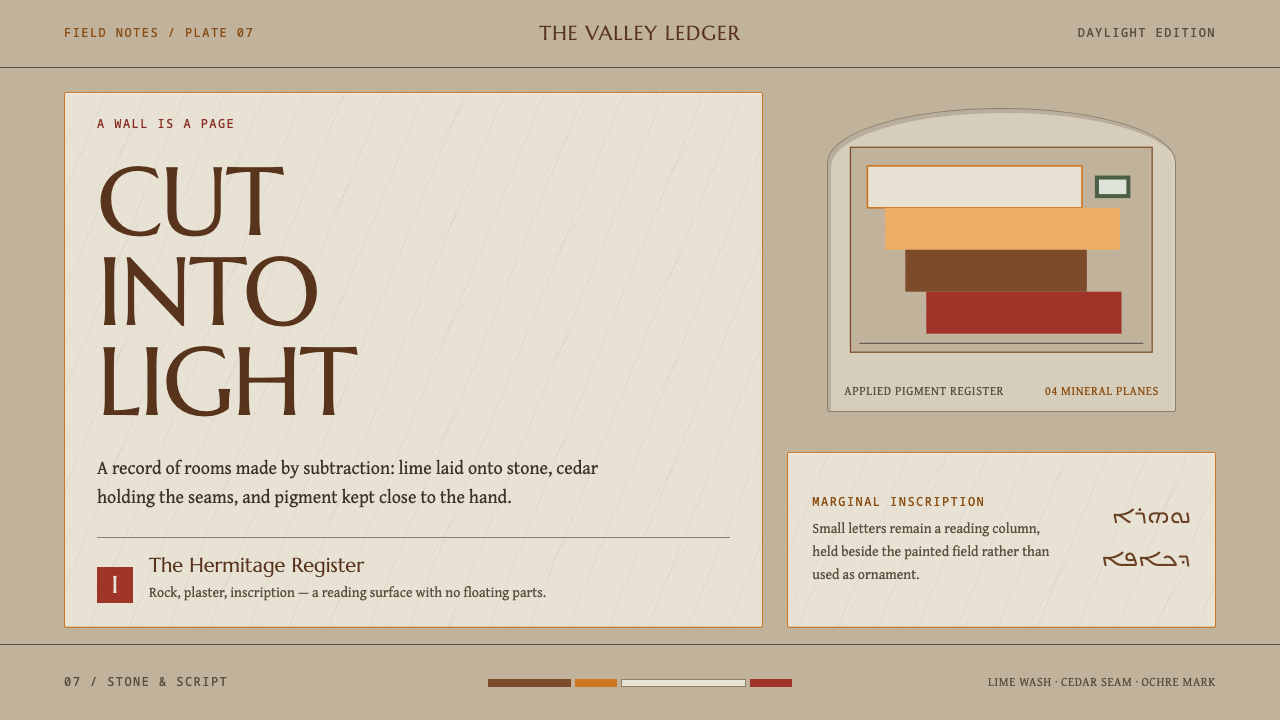 Maronite QadishaNothing floats. Lime-plaster terraces, cedar seams, and small Syriac margins…
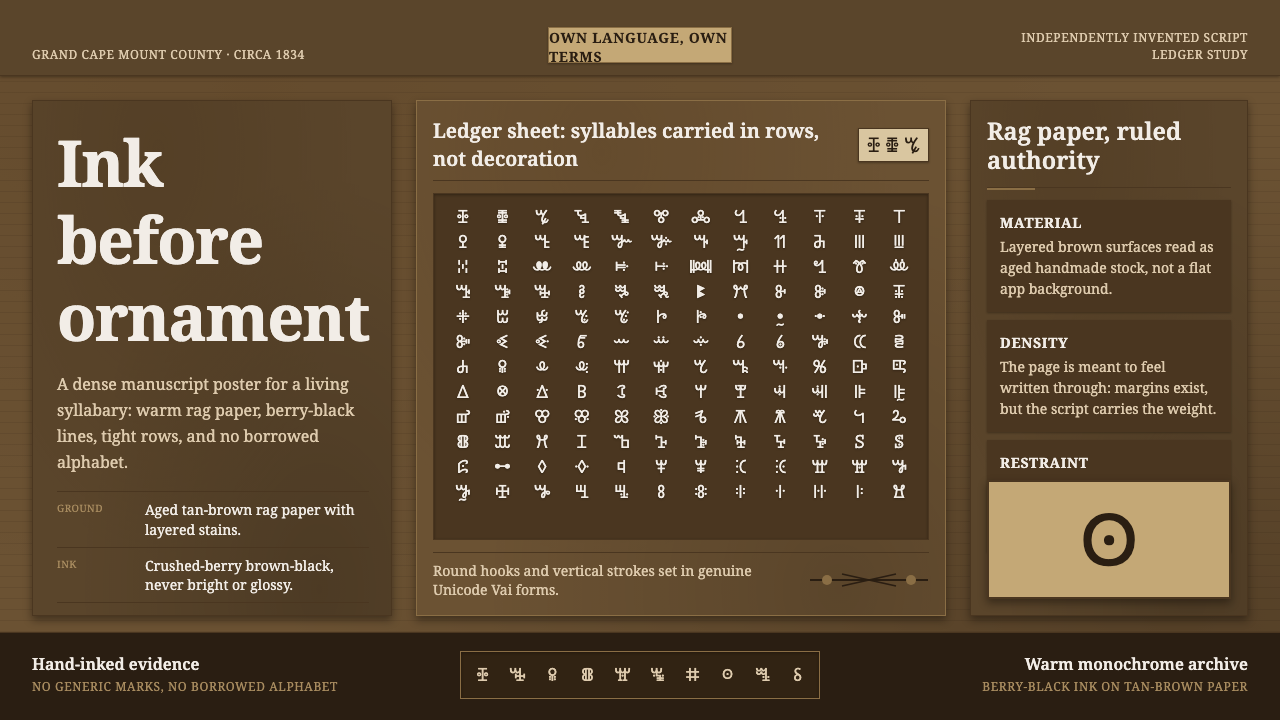 Vai Syllabary LiberiaInk has authority. Dense Vai glyphs pack berry-black rows across warm tan rag…
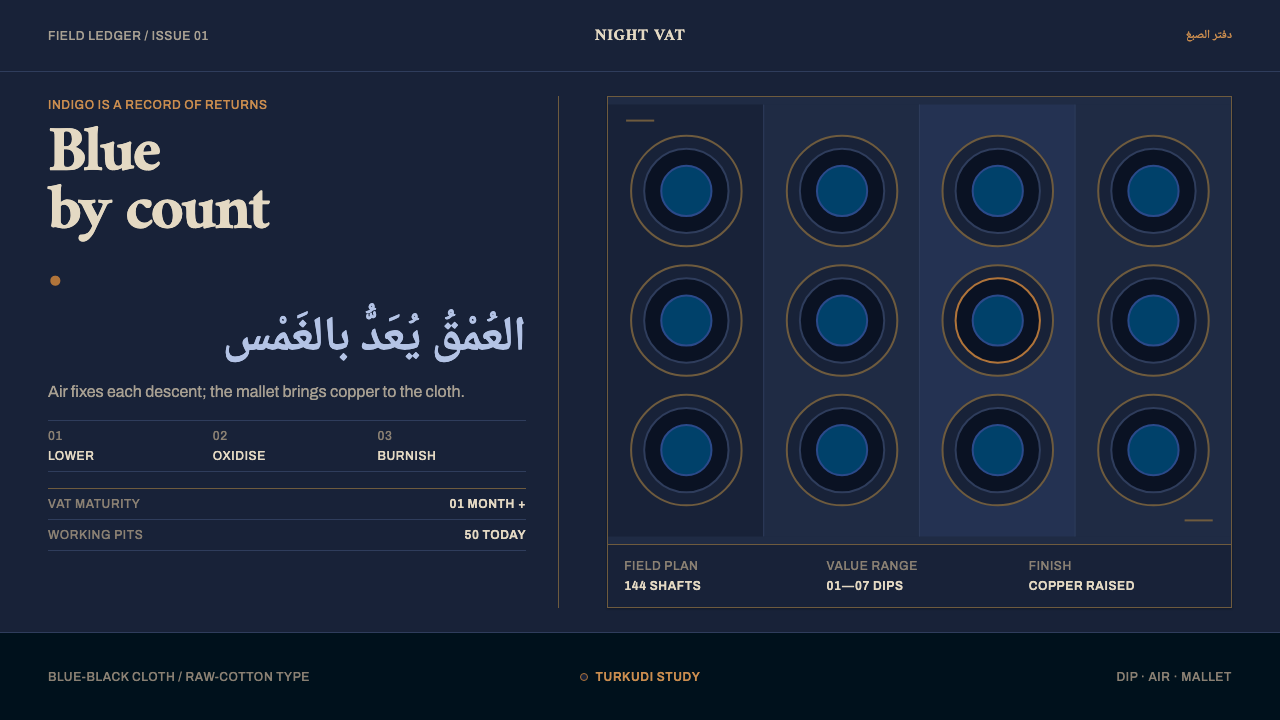 Kano Indigo Dye PitsDepth is made by repetition. Blue-black bands and copper seams trace each cou…
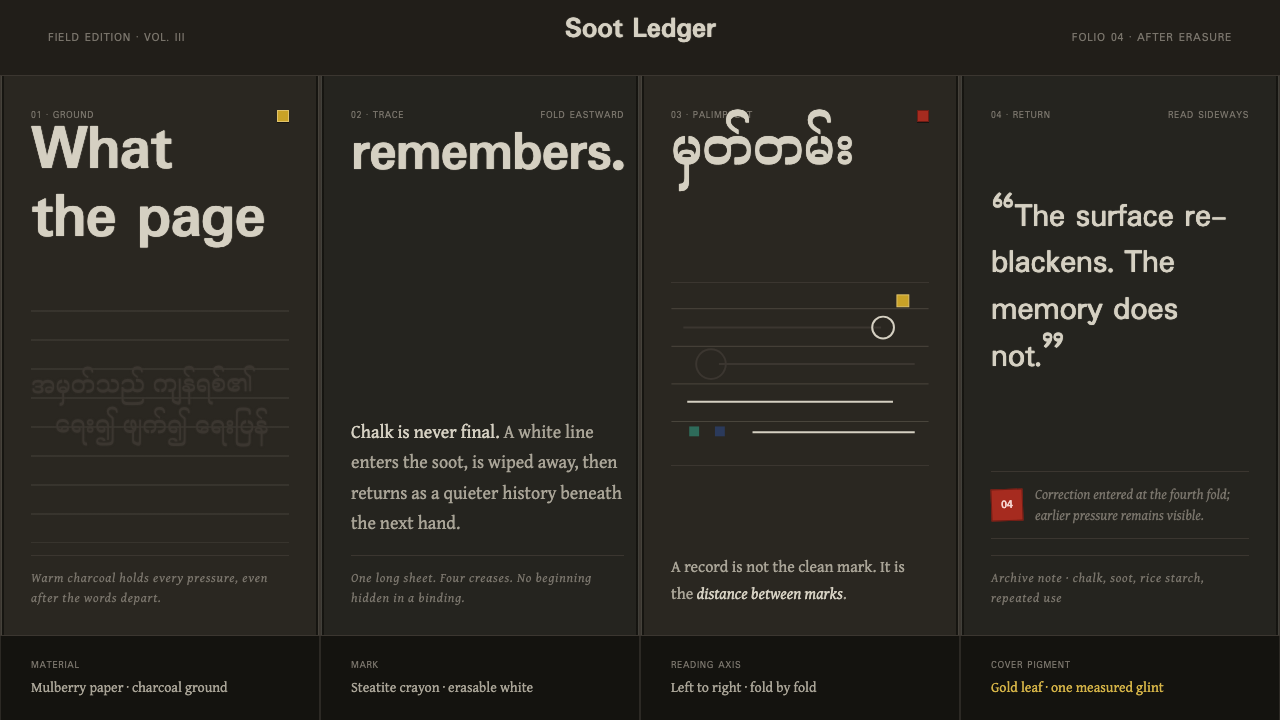 Shan Parabaik ManuscriptMemory survives erasure. Chalk-white lines and grey ghosts travel across warm…
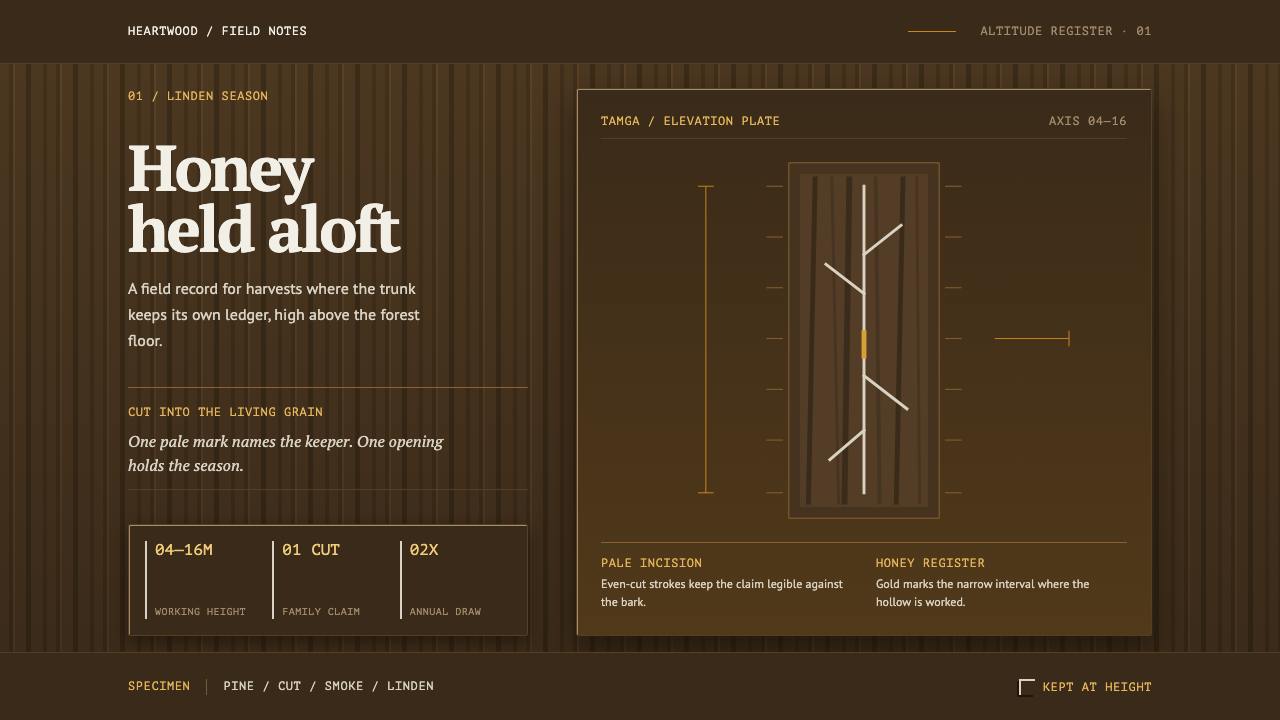 Bashkir Wild HoneyA working forest held on one axis. Pale tamga cuts and honey gold rise throug…