What is UV Scorpion Glow?
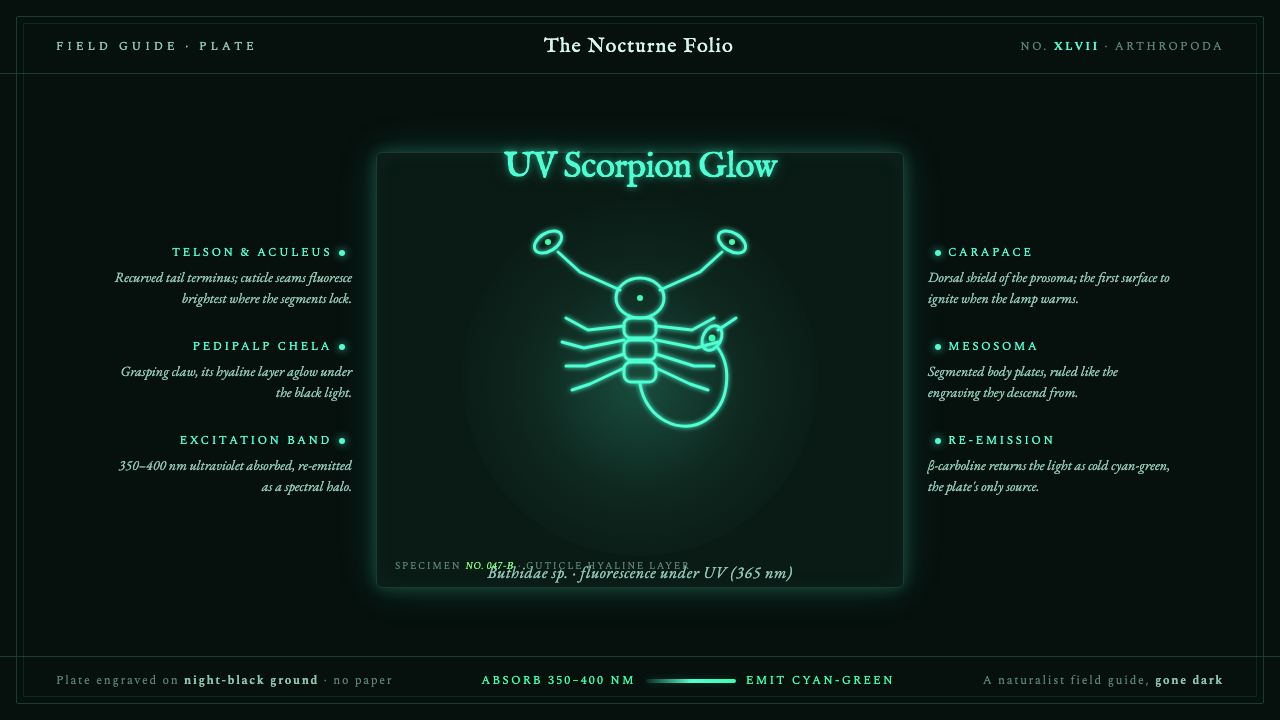
UV Scorpion Glow turns a desert field guide into a nocturnal specimen plate, where cyan-green fluorescence is the only light allowed to exist.
UV Scorpion Glow in brief
UV Scorpion Glow is a dark natural-history aesthetic built around the visual shock of a scorpion under ultraviolet light. The specimen appears cyan-green against a night-black field, not as an illustration placed on paper but as a living signal emerging from darkness. The result is scientific, eerie, and intensely specific: the page behaves like a field observation after sunset, with the animal’s exoskeleton providing the entire visual event.
Its structure comes from pre-1900 naturalist field guides and engraving-era plates. A single specimen occupies the center of attention while serif labels, captions, and leader lines gather around it like evidence. The surrounding information is not decorative framing; it is the apparatus of identification. Every line points, names, or clarifies, giving the composition the controlled density of an entomological reference plate.
The palette is deliberately narrow. Night-black establishes the habitat and absorbs visual noise, while cyan-green marks the fluorescent cuticle and its spectral halo. Serif typography introduces the authority of printed natural history, but the page remains atmospheric rather than antique. UV Scorpion Glow is therefore not a sepia engraving revival: it is an old scientific method reimagined under cold ultraviolet illumination.
Where does UV Scorpion Glow come from?
The aesthetic begins with the pre-1900 tradition of scientific natural-history illustration. Field guides treated the page as a compact instrument for observing, comparing, and naming the natural world. Their plates combined a carefully isolated specimen with annotations that made visual detail legible. UV Scorpion Glow preserves that relationship between specimen and explanation, but replaces daylight paper with the visual conditions of a desert night.
Its regional imagination comes from the Middle East, understood as a desert habitat in which the scorpion is both ordinary and mysterious. The black field is not a generic luxury backdrop; it suggests the absence of ambient light and the expansive darkness surrounding a nocturnal animal. Against that darkness, fluorescence becomes a discovery mechanism. The creature is visible because a hidden property of its body has been activated.
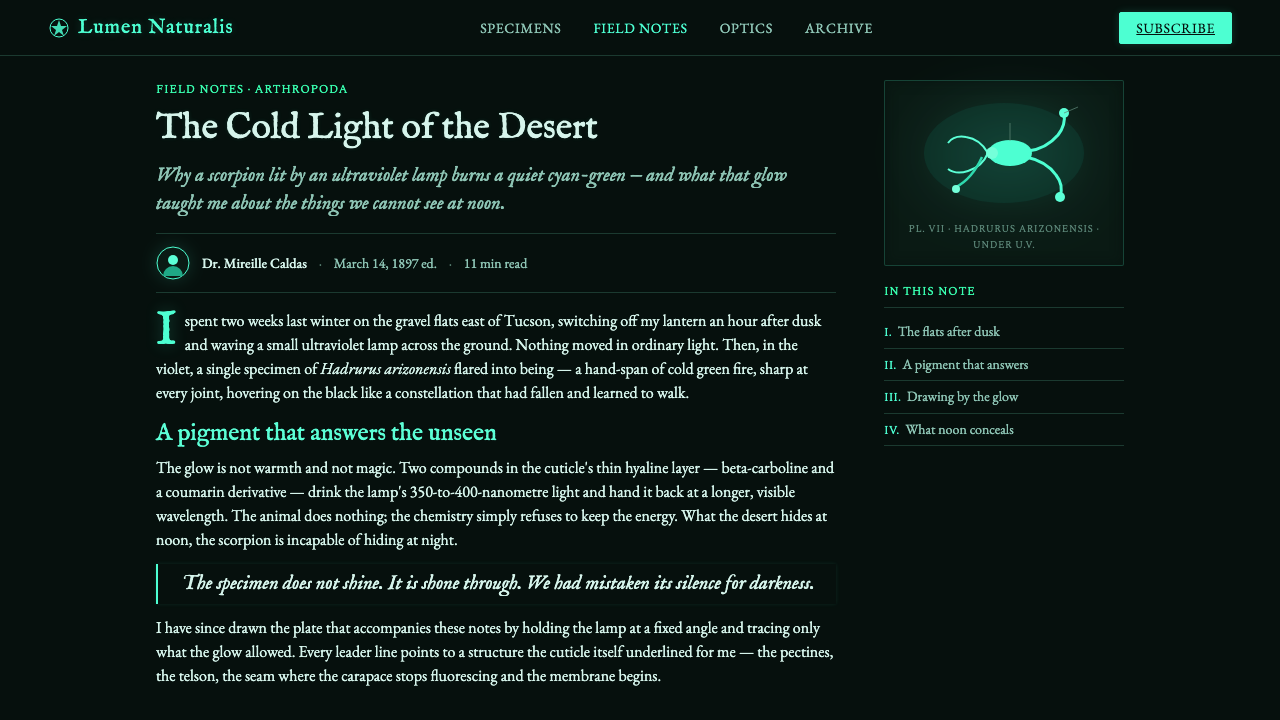
The scientific premise comes from the study of cuticle fluorescence during the twentieth and twenty-first centuries. Beta-carboline and 7-hydroxy-4-methylcoumarin are trapped in the hyaline layer of the cuticle, where they absorb ultraviolet light and re-emit a cold cyan-green glow. The design does not need to diagram this chemistry literally, but it gains meaning from treating the halo as evidence of an otherwise invisible material condition.
The resulting language joins three traditions: natural-history illustration, engraving-era field-guide plates, and arthropod taxonomy. Naturalist illustrators contribute the centered specimen and disciplined annotation. Arthropod taxonomists contribute the logic of labels, distinctions, and identifying details. Fluorescence researchers contribute the transformation of the specimen from ordinary organism into spectral phenomenon. Together they create a style that feels archival in method but contemporary in atmosphere.
What defines the UV Scorpion Glow look?
Night-Black Ground
The background should read as desert night rather than printed paper. It is deep, quiet, and visually absorbent, allowing the specimen and its annotations to emerge with unusual force. Avoid treating black as a neutral container; it is the environmental condition that makes the fluorescence meaningful.
Cyan-Green Fluorescence
Cyan-green belongs almost exclusively to the scorpion and the halo immediately surrounding its cuticle. It should feel cold, spectral, and chemically activated rather than cheerful or tropical. The glow is the focal hierarchy of the entire system, so secondary color should remain restrained and subordinate.
Engraving-Era Serif
Serif type connects the interface to field-guide plates and historical scientific printing. Letterforms should carry editorial authority without becoming ornate, with labels and captions kept compact enough to feel observational. The typography is part of the specimen’s classification apparatus, not a theatrical costume applied after the fact.
Leader-Line Composition
Leader lines organize the space around the specimen and turn empty darkness into a network of precise references. They should be thin, deliberate, and clearly connected to anatomical or identifying details. Their purpose is directional: the eye should move from label to feature, then back to the whole organism.
Single-Specimen Focus
The composition favors one fluorescing scorpion rather than a crowded collection. A solitary specimen gives the page the authority of a plate and the tension of a nocturnal sighting. Supporting diagrams or details may appear, but they should explain the central organism instead of competing with it.
Scientific Restraint
The style gains credibility by limiting effects to what the observation requires. Darkness establishes habitat, serif annotation establishes record, and fluorescence establishes discovery. Extra ornament, decorative imagery, or unrelated luminous accents weaken the premise by suggesting that the page is performing atmosphere instead of documenting a phenomenon.
Who shaped UV Scorpion Glow?
Naturalist illustrators provide the compositional discipline of the field-guide plate: an isolated organism, readable identifying details, and annotations arranged as part of the observation. Their contribution keeps the style rooted in study rather than fantasy, even when the specimen appears otherworldly.
Arthropod taxonomists supply the language of classification. Their influence appears in leader lines, compact labels, anatomical distinctions, and the assumption that every visible feature may matter. The surrounding text should feel like a system for recognition, not generic description.
Fluorescence researchers provide the central transformation: the scorpion is not merely depicted but revealed through ultraviolet activation. The cold halo becomes a visual trace of material chemistry, giving the otherwise historical field-guide structure a distinctly modern scientific premise.
How do you use UV Scorpion Glow today?
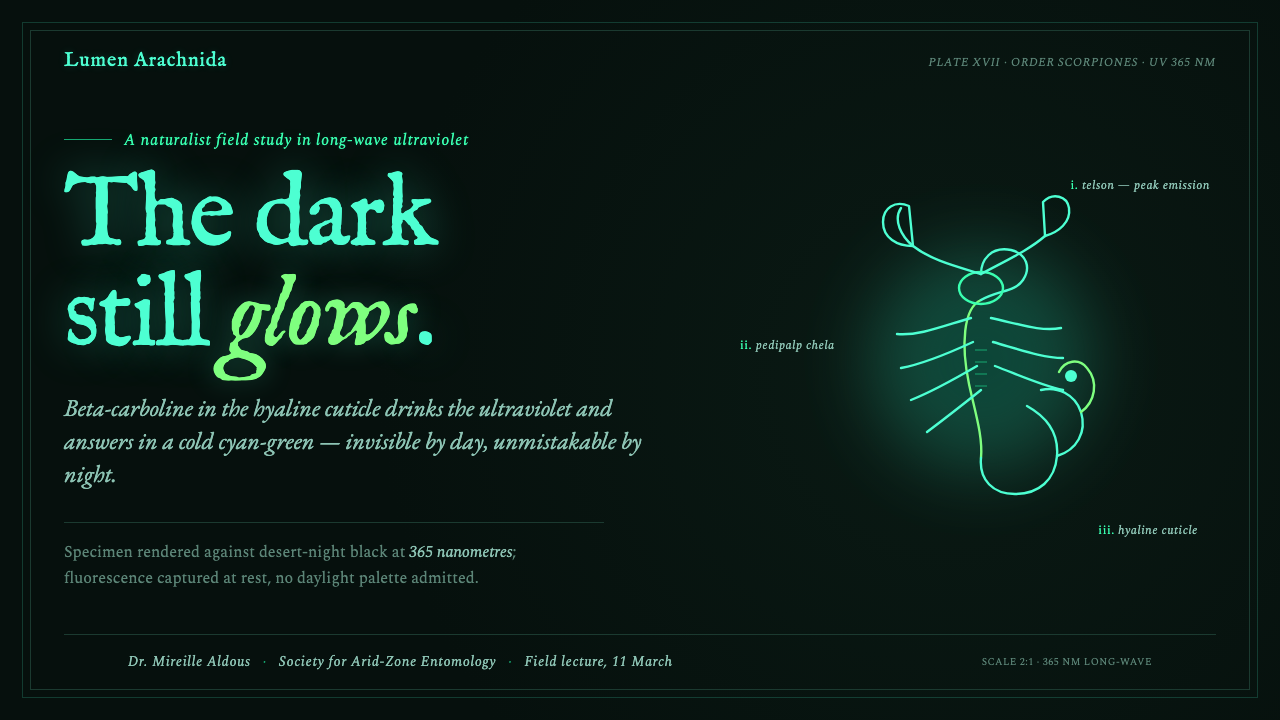
For presentation covers, use the single scorpion as a decisive nocturnal emblem. Let the specimen occupy a strong central or offset position against night-black, with a small constellation of serif labels establishing the field-guide premise. On content slides, keep the same specimen-and-annotation logic: one clear subject, a limited group of explanatory callouts, and cyan-green reserved for the point being revealed. Data slides should feel like evidence plates, with labels and leader lines explaining the important relationship rather than decorative framing.
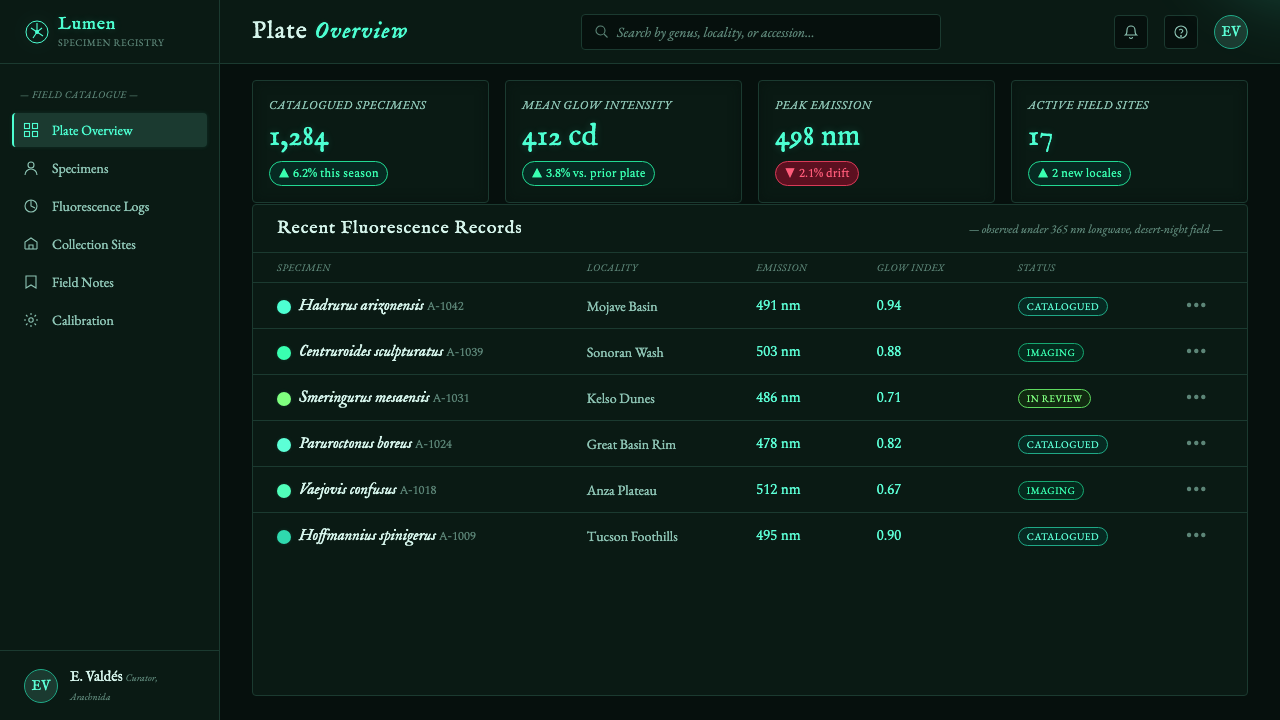
For web interfaces, UV Scorpion Glow suits dashboards, research tools, monitoring views, and pricing pages that want to feel specialized and investigative. Keep the main surface dark, use serif typography for headings or annotation-like metadata, and allow the fluorescent accent to identify active states, selected records, or the most important metric. Cards should feel like catalog entries or specimen notes. Avoid making every control luminous; the interface becomes more convincing when the glow appears only where discovery or action is taking place.
For editorial and marketing work, the style can turn a product story into a field report. Use a dominant specimen image or diagram, surround it with concise captions, and treat the page margins as quiet observation space. A launch page might present each feature as a labeled anatomical detail, while a campaign poster could isolate one luminous form and let the surrounding darkness carry the drama. The strongest executions maintain the tension between archival authority and nocturnal strangeness.
For educational material, the aesthetic works especially well when the subject involves biology, materials, field observation, or hidden processes. A lesson page can introduce the scorpion as a specimen, use annotations to explain the cuticle, and reserve the cyan-green halo for the transformation caused by ultraviolet light. The visual system encourages readers to inspect relationships and details, making it useful for diagrams that depend on careful looking rather than rapid decoration.
The common mistake is to interpret the theme as permission to add neon everywhere. Multiple glowing accents, bright gradients, sci-fi interface ornaments, or unrelated animal imagery turn the field guide into a generic cyberpunk surface. Another mistake is using decorative serif type without genuine annotation logic. The style works when darkness, specimen, label, and fluorescence form one chain of meaning; if any one of those elements becomes independent decoration, the premise loses its scientific tension.
UV Scorpion Glow — FAQ
Is UV Scorpion Glow a scientific style or a horror style?
Its foundation is scientific natural-history illustration, not horror. The eerie feeling comes from the real transformation of a familiar animal under ultraviolet light and from the use of night-black space. Horror may be an emotional side effect, but the organizing logic remains observation, classification, and explanation.
Must the central subject always be a scorpion?
The defining image is the fluorescing scorpion, so replacing it changes the identity of the style. Other natural specimens can borrow the field-guide structure, serif annotation, and leader lines, but the strongest use keeps the scorpion central. The theme depends on the contrast between an arthropod specimen and its unexpected spectral glow.
Can the style use a light background?
A light background can support the annotation system, but it weakens the central premise. The page is intended to feel like night rather than paper, and the cyan-green fluorescence gains its force from surrounding darkness. If a light variant is necessary, keep the specimen and its halo visually dominant and avoid turning the result into a conventional daylight field guide.
How much annotation should appear around the specimen?
Enough to establish identification and guide attention, but not enough to bury the organism. Labels should point to meaningful anatomical or categorical details, while captions can provide context outside the immediate body area. The right density feels like a carefully edited plate: rich in evidence, controlled in movement, and never crowded for its own sake.
Why should the glow remain limited to the specimen?
Because the glow represents a specific material phenomenon: the cuticle absorbing ultraviolet light and re-emitting cold color. Extending the same effect to buttons, borders, icons, or unrelated decoration destroys that meaning. Restriction creates hierarchy. When the specimen is the only luminous body, the viewer understands that the page is revealing something rather than simply displaying a dark visual theme.
Related design styles
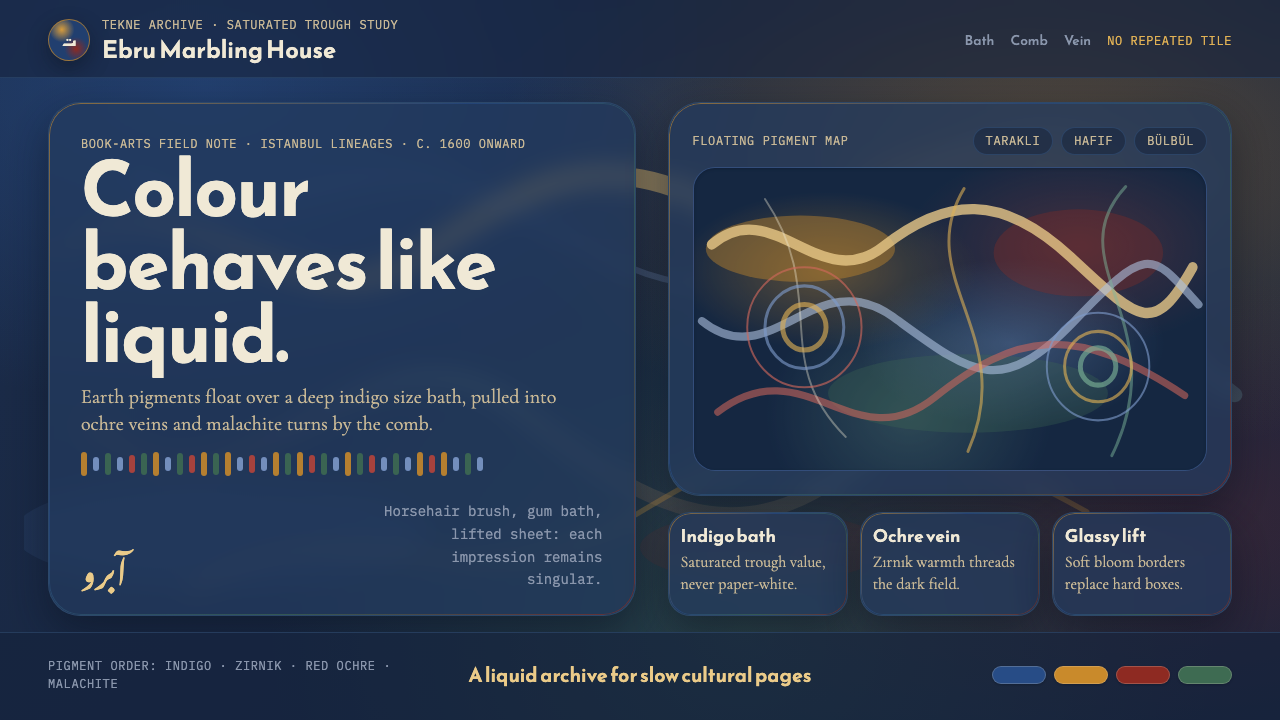 Ottoman Ebru MarblingLiquid, never tiled. Indigo bath, ochre veins, and glassy bloom edges carry t…
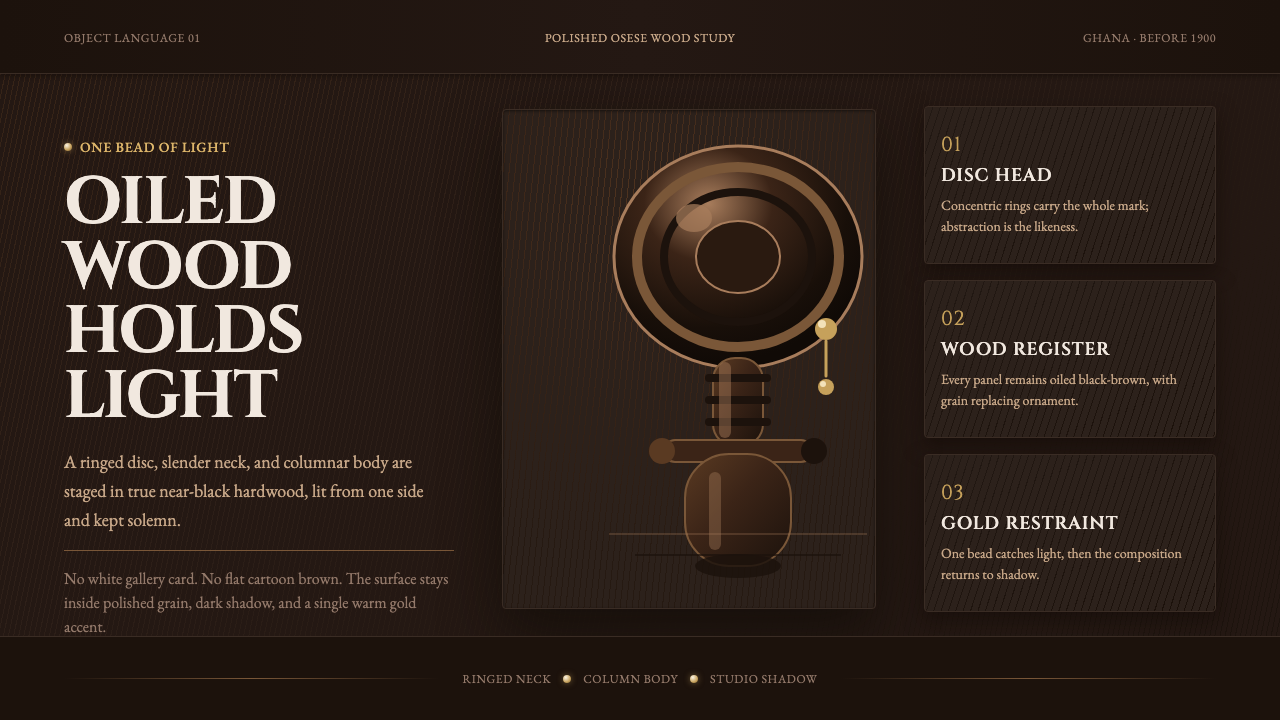 Akuaba Akan Fertility DollDarkness becomes sculpture. Near-black wood, ringed geometry, and one gold be…
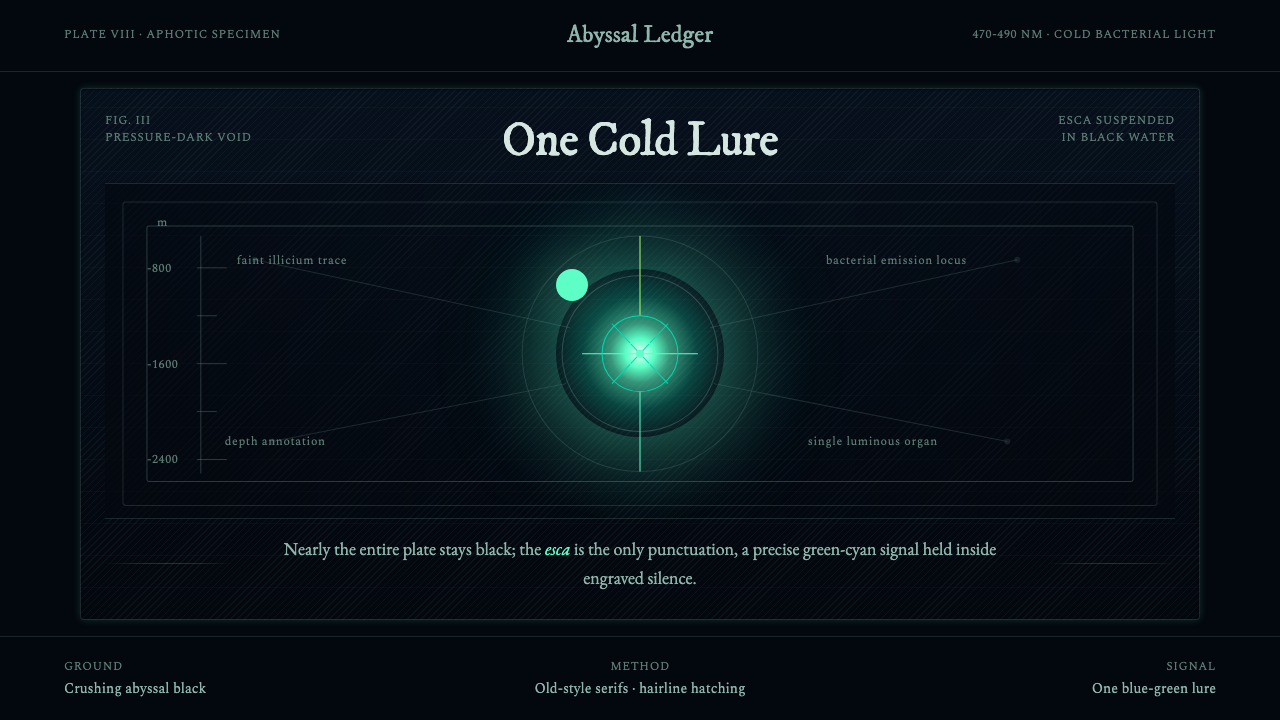 Anglerfish Lure BioluminescenceLight is scarce. Old serifs and hairline rules frame one cold green-cyan lure.
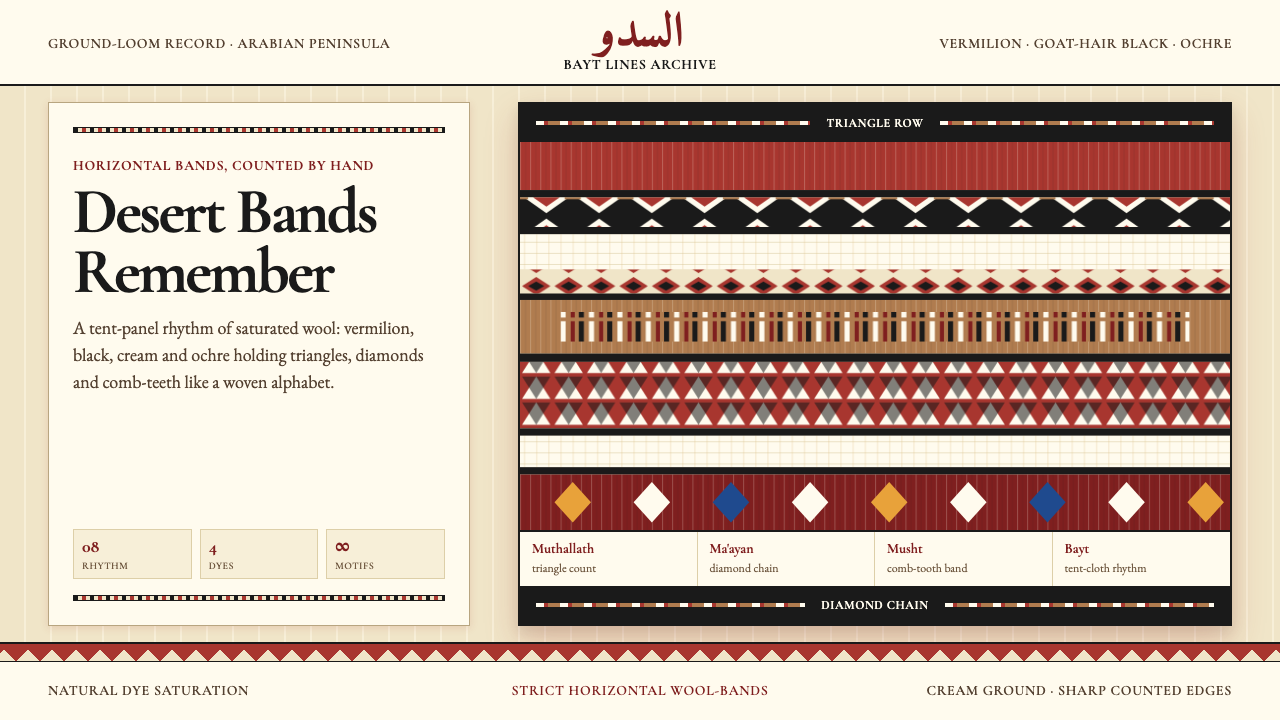 Bedouin Desert Textile (Sadu)Woven memory, not ornament. Vermilion-black bands count triangles and diamond…
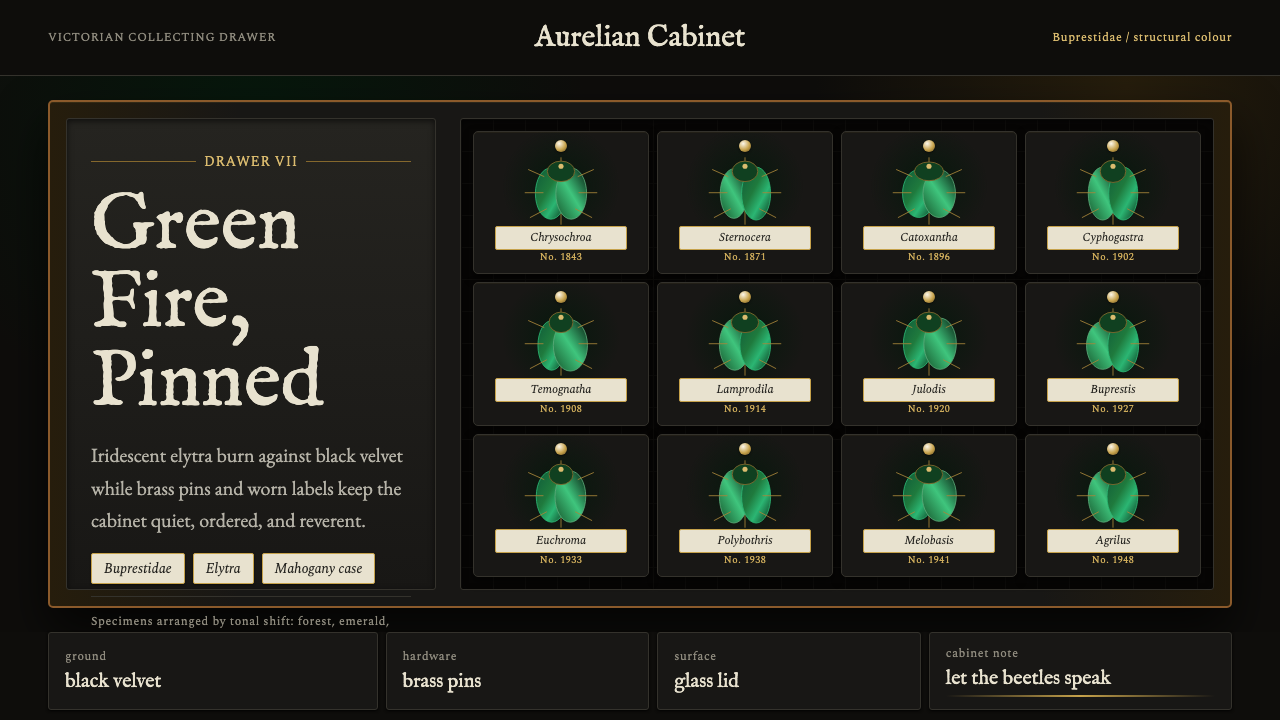 Beetle Specimen CabinetGreen burns in darkness. Emerald elytra grids glow under brass keylines and b…
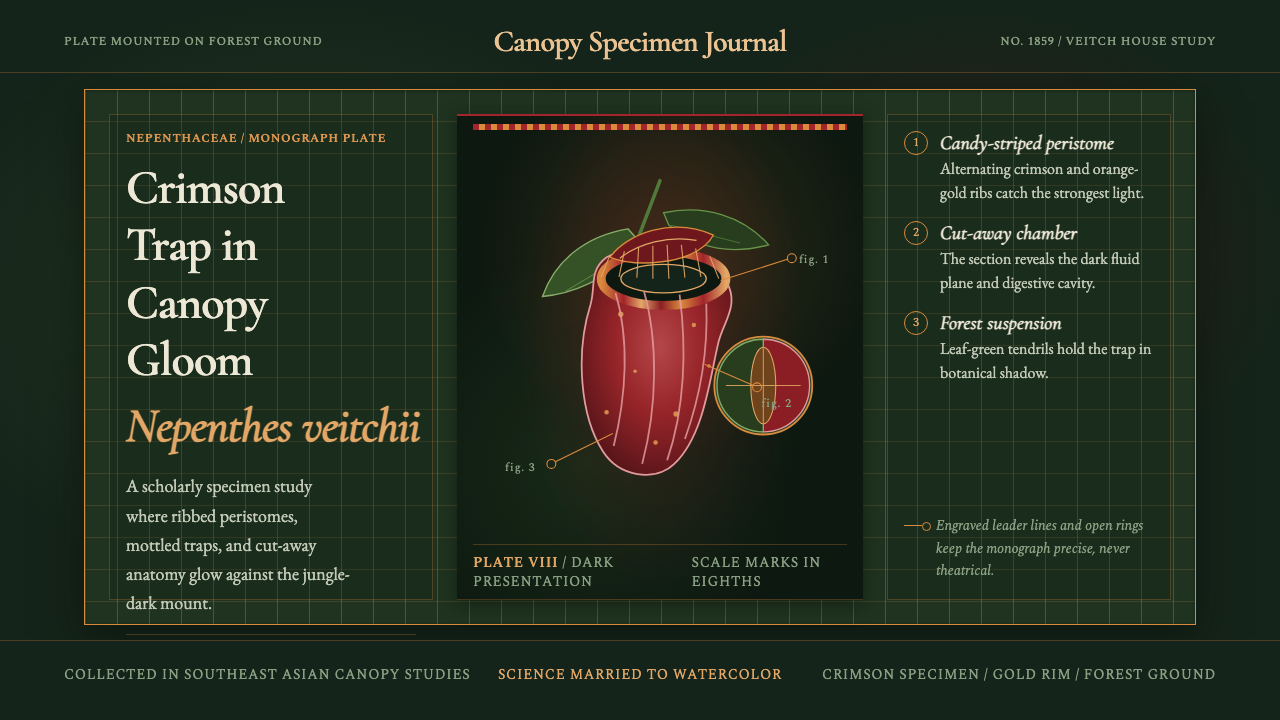 Carnivorous Pitcher PlantBotanical danger glows. Crimson traps and gold rims float on jungle-dark gree…