What is Akuaba Akan Fertility Doll?
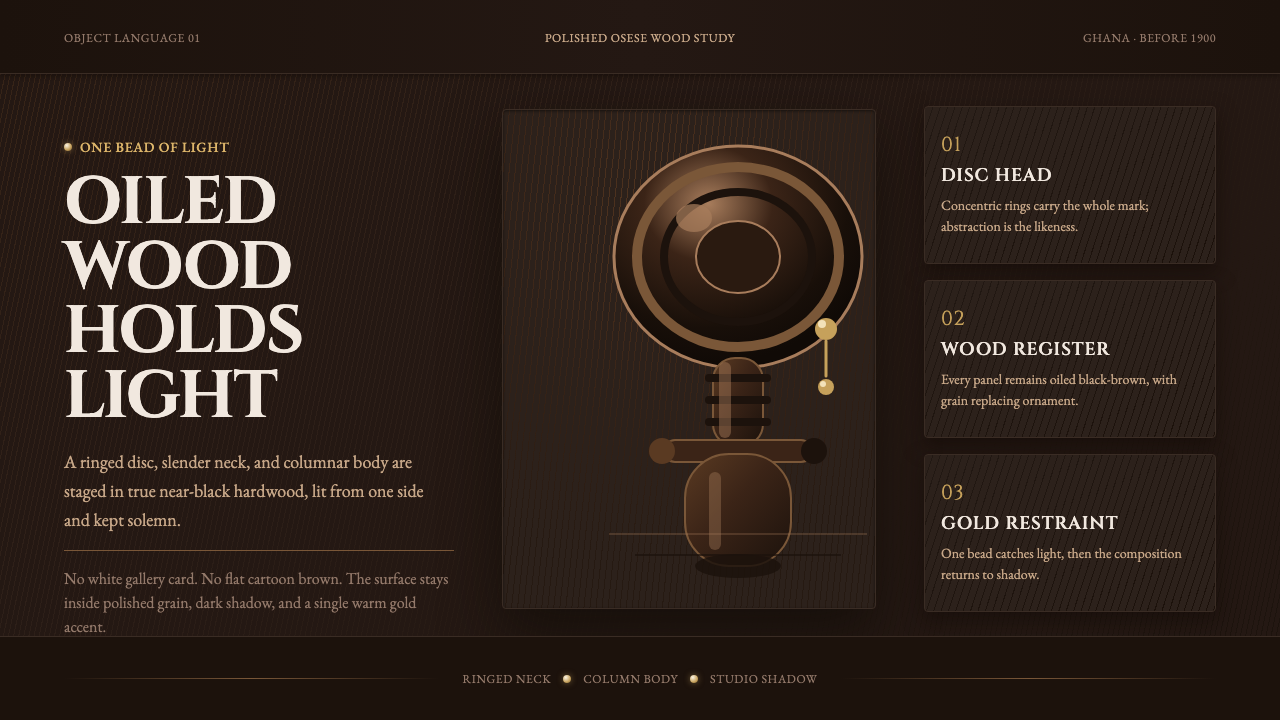
The Akuaba Akan fertility doll turns dark wood into an image of hope: a ringed head, a poised body, and a small warm gleam held inside shadow.
Akuaba Akan Fertility Doll in brief
The akua'ba is a carved wooden fertility figure of the Ashanti and Akan peoples of Ghana. Before 1900, women seeking a healthy, beautiful child carried these figures. Its silhouette is immediately recognizable: a flat disc-like head, a slender ringed neck, and a columnar torso reduced to a calm, highly legible rhythm of forms.
This is not an aesthetic built from a decorative background around an object. The object is the visual system. Hard osese wood is carved, polished, and oiled until it carries a deep black-brown gloss. Light does not erase the darkness; it travels across wood grain, curved edges, and worn-looking planes, making the carving feel present through restraint.
As a contemporary design language, Akuaba works best when it preserves that material logic. Near-black surfaces establish the field, soft directional light reveals form, ringed geometry creates cadence, and a single warm gold bead-like accent acts as a concentrated point of attention. The result should feel sculptural and inward-looking rather than merely dark or luxurious.
Where does Akuaba Akan Fertility Doll come from?
The akua'ba belongs to the long-standing carving tradition of the Asante and Akan peoples of Ghana in West Africa. Its history is described here as pre-1900, but its importance is not limited to an isolated historical artifact. It was made for use: a carved figure carried by women who desired a healthy, beautiful child.
Akan wood-carvers shaped the figure from hard osese wood. The choice of material matters because the form and its finish are inseparable. The wood supports a slim neck, a broad disc-head, and a compact torso while accepting the polishing and oiling that bring the surface toward a glossy black-brown depth.
The form is an instance of geometric abstraction of the ideal head. Rather than treating the human figure as a naturalistic portrait, the carving concentrates identity and beauty into a small set of memorable relationships: disc and column, circle and vertical, narrow support and expansive crown. The abstraction gives the figure a ceremonial clarity.
Its ringed neck is central to the beauty ideal named in the source material. Those repeated bands make the neck more than a connector between head and body: they are a visual transition, a tactile rhythm, and a signal that refinement can be expressed through controlled repetition. Beaded earrings and waist strings extend that same logic of concentrated ornament.
What defines the Akuaba Akan Fertility Doll look?
Material Darkness
The dominant field should resemble polished, oiled hardwood rather than generic black. Darkness has grain, warmth, and reflective variation. It should feel absorbed into the material, with highlights arriving only where a carved surface turns toward the light.
Disc and Column
The signature composition is built from a broad flat disc-head and a narrow vertical body. This contrast creates a stable silhouette with unusual authority: the head becomes a quiet emblem, while the torso gives it weight and uprightness.
Ringed Rhythm
Repeated rings around the neck introduce a measured rhythm between the expansive head and compact body. Use repetition as carving-like cadence, not as a decorative pattern spread across every surface. Each ring should strengthen the sense of touch and containment.
Single-Sided Light
Light should behave like a studio light placed to one side of a carving. It reveals contour, rim, and polished grain while allowing the opposite side to remain deep. Even illumination weakens the sculptural premise by making every surface equally available.
Warm Bead Accent
A single warm gold accent can stand in for the figure's beaded earrings and waist strings. It should be small, deliberate, and luminous against the wood-dark field. Its role is not to make the composition flashy, but to give the darkness one held point of life.
Sculptural Restraint
This language relies on few elements and clear surface hierarchy. Avoid floating white silhouettes, museum-label neutrality, or unrelated ornamental texture. The figure should feel carved from the same darkness as its surrounding field, with form revealed gradually rather than outlined completely.

Who shaped Akuaba Akan Fertility Doll?
Akan wood-carvers made the akua'ba from hard osese wood, defining the figure through carving, polishing, and oiling. Their work joins abstraction to material knowledge: the disc-head, ringed neck, and columnar torso are not separate graphic motifs but a coherent wooden form.
Women seeking a healthy, beautiful child carried the akua'ba before 1900. This use gives the object its emotional center. Its measured beauty is tied to care, expectation, and the desire for a flourishing child, not to visual abstraction for its own sake.
The figure itself is the enduring protagonist of this tradition. Its idealized head, ringed neck, glossy black-brown wood, and bead-associated accents make it one of the most recognizable abstracted forms in African sculpture while remaining rooted in a specific Akan purpose.
How do you use Akuaba Akan Fertility Doll today?
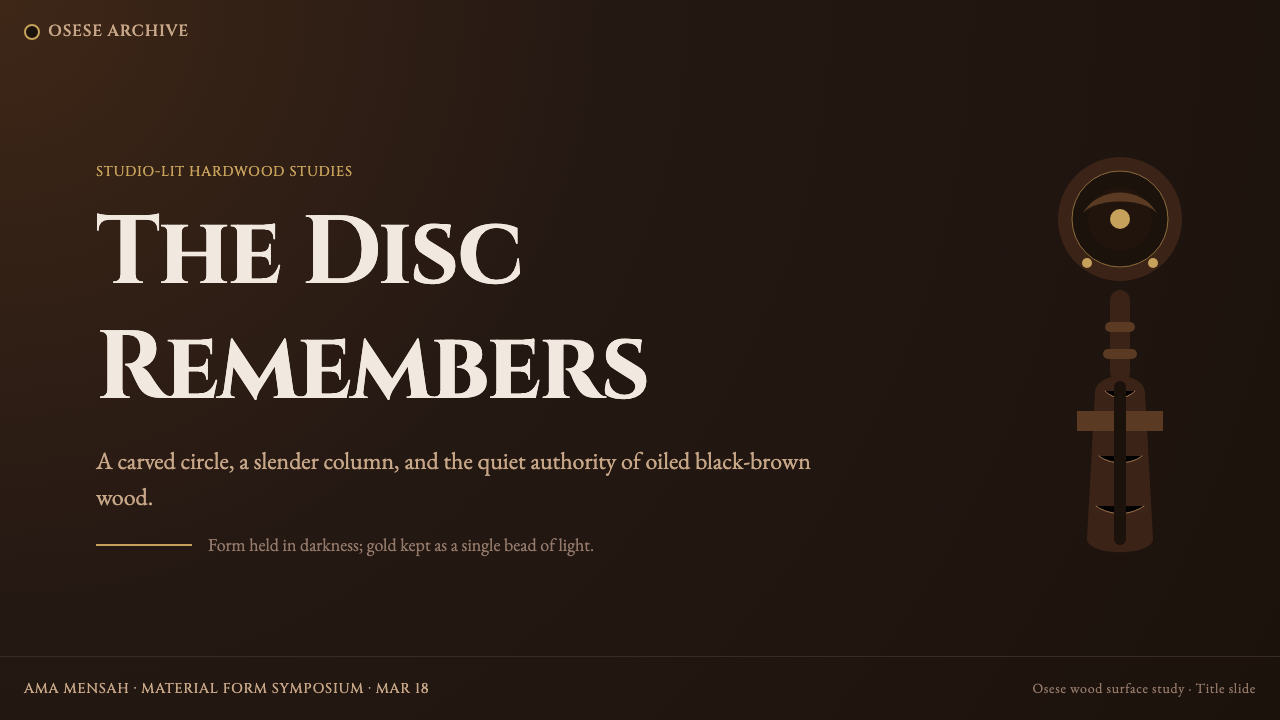
For presentation covers, treat the page as a dark display case for one sculptural silhouette. Let a large disc or cropped ring establish the focal shape, then place the title with ample quiet around it. A restrained warm bead accent can mark the title, a chapter cue, or a single piece of metadata. The cover should suggest discovery through light, not explain every detail at once.
On content slides, use the disc-and-column relationship to organize hierarchy. A broad circular or ringed anchor can hold a section title, while a narrow vertical text area carries explanation. Data slides should not imitate wood sculpture literally; instead, use dark grounded charts with a single highlighted series or category, preserving the idea that attention is earned by contrast and containment.
For web interfaces, the language suits dashboards, profiles, and premium information spaces that benefit from focus and calm. Keep panels visually connected to the dark field rather than making them appear as pale cards floating above it. Use directional highlights, restrained ring motifs, and one warm state indicator to guide scanning. Pricing pages can use the accent selectively to distinguish a featured option without turning every tier into a competing jewel.
For editorial and marketing work, make imagery feel like a close encounter with a carved object. Large crops of grain, curved contour, and side-lit surfaces can carry more atmosphere than a busy collage. Pair concise copy with deliberate empty darkness, and use ringed dividers or a small bead marker to introduce quotations, product details, or calls to action.
The common mistake is reducing Akuaba to a generic black-and-gold luxury style. That loses the source's specificity: dark oiled wood, geometric abstraction of the ideal head, ringed-neck rhythm, and the association with women carrying a fertility figure. Avoid covering the layout in metallic accents, making the wood uniformly glossy, or presenting the figure as a detached white museum silhouette.
Akuaba Akan Fertility Doll — FAQ
Is Akuaba style simply a dark luxury aesthetic?
No. Its darkness comes from the polished and oiled black-brown surface of hard osese wood, not from an abstract luxury convention. The visual language is also defined by the flat disc-head, ringed neck, columnar body, and a focused bead-like accent. If those material and formal relationships disappear, black and gold alone do not communicate the source.
Why is the head rendered as a flat disc?
The disc-head is part of the akua'ba's highly abstracted and recognizable silhouette. The source material identifies this as geometric abstraction of the ideal head. It concentrates the figure's presence into a broad, memorable form balanced on a slender neck, rather than relying on naturalistic facial modeling.
How should light be used in an Akuaba-inspired composition?
Use light as if it were illuminating a single carved object from one side. It should reveal polished grain, the edge of the disc, and the rings around the neck while preserving substantial darkness elsewhere. The goal is not dramatic theatricality for its own sake, but fidelity to a carved form whose surfaces become legible through selective reflection.
Can the warm gold accent appear more than once?
It can, but it should remain concentrated and purposeful. In the source language, the warm accent stands in for beaded earrings and waist strings worn by the figure. Treat it as a small sign of adornment and attention, not as a second dominant surface. Repetition is most convincing when it still feels like a sparse string of beads against dark wood.
What should designers avoid when referencing the akua'ba?
Avoid detaching the figure from its material and purpose. A white cutout on a neutral museum-card background, indiscriminate metallic decoration, or unrelated ornamental pattern can make the reference feel generic. Keep the focus on oiled wood darkness, sculptural geometry, ringed-neck rhythm, and the figure's association with women seeking a healthy, beautiful child.
Related design styles
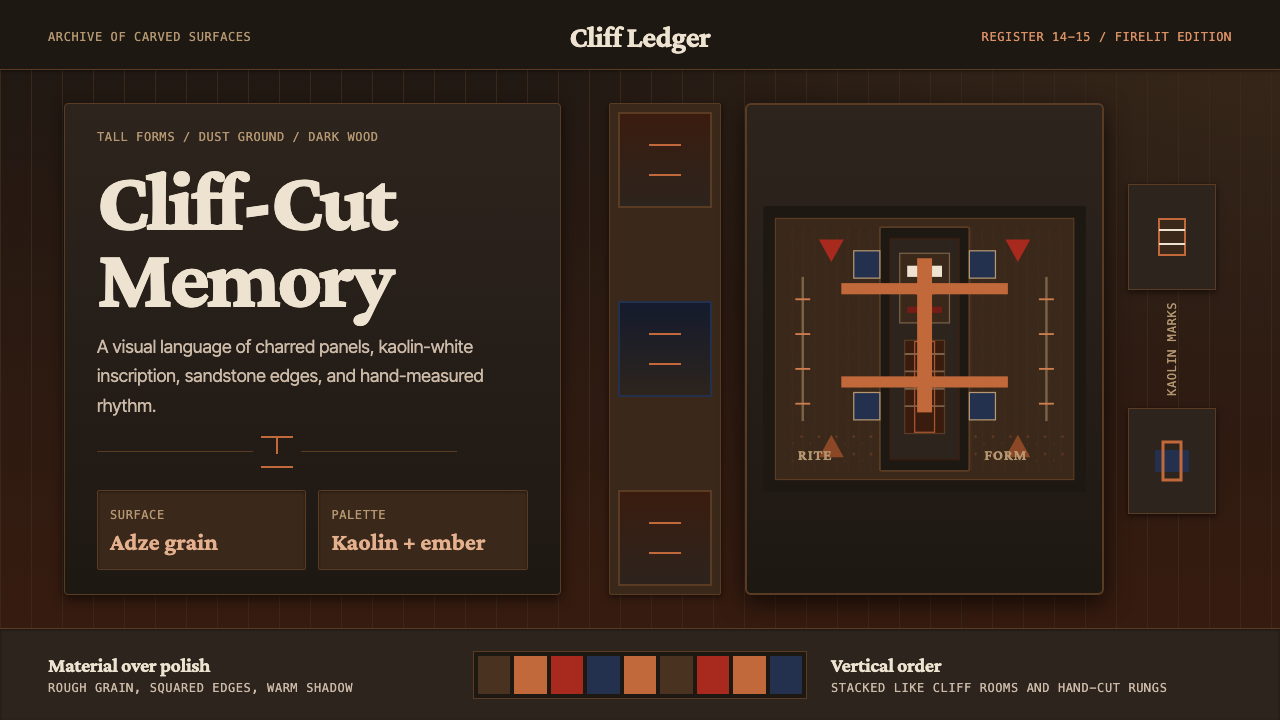 Dogon Bandiagara Cliff MaskHand-hewn gravity. Charred wood, kaolin type, and sandstone geometry stack li…
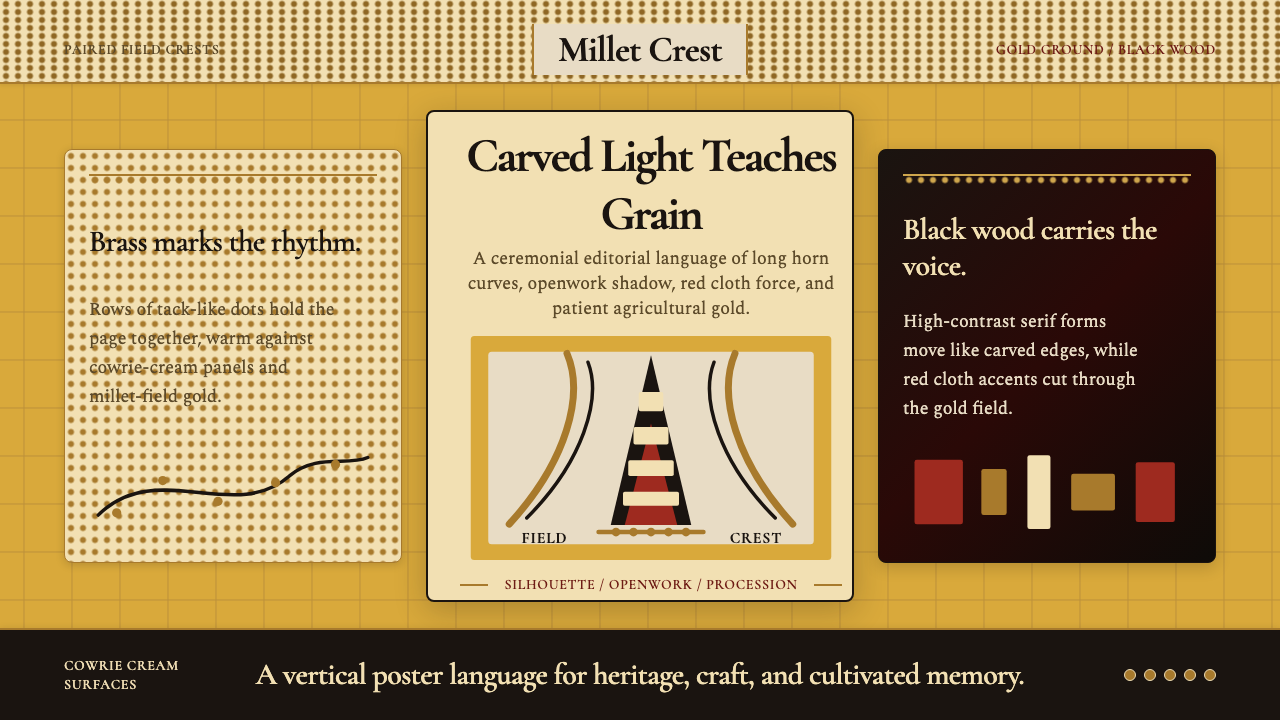 Bambara Chi Wara AntelopeCarved memory in gold. Black serif silhouettes and brass-dot borders carry th…
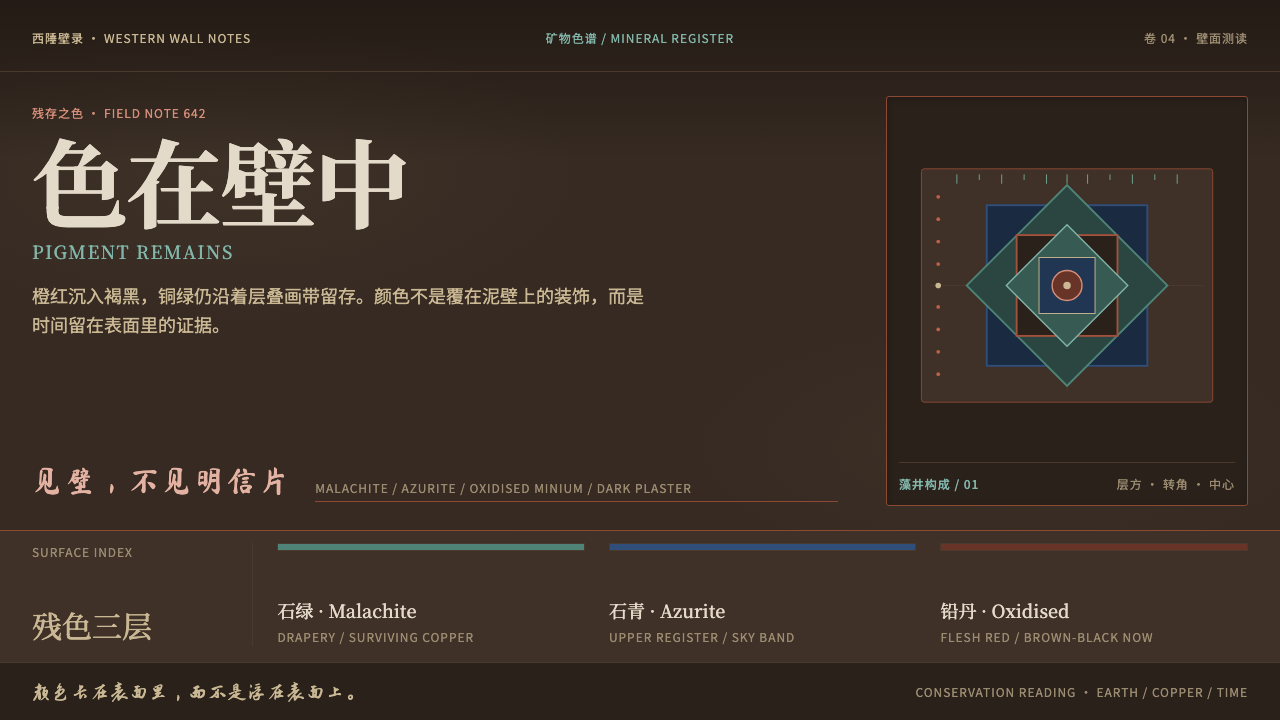 Dunhuang Mogao MuralsTime lives in the wall. Mineral green and azurite endure on oxidised brown pl…
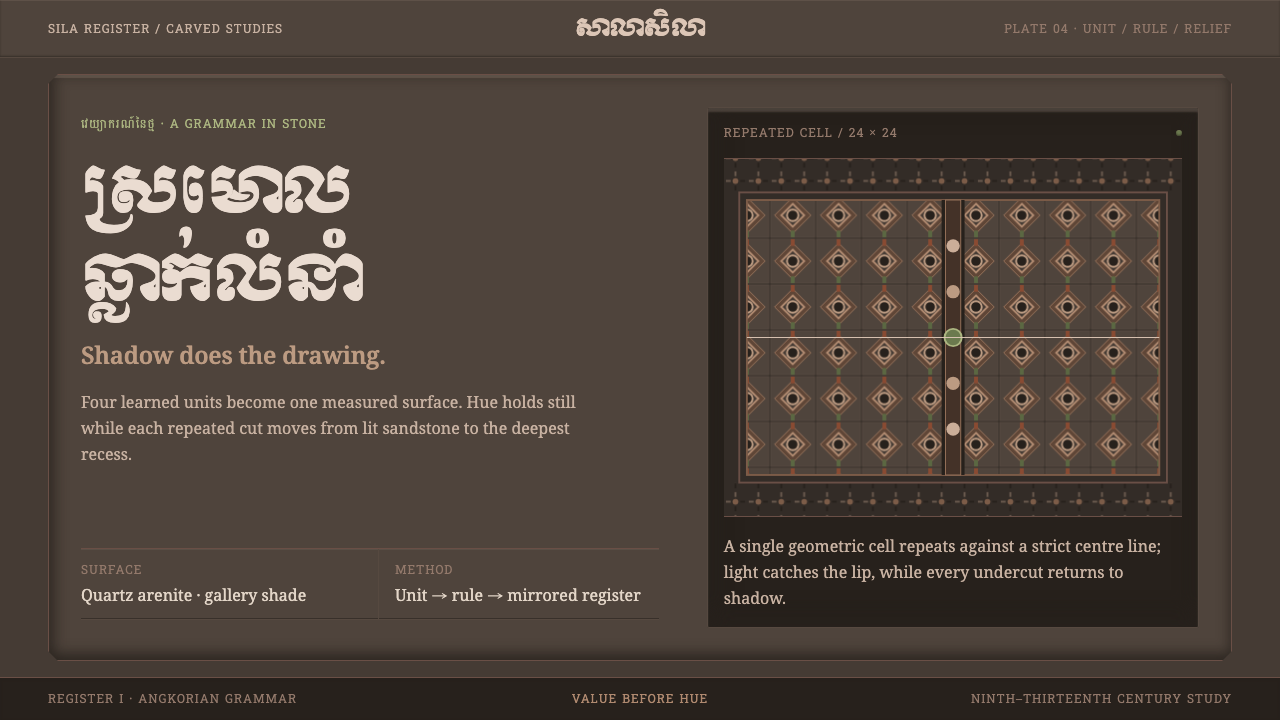 Khmer Kbach MotifShadow carves the grammar. Repeated stone cells turn a narrow sandstone palet…
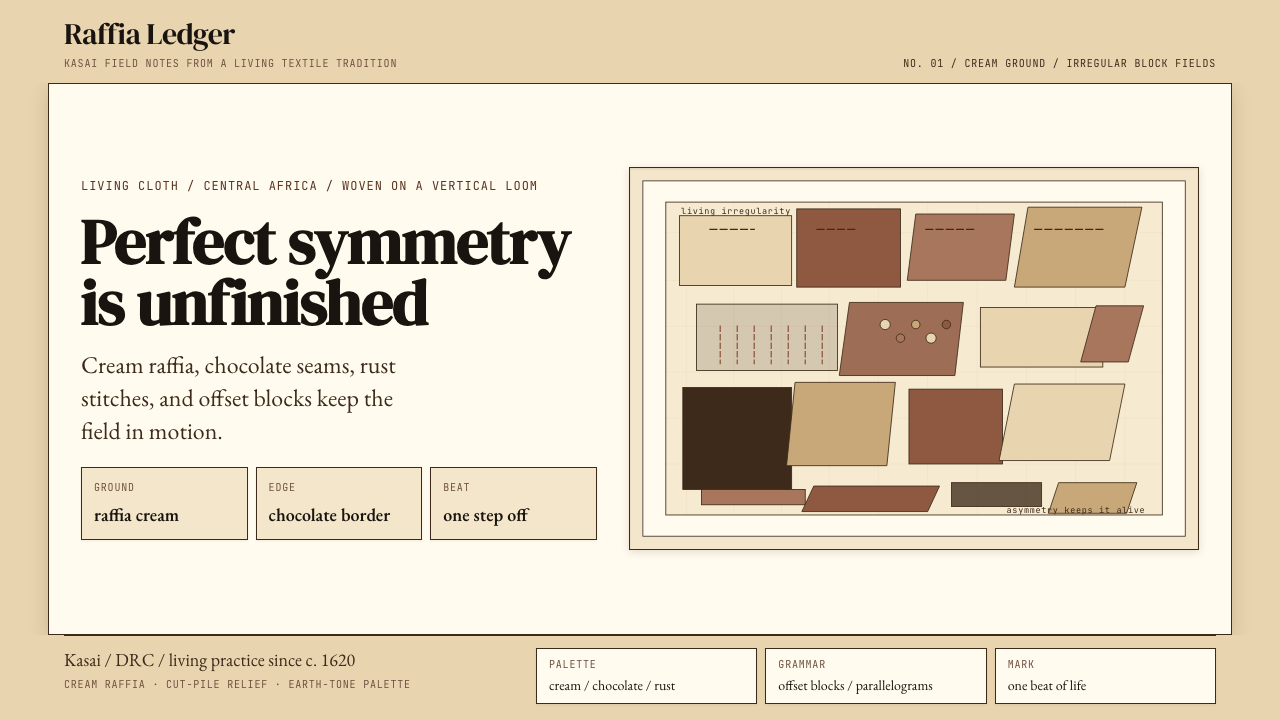 Kuba Raffia Cloth (Congo)Deliberate asymmetry lives. Cream raffia, chocolate seams, and rust blocks.
 Lithuanian Amber (Baltic Pagan)Ancient amber glows. Honey resin on smoked oak, framed by saulė geometry.