What is Sacred Geometry Platonic Solids?
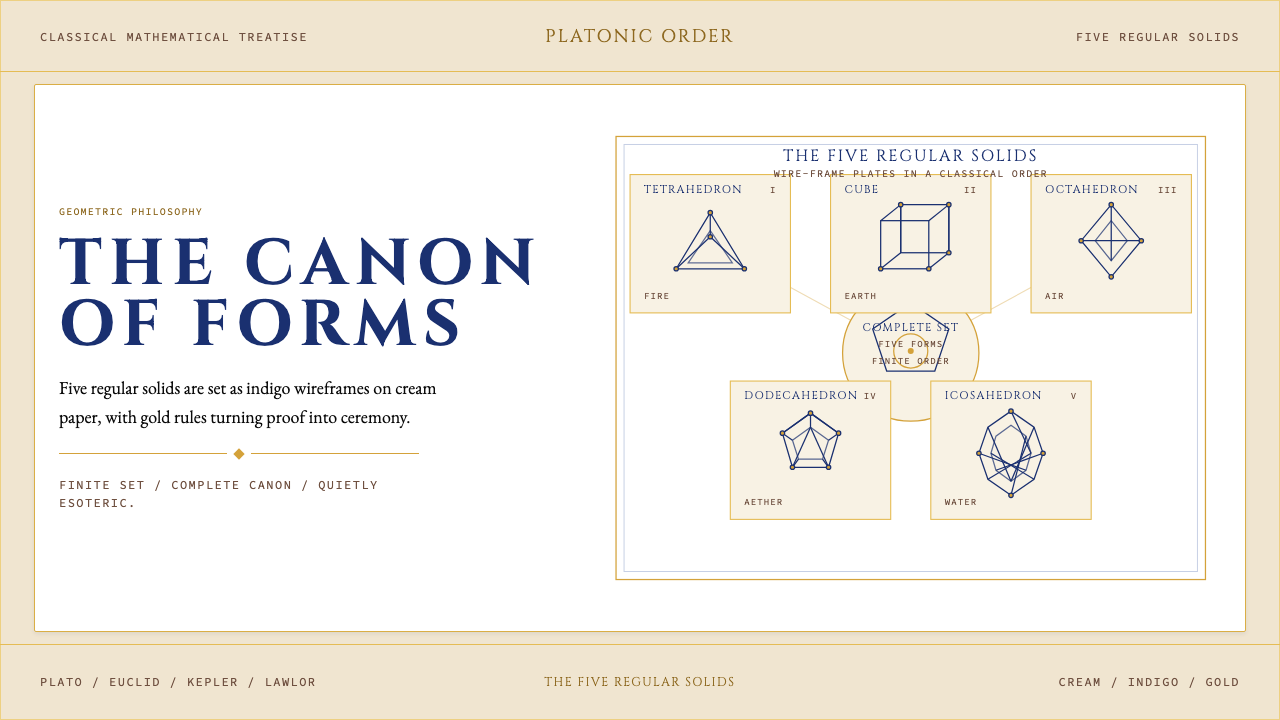
Where ancient Greek mathematics meets contemplative design — warm cream paper, deep-indigo wireframes, and the five Platonic solids treated not as decoration but as philosophy.
Sacred Geometry Platonic Solids in brief
Sacred Geometry Platonic Solids is a design system modeled on the visual language of a classical mathematical treatise. Its palette centers on warm cream grounds, deep-indigo ink, and warm-gold filigree — the colors of aged vellum and fine engraving. The five Platonic solids — tetrahedron, cube, octahedron, dodecahedron, and icosahedron — appear as three-dimensional wireframes, rendered with the precision of Renaissance geometric manuscripts. Every compositional decision communicates that geometry is not ornament but cosmological structure.
The system reads like Plato's Timaeus set in fine metal type: generous letter-spacing, classically-proportioned serif headings, readable body text with open counters, and monospace letterforms reserved for formulae and annotations. Nothing is casual. Every page is measured, restrained, and quietly esoteric — a contemplative object, not a promotional screen. The aesthetic belongs to the tradition of the illustrated scientific folio: diagrams carry the same weight as prose, and white space is not emptiness but silence.
Unlike maximalist mystical design that reaches for fantasy through texture and illustrative excess, this system achieves its sense of the sacred through precision and restraint. The wireframe solids are never filled with color — they remain structural, transparent, almost diagrammatic. This discipline is what separates the style from decorative geometry: the solids are shown as Euclid would have drawn them, not as a poster artist would embellish them.

Where does Sacred Geometry Platonic Solids come from?
The Platonic solids take their name from Plato's dialogue Timaeus, written around 360 BCE, in which the philosopher assigned each of the five regular convex polyhedra to one of the classical elements: the tetrahedron to fire, the cube to earth, the octahedron to air, the icosahedron to water, and the dodecahedron to the cosmos itself. This was not casual metaphor — it was a cosmological claim. Plato argued that the universe was fundamentally geometric, that the material world was composed of triangular faces arranged into these five perfect forms, and that understanding the solids was therefore a form of understanding creation. The mathematical rigor of the Timaeus established the Platonic solids as objects of both scientific inquiry and philosophical veneration for the next two millennia.
Euclid's Elements, compiled around 300 BCE, provided the geometric foundation that Plato's cosmology required. Book XIII of the Elements — the culminating book — is entirely devoted to the construction and proof of all five Platonic solids. For Euclid, the solids were not philosophical symbols but mathematical objects with provable properties: fixed numbers of faces, edges, and vertices; unique face geometries; inscribable in a sphere. The austere precision of Euclidean proof shaped how later generations would visualize and represent the solids — as diagrams, not illustrations — and this diagrammatic tradition is central to the aesthetic that the design system inherits.
During the Renaissance, the Platonic solids experienced a dramatic revival. The Florentine Neoplatonists, led by Marsilio Ficino and Pico della Mirandola, revived Platonic philosophy and with it a deep interest in mathematical mysticism. Luca Pacioli's De Divina Proportione (1509), illustrated by Leonardo da Vinci, presented the solids in meticulous perspective drawings that combined mathematical accuracy with artistic mastery. These images — solid edges rendered as fine lines, interiors left open or shown as skeletal wireframes — became the visual archetype for all subsequent sacred geometry illustration. The Renaissance understanding of the solids as simultaneously scientific fact, artistic subject, and spiritual symbol is precisely the blend that the design system cultivates.
Johannes Kepler, writing in Mysterium Cosmographicum (1596), attempted to model the orbits of the six then-known planets using a nested arrangement of the five Platonic solids. Though his planetary model proved incorrect, the ambition of the project — to find a geometric key to cosmic order — exemplifies the tradition of treating the solids as profound, not merely curious, mathematical objects. Robert Lawlor's Sacred Geometry: Philosophy and Practice (1982) brought this long tradition into the late twentieth century, arguing that geometric proportion underlies art, architecture, and nature across cultures. Lawlor's work, along with the broader sacred geometry revival of the 1970s and 1980s, established the visual vocabulary — cream-toned paper, precise line drawings, contemplative layout — that the design system directly channels.
What defines the Sacred Geometry Platonic Solids look?
Color Palette
The palette is built from three sources: a warm cream that reads as aged parchment rather than digital white; a deep indigo that functions as the primary ink color for text, wireframe lines, and structural rules; and a warm gold used sparingly for decorative filigree, ruling lines, and accent marks. The relationship between these three is one of temperature harmony — all three share a warmth that avoids the cold precision of pure scientific illustration. On dark variants, the cream becomes a near-black and the indigo lightens to a mist, while the gold retains its luminosity. Saturation throughout is deliberately restrained; no color reads as vivid or electric.
Wireframe Solids
The five Platonic solids appear as three-dimensional wireframe drawings — edges rendered as fine lines, faces left open and transparent. This choice is both historically grounded and philosophically significant: it follows the tradition of Euclid's geometric diagrams and Leonardo's illustrations for De Divina Proportione, where the internal structure of a solid matters as much as its outer silhouette. The wireframes are never filled with color or texture. They are structural objects, shown as if cut from fine wire and suspended above the page. Rendered at varying scales and orientations, they create a sense of rotation and contemplation without simulation.
Typography Scale and Spacing
Typography is set with the generosity of an illuminated manuscript. Headings use classically-proportioned serif letterforms with high stroke contrast — the kind of type associated with Renaissance title pages and mathematical treatises. Body text is set in an open, readable serif with comfortable leading, evoking the feel of a scholarly edition rather than a display piece. Monospace letterforms handle formulae and labels, their uniform rhythm contrasting with the organic variation of the serif text. Letter-spacing is wide throughout — titles are tracked broadly, even subcaptions breathe — reinforcing the contemplative, unhurried register of the system.
Gold Filigree and Ruling Lines
Gold is deployed with the precision and restraint of a scientific instrument maker applying decoration to a brass astrolabe. It appears as thin ruling lines framing text blocks, as fine filigree borders at page margins, and as accent marks separating sections. It never floods a surface or functions as a background tone — it is always linear, always delicate. This use of gold signals the tradition of the illuminated codex and the engraved plate, where gold leaf or burnished detail appeared at the periphery of scholarly diagrams as evidence of care and devotion, not as graphic fill.
Compositional Structure
Layouts follow the logic of the scholarly folio: a centered or near-centered text column with generous outer margins for annotations and labels, figures placed with deliberate geometric relationships to the surrounding text, and section breaks marked by horizontal rules rather than whitespace alone. The composition is symmetrical in a classical rather than contemporary sense — centered axes, balanced margins — which distinguishes it clearly from modernist asymmetric grid systems. This classical symmetry contributes to the sense of authority and permanence the style communicates.
Restraint Over Richness
The system consistently chooses precision over abundance. A single wireframe solid at large scale communicates more than a field of many small ones. A single gold ruling line carries more weight than a decorative border filled with interlocking pattern. This restraint is not minimalism in the contemporary product-design sense — the system is not sparse or stark. It is measured: every element earns its place by contributing to the sense that geometry is a serious, studied subject, not a visual trend to be consumed.
Absence of Photographic Imagery
Photography and representational illustration have no place in this system. The visual vocabulary is entirely constructed from geometric line, text, and the minimal application of flat color. This exclusion mirrors the tradition of the geometric treatise, where diagrams were the sole visual language because they were the only form of image that could be as precise as mathematical proof. In contemporary application, this means the system relies on its typographic and diagrammatic elements to carry all communicative and aesthetic weight — there is no photographic backdrop, no lifestyle image, no textured scene-setting.

Who shaped Sacred Geometry Platonic Solids?
Plato's Timaeus, written around 360 BCE, is the foundational text for all subsequent sacred geometry tradition. In it, Plato assigns each of the five regular polyhedra to a classical element and argues that the cosmos is literally built from geometric forms. This was not metaphor but ontology — Plato believed the material world was constructed from triangular faces assembled into the five perfect solids. The Timaeus established geometry as a branch of philosophy, not merely mathematics, and that dual status — rigorous and contemplative simultaneously — is the precise cultural inheritance that the design system claims.
Euclid's Elements, compiled around 300 BCE, provides the mathematical proof structure that transforms the Platonic solids from philosophical speculation into rigorously demonstrated geometry. Book XIII, the final and culminating book, constructs all five solids from first principles and proves their completeness — that no other regular convex polyhedra exist. The Euclidean tradition of diagram-as-proof, where a figure is not illustrative but argumentative, is the direct ancestor of the diagrammatic visual style the design system employs. The aesthetic of precise, unlabeled geometric construction lines is a visual quotation of Euclidean methodology.
Pacioli's De Divina Proportione (1509) and Leonardo's illustrations for it represent the moment when the Platonic solids became an art subject as well as a mathematical one. Leonardo drew the solids in open-faced perspective — faces shown as transparent wireframes rather than opaque surfaces — establishing the visual convention that the design system directly inherits. The collaboration between the mathematician and the artist exemplifies the Renaissance belief that geometric proportion was the link between divine order and human beauty. These illustrations, circulated widely through print, made the wireframe solid a recognizable cultural symbol across European intellectual culture.
Kepler's Mysterium Cosmographicum (1596) attempted to explain the spacing of planetary orbits by nesting the five Platonic solids inside one another, each inscribed within a sphere corresponding to a planetary orbit. The model proved astronomically incorrect once Kepler himself derived his elliptical orbit laws, but its ambition — to find that the cosmos is secretly a geometric construction — remained deeply influential. Kepler's willingness to pursue this idea with full mathematical rigor, rather than mere poetic intuition, exemplifies the intellectual tradition the design system inhabits: geometry as a discipline serious enough to stake cosmological claims on.
Lawlor's Sacred Geometry: Philosophy and Practice (1982) brought the 2,400-year tradition of mathematical mysticism into the modern design consciousness. The book's visual style — cream-toned paper, precise technical line drawings, meditative layout with generous margins — established the aesthetic vocabulary that contemporary sacred geometry design inherits and updates. Lawlor argued that geometric proportion is a universal language underlying art, architecture, music, and nature across cultures, giving the tradition a cross-cultural legitimacy that extended its influence well beyond Western esotericism. His work effectively defined what sacred geometry looks like for late twentieth and early twenty-first century practitioners.
How do you use Sacred Geometry Platonic Solids today?
Sacred Geometry Platonic Solids is a high-context, deliberately slow aesthetic — it rewards attention and communicates seriousness, depth, and intellectual credibility. Applying it correctly means understanding that it belongs to the register of the scholarly publication, not the tech launch. It works best for products, events, and communications that genuinely benefit from an association with ancient mathematical tradition: scientific education, philosophy, contemplative practice, premium publishing, archival or heritage institutions, and high-concept creative studios. Applied to contexts that do not share these values, the style reads as costume rather than character.
For presentation slides, the system lends itself to keynotes and lectures where the speaker wants to position complex ideas within a tradition of serious inquiry. A cover slide benefits from a large wireframe solid centered on the cream ground, with the title in wide-tracked serif type below it and a thin gold ruling line separating title from subtitle. Content slides should treat diagrams and text as co-equal — not slides with bullet points, but pages where a geometric figure and explanatory text occupy the same compositional plane. Data visualizations take on the quality of mathematical diagrams: clean line charts and precisely labeled scatter plots rather than heavily styled infographics.
For web interfaces and dashboards, the style suits research tools, scientific platforms, educational portals, and any product where the user is expected to spend extended time reading and thinking rather than quickly scanning and acting. The page structure follows the folio model: a narrow centered column for primary content, wide outer margins for supplementary information, and typographic hierarchy defined by size contrast and spacing rather than color variety. Interactive elements — buttons, links, form fields — should be typographic and linear, with hover states that shift a ruling line's color from indigo to gold rather than introducing animation or shadow effects.
For editorial design — long-form articles, research reports, book interiors — the system is close to its natural habitat. Running text benefits from the wide tracking and generous leading that the style prescribes, making long reading sessions comfortable. Section headers can use the solid's geometry as a visual divider: a small wireframe tetrahedron or octahedron placed at the opening of a section creates spatial rhythm without relying on decorative ornament. Pull quotes and marginalia should be set in the same serif at a lighter weight, placed in the outer margin to preserve the folio-style composition.
The most common mistake when applying this style is treating it as a mystical mood board — pulling in starfield backgrounds, gradient auras, or crystalline textures alongside the wireframe solids. This destroys the quality that makes the style distinctive: its analogy to a rigorous academic diagram. The second common mistake is applying it to fast-paced consumer contexts — e-commerce product pages, social media templates, quick-scan dashboards — where its contemplative pace becomes a liability. The third mistake is using the gold liberally as a fill color rather than a line element; gold as background or button color collapses the careful hierarchy the system is built on. Use the style where slowness, precision, and intellectual weight are genuinely desirable, and use it sparingly enough that the wireframe solids retain their capacity to stop a viewer and prompt a second look.

Sacred Geometry Platonic Solids — FAQ
How is this different from generic 'sacred geometry' or new-age design?
Generic sacred geometry design typically leans into cosmic mysticism through gradient starfields, layered mandalas, neon color, and illustrative excess. Sacred Geometry Platonic Solids is deliberately counter to that tradition. Its reference points are Euclid's diagrams, Leonardo's De Divina Proportione illustrations, and the visual language of the scholarly scientific treatise — not new-age spirituality. The palette is restrained and warm, not vivid and cosmic. The wireframes are structural and diagrammatic, not decorative or glowing. The style communicates intellectual precision that happens to carry spiritual weight, not spiritual atmosphere dressed up in geometry.
Can this style work in digital interfaces, or is it too print-derived?
The style is rooted in the print tradition of the folio and the engraved plate, which means it requires adaptation for digital contexts. The adaptations that work: replacing physical paper texture with a warm off-white screen background, using thin hairline rules and vector wireframe solids that render crisply at any resolution, and ensuring that the typographic hierarchy is strong enough to guide reading without physical page cues. The adaptations that fail: adding drop shadows or hover glows to the wireframe solids, introducing transition animations that undermine the contemplative static quality of the style, or compressing the generous spacing to fit more content per screen. Digital applications of this style succeed when they resist the temptation to make the interface feel responsive and immediate, and instead commit to the slower register of a fine printed page.
Why are the Platonic solids important — can I replace them with other geometric forms?
The five Platonic solids are culturally and mathematically specific in a way that other geometric forms are not. They are the only convex polyhedra in which every face is an identical regular polygon — a property that Euclid proved is satisfied by exactly five and no more. Their cultural significance in the Platonic and Neoplatonic traditions, the Renaissance mathematical arts, and two millennia of esoteric geometry gives them a semantic weight that a generic sphere, cube, or pyramid does not carry alone. Using other geometric forms — fractals, nested circles, star polygons — shifts the reference frame toward either modernist geometry or generic sacred geometry illustration. The five solids together, with their historic names and their relationship to each other, are what distinguishes this specific design system from any other geometry-based aesthetic.
Does the style work for brands that are not academic or scientific?
It can, but the fit depends on whether the brand genuinely benefits from association with tradition, depth, and contemplative precision — rather than simply wanting to look learned or esoteric. Luxury goods, fine craft studios, philosophical publishing imprints, and meditation or mindfulness platforms can plausibly borrow this register because their values overlap with what the style communicates. Consumer brands that rely on warmth, accessibility, and visual energy will find the style too austere and remote. Technology brands that want to signal intellectual seriousness can use elements of the system — particularly the typographic conventions and the measured color palette — while perhaps reducing the wireframe solids to background or accent roles. The key test: does the brand benefit from the connotation of ideas that were worth two thousand years of serious attention?
How do I avoid the style looking dated or overly niche?
The risk of looking dated comes from leaning too heavily on obvious period markers — elaborate filigree borders, overly ornate initial capitals, sepia-heavy color grading that evokes aged paper too literally. The style remains current when it uses the historical vocabulary with restraint: the cream ground reads as warm and considered rather than antique, the gold appears as a precise linear accent rather than a gilding flourish, and the wireframe solids are rendered with contemporary vector precision rather than hand-drawn imprecision. The risk of looking overly niche comes from applying the style without apparent purpose — using sacred geometry as pure aesthetic preference rather than as a system whose values serve the product's communication goals. When the geometry is motivated and the execution is precise, the style reads as authoritative across audiences, not as the private language of a specialist subculture.
Related design styles
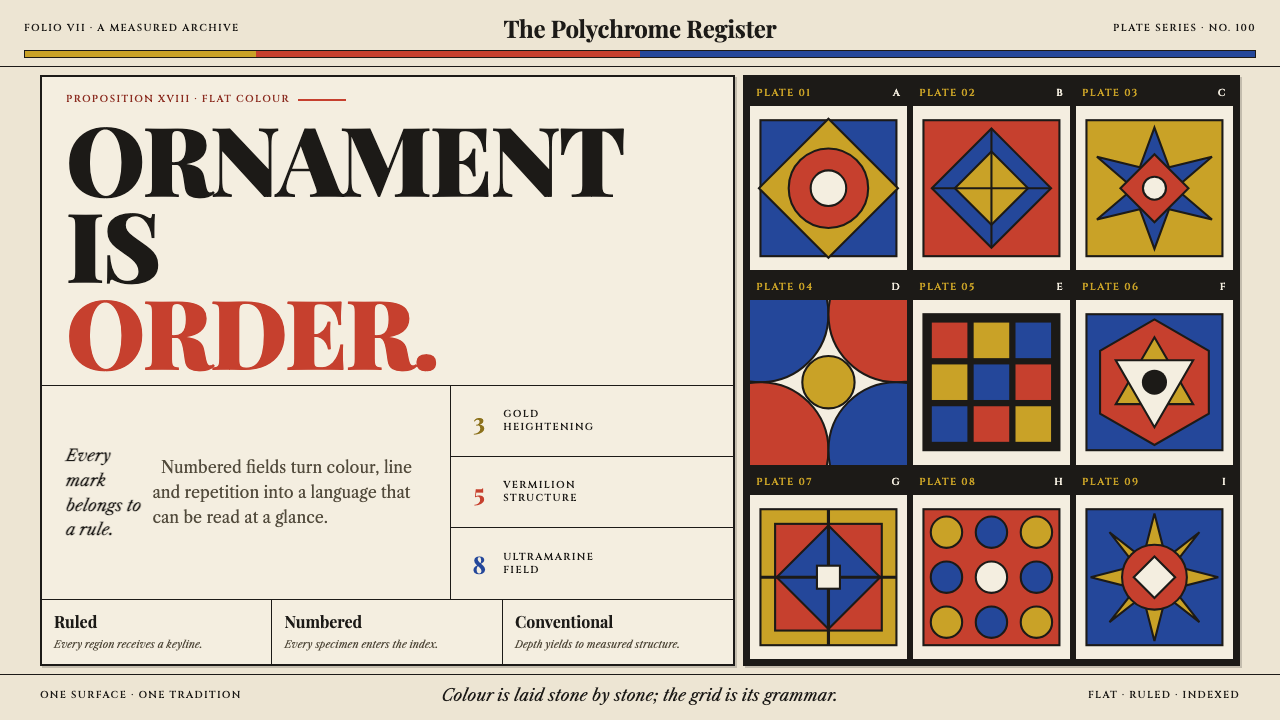 Grammar of OrnamentOrnament becomes order. Numbered grids set vermilion, ultramarine and gold in…
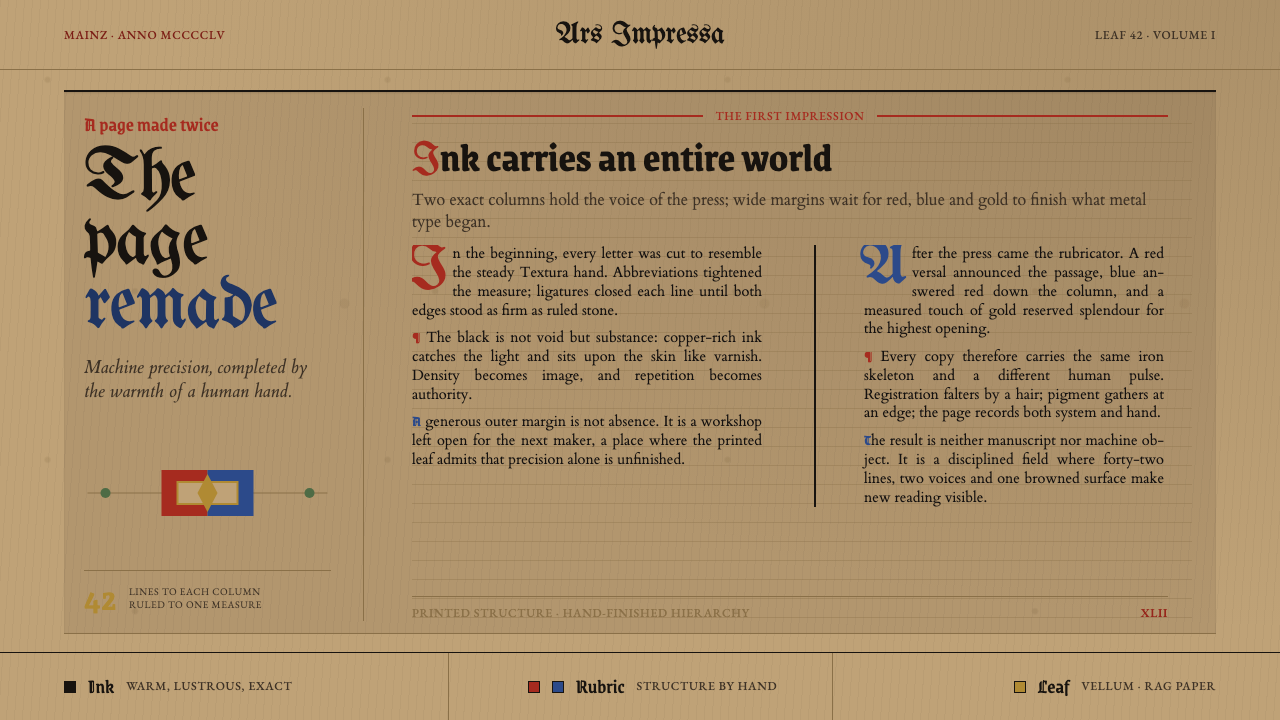 Gutenberg 42-Line BiblePrecision awaits the hand. Dense black columns open into red, blue and gold o…
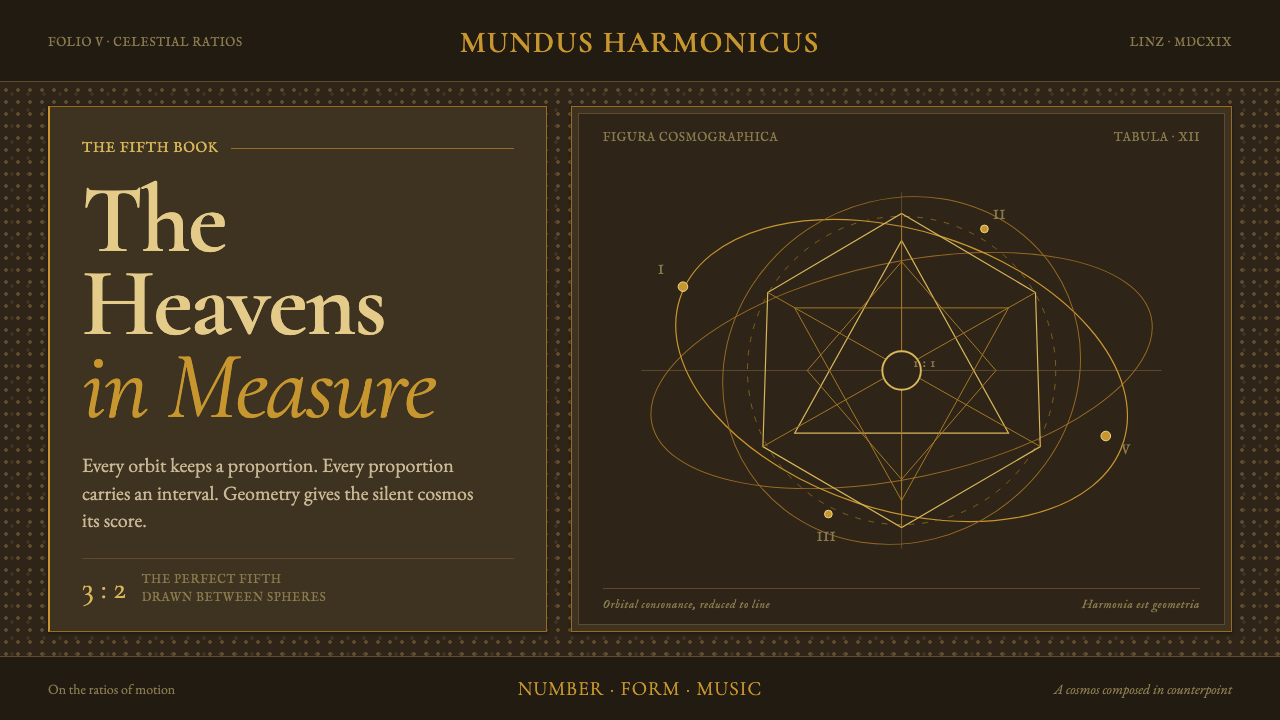 Kepler Harmonices MundiThe cosmos becomes credible geometry. Ocher-gold orbits are engraved on deep…
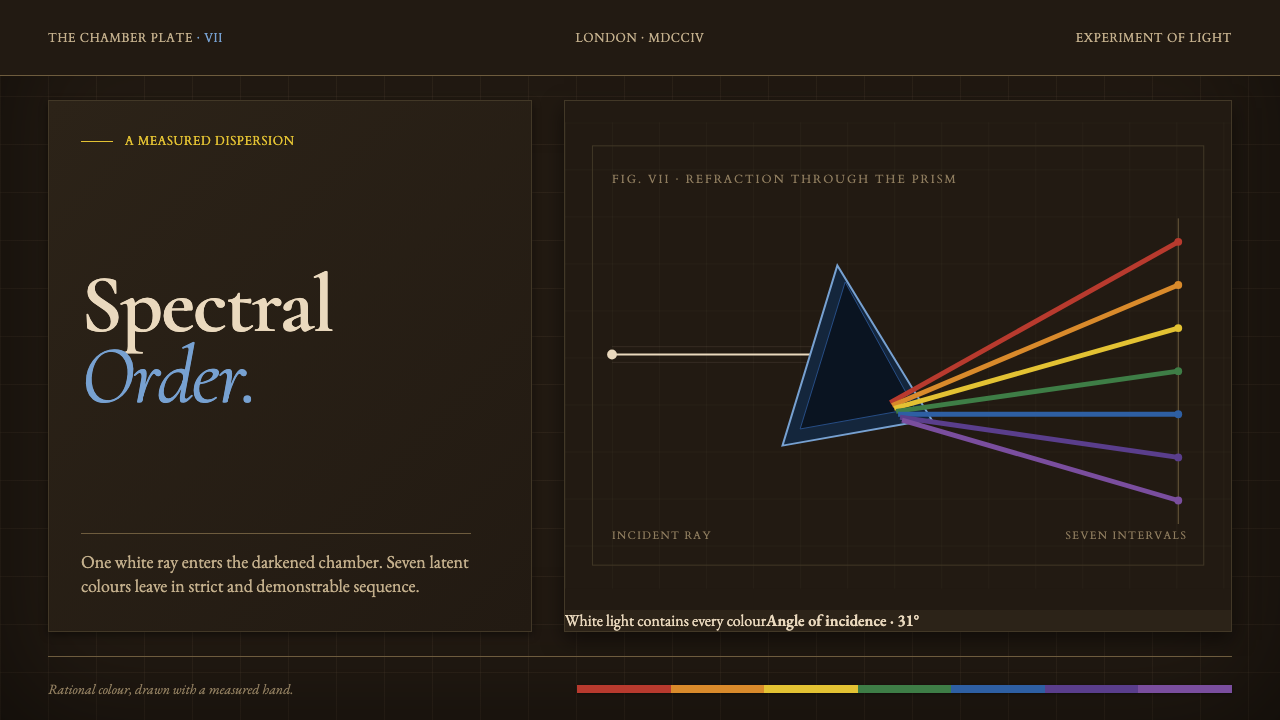 Newton Opticks SpectrumColor becomes evidence. Seven hard-edged pigment bands cross a gridded sepia…
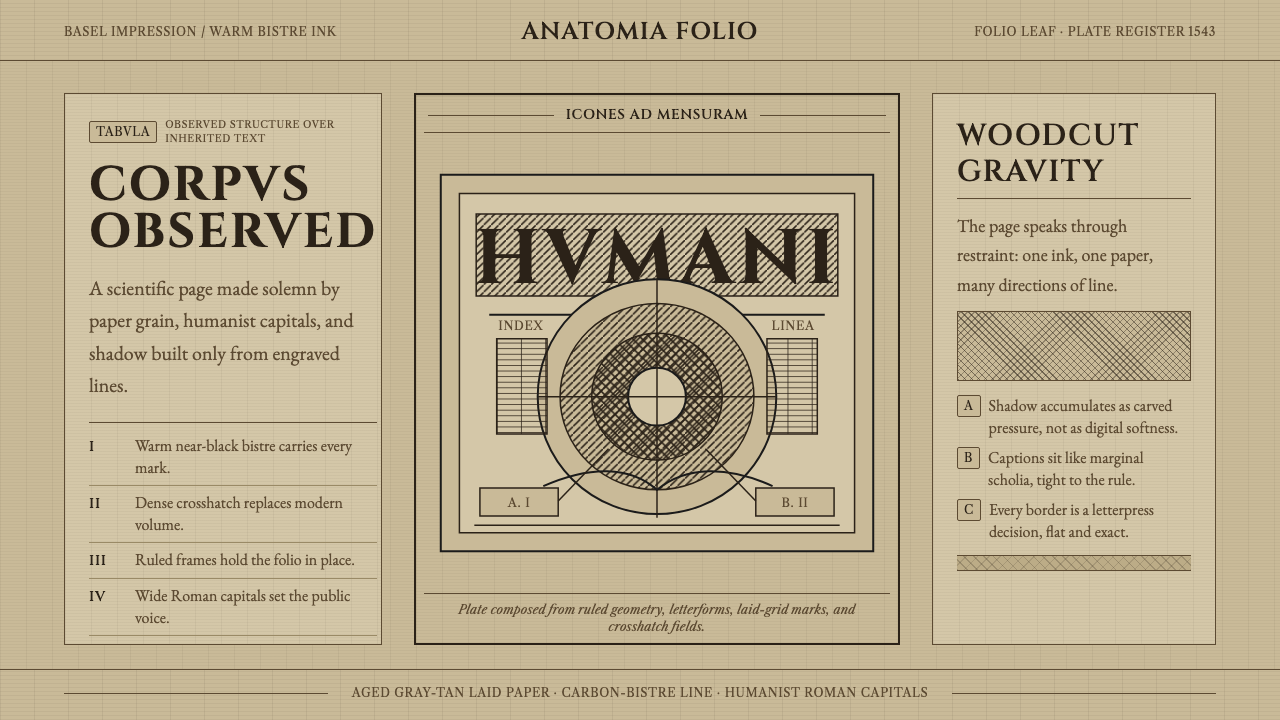 Vesalius AnatomyScience feels hand-pressed. Bistre Cinzel, hatchwork, and warm laid paper hol…
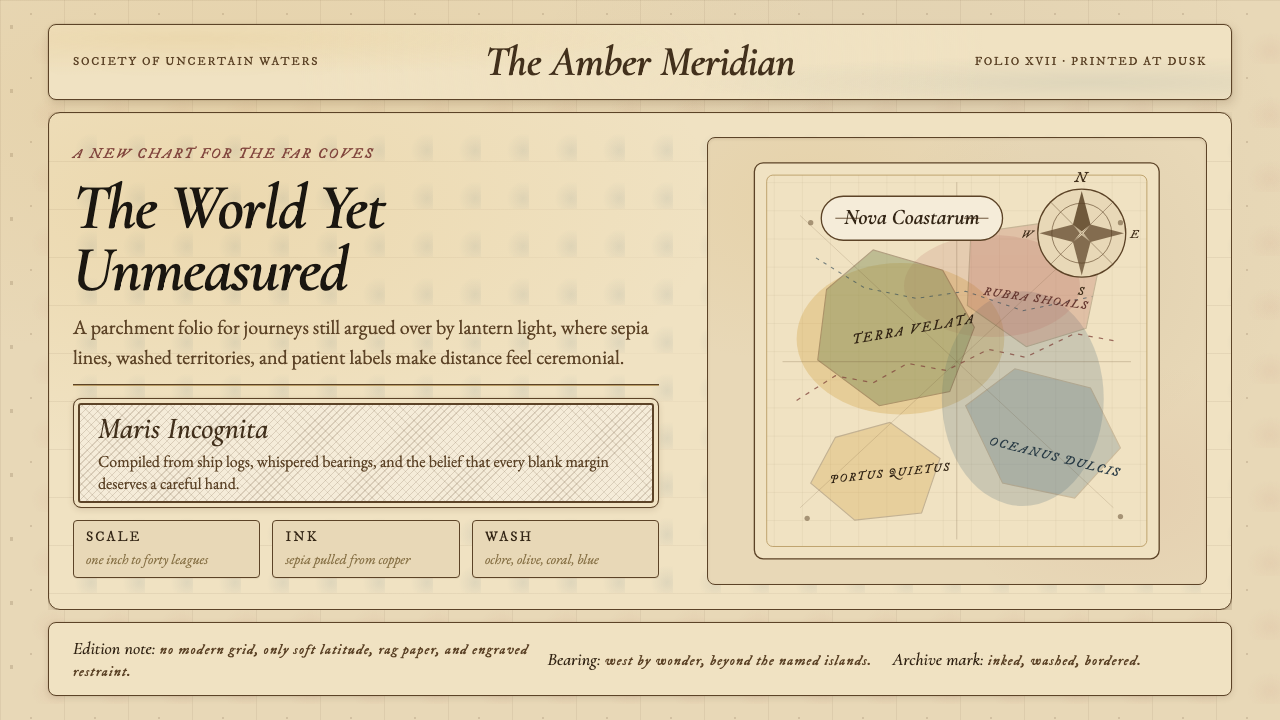 Vintage CartographyDiscovery feels ceremonial. Sepia copperplate on aged parchment, framed by co…