What is Risograph Print?
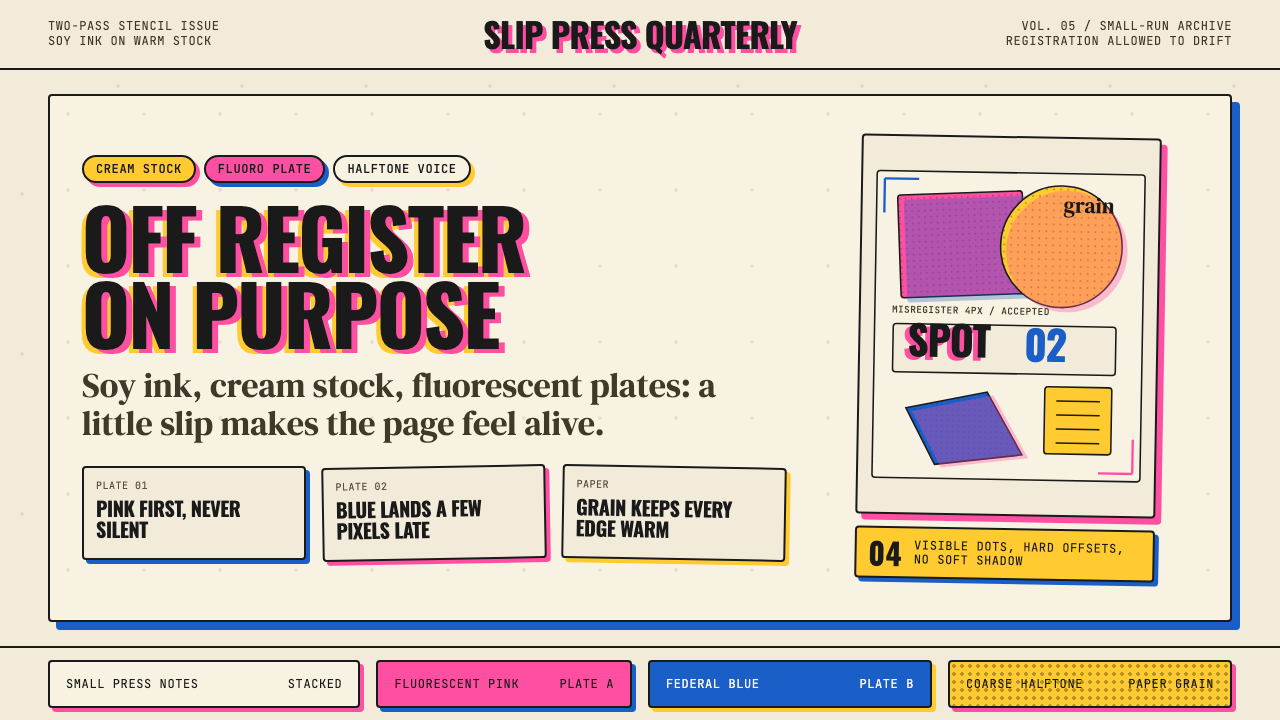
Risograph turned a 1986 office duplicator into the defining aesthetic of 2010s indie publishing — where every registration slip and halftone dot is a feature, not a flaw.
Risograph Print in brief
Risograph Print is the aesthetic vocabulary that emerged from indie publishing studios in the 2010s around the Risograph duplicator — a soy-ink stencil machine invented by Riso Kagaku Corporation in Japan in 1986. Unlike offset or digital printing, the Risograph applies one spot color per pass, which means any multi-color composition is built up layer by layer. The imprecision inherent in that process — slight shifts between color layers, variations in ink density, halftone dot patterns at low line-screen frequencies — became not a deficiency to correct but the entire visual point.
The look is immediately recognizable: warm cream or natural stock as the base, two or three fluorescent or muted spot colors layered in rough register, halftone dot fills that recall screen-printed posters, chunky condensed display type alongside hand-drawn illustration, and an overall quality of mechanical warmth — something printed by a machine, but a machine with personality and imprecision built in. Overlapping color areas create unexpected secondary hues through transparent ink interaction, adding tonal depth that no designer fully controls in advance.
Risograph Print sits in a creative space between screen printing and photocopying. It reads as hand-made and analog while being genuinely mechanical. The aesthetic emerged partly from economics — Risograph machines are cheap to run and accessible to small studios — and partly from a cultural reaction against the hyper-clean output of digital printing. Where desktop publishing promised perfection, Risograph print embraced productive failure. That embrace turned a workhorse duplicator into one of the most recognizable and widely imitated visual styles of its generation.

Where does Risograph Print come from?
The Riso Kagaku Corporation introduced the Risograph in 1986 as an inexpensive, high-volume duplicator for offices and schools — a successor to the spirit duplicator and mimeograph that could handle long print runs at low cost. The machine works by scanning a master image onto a thermal stencil drum, which then rolls ink through the stencil onto each sheet. Because it was designed for office utility rather than fine reproduction, it was never engineered to be consistent or precise in the way commercial presses are. Registration — the alignment between successive color passes — was deliberately tolerated at a loose standard. Ink saturation varied depending on paper absorption and drum age. These were known limitations, accepted as the cost of accessibility.
For the first two decades of its existence, the Risograph was largely invisible to the design world. It lived in church offices, community centers, and school print rooms. Then, beginning around 2008, a handful of design and illustration studios in London, Toronto, and New York began acquiring the machines not despite their limitations but because of them. Hato Press in London, founded in 2009, became one of the first studios to build an identity around Risograph printing, producing zines, posters, and books that foregrounded the machine's characteristic slippage and opacity. Colour Code Printing in Toronto and Risolab in New York followed, each developing a house aesthetic that treated the Risograph's fluorescent ink palette — including colors like fluorescent pink, bright red, and cornflower blue — as a distinct design vocabulary unavailable through any other printing method.
The timing aligned with the broader zine renaissance of the early 2010s, in which independent publishing, small-press books, and artist-made periodicals proliferated as cultural objects with genuine cachet. Digital tools had democratized page layout, but they had also homogenized the look of self-published work. The Risograph offered a material specificity that digital methods could not replicate — the ink was physically present on the paper, imperfect and tactile, and the fluorescent spot colors had a luminosity that no CMYK combination could reproduce faithfully. For artists and designers working outside mainstream commercial publishing, the machine represented both an economic alternative and an aesthetic position.
By the mid-2010s, the Risograph aesthetic had become identifiable enough to generate imitators who had never touched an actual machine. Digital designers began replicating halftone dot patterns, deliberate color misregistration, and the particular glow of fluorescent spot colors using software filters and texture overlays. This secondary wave — digital Risograph simulation — spread the aesthetic far beyond the small-press community and into commercial illustration, motion graphics, and interface design. The aesthetic continued to evolve through the late 2010s and into the 2020s, absorbing influences from zine culture, contemporary illustration, and the broader revival of analog media, while retaining the core visual signatures that Hato Press and its contemporaries had established in the first place.
What defines the Risograph Print look?
Spot-Color Layering
Risograph print is built from a small number of spot colors — typically two or three — applied in separate passes rather than mixed into a unified CMYK output. This means each color is visually distinct on the page, and where two colors overlap, they create a third mixed tone through ink transparency rather than a pre-planned blend. The palette tends toward fluorescent or semi-fluorescent hues — vivid pinks, warm yellows, muted teals, bright reds — that have a luminosity unavailable in standard four-color process printing. Designers working in this aesthetic, whether in actual print or digital simulation, restrict themselves to this limited layered palette rather than drawing from a full spectrum.
Misregistration
Because each color in a Risograph print is applied in a separate pass through the machine, there is always some degree of misalignment between layers — a slight shift where the edge of one color does not perfectly meet the edge of another. In mechanical printing this would be a defect to minimize; in Risograph aesthetics it is actively cultivated. The misregistration creates a halo effect at color boundaries, adds tactile visual depth, and marks the work as genuinely printed rather than digitally composed. When simulated in digital work, this misregistration is introduced deliberately as an offset between color layers, creating the same halo without actual mechanical variance.
Halftone Dot Texture
Risograph machines reproduce tonal gradation through coarse halftone dot screens — dot patterns where larger dots indicate higher ink density and smaller dots indicate lower density. The screen frequency used in Risograph printing is noticeably lower than in commercial offset printing, meaning the individual dots are large enough to be seen clearly with the naked eye. This produces a texture that is simultaneously mechanical and hand-crafted — rows and clusters of dots visible as a visual element in their own right, not hidden infrastructure. In the Risograph aesthetic, halftone fills are used expressively, applied to illustrative elements, backgrounds, and type treatments as a primary texture rather than a workaround for limited color range.
Warm Analog Stock
The paper stock in Risograph printing is not a neutral white substrate but an active part of the visual result. Uncoated, natural, or recycled stocks — cream, off-white, or pale buff in tone — are preferred both for practical reasons (the soy ink adheres better to uncoated surfaces) and for aesthetic ones (the warm ground integrates with the spot colors to create a unified analog feel). The slight texture and absorbency of these stocks cause the ink to sit on and within the paper in a way that glossy coated stock never would, contributing to the characteristic matte, slightly rough quality of the finished surface. In digital applications of the aesthetic, this ground is simulated through off-white or cream backgrounds with subtle paper texture overlays.
Display Type and Hand-Drawn Illustration
The typographic character of Risograph print work draws from two related sources: chunky condensed sans-serif or display serif letterforms at large scale, and hand-drawn lettering and illustration that mirrors the organic imprecision of the print process itself. The type tends toward strong weight and compressed proportions — it fills the page boldly without competing with the texture of the printed color fields. Illustration styles range from flat graphic shapes to deliberately rough line-drawn characters, always with a hand-made quality that harmonizes with the mechanical imperfection of the printing. The combination of display type and hand-drawn elements is among the most immediately legible signatures of the aesthetic.
Transparent Ink Overlap and Surprise
Because Risograph inks are semi-transparent, any area where two color layers overlap produces an emergent third color that is neither a deliberate mix nor a fully predictable result. A layer of fluorescent yellow over a layer of bright red might produce a warm orange; a blue over a pink might produce a quiet lavender — but the exact result depends on ink density, paper absorption, and layer order in ways that cannot be precisely pre-visualized. This productive unpredictability is a defining quality of the aesthetic: the designer sets up a system of layers and spot colors, but the machine negotiates the final result. In digital simulation, this overlap is approximated with multiply or screen blending modes, which mimic the optical mixing without the physical variance.
Zine-Scale Intimacy
Risograph printing is inherently suited to small-format, short-run production — the economics of the machine favor zines, limited-edition posters, chapbooks, and hand-distributed publications rather than mass-market runs. This material context shapes the aesthetic: it is close, personal, and small-batch in character. Even when the visual style is applied at larger scales — to exhibition posters, book covers, or digital interfaces — it carries this implicit quality of intimacy and limited production. Work in the Risograph aesthetic tends to resist the anonymous scalability of mainstream commercial design, feeling instead like something made for a specific audience by a specific hand.

Who shaped Risograph Print?
The Japanese company that invented the Risograph duplicator in 1986, Riso Kagaku (often simply called Riso) designed the machine as an affordable high-volume office copier, never anticipating its adoption as an art and design tool. The company's fluorescent ink range — developed for visibility in office communication — became the essential color palette of the aesthetic. Riso continues to manufacture the machines and has benefited from the cultural resurgence of Risograph printing, even as the primary driver of that resurgence has come from design studios operating far outside the corporate office market the company originally targeted.
Founded in London in 2009, Hato Press was among the first design studios to build a complete identity around Risograph printing, treating the machine's limitations as a creative framework rather than a production constraint. The studio published zines, artist books, and posters that established what a consciously designed Risograph aesthetic could look like — vibrant spot colors in deliberate misregistration, halftone textures used expressively, hand-drawn and display type working together. Hato Press became a reference point for studios internationally and helped legitimize Risograph printing as a serious design medium within the contemporary graphic design community.
Colour Code Printing, based in Toronto, became one of the leading Risograph print studios in North America during the 2010s, operating both as a print service for artists and designers and as a creative studio in its own right. Their work helped develop the North American strain of the aesthetic, which tended toward a slightly warmer, more illustration-forward approach compared to the graphic severity of some European counterparts. By offering accessible print-on-demand Risograph services to artists across the continent, Colour Code also made the physical technology available to practitioners who lacked access to their own machines, helping spread the aesthetic beyond established studio centers.
Risolab NYC established Risograph printing as a serious creative medium within the New York design and art publishing community, operating as a print studio and educational space where artists and designers could work with Risograph machines directly. The studio's dual role — as both service provider and creative advocate — helped introduce the aesthetic to a broader audience of illustrators, graphic designers, and artists who might otherwise have encountered it only as a digital simulation. Risolab contributed to the ecosystem of small-press publishing in New York that made the city one of the key nodes in the international Risograph network during the 2010s.
How do you use Risograph Print today?
Risograph Print is one of the most character-rich historical aesthetics to apply in contemporary design contexts, but its character is specific enough that misapplication is easy. The core discipline is restraint in color selection: choose two or three spot colors from the Risograph palette — fluorescent pinks and reds, warm yellows, teals, cornflower blues — and commit to them for the entire composition. The power of the style comes from the limitation, not from the range. A composition using five or six colors stops reading as Risograph and starts reading as generic retro illustration.
For presentation slides, the Risograph aesthetic works exceptionally well on cover pages and section dividers. A cover benefits from an illustrative full-bleed composition in two spot colors — a halftone-textured background in one color, a bold hand-drawn or display-type title in a second, with deliberate misregistration between the two creating a shadow-halo effect. Content slides should be simpler: cream or warm off-white ground, one accent color used for data highlights or call-outs, a condensed sans-serif or slab-serif heading style. Data slides can adopt the halftone dot as a texture for bar fills, creating charts that feel consistent with the overall illustration-forward aesthetic. Avoid digital-smooth gradients or drop shadows — they break the analog illusion immediately.
For web interfaces, Risograph works best in contexts that benefit from warmth and personality: editorial platforms, cultural organization sites, independent publication landing pages, creative portfolio sites, and event or festival microsites. The approach for dashboards and pricing pages is workable but requires care — the warm ground and limited color palette can feel low-contrast for data-dense layouts. Where it does apply: use a cream or warm white base, define one fluorescent or saturated accent color for primary interactive states and calls to action, and use halftone patterns as decorative fills for hero sections or feature cards rather than for body content. Bordered cards with a slight offset shadow simulate the printed object quality without requiring actual texture.
For editorial and marketing work, Risograph Print excels at giving publications, social content, and campaign materials a distinctly hand-crafted, independent-feeling character that mass-market design typically cannot replicate. Magazine covers and feature headers benefit from the aesthetic's poster-like scale: a large illustrative element in two spot colors, a bold display headline set against the cream ground. Marketing campaigns that position a brand as independent, artist-aligned, or culturally embedded — record labels, independent fashion brands, arts nonprofits, specialty food producers — find the aesthetic a natural fit. The spot-color discipline applies to marketing as firmly as to editorial: pick one primary campaign color and one accent, and let the cream ground do the rest.
The most common mistake when applying Risograph Print digitally is mistaking visual complexity for authenticity. Adding more colors, more halftone layers, more grain and grit does not intensify the Risograph quality — it dilutes it. The original aesthetic is legible precisely because each color layer is simple and the composition underneath is clear. A second common error is applying the texture without the underlying design discipline: halftone fills and misregistration effects placed over a standard corporate grid layout do not produce Risograph work, they produce Risograph decoration. The aesthetic requires that the entire compositional logic — type scale, illustration style, color role, layout proportion — be rebuilt from the Risograph sensibility, not layered on top of an existing design system as a visual treatment.

Risograph Print — FAQ
Do I need an actual Risograph machine to work in this aesthetic?
No — the Risograph aesthetic has a well-established digital simulation tradition that has been part of the style's spread since the mid-2010s. Digital work in this aesthetic typically uses a limited two or three-color spot palette, halftone dot patterns applied as fills or overlays, deliberate misregistration between color layers achieved through small layer offsets, and a warm off-white or cream background with subtle paper texture. The distinction between actual Risograph print and digital simulation is visible on close inspection but not at a glance — both convey the same essential visual character. What matters for authenticity is not the production method but the design discipline: limited colors, restrained composition, and an honest engagement with the aesthetic's logic rather than borrowing its surface texture while ignoring its structural constraints.
How does Risograph Print differ from screen printing aesthetics?
The two aesthetics share significant common ground — both are spot-color processes, both work in limited ink layers, and both produce a flat, non-photographic look with visible texture. The differences are in the character of the imperfection and the palette available. Screen printing imperfection tends to show as ink bleed at edges, uneven coverage across large flat areas, and slight variation in registration. Risograph imperfection is more systemic: the halftone dot patterns are coarser and more visible, the misregistration between layers is more consistent (a predictable drift rather than random variation), and the fluorescent ink palette is specific to the Riso machine formulation in ways that screen printing inks do not replicate. Screen printing also allows for fully opaque inks, which Risograph does not, meaning Risograph color mixing through transparency is a distinct visual property absent from most screen-printed work.
Which types of projects benefit most from the Risograph aesthetic, and where does it struggle?
Risograph works best for projects where warmth, personality, cultural specificity, and an independent or hand-crafted character are genuine values — not just visual styling. Independent publishing, music releases, cultural event materials, artist portfolios, experimental editorial, specialty retail brands, and community-oriented organizations all find natural alignment with the aesthetic's intimacy and intentional imperfection. It struggles in contexts requiring institutional authority, clinical neutrality, or high information density: enterprise software dashboards, financial services, healthcare interfaces, and any context where users need to trust the design to be transparent rather than expressive. The aesthetic also resists high-resolution photographic content — it is fundamentally an illustrative, flat-color system, and mixing it with conventional product photography or photorealistic rendering produces uneasy results rather than productive contrast.
Why do designers keep returning to this aesthetic even as digital tools have advanced?
The persistence of the Risograph aesthetic is not nostalgia in the simple sense — it is a continuing argument about what digital perfectibility costs. As print-on-demand, AI-generated imagery, and hyper-refined digital tools have made flawless visual production accessible to almost anyone, the visible imperfection of the Risograph process functions as a signal of intentionality, labor, and human presence. A Risograph-aesthetic composition — whether printed or simulated — communicates that a person made a series of specific, constrained choices rather than generating output at scale. This communicative function gives the aesthetic a durability that purely trend-driven visual styles lack. It will remain legible and meaningful as long as the cultural pressure toward digital frictionlessness that it responds to continues — which is to say, for the foreseeable future.
How should color overlap and mixing be handled when working digitally?
The key is to respect the logic of transparent ink layering rather than pre-mixing colors in software. Work with each spot color on a separate layer, set to a multiply or screen blending mode depending on whether you want a darker or lighter overlap result — multiply approximates transparent ink layering, which is the Risograph default. The overlap color will emerge from the blending mode calculation rather than being chosen directly, just as it would emerge from actual ink transparency in physical printing. Avoid using the eyedropper to sample the resulting overlap color and apply it directly as a flat fill — that removes the layering logic and produces a result that looks like graphic design referencing Risograph rather than design operating within Risograph's own system. Keep each color layer simple and structurally meaningful, and let the overlap areas be a consequence of composition rather than a deliberate additional color choice.
Related design styles
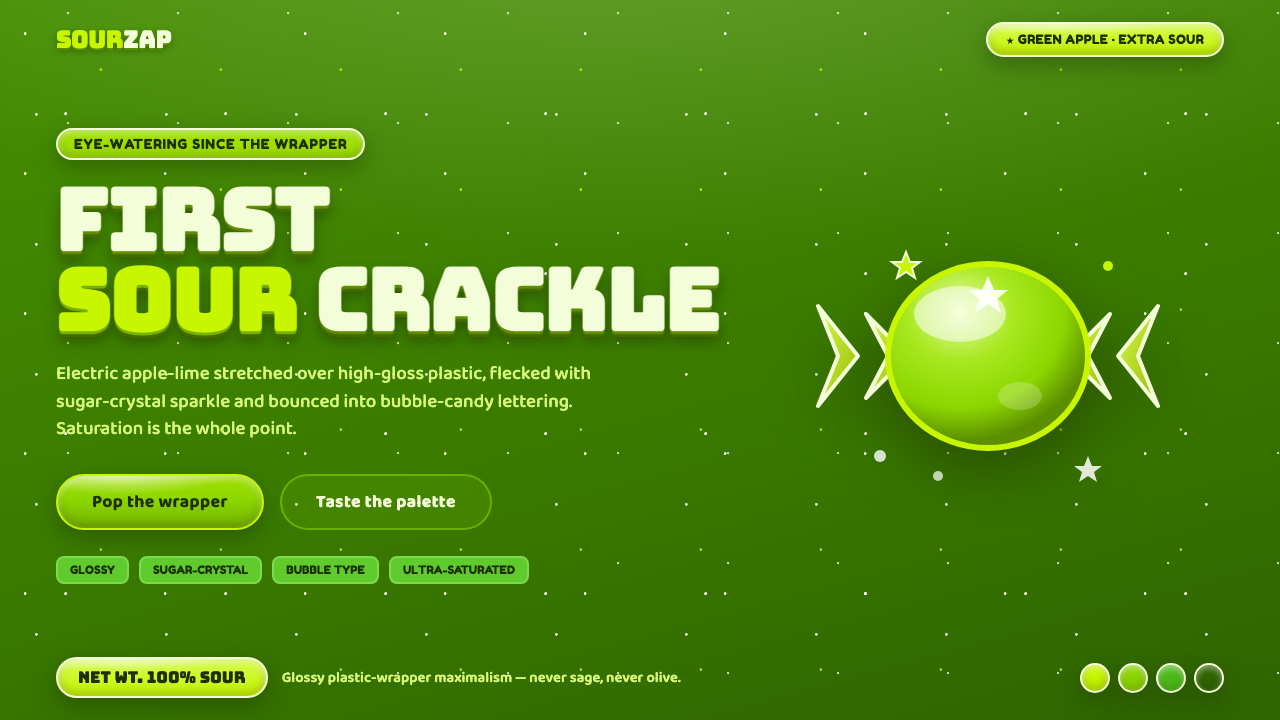 Sour Apple Candy GreenSaturation is the point. Electric apple-green on glossy plastic, sugar-crysta…
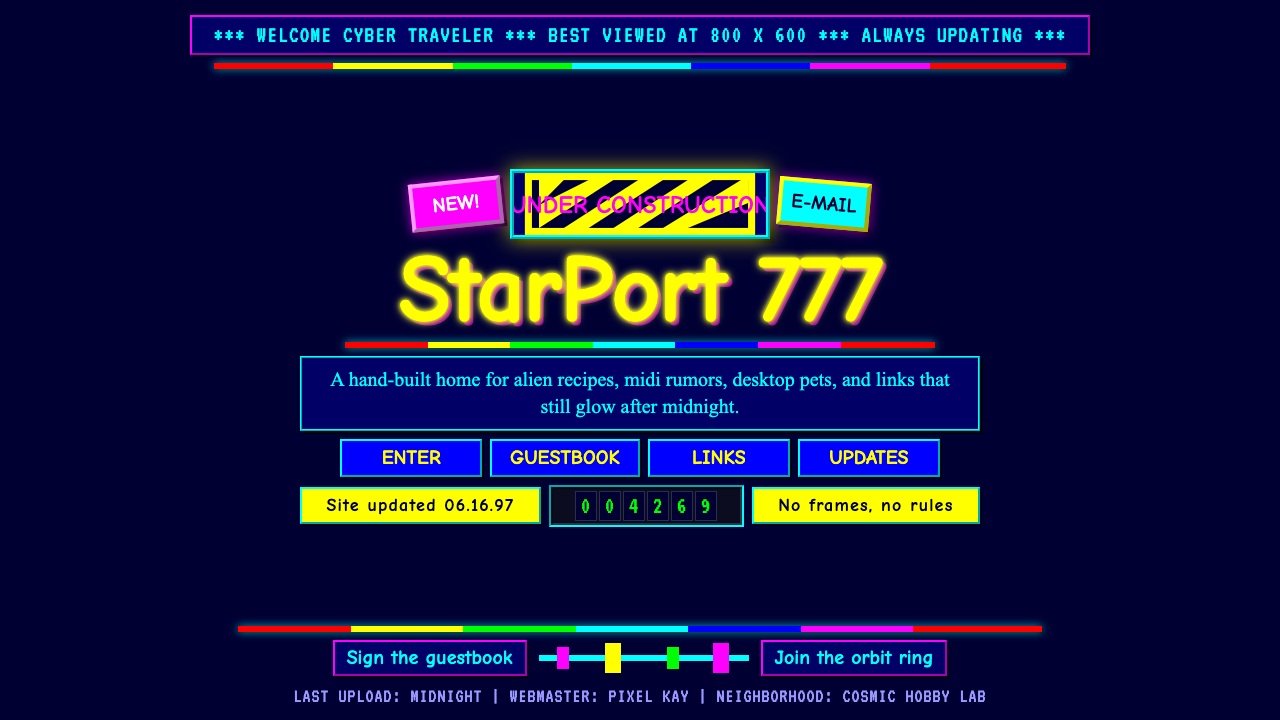 GeoCities Personal WebClutter is celebration. Starfield tiles, cartoon headings, rainbow rules, and…
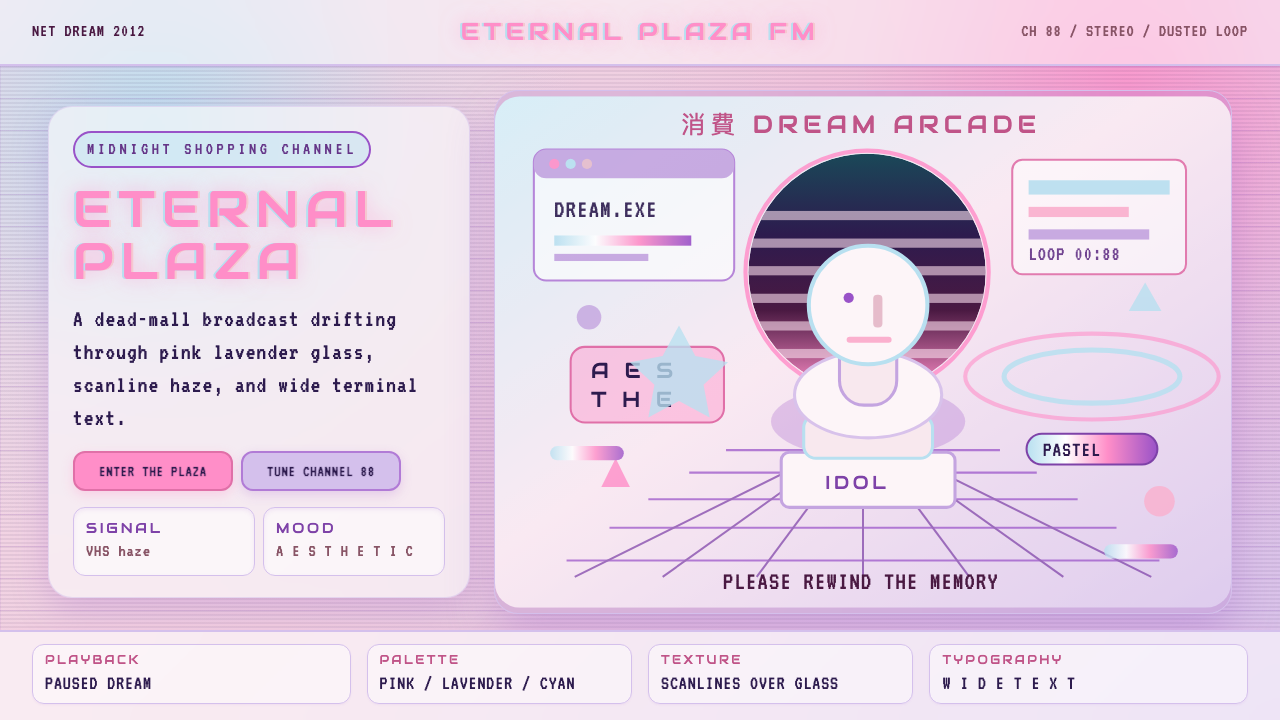 Vaporwave (Tumblr 2012)Dead-mall nostalgia glows. Pink-lavender glass, VHS scanlines, and wide retro…
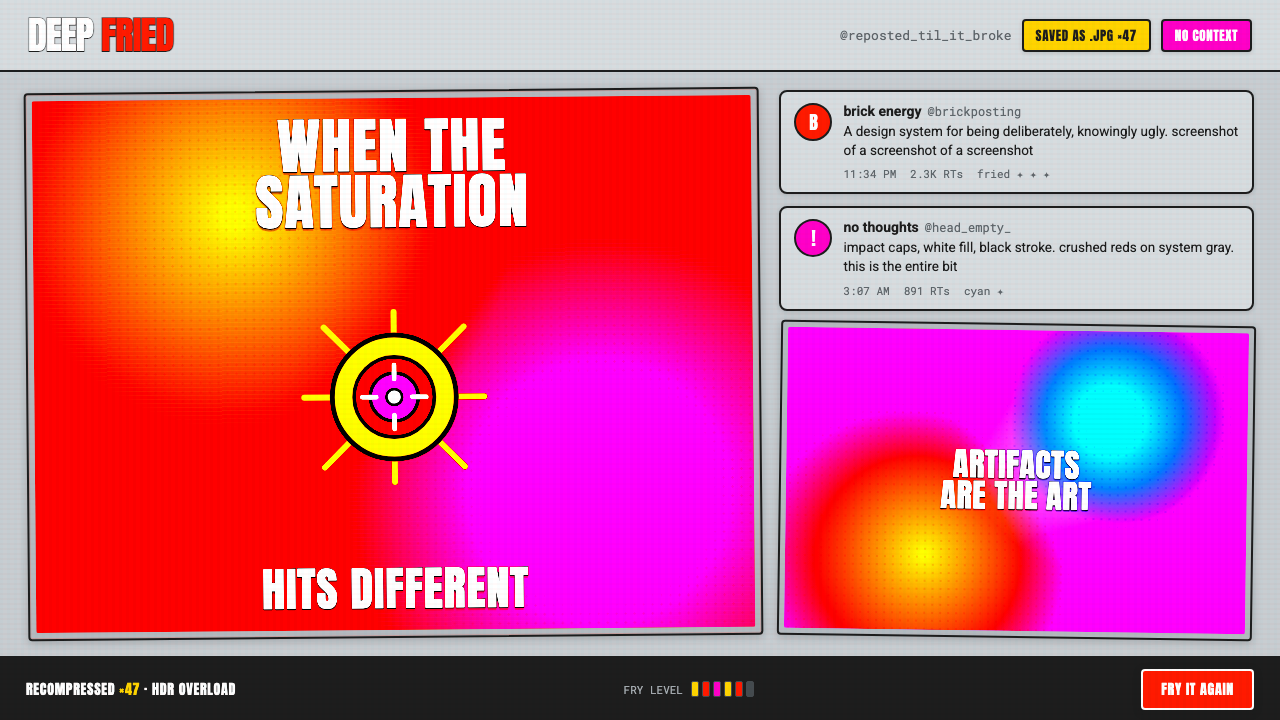 Weird Twitter / ShitpostGloriously ugly on purpose. Blown-out HDR reds and white-stroke Impact caps o…
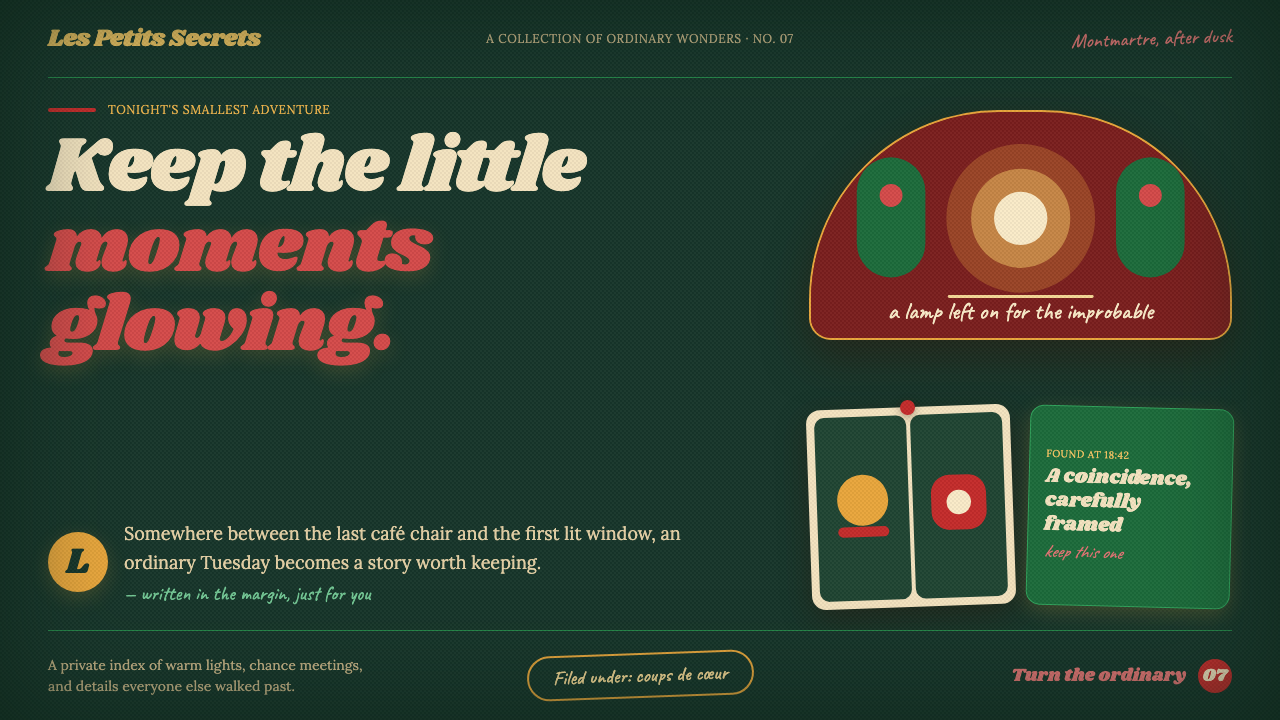 Amélie (Montmartre 2001)Ordinary moments glow like secrets. Storybook green, carmine accents, and cre…
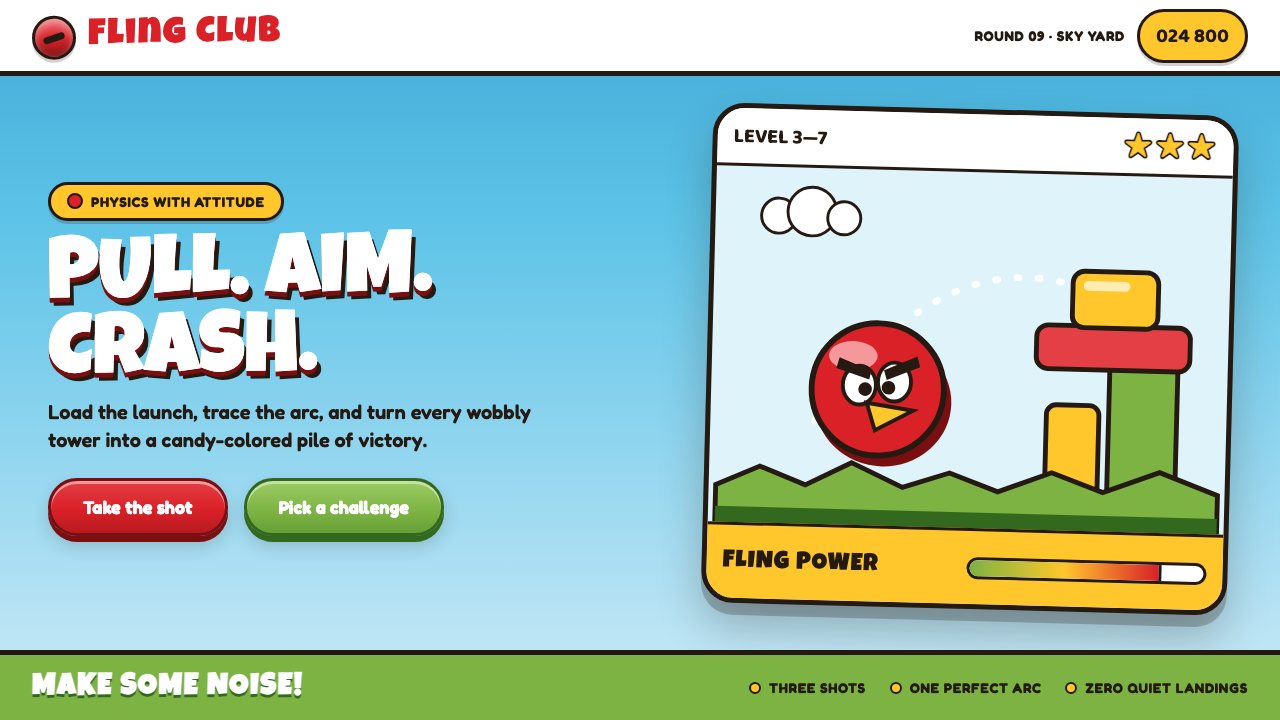 Angry Birds (2009)Adorable aggression takes flight. Candy primaries, chunky outlines, and a dot…