What is Herpetology Scale Plate?
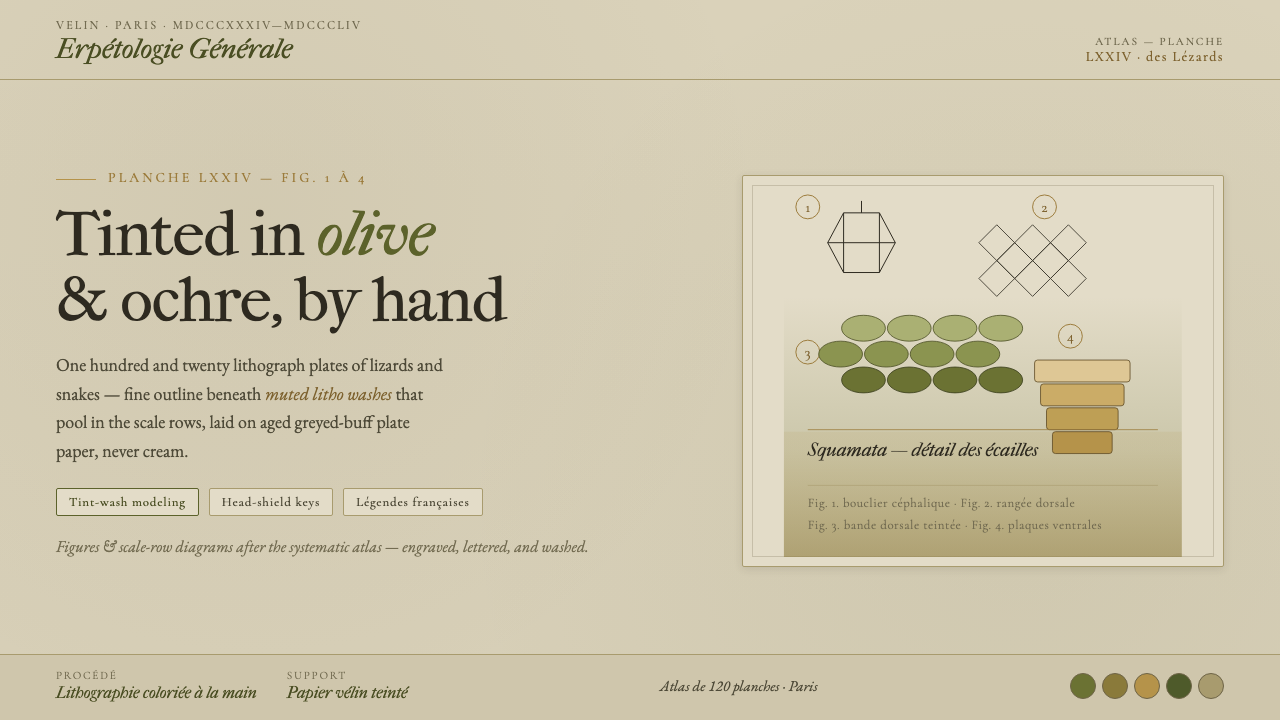
Herpetology Scale Plate turns the patient evidence of a nineteenth-century reptile atlas into a digital language of buff paper, quiet pigment, and exacting line.
Herpetology Scale Plate in brief
Herpetology Scale Plate is a scholarly natural-history style derived from Erpétologie générale, the Paris atlas issued by Roret between 1834 and 1854 and credited to André Marie Constant Duméril, Gabriel Bibron, and Auguste Duméril. Its source material consists of hand-colored lithograph plates of lizards and snakes. Full-body specimens share the page with the smaller visual evidence needed to distinguish them: rows of scales, arrangements of head shields, numbered details, and French legends.
The style does not treat an animal as decoration. It treats the specimen as an object of sustained looking. Fine outlines establish the anatomical fact; muted olive-green and warm ochre washes settle over that drawing to indicate volume, surface, and variation. The result is neither a field photograph nor a modern schematic. It is a measured image in which beauty emerges from careful observation and classification.
As a digital system, Herpetology Scale Plate preserves that hierarchy of evidence. A greyed-buff plate-paper ground carries period serif legends, precise contour work, restrained washes, and occasional ornamental warmth. Its governing contrast is between inspection and atmosphere: the line must remain legible enough to study, while the tint must feel deposited on paper rather than filled into a shape. Flat, spotless vector treatment breaks the illusion immediately.
Where does Herpetology Scale Plate come from?
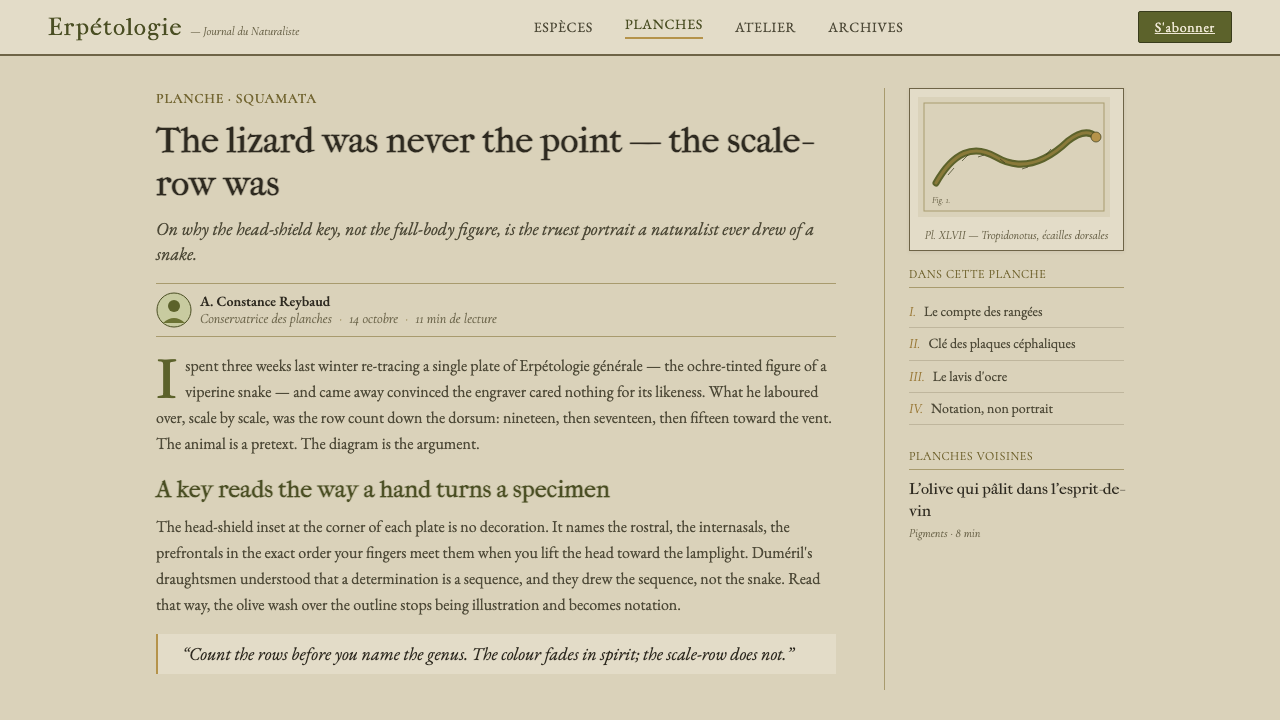
Erpétologie générale belongs to the nineteenth-century culture of systematic herpetology and to the parallel tradition of hand-colored natural-history atlases. Issued in Paris by Roret from 1834 to 1854, it assembled 120 lithograph plates devoted to lizards and snakes. The extended publication period matters to the visual character: the atlas reads as a body of accumulated plates, each organized for comparison, reference, and return rather than for a single dramatic encounter.
Its authorship is inseparable from its authority. André Marie Constant Duméril, Gabriel Bibron, and Auguste Duméril are named on the work; Roret is identified as publisher. Their atlas joins full-body figures to scale-row diagrams and head-shield keys, placing broad recognition and close inspection in the same visual field. The French legends and numbering do not sit outside the illustration as captions added later. They are part of the plate’s method of making evidence navigable.
Lithography made room for a specific balance of repeatable outline and hand-applied variation. The underlying drawing could retain its fine anatomical structure while olive and ochre tints gave individual plates a quiet, worked surface. This relationship is central to the revival reading: the outline carries classification, while the wash refuses the sterile sameness of a purely mechanical image. One without the other would no longer feel like the source atlas.
The contemporary style is therefore best understood as a scholarly facsimile rather than a generalized vintage mood. Its Parisian origin, period typography, French legends, subdued pigment, and buff paper all reinforce the same proposition: knowledge is built through patient visual discrimination. Borrowing only aged paper or only reptile imagery misses the system. The decisive quality is the way annotation, specimen, and diagnostic detail cooperate on a single plate.
What defines the Herpetology Scale Plate look?
Plate-Paper Ground
The background should resemble aged, greyed buff plate paper rather than a clean digital canvas. It is quiet, slightly weathered in feeling, and spacious enough to let small legends and delicate contours remain audible. The ground supports study; it must never compete with the specimen.
Tint-Wash Modeling
Olive is the governing tint and warm ochre is its measured companion. Both arrive as translucent-looking washes over outline, suggesting modeled surface rather than a solid color region. Variation should feel hand-applied, restrained, and local to the specimen.
Fine Contour
Line is the factual backbone of the style. It records silhouette, anatomy, and the small boundaries that make scale rows and head shields intelligible. The contour must remain finer and more disciplined than the wash, never becoming a decorative sketch or a heavy cartoon border.
Diagnostic Insets
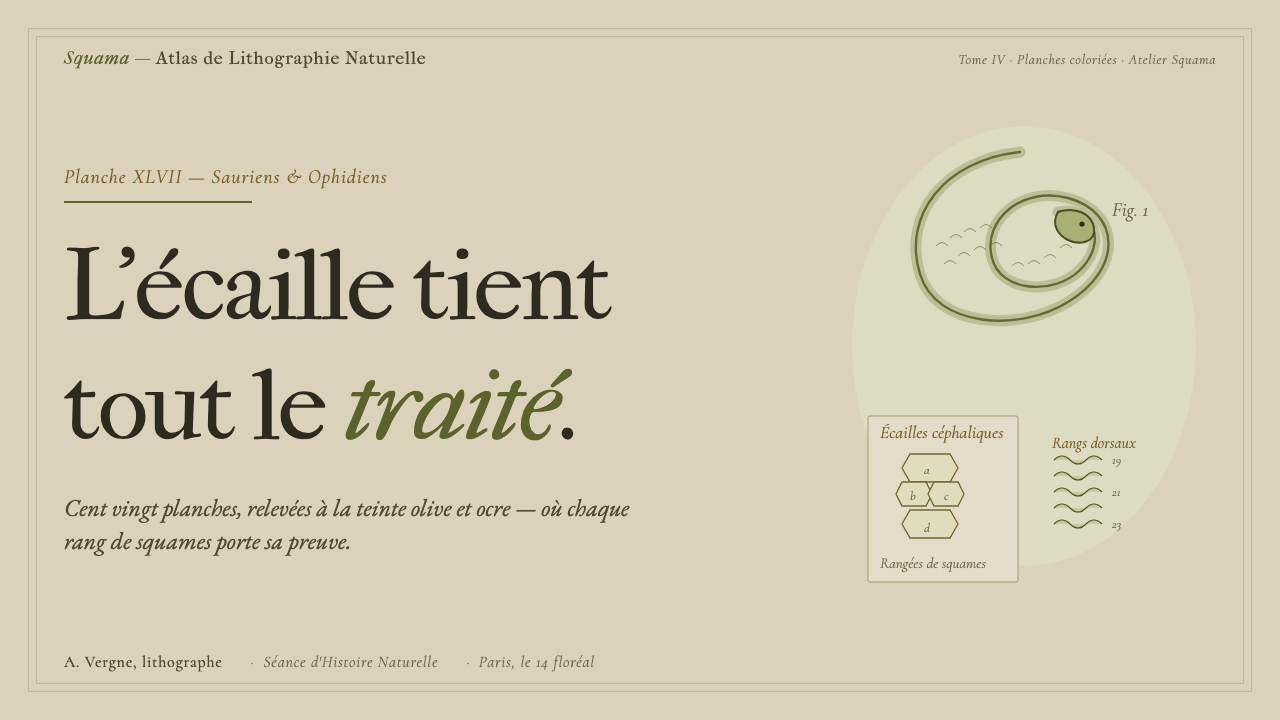
Scale-row diagrams and head-shield keys give the composition its scientific rhythm. Small diagrams are not filler ornaments; they are evidence at a different magnification. Place them with enough separation to read independently, while keeping their numbering and line language visibly tied to the full figure.
French Legend
Period serif type carries French legends, plate numbers, and concise labels with the manner of a printed atlas. Typography should feel integrated with the drawing: informative, composed, and slightly formal. It should not behave like a contemporary interface label floating above the page.
Studied Asymmetry
A full specimen can dominate one area while keys, legends, and smaller details occupy another. This imbalance is purposeful: it lets the page move between whole and part. Empty plate paper is an active interval, not unused territory demanding decoration.
Who shaped Herpetology Scale Plate?
André Marie Constant Duméril is one of the named authors of Erpétologie générale. Within this style’s source context, his name anchors the atlas in nineteenth-century systematic herpetology rather than in decorative animal illustration. The digital revival should retain that scholarly seriousness: every drawn feature appears to have a reason for being present.
Gabriel Bibron is named alongside the Dumérils as an author of the atlas. His presence matters because the style originates in a collaborative reference work, not a solitary artist’s personal vision. The page therefore favors compareable evidence, ordered notation, and repeatable visual conventions over expressive flourish.
Auguste Duméril is the third named author of Erpétologie générale. In the visual system, that authorship is reflected by the plate’s double obligation: it must present a compelling animal figure and preserve enough small-scale information for study. Elegance is not separate from precision; it is precision arranged with restraint.
Roret published the atlas in Paris across the period from 1834 to 1854. The publisher’s role is useful for understanding the style as printed matter: legends, numbering, contours, and tint all belong to a reproducible plate culture. A successful adaptation should feel edited and issued, not merely illustrated.
How do you use Herpetology Scale Plate today?
For presentation covers, use a single carefully observed specimen or a cropped anatomical detail as the central claim, surrounded by generous buff ground. A restrained French-style legend, a plate identifier, and a small ochre accent can establish the atlas voice without crowding the title. On content slides, preserve the distinction between primary figure and supporting evidence: text should sit as a measured annotation, not as a promotional overlay.
For data or explanatory slides, borrow the source atlas’s whole-to-part logic. Let a main diagram carry the narrative, then place small scale-like or head-shield-like detail views beside it to explain categories, exceptions, or evidence. Keep rules, labels, and connectors fine and calm. The goal is not to disguise a chart as biology; it is to make information feel inspected, indexed, and materially grounded.
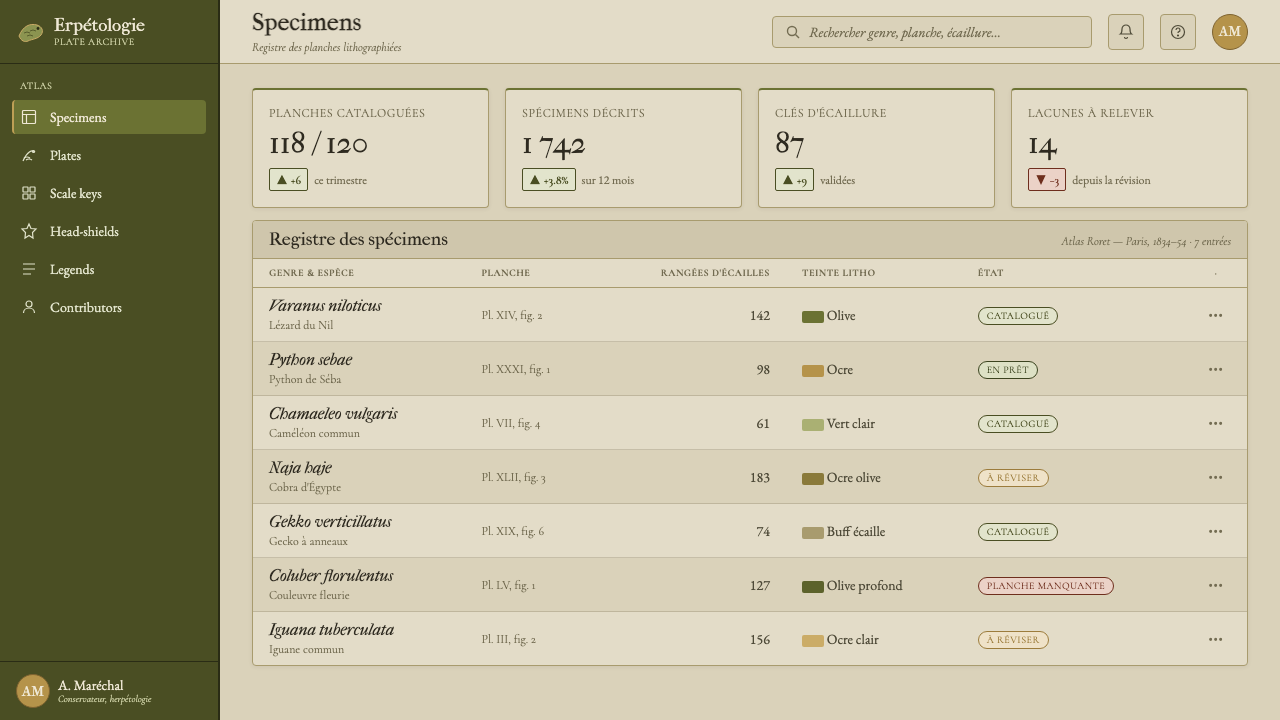
In web interfaces, the style is strongest in knowledge pages, collection browsers, research dashboards, and pricing or membership areas that need an editorial sense of authority. Use the buff ground as a stable reading field, olive for primary emphasis, and ochre sparingly for calls to action or selected states. Cards should resemble plates or catalog entries, with descriptive type, numbered metadata, and breathing room instead of glossy interface effects.
For editorial and marketing work, treat imagery as evidence with atmosphere. A long-form article can alternate a dominant specimen plate with short legends, captions, and diagnostic close-ups. A campaign page can use the atlas vocabulary to communicate care, rarity, collection, or study, but should keep claims readable and contemporary. The visual language adds credibility only when its labels and organization remain purposeful.
The common mistake is reducing the style to an old-paper texture plus a green animal drawing. That produces nostalgia without method. Avoid spotless flat fills, aggressively saturated accents, oversized decorative serif headlines, and dense ornamental framing. The source earns its character through the relation between fine outline, muted hand-colored wash, French annotation, and analytical detail; remove that relation and the result becomes generic vintage illustration.
Herpetology Scale Plate — FAQ
Is Herpetology Scale Plate simply a vintage illustration style?
No. Its historical surface is important, but the system is fundamentally scholarly. It comes from a hand-colored herpetology atlas in which specimen figure, scale-row diagram, head-shield key, numbering, and French legend cooperate to make distinctions visible. A convincing adaptation retains that evidentiary logic instead of using age as a decorative filter.
Can the style use photography or contemporary product imagery?
It can, provided the image is treated like a plate rather than a glossy scene. Isolate the subject, preserve a calm ground, add precise annotation only where it clarifies, and let fine contour or diagrammatic detail do real explanatory work. The image should invite inspection, not rely on dramatic lighting or lifestyle atmosphere.
Why are olive and ochre used so sparingly?
The source atlas uses muted olive-green and ochre tints as hand-colored modeling over fine outline. Their restraint protects the informational hierarchy: line, legend, and diagnostic detail remain readable. If pigment becomes uniformly strong or covers the page broadly, the image stops feeling like a studied lithograph plate and starts behaving like modern decorative illustration.
Does every layout need a lizard or snake?
No. The style can extend through plate paper, serif legends, fine outlines, numbered evidence, muted wash, and the relationship between a main subject and its diagnostic insets. But it should not be applied indiscriminately. When no subject benefits from observation, classification, or annotation, forcing the atlas language will feel theatrical rather than authentic.
Related design styles
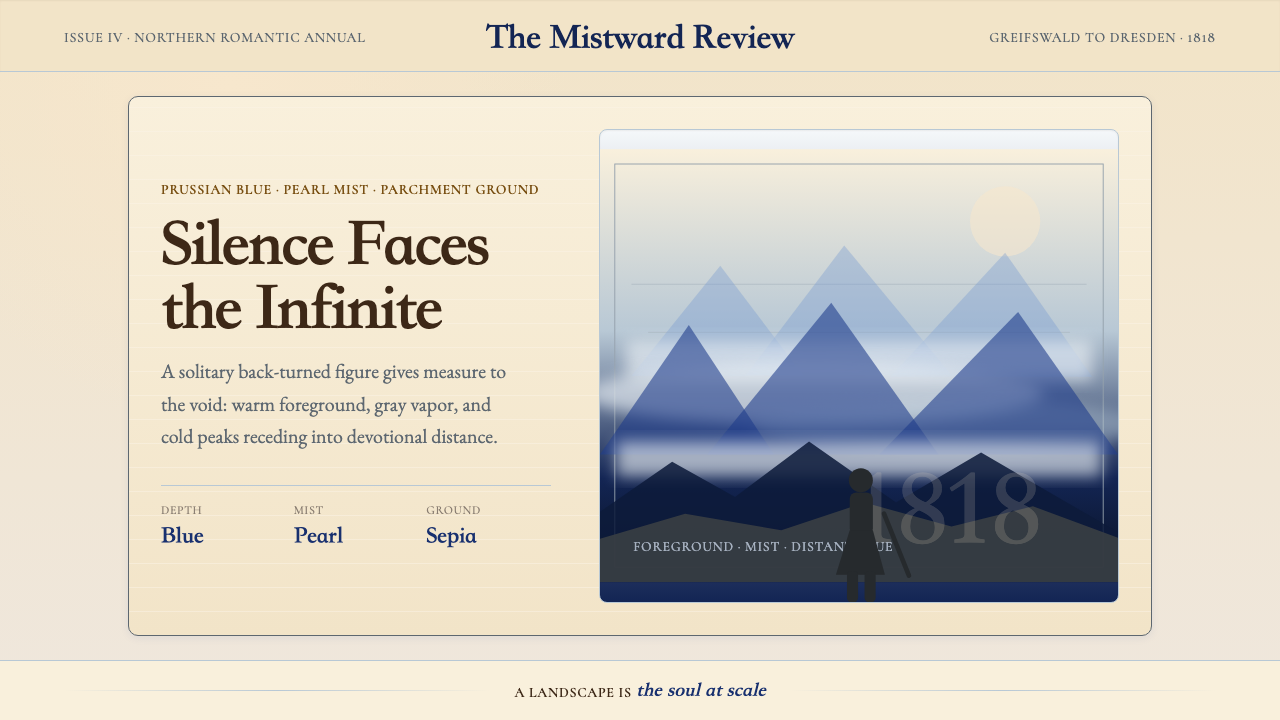 Caspar David FriedrichSilence becomes vast. Prussian blue depth, pearl mist, and parchment framing…
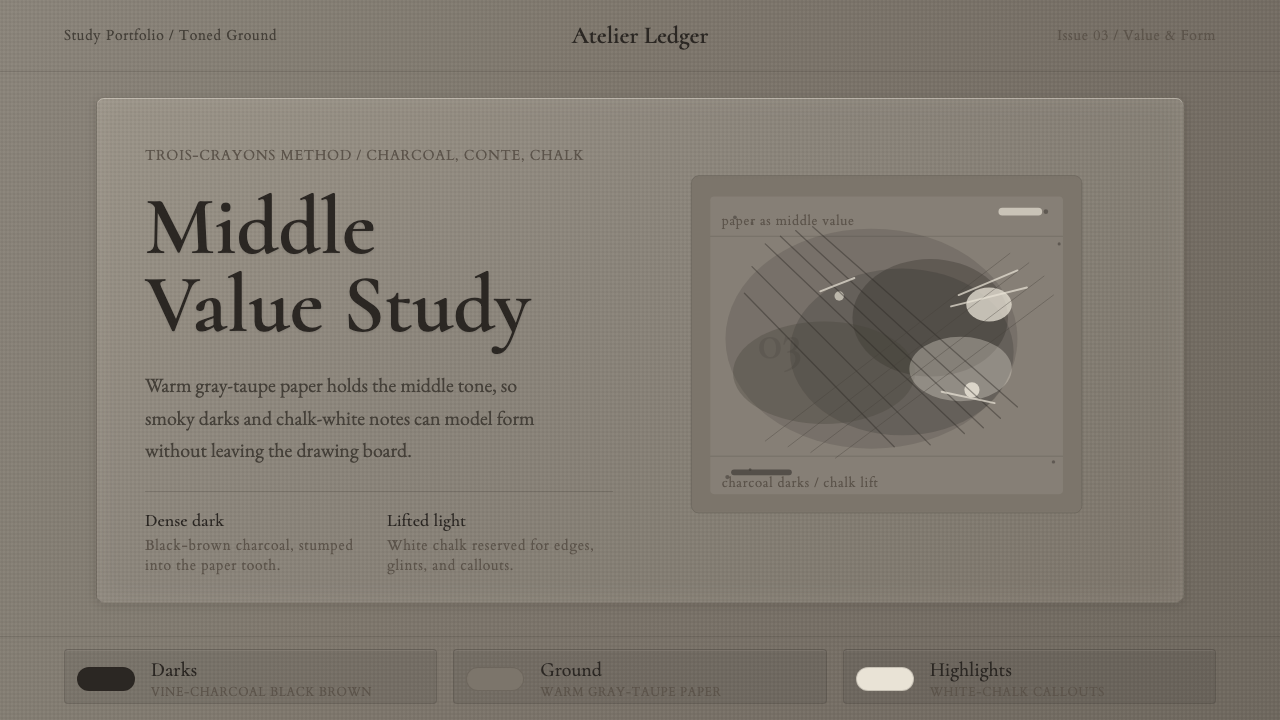 Charcoal & Conté DrawingAtelier calm, in middle value. Gray-taupe tooth, smoky charcoal, and chalk-wh…
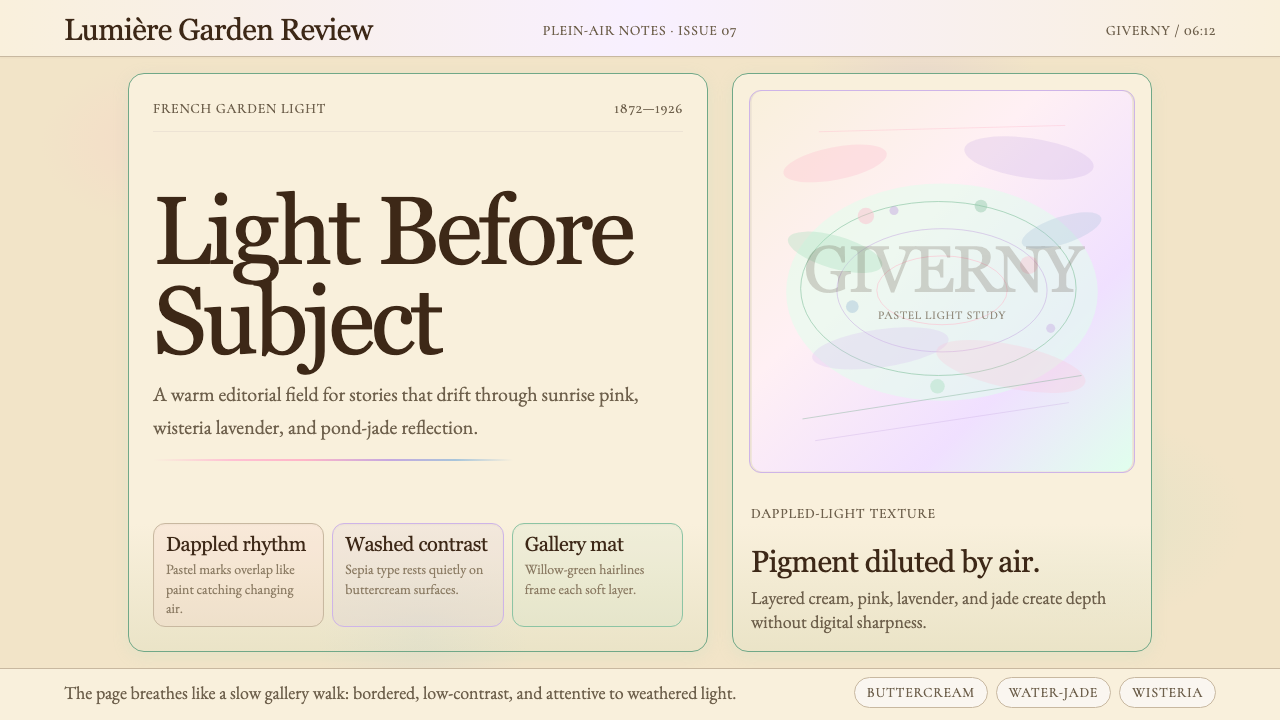 Claude Monet ImpressionistLight becomes the subject. Buttercream, pastel dapples, and Cormorant serif s…
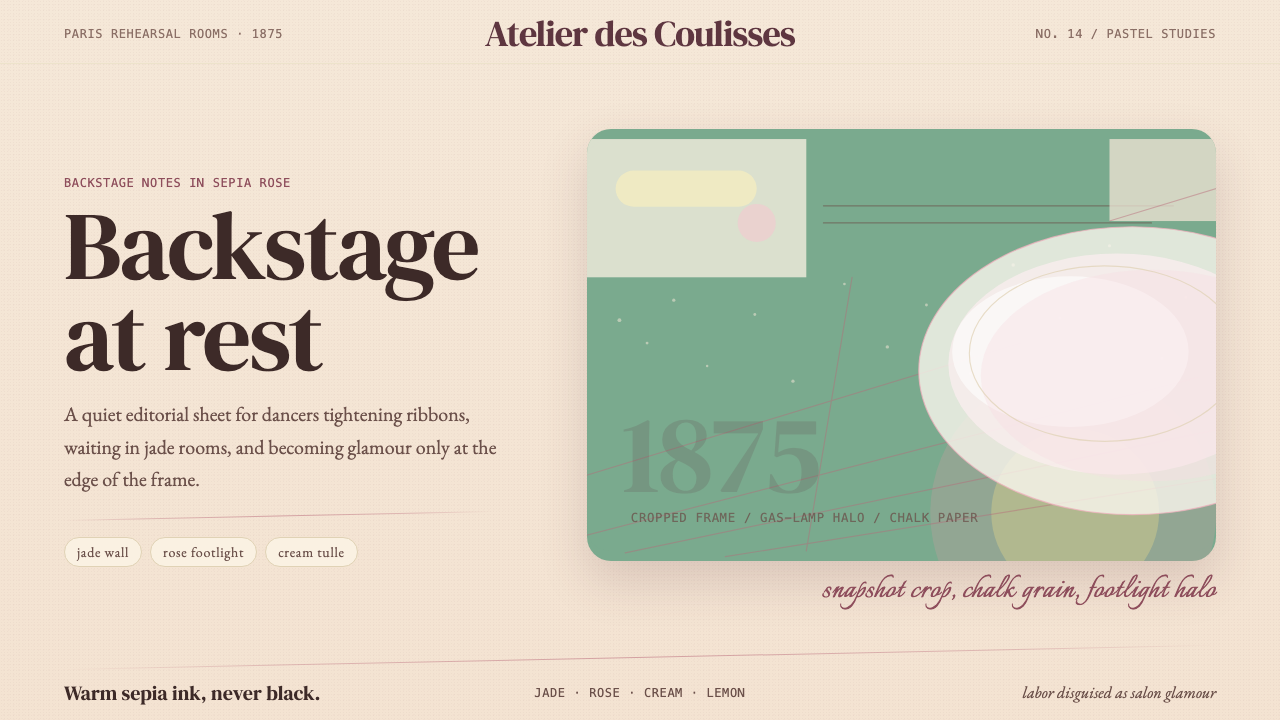 Degas Ballet PastelsBackstage glamour is labor. Jade walls, rose footlights, cropped serifs on cr…
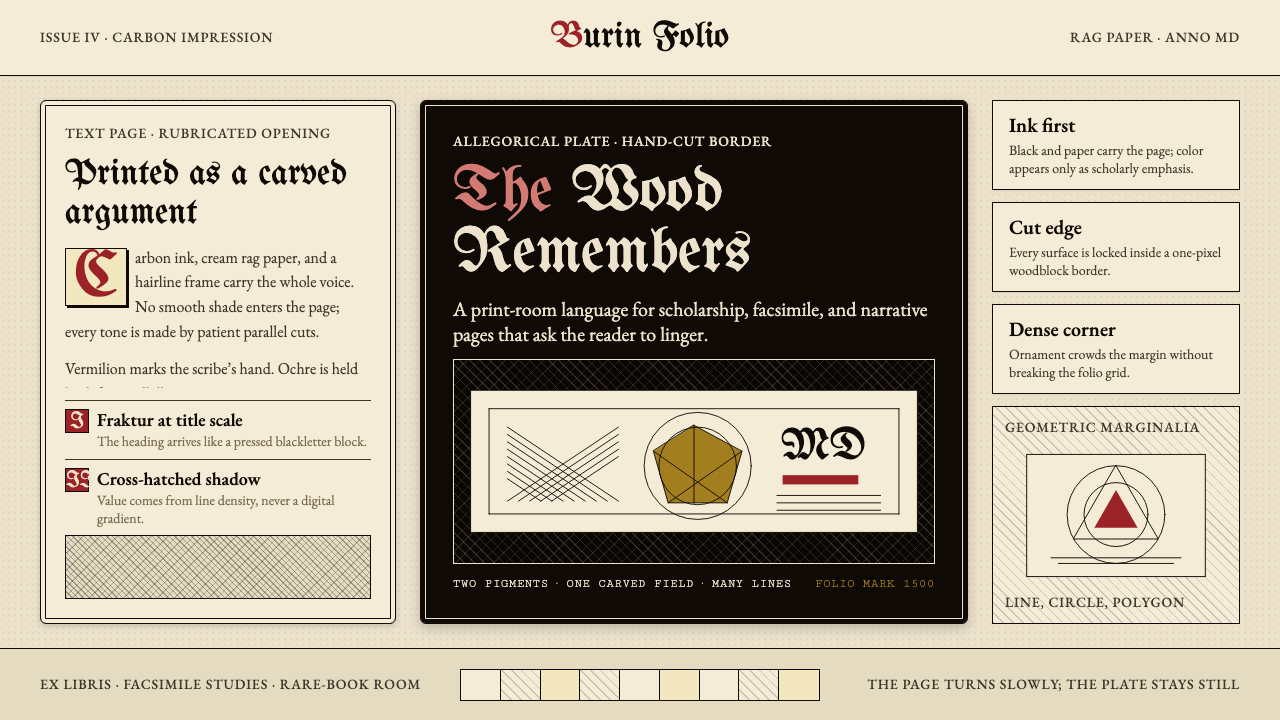 Dürer WoodcutInk remembers everything. Fraktur titles, rag-paper cream, and cross-hatched…
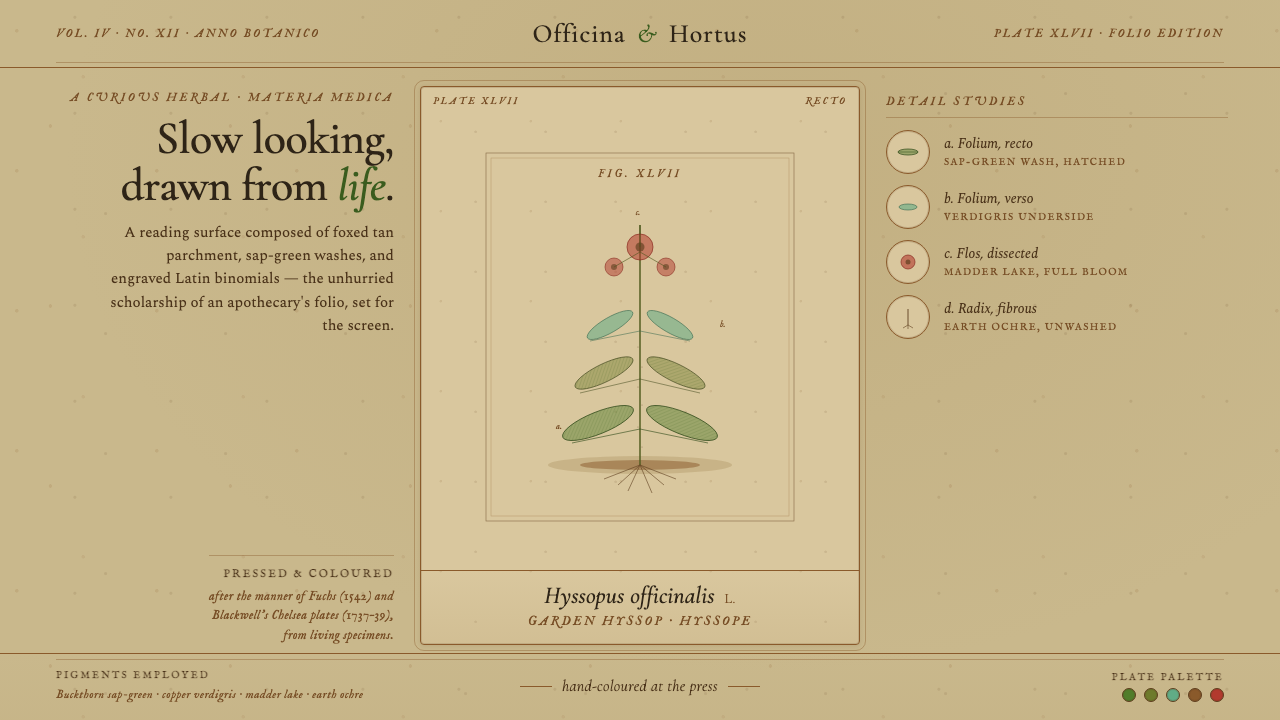 Herbal PharmacopoeiaSlow scholarship of the apothecary folio. Foxed tan parchment, sap-green wash…