What is Claude Monet Impressionist?
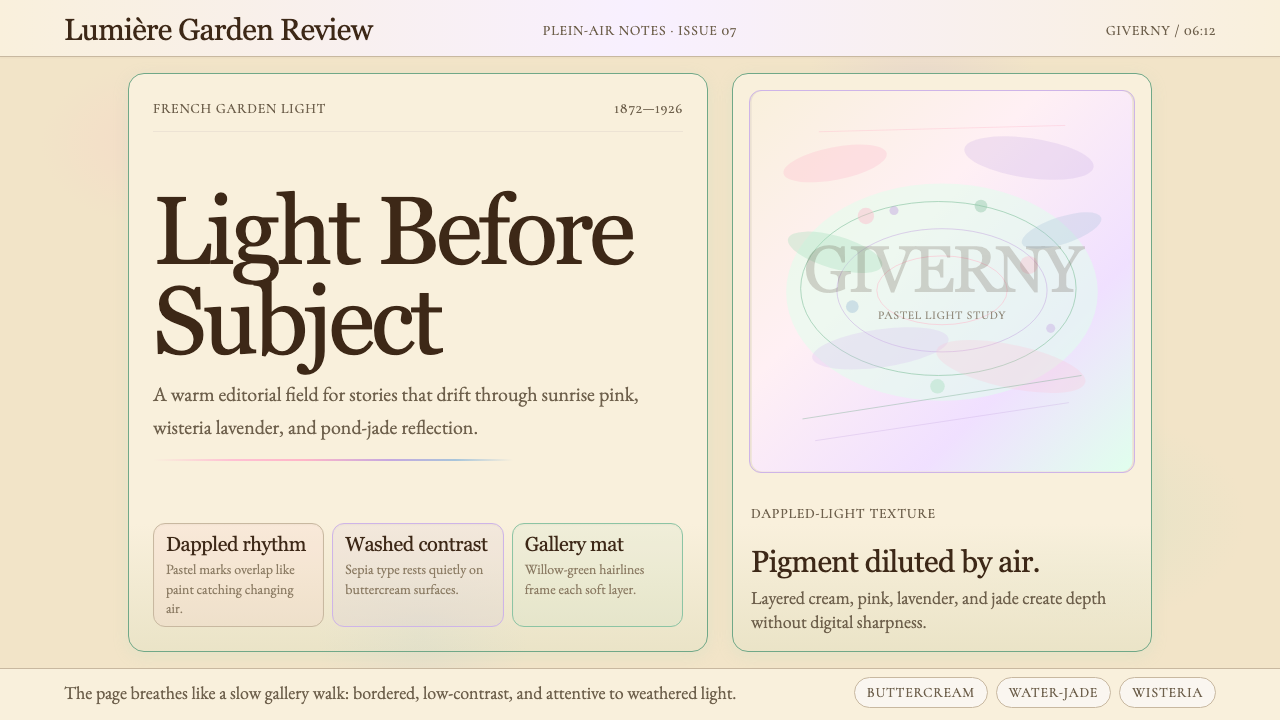
Monet taught the world to paint light itself — and this design system translates that shimmering, transient beauty into a warm editorial language for modern screens.
Claude Monet Impressionist in brief
The Monet Impressionist design system draws its soul from one of the most radical ideas in the history of Western painting: that the subject of a picture need not be the object in the scene, but the light falling upon it. When Claude Monet exhibited Impression, Sunrise in Paris in 1874, critics used the title mockingly — the word 'impressionism' was initially an insult. Within a decade, it had become the name of the most influential painting movement of the nineteenth century, and the soft, luminous palette Monet spent his life perfecting had redefined what color could do on a flat surface.
Visually, this system is defined by atmospheric softness rather than hard-edge clarity. The palette is drawn from Monet's recurring motifs: the warm pink and coral of early sunrise, the wisteria lavender and pale violet of his Giverny garden, the translucent jade and celadon of pond reflections, the buttercream warmth of late-afternoon light, and the hazy sky blues that dissolve into mist at the horizon. These hues are never saturated to full intensity — they are always tempered by light, as if seen through a scrim of morning atmosphere. Contrast is gentle and relative rather than stark and absolute.
Typography in this system reaches for the warmth and fineness of a printed editorial page. Delicate serif letterforms echo the organic curves of flowering wisteria and lily pads; generous leading and unhurried line lengths encourage reading as an act of dwelling rather than scanning. Ornamental flourishes are permitted where they serve the editorial character — this is a world apart from the austere rationalism of Bauhaus or the mechanical precision of Swiss grid systems. The overall effect is one of cultivated leisure, cultural richness, and the gentle authority of a well-made art publication.

Where does Claude Monet Impressionist come from?
The movement that would take Monet's name as its emblem began not in a manifesto or a school, but in a practical revolt against the exhibition system that controlled French art. The Académie des Beaux-Arts, through its annual Salon, determined which paintings reached the public and which artists achieved careers. Its tastes ran to historical and mythological subjects rendered with smooth, invisible brushwork — finish was a virtue, and evidence of the painter's hand a flaw. In 1863, the Salon rejected so many submissions that Emperor Napoleon III permitted a 'Salon des Refusés' to display the rejected works. Édouard Manet's Le Déjeuner sur l'herbe scandalized visitors, but it also announced that a different kind of painting was pressing against the walls of acceptable taste.
Monet and his circle — which included Camille Pissarro, Pierre-Auguste Renoir, Alfred Sisley, and Berthe Morisot — rejected the studio-bound conventions of the Academy in favour of painting outdoors, directly from observation, in changing natural light. This practice of plein-air painting was not entirely new — the Barbizon school had worked in the open air decades earlier — but the Impressionists took it to a structural conclusion: if light was always changing, then the mark on the canvas had to be quick, visible, and responsive. The characteristic short, discrete brushstroke of Impressionism was not a stylistic whim but a technical necessity, a record of a specific moment of perceived light.
Monet's personal journey through the movement traced its full ambitions. Born in Paris in 1840 and raised in Normandy, he received early encouragement from Eugène Boudin, the coastal landscape painter who first took him outdoors to work. He studied in Paris alongside Renoir, Sisley, and Frédéric Bazille, and by the time the first Impressionist exhibition opened in April 1874 at the studio of photographer Nadar, he was already committed to the serial study of light on a single subject across shifting time and conditions. His Haystacks series (begun 1890), the Rouen Cathedral studies (1892–1894), and the Thames views from London's Savoy Hotel represent the systematic investigation that distinguished him from painters content with a single view: he wanted to capture not a scene but the life of light within it across hours, seasons, and years.
The final chapter of Monet's life was played out at Giverny, the property in Normandy he acquired in 1883 and spent decades transforming into a living artwork. The Japanese bridge, the weeping willows, and above all the water-lily pond became the subjects of the monumental late canvases — the Nymphéas — that Monet worked on until his death in 1926 and which now occupy the oval rooms of the Orangerie in Paris. These late works anticipated abstraction: the horizon disappears, the lily pads and reflections become interchangeable, and what remains is pure color and atmosphere. Georges Clemenceau, the French statesman and Monet's lifelong friend, negotiated the gift of the grand decorations to the French state in the final years of Monet's life, ensuring that the movement's culminating vision would endure as a permanent public monument.
What defines the Claude Monet Impressionist look?
Atmospheric Palette
Color in this system is always experienced as light-saturated atmosphere rather than flat pigment. The foundational hues — sunrise pink, wisteria lavender, pond jade, buttercream, and sky blue — are deployed at low intensity with high luminosity, as if every surface is simultaneously lit from within and washed by outdoor daylight. No single color dominates at full strength; instead, tones drift into one another at the edges, creating transitions that feel breathed rather than drawn. The overall palette reads as warm and enveloping, never clinical.
Soft, Visible Texture
Where Bauhaus insists on smooth, frictionless surfaces, the Monet system welcomes the trace of the maker's hand. Backgrounds carry a subtle grain or washed quality, as if lightly stained with watercolor. Dividers and decorative elements may suggest the soft rhythm of a brushstroke rather than the mechanical precision of a ruled line. This texture is never so insistent as to impede legibility — it operates as a gentle sensory reminder that the content is being presented in a made, crafted environment rather than a purely computational one.
Organic, Curvilinear Form
The Monet system does not share Bauhaus geometry's love of the hard circle, square, and triangle. Instead, forms follow the soft logic of the natural world: the arc of a stone bridge over still water, the ellipse of a lily pad, the unhurried curve of a garden path. Borders and containers use rounded corners that feel grown rather than constructed. Decorative motifs, where used, draw from botanical and aquatic sources — stylized leaves, rippled reflections — rather than the mechanical or the geometric.
Delicate Editorial Typography
Type choices favor high-contrast serif letterforms with fine hairlines and pronounced stroke modulation — the kind of letterforms that carry associations with printed cultural journalism, museum catalogues, and fine art publishing. Headings are set at a scale that commands attention without aggression; body text flows in relatively long, unhurried lines with generous leading. The typographic color of a page is warm and open rather than dense and compressed. Italic cuts are used freely and expressively to introduce titles, quotations, and section headings.
Luminous, Low-Contrast Layering
Rather than separating elements with high-contrast borders or hard shadows, the Monet system uses tonal proximity to organize space. Sections are distinguished by a shift from buttercream to pale lavender, from soft white to the faintest blush — differences the eye reads without conscious effort. Shadows, where used, are soft and diffuse, suggesting natural light scattering across a surface rather than a cast shadow under artificial illumination. The result is a layout that breathes and reads as continuous, like the surface of still water, rather than a collection of discrete compartments.
Temporal, Transient Mood
Impressionism is the art of a specific moment — the six-thirty light, not the generalized daylight. The design system carries this sensibility in its tonal choices and compositional rhythm. Imagery, where included, favors soft focus, directional light, and the suggestion of movement or transition — a reflection disturbed by a breeze, petals on the verge of falling. The overall emotional register is one of pleasant melancholy, aesthetic alertness, and the cultured appreciation of beauty that does not last. This mood distinguishes the system sharply from contemporary styles aimed at urgency, clarity, or efficiency.
Garden and Water Motifs
The iconographic vocabulary of this system draws heavily from Monet's Giverny world: the lily pad, the arched bridge, trailing wisteria, water reflections, and the layered depth of a garden in full bloom. These motifs appear as background textures, decorative accents, section breaks, and illustrative elements. They are used with restraint — one or two per composition rather than as overall pattern — and always in service of the editorial or atmospheric intention of the layout rather than as decoration for its own sake.

Who shaped Claude Monet Impressionist?
Born in Paris in 1840 and raised in the coastal town of Sainte-Adresse near Le Havre, Monet is the defining figure of Impressionism — the painter whose name the movement effectively carries. He was a founding participant of the 1874 exhibition that gave the movement its name (borrowed from his Impression, Sunrise), and he outlived most of his contemporaries, continuing to paint at Giverny until blindness from cataracts in his final years severely compromised his vision. His late Nymphéas series — conceived as a total environment, an unbroken panorama of the water-lily pond — anticipated the scale and immersiveness of twentieth-century abstraction and continues to attract more museum visitors than almost any other body of Impressionist work.
Pissarro was the only painter to exhibit at all eight Impressionist exhibitions (1874–1886), and his role within the movement was more pedagogical and connective than his paintings alone suggest. He corresponded extensively with younger artists including Paul Cézanne and Paul Gauguin, encouraging and critiquing their work with unusual generosity. His own paintings — characterized by high viewpoints over streets and fields, a systematic interest in the fall of light across the middle distance, and a palette anchored in the grey-greens and warm ochres of the Île-de-France countryside — represent a quieter, more empirical branch of Impressionism than Monet's atmospheric extremism.
Renoir brought to Impressionism an interest in the human figure and social scene that complemented Monet's focus on landscape and light. His paintings of open-air café terraces, riverside bathing parties, and Montmartre dance halls — above all Le Moulin de la Galette (1876) and Luncheon of the Boating Party (1881) — captured the warmth and sociability of bourgeois Parisian leisure with a palette of exceptional luminosity. Where Monet dissolved his subjects into atmosphere, Renoir retained the individual warmth of faces and skin, giving the Impressionist palette its most immediately appealing human dimension.
Morisot was the most prominent woman among the Impressionists, exhibiting in seven of the eight group exhibitions and consistently producing work of exceptional delicacy and psychological depth. Her subjects were primarily domestic and private — a woman reading by an open window, children in a garden, figures on a balcony overlooking Paris — but she handled these intimate scenes with the same commitment to observed light and free brushwork as her male contemporaries. Her palette leaned toward silvery whites, soft greys, and pale greens, and her compositions often suspended the figure in an atmosphere of reflective quiet that is distinctly her own.
Clemenceau's place in the Monet story is unique among the movement's associated figures: he was not a painter at all, but the French statesman known as 'The Tiger' who served twice as Prime Minister and led France through the final years of the First World War. His lifelong friendship with Monet began in their shared years in Normandy and deepened as Monet's eyesight declined. Clemenceau visited Giverny repeatedly, encouraged Monet to continue working through failing vision, and ultimately negotiated the donation of the grand Nymphéas decorations to the French state — ensuring the Orangerie installation became a reality before Monet's death in 1926.
How do you use Claude Monet Impressionist today?
The Monet Impressionist system is most powerful when the content itself has a cultural, editorial, or experiential character — when the goal is to evoke a state of contemplative engagement rather than drive rapid transactional decisions. Applied well, it communicates sophistication, warmth, and a curatorial sensibility that instantly distinguishes a product from the utilitarian defaults of modern interface design. Applied carelessly, it can read as nostalgic, unfocused, or decoratively overwrought. The key is understanding that Impressionism's softness is disciplined — Monet's canvases have immense compositional rigor beneath their apparent looseness — and bringing that same underlying structure to digital layouts.
For presentation slides, this system excels on both cover and section-break pages where mood and cultural positioning matter most. A cover built in this system might use a single atmospheric image — soft, directionally lit, with a visible textural depth — paired with a fine serif title set in warm near-white against a deep tonal ground of pond-jade or late-evening lavender. Content slides should resist the temptation to fill every surface with texture: treat the background as a quiet field, use tonal contrast rather than color contrast to separate sections, and let generous white space function as the breathing room that connects the layout to Impressionism's sense of atmosphere. Data slides take a more restrained approach — charts and graphs in the system's muted palette, with a single accent color drawn from the sunrise pink or wisteria range to highlight the key finding.
For web interfaces, this system is best suited to editorial platforms, cultural institution websites, art-adjacent e-commerce, and premium lifestyle products. Dashboard and pricing page applications require care: the low-contrast palette that creates atmospheric richness in an editorial layout can undermine scannability in a data-dense environment. When applying the system to dashboards, increase the tonal differentiation between section backgrounds slightly, ensure that body text remains at sufficient contrast for sustained reading, and use the warmer end of the palette — sunrise pink, buttercream — for interactive highlights and calls to action rather than the more atmospheric lavenders and blues. Navigation should use fine serif or well-proportioned sans-serif type; avoid icon-heavy interfaces that conflict with the system's literary character.
For editorial layouts, marketing pages, and cultural communications, this system is at its most natural. Long-form article layouts benefit from the system's generous leading, fine serif body type, and the use of atmospheric pull-quotes set in italic at an elevated scale. Feature sections on marketing pages can alternate between pale backgrounds — wisteria lavender, morning mist white, soft pond green — to create rhythm without structural repetition. Imagery should be chosen for softness of light and warmth of tone: photographs taken in golden-hour or overcast daylight, with visible texture and depth, rather than the hard-lit studio images common in contemporary technology marketing.
A common mistake when applying this system is conflating atmospheric softness with visual vagueness. Monet's paintings are precise records of specific perceptual experiences — he was not painting fog, he was painting what he saw through fog, and the difference is everything. In digital terms, this means maintaining clear type hierarchy even when backgrounds are soft, ensuring interactive states are unmistakable even when palette contrast is low, and never using texture or tonal complexity as a substitute for compositional decisions. The system should feel like stepping into a carefully designed garden — quiet, enveloping, but navigable — rather than like looking through frosted glass.

Claude Monet Impressionist — FAQ
How does Monet Impressionist differ from other soft or pastel-palette design systems?
Most soft or pastel design systems use low-saturation color as a purely aesthetic choice — a way to feel gentle or approachable without a specific visual logic. The Monet system is distinct because its palette has a documented perceptual origin: these are the specific hues that recur across Monet's body of work because they correspond to specific atmospheric conditions in northern France — the particular quality of light at the Seine estuary, the color of water reflecting a sky filtered through morning mist. The system also pairs its palette with deliberate typographic and compositional choices that reinforce the editorial and cultural character; a generic pastel system typically does not carry this layer of thematic coherence.
Can this system work for products that need to communicate urgency or drive quick decisions?
With significant modification, but generally it is not the right choice for those goals. The Monet system's low contrast, atmospheric layering, and leisurely typographic pacing are calibrated to encourage dwelling and contemplation — the opposite of the visual urgency that drives conversion-focused landing pages, time-limited offers, or emergency notifications. If a product requires both an atmospheric brand presence and clear calls to action, the practical solution is to use the Monet system for brand and editorial surfaces while switching to a more contrast-forward approach for transactional screens. Attempting to compress the full range of urgency into the system's palette tends to produce either muddy, low-impact calls to action or jarring tonal inconsistency.
How should imagery be selected and treated to fit this system?
Photography selected for this system should share the atmospheric qualities of the palette: soft, directional natural light rather than hard studio lighting; warm or neutral color temperature rather than cool or stark; visible depth-of-field that suggests a living, breathing scene rather than a product-isolated cutout. Images taken in golden-hour daylight, overcast outdoor light, or the diffused light of a large north-facing window all tend to fit naturally. Treatment should preserve the image's tonal range without aggressive cropping or high-contrast post-processing — slight warmth in the color grade reinforces the palette. Images used as full backgrounds should be layered with a soft tonal wash from the system's palette to create visual continuity between the image and the typographic elements placed over it.
Is Monet Impressionist suited to dark-mode or dark-background interfaces?
A dark inversion of this system is possible but requires care. Monet's own paintings move between registers: the late Nymphéas work is sometimes very dark in its deepest shadow passages, with the lily pads and reflections emerging from near-black water. A dark variant can draw on this late-career palette — deep teal, near-black with an undertone of jade, accented by the pale luminosity of lily-white and sunrise pink. However, the system's defining quality — the sense that color is light rather than pigment — becomes harder to maintain against dark grounds, where the same muted hues can read as simply flat and lifeless. A successful dark Monet variant typically requires increasing the luminosity of the accent colors beyond their standard palette values to restore the sense of glow.
What kinds of products or brands would be wrong for this system?
The Monet system is poorly matched to products that rely on signaling technical precision, raw efficiency, or aggressive modernity. Developer tools, financial trading interfaces, logistics dashboards, and cybersecurity platforms typically need visual languages that communicate rigor, speed, and exactitude — qualities at odds with the contemplative softness of Impressionism. Equally, brands that need to communicate mass-market accessibility and everyday affordability may find the system's cultural refinement reads as exclusive or precious rather than welcoming. The system works where a product genuinely shares Impressionism's values: beauty in transience, the cultivation of perception, and the pleasure of a made thing experienced with full attention.
Related design styles
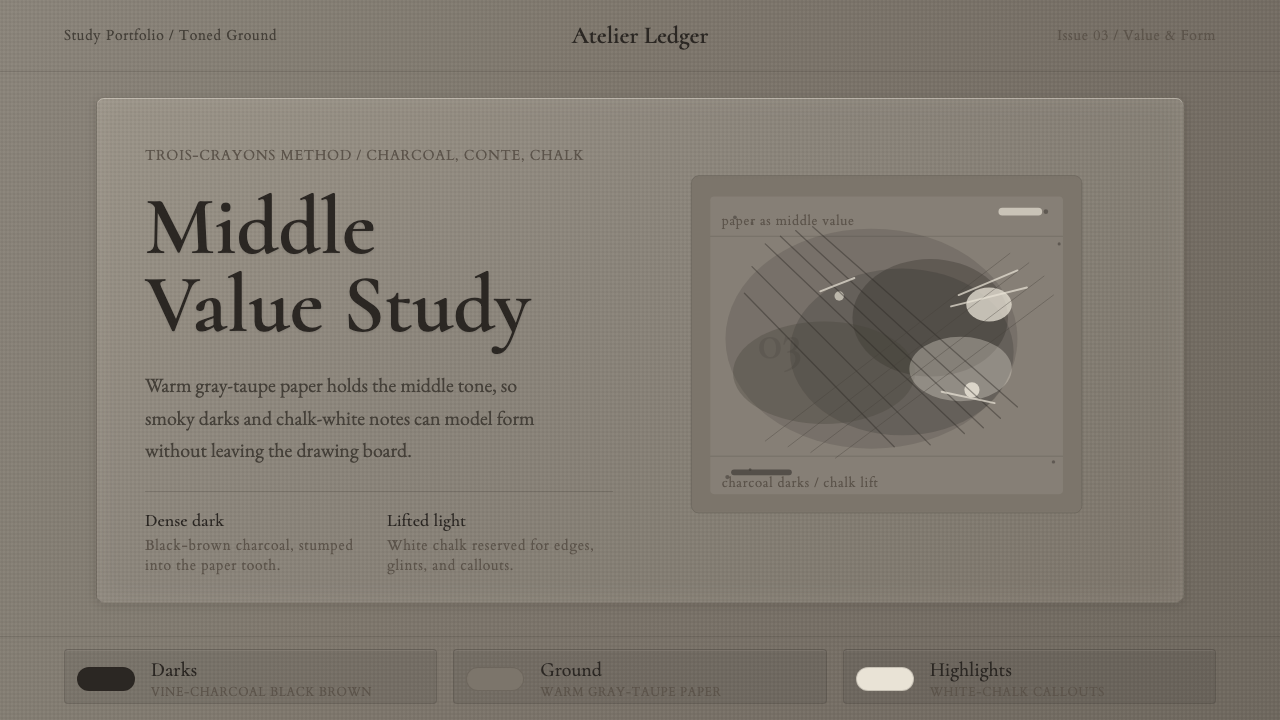 Charcoal & Conté DrawingAtelier calm, in middle value. Gray-taupe tooth, smoky charcoal, and chalk-wh…
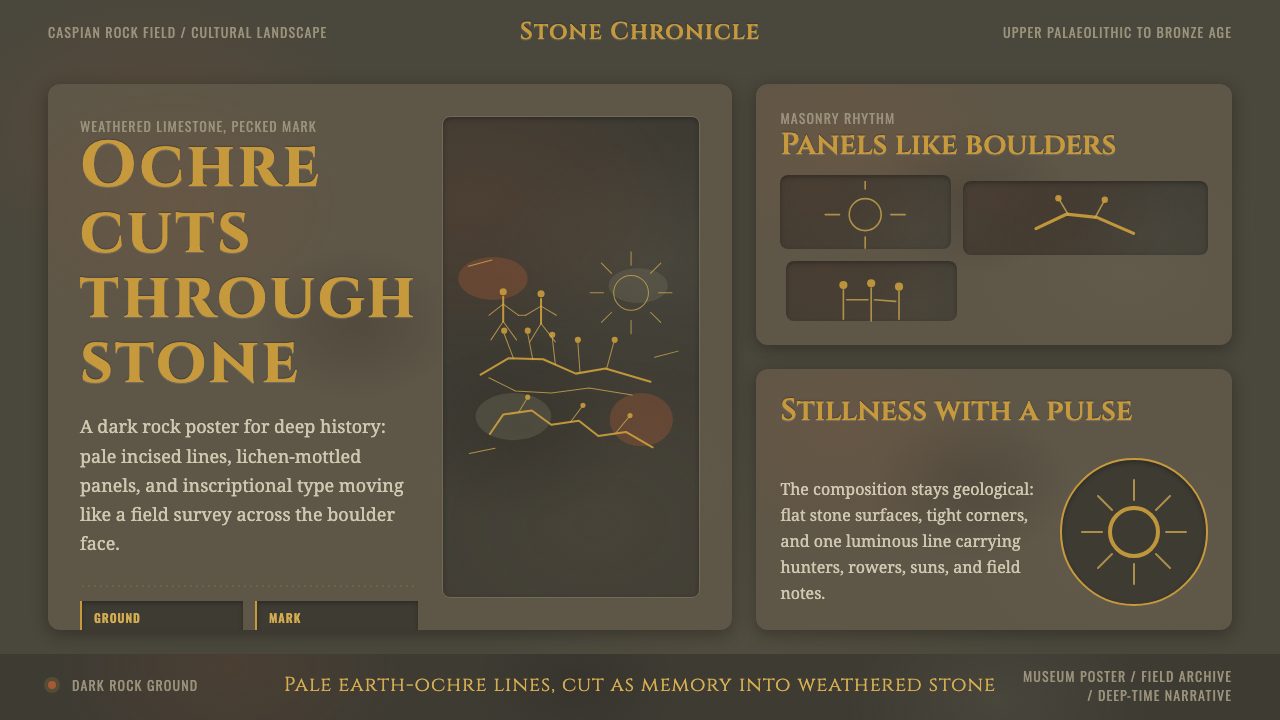 Azerbaijani Gobustan PetroglyphAncient rock speaks. Ochre incisions glow across dark lichen-mottled stone.
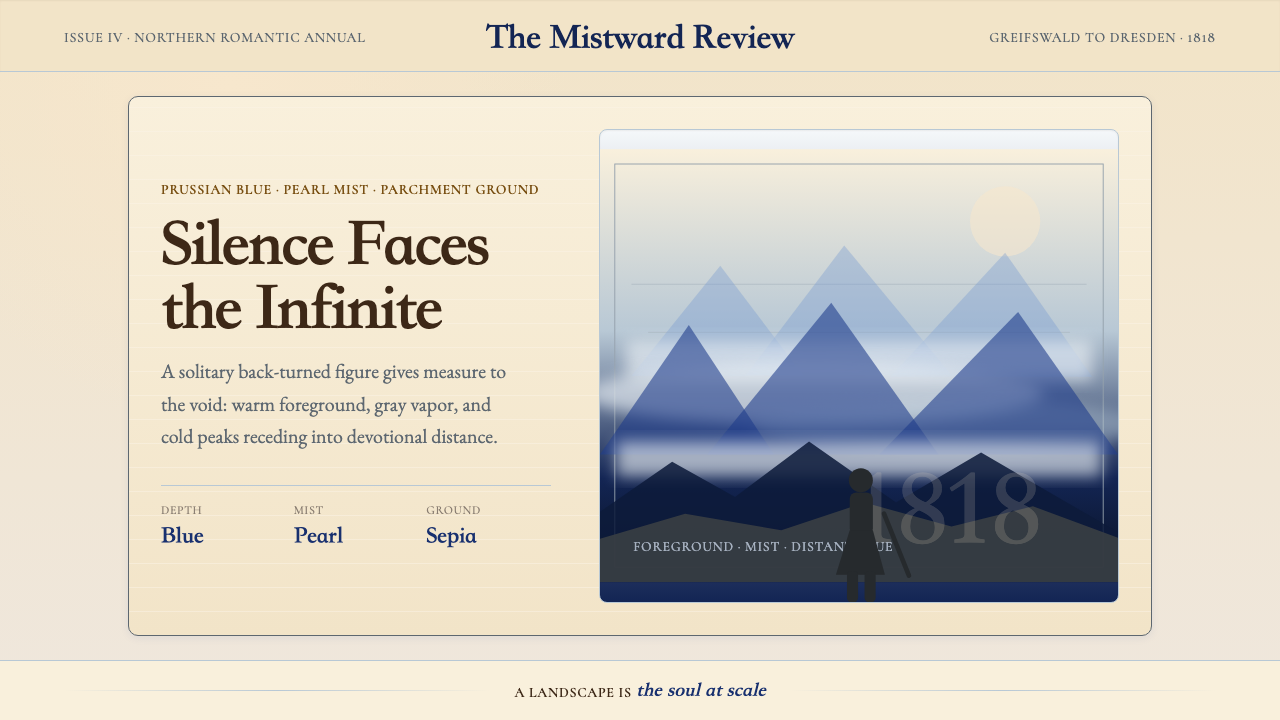 Caspar David FriedrichSilence becomes vast. Prussian blue depth, pearl mist, and parchment framing…
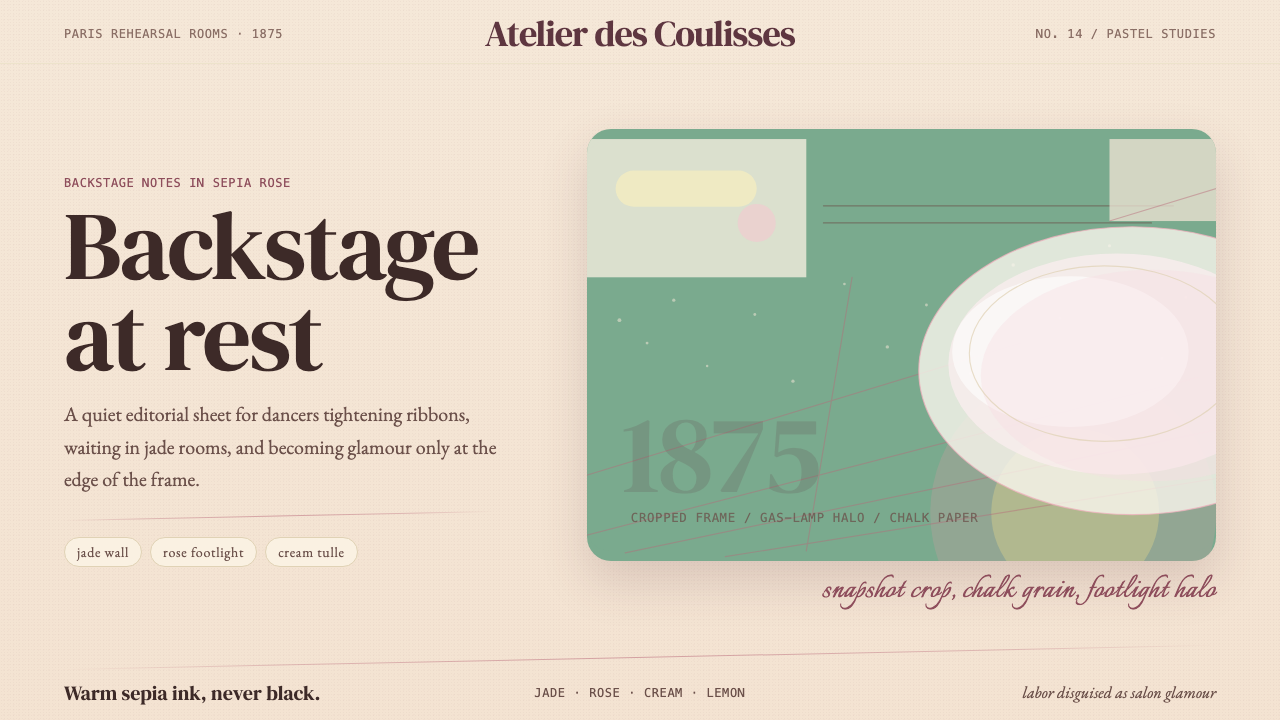 Degas Ballet PastelsBackstage glamour is labor. Jade walls, rose footlights, cropped serifs on cr…
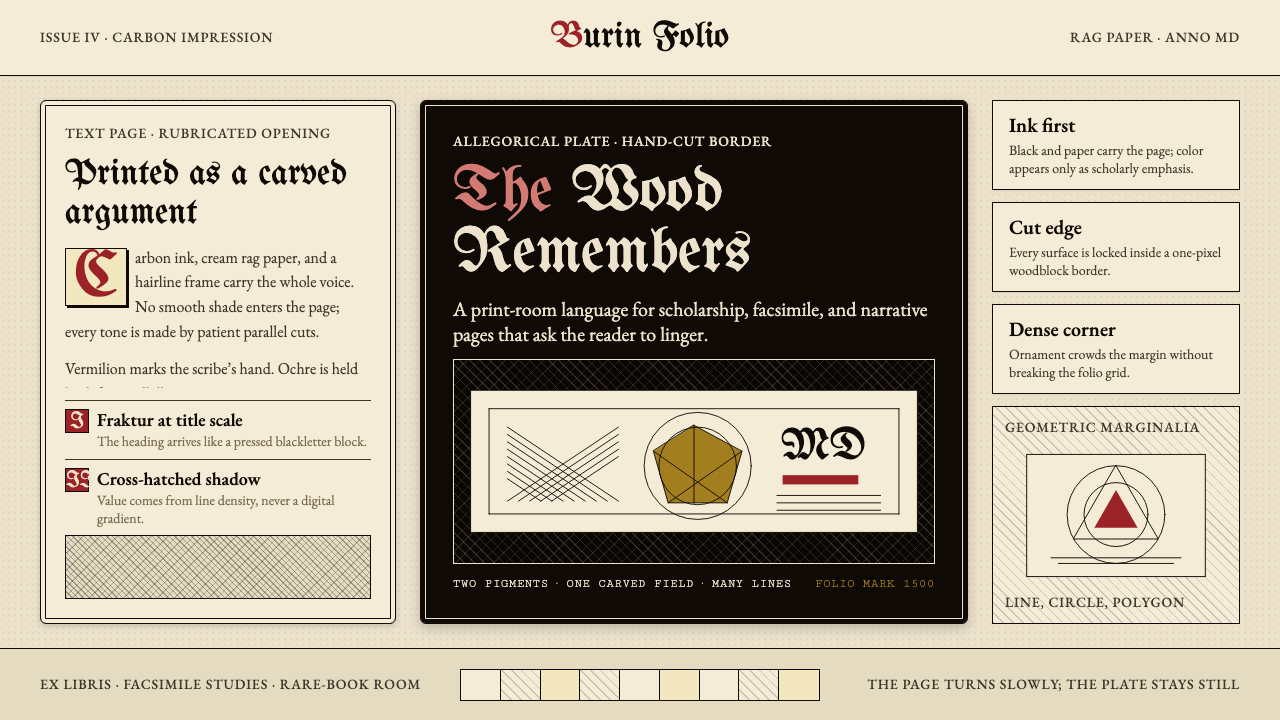 Dürer WoodcutInk remembers everything. Fraktur titles, rag-paper cream, and cross-hatched…
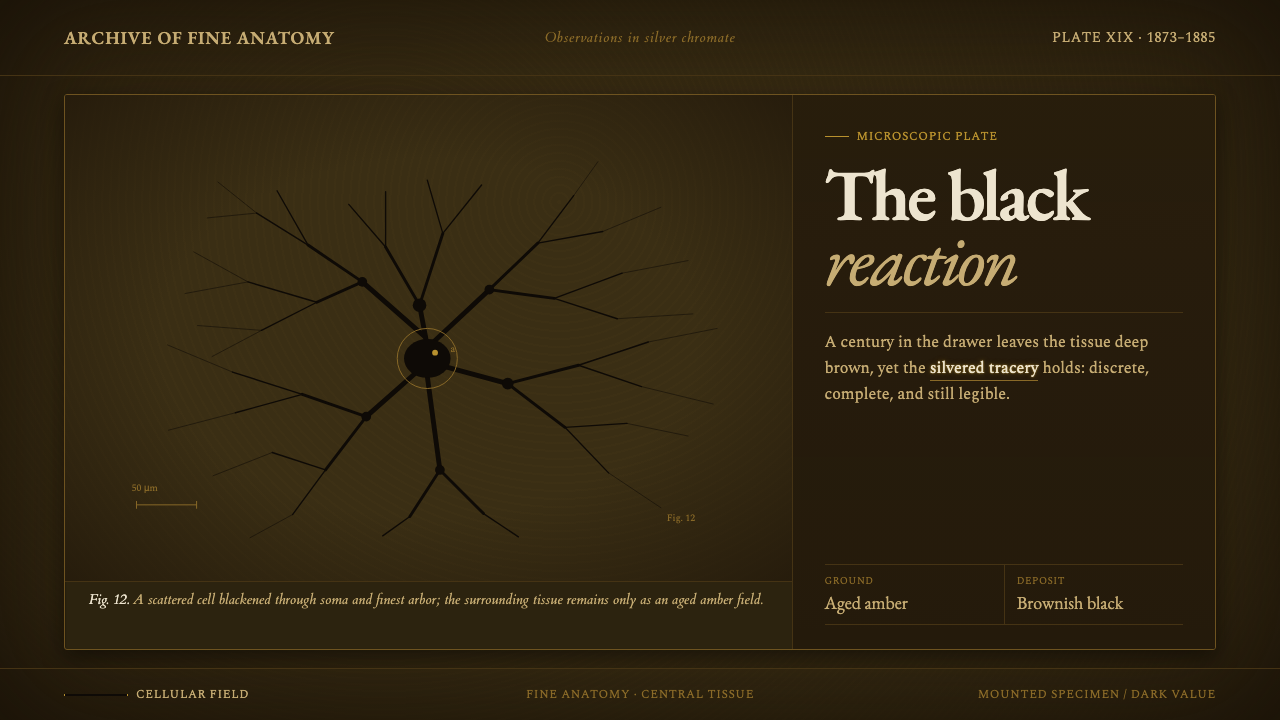 Golgi Neuron Silver StainA century-darkened specimen. Near-black dendrites branch across an aged amber…